Hesiod, Theogony 453-506: Cronos swallows his children; the birth of Zeus
Introduction
Hesiod's Theogony (c. 700 BCE) is the oldest Greek account of the origin of the world and the gods, from Chaos and Earth through the reign of Cronos to the victory of Zeus. This part: Cronos swallows his children; the birth of Zeus (lines 453-506, 54 lines). Rhea's children are swallowed by Cronos until she hides the infant Zeus in Crete; Cronos disgorges them; the Cyclopes give Zeus the thunderbolt.
The page photographs are from Florence, Biblioteca Medicea Laurenziana, Plut. 32.16 (paper, late 13th century; a large collection of Greek poetry that also holds letters of Maximus Planudes), Theogony on fols. 240r-247v, the oldest complete manuscript of the poem with published images, in the Biblioteca Medicea Laurenziana's Teca Digitale. This part is on fol. 243v, 244r. The scribe writes two verses to a row, one in each column, so a page is read across the columns, row by row. Each section below is one page; its note gives the page's first and last verse as read on the photograph.
The Greek is Evelyn-White's Loeb text (1914) via Perseus, not a transcription of this manuscript, whose wording differs here and there. Verses the editor brackets as later additions are shown in square brackets. The English is Evelyn-White's prose translation (1914); it is cut at the end of his sentences, so where a sentence runs across a page break it is given whole to one page; each section's note gives the exact lines its English covers.
How was this verified? (Provenance)
Where on the image
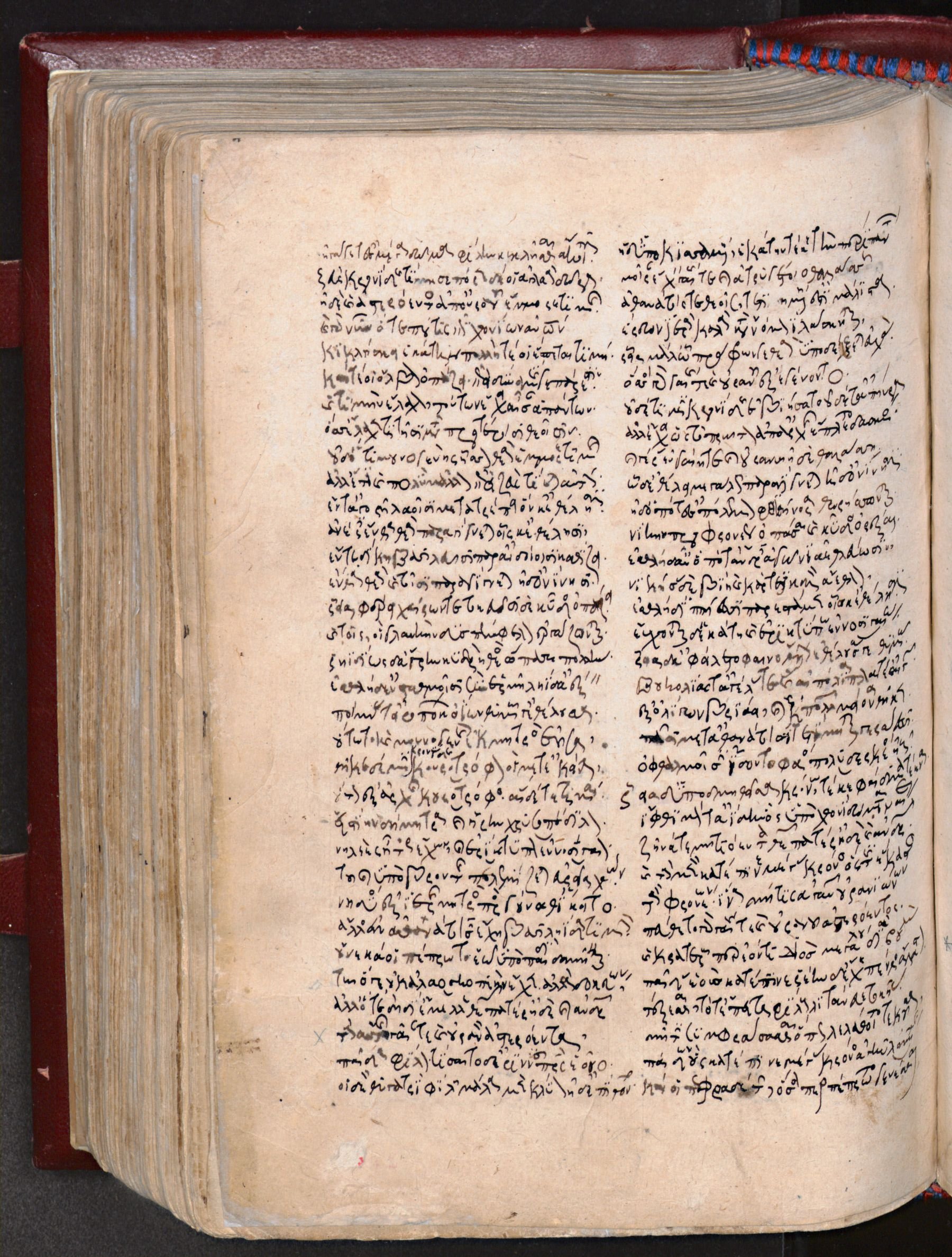
Laur. Plut. 32.16, fol. 243v: lines 410-475, begins ‹ἠγάγετʼ ἐς μέγα δῶμα›, ends ‹ὅσα περ πέπρωτο γενέσθαι›. Checked on the image: first and last rows read and matched to the Greek (re-read on the image 2026-11-12: first row ‹410 | 411: ἠγάγετ' ἐς μέγα δῶμα ... | ἡ δ' ὑποκυσαμένη ἑκάτην ...›, last row ‹474 | 475: οἳ δὲ θυγατρὶ φίλῃ ... | ... ὅσα περ πέπρωτο γενέσθαι›); the page before ends at line 409 and the page after begins at line 476. This section shows lines 453-475 of that page; the rest of the page belongs to the previous part of the poem. English here: lines 453-476, cut at the end of Evelyn-White's sentences. His sentence that runs across the break with the next page is given whole here, so the English ends with line 476 (‹... king and his stout-hearted son.›).
453Ῥείη δὲ δμηθεῖσα Κρόνῳ τέκε φαίδιμα τέκνα,
454Ἱστίην Δήμητρα καὶ Ἥρην χρυσοπέδιλον
455ἴφθιμόν τʼ Ἀίδην, ὃς ὑπὸ χθονὶ δώματα ναίει
456νηλεὲς ἦτορ ἔχων, καὶ ἐρίκτυπον Ἐννοσίγαιον
457Ζῆνά τε μητιόεντα, θεῶν πατέρʼ ἠδὲ καὶ ἀνδρῶν,
458τοῦ καὶ ὑπὸ βροντῆς πελεμίζεται εὐρεῖα χθών.
459καὶ τοὺς μὲν κατέπινε μέγας Κρόνος, ὥς τις ἕκαστος
460νηδύος ἐξ ἱερῆς μητρὸς πρὸς γούναθʼ ἵκοιτο,
461τὰ φρονέων, ἵνα μή τις ἀγαυῶν Οὐρανιώνων
462ἄλλος ἐν ἀθανάτοισιν ἔχοι βασιληίδα τιμήν.
463πεύθετο γὰρ Γαίης τε καὶ Οὐρανοῦ ἀστερόεντος,
464οὕνεκά οἱ πέπρωτο ἑῷ ὑπὸ παιδὶ δαμῆναι
465καὶ κρατερῷ περ ἐόντι, Διὸς μεγάλου διὰ βουλάς·
466τῷ ὅ γʼ ἄρʼ οὐκ ἀλαὸς σκοπιὴν ἔχεν, ἀλλὰ δοκεύων
467παῖδας ἑοὺς κατέπινε· Ῥέην δʼ ἔχε πένθος ἄλαστον.
468ἀλλʼ ὅτε δὴ Δίʼ ἔμελλε θεῶν πατέρʼ ἠδὲ καὶ ἀνδρῶν
469τέξεσθαι, τότʼ ἔπειτα φίλους λιτάνευε τοκῆας
470τοὺς αὐτῆς, Γαῖάν τε καὶ Οὐρανὸν ἀστερόεντα,
471μῆτιν συμφράσσασθαι, ὅπως λελάθοιτο τεκοῦσα
472παῖδα φίλον, τίσαιτο δʼ ἐρινῦς πατρὸς ἑοῖο
473παίδων θʼ, οὓς κατέπινε μέγας Κρόνος ἀγκυλομήτης.
474οἳ δὲ θυγατρὶ φίλῃ μάλα μὲν κλύον ἠδʼ ἐπίθοντο,
475καί οἱ πεφραδέτην, ὅσα περ πέπρωτο γενέσθαι
453But Rhea was subject in love to Cronos and bore splendid children, Hestia, Demeter, and gold-shod Hera 455and strong Hades, pitiless in heart, who dwells under the earth, and the loud-crashing Earth-Shaker, and wise Zeus, father of gods and men, by whose thunder the wide earth is shaken. These great Cronos swallowed as each 460came forth from the womb to his mother's knees with this intent, that no other of the proud sons of Heaven should hold the kingly office amongst the deathless gods. For he learned from Earth and starry Heaven that he was destined to be overcome by his own son, 465strong though he was, through the contriving of great Zeus. Therefore he kept no blind outlook, but watched and swallowed down his children: and unceasing grief seized Rhea. But when she was about to bear Zeus, the father of gods and men, 470then she besought her own dear parents, Earth and starry Heaven, to devise some plan with her that the birth of her dear child might be concealed, and that retribution might overtake great, crafty Cronos for his own father and also for the children whom he had swallowed down. And they readily heard and obeyed their dear daughter, 475and told her all that was destined to happen touching Cronos the king and his stout-hearted son.
Where on the image
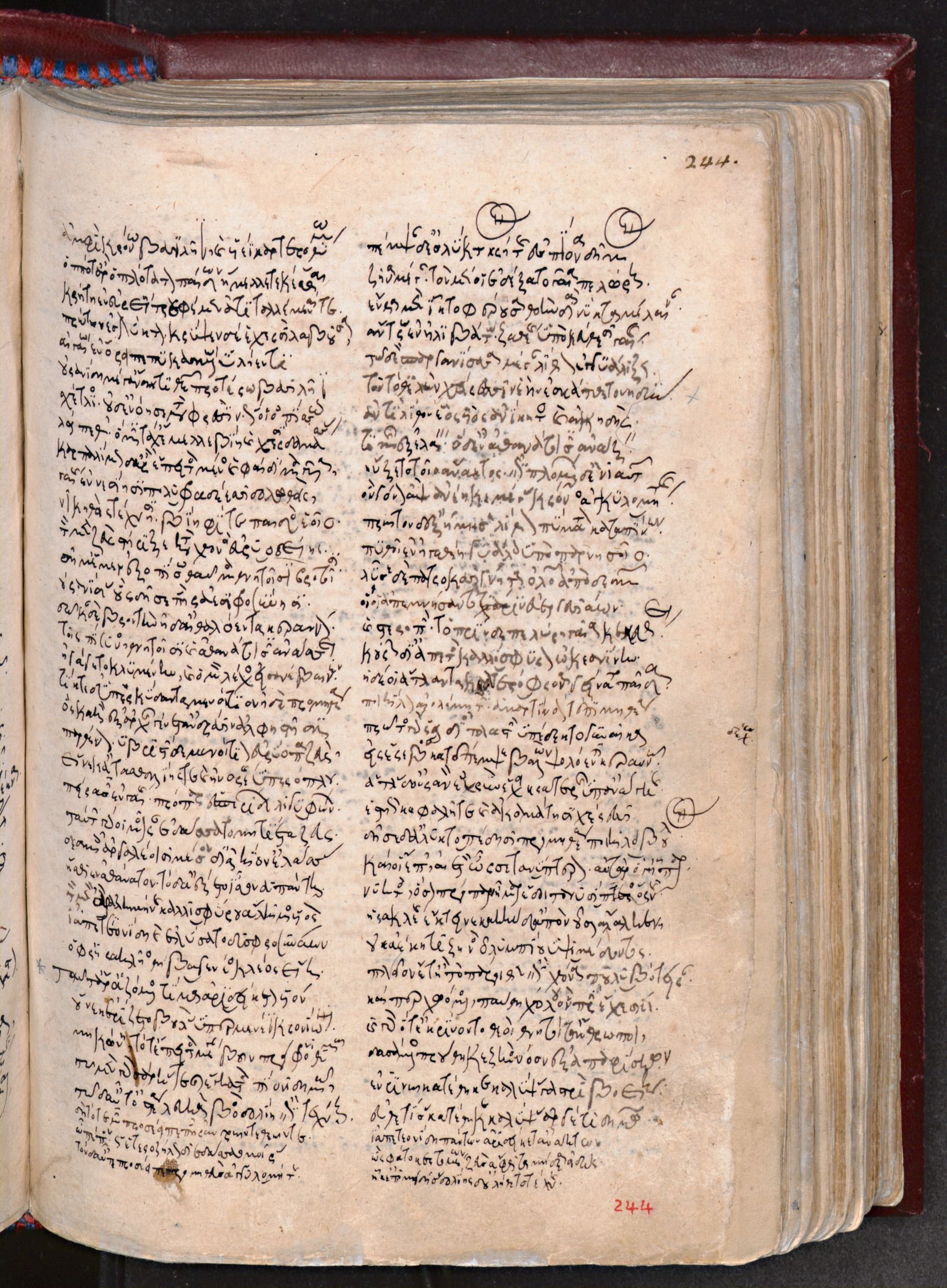
Laur. Plut. 32.16, fol. 244r: lines 476-547, begins ‹ἀμφὶ Κρόνῳ βασιλῆι καὶ›, ends ‹δʼ οὐ λήθετο τέχνης·›. Checked on the image: first and last rows read and matched to the Greek (re-read on the image 2026-11-12: first row ‹476 | 477: ἀμφὶ κρόνῳ βασιλῆι ... | πέμψαν δ' ἐς λύκτον ...›, last row ‹546 | 547: τὸν δ' αὖτε προσέειπε προμηθεὺς ... | ... δολίης δ' οὐ λήθετο τέχνης›); the page before ends at line 475 and the page after begins at line 548. This section shows lines 476-506 of that page; the rest of the page belongs to the next part of the poem. The last three rows (542-547) are written smaller, squeezed in at the foot of the page. English here: lines 477-506, cut at the end of Evelyn-White's sentences. The sentence that runs across the page break (to line 476) is given whole with the page before; the English here begins with ‹So they sent her to Lyctus ...› (line 477).
476ἀμφὶ Κρόνῳ βασιλῆι καὶ υἱέι καρτεροθύμῳ.
477πέμψαν δʼ ἐς Λύκτον, Κρήτης ἐς πίονα δῆμον,
478ὁππότʼ ἄρʼ ὁπλότατον παίδων τέξεσθαι ἔμελλε,
479Ζῆνα μέγαν· τὸν μέν οἱ ἐδέξατο Γαῖα πελώρη
480Κρήτῃ ἐν εὐρείῃ τραφέμεν ἀτιταλλέμεναί τε.
481ἔνθα μιν ἷκτο φέρουσα θοὴν διὰ νύκτα μέλαιναν
482πρώτην ἐς Λύκτον· κρύψεν δέ ἑ χερσὶ λαβοῦσα
483ἄντρῳ ἐν ἠλιβάτῳ, ζαθέης ὑπὸ κεύθεσι γαίης,
484Αἰγαίῳ ἐν ὄρει πεπυκασμένῳ ὑλήεντι.
485τῷ δὲ σπαργανίσασα μέγαν λίθον ἐγγυάλιξεν
486Οὐρανίδῃ μέγʼ ἄνακτι, θεῶν προτέρῳ βασιλῆι.
487τὸν τόθʼ ἑλὼν χείρεσσιν ἑὴν ἐσκάτθετο νηδὺν
488σχέτλιος· οὐδʼ ἐνόησε μετὰ φρεσίν, ὥς οἱ ὀπίσσω
489ἀντὶ λίθου ἑὸς υἱὸς ἀνίκητος καὶ ἀκηδὴς
490λείπεθʼ, ὅ μιν τάχʼ ἔμελλε βίῃ καὶ χερσὶ δαμάσσας
491τιμῆς ἐξελάειν, ὃ δʼ ἐν ἀθανάτοισι ἀνάξειν.
492καρπαλίμως δʼ ἄρʼ ἔπειτα μένος καὶ φαίδιμα γυῖα
493ηὔξετο τοῖο ἄνακτος· ἐπιπλομένων δʼ ἐνιαυτῶν
494Γαίης ἐννεσίῃσι πολυφραδέεσσι δολωθεὶς
495ὃν γόνον ἄψ ἀνέηκε μέγας Κρόνος ἀγκυλομήτης
496[νικηθεὶς τέχνῃσι βίηφί τε παιδὸς ἑοῖο.]
497πρῶτον δʼ ἐξέμεσεν λίθον, ὃν πύματον κατέπινεν·
498τὸν μὲν Ζεὺς στήριξε κατὰ χθονὸς εὐρυοδείης
499Πυθοῖ ἐν ἠγαθέῃ γυάλοις ὕπο Παρνησοῖο
500σῆμʼ ἔμεν ἐξοπίσω, θαῦμα θνητοῖσι βροτοῖσιν.
501λῦσε δὲ πατροκασιγνήτους ὀλοῶν ὑπὸ δεσμῶν
502Οὐρανίδας, οὓς δῆσε πατὴρ ἀεσιφροσύνῃσιν·
503οἳ οἱ ἀπεμνήσαντο χάριν ἐυεργεσιάων,
504δῶκαν δὲ βροντὴν ἠδʼ αἰθαλόεντα κεραυνὸν
505καὶ στεροπήν· τὸ πρὶν δὲ πελώρη Γαῖα κεκεύθει·
506τοῖς πίσυνος θνητοῖσι καὶ ἀθανάτοισιν ἀνάσσει.
477So they sent her to Lyctus, to the rich land of Crete, when she was ready to bear great Zeus, the youngest of her children. Him did vast Earth receive from Rhea 480in wide Crete to nourish and to bring up. To that place came Earth carrying him swiftly through the black night to Lyctus first, and took him in her arms and hid him in a remote cave beneath the secret places of the holy earth on thick-wooded Mount Aegeum; but to the mightily ruling son of Heaven, the earlier king of the gods, 485she gave a great stone wrapped in swaddling clothes. Then he took it in his hands and thrust it down into his belly: wretch! he knew not in his heart that in place of the stone his son was left behind, unconquered and untroubled, 490and that he was soon to overcome him by force and might and drive him from his honors, himself to reign over the deathless gods. 492After that, the strength and glorious limbs of the prince increased quickly, and as the years rolled on, great Cronos the wily was beguiled by the deep suggestions of Earth, 495and brought up again his offspring, vanquished by the arts and might of his own son, and he vomited up first 500the stone which he had swallowed last. And Zeus set it fast in the wide-pathed earth at goodly Pytho under the glens of Parnassus, to be a sign thenceforth and a marvel to mortal men. And he set free from their deadly bonds the brothers of his father, sons of Heaven whom his father in his foolishness had bound. And they remembered to be grateful to him for his kindness, and gave him thunder and the glowing thunderbolt 505and lightning: for before that, huge Earth had hidden these. In them he trusts and rules over mortals and immortals.
Notes
- Greek: H. G. Evelyn-White, Hesiod, the Homeric Hymns and Homerica (Loeb Classical Library, 1914), via Perseus. Square brackets mark verses the editor regards as interpolated.
- English: H. G. Evelyn-White's translation in the same volume; his footnotes are omitted.
- Lines 929a-929t of the Loeb text (a passage on the birth of Athena quoted by Galen from Chrysippus) are not in the medieval manuscripts and are not included.
Cite
Sources
- Source: Laur. Plut. 32.16 (BML Teca Digitale IIIF) + Evelyn-White Greek (Loeb 1914, Perseus) + Evelyn-White English (1914, Perseus) (holding institution)
- Critical edition: Evelyn-White, Loeb 1914, via Perseus
← previous · → next · v cycle view · l back to library