Hesiod, Theogony 337-452: The children of the Titans; the hymn to Hecate
Introduction
Hesiod's Theogony (c. 700 BCE) is the oldest Greek account of the origin of the world and the gods, from Chaos and Earth through the reign of Cronos to the victory of Zeus. This part: The children of the Titans; the hymn to Hecate (lines 337-452, 116 lines). The rivers and Oceanids, the children of Hyperion, Crius, Coeus and Phoebe, Styx's honour, and the praise of Hecate.
The page photographs are from Florence, Biblioteca Medicea Laurenziana, Plut. 32.16 (paper, late 13th century; a large collection of Greek poetry that also holds letters of Maximus Planudes), Theogony on fols. 240r-247v, the oldest complete manuscript of the poem with published images, in the Biblioteca Medicea Laurenziana's Teca Digitale. This part is on fol. 242v, 243r, 243v. The scribe writes two verses to a row, one in each column, so a page is read across the columns, row by row. Each section below is one page; its note gives the page's first and last verse as read on the photograph.
The Greek is Evelyn-White's Loeb text (1914) via Perseus, not a transcription of this manuscript, whose wording differs here and there. Verses the editor brackets as later additions are shown in square brackets. The English is Evelyn-White's prose translation (1914); it is cut at the end of his sentences, so where a sentence runs across a page break it is given whole to one page; each section's note gives the exact lines its English covers.
How was this verified? (Provenance)
Where on the image
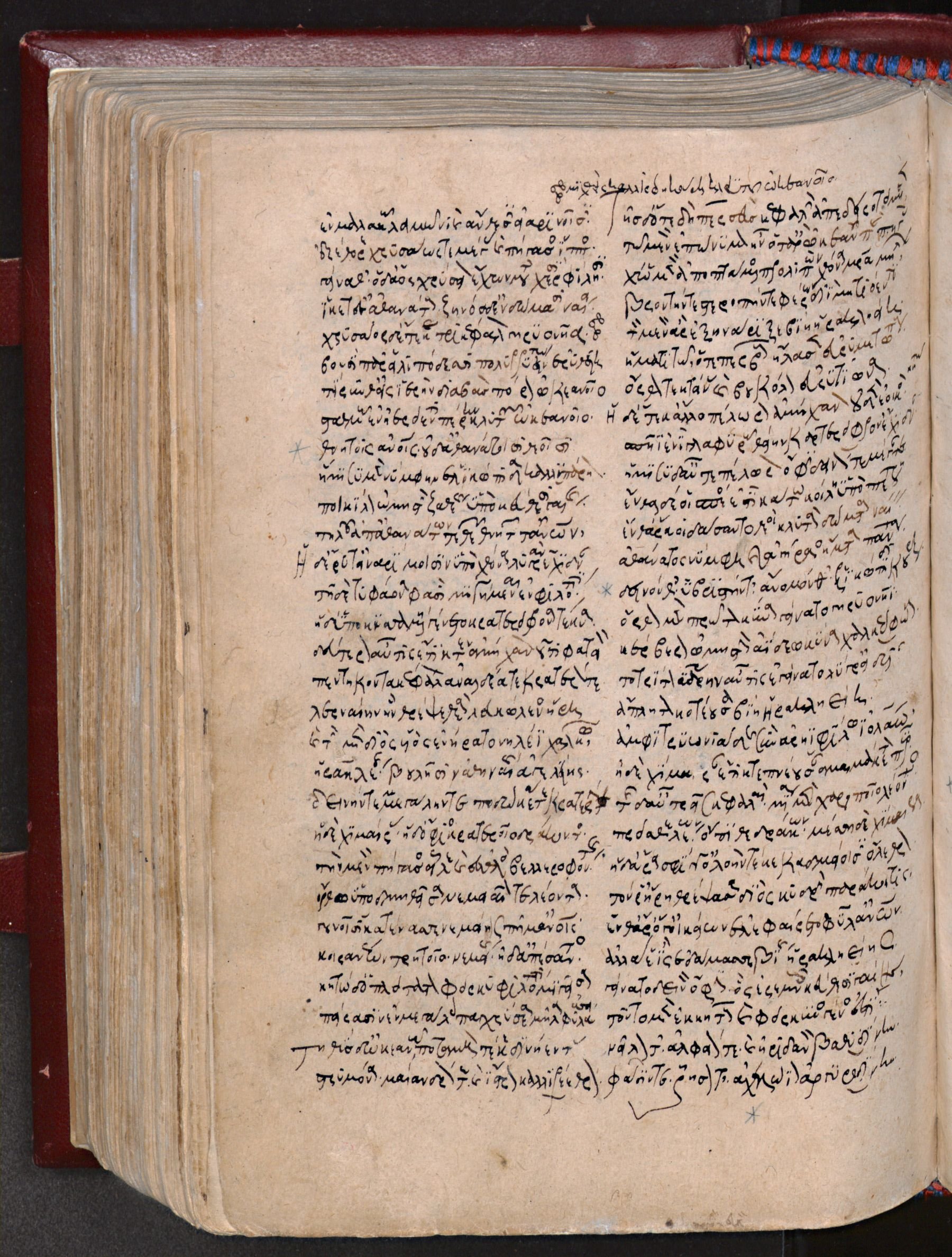
Laur. Plut. 32.16, fol. 242v: lines 279-340, begins ‹ἐν μαλακῷ λειμῶνι καὶ›, ends ‹τʼ Ἀχελώιόν τʼ ἀργυροδίνην›. Checked on the image: first and last rows read and matched to the Greek (re-read on the image 2026-11-12: first row ‹279 | 280: ἐν μαλακῷ λειμῶνι ... | τῆς δ' ὅτε δὴ περσεὺς ...›, last row ‹339 | 340: στρυμόνα μαίανδρόν τε ... | ... ἀχελώϊόν τ' ἀργυροδίνην›); the page before ends at line 278 and the page after begins at line 341. This section shows lines 337-340 of that page; the rest of the page belongs to the previous part of the poem. A one-line note in the top margin is not part of the poem. English here: lines 337-345, cut at the end of Evelyn-White's sentences. His sentence that runs across the break with the next page is given whole here, so the English ends with line 345 (‹... Euenus, Ardescus, and divine Scamander.›).
337Τηθὺς δʼ Ὠκεανῷ Ποταμοὺς τέκε δινήεντας,
338Νεῖλόν τʼ Ἀλφειόν τε καὶ Ἠριδανὸν βαθυδίνην
339Στρυμόνα Μαίανδρόν τε καὶ Ἴστρον καλλιρέεθρον
340Φᾶσίν τε Ῥῆσόν τʼ Ἀχελώιόν τʼ ἀργυροδίνην
337And Tethys bore to Ocean eddying rivers, Nilus, and Alpheus, and deep-swirling Eridanus, Strymon, and Meander, and the fair stream of Ister, 340and Phasis, and Rhesus, and the silver eddies of Achelous, Nessus, and Rhodius, Haliacmon, and Heptaporus, Granicus, and Aesepus, and holy Simois, and Peneus, and Hermus, and Caicus' fair stream, and great Sangarius, Ladon, Parthenius, 345Euenus, Ardescus, and divine Scamander.
Where on the image
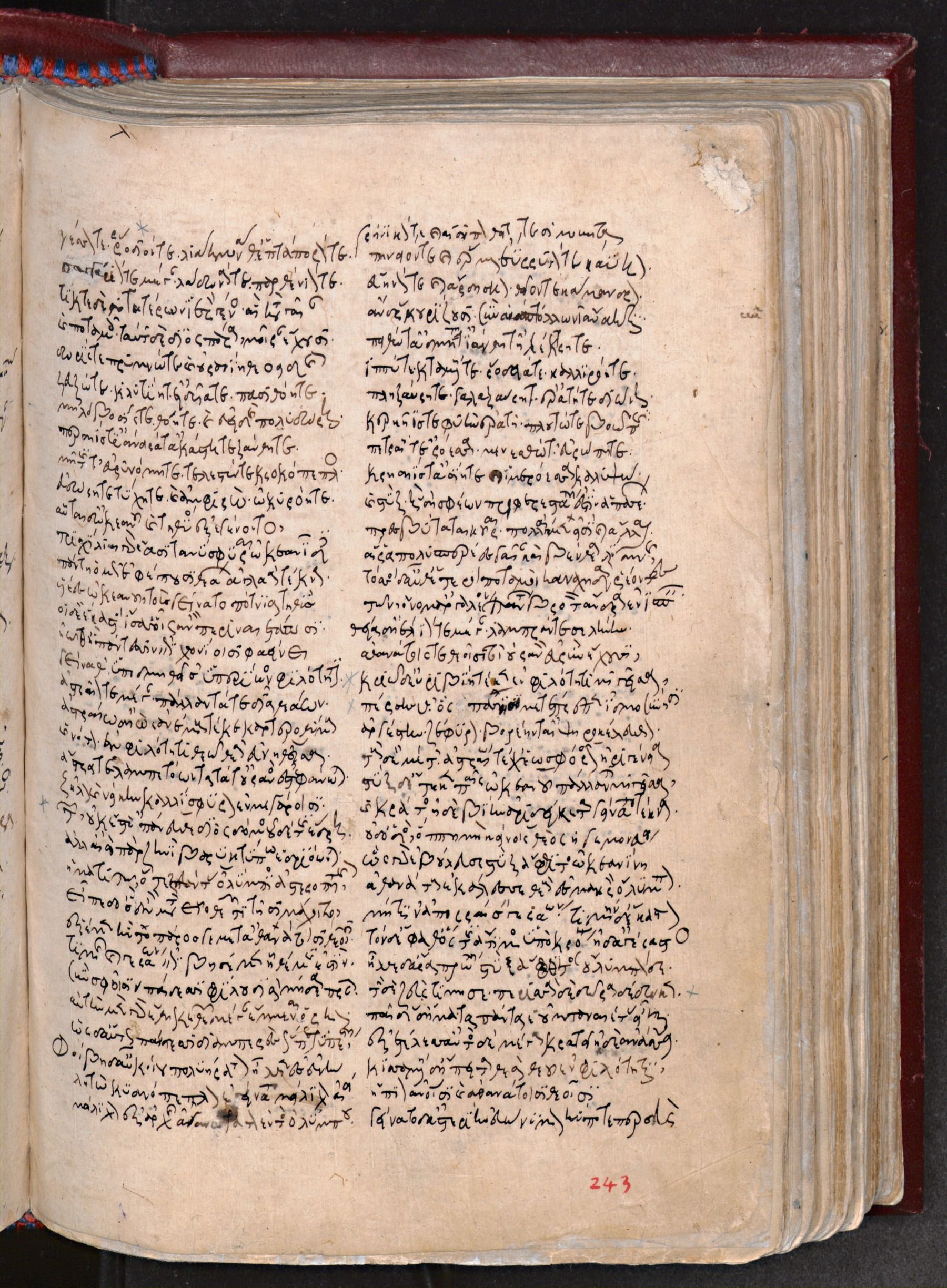
Laur. Plut. 32.16, fol. 243r: lines 341-409, begins ‹Νέσσον τε Ῥοδίον θʼ›, ends ‹ἐυώνυμον, ἥν ποτε Πέρσης›. Checked on the image: first and last rows read and matched to the Greek (re-read on the image 2026-11-12: first row ‹341 (left) νέσσον τε ῥόδιόν θ' ἁλιάκμονα ...; 342 (right, half a row higher) γρήνικόν τε καὶ αἴσηπον ...›, last row ‹408 | 409: ... ἀγανώτατον ἐντὸς ὀλύμπου | γείνατο δ' ἀστερίην ... ἥν ποτε πέρσης›); the page before ends at line 340 and the page after begins at line 410. The right column starts half a row higher than the left, so the top rows read by height 341 (left), 342 and 343 (right), 344 (left), 345 (right) and so on; the right column has 35 rows and the left 34, and by the foot the rows pair normally (402 | 403 ... 408 | 409). English here: lines 346-410, cut at the end of Evelyn-White's sentences. The sentence that runs across the page break (to line 345) is given whole with the page before; the English here begins with ‹Also she brought forth a holy company ...› (line 346). His sentence that runs across the break with the next page is given whole here, so the English ends with line 410 (‹... be called his dear wife.›).
341Νέσσον τε Ῥοδίον θʼ Ἁλιάκμονά θʼ Ἑπτάπορόν τε
342Γρήνικόν τε καὶ Αἴσηπον θεῖόν τε Σιμοῦντα
343Πηνειόν τε καὶ Ἕρμον ἐυρρείτην τε Κάικον
344Σαγγάριόν τε μέγαν Λάδωνά τε Παρθένιόν τε
345Εὔηνόν τε καὶ Ἄρδησκον θεῖόν τε Σκάμανδρον.
346τίκτε δὲ θυγατέρων ἱερὸν γένος, αἳ κατὰ γαῖαν
347ἄνδρας κουρίζουσι σὺν Ἀπόλλωνι ἄνακτι
348καὶ Ποταμοῖς, ταύτην δὲ Διὸς πάρα μοῖραν ἔχουσι,
349Πειθώ τʼ Ἀδμήτη τε Ἰάνθη τʼ Ἠλέκτρη τε
350Δωρίς τε Πρυμνώ τε καὶ Οὐρανίη θεοειδὴς
351Ἱππώ τε Κλυμένη τε Ῥόδειά τε Καλλιρόη τε
352Ζευξώ τε Κλυτίη τε Ἰδυῖά τε Πασιθόη τε
353Πληξαύρη τε Γαλαξαύρη τʼ ἐρατή τε Διώνη
354Μηλόβοσίς τε Φόη τε καὶ εὐειδὴς Πολυδώρη
355Κερκηίς τε φυὴν ἐρατὴ Πλουτώ τε βοῶπις
356Περσηίς τʼ Ἰάνειρά τʼ Ἀκάστη τε Ξάνθη τε
357Πετραίη τʼ ἐρόεσσα Μενεσθώ τʼ Εὐρώπη τε
358Μῆτίς τʼ Εὐρυνόμη τε Τελεστώ τε Κροκοπεπλος
359Χρυσηίς τʼ Ἀσίη τε καὶ ἱμερόεσσα Καλυψὼ
360Εὐδώρη τε Τύχη τε καὶ Ἀμφιρὼ Ὠκυρόη τε
361καὶ Στύξ, ἣ δή σφεων προφερεστάτη ἐστὶν ἁπασέων.
362αὗται δʼ Ὠκεανοῦ καὶ Τηθύος ἐξεγένοντο
363πρεσβύταται κοῦραι· πολλαί γε μέν εἰσι καὶ ἄλλαι.
364τρὶς γὰρ χίλιαί εἰσι τανύσφυροι Ὠκεανῖναι,
365αἵ ῥα πολυσπερέες γαῖαν καὶ βένθεα λίμνης
366πάντη ὁμῶς ἐφέπουσι, θεάων ἀγλαὰ τέκνα.
367τόσσοι δʼ αὖθʼ ἕτεροι ποταμοὶ καναχηδὰ ῥέοντες,
368υἱέες Ὠκεανοῦ, τοὺς γείνατο πότνια Τηθύς·
369τῶν ὄνομʼ ἀργαλέον πάντων βροτὸν ἀνέρʼ ἐνισπεῖν,
370οἳ δὲ ἕκαστοι ἴσασιν, ὅσοι περιναιετάωσιν.
371θεία δʼ Ἠέλιόν τε μέγαν λαμπράν τε Σελήνην
372Ἠῶ θʼ, ἣ πάντεσσιν ἐπιχθονίοισι φαείνει
373ἀθανάτοις τε θεοῖσι, τοὶ οὐρανὸν εὐρὺν ἔχουσι,
374γείναθʼ ὑποδμηθεῖσʼ Ὑπερίονος ἐν φιλότητι.
375Κρίῳ δʼ Εὐρυβίη τέκεν ἐν φιλότητι μιγεῖσα
376Ἀστραῖόν τε μέγαν Πάλλαντά τε δῖα θεάων
377Πέρσην θʼ, ὃς καὶ πᾶσι μετέπρεπεν ἰδμοσύνῃσιν.
378Ἀστραίῳ δʼ Ἠὼς ἀνέμους τέκε καρτεροθύμους,
379ἀργέστην Ζέφυρον Βορέην τʼ αἰψηροκέλευθον
380καὶ Νότον, ἐν φιλότητι θεὰ θεῷ εὐνηθεῖσα.
381τοὺς δὲ μέτʼ ἀστέρα τίκτεν Ἑωσφόρον Ἠριγένεια
382ἄστρα τε λαμπετόωντα, τά τʼ οὐρανὸς ἐστεφάνωται.
383Στὺξ δʼ ἔτεκʼ Ὠκεανοῦ θυγάτηρ Πάλλαντι μιγεῖσα
384Ζῆλον καὶ Νίκην καλλίσφυρον ἐν μεγάροισιν·
385καὶ Κράτος ἠδὲ Βίην ἀριδείκετα γείνατο τέκνα,
386τῶν οὐκ ἔστʼ ἀπάνευθε Διὸς δόμος, οὐδέ τις ἕδρη,
387οὐδʼ ὁδός, ὅππη μὴ κείνοις θεὸς ἡγεμονεύῃ,
388ἀλλʼ αἰεὶ πὰρ Ζηνὶ βαρυκτύπῳ ἑδριόωνται.
389ὣς γὰρ ἐβούλευσεν Στὺξ ἄφθιτος Ὠκεανίνη
390ἤματι τῷ, ὅτε πάντας Ὀλύμπιος ἀστεροπητὴς
391ἀθανάτους ἐκάλεσσε θεοὺς ἐς μακρὸν Ὄλυμπον,
392εἶπε δʼ, ὃς ἂν μετὰ εἷο θεῶν Τιτῆσι μάχοιτο,
393μή τινʼ ἀπορραίσειν γεράων, τιμὴν δὲ ἕκαστον
394ἑξέμεν, ἣν τὸ πάρος γε μετʼ ἀθανάτοισι θεοῖσιν
395τὸν δʼ ἔφαθʼ, ὅστις ἄτιμος ὑπὸ Κρόνου ἠδʼ ἀγέραστος,
396τιμῆς καὶ γεράων ἐπιβησέμεν, ἧ θέμις ἐστίν.
397ἦλθε δʼ ἄρα πρώτη Στὺξ ἄφθιτος Οὔλυμπόνδε
398σὺν σφοῖσιν παίδεσσι φίλου διὰ μήδεα πατρός.
399τὴν δὲ Ζεὺς τίμησε, περισσὰ δὲ δῶρα δέδωκεν.
400αὐτὴν μὲν γὰρ ἔθηκε θεῶν μέγαν ἔμμεναι ὅρκον,
401παῖδας δʼ ἤματα πάντα ἑοῦ μεταναιέτας εἶναι.
402ὣς δʼ αὔτως πάντεσσι διαμπερές, ὥς περ ὑπέστη,
403ἐξετέλεσσʼ· αὐτὸς δὲ μέγα κρατεῖ ἠδὲ ἀνάσσει.
404φοίβη δʼ αὖ Κοίου πολυήρατον ἦλθεν ἐς εὐνήν·
405κυσαμένη δὴ ἔπειτα θεὰ θεοῦ ἐν φιλότητι
406Λητὼ κυανόπεπλον ἐγείνατο, μείλιχον αἰεί,
407ἤπιον ἀνθρώποισι καὶ ἀθανάτοισι θεοῖσιν,
408μείλιχον ἐξ ἀρχῆς, ἀγανώτατον ἐντὸς Ὀλύμπου.
409γείνατο δʼ Ἀστερίην ἐυώνυμον, ἥν ποτε Πέρσης
346Also she brought forth a holy company of daughters who with the lord Apollo and the Rivers have youths in their keeping—to this charge Zeus appointed them—Peitho, and Admete, and Ianthe, and Electra, 350and Doris, and Prymno, and Urania divine in form, Hippo, Clymene, Rhodea, and Callirrhoe, Zeuxo and Clytie, and Idyia, and Pasithoe, Plexaura, and Galaxaura, and lovely Dione, Melobosis and Thoe and handsome Polydora, 355Cerceis lovely of form, and soft eyed Pluto, Perseis, Ianeira, Acaste, Xanthe, Petraea the fair, Menestho, and Europa, Metis, and Eurynome, and Telesto saffron-clad, Chryseis and Asia and charming Calypso, 360Eudora, and Tyche, Amphirho, and Ocyrrhoe, and Styx who is the chiefest of them all. These are the eldest daughters that sprang from Ocean and Tethys; but there are many besides. For there are three thousand neat-ankled daughters of Ocean who are dispersed far and wide, 365and in every place alike serve the earth and the deep waters, children who are glorious among goddesses. And as many other rivers are there, babbling as they flow, sons of Ocean, whom queenly Tethys bare, but their names it is hard for a mortal man to tell, 370but people know those by which they severally dwell. 371And Theia was subject in love to Hyperion and bore great Helius (Sun) and clear Selene (Moon) and Eos (Dawn) who shines upon all that are on earth and upon the deathless Gods who live in the wide heaven. 375And Eurybia, bright goddess, was joined in love to Crius and bore great Astraeus, and Pallas, and Perses who also was eminent among all men in wisdom. And Eos bore to Astraeus the strong-hearted winds, brightening Zephyrus, and Boreas, headlong in his course, 380and Notus,—a goddess mating in love with a god. And after these Erigeneia bare the star Eosphorus (Dawn-bringer), and the gleaming stars with which heaven is crowned. And Styx the daughter of Ocean was joined to Pallas and bore Zelus (Emulation) and trim-ankled Nike (Victory) in the house. Also she brought forth 385Cratos (Strength) and Bia (Force), wonderful children. These have no house apart from Zeus, nor any dwelling nor path except that wherein God leads them, but they dwell always with Zeus the loud-thunderer. For so did Styx the deathless daughter of Ocean plan 390on that day when the Olympian Lightning god called all the deathless gods to great Olympus, and said that whosoever of the gods would fight with him against the Titans, he would not cast him out from his rights, but each should have the office which he had before amongst the deathless gods. 395And he declared that he who was without office or right under Cronos, should be raised to both office and rights as is just. So deathless Styx came first to Olympus with her children through the wit of her dear father. And Zeus honored her, and gave her very great gifts, 400for he appointed her to be the great oath of the gods, and her children to live with him always. And as he promised, so he performed fully unto them all. But he himself mightily reigns and rules. 404Again, Phoebe came to the desired embrace of Coeus. 405Then the goddess through the love of the god conceived and brought forth dark-gowned Leto, always mild, kind to men and to the deathless gods, mild from the beginning, gentlest in all Olympus. Also she bore Asteria of happy name, whom Perses once 410led to his great house to be called his dear wife.
Where on the image
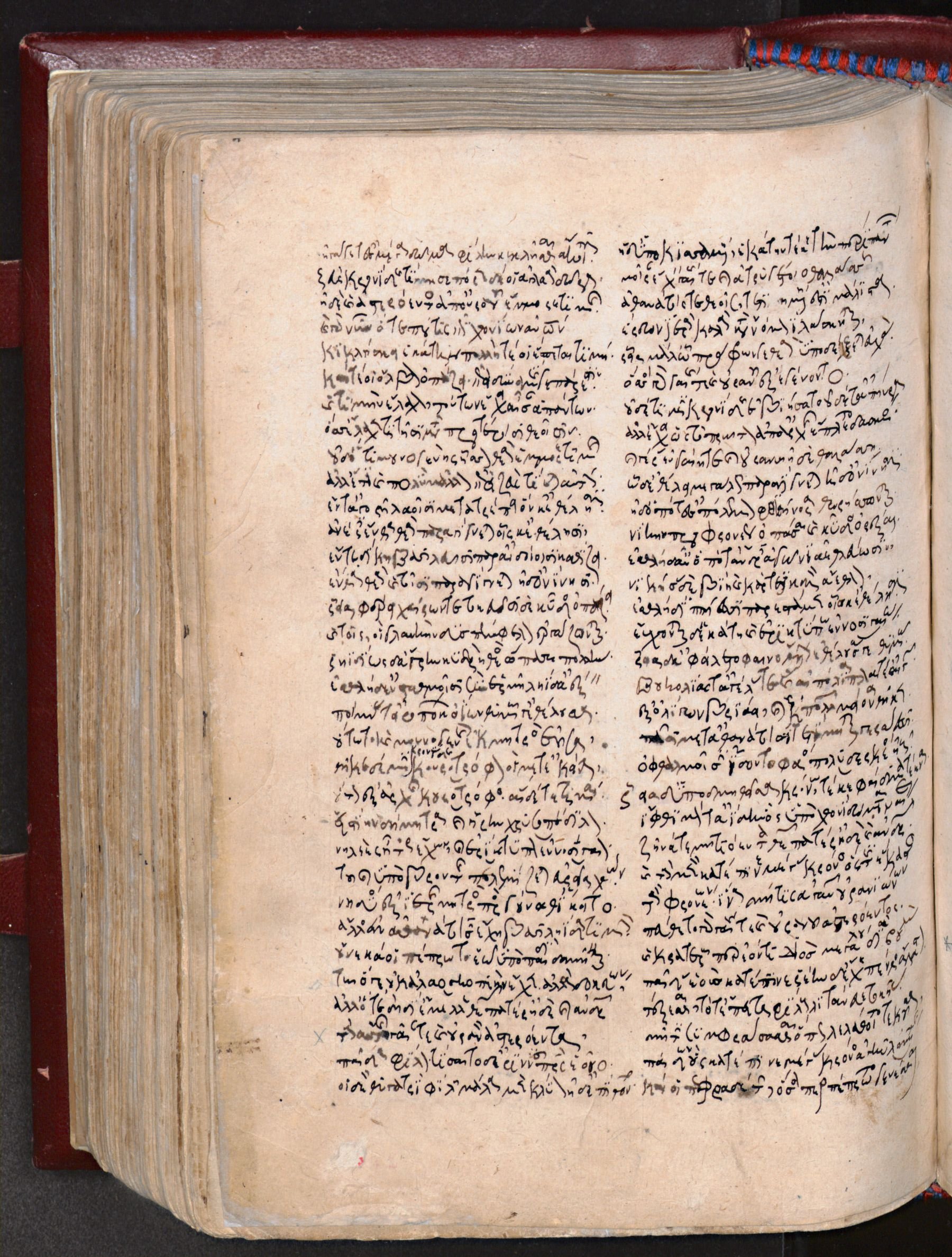
Laur. Plut. 32.16, fol. 243v: lines 410-475, begins ‹ἠγάγετʼ ἐς μέγα δῶμα›, ends ‹ὅσα περ πέπρωτο γενέσθαι›. Checked on the image: first and last rows read and matched to the Greek (re-read on the image 2026-11-12: first row ‹410 | 411: ἠγάγετ' ἐς μέγα δῶμα ... | ἡ δ' ὑποκυσαμένη ἑκάτην ...›, last row ‹474 | 475: οἳ δὲ θυγατρὶ φίλῃ ... | ... ὅσα περ πέπρωτο γενέσθαι›); the page before ends at line 409 and the page after begins at line 476. This section shows lines 410-452 of that page; the rest of the page belongs to the next part of the poem. English here: lines 411-452, cut at the end of Evelyn-White's sentences. The sentence that runs across the page break (to line 410) is given whole with the page before; the English here begins with ‹And she conceived and bore Hecate ...› (line 411).
410ἠγάγετʼ ἐς μέγα δῶμα φίλην κεκλῆσθαι ἄκοιτιν.
411ἢ δʼ ὑποκυσαμένη Ἑκάτην τέκε, τὴν περὶ πάντων
412Ζεὺς Κρονίδης τίμησε· πόρεν δέ οἱ ἀγλαὰ δῶρα,
413μοῖραν ἔχειν γαίης τε καὶ ἀτρυγέτοιο θαλάσσης.
414ἣ δὲ καὶ ἀστερόεντος ἀπʼ οὐρανοῦ ἔμμορε τιμῆς
415ἀθανάτοις τε θεοῖσι τετιμένη ἐστὶ μάλιστα.
416καὶ γὰρ νῦν, ὅτε πού τις ἐπιχθονίων ἀνθρώπων
417ἔρδων ἱερὰ καλὰ κατὰ νόμον ἱλάσκηται,
418κικλῄσκει Ἑκάτην. πολλή τέ οἱ ἕσπετο τιμὴ
419ῥεῖα μάλʼ, ᾧ πρόφρων γε θεὰ ὑποδέξεται εὐχάς,
420καί τέ οἱ ὄλβον ὀπάζει, ἐπεὶ δύναμίς γε πάρεστιν.
421ὅσσοι γὰρ Γαίης τε καὶ Οὐρανοῦ ἐξεγένοντο
422καὶ τιμὴν ἔλαχον, τούτων ἔχει αἶσαν ἁπάντων.
423οὐδέ τί μιν Κρονίδης ἐβιήσατο οὐδέ τʼ ἀπηύρα,
424ὅσσʼ ἔλαχεν Τιτῆσι μετὰ προτέροισι θεοῖσιν,
425ἀλλʼ ἔχει, ὡς τὸ πρῶτον ἀπʼ ἀρχῆς ἔπλετο δασμός,
426οὐδʼ, ὅτι μουνογενής, ἧσσον θεὰ ἔμμορε τιμῆς,
427καὶ γέρας ἐν γαίῃ τε καὶ οὐρανῷ ἠδὲ θαλάσσῃ·
428ἀλλʼ ἔτι καὶ πολὺ μᾶλλον, ἐπεὶ Ζεὺς τίεται αὐτήν.
429ᾧ δʼ ἐθέλει, μεγάλως παραγίγνεται ἠδʼ ὀνίνησιν·
430ἔν τʼ ἀγορῇ λαοῖσι μεταπρέπει, ὅν κʼ ἐθέλῃσιν·
431ἠδʼ ὁπότʼ ἐς πόλεμον φθεισήνορα θωρήσσωνται
432ἀνέρες, ἔνθα θεὰ παραγίγνεται, οἷς κʼ ἐθέλῃσι
433νίκην προφρονέως ὀπάσαι καὶ κῦδος ὀρέξαι.
434ἔν τε δίκῃ βασιλεῦσι παρʼ αἰδοίοισι καθίζει,
435ἐσθλὴ δʼ αὖθʼ ὁπότʼ ἄνδρες ἀεθλεύωσιν ἀγῶνι,
436ἔνθα θεὰ καὶ τοῖς παραγίγνεται ἠδʼ ὀνίνησιν·
437νικήσας δὲ βίῃ καὶ κάρτεϊ καλὸν ἄεθλον
438ῥεῖα φέρει χαίρων τε, τοκεῦσι δὲ κῦδος ὀπάζει.
439ἐσθλὴ δʼ ἱππήεσσι παρεστάμεν, οἷς κʼ ἐθέλῃσιν.
440καὶ τοῖς, οἳ γλαυκὴν δυσπέμφελον ἐργάζονται,
441εὔχονται δʼ Ἑκάτῃ καὶ ἐρικτύπῳ Ἐννοσιγαίῳ,
442ῥηιδίως ἄγρην κυδρὴ θεὸς ὤπασε πολλήν,
443ῥεῖα δʼ ἀφείλετο φαινομένην, ἐθέλουσά γε θυμῷ.
444ἐσθλὴ δʼ ἐν σταθμοῖσι σὺν Ἑρμῇ ληίδʼ ἀέξειν·
445βουκολίας δʼ ἀγέλας τε καὶ αἰπόλια πλατέʼ αἰγῶν
446ποίμνας τʼ εἰροπόκων ὀίων, θυμῷ γʼ ἐθέλουσα,
447ἐξ ὀλίγων βριάει κἀκ πολλῶν μείονα θῆκεν.
448οὕτω τοι καὶ μουνογενὴς ἐκ μητρὸς ἐοῦσα
449πᾶσι μετʼ ἀθανάτοισι τετίμηται γεράεσσιν.
450θῆκε δέ μιν Κρονίδης κουροτρόφον, οἳ μετʼ ἐκείνην
451ὀφθαλμοῖσιν ἴδοντο φάος πολυδερκέος Ἠοῦς.
452οὕτως ἐξ ἀρχῆς κουροτρόφος, αἳ δέ τε τιμαί.
411And she conceived and bore Hecate whom Zeus the son of Cronos honored above all. He gave her splendid gifts, to have a share of the earth and the unfruitful sea. She received honor also in starry heaven, 415and is honored exceedingly by the deathless gods. For to this day, whenever any one of men on earth offers rich sacrifices and prays for favor according to custom, he calls upon Hecate. Great honor comes full easily to him whose prayers the goddess receives favorably, 420and she bestows wealth upon him; for the power surely is with her. For as many as were born of Earth and Ocean amongst all these she has her due portion. The son of Cronos did her no wrong nor took anything away of all that was her portion among the former Titan gods: 425but she holds, as the division was at the first from the beginning, 427privilege both in earth, and in heaven, and in sea. 426Also, because she is an only child, the goddess receives not less honor, 428but much more still, for Zeus honors her. Whom she will she greatly aids and advances: 434she sits by worshipful kings in judgement, 430and in the assembly whom she will is distinguished among the people. And when men arm themselves for the battle that destroys men, 433then the goddess is at hand to give victory and grant glory readily to whom she will. 435Good is she also when men contend at the games, for there too the goddess is with them and profits them: and he who by might and strength gets the victory wins the rich prize easily with joy, and brings glory to his parents. And she is good to stand by horsemen, whom she will: 440and to those whose business is in the grey discomfortable sea, and who pray to Hecate and the loud-crashing Earth-Shaker, easily the glorious goddess gives great catch, and easily she takes it away as soon as seen, if so she will. She is good in the byre with Hermes to increase the stock. 445The droves of kine and wide herds of goats and flocks of fleecy sheep, if she will, she increases from a few, or makes many to be less. So, then, albeit her mother's only child, she is honored amongst all the deathless gods. 450And the son of Cronos made her a nurse of the young who after that day saw with their eyes the light of all-seeing Dawn. So from the beginning she is a nurse of the young, and these are her honors.
Notes
- Greek: H. G. Evelyn-White, Hesiod, the Homeric Hymns and Homerica (Loeb Classical Library, 1914), via Perseus. Square brackets mark verses the editor regards as interpolated.
- English: H. G. Evelyn-White's translation in the same volume; his footnotes are omitted.
- Lines 929a-929t of the Loeb text (a passage on the birth of Athena quoted by Galen from Chrysippus) are not in the medieval manuscripts and are not included.
Cite
Sources
- Source: Laur. Plut. 32.16 (BML Teca Digitale IIIF) + Evelyn-White Greek (Loeb 1914, Perseus) + Evelyn-White English (1914, Perseus) (holding institution)
- Critical edition: Evelyn-White, Loeb 1914, via Perseus
← previous · → next · v cycle view · l back to library