Hesiod, Theogony 207-336: The children of Night and of the Sea; Nereus and the Nereids; the monsters
Introduction
Hesiod's Theogony (c. 700 BCE) is the oldest Greek account of the origin of the world and the gods, from Chaos and Earth through the reign of Cronos to the victory of Zeus. This part: The children of Night and of the Sea; Nereus and the Nereids; the monsters (lines 207-336, 130 lines). The children of Night, the offspring of Pontus, the fifty Nereids, and the monstrous line of Phorcys and Ceto.
The page photographs are from Florence, Biblioteca Medicea Laurenziana, Plut. 32.16 (paper, late 13th century; a large collection of Greek poetry that also holds letters of Maximus Planudes), Theogony on fols. 240r-247v, the oldest complete manuscript of the poem with published images, in the Biblioteca Medicea Laurenziana's Teca Digitale. This part is on fol. 241v, 242r, 242v. The scribe writes two verses to a row, one in each column, so a page is read across the columns, row by row. Each section below is one page; its note gives the page's first and last verse as read on the photograph.
The Greek is Evelyn-White's Loeb text (1914) via Perseus, not a transcription of this manuscript, whose wording differs here and there. Verses the editor brackets as later additions are shown in square brackets. The English is Evelyn-White's prose translation (1914); it is cut at the end of his sentences, so where a sentence runs across a page break it is given whole to one page; each section's note gives the exact lines its English covers.
How was this verified? (Provenance)
Where on the image
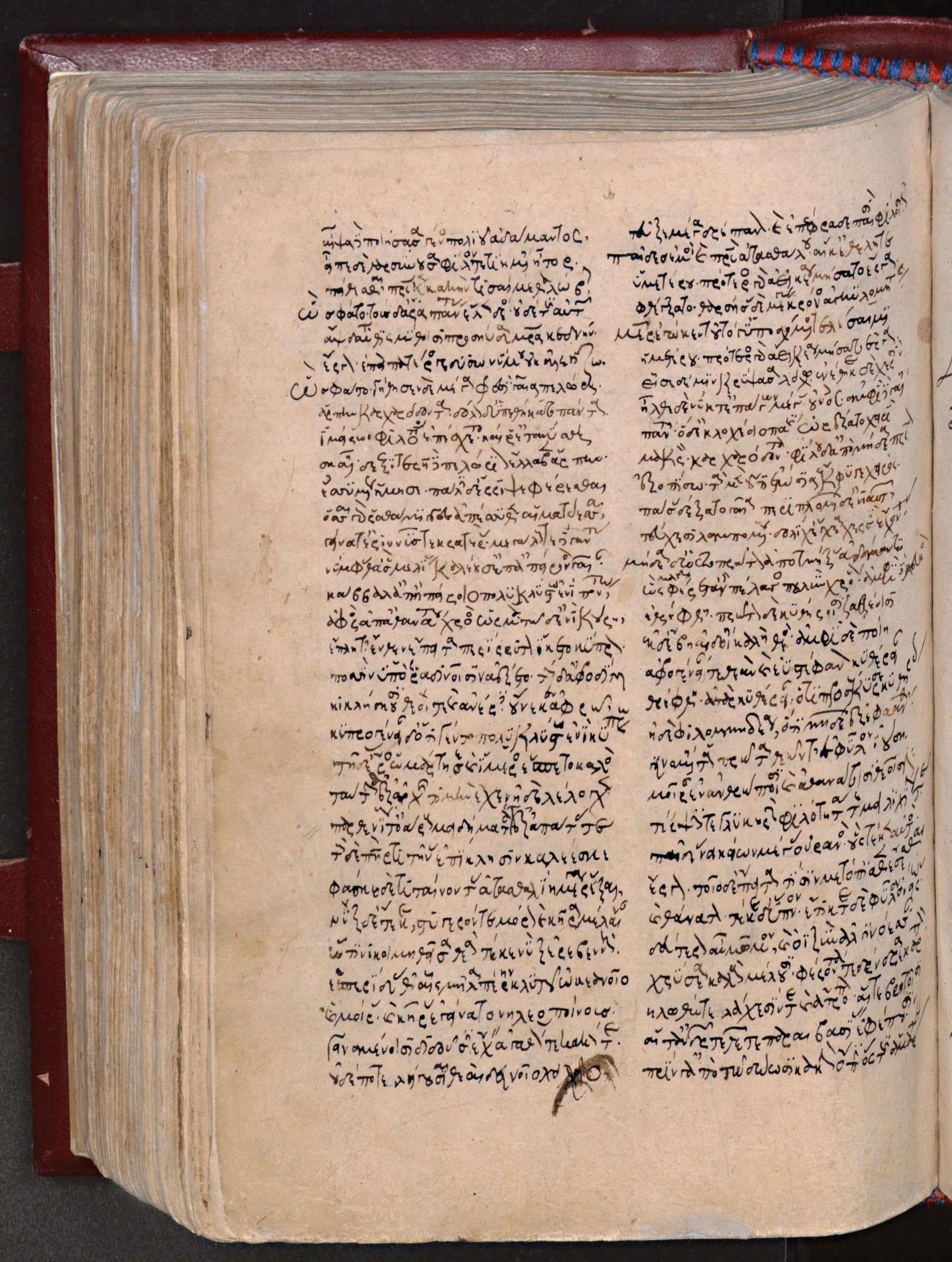
Laur. Plut. 32.16, fol. 241v: lines 161-222, begins ‹αἶψα δὲ ποιήσασα γένος›, ends ‹ὄπιν, ὅς τις ἁμάρτῃ.›. Checked on the image: first and last rows read and matched to the Greek (re-read on the image 2026-11-12: first row ‹161 | 162: αἶψα δὲ ποιήσασα γένος ... | τεῦξε μέγα δρέπανον ...›, last row ‹221 | 222: ... θεαὶ δεινοῖο χόλοιο | ... κακὴν ὄπιν ὅς τις ἁμάρτῃ›); the page before ends at line 160 and the page after begins at line 223. This section shows lines 207-222 of that page; the rest of the page belongs to the previous part of the poem. English here: lines 207-222, cut at the end of Evelyn-White's sentences. At the break with the next page the English ends with line 222, the same line as the Greek.
207τοὺς δὲ πατὴρ Τιτῆνας ἐπίκλησιν καλέεσκε
208παῖδας νεικείων μέγας Οὐρανός, οὓς τέκεν αὐτός·
209φάσκε δὲ τιταίνοντας ἀτασθαλίῃ μέγα ῥέξαι
210ἔργον, τοῖο δʼ ἔπειτα τίσιν μετόπισθεν ἔσεσθαι.
211νὺξ δʼ ἔτεκεν στυγερόν τε Μόρον καὶ Κῆρα μέλαιναν
212καὶ Θάνατον, τέκε δʼ Ὕπνον, ἔτικτε δὲ φῦλον Ὀνείρων·
213οὔ τινι κοιμηθεῖσα θεὰ τέκε Νὺξ ἐρεβεννή,
214δεύτερον αὖ Μῶμον καὶ Ὀιζὺν ἀλγινόεσσαν
215Ἑσπερίδας θʼ, ᾗς μῆλα πέρην κλυτοῦ Ὠκεανοῖο
216χρύσεα καλὰ μέλουσι φέροντά τε δένδρεα καρπόν.
217καὶ Μοίρας καὶ Κῆρας ἐγείνατο νηλεοποίνους,
218Κλωθώ τε Λάχεσίν τε καὶ Ἄτροπον, αἵτε βροτοῖσι
219γεινομένοισι διδοῦσιν ἔχειν ἀγαθόν τε κακόν τε,
220αἵτʼ ἀνδρῶν τε θεῶν τε παραιβασίας ἐφέπουσιν·
221οὐδέ ποτε λήγουσι θεαὶ δεινοῖο χόλοιο,
222πρίν γʼ ἀπὸ τῷ δώωσι κακὴν ὄπιν, ὅς τις ἁμάρτῃ.
207But these sons whom he begot himself great Heaven used to call Titans (Strainers) in reproach, for he said that they strained and did presumptuously 210a fearful deed, and that vengeance for it would come afterwards. And Night bore hateful Doom and black Fate and Death, and she bore Sleep and the tribe of Dreams. 214And again the goddess murky Night, though she lay with none, 213bare Blame and painful Woe, 215and the Hesperides who guard the rich, golden apples and the trees bearing fruit beyond glorious Ocean. Also she bore the Destinies and ruthless avenging Fates, Clotho and Lachesis and Atropos, who give men at their birth both evil and good to have, 220and they pursue the transgressions of men and of gods: and these goddesses never cease from their dread anger until they punish the sinner with a sore penalty.
Where on the image
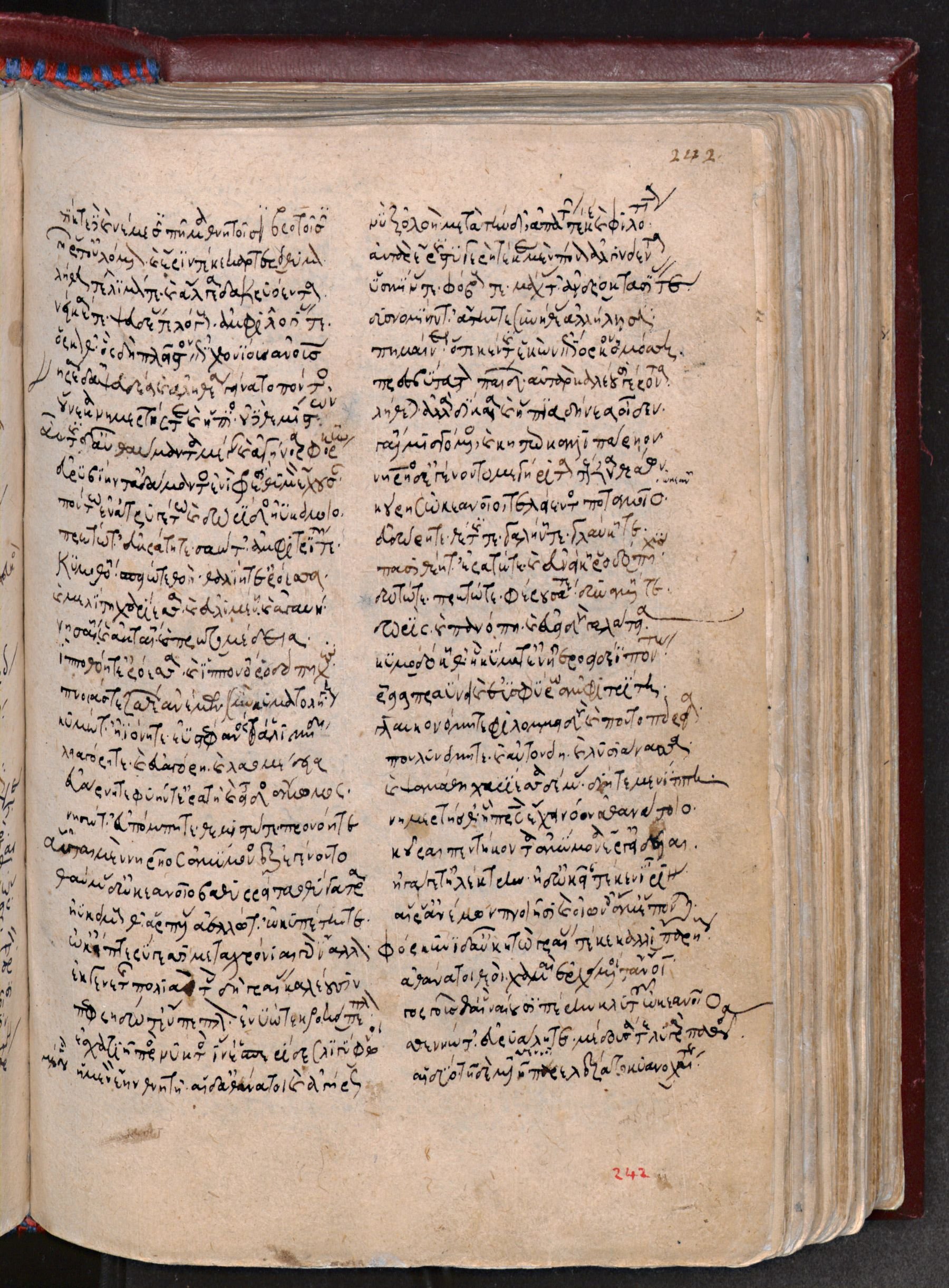
Laur. Plut. 32.16, fol. 242r: lines 223-278, begins ‹τίκτε δὲ καὶ Νέμεσιν,›, ends ‹δὲ μιῇ παρελέξατο Κυανοχαίτης›. Checked on the image: first and last rows read and matched to the Greek (re-read on the image 2026-11-12: first row ‹223 | 224: τίκτε δὲ καὶ νέμεσιν ... | νὺξ ὀλοή μετὰ τὴν δ' ...›, last row ‹277 | 278: ... ἀθάνατοι καὶ ἀγήρῳ | ... παρελέξατο κυανοχαίτης›); the page before ends at line 222 and the page after begins at line 279. English here: lines 223-278, cut at the end of Evelyn-White's sentences. At the break with the page before, his sentence for line 223 (‹Also deadly Night bore Nemesis ...›) begins with the Greek of this page. His sentence ‹With her lay the Dark-haired One ...› begins in line 278, before the page break, and is given whole with the next page, so the English here ends with line 278 (the sentence break falls inside that line).
223τίκτε δὲ καὶ Νέμεσιν, πῆμα θνητοῖσι βροτοῖσι,
224Νὺξ ὀλοή· μετὰ τὴν δʼ Ἀπάτην τέκε καὶ Φιλότητα
225Γῆράς τʼ οὐλόμενον, καὶ Ἔριν τέκε καρτερόθυμον.
226αὐτὰρ Ἔρις στυγερὴ τέκε μὲν Πόνον ἀλγινόεντα
227Λήθην τε Λιμόν τε καὶ Ἄλγεα δακρυόεντα
228Ὑσμίνας τε Μάχας τε Φόνους τʼ Ἀνδροκτασίας τε
229Νείκεά τε ψευδέας τε Λόγους Ἀμφιλλογίας τε
230Δυσνομίην τʼ Ἄτην τε, συνήθεας ἀλλήλῃσιν,
231Ὅρκον θʼ, ὃς δὴ πλεῖστον ἐπιχθονίους ἀνθρώπους
232πημαίνει, ὅτε κέν τις ἑκὼν ἐπίορκον ὀμόσσῃ.
233Νηρέα δʼ ἀψευδέα καὶ ἀληθέα γείνατο Πόντος,
234πρεσβύτατον παίδων· αὐτὰρ καλέουσι γέροντα,
235οὕνεκα νημερτής τε καὶ ἤπιος, οὐδὲ θεμιστέων
236λήθεται, ἀλλὰ δίκαια καὶ ἤπια δήνεα οἶδεν·
237αὖτις δʼ αὖ Θαύμαντα μέγαν καὶ ἀγήνορα Φόρκυν
238Γαίῃ μισγόμενος καὶ Κητὼ καλλιπάρῃον
239Εὐρυβίην τʼ ἀδάμαντος ἐνὶ φρεσὶ θυμὸν ἔχουσαν.
240Νηρῆος δʼ ἐγένοντο μεγήρατα τέκνα θεάων
241πόντῳ ἐν ἀτρυγέτῳ καὶ Δωρίδος ἠυκόμοιο,
242κούρης Ὠκεανοῖο, τελήεντος ποταμοῖο,
243Πλωτώ τʼ Εὐκράντη τε Σαώ τʼ Ἀμφιτρίτη τε
244Εὐδώρη τε Θέτις τε Γαλήνη τε Γλαύκη τε
245Κυμοθόη Σπειώ τε Θόη θʼ Ἀλίη τʼ ἐρόεσσα
246Πασιθέη τʼ Ἐρατώ τε καὶ Εὐνίκη ῥοδόπηχυς
247καὶ Μελίτη χαρίεσσα καὶ Εὐλιμένη καὶ Ἀγαυὴ
248Δωτώ τε Πρωτώ τε Φέρουσά τε Δυναμένη τε
249Νησαίη τε καὶ Ἀκταίη καὶ Πρωτομέδεια
250Δωρὶς καὶ Πανόπεια καὶ εὐειδὴς Γαλάτεια
251Ἱπποθόη τʼ ἐρόεσσα καὶ Ἱππονόη ῥοδόπηχυς
252Κυμοδόκη θʼ, ἣ κύματʼ ἐν ἠεροειδέι πόντῳ
253πνοιάς τε ζαέων ἀνέμων σὺν Κυματολήγῃ
254ῥεῖα πρηΰνει καὶ ἐυσφύρῳ Ἀμφιτρίτῃ,
255Κυμώ τʼ Ἠιόνη τε ἐυστέφανός θʼ Ἁλιμήδη
256Γλαυκονόμη τε φιλομμειδὴς καὶ Ποντοπόρεια
257Ληαγόρη τε καὶ Εὐαγόρη καὶ Λαομέδεια
258Πουλυνόη τε καὶ Αὐτονόη καὶ Λυσιάνασσα
259Εὐάρνη τε φυήν τʼ ἐρατὴ καὶ εἶδος ἄμωμος
260καὶ Ψαμάθη χαρίεσσα δέμας δίη τε Μενίππη
261Νησώ τʼ Εὐπόμπη τε Θεμιστώ τε Προνόη τε
262Νημερτής θʼ, ἣ πατρὸς ἔχει νόον ἀθανάτοιο.
263αὗται μὲν Νηρῆος ἀμύμονος ἐξεγένοντο
264κοῦραι πεντήκοντα, ἀμύμονα ἔργα ἰδυῖαι.
265Θαύμας δʼ Ὠκεανοῖο βαθυρρείταο θύγατρα
266ἠγάγετʼ Ἠλέκτρην· ἣ δʼ ὠκεῖαν τέκεν Ἶριν
267ἠυκόμους θʼ Ἁρπυίας Ἀελλώ τʼ Ὠκυπέτην τε,
268αἵ ῥʼ ἀνέμων πνοιῇσι καὶ οἰωνοῖς ἅμʼ ἕπονται
269ὠκείῃς πτερύγεσσι· μεταχρόνιαι γὰρ ἴαλλον.
270Φόρκυϊ δʼ αὖ Κητὼ Γραίας τέκε καλλιπαρῄους
271ἐκ γενετῆς πολιάς, τὰς δὴ Γραίας καλέουσιν
272ἀθάνατοί τε θεοὶ χαμαὶ ἐρχόμενοί τʼ ἄνθρωποι,
273Πεμφρηδώ τʼ ἐύπεπλον Ἐνυώ τε κροκόπεπλον,
274Γοργούς θʼ, αἳ ναίουσι πέρην κλυτοῦ Ὠκεανοῖο
275ἐσχατιῇ πρὸς Νυκτός, ἵνʼ Ἑσπερίδες λιγύφωνοι,
276Σθεννώ τʼ Εὐρυάλη τε Μέδουσά τε λυγρὰ παθοῦσα.
277ἣ μὲν ἔην θνητή, αἳ δʼ ἀθάνατοι καὶ ἀγήρῳ,
278αἱ δύο· τῇ δὲ μιῇ παρελέξατο Κυανοχαίτης
223Also deadly Night bore Nemesis (Indignation) to afflict mortal men, and after her, Deceit and Friendship 225and hateful Age and hard-hearted Strife. But abhorred Strife bore painful Toil and Forgetfulness and Famine and tearful Sorrows, Fightings also, Battles, Murders, Manslaughters, Quarrels, Lying Words, Disputes, 230Lawlessness and Ruin, all of one nature, and Oath who most troubles men upon earth when anyone willfully swears a false oath. And Sea begat Nereus, the eldest of his children, who is true and lies not: and men call him the Old Man 235because he is trusty and gentle and does not forget the laws of righteousness, but thinks just and kindly thoughts. And yet again he got great Thaumas and proud Phorcys, being mated with Earth, and fair-cheeked Ceto and Eurybia who has a heart of flint within her. 240And of Nereus and rich-haired Doris, daughter of Ocean the perfect river, were born children, passing lovely amongst goddesses, Ploto, Eucrante, Sao, and Amphitrite, and Eudora, and Thetis, Galene and Glauce, 245Cymothoe, Speo, Thoe and lovely Halie, and Pasithea, and Erato, and rosy-armed Eunice, and gracious Melite, and Eulimene, and Agaue, Doto, Proto, Pherusa, and Dynamene, and Nisaea, and Actaea, and Protomedea, 250Doris, Panopea, and comely Galatea, and lovely Hippothoe, and rosy-armed Hipponoe, and Cymodoce who with Cymatolege and Amphitrite easily calms the waves upon the misty sea and the blasts of raging winds, 255and Cymo, and Eione, and rich-crowned Alimede, and Glauconome, fond of laughter, and Pontoporea, Leagore, Euagore, and Laomedea, and Polynoe, and Autonoe, and Lysianassa, and Euarne, lovely of shape and without blemish of form, 260and Psamathe of charming figure and divine Menippe, Neso, Eupompe, Themisto, Pronoe, and Nemertes who has the nature of her deathless father. These fifty daughters sprang from blameless Nereus, skilled in excellent crafts. 265And Thaumas wedded Electra the daughter of deep-flowing Ocean, and she bore him swift Iris and the long-haired Harpies, Aello (Storm-swift) and Ocypetes (Swift-flier) who on their swift wings keep pace with the blasts of the winds and the birds; for quick as time they dart along. 270And again, Ceto bore to Phorcys the fair-cheeked Graiae, sisters grey from their birth: and both deathless gods and men who walk on earth call them Graiae, Pemphredo well-clad, and saffron-robed Enyo, and the Gorgons who dwell beyond glorious Ocean 275in the frontier land towards Night where are the clear-voiced Hesperides, Sthenno, and Euryale, and Medusa who suffered a woeful fate: she was mortal, but the two were undying and grew not old.
Where on the image
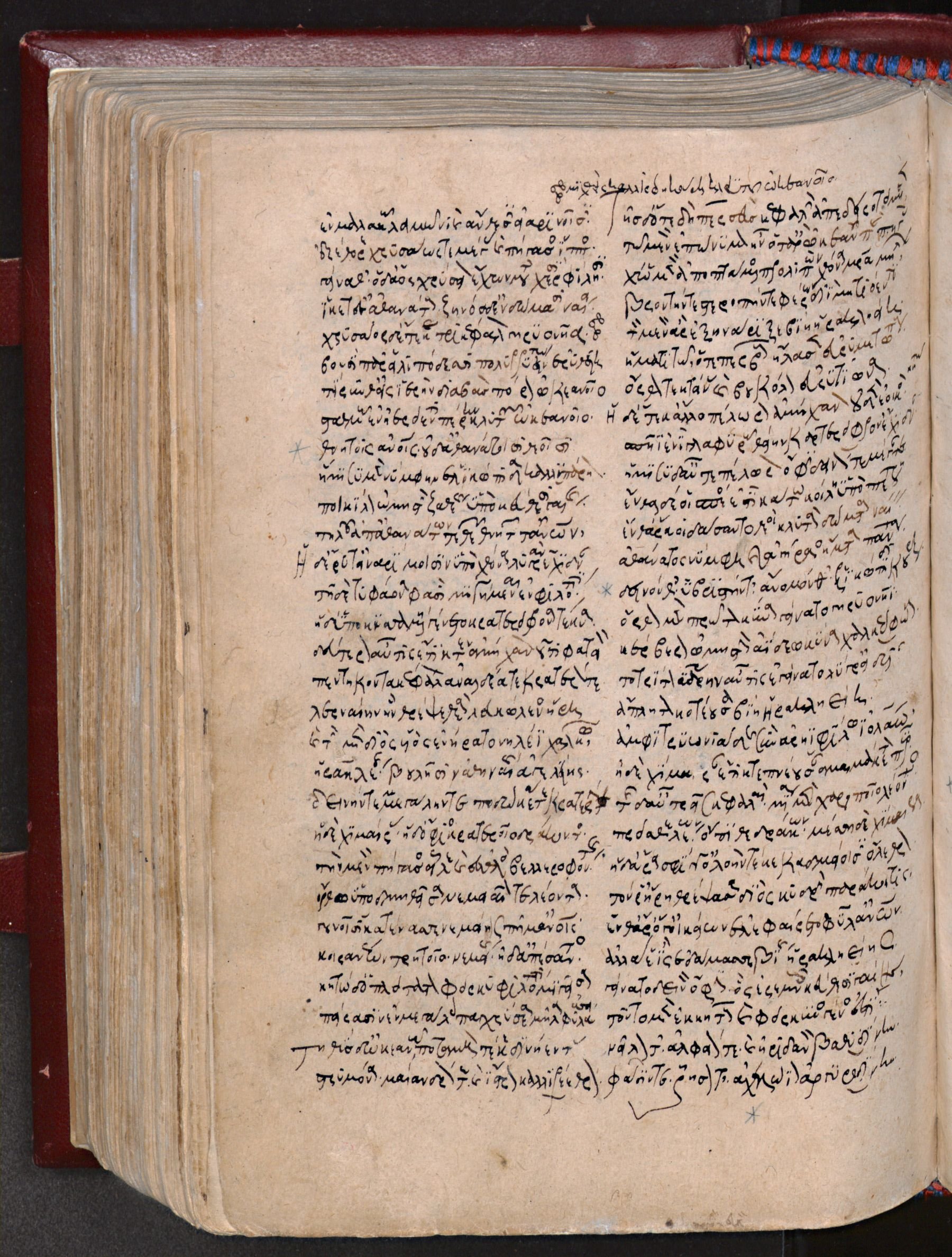
Laur. Plut. 32.16, fol. 242v: lines 279-340, begins ‹ἐν μαλακῷ λειμῶνι καὶ›, ends ‹τʼ Ἀχελώιόν τʼ ἀργυροδίνην›. Checked on the image: first and last rows read and matched to the Greek (re-read on the image 2026-11-12: first row ‹279 | 280: ἐν μαλακῷ λειμῶνι ... | τῆς δ' ὅτε δὴ περσεὺς ...›, last row ‹339 | 340: στρυμόνα μαίανδρόν τε ... | ... ἀχελώϊόν τ' ἀργυροδίνην›); the page before ends at line 278 and the page after begins at line 341. This section shows lines 279-336 of that page; the rest of the page belongs to the next part of the poem. A one-line note in the top margin is not part of the poem. English here: lines 278-336, cut at the end of Evelyn-White's sentences. His sentence ‹With her lay the Dark-haired One ...› begins in line 278, before the page break, and is given whole with this page (line 278 holds the end of one sentence and the start of the next).
279ἐν μαλακῷ λειμῶνι καὶ ἄνθεσιν εἰαρινοῖσιν.
280τῆς δʼ ὅτε δὴ Περσεὺς κεφαλὴν ἀπεδειροτόμησεν,
281ἔκθορε Χρυσαωρ τε μέγας καὶ Πήγασος ἵππος.
282τῷ μὲν ἐπώνυμον ἦεν, ὅτʼ Ὠκεανοῦ περὶ πηγὰς
283γένθʼ, ὃ δʼ ἄορ χρύσειον ἔχων μετὰ χερσὶ φίλῃσιν.
284χὠ μὲν ἀποπτάμενος προλιπὼν χθόνα, μητέρα μήλων,
285ἵκετʼ ἐς ἀθανάτους· Ζηνὸς δʼ ἐν δώμασι ναίει
286βροντήν τε στεροπήν τε φέρων Διὶ μητιόεντι.
287Χρυσάωρ δʼ ἔτεκεν τρικέφαλον Γηρυονῆα
288μιχθεὶς Καλλιρόῃ κούρῃ κλυτοῦ Ὠκεανοῖο.
289τὸν μὲν ἄρʼ ἐξενάριξε βίη Ἡρακληείη
290βουσὶ παρʼ εἰλιπόδεσσι περιρρύτῳ εἰν Ἐρυθείῃ
291ἤματι τῷ ὅτε περ βοῦς ἤλασεν εὐρυμετώπους
292Τίρυνθʼ εἰς ἱερὴν διαβὰς πόρον Ὠκεανοῖο
293Ὄρθον τε κτείνας καὶ βουκόλον Εὐρυτίωνα
294σταθμῷ ἐν ἠερόεντι πέρην κλυτοῦ Ὠκεανοῖο.
295ἣ δʼ ἔτεκʼ ἄλλο πέλωρον ἀμήχανον, οὐδὲν ἐοικὸς
296θνητοῖς ἀνθρώποις οὐδʼ ἀθανάτοισι θεοῖσιν,
297σπῆι ἔνι γλαφυρῷ θείην κρατερόφρονʼ Ἔχιδναν,
298ἥμισυ μὲν νύμφην ἑλικώπιδα καλλιπάρῃον,
299ἥμισυ δʼ αὖτε πέλωρον ὄφιν δεινόν τε μέγαν τε
300αἰόλον ὠμηστὴν ζαθέης ὑπὸ κεύθεσι γαίης.
301ἔνθα δέ οἱ σπέος ἐστὶ κάτω κοίλῃ ὑπὸ πέτρῃ
302τηλοῦ ἀπʼ ἀθανάτων τε θεῶν θνητῶν τʼ ἀνθρώπων·
303ἔνθʼ ἄρα οἱ δάσσαντο θεοὶ κλυτὰ δώματα ναίειν.
304ἣ δʼ ἔρυτʼ εἰν Ἀρίμοισιν ὑπὸ χθονὶ λυγρὴ Ἔχιδνα,
305ἀθάνατος νύμφη καὶ ἀγήραος ἤματα πάντα.
306τῇ δὲ Τυφάονά φασι μιγήμεναι ἐν φιλότητι
307δεινόν θʼ ὑβριστήν τʼ ἄνομόν θʼ ἑλικώπιδι κούρῃ·
308ἣ δʼ ὑποκυσαμένη τέκετο κρατερόφρονα τέκνα.
309Ὄρθον μὲν πρῶτον κύνα γείνατο Γηρυονῆι·
310δεύτερον αὖτις ἔτικτεν ἀμήχανον, οὔ τι φατειὸν
311Κέρβερον ὠμηστήν, Ἀίδεω κύνα χαλκεόφωνον,
312πεντηκοντακέφαλον, ἀναιδέα τε κρατερόν τε·
313τὸ τρίτον Ὕδρην αὖτις ἐγείνατο λυγρὰ ἰδυῖαν
314Λερναίην, ἣν θρέψε θεὰ λευκώλενος Ἥρη
315ἄπλητον κοτέουσα βίῃ Ἡρακληείῃ.
316καὶ τὴν μὲν Διὸς υἱὸς ἐνήρατο νηλέι χαλκῷ
317Ἀμφιτρυωνιάδης σὺν ἀρηιφίλῳ Ἰολάῳ
318Ηρακλέης βουλῇσιν Ἀθηναίης ἀγελείης.
319ἣ δὲ Χίμαιραν ἔτικτε πνέουσαν ἀμαιμάκετον πῦρ,
320δεινήν τε μεγάλην τε ποδώκεά τε κρατερήν τε·
321τῆς δʼ ἦν τρεῖς κεφαλαί· μία μὲν χαροποῖο λέοντος,
322ἣ δὲ χιμαίρης, ἣ δʼ ὄφιος, κρατεροῖο δράκοντος,
323[πρόσθε λέων, ὄπιθεν δὲ δράκων, μέσση δὲ χίμαιρα,]
324[δεινὸν ἀποπνείουσα πυρὸς μένος αἰθομένοιο.]
325τὴν μὲν Πήγασος εἷλε καὶ ἐσθλὸς Βελλεροφόντης.
326ἣ δʼ ἄρα Φῖκʼ ὀλοὴν τέκε Καδμείοισιν ὄλεθρον
327Ὅρθῳ ὑποδμηθεῖσα Νεμειαῖόν τε λέοντα,
328τόν ῥʼ Ἥρη θρέψασα Διὸς κυδρὴ παράκοιτις
329γουνοῖσιν κατένασσε Νεμείης, πῆμʼ ἀνθρώποις.
330ἔνθʼ ἄρʼ ὃ οἰκείων ἐλεφαίρετο φῦλʼ ἀνθρώπων,
331κοιρανέων Τρητοῖο Νεμείης ἠδʼ Ἀπέσαντος·
332ἀλλά ἑ ἲς ἐδάμασσε βίης Ἡρακληείης.
333Κητὼ δʼ ὁπλότατον Φόρκυι φιλότητι μιγεῖσα
334γείνατο δεινὸν ὄφιν, ὃς ἐρεμνῆς κεύθεσι γαίης
335πείρασιν ἐν μεγάλοις παγχρύσεα μῆλα φυλάσσει.
336τοῦτο μὲν ἐκ Κητοῦς καὶ Φόρκυνος γένος ἐστίν.
278With her lay the Dark-haired One in a soft meadow amid spring flowers. 280And when Perseus cut off her head, there sprang forth great Chrysaor and the horse Pegasus who is so called because he was born near the springs of Ocean; and that other, because he held a golden blade in his hands. Now Pegasus flew away and left the earth, the mother of flocks, 285and came to the deathless gods: and he dwells in the house of Zeus and brings to wise Zeus the thunder and lightning. But Chrysaor was joined in love to Callirrhoe, the daughter of glorious Ocean, and begot three-headed Geryones. Him mighty Heracles slew 290in sea-girt Erythea by his shambling oxen on that day when he drove the wide-browed oxen to holy Tiryns, and had crossed the ford of Ocean and killed Orthus and Eurytion the herdsman in the dim stead out beyond glorious Ocean. 300And in a hollow cave she bore another monster, irresistible, in no wise like either to mortal men or to the undying gods, even the goddess fierce Echidna who is half a nymph with glancing eyes and fair cheeks, and half again a huge snake, great and awful, with speckled skin, eating raw flesh beneath the secret parts of the holy earth. And there she has a cave deep down under a hollow rock far from the deathless gods and mortal men. There, then, did the gods appoint her a glorious house to dwell in: and she keeps guard in Arima beneath the earth, grim Echidna, 305a nymph who dies not nor grows old all her days. 304Men say that Typhaon the terrible, outrageous and lawless, was joined in love to her, the maid with glancing eyes. So she conceived and brought forth fierce offspring; first she bore Orthus the hound of Geryones, 310and then again she bore a second, a monster not to be overcome and that may not be described, Cerberus who eats raw flesh, the brazen-voiced hound of Hades, fifty-headed, relentless and strong. And again she bore a third, the evil-minded Hydra of Lerna, whom the goddess, white-armed Hera nourished, 315being angry beyond measure with the mighty Heracles. And her Heracles, the son of Zeus, of the house of Amphitryon, together with warlike Iolaus, destroyed with the unpitying sword through the plans of Athena the spoil driver. She was the mother of Chimaera who breathed raging fire, 320a creature fearful, great, swift footed and strong, who had three heads, one of a grim-eyed lion, another of a goat, and another of a snake, a fierce dragon; in her forepart she was a lion; in her hinderpart, a dragon; and in her middle, a goat, breathing forth a fearful blast of blazing fire. 325Her did Pegasus and noble Bellerophon slay; but Echidna was subject in love to Orthus and brought forth the deadly Sphinx which destroyed the Cadmeans, and the Nemean lion, which Hera, the good wife of Zeus, brought up and made to haunt the hills of Nemea, a plague to men. 330There he preyed upon the tribes of her own people and had power over Tretus of Nemea and Apesas: yet the strength of stout Heracles overcame him. And Ceto was joined in love to Phorcys and bore her youngest, the awful snake who guards 335the apples all of gold in the secret places of the dark earth at its great bounds. This is the offspring of Ceto and Phorcys.
Notes
- Greek: H. G. Evelyn-White, Hesiod, the Homeric Hymns and Homerica (Loeb Classical Library, 1914), via Perseus. Square brackets mark verses the editor regards as interpolated.
- English: H. G. Evelyn-White's translation in the same volume; his footnotes are omitted.
- Lines 929a-929t of the Loeb text (a passage on the birth of Athena quoted by Galen from Chrysippus) are not in the medieval manuscripts and are not included.
Cite
Sources
- Source: Laur. Plut. 32.16 (BML Teca Digitale IIIF) + Evelyn-White Greek (Loeb 1914, Perseus) + Evelyn-White English (1914, Perseus) (holding institution)
- Critical edition: Evelyn-White, Loeb 1914, via Perseus
← previous · → next · v cycle view · l back to library