Homeric Hymn 5, To Aphrodite
Introduction
The Homeric Hymns are 33 hexameter poems to the Greek gods, composed by anonymous poets between about the 7th and the 5th century BCE and handed down under Homer's name. This entry: Homeric Hymn 5, To Aphrodite. Zeus makes Aphrodite fall in love with the mortal Anchises; she comes to him on Mount Ida disguised as a girl and foretells the birth of Aeneas.
This collection has Hymns 1-18 only. The manuscript shown, M, breaks off at Hymn 18, line 4 (fol. 50r; fol. 50v is blank), so the rest of Hymn 18 (lines 5-12) and Hymns 19-33 (to Pan, Hephaestus, Apollo, Poseidon, Zeus, Hestia, the Muses and Apollo, Dionysus, Artemis, Athena, Hestia, Earth, Helios, Selene and the Dioscuri) are not in it and are not given here.
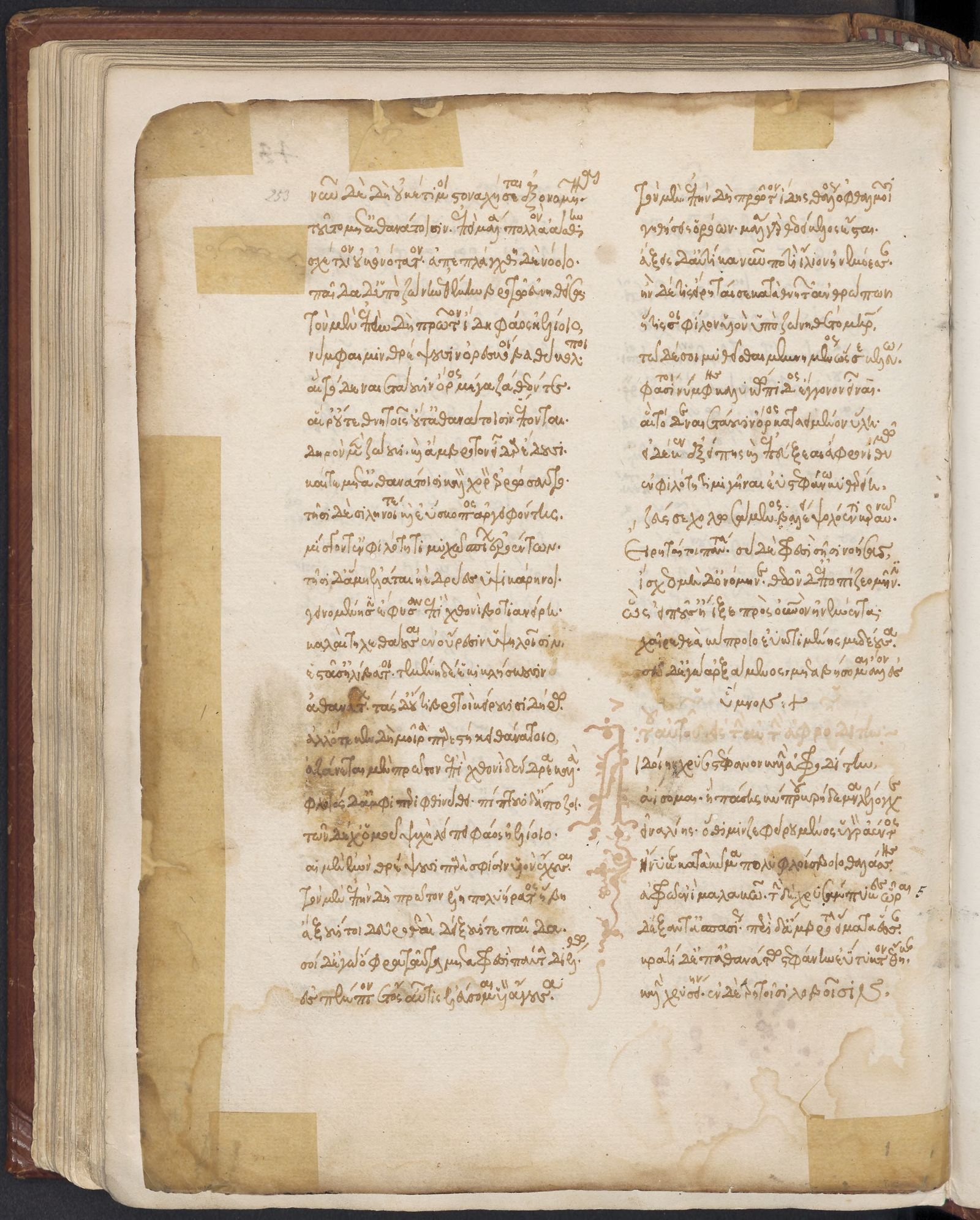
The page photographs are from Leiden, Universiteitsbibliotheek, BPG 33 H (the 'Moscow' manuscript, M; paper, Greece?, first half of the 15th century; found in Moscow in 1777 by C. F. Matthaei), Homeric Hymns on fols. 31r-50r. M is the only manuscript of the Hymn to Demeter. Each section below is one column of a page (a = left, b = right); its note gives the first and last verse as read on the photograph. This entry is on fol. 46v, 47r, 47v, 48r, 48v.
Verses of the Loeb text that are not in this manuscript, and so are not shown: Hymn 5: 68-112.
The Greek is Evelyn-White's Loeb text (1914) via Perseus, not a transcription of the manuscript; where M is damaged the edition's restorations are shown in square brackets. The English is Evelyn-White's prose translation (1914), in blocks of about five lines, so a block can begin a line or two before or after a column break.
How was this verified? (Provenance)
Where on the image
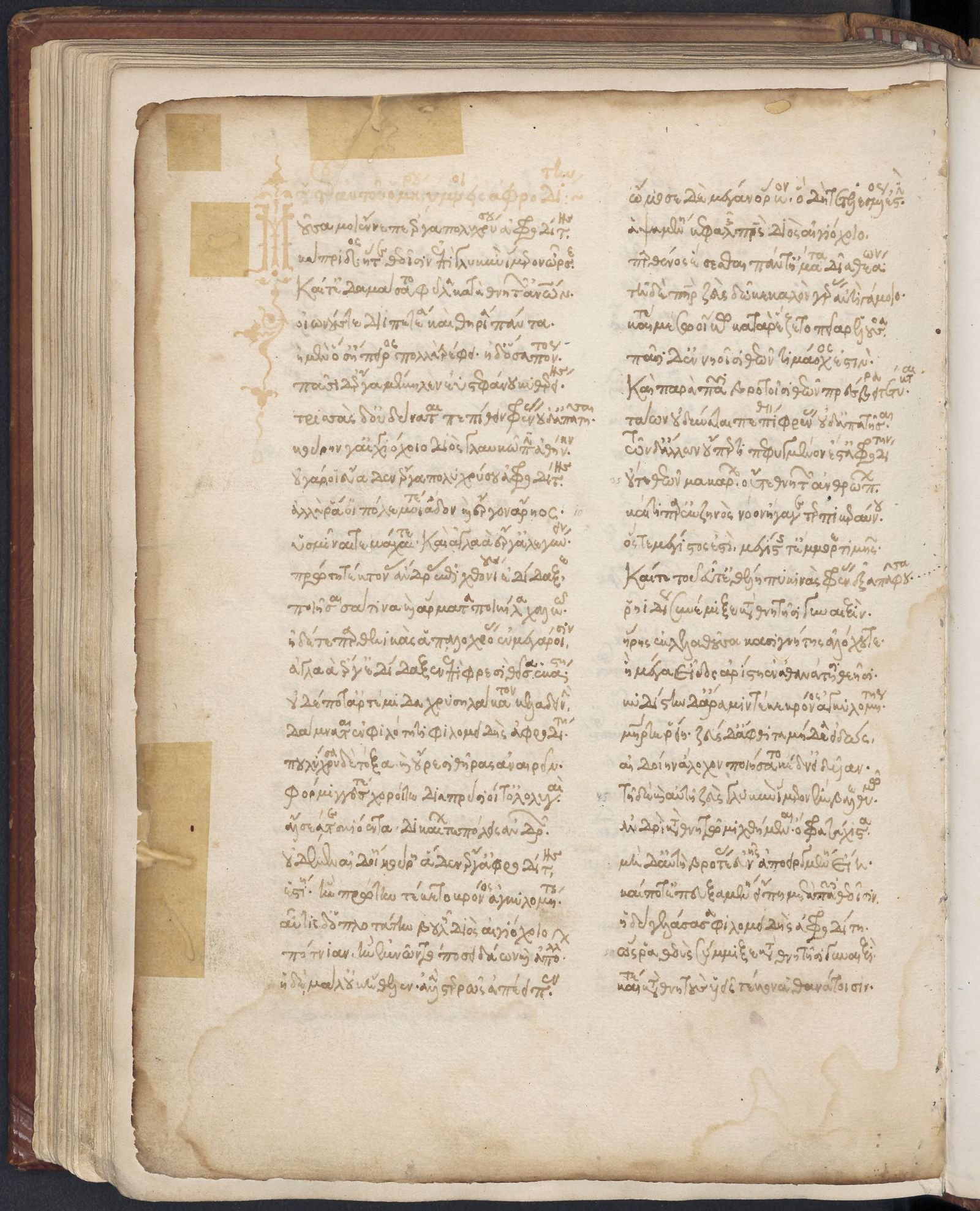
Leiden BPG 33 H, fol. 46v, column a (left): Hymn 5 1-25; begins ‹μοῦσά μοι ἐννέπε ἔργα›, ends ‹ἔθελεν, ἀλλὰ στερεῶς ἀπέειπεν·›. Checked on the image: the first and last verses of the column were read and matched to the Greek. The column before ends with Hymn 4 580. The next column begins with Hymn 5 26. The Hymn to Aphrodite begins at the head of the column with a large initial. English blocks here: 1-4, 5-9, 10-14, 15-19, 20-24.
1μοῦσά μοι ἐννέπε ἔργα πολυχρύσου Ἀφροδίτης,
2Κύπριδος, ἥτε θεοῖσιν ἐπὶ γλυκὺν ἵμερον ὦρσε
3καί τʼ ἐδαμάσσατο φῦλα καταθνητῶν ἀνθρώπων
4οἰωνούς τε διιπετέας καὶ θηρία πάντα,
5ἠμὲν ὅσʼ ἤπειρος πολλὰ τρέφει ἠδʼ ὅσα πόντος·
6πᾶσιν δʼ ἔργα μέμηλεν ἐυστεφάνου Κυθερείης.
7τρισσὰς δʼ οὐ δύναται πεπιθεῖν φρένας οὐδʼ ἀπατῆσαι·
8κούρην τʼ αἰγιόχοιο Διός, γλαυκῶπιν Ἀθήνην·
9οὐ γάρ οἱ εὔαδεν ἔργα πολυχρύσου Ἀφροδίτης,
10ἀλλʼ ἄρα οἱ πόλεμοί τε ἅδον καὶ ἔργον Ἄρηος
11ὑσμῖναί τε μάχαι τε καὶ ἀγλαὰ ἔργʼ ἀλεγύνειν.
12πρώτη τέκτονας ἄνδρας ἐπιχθονίους ἐδίδαξε
13ποιῆσαι σατίνας τε καὶ ἅρματα ποικίλα χαλκῷ.
14ἣ δέ τε παρθενικὰς ἁπαλόχροας ἐν μεγάροισιν
15ἀγλαὰ ἔργʼ ἐδίδαξεν ἐπὶ φρεσὶ θεῖσα ἑκάστῃ.
16οὐδέ ποτʼ Ἀρτέμιδα χρυσηλάκατον, κελαδεινὴν
17δάμναται ἐν φιλότητι φιλομμειδὴς Ἀφροδίτη.
18καὶ γὰρ τῇ ἅδε τόξα καὶ οὔρεσι θῆρας ἐναίρειν,
19φόρμιγγές τε χοροί τε διαπρύσιοί τʼ ὀλολυγαὶ
20ἄλσεά τε σκιόεντα δικαίων τε πτόλις ἀνδρῶν.
21οὐδὲ μὲν αἰδοίῃ κούρῃ ἅδε ἔργʼ Ἀφροδίτης,
22Ἱστίῃ, ἣν πρώτην τέκετο Κρόνος ἀγκυλομήτης,
23αὖτις δʼ ὁπλοτάτην, βουλῇ Διὸς αἰγιόχοιο,
24πότνιαν, ἣν ἐμνῶντο Ποσειδάων καὶ Ἀπόλλων·
25ἣ δὲ μαλʼ οὐκ ἔθελεν, ἀλλὰ στερεῶς ἀπέειπεν·
1Muse, tell me the deeds of golden Aphrodite the Cyprian, who stirs up sweet passion in the gods and subdues the tribes of mortal men and birds that fly in air and all the many creatures 5that the dry land rears, and all that the sea: all these love the deeds of rich-crowned Cytherea. Yet there are three hearts that she cannot bend nor yet ensnare. First is the daughter of Zeus who holds the aegis, bright-eyed Athena; for she has no pleasure in the deeds of golden Aphrodite, 10but delights in wars and in the work of Ares, in strifes and battles and in preparing famous crafts. She first taught earthly craftsmen to make chariots of war and cars variously wrought with bronze, and she, too, teaches tender maidens in the house 15and puts knowledge of goodly arts in each one's mind. Nor does laughter-loving Aphrodite ever tame in love Artemis, the huntress with shafts of gold; for she loves archery and the slaying of wild beasts in the mountains, the lyre also and dancing and thrilling cries 20and shady woods and the cities of upright men. Nor yet does the pure maiden Hestia love Aphrodite's works. She was the first-born child of wily Cronos and youngest too, by will of Zeus who holds the aegis, —a queenly maid whom both Poseidon and Apollo sought to wed.
Where on the image
Leiden BPG 33 H, fol. 46v, column b (right): Hymn 5 26-51; begins ‹ὤμοσε δὲ μέγαν ὅρκον,›, ends ‹καταθνητοὺς υἱεῖς τέκον ἀθανάτοισιν,›. Checked on the image: the first and last verses of the column were read and matched to the Greek. The column before ends with Hymn 5 25. The next column begins with Hymn 5 52. English blocks here: 25-29, 30-32, 33-34, 35-39, 40-44, 45-49.
26ὤμοσε δὲ μέγαν ὅρκον, ὃ δὴ τετελεσμένος ἐστίν,
27ἁψαμένη κεφαλῆς πατρὸς Διὸς αἰγιόχοιο,
28παρθένος ἔσσεσθαι πάντʼ ἤματα, δῖα θεάων.
29τῇ δὲ πατὴρ Ζεὺς δῶκε καλὸν γέρας ἀντὶ γάμοιο
30καί τε μέσῳ οἴκῳ κατʼ ἄρʼ ἕζετο πῖαρ ἑλοῦσα.
31πᾶσιν δʼ ἐν νηοῖσι θεῶν τιμάοχός ἐστι
32καὶ παρὰ πᾶσι βροτοῖσι θεῶν πρέσβειρα τέτυκται.
33τάων οὐ δύναται πεπιθεῖν φρένας οὐδʼ ἀπατῆσαι·
34τῶν δʼ ἄλλων οὔ πέρ τι πεφυγμένον ἔστʼ Ἀφροδίτην
35οὔτε θεῶν μακάρων οὔτε θνητῶν ἀνθρώπων.
36καί τε παρὲκ Ζηνὸς νόον ἤγαγε τερπικεραύνου,
37ὅστε μέγιστός τʼ ἐστὶ μεγίστης τʼ ἔμμορε τιμῆς.
38καί τε τοῦ, εὖτʼ ἐθέλοι, πυκινὰς φρένας ἐξαπαφοῦσα
39ῥηιδίως συνέμιξε καταθνητῇσι γυναιξίν,
40Ἥρης ἐκλελαθοῦσα, κασιγνήτης ἀλόχου τε,
41ἣ μέγα εἶδος ἀρίστη ἐν ἀθανάτῃσι θεῇσι.
42κυδίστην δʼ ἄρα μιν τέκετο Κρόνος ἀγκυλομήτης
43μήτηρ τε Ῥείη· Ζεὺς δʼ ἄφθιτα μήδεα εἰδὼς
44αἰδοίην ἄλοχον ποιήσατο κέδνʼ εἰδυῖαν.
45τῇ δὲ καὶ αὐτῇ Ζεὺς γλυκὺν ἵμερον ἔμβαλε θυμῷ
46ἀνδρὶ καταθνητῷ μιχθήμεναι, ὄφρα τάχιστα
47μηδʼ αὐτὴ βροτέης εὐνῆς ἀποεργμένη εἴη,
48καί ποτʼ ἐπευξαμένη εἴπῃ μετὰ πᾶσι θεοῖσιν
49ἡδὺ γελοιήσασα, φιλομμειδὴς Ἀφροδίτη,
50ὥς ῥα θεοὺς συνέμιξε καταθνητῇσι γυναιξί,
51καί τε καταθνητοὺς υἱεῖς τέκον ἀθανάτοισιν,
25But she was wholly unwilling, nay, stubbornly refused; and touching the head of father Zeus who holds the aegis, she, that fair goddess, swear a great oath which has in truth been fulfilled, that she would be a maiden all her days. So Zeus the Father gave her an high honor instead of marriage, 30and she has her place in the midst of the house and has the richest portion. In all the temples of the gods she has a share of honor, and among all mortal men she is chief of the goddesses. 33Of these three Aphrodite cannot bend or ensnare the hearts. But of all others there is nothing 35among the blessed gods or among mortal men that has escaped Aphrodite. Even the heart of Zeus, who delights in thunder, is led astray by her; though he is greatest of all and has the lot of highest majesty, she beguiles even his wise heart whensoever she pleases, and mates him with mortal women, 40unknown to Hera, his sister and his wife, the grandest far in beauty among the deathless goddesses —most glorious is she whom wily Cronos with her mother Rhea did beget: and Zeus, whose wisdom is everlasting, made her his chaste and careful wife. 45But upon Aphrodite herself Zeus cast sweet desire to be joined in love with a mortal man, to the end that, very soon, not even she should be innocent of a mortal's love; lest laughter-loving Aphrodite should one day softly smile and say mockingly among all the gods
Where on the image
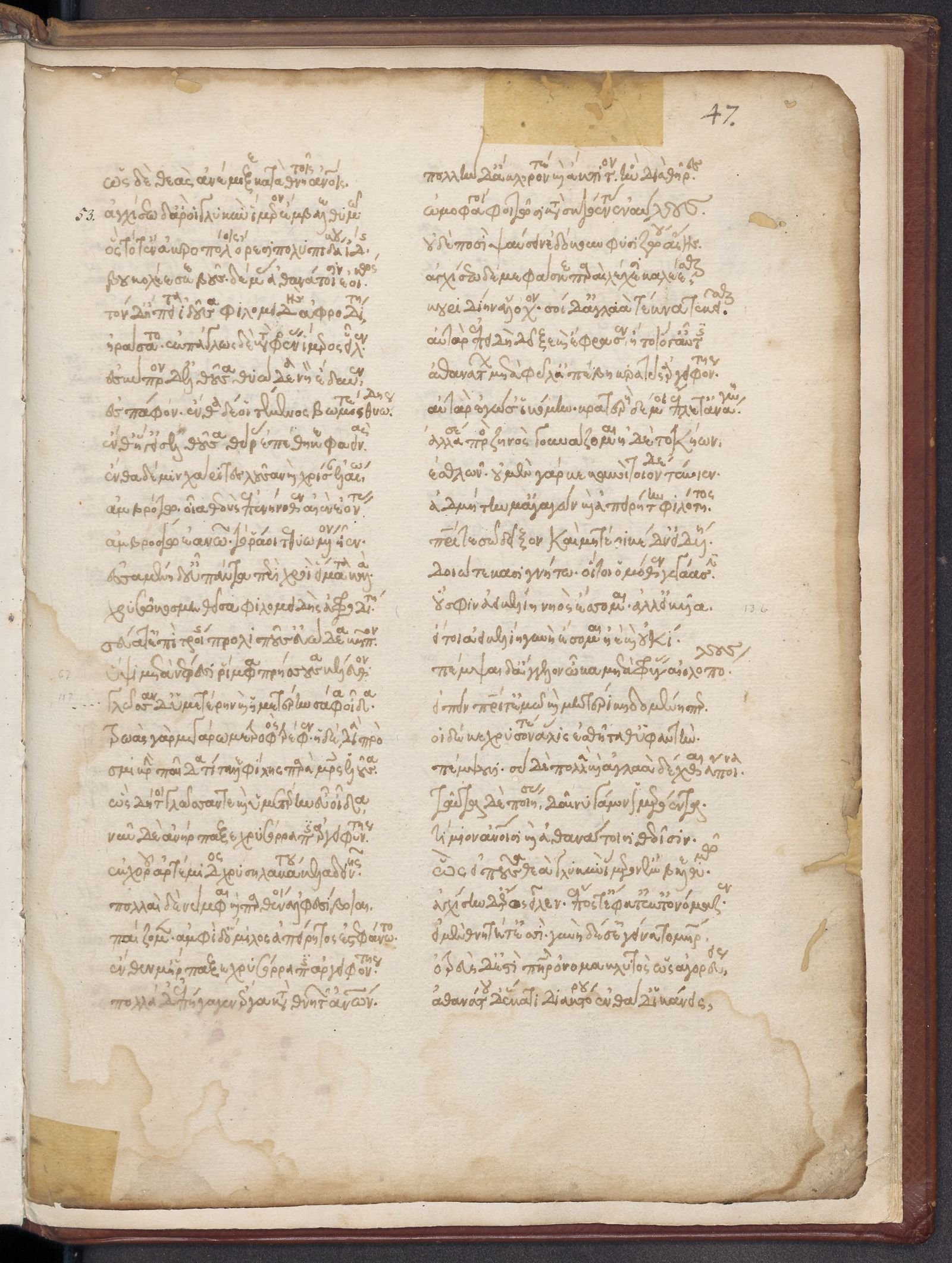
Leiden BPG 33 H, fol. 47r, column a (left): Hymn 5 52-67; Hymn 5 113-122; begins ‹ὥς τε θεὰς ἀνέμιξε›, ends ‹ἤγαγεν ἔργα καταθνητῶν ἀνθρώπων,›. Checked on the image: the first and last verses of the column were read and matched to the Greek. The column before ends with Hymn 5 51. The next column begins with Hymn 5 123. The manuscript passes from Aphrodite 67 straight to 113: verses 68-112 are not in M (a later hand notes the verse numbers in the margin). English blocks here: 50-54, 55-59, 60-64, 65-69, 110-114, 115-119, 120-124. The English block(s) 65-69, 110-114 also cover verses that are not in the manuscript.
52ὥς τε θεὰς ἀνέμιξε καταθνητοῖς ἀνθρώποις.
53Ἀγχίσεω δʼ ἄρα οἱ γλυκὺν ἵμερον ἔμβαλε θυμῷ,
54ὃς τότʼ ἐν ἀκροπόλοις ὄρεσιν πολυπιδάκου Ἴδης
55βουκολέεσκεν βοῦς δέμας ἀθανάτοισιν ἐοικώς.
56τὸν δὴ ἔπειτα ἰδοῦσα φιλομμειδὴς Ἀφροδίτη
57ἠράσατʼ, ἔκπαγλος δὲ κατὰ φρένας ἵμερος εἷλεν.
58ἐς Κύπρον δʼ ἐλθοῦσα θυώδεα νηὸν ἔδυνεν,
59ἐς Πάφον· ἔνθα δέ οἱ τέμενος βωμός τε θυώδης.
60ἐνθʼ ἥ γʼ εἰσελθοῦσα θύρας ἐπέθηκε φαεινάς·
61ἔνθα δέ μιν Χάριτες λοῦσαν καὶ χρῖσαν ἐλαίῳ
62ἀμβρότῳ, οἷα θεοὺς ἐπενήνοθεν αἰὲν ἐόντας,
63ἀμβροσίῳ ἑδανῷ, τό ῥά οἱ τεθυωμένον ἦεν.
64ἑσσαμένη δʼ εὖ πάντα περὶ χροῒ εἵματα καλὰ
65χρυσῷ κοσμηθεῖσα φιλομμειδὴς Ἀφροδίτη
66σεύατʼ ἐπὶ Τροίης προλιποῦσʼ εὐώδεα Κύπρον,
67ὕψι μετὰ νέφεσιν ῥίμφα πρήσσουσα κέλευθον.
113γλῶσσαν δʼ ὑμετέρην τε καὶ ἡμετέρην σάφα οἶδα.
114Τρῳὰς γὰρ μεγάρῳ με τροφὸς τρέφεν· ἣ δὲ διαπρὸ
115σμικρὴν παῖδʼ ἀτίταλλε, φίλης παρὰ μητρὸς ἑλοῦσα.
116ὣς δή τοι γλῶσσάν γε καὶ ὑμετέρην εὖ οἶδα.
117νῦν δέ μʼ ἀνήρπαξε χρυσόρραπις Ἀργειφόντης
118ἐκ χοροῦ Ἀρτέμιδος χρυσηλακάτου, κελαδεινῆς.
119πολλαὶ δὲ νύμφαι καὶ παρθένοι ἀλφεσίβοιαι
120παίζομεν, ἀμφὶ δʼ ὅμιλος ἀπείριτος ἐστεφάνωτο.
121ἔνθεν μʼ ἥρπαξε χρυσόρραπις Ἀργειφόντης·
122πολλὰ δʼ ἔπʼ ἤγαγεν ἔργα καταθνητῶν ἀνθρώπων,
50that she had joined the gods in love with mortal women who bare sons of death to the deathless gods, and had mated the goddesses with mortal men. And so he put in her heart sweet desire for Anchises who at that time among the steep hills of many-fountained Ida 55was tending cattle, and in shape was like the immortal gods. Therefore, when laughter-loving Aphrodite saw him, she loved him, and terribly desire seized her in her heart. She went to Cyprus, to Paphos, where her precinct is and fragrant altar, and passed into her sweet-smelling temple. 60There she went in and put to the glittering doors, and there the Graces bathed her with heavenly oil such as blooms upon the bodies of the eternal gods —oil divinely sweet, which she had by her, filled with fragrance. And laughter-loving Aphrodite put on all her rich clothes, 65and when she had decked herself with gold, she left sweet-smelling Cyprus and went in haste towards Troy, swiftly travelling high up among the clouds. So she came to many-fountained Ida, the mother of wild creatures and went straight to the homestead across the mountains. After her 110Nay, I am but a mortal, and a woman was the mother that bare me. Otreus of famous name is my father, if so be you have heard of him, and he reigns over all Phrygia rich in fortresses. But I know your speech well beside my own, for a Trojan nurse brought me up at home: 115she took me from my dear mother and reared me thenceforth when I was a little child. So comes it, then, that I well know your tongue also. And now the Slayer of Argus with the golden wand has caught me up from the dance of huntress Artemis, her with the golden arrows. For there were many of us, nymphs and marriageable maidens, 120playing together; and an innumerable company encircled us: from these the Slayer of Argus with the golden wand rapt me away. He carried me over many fields of mortal men and over much land untilled and unpossessed, where savage wild-beasts roam through shady coombes,
Where on the image
Leiden BPG 33 H, fol. 47r, column b (right): Hymn 5 123-147; begins ‹πολλὴν δʼ ἄκληρόν τε›, ends ‹ἕκητι διακτόρου ἐνθάδʼ ἱκάνεις›. Checked on the image: the first and last verses of the column were read and matched to the Greek. The column before ends with Hymn 5 122. The next column begins with Hymn 5 148. English blocks here: 125-129, 130-134, 135-139, 140-144, 145-149.
123πολλὴν δʼ ἄκληρόν τε καὶ ἄκτιτον, ἣν διὰ θῆρες
124ὠμοφάγοι φοιτῶσι κατὰ σκιόεντας ἐναύλους·
125οὐδὲ ποσὶ ψαύσειν ἐδόκουν φυσιζόου αἴης·
126Ἀγχίσεω δέ με φάσκε παραὶ λέχεσιν καλέεσθαι
127κουριδίην ἄλοχον, σοὶ δʼ ἀγλαὰ τέκνα τεκεῖσθαι.
128αὐτὰρ ἐπεὶ δὴ δεῖξε καὶ ἔφρασεν, ἦ τοι ὅ γʼ αὖτις
129ἀθανάτων μετὰ φῦλʼ ἀπέβη κρατὺς Ἀργειφόντης·
130αὐτὰρ ἐγώ σʼ ἱκόμην, κρατερὴ δέ μοι ἔπλετʼ ἀνάγκη.
131ἀλλά σε πρὸς Ζηνὸς γουνάζομαι ἠδὲ τοκήων
132ἐσθλῶν· οὐ μὲν γάρ κε κακοὶ τοιόνδε τέκοιεν·
133ἀδμήτην μʼ ἀγαγὼν καὶ ἀπειρήτην φιλότητος
134πατρί τε σῷ δεῖξον καὶ μητέρι κέδνʼ εἰδυίῃ
135σοῖς τε κασιγνήτοις, οἵ τοι ὁμόθεν γεγάασιν.
136οὔ σφιν ἀεικελίη νυὸς ἔσσομαι, ἀλλʼ εἰκυῖα.
137πέμψαι δʼ ἄγγελον ὦκα μετὰ Φρύγας αἰολοπώλους
138εἰπεῖν πατρί τʼ ἐμῷ καὶ μητέρι κηδομένῃ περ·
139οἳ δέ κέ τοι χρυσόν τε ἅλις ἐσθῆτά θʼ ὑφαντὴν
140πέμψουσιν· σὺ δὲ πολλὰ καὶ ἀγλαὰ δέχθαι ἄποινα.
141ταῦτα δὲ ποιήσας δαίνυ γάμον ἱμερόεντα,
142τίμιον ἀνθρώποισι καὶ ἀθανάτοισι θεοῖσιν.
143ὣς εἰποῦσα θεὰ γλυκὺν ἵμερον ἔμβαλε θυμῷ.
144Ἀγχίσην δʼ ἔρος εἷλεν ἔπος τʼ ἔφατʼ ἔκ τʼ ὀνόμαζεν·
145εἰ μὲν θνητή τʼ ἐσσί, γυνὴ δέ σε γείνατο μήτηρ,
146Ὀτρεὺς δʼ ἐστὶ πατὴρ ὀνομακλυτός, ὡς ἀγορεύεις,
147ἀθανάτου δὲ ἕκητι διακτόρου ἐνθάδʼ ἱκάνεις
125until I thought never again to touch the life-giving earth with my feet. And he said that I should be called the wedded wife of Anchises, and should bear you goodly children. But when he had told and advised me, he, the strong Slayer of Argos, went back to the families of the deathless gods, 130while I am now come to you: for unbending necessity is upon me. But I beseech you by Zeus and by your noble parents —for no base folk could get such a son as you —take me now, stainless and unproved in love, and show me to your father and careful mother 135and to your brothers sprung from the same stock. I shall be no ill-liking daughter for them, but a likely. Moreover, send a messenger quickly to the swift-horsed Phrygians, to tell my father and my sorrowing mother; and they will send you gold in plenty and woven stuffs, many splendid gifts; 140take these as bride-piece. So do, and then prepare the sweet marriage that is honorable in the eyes of men and deathless gods.” When she had so spoken, the goddess put sweet desire in his heart. And Anchises was seized with love, so that he opened his mouth and said: 145“If you are a mortal and a woman was the mother who bare you, and Otreus of famous name is your father as you say, and if you are come here by the will of Hermes the immortal Guide, and are to be called my wife always, then neither god nor mortal man
Where on the image
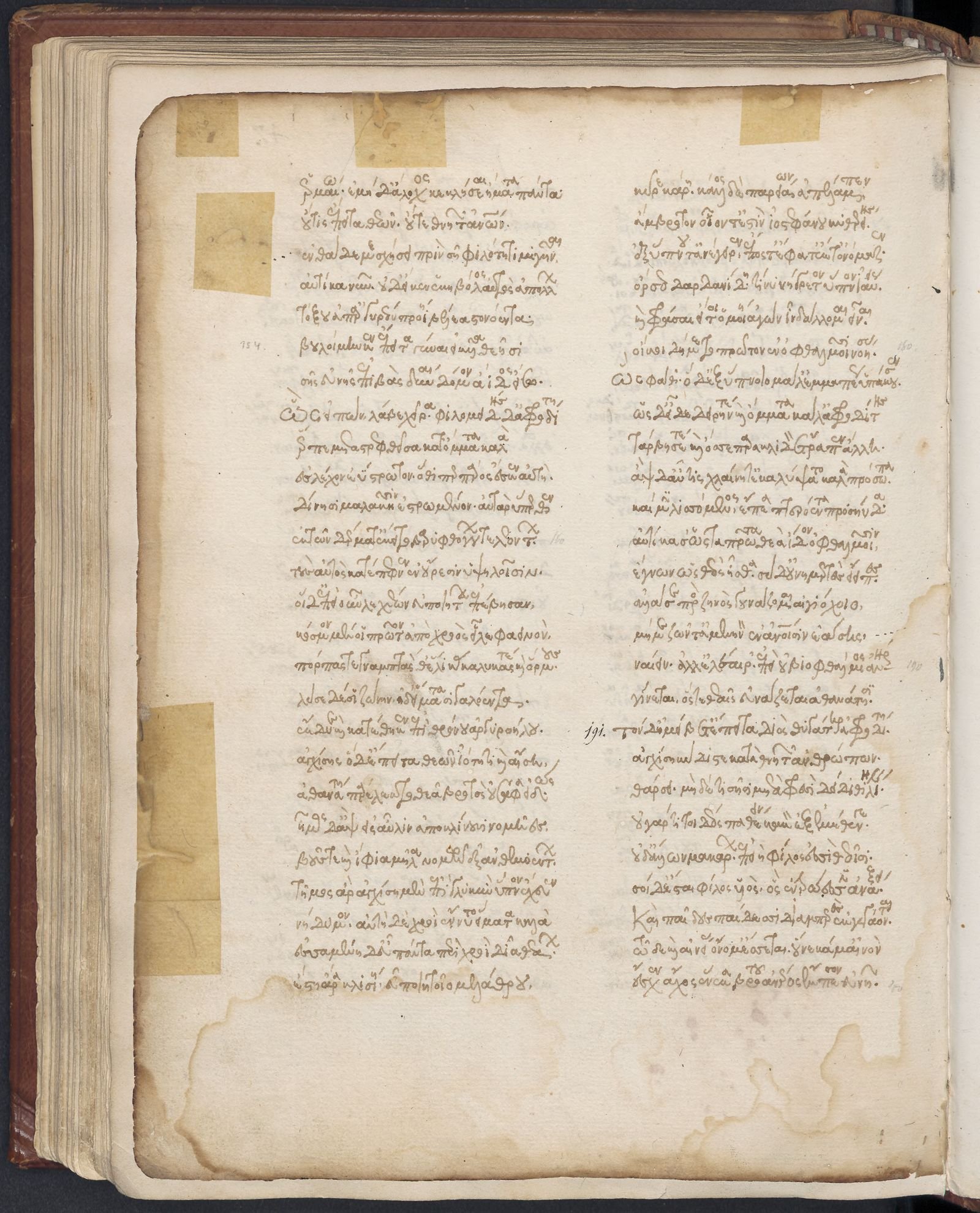
Leiden BPG 33 H, fol. 47v, column a (left): Hymn 5 148-173; begins ‹Ἑρμέω, ἐμὴ δʼ ἄλοχος›, ends ‹πὰρ κλισίῃ, κεὐποιήτοιο μελάθρου›. Checked on the image: the first and last verses of the column were read and matched to the Greek. The column before ends with Hymn 5 147. The next column begins with Hymn 5 174. English blocks here: 150-154, 155-159, 160-164, 165-169, 170-174.
148Ἑρμέω, ἐμὴ δʼ ἄλοχος κεκλήσεαι ἤματα πάντα·
149οὔ τις ἔπειτα θεῶν οὔτε θνητῶν ἀνθρώπων
150ἐνθάδε με σχήσει, πρὶν σῇ φιλότητι μιγῆναι
151αὐτίκα νῦν· οὐδʼ εἴ κεν ἑκηβόλος αὐτὸς Ἀπόλλων
152τόξου ἀπʼ ἀργυρέου προΐῃ βέλεα στονόεντα.
153βουλοίμην κεν ἔπειτα, γύναι ἐικυῖα θεῇσι,
154σῆς εὐνῆς ἐπιβὰς δῦναι δόμον Ἄιδος εἴσω.
155ὣς εἰπὼν λάβε χεῖρα· φιλομμειδὴς δʼ Ἀφροδίτη
156ἕρπε μεταστρεφθεῖσα κατʼ ὄμματα καλὰ βαλοῦσα
157ἐς λέχος εὔστρωτον, ὅθι περ πάρος ἔσκεν ἄνακτι
158χλαίνῃσιν μαλακῇς ἐστρωμένον· αὐτὰρ ὕπερθεν
159ἄρκτων δέρματʼ ἔκειτο βαρυφθόγγων τε λεόντων,
160τοὺς αὐτὸς κατέπεφνεν ἐν οὔρεσιν ὑψηλοῖσιν.
161οἳ δʼ ἐπεὶ οὖν λεχέων εὐποιήτων ἐπέβησαν,
162κόσμον μέν οἱ πρῶτον ἀπὸ χροὸς εἷλε φαεινόν,
163πόρπας τε γναμπτάς θʼ ἕλικας κάλυκάς τε καὶ ὅρμους.
164λῦσε δέ οἱ ζώνην ἰδὲ εἵματα σιγαλόεντα
165ἔκδυε καὶ κατέθηκεν ἐπὶ θρόνου ἀργυροήλου
166Ἀγχίσης· ὃ δʼ ἔπειτα θεῶν ἰότητι καὶ αἴσῃ
167ἀθανάτῃ παρέλεκτο θεᾷ βροτός, οὐ σάφα εἰδώς.
168ἦμος δʼ ἂψ εἰς αὖλιν ἀποκλίνουσι νομῆες
169βοῦς τε καὶ ἴφια μῆλα νομῶν ἐξ ἀνθεμοέντων·
170τῆμος ἄρʼ Ἀγχίσῃ μὲν ἐπὶ γλυκὺν ὕπνον ἔχευε
171νήδυμον, αὐτὴ δὲ χροῒ ἕννυτο εἵματα καλά.
172ἑσσαμένη δʼ εὖ πάντα περὶ χροῒ δῖα θεάων
173ἔστη πὰρ κλισίῃ, κεὐποιήτοιο μελάθρου
150shall here restrain me till I have lain with you in love right now; no, not even if far-shooting Apollo himself should launch grievous shafts from his silver bow. Willingly would I go down into the house of Hades, O lady, beautiful as the goddesses, once I had gone up to your bed.” 155So speaking, he caught her by the hand. And laughter-loving Aphrodite, with face turned away and lovely eyes downcast, crept to the well-spread couch which was already laid with soft coverings for the hero; and upon it lay skins of bears and deep-roaring lions 160which he himself had slain in the high mountains. And when they had gone up upon the well-fitted bed, first Anchises took off her bright jewelry of pins and twisted brooches and earrings and necklaces, and loosed her girdle and stripped off her bright garments 165and laid them down upon a silver-studded seat. Then by the will of the gods and destiny he lay with her, a mortal man with an immortal goddess, not clearly knowing what he did. But at the time when the herdsmen drive their oxen and hardy sheep back to the fold from the flowery pastures, 170even then Aphrodite poured soft sleep upon Anchises, but herself put on her rich raiment. And when the bright goddess had fully clothed herself, she stood by the couch, and her head reached to the well-hewn roof-tree; from her cheeks shone unearthly beauty
Where on the image
Leiden BPG 33 H, fol. 47v, column b (right): Hymn 5 174-199; begins ‹κῦρε κάρη· κάλλος δὲ›, ends ‹βροτοῦ ἀνέρος ἔμπεσον εὐνῇ·›. Checked on the image: the first and last verses of the column were read and matched to the Greek. The column before ends with Hymn 5 173. The next column begins with Hymn 5 200. English blocks here: 175-176, 177-179, 180-184, 185-189, 190-194, 195-199.
174κῦρε κάρη· κάλλος δὲ παρειάων ἀπέλαμπεν
175ἄμβροτον, οἷόν τʼ ἐστὶν ἐυστεφάνου Κυθερείης,
176ἐξ ὕπνου τʼ ἀνέγειρεν ἔπος τʼ ἔφατʼ ἔκ τʼ ὀνόμαζεν·
177ὄρσεο, Δαρδανίδη· τί νυ νήγρετον ὕπνον ἰαύεις;
178καὶ φράσαι, εἴ τοι ὁμοίη ἐγὼν ἰνδάλλομαι εἶναι,
179οἵην δή με τὸ πρῶτον ἐν ὀφθαλμοῖσι νόησας;
180ὣς φάθʼ· ὃ δʼ ἐξ ὕπνοιο μάλʼ ἐμμαπέως ὑπάκουσεν.
181ὡς δὲ ἴδεν δειρήν τε καὶ ὄμματα κάλʼ Ἀφροδίτης,
182τάρβησέν τε καὶ ὄσσε παρακλιδὸν ἔτραπεν ἄλλῃ·
183ἂψ δʼ αὖτις χλαίνῃ τε καλύψατο καλὰ πρόσωπα
184καί μιν λισσόμενος ἔπεα πτερόεντα προσηύδα·
185αὐτίκα σʼ ὡς τὰ πρῶτα, θεά, ἴδον ὀφθαλμοῖσιν,
186ἔγνων ὡς θεὸς ἦσθα· σὺ δʼ οὐ νημερτὲς ἔειπες.
187ἀλλά σε πρὸς Ζηνὸς γουνάζομαι αἰγιόχοιο,
188μή με ζῶντʼ ἀμενηνὸν ἐν ἀνθρώποισιν ἐάσῃς
189ναίειν, ἀλλʼ ἐλέαιρʼ· ἐπεὶ οὐ βιοθάλμιος ἀνὴρ
190γίγνεται, ὅς τε θεαῖς εὐνάζεται ἀθανάτῃσι.
191τὸν δʼ ἠμείβετʼ ἔπειτα Διὸς θυγάτηρ Ἀφροδίτη·
192Ἀγχίση, κύδιστε καταθνητῶν ἀνθρώπων,
193θάρσει, μηδέ τι σῇσι μετὰ φρεσὶ δείδιθι λίην·
194οὐ γάρ τοί τι δέος παθέειν κακὸν ἐξ ἐμέθεν γε,
195οὐδʼ ἄλλων μακάρων· ἐπεὶ ἦ φίλος ἐσσὶ θεοῖσι.
196σοὶ δʼ ἔσται φίλος υἱός, ὃς ἐν Τρώεσσιν ἀνάξει
197καὶ παῖδες παίδεσσι διαμπερὲς ἐκγεγάοντες·
198τῷ δὲ καὶ Αἰνείας ὄνομʼ ἔσσεται, οὕνεκά μʼ αἰνὸν
199ἔσχεν ἄχος, ἕνεκα βροτοῦ ἀνέρος ἔμπεσον εὐνῇ·
175such as belongs to rich-crowned Cytherea. Then she aroused him from sleep and opened her mouth and said: 177“Up, son of Dardanus! —why sleep you so heavily? —and consider whether I look as I did when first you saw me with your eyes.” 180So she spake. And he awoke in a moment and obeyed her. But when he saw the neck and lovely eyes of Aphrodite, he was afraid and turned his eyes aside another way, hiding his comely face with his cloak. Then he uttered winged words and entreated her: 185“So soon as ever I saw you with my eyes, goddess, I knew that you were divine; but you did not tell me truly. Yet by Zeus who holds the aegis I beseech you, leave me not to lead a palsied life among men, but have pity on me; 190for he who lies with a deathless goddess is no hale man afterwards.”Then Aphrodite the daughter of Zeus answered him: “Anchises, most glorious of mortal men, take courage and be not too fearful in your heart. You need fear no harm from me 195nor from the other blessed ones, for you are dear to the gods: and you shall have a dear son who shall reign among the Trojans, and children's children after him, springing up continually. His name shall be Aeneas, because I felt awful grief in that I laid me in the bed of a mortal man:
Where on the image
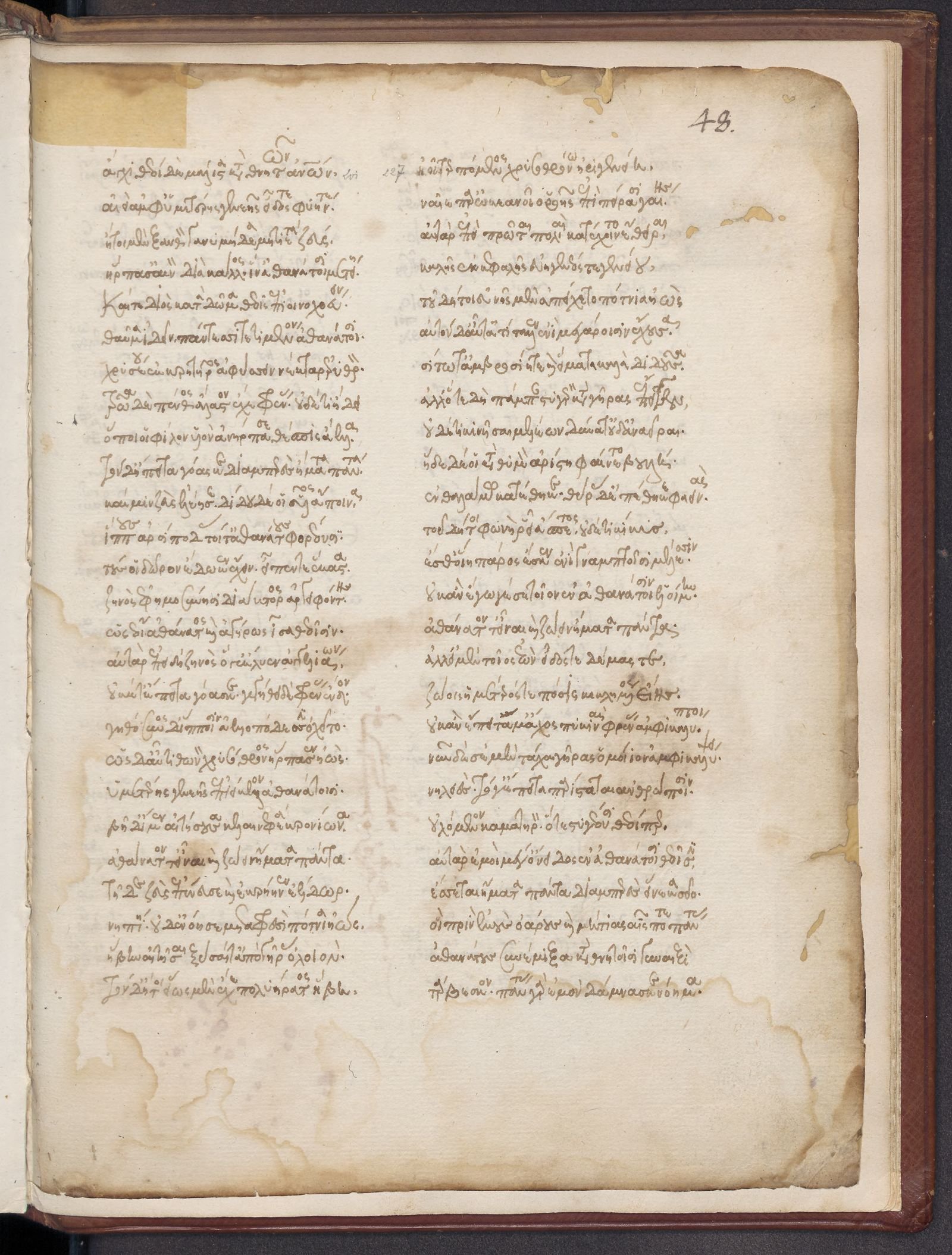
Leiden BPG 33 H, fol. 48r, column a (left): Hymn 5 200-225; begins ‹ἀγχίθεοι δὲ μάλιστα καταθνητῶν›, ends ‹μὲν ἔχεν πολυήρατος ἥβη,›. Checked on the image: the first and last verses of the column were read and matched to the Greek. The column before ends with Hymn 5 199. The next column begins with Hymn 5 226. English blocks here: 200-204, 205-209, 210-214, 215-217, 218-219, 220-224.
200ἀγχίθεοι δὲ μάλιστα καταθνητῶν ἀνθρώπων
201αἰεὶ ἀφʼ ὑμετέρης γενεῆς εἶδός τε φυήν τε.
202ἦ τοι μὲν ξανθὸν Γανυμήδεα μητιέτα Ζεὺς
203ἥρπασε ὃν διὰ κάλλος, ἵνʼ ἀθανάτοισι μετείη
204καί τε Διὸς κατὰ δῶμα θεοῖς ἐπιοινοχοεύοι,
205θαῦμα ἰδεῖν, πάντεσσι τετιμένος ἀθανάτοισι,
206χρυσέου ἐκ κρητῆρος ἀφύσσων νέκταρ ἐρυθρόν.
207Τρῶα δὲ πένθος ἄλαστον ἔχε φρένας, οὐδέ τι ᾔδει,
208ὅππη οἱ φίλον υἱὸν ἀνήρπασε θέσπις ἄελλα·
209τὸν δὴ ἔπειτα γόασκε διαμπερὲς ἤματα πάντα
210καί μιν Ζεὺς ἐλέησε, δίδου δέ οἱ υἷος ἄποινα,
211ἵππους ἀρσίποδας, τοί τʼ ἀθανάτους φορέουσι.
212τούς οἱ δῶρον ἔδωκεν ἔχειν· εἶπεν δὲ ἕκαστα
213Ζηνὸς ἐφημοσύνῃσι διάκτορος Ἀργειφόντης,
214ὡς ἔοι ἀθάνατος καὶ ἀγήρως ἶσα θεοῖσιν.
215αὐτὰρ ἐπειδὴ Ζηνὸς ὅ γʼ ἔκλυεν ἀγγελιάων,
216οὐκέτʼ ἔπειτα γόασκε, γεγήθει δὲ φρένας ἔνδον,
217γηθόσυνος δʼ ἵπποισιν ἀελλοπόδεσσιν ὀχεῖτο.
218ὣς δʼ αὖ Τιθωνὸν χρυσόθρονος ἥρπασεν Ἠώς,
219ὑμετέρης γενεῆς, ἐπιείκελον ἀθανάτοισι.
220Βῆ δʼ ἴμεν αἰτήσουσα κελαινεφέα Κρονίωνα,
221ἀθάνατόν τʼ εἶναι καὶ ζώειν ἤματα πάντα·
222τῇ δὲ Ζεὺς ἐπένευσε καὶ ἐκρήηνεν ἐέλδωρ.
223νηπίη, οὐδʼ ἐνόησε μετὰ φρεσὶ πότνια Ἠὼς
224ἥβην αἰτῆσαι ξῦσαί τʼ ἄπο γῆρας ὀλοιόν.
225τὸν δʼ ἦ τοι εἵως μὲν ἔχεν πολυήρατος ἥβη,
200yet are those of your race always the most like to gods of all mortal men in beauty and in stature. Verily wise Zeus carried off golden-haired Ganymedes because of his beauty, to be amongst the Deathless Ones and pour drink for the gods in the house of Zeus — 205a wonder to see—,honored by all the immortals as he draws the red nectar from the golden bowl. But grief that could not be soothed filled the heart of Tros; for he knew not whither the heaven-sent whirlwind had caught up his dear son, so that he mourned him always, unceasingly, 210until Zeus pitied him and gave him high-stepping horses such as carry the immortals as recompense for his son. These he gave him as a gift. And at the command of Zeus, the Guide, the slayer of Argus, told him all, and how his son would be deathless and unageing, even as the gods. 215So when Tros heard these tidings from Zeus, he no longer kept mourning but rejoiced in his heart and rode joyfully with his storm-footed horses. 218So also golden-throned Eos rapt away Tithonus who was of your race and like the deathless gods. 220And she went to ask the dark-clouded Son of Cronos that he should be deathless and live eternally; and Zeus bowed his head to her prayer and fulfilled her desire. Too simple was queenly Eos: she thought not in her heart to ask youth for him and to strip him of the slough of deadly age.
Where on the image
Leiden BPG 33 H, fol. 48r, column b (right): Hymn 5 226-251; begins ‹Ἠοῖ τερπόμενος χρυσοθρόνῳ, ἠριγενείῃ›, ends ‹γὰρ ἐμὸν δάμνασκε νόημα.›. Checked on the image: the first and last verses of the column were read and matched to the Greek. The column before ends with Hymn 5 225. The next column begins with Hymn 5 252. English blocks here: 225-229, 230-234, 235-239, 240-244, 245-246, 247-249.
226Ἠοῖ τερπόμενος χρυσοθρόνῳ, ἠριγενείῃ
227ναῖε παρʼ Ὠκεανοῖο ῥοῇς ἐπὶ πείρασι γαίης·
228αὐτὰρ ἐπεὶ πρῶται πολιαὶ κατέχυντο ἔθειραι
229καλῆς ἐκ κεφαλῆς εὐηγενέος τε γενείου,
230τοῦ δʼ ἦ τοι εὐνῆς μὲν ἀπείχετο πότνια Ἠώς,
231αὐτὸν δʼ αὖτʼ ἀτίταλλεν ἐνὶ μεγάροισιν ἔχουσα,
232σίτῳ τʼ ἀμβροσίῃ τε καὶ εἵματα καλὰ διδοῦσα.
233ἀλλʼ ὅτε δὴ πάμπαν στυγερὸν κατὰ γῆρας ἔπειγεν,
234οὐδέ τι κινῆσαι μελέων δύνατʼ οὐδʼ ἀναεῖραι,
235ἥδε δέ οἱ κατὰ θυμὸν ἀρίστη φαίνετο βουλή·
236ἐν θαλάμῳ κατέθηκε, θύρας δʼ ἐπέθηκε φαεινάς.
237τοῦ δʼ ἦ τοι φωνὴ ῥέει ἄσπετος, οὐδέ τι κῖκυς
238ἔσθʼ, οἵη πάρος ἔσκεν ἐνὶ γναμπτοῖσι μέλεσσιν.
239οὐκ ἂν ἐγώ γε σὲ τοῖον ἐν ἀθανάτοισιν ἑλοίμην
240ἀθάνατόν τʼ εἶναι καὶ ζώειν ἤματα πάντα.
241ἀλλʼ εἰ μὲν τοιοῦτος ἐὼν εἶδός τε δέμας τε
242ζώοις ἡμέτερός τε πόσις κεκλημένος εἴης,
243οὐκ ἂν ἔπειτά μʼ ἄχος πυκινὰς φρένας ἀμφικαλύπτοι.
244νῦν δέ σε μὲν τάχα γῆρας ὁμοίιον ἀμφικαλύψει
245νηλειές, τό τʼ ἔπειτα παρίσταται ἀνθρώποισιν,
246οὐλόμενον, καματηρόν, ὅτε στυγέουσι θεοί περ.
247αὐτὰρ ἐμοὶ μέγʼ ὄνειδος ἐν ἀθανάτοισι θεοῖσιν
248ἔσσεται ἤματα πάντα διαμπερὲς εἵνεκα σεῖο,
249οἳ πρὶν ἐμοὺς ὀάρους καὶ μήτιας, αἷς ποτε πάντας
250ἀθανάτους συνέμιξα καταθνητῇσι γυναιξί,
251τάρβεσκον· πάντας γὰρ ἐμὸν δάμνασκε νόημα.
225So while he enjoyed the sweet flower of life he lived rapturously with golden-throned Eos, the early-born, by the streams of Ocean, at the ends of the earth; but when the first grey hairs began to ripple from his comely head and noble chin, 230queenly Eos kept away from his bed, though she cherished him in her house and nourished him with food and ambrosia and gave him rich clothing. But when loathsome old age pressed full upon him, and he could not move nor lift his limbs, 235this seemed to her in her heart the best counsel: she laid him in a room and put to the shining doors. There he babbles endlessly, and no more has strength at all, such as once he had in his supple limbs. I would not have you be deathless among the deathless gods 240and live continually after such sort. Yet if you could live on such as now you are in look and in form, and be called my husband, sorrow would not then enfold my careful heart. But, as it is, harsh old age will soon enshroud you — 245ruthless age which stands someday at the side of every man, deadly, wearying, dreaded even by the gods. 247And now because of you I shall have great shame among the deathless gods henceforth, continually. For until now they feared my jibes and the wiles by which, or soon or late,
Where on the image
Leiden BPG 33 H, fol. 48v, column a (left): Hymn 5 252-277; begins ‹νῦν δὲ δὴ οὐκέτι›, ends ‹αὖτις ἐλεύσομαι υἱὸν ἄγουσα.›. Checked on the image: the first and last verses of the column were read and matched to the Greek. The column before ends with Hymn 5 251. The next column begins with Hymn 5 278. English blocks here: 250-254, 255-259, 260-264, 265-269, 270-274, 275-279.
252νῦν δὲ δὴ οὐκέτι μοι στόμα χείσεται ἐξονομῆναι
253τοῦτο μετʼ ἀθανάτοισιν, ἐπεὶ μάλα πολλὸν ἀάσθην,
254σχέτλιον, οὐκ ὀνοταστόν, ἀπεπλάγχθην δὲ νόοιο,
255παῖδα δʼ ὑπὸ ζώνῃ ἐθέμην βροτῷ εὐνηθεῖσα.
256τὸν μέν, ἐπὴν δὴ πρῶτον ἴδῃ φάος ἠελίοιο,
257Νύμφαι μιν θρέψουσιν ὀρεσκῷοι βαθύκολποι,
258αἳ τόδε ναιετάουσιν ὄρος μέγα τε ζάθεόν τε·
259αἵ ῥʼ οὔτε θνητοῖς οὔτʼ ἀθανάτοισιν ἕπονται.
260δηρὸν μὲν ζώουσι καὶ ἄμβροτον εἶδαρ ἔδουσι
261καί τε μετʼ ἀθανάτοισι καλὸν χορὸν ἐρρώσαντο.
262τῇσι δὲ Σειληνοὶ καὶ ἐύσκοπος Ἀργειφόντης
263μίσγοντʼ ἐν φιλότητι μυχῷ σπείων ἐροέντων.
264τῇσι δʼ ἅμʼ ἢ ἐλάται ἠὲ δρύες ὑψικάρηνοι
265γεινομένῃσιν ἔφυσαν ἐπὶ χθονὶ βωτιανείρῃ,
266καλαί, τηλεθάουσαι, ἐν οὔρεσιν ὑψηλοῖσιν.
267ἑστᾶσʼ ἠλίβατοι, τεμένη δέ ἑ κικλήσκουσιν
268ἀθανάτων· τὰς δʼ οὔ τι βροτοὶ κείρουσι σιδήρῳ·
269ἀλλʼ ὅτε κεν δὴ μοῖρα παρεστήκῃ θανάτοιο,
270ἀζάνεται μὲν πρῶτον ἐπὶ χθονὶ δένδρεα καλά,
271φλοιὸς δʼ ἀμφιπεριφθινύθει, πίπτουσι δʼ ἄπʼ ὄζοι,
272τῶν δέ θʼ ὁμοῦ ψυχὴ λείπει φάος ἠελίοιο.
273αἳ μὲν ἐμὸν θρέψουσι παρὰ σφίσιν υἱὸν ἔχουσαι.
274τὸν μὲν ἐπὴν δὴ πρῶτον ἕλῃ πολυήρατος ἥβη,
275ἄξουσίν σοι δεῦρο θεαὶ δείξουσί τε παῖδα.
276σοὶ δʼ ἐγώ, ὄφρα κε ταῦτα μετὰ φρεσὶ πάντα διέλθω,
277ἐς πέμπτον ἔτος αὖτις ἐλεύσομαι υἱὸν ἄγουσα.
250I mated all the immortals with mortal women, making them all subject to my will. But now my mouth shall no more have this power among the gods; for very great has been my madness, my miserable and dreadful madness, and I went astray out of my mind 255who have gotten a child beneath my girdle, mating with a mortal man. As for the child, as soon as he sees the light of the sun, the deep-breasted mountain Nymphs who inhabit this great and holy mountain shall bring him up. They rank neither with mortals nor with immortals: 260long indeed do they live, eating heavenly food and treading the lovely dance among the immortals, and with them the Sileni and the sharp-eyed Slayer of Argus mate in the depths of pleasant caves; but at their birth pines or high-topped oaks 265spring up with them upon the fruitful earth, beautiful, flourishing trees, towering high upon the lofty mountains (and men call them holy places of the immortals, and never mortal lops them with the axe); but when the fate of death is near at hand, 270first those lovely trees wither where they stand, and the bark shrivels away about them, and the twigs fall down, and at last the life of the Nymph and of the tree leave the light of the sun together. These Nymphs shall keep my son with them and rear him, and as soon as he is come to lovely boyhood, 275the goddesses will bring him here to you and show you your child. But, that I may tell you all that I have in mind, I will come here again towards the fifth year and bring you my son. So soon as ever you have seen him —a scion to delight the eyes —, you will rejoice in beholding him; for he shall be most godlike:
Where on the image
Leiden BPG 33 H, fol. 48v, column b (right): Hymn 5 278-293; Hymn 6 1-8; begins ‹τὸν μὲν ἐπὴν δὴ›, ends ‹ἐν δὲ τρητοῖσι λοβοῖσιν›. Checked on the image: the first and last verses of the column were read and matched to the Greek. The column before ends with Hymn 5 277. The next column begins with Hymn 6 9. The Hymn to Aphrodite ends with verse 293; a red title (faded) introduces the short Hymn 6. English blocks here: 280-284, 285-289, 290-293.
278τὸν μὲν ἐπὴν δὴ πρῶτον ἴδῃς θάλος ὀφθαλμοῖσι,
279γηθήσεις ὁρόων· μάλα γὰρ θεοείκελος ἔσται·
280ἄξεις δʼ αὐτίκα νιν ποτὶ Ἴλιον ἠνεμόεσσαν.
281ἢν δέ τις εἴρηταί σε καταθνητῶν ἀνθρώπων,
282ἥ τις σοι φίλον υἱὸν ὑπὸ ζώνῃ θέτο μήτηρ,
283τῷ δὲ σὺ μυθεῖσθαι μεμνημένος, ὥς σε κελεύω·
284φάσθαι τοι Νύμφης καλυκώπιδος ἔκγονον εἶναι,
285αἳ τόδε ναιετάουσιν ὄρος καταειμένον ὕλῃ.
286εἰ δέ κεν ἐξείπῃς καὶ ἐπεύξεαι ἄφρονι θυμῷ
287ἐν φιλότητι μιγῆναι ἐυστεφάνῳ Κυθερείῃ,
288Ζεύς σε χολωσάμενος βαλέει ψολόεντι κεραυνῷ.
289εἴρηταί τοι πάντα· σὺ δὲ φρεσὶ σῇσι νοήσας,
290ἴσχεο μηδʼ ὀνόμαινε, θεῶν δʼ ἐποπίζεο μῆνιν.
291ὣς εἰποῦσʼ ἤιξε πρὸς οὐρανὸν ἠνεμόεντα.
292χαῖρε, θεά, Κύπροιο ἐυκτιμένης μεδέουσα·
293σεῦ δʼ ἐγὼ ἀρξάμενος μεταβήσομαι ἄλλον ἐς ὕμνον.
280them bring him at once to windy Ilion. And if any mortal man ask you who got your dear son beneath her girdle, remember to tell him as I bid you: say he is the offspring of one of the flower-like Nymphs 285who inhabit this forest-clad hill. But if you tell all and foolishly boast that you lay with rich-crowned Aphrodite, Zeus will smite you in his anger with a smoking thunderbolt. Now I have told you all. Take heed: 290refrain and name me not, but have regard to the anger of the gods.” When the goddess had so spoken, she soared up to windy heaven. Hail, goddess, queen of well-builded Cyprus! with you have I begun; now I will turn me to another hymn.
Notes
- Greek: H. G. Evelyn-White, Hesiod, the Homeric Hymns and Homerica (Loeb Classical Library, 1914), via Perseus. Square brackets mark the editor's restorations of text lost or doubtful in the manuscript.
- Lines the Loeb numbers with letters (137a, 236a, 317a, 526a and others) are editorial supplements or variants and are left out.
- English: Evelyn-White's translation in the same volume; his footnotes are omitted. English blocks that fall wholly in verses missing from M are left out (Hymn 5: 70-74, 75-79, 80-84, 85-88, 89-89, 90-90, 87-87, 88-90, 91-94, 95-99, 100-104, 105-106, 107-109).
Cite
Sources
- Source: Leiden BPG 33 H (Leiden University Libraries IIIF) + Evelyn-White Greek (Loeb 1914, Perseus) + Evelyn-White English (1914, Perseus) (holding institution)
- Critical edition: Evelyn-White, Loeb 1914, via Perseus
← previous · → next · v cycle view · l back to library