Pausanias, Description of Greece 10.5.7-10: the Delphic oracle founded by men from the Hyperboreans
Introduction
Pausanias wrote his Description of Greece in the 2nd century AD. In book 10, on Delphi, he reports that shepherds first came on the oracle, that Phemonoe was the first prophetess, and that Boeo, a local poetess, said in a hymn that the oracle was founded by men from the Hyperboreans, Pagasus and Agyieus, and that Olen, also a Hyperborean, was Apollo's first prophet and the first to sing in hexameters (10.5.7-8). Of the early temples, the second, of bees' wax and feathers, was said to have been sent by Apollo to the Hyperboreans (10.5.9); another story names as its builder a Delphian called Pteras (10.5.10).
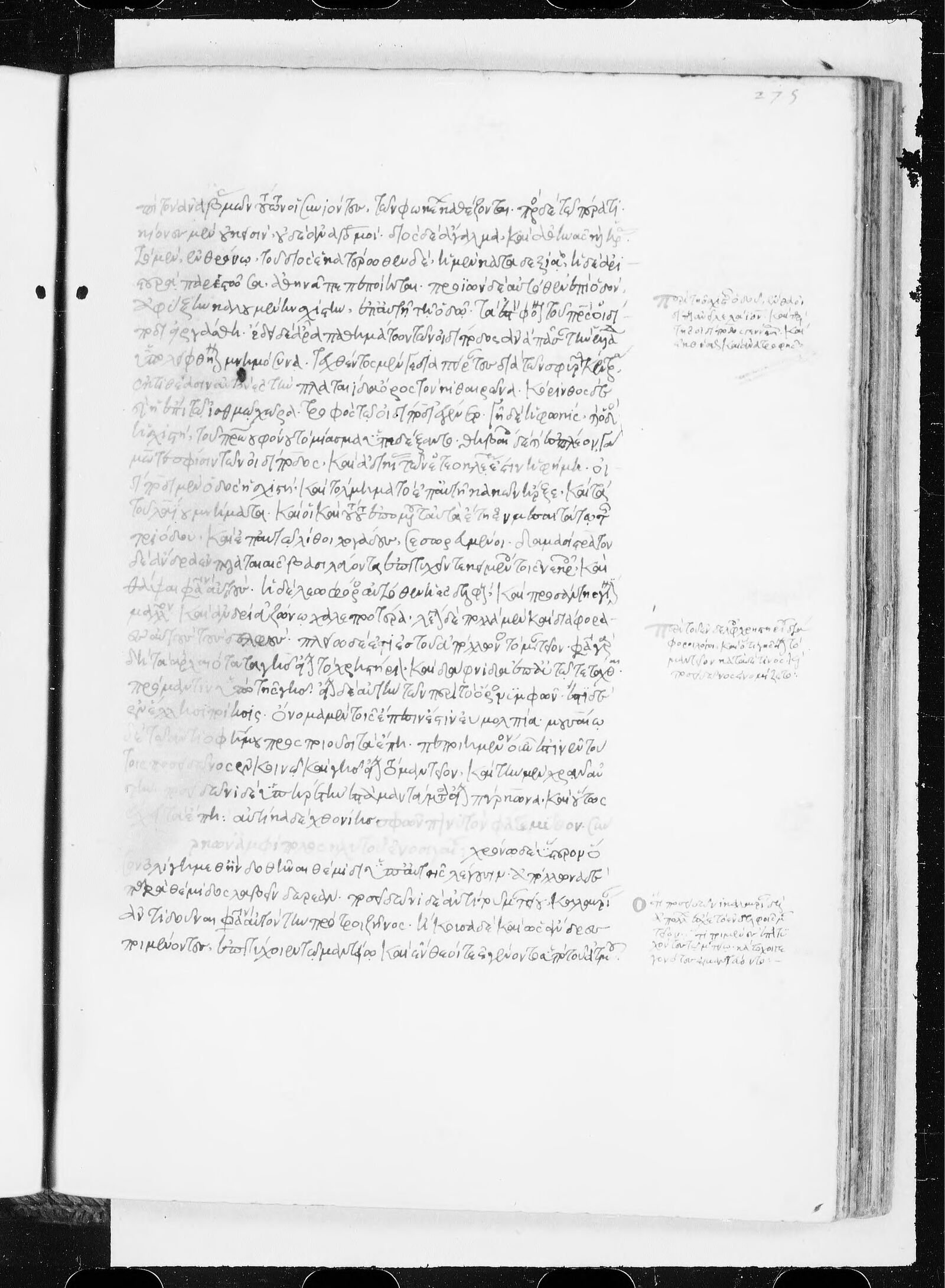
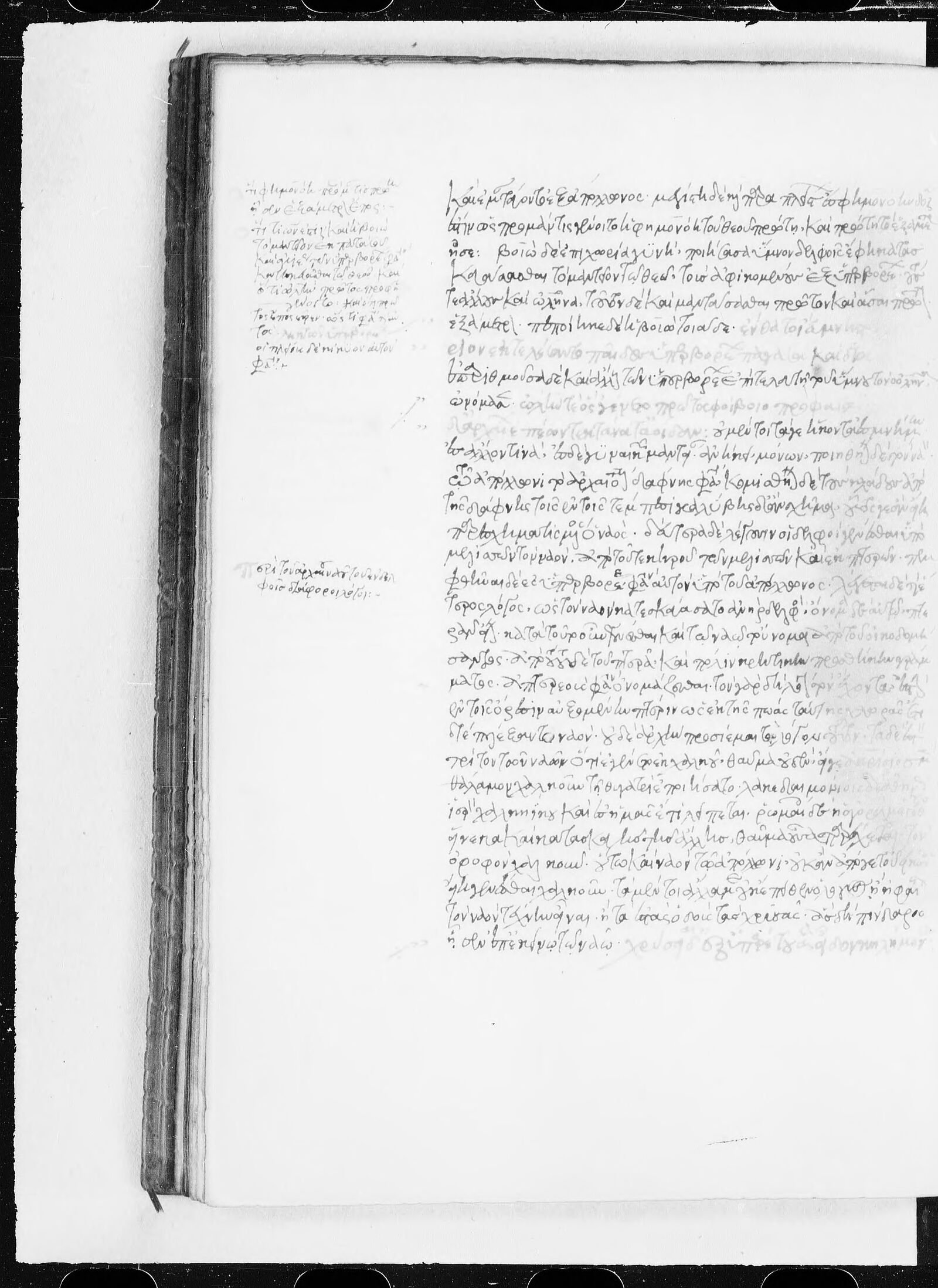
All manuscripts of Pausanias are late, of the 15th century. The one shown is Paris, BnF, grec 1410, copied in 1491 by Michael Souliardos (siglum Pa); the older Venice manuscript (Marc. gr. 413) has no published images. The BnF's images are made from microfilm, each showing an opening of two pages, cropped here to the page; each page has 30 lines. 10.5.7-10 run from fol. 275r line 29 to fol. 275v line 22.
How was this verified? (Provenance)
Where on the image
10.5.7 begins in fol. 275r line 29 (folio number read), ‹ἤκουσα δὲ καὶ ὡς ἄνδρες›, line 30 ‹ποιμαίνοντες ἐπιτύχοιεν τῷ μαντείῳ›; fol. 275v begins ‹καὶ ἐμαντεύσαντο ἐξ ἀπόλλωνος›; the section ends in line 6. Read on the BnF images (verse lines in faint red ink counted by hand).
ἤκουσα δὲ καὶ ὡς ἄνδρες ποιμαίνοντες ἐπιτύχοιεν τῷ μαντείῳ, καὶ ἔνθεοί τε ἐγένοντο ὑπὸ τοῦ ἀτμοῦ καὶ ἐμαντεύσαντο ἐξ Ἀπόλλωνος. μεγίστη δὲ καὶ παρὰ πλείστων ἐς Φημονόην δόξα ἐστίν, ὡς πρόμαντις γένοιτο ἡ Φημονόη τοῦ θεοῦ πρώτη καὶ πρώτη τὸ ἑξάμετρον ᾖσεν. Βοιὼ δὲ ἐπιχωρία γυνὴ ποιήσασα ὕμνον Δελφοῖς ἔφη κατασκευάσασθαι τὸ μαντεῖον τῷ θεῷ τοὺς ἀφικομένους ἐξ Ὑπερβορέων τούς τε ἄλλους
καὶ Ὠλῆνα· τοῦτον δὲ καὶ μαντεύσασθαι πρῶτον καὶ ᾄσαι πρῶτον τὸ ἑξάμετρον.
I have heard too that shepherds feeding their flocks came upon the oracle, were inspired by the vapor, and prophesied as the mouthpiece of Apollo. The most prevalent view, however, is that Phemonoe was the first prophetess of the god, and first sang in hexameter verse. Boeo, a native woman who composed a hymn for the Delphians, said that the oracle was established for the god by comers from the Hyperboreans, Olen and others, and that he was the first to prophesy and the first to chant the hexameter oracles.
Where on the image
10.5.8 begins in fol. 275v line 6, ‹πεποίηκε δὲ ἡ βοιὼ τοιάδε· ἔνθα τοι εὔμνη-›; Boeo's verses and the naming of Olen (‹ὠλήν θ' ὃς γένετο›, line 9) follow; the section ends in line 11. Read on the BnF image.
πεποίηκε δὲ ἡ Βοιὼ τοιάδε·
ἔνθα τοι εὔμνηστον χρηστήριον ἐκτελέσαντο
παῖδες Ὑπερβορέων Παγασὸς καὶ δῖος Ἀγυιεύς.
ἐπαριθμοῦσα δὲ καὶ ἄλλους τῶν Ὑπερβορέων, ἐπὶ τελευτῇ τοῦ ὕμνου τὸν Ὠλῆνα ὠνόμασεν·
Ὠλήν θʼ, ὃς γένετο πρῶτος Φοίβοιο προφάτας,
πρῶτος δʼ ἀρχαίων ἐπέων τεκτάνατʼ ἀοιδάν.
οὐ μέντοι τά γε ἥκοντα ἐς μνήμην ἐς ἄλλον τινά, ἐς δὲ γυναικῶν μαντείαν ἀνήκει μόνων.
The verses of Boeo are:—
Here in truth a mindful oracle was built
By the sons of the Hyperboreans, Pagasus and divine Agyieus.
After enumerating others also of the Hyperboreans, at the end of the hymn she names Olen:—
And Olen, who became the first prophet of Phoebus,
And first fashioned a song of ancient verses.
Tradition, however, reports no other man as prophet, but makes mention of prophetesses only.
Where on the image
10.5.9 begins in fol. 275v line 11, ‹ποιηθῆναι δὲ τὸν ναὸν›, and ends in line 16 with ‹ὑπὸ τοῦ ἀπόλλωνος› (the wax temple sent to the Hyperboreans). Read on the BnF image.
ποιηθῆναι δὲ τὸν ναὸν τῷ Ἀπόλλωνι τὸ ἀρχαιότατον δάφνης φασί, κομισθῆναι δὲ τοὺς κλάδους ἀπὸ τῆς δάφνης τῆς ἐν τοῖς Τέμπεσι· καλύβης δʼ ἂν σχῆμα οὗτός γε ἂν εἴη παρεσχηματισμένος ὁ ναός. δεύτερα δὲ λέγουσιν οἱ Δελφοὶ γενέσθαι ὑπὸ μελισσῶν τὸν ναὸν ἀπό τε τοῦ κηροῦ τῶν μελισσῶν καὶ ἐκ πτερῶν· πεμφθῆναι δὲ ἐς Ὑπερβορέους φασὶν αὐτὸν ὑπὸ τοῦ Ἀπόλλωνος.
They say that the most ancient temple of Apollo was made of laurel, the branches of which were brought from the laurel in Tempe. This temple must have had the form of a hut. The Delphians say that the second temple was made by bees from bees-wax and feathers, and that it was sent to the Hyperboreans by Apollo.
Where on the image
10.5.10 begins in fol. 275v line 16, ‹λέγεται δὲ καὶ ἕ-›, and ends in line 22, ‹διεπλέξαντο ναόν· οὐδὲ ἀρχὴν προσίεμαι τὸν λόγον›, followed by 10.5.11. Read on the BnF image.
λέγεται δὲ καὶ ἕτερος λόγος, ὡς τὸν ναὸν κατεσκευάσατο ἀνὴρ Δελφός, ὄνομα δὲ αὐτῷ Πτερᾶν εἶναι· κατὰ τοῦτο οὖν γενέσθαι καὶ τῷ ναῷ τοὔνομα ἀπὸ τοῦ οἰκοδομήσαντος· ἀπὸ τούτου δὲ τοῦ Πτερᾶ καὶ πόλιν Κρητικὴν προσθήκῃ γράμματος Ἀπτερεούς φασιν ὀνομάζεσθαι. τὸν γὰρ δὴ λόγον τὸν ἔχοντα ἐς τὴν ἐν τοῖς ὄρεσιν αὐξομένην πτέριν, ὡς ἐκ τῆς πόας ταύτης χλωρᾶς ἔτι διεπλέξαντο ναόν, οὐδὲ ἀρχὴν προσίεμαι τὸν λόγον τοῦτον.
Another story is current, that the temple was set up by a Delphian, whose name was Pteras, and so the temple received its name from the builder. After this Pteras, so they say, the city in Crete was named, with the addition of a letter, Apterei. The story that the temple was built of the fern (pteris) that grows on the mountains, by interweaving fresh stalks of it, I do not accept at all.
Notes
- Greek: Spiro's Teubner text via Perseus, not a transcription of the manuscript.
- English: Jones's Loeb translation via Perseus; Jones's footnotes are omitted.
Cite
Sources
- Source: Paris gr. 1410 via Gallica (BnF) + Spiro's Greek (Perseus) + Jones's English (Loeb, Perseus) (holding institution)
- Critical edition: Perseus editions named per passage
← previous · → next · v cycle view · l back to library