Pausanias, Description of Greece 5.7.6-9: the Idaean Heracles brings the wild olive from the Hyperboreans to Olympia
Introduction
In book 5, on Elis and Olympia, Pausanias gives the Elean account of how the Olympic games began. Cronus was the first king of heaven, and the men of the golden race built him a temple at Olympia. When Zeus was born, Rhea gave him into the keeping of the Dactyls of Ida, also called Curetes, five brothers from Crete led by Heracles (not the son of Alcmena) (5.7.6). Heracles set his brothers to race and crowned the winner with wild olive, which he had brought to Greece from the land of the Hyperboreans (5.7.7). Pausanias then cites the poets who wrote of the Hyperboreans: Olen the Lycian, Melanopus of Cyme, and Aristeas of Proconnesus (5.7.8-9). The Idaean Heracles is said to have named the games Olympic and to have held them every fifth year because the brothers were five (5.7.9). Pindar's Olympian 3, also in this collection, tells how Heracles the son of Alcmena brought the olive from the Hyperboreans.
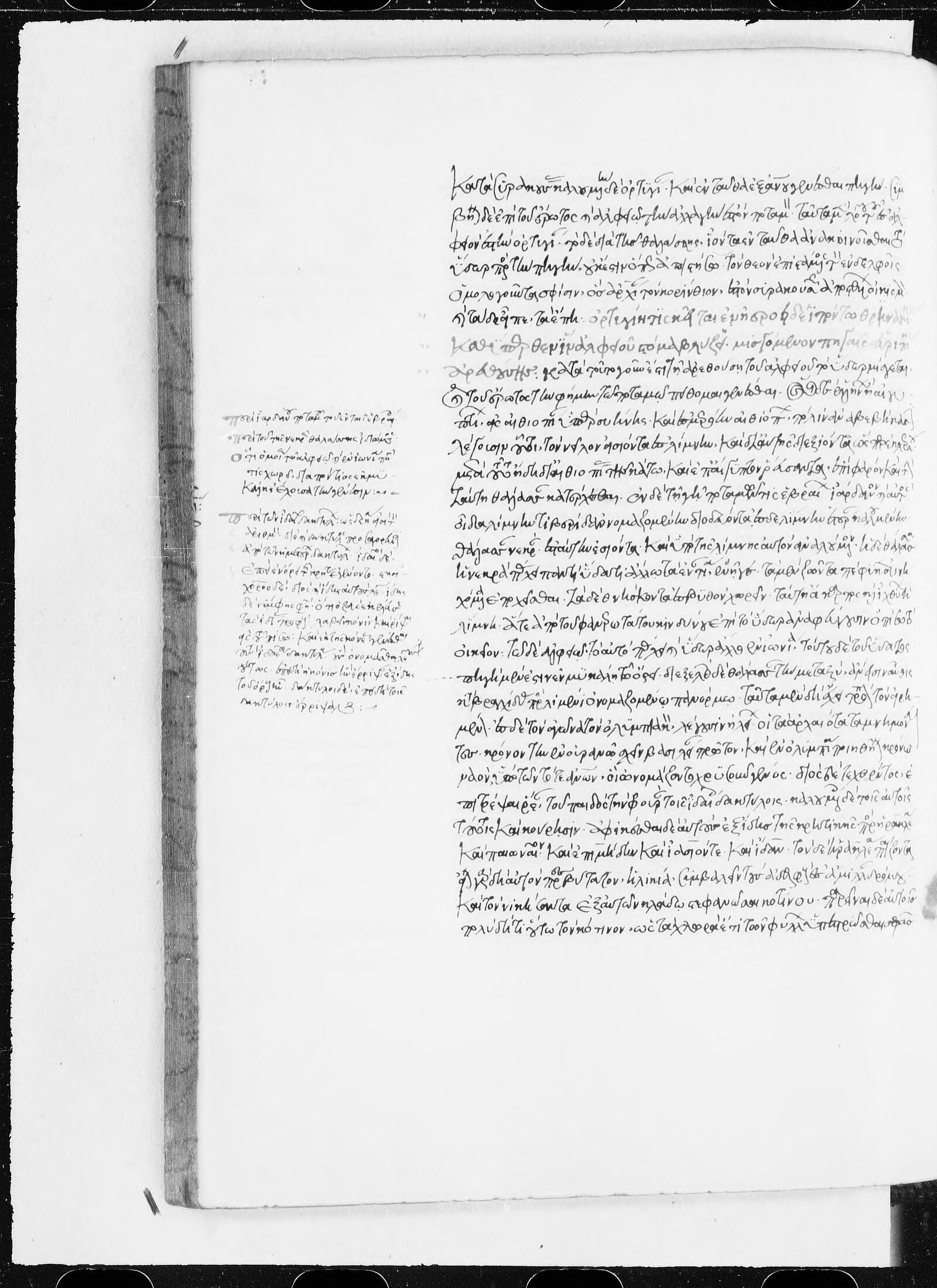
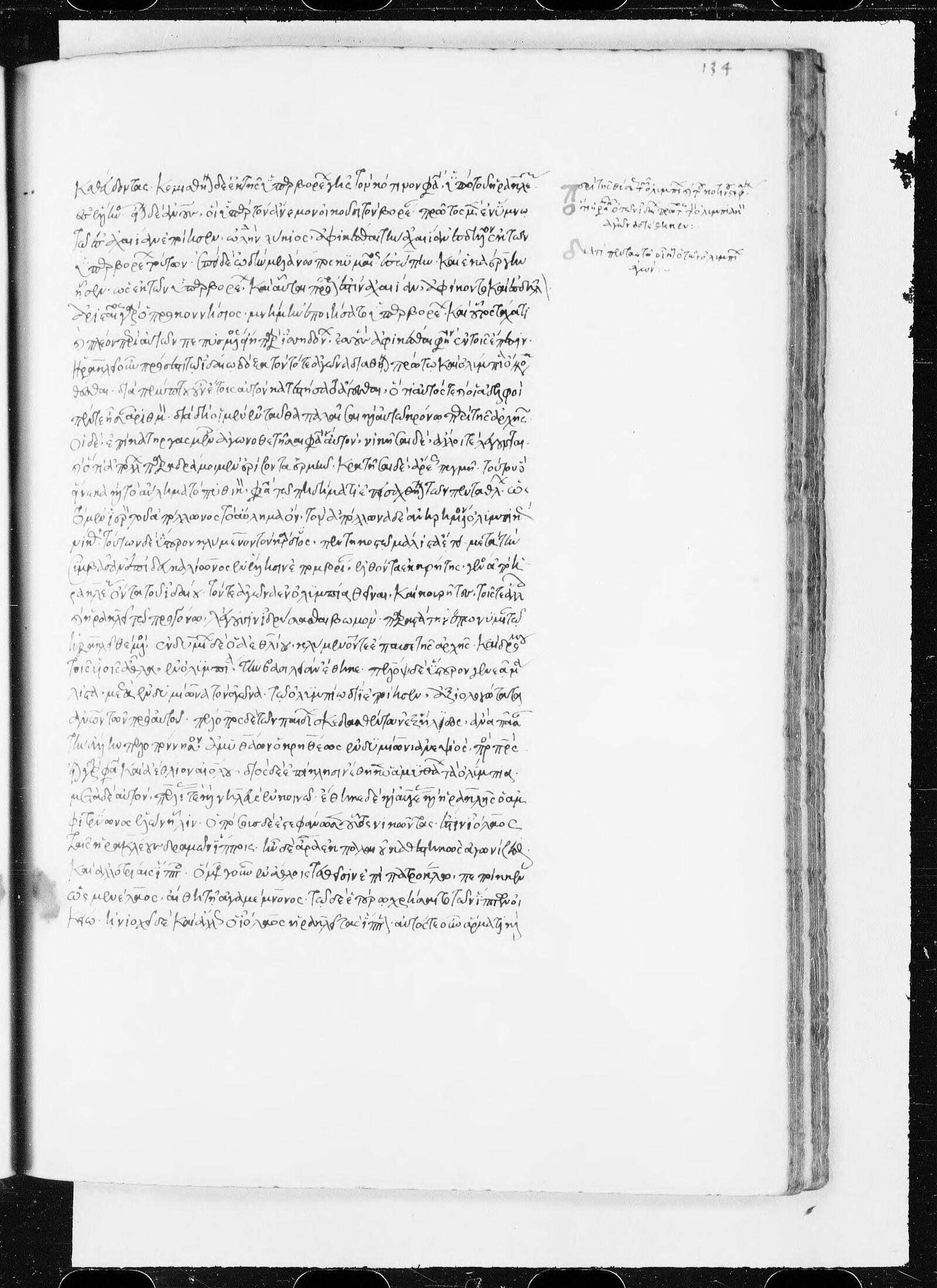
All manuscripts of Pausanias are late, of the 15th century. The one shown is Paris, BnF, grec 1410, copied in 1491 by Michael Souliardos (siglum Pa); the older Venice manuscript (Marc. gr. 413) has no published images. The BnF's images are made from microfilm, each showing an opening of two pages, cropped here to the page; each page has 30 lines. 5.7.6-9 run from fol. 133v line 21 to fol. 134r line 10 (image 141 of the BnF set, one opening).
How was this verified? (Provenance)
Where on the image
5.7.6 begins in fol. 133v line 21, after 5.7.5 ‹πρὸς λιμένι ὀνομαζομένῳ πανόρμῳ›: ‹ταῦτα μὲν δὴ ἔχει τρόπον τὸν εἰρη|μένον›; line 22 reads ‹ἐς δὲ τὸν ἀγῶνα τὸν ὀλυμπικὸν λέγουσιν ἠλείων›, line 25 ‹τοῖς ἰδαίοις δακτύλοις›; the section ends in line 27 with ‹καὶ ἰάσιόν τε καὶ ἴδαν›. Lines counted on the 30-line page; read on the BnF image (image 141, left page) and full-resolution crops.
ταῦτα μὲν δὴ ἔχει τρόπον τὸν εἰρημένον· ἐς δὲ τὸν ἀγῶνα τὸν Ὀλυμπικὸν λέγουσιν Ἠλείων οἱ τὰ ἀρχαιότατα μνημονεύοντες Κρόνον τὴν ἐν οὐρανῷ σχεῖν βασιλείαν πρῶτον καὶ ἐν Ὀλυμπίᾳ ποιηθῆναι Κρόνῳ ναὸν ὑπὸ τῶν τότε ἀνθρώπων, οἳ ὠνομάζοντο χρυσοῦν γένος· Διὸς δὲ τεχθέντος ἐπιτρέψαι Ῥέαν τοῦ παιδὸς τὴν φρουρὰν τοῖς Ἰδαίοις Δακτύλοις, καλουμένοις δὲ τοῖς αὐτοῖς τούτοις καὶ Κούρησιν· ἀφικέσθαι δὲ αὐτοὺς ἐξ Ἴδης τῆς Κρητικῆς, [πρὸς] Ἡρακλέα καὶ Παιωναῖον καὶ Ἐπιμήδην καὶ Ἰάσιόν τε καὶ Ἴδαν·
These things then are as I have described them. As for the Olympic games, the most learned antiquaries of Elis say that Cronus was the first king of heaven, and that in his honour a temple was built in Olympia by the men of that age, who were named the Golden Race. When Zeus was born, Rhea entrusted the guardianship of her son to the Dactyls of Ida, who are the same as those called Curetes. They came from Cretan Ida—Heracles, Paeonaeus, Epimedes, Iasius and Idas.
Where on the image
5.7.7 begins in fol. 133v line 27, ‹τὸν δὲ ἡρακλέα παίζοντα›; line 29 ‹κλάδῳ στεφανῶσαι κοτίνου›; the page ends (line 30) ‹ὑπεστρῶσθαι σφᾶς›. Fol. 134r (folio number 134 read) begins ‹καθεύδοντας· κομισθῆναι δὲ ἐκ τῆς ὑπερβορέων γῆς τὸν κότινον›, and the section ends in line 2 with ‹οἰκοῦσι τὸν βορέαν›. Read on the BnF image (image 141) and crops.
τὸν δὲ Ἡρακλέα παίζοντα—εἶναι γὰρ δὴ αὐτὸν πρεσβύτατον ἡλικίᾳ—συμβαλεῖν τοὺς ἀδελφοὺς ἐς ἅμιλλαν δρόμου καὶ τὸν νικήσαντα ἐξ αὐτῶν κλάδῳ στεφανῶσαι κοτίνου· παρεῖναι δὲ αὐτοῖς πολὺν δή τι οὕτω τὸν κότινον ὡς τὰ χλωρὰ ἔτι τῶν φύλλων ὑπεστρῶσθαι σφᾶς καθεύδοντας. κομισθῆναι δὲ ἐκ τῆς Ὑπερβορέων γῆς τὸν κότινόν φασιν ὑπὸ τοῦ Ἡρακλέους ἐς Ἕλληνας, εἶναι δὲ ἀνθρώπους οἳ ὑπὲρ τὸν ἄνεμον οἰκοῦσι τὸν Βορέαν.
Heracles, being the eldest, matched his brothers, as a game, in a running-race, and crowned the winner with a branch of wild olive, of which they had such a copious supply that they slept on heaps of its leaves while still green. It is said to have been introduced into Greece by Heracles from the land of the Hyperboreans, men living beyond the home of the North Wind.
Where on the image
5.7.8 begins at the end of fol. 134r line 2, ‹πρῶτος μὲν ἐν ὕμνῳ›; line 3 ‹ἐποίησεν ὠλὴν λύκιος›, line 4 ‹μελάνωπος κυμαῖος ἐς ὦπιν καὶ ἑκαέργην›; the section ends at the end of line 5 with ‹ἀφίκοντο καὶ ἐς δῆλ›, the ending -ον left out and marked by an abbreviation stroke. Read on the BnF image and a zoomed crop (QC 2026-11-12).
πρῶτος μὲν ἐν ὕμνῳ τῷ ἐς Ἀχαιίαν ἐποίησεν Ὠλὴν Λύκιος ἀφικέσθαι τὴν Ἀχαιίαν ἐς Δῆλον ἐκ τῶν Ὑπερβορέων τούτων· ἔπειτα δὲ ᾠδὴν Μελάνωπος Κυμαῖος ἐς Ὦπιν καὶ Ἑκαέργην ᾖσεν, ὡς ἐκ τῶν Ὑπερβορέων καὶ αὗται πρότερον ἔτι τῆς Ἀχαιίας ἀφίκοντο [καὶ] ἐς Δῆλον·
Olen the Lycian, in his hymn to Achaeia, was the first to say that from these Hyperboreans Achaeia came to Delos. Then Melanopus of Cyme composed an ode to Opis and Hecaërge, declaring that these, even before Achaeia, came to Delos from the Hyperboreans.
Where on the image
5.7.9 begins at the start of fol. 134r line 6, ‹ἀριστέας γ(ὰρ) ὁ προκοννήσιος› (-ας written above the line, γὰρ abbreviated), and the line goes on ‹μνήμην ἐποιήσατο ὑπερβορέων καὶ οὗτος›; line 8 begins ‹ἡρακλεῖ οὖν πρόσεστι τῷ ἰδαίῳ›; the section ends in line 10, ‹πέντε ἦσαν ἀριθμόν›, followed in the same line by 5.7.10 ‹δία δὴ οἱ μὲν›. Two notes in the right margin, beside lines 1-3, concern the founding of the Olympic games. Read on the BnF image and a zoomed crop (QC 2026-11-12).
Ἀριστέας ⟨δὲ⟩ [γὰρ] ὁ Προκοννήσιος—μνήμην ⟨γὰρ⟩ ἐποιήσατο Ὑπερβορέων καὶ οὗτος—τάχα τι καὶ πλέον περὶ αὐτῶν πεπυσμένος ⟨ἂν⟩ εἴη παρὰ Ἰσσηδόνων, ἐς οὓς ἀφικέσθαι φησὶν ἐν τοῖς ἔπεσιν. Ἡρακλεῖ οὖν πρόσεστι τῷ Ἰδαίῳ δόξα τὸν τότε ἀγῶνα διαθεῖναι πρώτῳ καὶ Ὀλύμπια ὄνομα θέσθαι· διὰ πέμπτου οὖν ἔτους αὐτὸν κατεστήσατο ἄγεσθαι, ὅτι αὐτός τε καὶ οἱ ἀδελφοὶ πέντε ἦσαν ἀριθμόν.
And Aristeas of Proconnesus—for he too made mention of the Hyperboreans—may perhaps have learnt even more about them from the Issedones, to whom he says in his poem that he came. Heracles of Ida, therefore, has the reputation of being the first to have held, on the occasion I mentioned, the games, and to have called them Olympic. So he established the custom of holding them every fifth year, because he and his brothers were five in number.
Notes
- Greek: Spiro's Teubner text via Perseus, not a transcription of the manuscript. Spiro's editorial signs are kept: words he deletes are in square brackets (πρὸς in 5.7.6, καὶ in 5.7.8, γὰρ after Ἀριστέας in 5.7.9) and words he supplies are in angle brackets (δὲ, γὰρ and ἂν in 5.7.9). Where this was checked, the manuscript has the words he deletes and lacks two of his supplements: fol. 133v line 26 ends ‹πρ(ὸς) ἡρακλέα›, fol. 134r line 5 ends ‹ἀφίκοντο καὶ ἐς δῆλ(ον)›, and line 6 reads ‹ἀριστέας γ(ὰρ) ὁ προκοννήσιος μνήμην ἐποιήσατο›, with no δὲ after ἀριστέας and no γὰρ after μνήμην.
- English: Jones and Ormerod's Loeb translation (1926), transcribed from the printed page; their footnote is omitted.
Cite
Sources
- Source: Paris gr. 1410 fol. 133v-134r via Gallica (BnF) + Spiro's Greek (Perseus) + Jones and Ormerod's English (Loeb 1926) (holding institution)
- Critical edition: Perseus editions named per passage
← previous · → next · v cycle view · l back to library