Ludlul bel nemeqi, Tablet II: illness and despair
Introduction
The sufferer reflects that he has done his duty to the gods and still suffers; he describes in detail the diseases that afflict him and the failure of the diviners and exorcists to help.
Ludlul bel nemeqi ('I will praise the lord of wisdom'), the Poem of the Righteous Sufferer, is a monologue in five tablets by Shubshi-meshre-Shakkan, a nobleman who lost the favour of his king and his gods, was struck by illness, and was restored by Marduk. It was composed in the late second millennium BCE and copied widely in the first millennium. This page follows the line numbering of the electronic Babylonian Library edition.
How this page is built. Each section is a run of consecutive lines as written on one photographed clay tablet. For every line the eBL edition (https://www.ebl.lmu.de/corpus/L/2/2/SB/II) lists the manuscripts that carry it, with each tablet's own column and line numbers; the tablet chosen for each run is the photographed copy of the work with the most signs preserved there. Commentaries and texts that only quote a line are never chosen. School and excerpt tablets are used only for lines that no photographed library copy preserves as well, and only where they carry the line as text; their sections say so. The original text is eBL's transliteration of that tablet's signs (not a modern composite text): square brackets mark broken signs, x an illegible sign, # a damaged sign, ? an uncertain reading, and words in {braces} are determinatives; the notes give a key to every sign used on this page, and eBL's layout codes are written out in words (for example '(line break)' or '(blank space)'). Superscript numbers are the line numbers of the eBL edition, used in both the Akkadian and the English. The English is B. R. Foster's translation in the eBL edition (CC BY-NC-SA 4.0), one line of English per line of the text; italics mark uncertain renderings, as in the source. Where the tablet is broken, the English still translates the whole line of eBL's composite text; each section's note names the lines that are broken on its tablet.
Finding a line on the photograph. Each section names the tablet, the face and column, and the tablet's own line numbers (a prime, as in 5', counts from the first preserved line of a broken column). On a tablet with six columns the obverse carries columns i-iii from left to right; the reverse, turned over from bottom to top, carries columns iv-vi from right to left. The photographs often show the obverse above the reverse with the edges around them; a fragment preserves only part of this layout.
This page shows 120 of the 120 lines of the eBL edition (100%), from 4 tablets in the British Museum: K.2518 (Nineveh), K.8396 (Nineveh), K.6935 (Nineveh), K.3972 (Nineveh).
How was this verified? (Provenance)
Where on the image
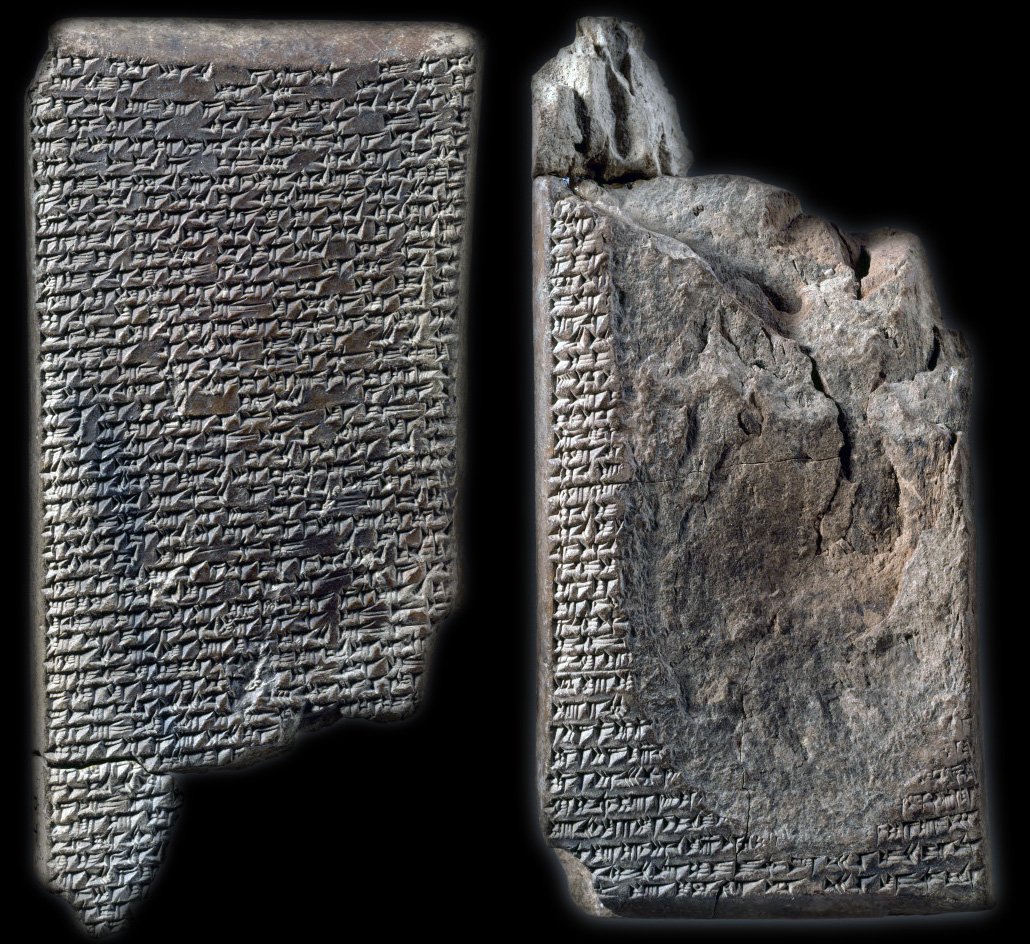
British Museum K.2518: obverse, the tablet's own lines 1 to 22. eBL's corpus edition (https://www.ebl.lmu.de/corpus/L/2/2/SB/II) attributes SB II 1-22 to this manuscript at these column and line numbers. Photograph checked: obverse and reverse side by side, with no scale bar and no ink number visible. About 50 dense lines on the obverse; the reverse has about 40 line-beginnings in a column plus a few lines across the bottom, the rest broken away. Consistent with eBL's obverse 47 and reverse 25 + 1. On this tablet line 1 is partly broken (square brackets and x in the Akkadian). The English of this line translates eBL's composite text, so it includes words that are not preserved on this tablet but are restored from other manuscripts or by the editors. Square brackets in the English mark eBL's restorations in its composite text; words that survive on other tablets carry no brackets even where this tablet is broken. Lines 2-22 are complete on this tablet.
1[šat]-tam#-ma a-na ba-laṭ a-dan-na i-te-eq
2a#-sah-har-ma le-mun le-mun-ma
3za-pur-ti u₂-ta-ṣa-pa i-šar-ti ul ut-tu
4DINGIR al-si-ma ul id-di-na pa-ni-šu₂
5u₂-sal-li {d}iš-tar-ri ul u₂!(I)-šaq-qa-a re-ši-ša₂
6{lu₂}HAL ina bi-ir ar₂-kat₃ ul ip-ru-us
7ina ma-aš₂-šak-ka u {lu₂}ENSI ul u₂-ša₂-pi di-i-ni
8za-qi₂-qu a-bal-ma ul u₂-pat-ti uz-ni
9{lu₂}MAŠ.MAŠ ina ki-kiṭ-ṭe-e ki-mil-ti ul ip-ṭur
10(gloss: 10) a-a-i-te ep-še-e-ti ša₂-na-a-ti ma-ti-tan
11a-mur-ma ar₂-kat₃ ri-da-ti ip-pe-ru
12ki-i ša₂ tam-qi₂-tu₄ a-na DINGIR la uk-tin-nu
13u₃ ina ma-ka-le-e {d}iš-tar-ri la zak-ru
14ap-pi la e-nu-u₂ šu-ken-ni la am-ru
15ina pi-i-šu₂ ip-par-ku-u₂ su-up-pe-e tes₂-li-ti
16ib-ṭi-lu u₄-mu DINGIR i-še-ṭu₂ eš-še-ši
17id-du-u₂ ah#-šu₂-nu me₂-šu-nu i-me₂-šu
18pa-la-hu u₃ it#-ʾu-du la u₂-šal-me-du UN-MEŠ-šu₂
19DINGIR-šu₂ la iz-kur# e-kul a-kal-šu₂
20(gloss: 10) i-zib {d}iš-tar-ta-šu₂ maṣ-has la ub-la
21a-na ša₂ im-hu-u₂ EN-šu₂ im-šu-u₂
22niš DINGIR-šu₂ kab-ti qal-liš iz-kur a-na-ku am-šal
1One whole year to the next, the predictable time passed by,
2As I turned round about me, it was more and more terrible,
3My ill luck was on the increase, I could find no good fortune.
4I called to my god, he did not show his face,
5I prayed to my goddess, she did not raise her head.
6The diviner did not get to the bottom of it with divination,
7With incense the dream interpreter did not clear up my case,
8I appealed for a dream spirit, but it did not inform me,
9The exorcist appeased no divine wrath with rites.
10What doings, strange everywhere!
11I looked behind me: persecution, harassment!
12Like one who had not made libations to his god,
13Nor invoked his goddess at a food offering,
14Who was not wont to prostrate, nor seen to bow down,
15From whose mouth prayer, supplication were wanting,
16Who skipped holy days, made light of festivals,
17Who was neglectful and disregarded their rites,
18Who had not taught his people reverence and worship,
19Who did not invoke his god, ate his food portion,
20Who snubbed his goddess, brought no flour offering,
21Like one gone out of his mind, who forgot his lord,
22Who casually swore a solemn oath by his god: I, indeed, became like (such a one)!
Where on the image
British Museum K.2518: obverse, the tablet's own lines 23 to 43. eBL's corpus edition (https://www.ebl.lmu.de/corpus/L/2/2/SB/II) attributes SB II 23-43 to this manuscript at these column and line numbers. Photograph checked: obverse and reverse side by side, with no scale bar and no ink number visible. About 50 dense lines on the obverse; the reverse has about 40 line-beginnings in a column plus a few lines across the bottom, the rest broken away. Consistent with eBL's obverse 47 and reverse 25 + 1. On this tablet lines 33-43 are partly broken (square brackets and x in the Akkadian). The English of these lines translates eBL's composite text, so it includes words that are not preserved on this tablet but are restored from other manuscripts or by the editors. Square brackets in the English mark eBL's restorations in its composite text; words that survive on other tablets carry no brackets even where this tablet is broken. Lines 23-32 are complete on this tablet.
23ah-su-us-ma ra-man su-up-pu-u₂ tes₂-li-ti
24tes₂-li-ti ta-ši-mat ni-qu-u sak-ku-u₂-a
25u₄-mu pa-la-ah DINGIR-MEŠ ṭu-ub lib₃-bi-ia
26u₄-mu re-du-ti {d}iš-tar ne₂-me-li ta-at-tur-ru
27ik-ri-bi LUGAL ši-i hi-du-ti
28u₃ ni-gu-ta-šu₂ a-na da-me-eq-ti# šum-ma
29u₂-šar a-na KUR-ia A-MEŠ DINGIR na-ṣa-ri
30(gloss: 10) šu-mi {d}iš-tar šu-qur UN-MEŠ-ia uš-ta-hi-iz
31ta-na-da-a-ti LUGAL e-liš u₂-maš-šil
32u₃ pu-luh-tu E₂.GAL um-man u₂-šal-mid#
33lu i-de ki-i it-ti DINGIR# i-ta-am-gur an-na-a#-[ti]
34ša₂ dam-qat ra-ma-nu-u[š] ana# DINGIR gul-lul-[tu₂]
35ša₂ ina lib₃-bi-šu₂ mu-us-s[u-k]at₃ UGU DINGIR-šu₂ dam-[qat]
36a-a-u₂ ṭe₃-em DINGIR#-MEŠ# qe₂#-reb# AN-e i-la[m-mad]
37mi-lik-ša₂ an-za-nun-ze-e [i-ha-ak-ki]m m[an-nu]
38e#-ka#-a#-ma# il-ma-d[a x x x x x x x x x]
39ša₂ ina am-šat ib-l[u-ṭu x x x x x]
40(gloss: 10) sur-riš uš-t[a-dir x x x x x]
41ina ṣi-bit ap-[pi x x x x x x x]
42ina pi-it pu-r[i-di x x x x x x x]
43ki-i pe-te u₃# [x x x x x x x x x]
23I, for my part, was mindful of prayer and supplication,
24Supplication to me was the natural recourse, sacrifice my rule.
25The day for reverencing the gods was a source of satisfaction to me,
26The goddess’s ceremony was my profit and return.
27Praying for the king, that was my joy,
28And his fanfare was as if for (my own) good omen.
29I instructed my land to observe the god’s rites,
30The goddess's name did I drill my people to esteem.
31I made my praises of the king like a god’s,
32And taught the populace reverence for the palace.
33I wish I knew that these things were always pleasing to a god!
34What is good to one’s self could be an offense to a god,
35What in one's own heart seems abominable could be good to one’s god!
36Whoever could learn the reasoning of a god, the innermost core of heaven?
37A (goddess’s) intentions, the unknowable depths of the earth, who could fathom them?
38Where might mere human beings have learned the ways of the gods?
39He who was alive yesterday died today,
40For a moment one is downcast, in an instant full of cheer,
41In a wink he sings in jubilation,
42In a heartbeat he moans like a professional mourner,
43What (the gods) intend for people changes at the blinking of an eye.
Where on the image
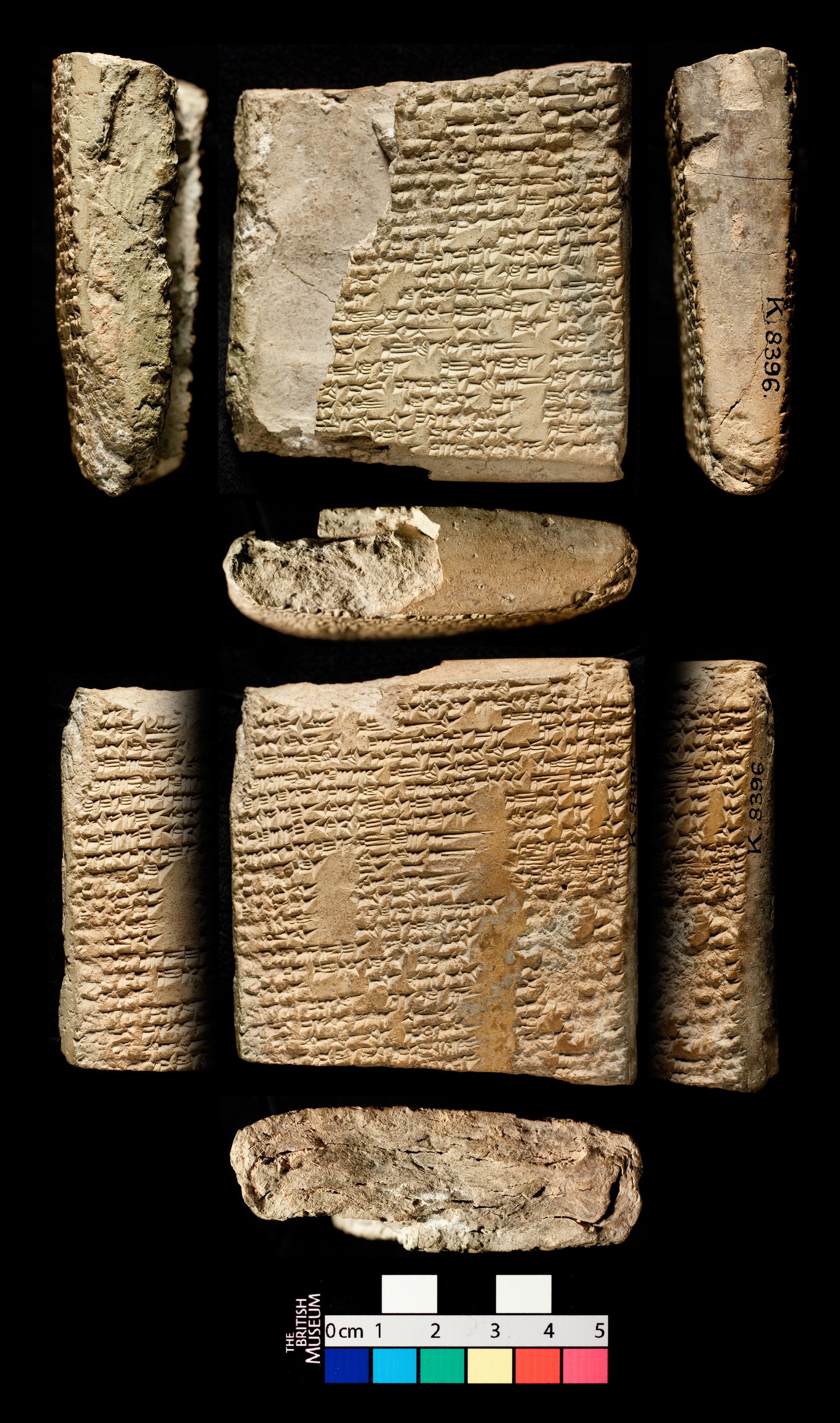
British Museum K.8396: obverse, the tablet's own lines 1' to 22'. eBL's corpus edition (https://www.ebl.lmu.de/corpus/L/2/2/SB/II) attributes SB II 44-65 to this manuscript at these column and line numbers. Photograph checked: obverse, reverse and edges, ink K.8396 on the edge. About 22 lines on the obverse (left part of the surface lost) and about 25 on the reverse, consistent with eBL's obverse 22 and reverse 26. On this tablet lines 44-65 are partly broken (square brackets and x in the Akkadian). The English of these lines translates eBL's composite text, so it includes words that are not preserved on this tablet but are restored from other manuscripts or by the editors. Square brackets in the English mark eBL's restorations in its composite text; words that survive on other tablets carry no brackets even where this tablet is broken.
44[x x x x im-ma]-a# ša₂#-lam#-tiš₂#
45[x x x x i]-ša₂#-an-na-na DINGIR-šin
46[x x x x x x x x] i#-li# ša₂-ma#-ʾi
47[x x x x x i-dab-b]u-ba# a#-rad# er#-kal#-[l]a
48[x x x x x x] x x qe₂#-reb#-ši-na la# a[l-tan-da]
49[x x x x x x] i#-qu#-pa# me-hu#-u#
50[x x x x x e-l]i-ia# in-ne₂-eš-ra
51[x x x x x] i#-šid# AN-e i-zi-qa
52[x x x x KI]-ti₃# i#-ši-ha di-ʾ-u₂
53[x x x x x i]t-ta-ṣa-a ABZU-uš-šu₂
54[x x x x n]e₂-ʾi-i u₂-ṣa-a ul-tu e₂-kur
55[x x x ur]-da! ul-tu qe₂-reb KUR-i
56[x x x x IL]LU šu-ru-up-pu-u i-nu-šu
57[x x ur-qi₂-t]u₄ KI-ti₃ i-pe-ṣe lu-ʾ-tu₂
58[x x x p]u-hur-šu₂-nu 1-niš iṭ-hu-ni
59[x x x qaq-qa-d]u i-te-ʾu-u₂ muh-hi
60[x x x] i#-ki-lu i-na-i-lu IGI+MIN-ia
61[x x x] i*#-te-qu u₂-ram#-mu-u₂ ki-ša₂-du
62[x x im-h]a-ṣu tu-le-e it-te#-ru#
63[x x x i]l-pu-tu₂ ra-ʾi#-ba id#-du#-u₂#
64[x x x x lib₃]-bi#-ia ip-pu-hu i-ša₂-ti*#
65[x x x id-lu-h]u u₂-na-ti-ia₂ ut-ti#-[ku]
44Starving, they become like corpses,
45Full, they would rival their gods.
46In good times, they speak of scaling heaven,
47When it goes badly, they complain of going down to hell.
48I have … these things, I have made no sense of them.
49But as for me, in despair, a whirlwind was driving me,
50Debilitating disease was let loose upon me.
51An evil vapor blew against me [from the] ends of the earth,
52Migraine surged up against me from the breast of hell.
53A malignant specter emerged from its hidden depth,
54A relentless ghost came out of its dwelling place,
55A she-demon came down from a mountain.
56Ague set forth with high water,
57Frailty broke through the ground with the plants.
58[They assem]bled their host, together they came upon me.
59[They] hem[med in my he]ad, they closed around my pate,
60My features were gloomy, my eyes ran a flood,
61They wrenched my nape tendons, they made my neck limp,
62They thwacked my chest, they pounded my breast,
63They hurt my back, threw me into convulsions,
64They kindled a fire in my epigastrium,
65They churned up my bowels, they tw[isted] my entrails,
Where on the image
British Museum K.8396: reverse, the tablet's own lines 1 to 25. eBL's corpus edition (https://www.ebl.lmu.de/corpus/L/2/2/SB/II) attributes SB II 66-90 to this manuscript at these column and line numbers. Photograph checked: obverse, reverse and edges, ink K.8396 on the edge. About 22 lines on the obverse (left part of the surface lost) and about 25 on the reverse, consistent with eBL's obverse 22 and reverse 26. On this tablet lines 66-70, 80-81, 83-90 are partly broken (square brackets and x in the Akkadian). The English of these lines translates eBL's composite text, so it includes words that are not preserved on this tablet but are restored from other manuscripts or by the editors. Square brackets in the English mark eBL's restorations in its composite text; words that survive on other tablets carry no brackets even where this tablet is broken. Lines 71-79, 82 are complete on this tablet.
66[(x) x x x x x] u₂-la#-ʾi#-bu ha#-š[e*-e?-a?]
67[meš]-re#-ti#-ia# u₂#-la#-ʾi-ib# u₂-niš-šu pi-iṭ#-ri#
68[la]-na zaq-ru i-bu#-tu₂ i-ga-ri-iš
69[gat]-ti rap-šat u₂-ru-ba-iš uš-ni-i-lu*#
70[k]i-i u₂-lil-te an-na-bi-ik bu-pa-niš an-na-di
71a#-lu-u₂ zu-um-ri i-te-di-iq ṣu-ba-ti
72ki#-ma šu-uš-kal-li u₂-kat₃-ti-man-ni šit-tu
73bal-ṣa-a-ma ul i-na-aṭ-ṭal i-na-a-a
74pe-ta-a-ma ul i-šem-ma-a uz-na-a-a
75kal pag-ri-ia i-ta-haz ri-mu-tu₂
76mi#-šit#-tu im-ta-qut eli UZU-MEŠ-ia
77man-gu# iṣ-bat i-di-ia
78lu#-ʾ-tu₂ im-ta-qut UGU bir-ki-ia
79ma#-ša₂-ma# na-mu-ši-ša₂ ši-pa#-a#-a
80(gloss: 10) ha*#-am*#-ṣu šuk#-šu-du u₂-nap-paq ma*#-[aq]-ti*#-iš#
81qa*#-du-ut mu-tu i-te-rim pa#-[n]i-ia#
82i*#-ša₂*#-as-sa-ni-ma ša₂-ʾi-li ul# a#-pal#
83x-a*-a* i-bak-ku-u ra#-man u[l] i#-ši#
84ina pi#-ia na-ah-bala n[a-di-m]a
85u₃# nap#-ra-ku se-ki-ir ša[p-t]i*-a
86lib₃*#-bi e-di-il pe-hi maš-qu*#-[u₂]-a
87ar₂#-kat bu-bu-te ka-tim ur-ʾu#-[d]i
88[aš₂]-na#-an šum-ma da-ad-da-riš a-la#-ʾu#-ut#
89[x x x x x UN-M]E[Š] UGU#-ia im#-tar#-ṣu#
90[x x x x x x x x] si#-le#-eʾ#-tu*#
66Coughing and hacking infected [my] lu[ngs],
67They infected my limbs, made my mobility wobbly,
68They toppled my lofty stature like a wall,
69They flattened my robust figure like a bulrush,
70I was knocked over like a marsh weed, I was thrown on my face.
71A demon clothed himself in my body for a garment,
72Drowsiness was smothering me like a net,
73My eyes were looking, they could not see,
74My ears were listening, they could not hear.
75Numbness took over my whole body,
76Paralysis fell upon my flesh.
77Stiffness seized my arms,
78Weakness befell my knees,
79My feet began to forget how to move.
80Stripped and defeated(?), I was gasping like one fallen,
81The sliminess of death had shrouded my face!
82When someone was calling to me, I could not answer who was asking,
83… they were weeping, I had lost consciousness.
84A snare was laid over my mouth,
85And a bolt was locking my lips.
86My insides were barred, my point of slaking blocked,
87My hunger was chronic, my gullet constricted.
88Were it of grain, I would choke it down like stinkweed,
89Beer, the sustenance of humankind, was sickening to me.
90Indeed, the malady dragged on!
Where on the image
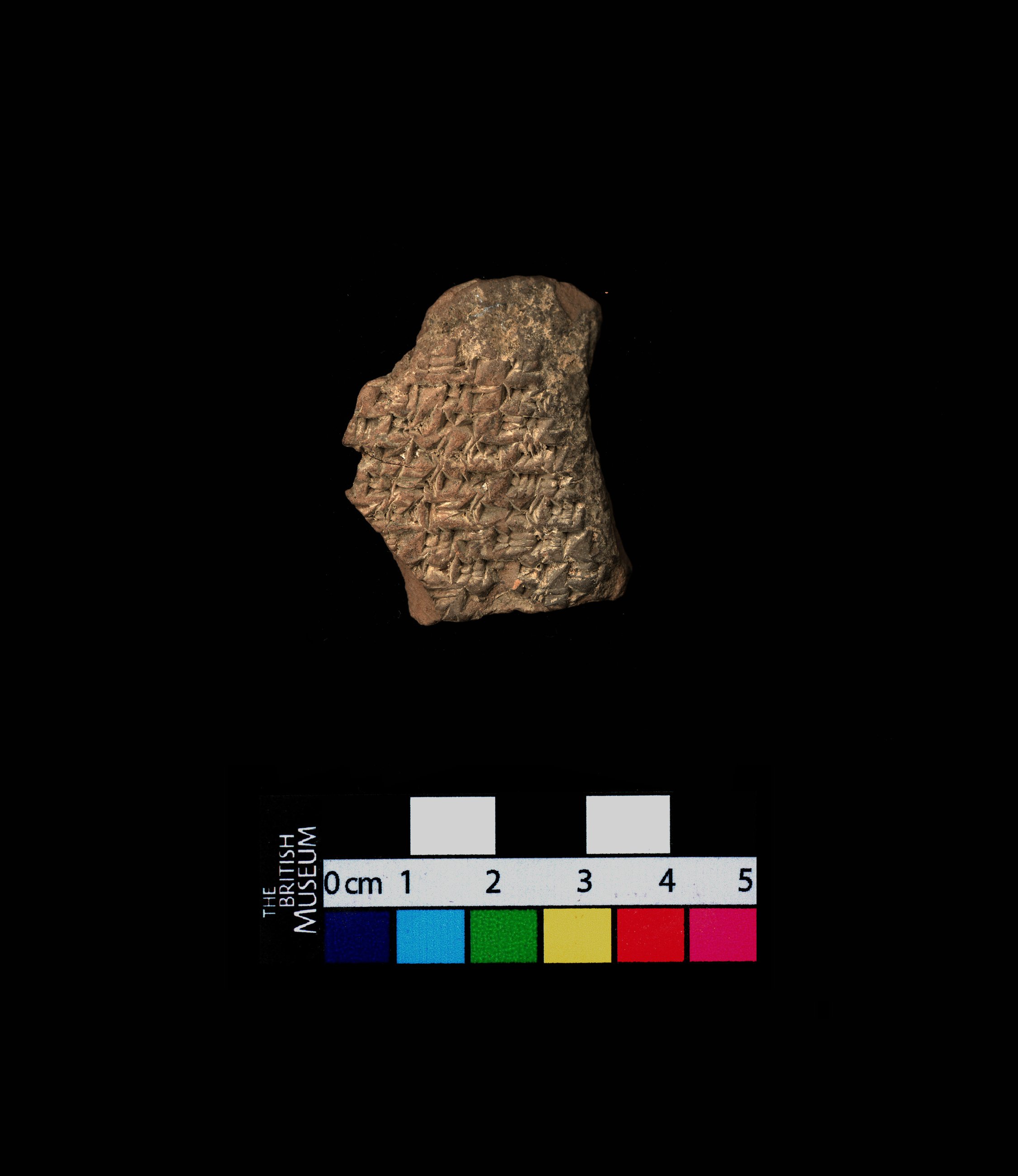
British Museum K.6935: reverse, the tablet's own lines 2' to 10'. eBL's corpus edition (https://www.ebl.lmu.de/corpus/L/2/2/SB/II) attributes SB II 91-99 to this manuscript at these column and line numbers. Photograph checked: one face only of a fragment about 3.5 cm wide with 9 or 10 dense lines; no ink number visible. Consistent with eBL's reverse 10. On this tablet of lines 91, 99 only one to three signs survive and lines 92-98 are partly broken (square brackets and x in the Akkadian). The English of these lines translates eBL's composite text, so it includes words that are not preserved on this tablet but are restored from other manuscripts or by the editors. Square brackets in the English mark eBL's restorations in its composite text; words that survive on other tablets carry no brackets even where this tablet is broken.
91[(x) x x ma-ka]-le#-e zi-[mu-u₂-a x x x]
92[(x) x i]š-tah-hu da-m[i x x x]
93[e-ṣe-e]n-ti#-MU us-su-[qat₆ x x x x x]
94[x x x x x x n]u-up-pu-hu u₂-r[iq-ta x x x]
95[x x x GI]Š.NA₂ me-sir₂ mu-ṣe#-[e x x x]
96[x x ki-šuk-k]i-ia i-tu-r[a x x x]
97[x x x x U]ZU-ia# na-d[a-a x x x x]
98[x x ra-ma-ni-i]a? mu#-uq#-q[u-ta x x x x]
99[x x x x x šu]m?-r[u?-ṣa x x x x x x x]
91For lack of food my features became unrecognizable,
92My flesh wasted away, my blood was running dry.
93My bones stuck out, covered (only) with skin,
94My veins were swelling through, [I was] afflicted with jaundice.
95I took to bed as confinement, going out was exhaustion,
96Home turned into my jailhouse.
97My arms were powerless, my flesh being the manacle,
98My feet having failed, my person was the fetter.
99My afflictions were grievous, the blow was severe,
Where on the image
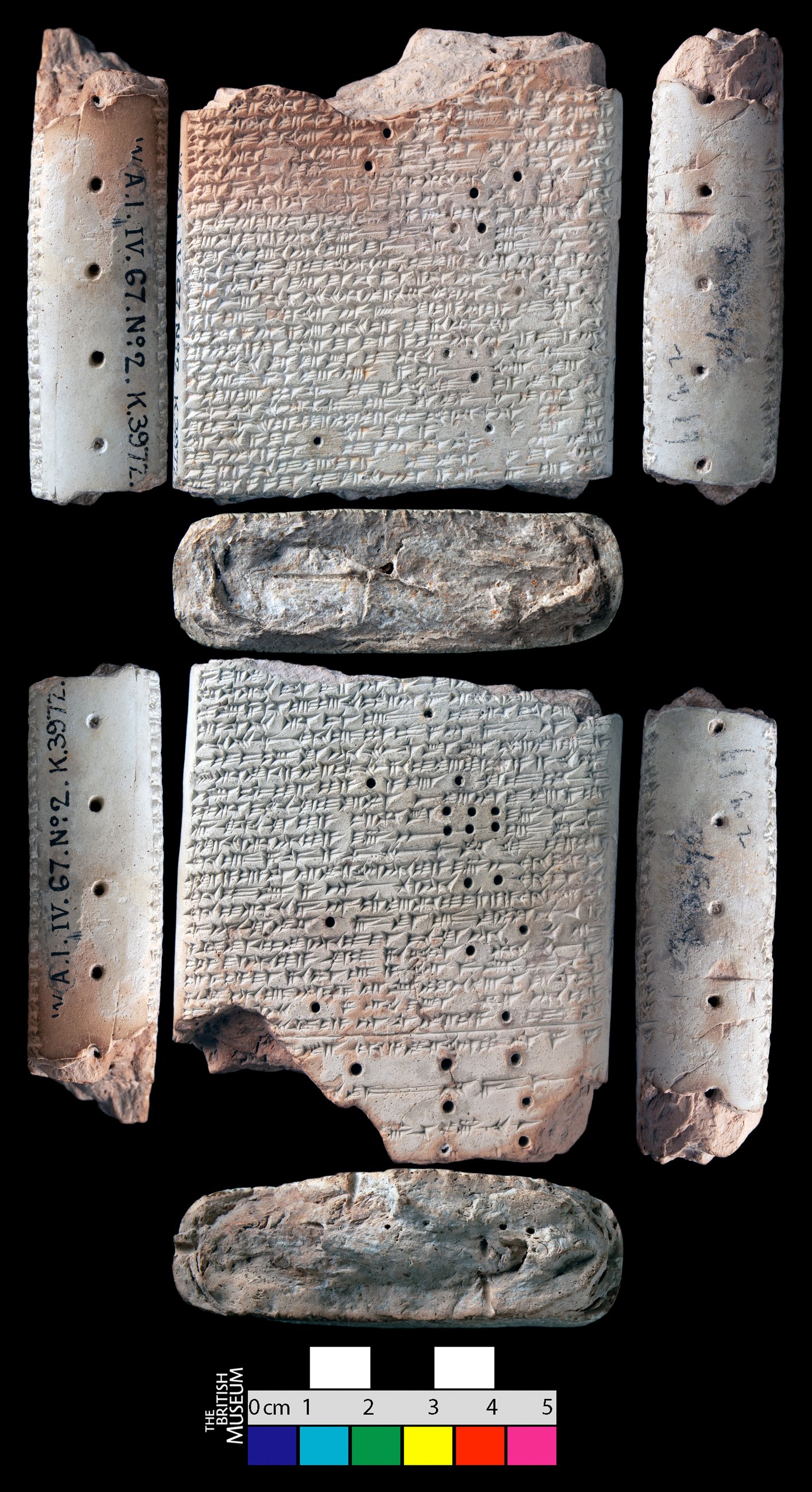
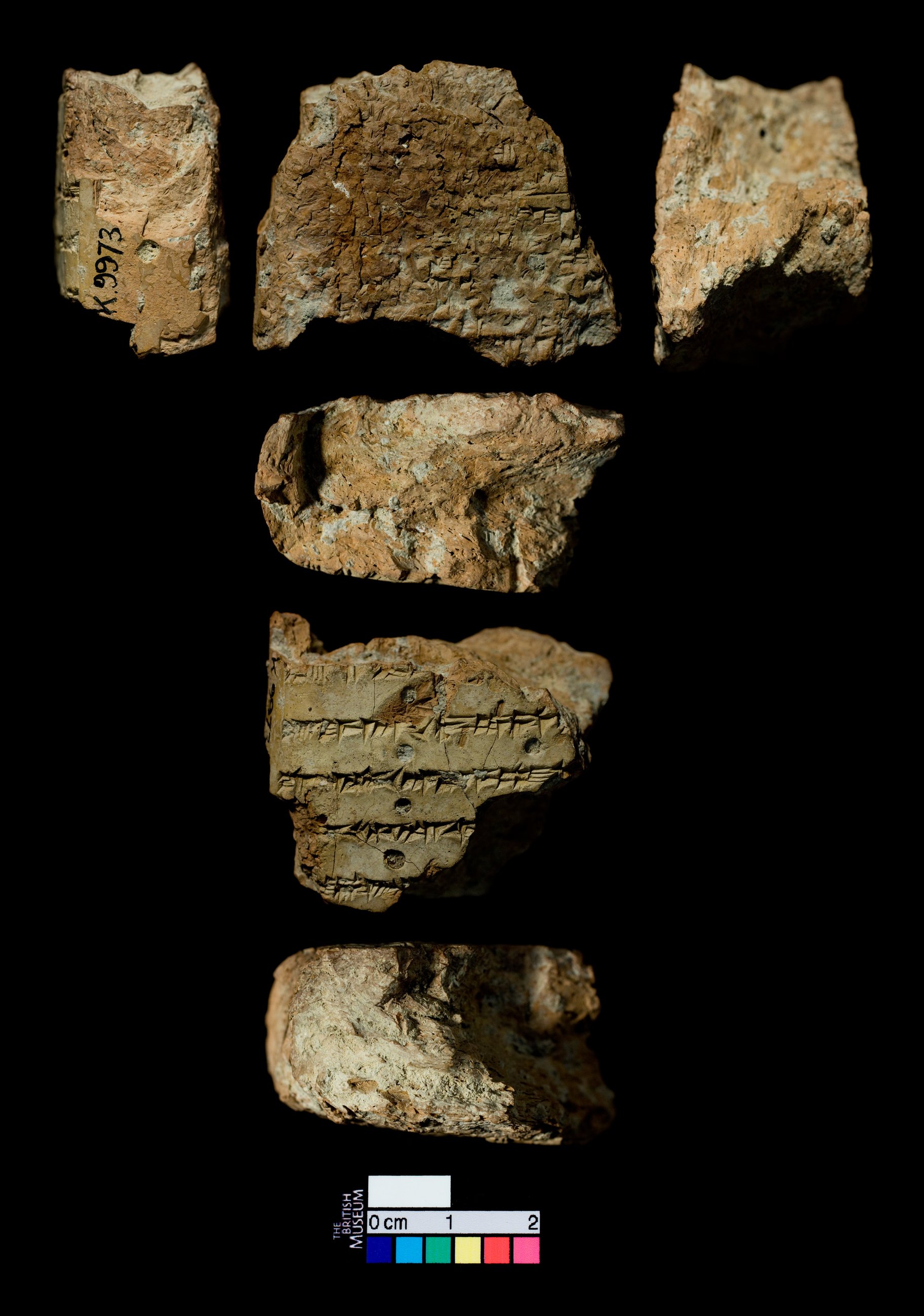
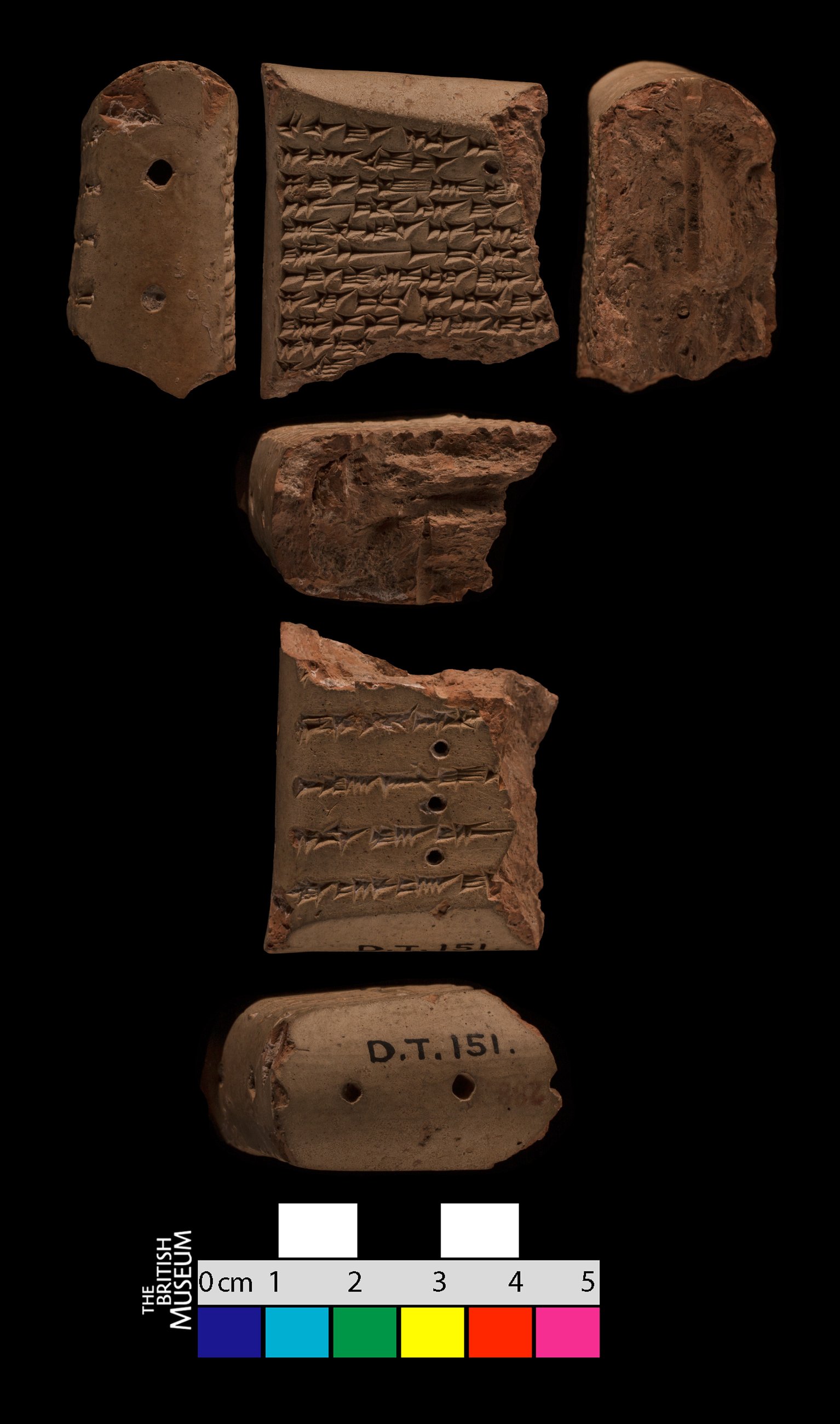
British Museum K.3972: reverse, the tablet's own lines 3' to 23'. eBL's corpus edition (https://www.ebl.lmu.de/corpus/L/2/2/SB/II) attributes SB II 100-120 to this manuscript at these column and line numbers. Photograph checked: obverse, reverse and edges of a nearly complete tablet, ink "W.A.I. IV 67 No 2. K.3972" on the left edge. About 45 lines on the obverse and about 40 on the reverse, consistent with eBL's obverse 48 and reverse 23. eBL treats K.3972 + K.9973 + DT.151 as one manuscript and holds a separate photograph of each of these pieces; it does not say which piece carries which line, so the photographs of K.3972 + K.9973 + DT.151 are linked, and the lines are on one or more of them. On this tablet lines 100-102, 120 are partly broken (square brackets and x in the Akkadian). The English of these lines translates eBL's composite text, so it includes words that are not preserved on this tablet but are restored from other manuscripts or by the editors. Square brackets in the English mark eBL's restorations in its composite text; words that survive on other tablets carry no brackets even where this tablet is broken. Lines 103-119 are complete on this tablet.
100qin-na-zi iṭ-ṭa#-an-ni# ma#-l[a-x x x x x]
101pa-ru-uš-šu₂ u₂-sah-hi-il-an-ni zi-qa#-ta# [x x]
102kal u₄-mu re-du-u₂ i-re-ed-da#-[an-ni]
103ina šat mu-ši ul u₂-nap-pa-ša₂-an-ni sur-riš#
104ina i-tab-lak-ku-ti pu-uṭ-ṭu-ru rik-su-u₂-a
105meš-re-tu-u-a su-up-pu-ha i-ta-ad-da!-a a-hi-tu₄
106ina ru-ub-ṣi-ia a-bit ki-i al-pi
107ub-tal-lil ki-i UDU.NITA₂ ina ta-ba-aš₂-ta-ni-ia
108sa-kik-ki-ia iš-hu-ṭu {lu₂}MAŠ.MAŠ
109u₃ te-re-ti-ia {lu₂}HAL u₂-teš₂-ši
110ul u₂-ša₂-pi a-ši-pu ši-kin mur-ṣi-ia
111u₃ a-dan-na si-li-ʾ-ti-ia {lu₂}HAL ul id-din
112ul i-ru-ṣa DINGIR qa-ti ul iṣ-bat
113ul i-re-man-ni {d}iš-ta-ri i-da-a-a ul il-lik
114pe-ti KI.MAH er-šu-u₂ šu-ka-nu-u-a
115a-di la mi-tu-ti-i-ma bi-ki-ti gam-rat
116kal ma-ti-ia ki-i ha-bil₂ iq-bu-ni
117iš-me-e-ma ha-du-u₂-a im-me-ru pa-nu-šu₂
118ha-di-ti u₂-ba-as-si-ru ka-bat-ta-šu₂ ip-par-du
119i#-ṭi# u₄#-mu ša₂ gi-mir kim-ti-ia
120[x x x m]u-de-e {d}UTU-su-un i-rim
100A scourge thrashed me, it was full of barbs,
101A crop lacerated me, it was studded with thorns.
102All day long tormentor would torment [me],
103Nor at night would he let me breathe freely a moment.
104From writhing, my joints were dislocated,
105My limbs were splayed, they were lying awry.
106I spent the night in my dung like an ox,
107I wallowed in my excrement like a sheep.
108The exorcist recoiled from my symptoms,
109While my omens confounded the diviner,
110The exorcist did not clarify the nature of my complaint,
111While the diviner put no time limit to my malady.
112My god did not rush to my rescue, nor take me by the hand,
113My goddess felt no pity for me, nor went by my side.
114My tomb was readied, my funerary goods set out,
115Before I had died, lamentation for me was done.
116All my country said, “How wretched he was!”
117When my ill-wisher heard, his face lit up,
118When the tidings reached her, my ill-wisher, her mood brightened.
119The day grew dim for my whole family,
120The sun of those close and who knew me was covered over.
Notes
- Akkadian: eBL transliteration of the signs on the photographed tablet (manuscript-level ATF), not a composite text.
- English: B. R. Foster's translation in the eBL edition; it renders eBL's composite text, including restorations from other tablets.
- Line numbers: eBL edition. Each section also gives the tablet's own column and line numbers.
- Signs in the Akkadian: [ ] broken away; x illegible sign; # damaged sign; ? uncertain reading; ! sign corrected by the editor; * collated sign; ( ) signs perhaps broken away; { } determinative; (gloss: ...) a note written by the scribe in small signs or in the margin.
Cite
Sources
- Source: British Museum tablet photographs + eBL manuscript transliterations (eBL corpus edition L II.2, Righteous Sufferer (Ludlul bel nemeqi) (ed. A. Hätinen), SB II) + English of the eBL edition (B. R. Foster (eBL edition)) (holding institution)
- Critical edition: electronic Babylonian Library, Righteous Sufferer (Ludlul bel nemeqi) (ed. A. Hätinen), manuscript transliterations
← previous · → next · v cycle view · l back to library