1 Chronicles, Chapter 10 (Codex Alexandrinus)
Introduction
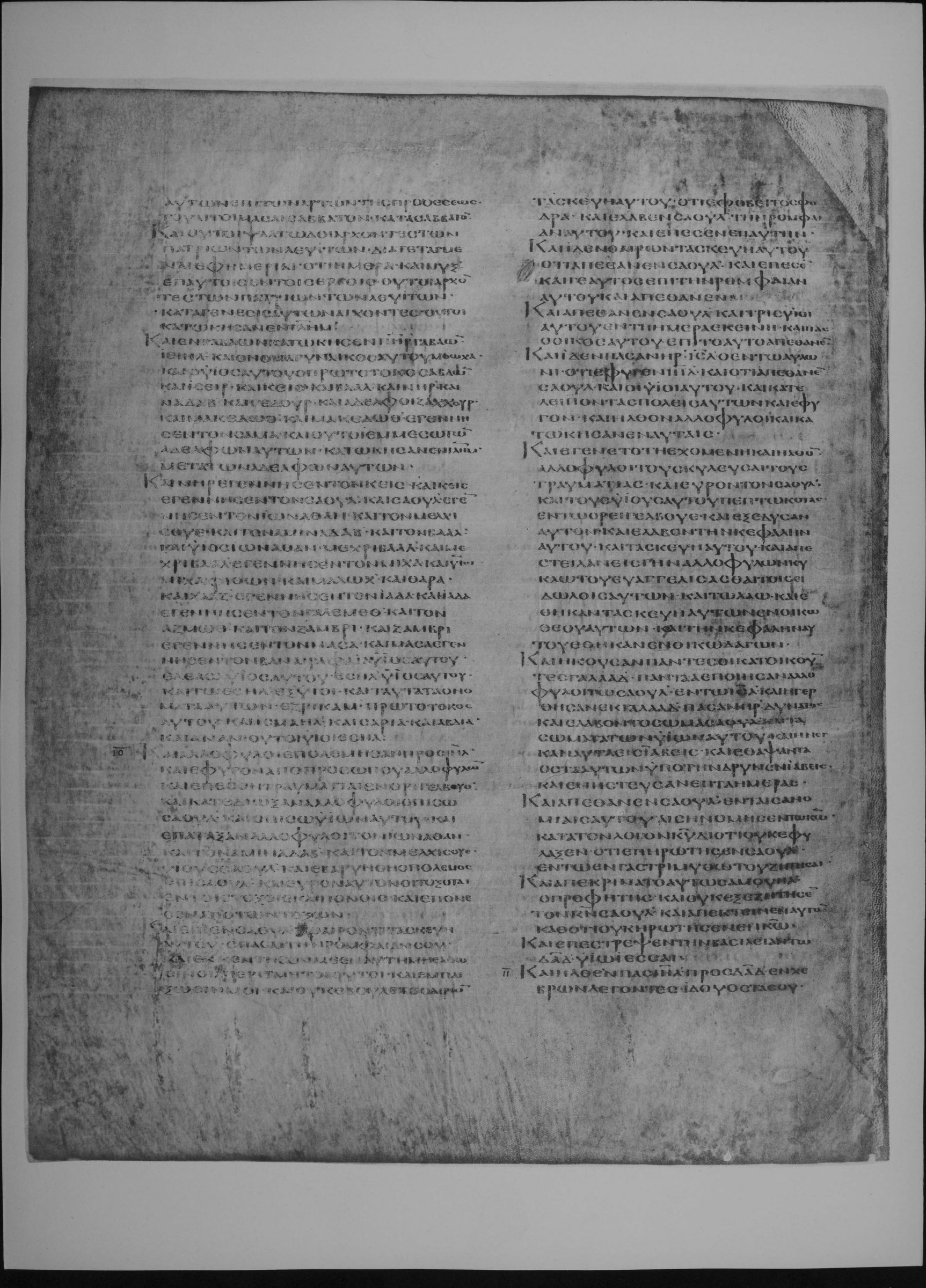
1 Chronicles 10 in the Greek Old Testament (the Septuagint) as written in Codex Alexandrinus, a Greek Bible copied in the fifth century, probably in Egypt, and now in the British Library (Royal MS 1 D. V, the first of its four volumes). It is one of the three great early codices of the whole Greek Bible, with Codex Vaticanus and Codex Sinaiticus.
This entry meets the strict three-criteria standard of the Theosis Library:
- Manuscript scan: the page of Codex Alexandrinus carrying this chapter (fol. 246v), from the full-size photographic (autotype) facsimile published by the British Museum in 1879-1883, as digitised on the Internet Archive. The verse range of every page comes from the reduced photographic facsimile of 1930, which prints it beneath each plate, and the opening words of every page were read on the plate to confirm the page and the verse it begins with. Each section links to the page or pages that hold its verses. Folio numbers are those written at the head of each leaf and visible on the plates.
- Original text: Swete's edition, which here prints the text of Codex Vaticanus (Vat. gr. 1209), the base of his edition, and gives the readings of Alexandrinus only in his apparatus. The Greek column is therefore Vaticanus' text; where Alexandrinus differs, the plate shows what Alexandrinus reads.
- English translation: Sir Lancelot C. L. Brenton, The Septuagint Version of the Old Testament (1844; 1851 edition), a translation of the Greek, public domain, from the eBible.org text.
How was this verified? (Provenance)
Where on the image
1 Chronicles 10:1-8 is on fol. 246v (full-size facsimile of 1879-83, Internet Archive codex-alexandrinus leaf 511). The 1930 reduced facsimile prints beneath this page: 1 Chron. ix. 32-xi. 1. Checked on the plate: the page begins inside 1 Chronicles 9:32 (first words read: ΑΥΤΩΝ ΕΠΙ ΤΩΝ ΑΡΤΩΝ ΤΗΣ ΠΡΟΘΕΣΕΩΣ ΤΟΥ ΕΤΟΙΜΑΣΑΙ ΣΑΒΒΑΤΟΝ ΚΑΤΑ ΣΑΒΒΑΤΟΝ ΚΑΙ ΟΥΤΟΙ ΨΑΛΤΩΔΟΙ).
1Καὶ ἀλλόφυλοι ἐπολέμησαν πρὸς Ἰσραήλ, καὶ ἔφυγον ἀπὸ προσώπου ἀλλοφύλων καὶ ἔπεσον τραυματίαι ἐν ὄρει Γελβοῦε. 2καὶ κατεδίωξαν ἀλλόφυλοι ὀπίσω Σαοὺλ καὶ ὀπίσω υἱῶν αὐτοῦ· καὶ ἐπάταξαν ἀλλόφυλοι τὸν Ἰωναθὰν καὶ τὸν Ἀμειναδὰβ καὶ τὸν Μελχεισοῦε υἱοὺς Σαούλ. 3καὶ ἐβαρύνθη ὁ πόλεμος ἐπὶ Σαούλ· καὶ εὗρον αὐτοὺς οἱ τοξόται ἐν τόξοις καὶ πόνοις, καὶ ἐπόνεσαν ἀπὸ τῶν τόξων. 4καὶ εἶπεν Σαοὺλ τῷ αἴροντι τὰ σκεύη αὐτοῦ Σπάσαι τὴν ῥομφαίαν σου καὶ ἐκκέντησόν με ἐν αὐτῇ, μὴ ἔλθωσιν οἱ ἀπερίτμητοι οὗτοι καὶ ἐμπαίξωσίν μοι. καὶ οὐκ ἐβούλετο ὁ αἴρων τὰ σκεύη αὐτοῦ, ὅτι ἐφοβεῖτο σφόδρα· καὶ ἔλαβεν Σαοὺλ τὴν ῥομφαίαν καὶ ἐπέπεσεν ἐπ᾽ αὐτήν. 5καὶ εἶδεν ὁ αἴρων τὰ σκεύη αὐτοῦ ὅτι ἀπέθανεν Σαούλ, καὶ ἔπεσεν καὶ αὐτὸς ἐπὶ τὴν ῥομφαίαν αὐτοῦ. 6καὶ ἀπέθανεν Σαοὺλ καὶ τρεῖς υἱοὶ αὐτοῦ ἐν τῇ ἡμέρᾳ ἐκείνῃ, καὶ πᾶς ὁ οἶκος αὐτοῦ ἐπὶ τὸ αὐτὸ ἀπέθανεν. 7καὶ εἶδεν πᾶς ἀνὴρ Ἰσραὴλ ὁ ἐν τῷ αὐλῶνι ὅτι ἔφυγεν Ἰσραήλ, καὶ ὅτι ἀπέθανεν Σαοὺλ καὶ οἱ υἱοὶ αὐτοῦ, καὶ κατέλειπον τὰς πόλεις αὐτῶν καὶ ἔφυγον· καὶ ἦλθον ἀλλόφυλοι καὶ κατῴκησαν ἐν αὐταῖς. 8Καὶ ἐγένετο τῇ ἐχομένῃ καὶ ἦλθον ἀλλόφυλοι τοῦ σκυλεύειν τοὺς τραυματίας, καὶ εὗρον τὸν Σαοὺλ καὶ τοὺς υἱοὺς αὐτοῦ πεπτωκότας ἐν τῷ ὄρει Γελβοῦε.
1Now the Philistines warred against Israel; and they fled from before the Philistines, and fell down slain in mount Gelbue. 2And the Philistines pursued after Saul, and after his sons; and the Philistines smote Jonathan, and Aminadab, and Melchisue, sons of Saul. 3And the battle prevailed against Saul, and the archers hit him with bows and arrows, and they were wounded of the bows. 4And Saul said to his armour-bearer, Draw thy sword, and pierce me through with it, lest these uncircumcised come and mock me. But his armour-bearer would not, for he was greatly afraid: so Saul took a sword, and fell upon it. 5And his armour-bearer saw that Saul was dead, and he also fell upon his sword. 6So Saul died, and his three sons on that day, and all his family died at the same time. 7And all the men of Israel that were in the valley saw that Israel fled, and that Saul and his sons were dead, and they left their cities, and fled: and the Philistines came and dwelt in them. 8And it came to pass on the next day that the Philistines came to strip the slain, and they found Saul and his sons fallen on mount Gelbue.
Where on the image
1 Chronicles 10:9-14 is on fol. 246v (full-size facsimile of 1879-83, Internet Archive codex-alexandrinus leaf 511). The 1930 reduced facsimile prints beneath this page: 1 Chron. ix. 32-xi. 1. Checked on the plate: the page begins inside 1 Chronicles 9:32 (first words read: ΑΥΤΩΝ ΕΠΙ ΤΩΝ ΑΡΤΩΝ ΤΗΣ ΠΡΟΘΕΣΕΩΣ ΤΟΥ ΕΤΟΙΜΑΣΑΙ ΣΑΒΒΑΤΟΝ ΚΑΤΑ ΣΑΒΒΑΤΟΝ ΚΑΙ ΟΥΤΟΙ ΨΑΛΤΩΔΟΙ).
9καὶ ἐξέδυσαν αὐτόν, καὶ ἔλαβον τὴν κεφαλὴν αὐτοῦ καὶ τὰ σκεύη αὐτοῦ, καὶ ἀπέστειλαν εἰς γῆν ἀλλοφύλων κύκλῳ τοῦ εὐαγγελίσασθαι τοῖς εἰδώλοις αὐτῶν καὶ τῷ λαῷ· 10καὶ ἔθηκαν τὰ σκεύη αὐτῶν ἐν οἴκῳ θεοῦ αὐτῶν, καὶ τὴν κεφαλὴν αὐτοῦ ἔθηκαν ἐν οἴκῳ Δαγών. 11καὶ ἤκουσαν πάντες οἱ κατοικοῦντες Γαλαὰδ ἅπαντα ἃ ἐποίησαν ἀλλόφυλοι τῷ Σαοὺλ καὶ τῷ Ἰσραήλ. 12καὶ ἠγέρθησαν ἐκ Γαλαὰδ πᾶς ἀνὴρ δυνατός, καὶ ἔλαβον τὸ σῶμα Σαοὺλ καὶ τὸ σῶμα τῶν υἱῶν αὐτοῦ, καὶ ἤνεγκαν αὐτὰ εἰς Ἰαβείς, καὶ ἔθαψαν τὰ ὀστᾶ αὐτῶν ὑπὸ τὴν δρῦν ἐν Ἰαβείς· καὶ ἐνήστευσαν ἑπτὰ ἡμέρας. 13καὶ ἀπέθανεν Σαοὺλ ἐν ταῖς ἀνομίαις αὐτοῦ αἷς ἠνόμησεν τῷ θεῷ κατὰ τὸν λόγον Κυρίου, διότι οὐκ ἐφύλαξεν· ὅτι ἐπηρώτησεν Σαοὺλ ἐν τῷ ἐνγαστριμύθῳ τοῦ ζητῆσαι, καὶ ἀπεκρίνατο αὐτῷ Σαμουὴλ ὁ προφήτης, 14καὶ οὐκ ἐζήτησεν Κύριον· καὶ ἀπέκτεινεν αὐτόν, καὶ ἐπέστρεψεν τὴν βασιλείαν τῷ Δαυεὶδ υἱῷ Ἰεσσαί.
9And they stripped him, and took his head, and his armour, and sent them into the land of the Philistines round about, to proclaim the glad tidings to their idols, and to the people. 10And they put their armour in the house of their god, and they put his head in the house of Dagon. 11And all the dwellers in Galaad heard of all that the Philistines had done to Saul and to Israel. 12And all the mighty men rose up from Galaad, and they took the body of Saul, and the bodies of his sons, and brought them to Jabis, and buried their bones under the oak in Jabis, and fasted seven days. 13So Saul died for his transgressions, wherein he transgressed against God, against the word of the Lord, forasmuch as he kept it not, because Saul enquired of a wizard to seek counsel, and Samuel the prophet answered him: 14and he sought not the Lord: so he slew him, and turned the kingdom to David the son of Jesse.
Cite
Sources
- Source: Codex Alexandrinus (British Library Royal MS 1 D. V) via the British Museum photographic facsimiles of 1879-83 and 1930 (Internet Archive) + Swete's Septuagint + Brenton's English (holding institution)
- Critical edition: H. B. Swete, The Old Testament in Greek according to the Septuagint (1909)
← previous · → next · v cycle view · l back to library