2 Maccabees, Chapter 13 (Codex Alexandrinus)
Introduction
2 Maccabees 13 in the Greek Old Testament (the Septuagint) as written in Codex Alexandrinus, a Greek Bible copied in the fifth century, probably in Egypt, and now in the British Library (Royal MS 1 D. VI, the second of its four volumes). It is one of the three great early codices of the whole Greek Bible, with Codex Vaticanus and Codex Sinaiticus.
This entry meets the strict three-criteria standard of the Theosis Library:
- Manuscript scan: the pages of Codex Alexandrinus carrying this chapter (fol. 503v, fol. 504r), from the full-size photographic (autotype) facsimile published by the British Museum in 1879-1883, as digitised on the Internet Archive. The verse range of every page comes from the reduced photographic facsimile of 1957, which prints it beneath each plate, and the opening words of every page were read on the plate to confirm the page and the verse it begins with. Each section links to the page or pages that hold its verses. Folio numbers are those written at the head of each leaf and visible on the plates.
- Original text: Swete's edition, which in the books of Maccabees prints the text of Codex Alexandrinus itself (Codex Vaticanus does not contain these books), with the readings of other manuscripts in his apparatus. Swete adds accents, breathings and punctuation and expands the abbreviated sacred names, so the plate shows the same text in unaccented capitals.
- English translation: Sir Lancelot C. L. Brenton, The Septuagint Version of the Old Testament (1844; 1851 edition), a translation of the Greek, public domain, from the eBible.org text.
How was this verified? (Provenance)
Where on the image
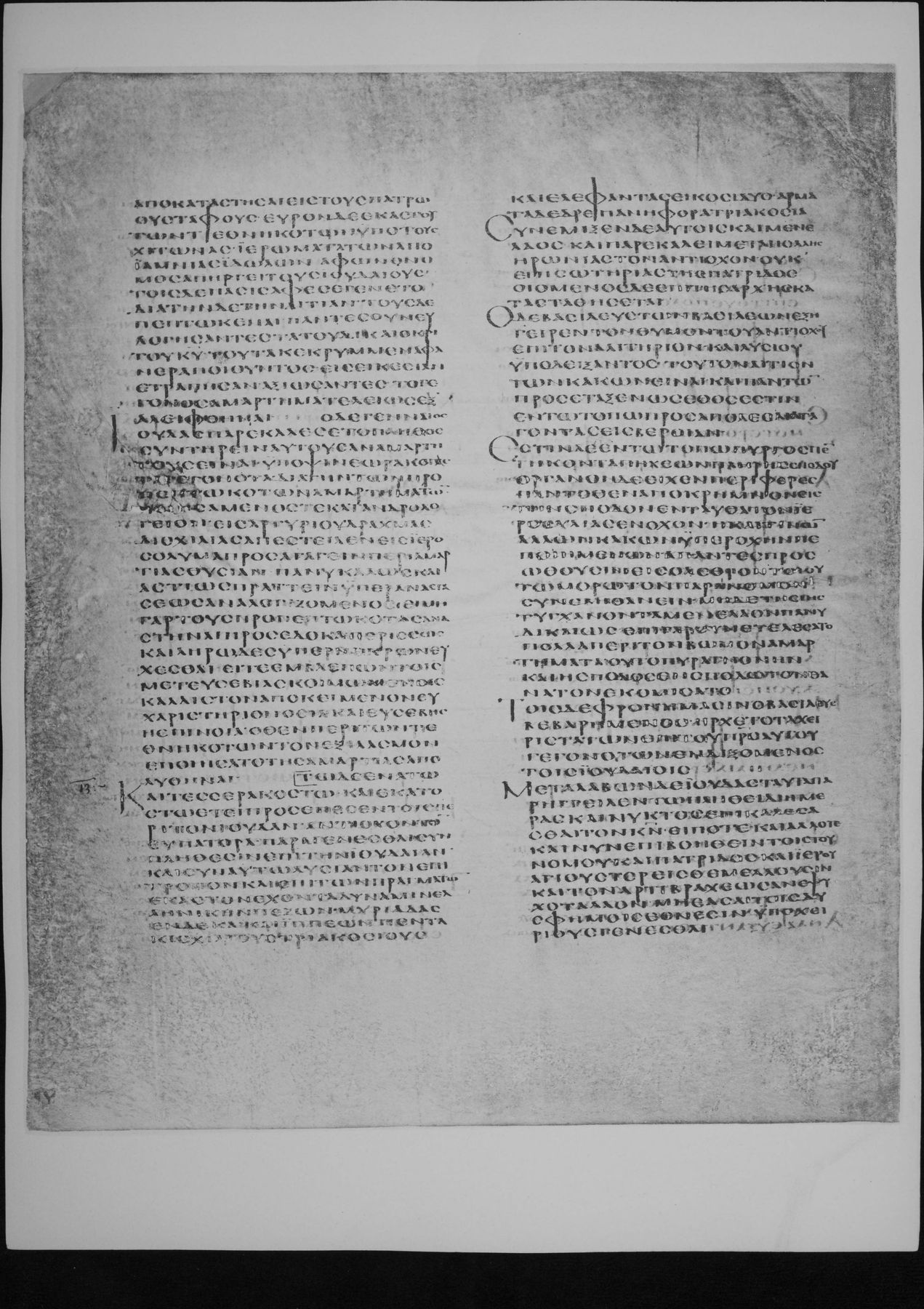
2 Maccabees 13:1-8 is on fol. 503v (full-size facsimile of 1879-83, Internet Archive codex-alexandrinus leaf 1013). The 1957 reduced facsimile prints beneath this page: 2 Maccabees xii. 39-xiii. 11. Checked on the plate: the page begins inside 2 Maccabees 12:39 (first words read: ΑΠΟΚΑΤΑΣΤΗΣΑΙ ΕΙΣ ΤΟΥΣ ΠΑΤΡΩΟΥΣ ΤΑΦΟΥΣ ΕΥΡΟΝ ΔΕ ΕΚΑΣΤΟΥ ΤΩΝ ΤΕΘΝΗΚΟΤΩΝ).
1Τῷ δὲ ἐνάτῳ καὶ τεσσερακοστῷ καὶ ἑκατοστῷ ἔτει προσέπεσεν τοῖς περὶ τὸν Ἰούδαν Ἀντίοχον τὸν Εὐπάτορα παραγενέσθαι σὺν πλήθεσιν ἐπὶ τὴν Ἰουδαίαν, 2καὶ σὺν αὐτῷ Λυσίαν τὸν ἐπίτροπον καὶ ἐπὶ τῶν πραγμάτων, ἕκαστον ἔχοντα δὺναμιν Ἑλληνικὴν πεζῶν μυριάδας ἕνδεκα καὶ ἱππέων πεντακισχιλίους τριακοσίους καὶ ἐλέφαντας εἴκοσι δύο, ἅρματα δὲ δρεπανηφόρα τριακόσια. 3συνέμιξεν δὲ αὐτοῖς καὶ Μενέλαος, καὶ παρεκάλει μετὰ πολλῆς εἰρωνίας τὸν Ἀντίοχον, οὐκ ἐπὶ σωτηρίας τῆς πατρίδος, οἰόμενος δὲ ἐπὶ τῆς ἀρχῆς κατασταθήσεσθαι. 4ὁ δὲ βασιλεὺς τῶν βασιλέων ἐξήγειρεν τὸν θυμὸν τοῦ Ἀντιόχου ἐπὶ τὸν ἀλιτήριον, καὶ Λυσίου ὑποδείξαντος τοῦτον αἴτιον τῶν κακῶν εἶναι καὶ πάντων προσέταξεν, ὡς ἔθος ἐστὶν ἐν τῷ τόπῳ, προσαπολέσαι, ἀγαγόντας εἰς Βέροιαν. 5ἔστιν δὲ ἐν τῷ τόπῳ πύργος πεντήκοντα πήχεων πλήρης σποδοῦ, ὄργανον δὲ εἶχεν περιφερὲς πάντοθεν ἀπόκρημνον εἰς τὴν σποδόν. 6ἐνταῦθα τὸν ἱεροσυλίας ἔνοχον, ἢ καί τινων ἄλλων κακῶν ὑπεροχὴν πεποιημένον, ἅπαντες προσωθοῦσιν εἰς ὄλεθρον. 7τοιούτῳ μόρῳ τὸν παράνομον συνέβη θανεῖν, μηδὲ τῆς γῆς τυγχάνοντα Μενέλαον· 8πάνυ δικαίως· ἐπεὶ γὰρ συνετελέσατο πολλὰ περὶ τὸν βωμὸν ἁμαρτήματα, οὗ τὸ πῦρ ἁγνὸν ἦν καὶ ἡ σποδός, ἐν σποδῷ τὸν θάνατον ἐκομίσατο.
1In the hundred forty and ninth year it was told Judas, that Antiochus Eupator was coming with a great power into Judea, 2and with him Lysias his protector, and ruler of his affairs, having either of them a Grecian power of footmen, an hundred and ten thousand, and horsemen five thousand and three hundred, and elephants two and twenty, and three hundred chariots armed with hooks. 3Menelaus also joined himself with them, and with great dissimulation encouraged Antiochus, not for the safeguard of the country, but because he thought to have been made governor. 4But the King of kings moved Antiochus' mind against this wicked wretch, and Lysias informed the king that this man was the cause of all mischief, so that the king commanded to bring him unto Berea, and to put him to death, as the manner is in that place. 5Now there was in that place a tower of fifty cubits high, full of ashes, and it had a round instrument, which on every side hanged down into the ashes. 6And whosoever was condemned of sacrilege, or had committed any other grievous crime, there did all men thrust him unto death. 7Such a death it happened that wicked man to die, not having so much as burial in the earth; and that most justly: 8for inasmuch as he had committed many sins about the altar, whose fire and ashes were holy, he received his death in ashes.
Where on the image
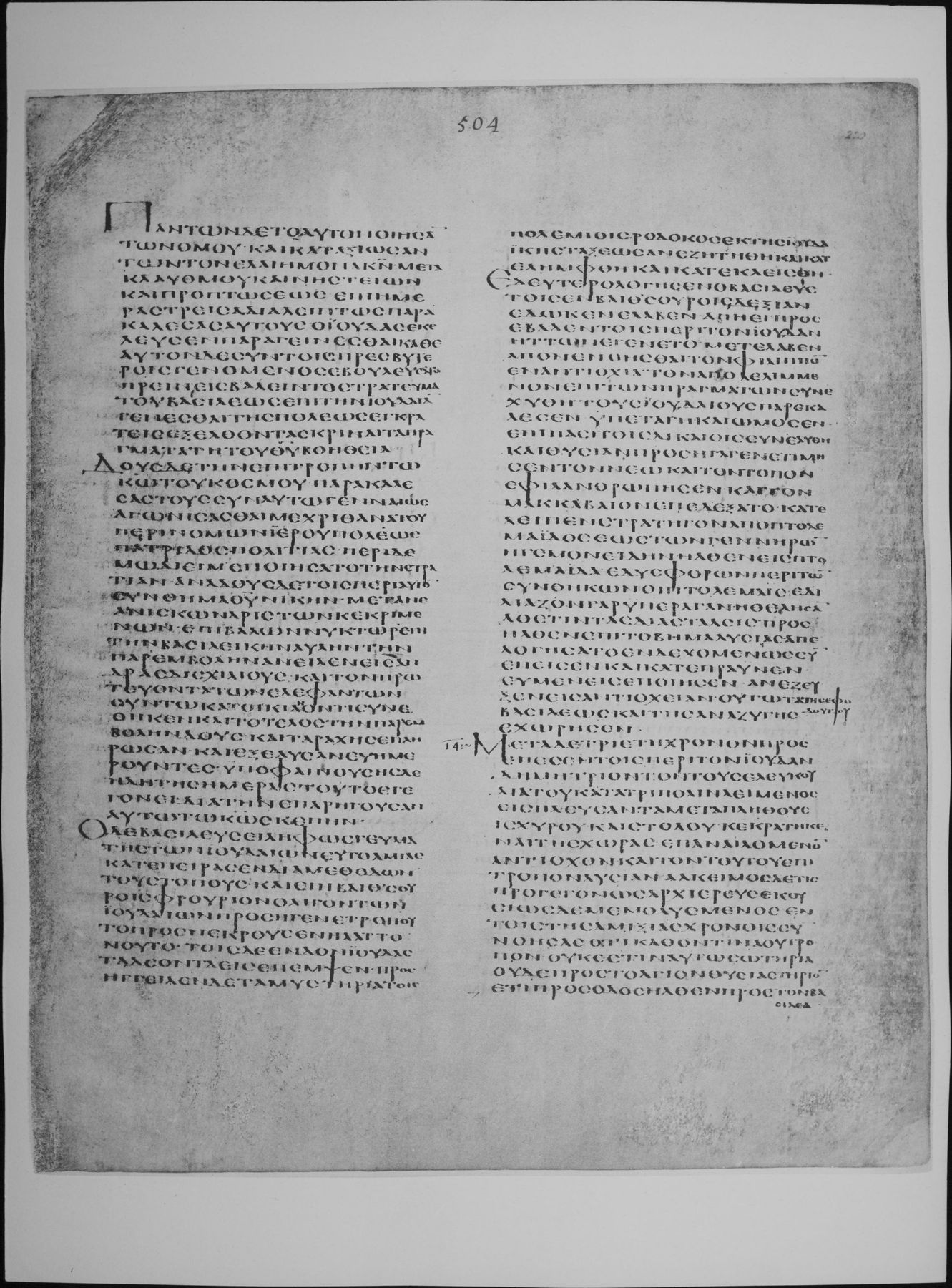
2 Maccabees 13:9-11 is on fol. 503v (full-size facsimile of 1879-83, Internet Archive codex-alexandrinus leaf 1013). The 1957 reduced facsimile prints beneath this page: 2 Maccabees xii. 39-xiii. 11. Checked on the plate: the page begins inside 2 Maccabees 12:39 (first words read: ΑΠΟΚΑΤΑΣΤΗΣΑΙ ΕΙΣ ΤΟΥΣ ΠΑΤΡΩΟΥΣ ΤΑΦΟΥΣ ΕΥΡΟΝ ΔΕ ΕΚΑΣΤΟΥ ΤΩΝ ΤΕΘΝΗΚΟΤΩΝ). 2 Maccabees 13:12-16 is on fol. 504r (full-size facsimile of 1879-83, Internet Archive codex-alexandrinus leaf 1014). The 1957 reduced facsimile prints beneath this page: 2 Maccabees xiii. 12-xiv. 4. Checked on the plate: the page begins at the start of 2 Maccabees 13:12 (first words read: ΠΑΝΤΩΝ ΔΕ ΤΟ ΑΥΤΟ ΠΟΙΗΣΑΝΤΩΝ ΚΑΙ ΚΑΤΑΞΙΩΣΑΝΤΩΝ ΤΟΝ ΕΛΕΗΜΟΝΑ ΚΝ).
9Τοῖς δὲ φρονήμασιν ὁ βασιλεὺς βεβαρημένος ἤρχετο, τὰ χείριστα τῶν ἐπὶ τοῦ πατρὸς αὐτοῦ γεγονότων ἐνδειξόμενος τοῖς Ἰουδαίοις. 10μεταλαβὼν δὲ Ἰούδας ταῦτα, παρήγγειλεν τῷ πλήθει δι᾽ ἡμέρας καὶ νυκτὸς ἐπικαλέσασθαι τὸν κύριον, εἴ ποτε καὶ ἄλλοτε, καὶ νῦν ἐπιβοηθεῖν 11τοῖς τοῦ νόμου καὶ πατρίδος καὶ ἱεροῦ ἁγίου στερεῖσθαι μέλλουσιν, καὶ τὸν ἄρτι βραχέως ἀνεψυχότα λαὸν μὴ ἐᾶσαι τοῖς δυσφήμοις ἔθνεσιν ὑποχειρίους γενέσθαι. 12πάντων δὲ τὸ αὐτὸ ποιησάντων ὁμοῦ καὶ καταξιωσάντων τὸν ἐλεήμονα κύριον μετὰ κλαυθμοῦ καὶ νηστειῶν καὶ προπτώσεως ἐπὶ ἡμέρας τρεῖς ἀδιαλείπτως, παρακαλέσας αὐτοὺς ὁ Ἰούδας ἐκέλευσεν παραγίνεσθαι. 13καθ᾽ ἑαυτὸν δὲ σὺν τοῖς πρεσβυτέροις γενόμενος ἐβουλεύσατο πρὶν εἰσβαλεῖν τὸ στράτευμα τοῦ βασιλέως ἐπὶ τὴν Ἰουδαίαν καὶ γενέσθαι τῆς πόλεως ἐγκρατεῖς, ἐξελθόντας κρῖναι τὰ πράγματα τῇ τοῦ θεοῦ βοηθείᾳ. 14δοὺς δὲ τὴν ἐπιτροπὴν τῷ κυρίῳ τοῦ κόσμου, παρακαλέσας τοὺς σὺν αὐτῷ γενναίως ἀγωνίσασθαι μέχρι θανάτου περὶ νόμων, ἱεροῦ, πόλεως, πατρίδος, πολιτίας· περὶ δὲ Μωδιεὶμ ἐποιήσατο τὴν στρατιάν. 15ἀναδοὺς δὲ τοῖς περὶ αὐτὸν σύνθημα θεοῦ νίκην, μετὰ νεανίσκων ἀρίστων κεκριμένων ἐπιβαλὼν νύκτωρ ἐπὶ τὴν βασιλικὴν αὐλήν, τὴν παρεμβολὴν ἀνεῖλεν εἰς ἄνδρας δισχιλίους, καὶ τὸν πρωτεύοντα τῶν ἐλεφάντων σὺν τῷ κατ᾽ οἰκίαν ὄντι συνέθηκεν· 16καὶ τὸ τέλος τὴν παρεμβολὴν δέους καὶ ταραχῆς ἐπλήρωσαν, καὶ ἐξέλυσαν εὐημεροῦντες.
9Now the king came with a barbarous and haughty mind to do far worse to the Jews, than had been done in his father's time. 10Which things when Judas perceived, he commanded the multitude to call upon the Lord night and day, that if ever at any other time, he would now also help them, being at the point to be put from their law, from their country, and from the holy temple: 11and that he would not suffer the people, that had even now been but a little refreshed, to be in subjection to the blasphemous nations. 12So when they had all done this together, and besought the merciful Lord with weeping and fasting, and lying flat upon the ground three days long, Judas, having exhorted them, commanded they should be in a readiness. 13And Judas, being apart with the elders, determined, before the king's host should enter into Judea, and get the city, to go forth and try the matter in fight by the help of the Lord. 14So when he had committed all to the Creator of the world, and exhorted his soldiers to fight manfully, even unto death, for the laws, the temple, the city, the country, and the commonwealth, he camped by Modin: 15and having given the watchword to them that were about him, Victory is of God; with the most valiant and choice young men he went in into the king's tent by night, and slew in the camp about four thousand men, and the chiefest of the elephants, with all that were upon him. 16And at last they filled the camp with fear and tumult, and departed with good success.
Where on the image
2 Maccabees 13:17-26 is on fol. 504r (full-size facsimile of 1879-83, Internet Archive codex-alexandrinus leaf 1014). The 1957 reduced facsimile prints beneath this page: 2 Maccabees xiii. 12-xiv. 4. Checked on the plate: the page begins at the start of 2 Maccabees 13:12 (first words read: ΠΑΝΤΩΝ ΔΕ ΤΟ ΑΥΤΟ ΠΟΙΗΣΑΝΤΩΝ ΚΑΙ ΚΑΤΑΞΙΩΣΑΝΤΩΝ ΤΟΝ ΕΛΕΗΜΟΝΑ ΚΝ).
17ὑποφαινούσης δὲ ἤδη τῆς ἡμέρας τοῦτο ἐγεγόνει, διὰ τὴν ἐπαρήγουσαν αὐτῷ τοῦ κυρίου σκέπην. 18Ὁ δὲ βασιλεὺς εἰληφὼς γεῦμα τῆς τῶν Ἰουδαίων εὐτολμίας, κατεπείρασεν διὰ μεθόδων τοὺς τόπους, 19καὶ ἐπὶ Βαιθσούροις φρούριον ὀλίγον τῶν Ἰουδαίων· προσῆγεν, ἐτροποῦτο, προσενέκρουσεν, ἠλαττονοῦτο. 20τοῖς δὲ ἔνδον Ἰούδας τὰ δέοντα εἰσέπεμψεν. 21προσήγγειλεν δὲ τὰ μυστήρια τοῖς πολεμίοις Ῥόδοκος ἐκ τῆς Ἰουδαικῆς τάξεως· ἀνεζητήθη καὶ κατελήμφθη καὶ κατεκλείσθη. 22ἐδευτερολόγησεν ὁ βασιλεὺς τοῖς ἐν Βαιθσούροις, δεξιὰν ἔδωκεν, ἔλαβεν, ἀπῄει, 23προσέβαλεν τοῖς περὶ τὸν Ἰούδαν, ἥττων ἐγένετο, μετέλαβεν ἀπονενοῆσθαι τὸν Φίλιππον ἐν Ἀντιοχίᾳ τὸν ἀπολελιμμένον ἐπὶ τῶν πραγμάτων, συνεχύθη, τοὺς Ἰουδαίους παρεκάλεσεν, ὑπετάγη, καὶ ὤμοσεν ἐπὶ πᾶσι τοῖς δικαίοις, συνελύθη καὶ θυσίαν προσήγαγεν, ἐτίμησεν τὸν νεὼ καὶ τὸν τόπον, ἐφιλανθρώπησεν 24καὶ τὸν Μακκαβαῖον ἐπεδέξατο, κατέλειπεν στρατηγὸν ἀπὸ Πτολεμαίδος ἕως τῶν Γεννήρων Ἡγεμονίδην, 25ἦλθεν εἰς Πτολεμαίδα· ἐδυσφόρουν περὶ τῶν συνθηκῶν οἱ Πτολεμαεῖς, ἐδειλίαζον γὰρ ὑπεράγαν· ἠθέλησαν ἀθετεῖν τὰς διαστάλσεις. 26προσῆλθεν ἐπὶ τὸ βῆμα Λυσίας, ἀπελογήσατο ἐνδεχομένως, συνέπεισεν καὶ κατεπρᾴυνεν, εὐμενεῖς ἐποίησεν, ἀνέζευξεν εἰς Ἀντιοχίαν. οὕτω τὰ τῆς ἐφόδου τοῦ βασιλέως καὶ τῆς ἀναζυγῆς ἐχώρησεν.
17This was done in the break of the day, because the protection of the Lord did help him. 18Now when the king had taken a taste of the manliness of the Jews, he went about to take the holds by policy, 19and marched toward Bethsura, which was a strong hold of the Jews: but he was put to flight, failed, and lost of his men: 20for Judas had conveyed unto them that were in it such things as were necessary. 21But Rhodocus, who was in the Jews' host, disclosed the secrets to the enemies; therefore he was sought out, and when they had gotten him, they put him in prison. 22The king treated with them in Bethsura the second time, gave his hand, took their's, departed, fought with Judas, was overcome: 23heard that Philip, who was left over the affairs in Antioch, was desperately bent, confounded, intreated the Jews, submitted himself, and sware to all equal conditions, agreed with them, and offered sacrifice, honoured the temple, and dealt kindly with the place, 24and accepted well of Maccabeus, made him principal governor from Ptolemais unto the Gerrhenians; 25came to Ptolemais: the people there were grieved for the covenants; for they stormed, because they would make their covenants void. 26Lysias went up to the judgment seat, said as much as could be in defence of the cause, persuaded, pacified, made them well affected, returned to Antioch. Thus it went touching the king's coming and departing.
Cite
Sources
- Source: Codex Alexandrinus (British Library Royal MS 1 D. VI) via the British Museum photographic facsimiles of 1879-83 and 1957 (Internet Archive) + Swete's Septuagint + Brenton's English (holding institution)
- Critical edition: H. B. Swete, The Old Testament in Greek according to the Septuagint (1909)
← previous · → next · v cycle view · l back to library