2 Maccabees, Chapter 14 (Codex Alexandrinus)
Introduction
2 Maccabees 14 in the Greek Old Testament (the Septuagint) as written in Codex Alexandrinus, a Greek Bible copied in the fifth century, probably in Egypt, and now in the British Library (Royal MS 1 D. VI, the second of its four volumes). It is one of the three great early codices of the whole Greek Bible, with Codex Vaticanus and Codex Sinaiticus.
This entry meets the strict three-criteria standard of the Theosis Library:
- Manuscript scan: the pages of Codex Alexandrinus carrying this chapter (fol. 504r, fol. 504v, fol. 505r, fol. 505v), from the full-size photographic (autotype) facsimile published by the British Museum in 1879-1883, as digitised on the Internet Archive. The verse range of every page comes from the reduced photographic facsimile of 1957, which prints it beneath each plate, and the opening words of every page were read on the plate to confirm the page and the verse it begins with. Each section links to the page or pages that hold its verses. Folio numbers are those written at the head of each leaf and visible on the plates.
- Original text: Swete's edition, which in the books of Maccabees prints the text of Codex Alexandrinus itself (Codex Vaticanus does not contain these books), with the readings of other manuscripts in his apparatus. Swete adds accents, breathings and punctuation and expands the abbreviated sacred names, so the plate shows the same text in unaccented capitals.
- English translation: Sir Lancelot C. L. Brenton, The Septuagint Version of the Old Testament (1844; 1851 edition), a translation of the Greek, public domain, from the eBible.org text.
How was this verified? (Provenance)
Where on the image
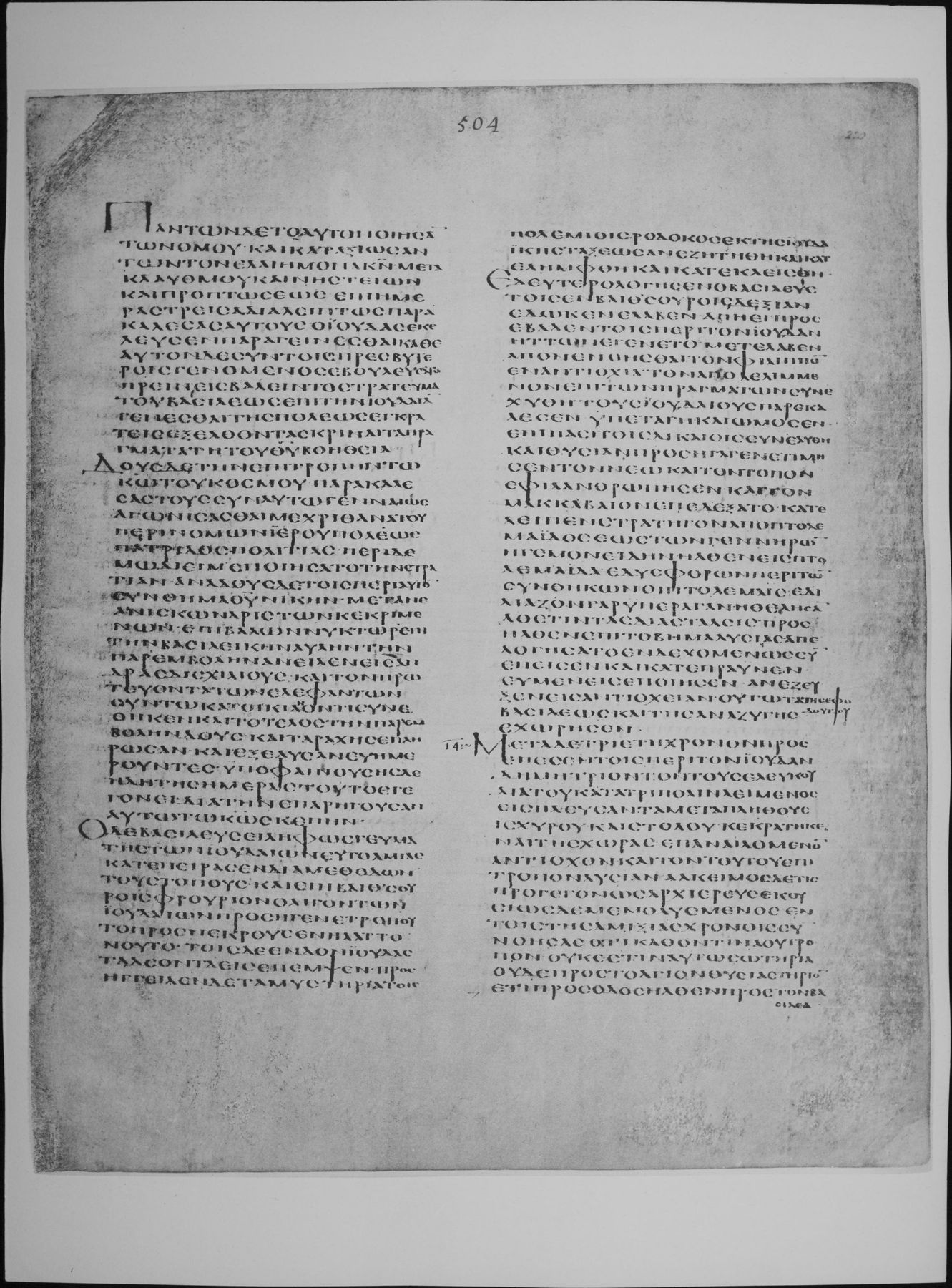
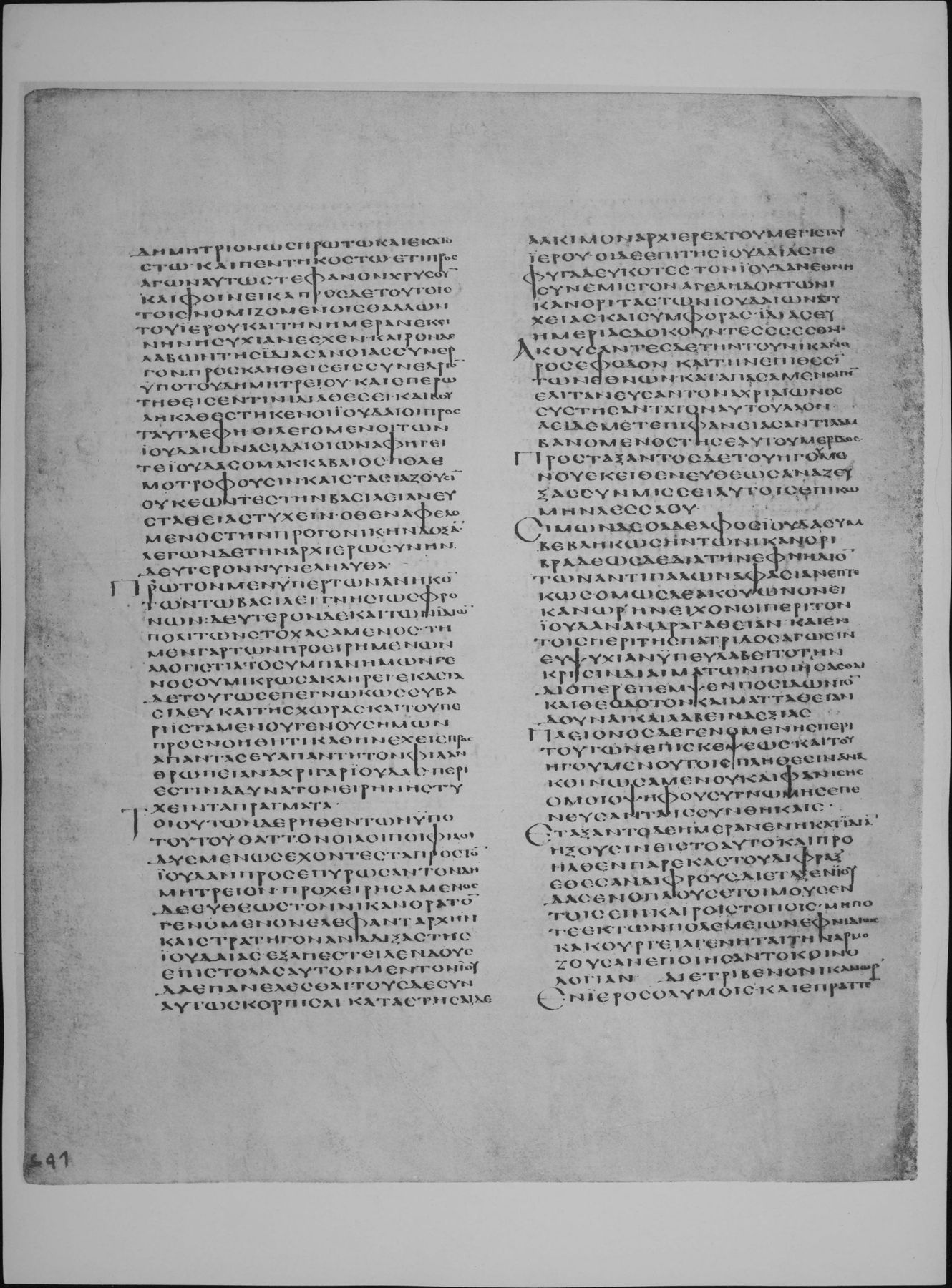
2 Maccabees 14:1-4 is on fol. 504r (full-size facsimile of 1879-83, Internet Archive codex-alexandrinus leaf 1014). The 1957 reduced facsimile prints beneath this page: 2 Maccabees xiii. 12-xiv. 4. Checked on the plate: the page begins at the start of 2 Maccabees 13:12 (first words read: ΠΑΝΤΩΝ ΔΕ ΤΟ ΑΥΤΟ ΠΟΙΗΣΑΝΤΩΝ ΚΑΙ ΚΑΤΑΞΙΩΣΑΝΤΩΝ ΤΟΝ ΕΛΕΗΜΟΝΑ ΚΝ). 2 Maccabees 14:4-8 is on fol. 504v (full-size facsimile of 1879-83, Internet Archive codex-alexandrinus leaf 1015). The 1957 reduced facsimile prints beneath this page: 2 Maccabees xiv. 4-xiv. 23. Checked on the plate: the page begins inside 2 Maccabees 14:4 (first words read: ΔΗΜΗΤΡΙΟΝ ΩΣ ΠΡΩΤΩ ΚΑΙ ΕΚΑΤΟΣΤΩ ΚΑΙ ΠΕΝΤΗΚΟΣΤΩ ΕΤΕΙ).
1Μετὰ δὲ τριετῆ χρόνον προσέπεσεν τοῖς περὶ τὸν Ἰούδαν, Δημήτριον τὸν τοῦ Σελεύκου διὰ τοῦ κατὰ Τρίπολιν λιμένος εἰσπλεύσαντα μετὰ πλήθους ἰσχυροῦ καὶ στόλου 2κεκρατηκέναι τῆς χώρας, ἐπανελόμενον Ἀντίοχον καὶ τὸν τούτου ἐπίτροπον Λυσίαν. 3Ἄλκιμος δὲ τις προγεγονὼς ἀρχιερεύς, ἑκουσίως δὲ μεμολυσμένος ἐν τοῖς τῆς ἀμιξίας χρόνοις, συννοήσας ὅτι καθ᾽ ὁντιναοῦν τρόπον οὐκ ἔστιν αὐτῷ σωτηρία οὐδὲ πρὸς τὸ ἅγιον θυσιαστήριον ἔτι πρόσοδος, 4ἦλθεν πρὸς τὸν βασιλέα Δημήτριον ὡς πρώτῳ καὶ ἑκατοστῷ καὶ πεντηκοστῷ ἔτει, προσάγων αὐτῷ στέφανον χρυσοῦν καὶ φοίνικα, πρὸς δὲ τούτοις τοῖς νομιζομένοις θαλλῶν τοῦ ἱεροῦ· καὶ τὴν ἡμέραν ἐκείνην ἡσυχίαν ἔσχεν. 5καιρὸν δὲ λαβὼν τῆς ἰδίας ἀνοίας συνεργόν, προσκληθεὶς εἰς συνέδριον ὑπὸ τοῦ Δημητρίου καὶ ἐπερωτηθεὶς ἐν τίνι διαθέσει καὶ βουλῇ καθέστηκαν οἱ Ἰουδαῖοι, πρὸς ταῦτα ἔφη 6Οἱ λεγόμενοι τῶν Ἰουδαίων Ἁσιδαῖοι, ὧν ἀφηγεῖται Ἰούδας ὁ Μακκαβαῖος, πολεμοτροφοῦσιν καὶ στασιάζουσιν, οὐκ ἐῶντες τὴν βασιλείαν εὐσταθείας τυχεῖν. 7ὅθεν ἀφελόμενος τὴν προγονικὴν δόξαν, λέγων δὲ τὴν ἀρχιερωσύνην, δεύτερον νῦν ἐλήλυθα, 8πρῶτον μέν ὑπὲρ τῶν ἀνηκόντων τῷ βασιλεῖ γνησίως φρονῶν, δεύτερον δὲ καὶ τῶν ἰδίων πολιτῶν στοχασάμενος· τῇ μὲν γὰρ τῶν προειρημένων ἀλογιστίᾳ τὸ σύμπαν ἡμῶν γένος οὐ μικρῶς ἀκληρεῖ.
1After three years was Judas informed, that Demetrius the son of Seleucus, having entered by the haven of Tripolis with a great power and navy, 2had taken the country, and killed Antiochus, and Lysias his protector. 3Now one Alcimus, who had been high priest, and had defiled himself wilfully in the times of their mingling with the Gentiles, seeing that by no means he could save himself, nor have any more access to the holy altar, 4came to king Demetrius in the hundred and one and fiftieth year, presenting unto him a crown of gold, and a palm, and also of the boughs which were used solemnly in the temple: and so that day he held his peace. 5Howbeit, having gotten opportunity to further his foolish enterprise, and being called into council by Demetrius, and asked how the Jews stood affected, and what they intended, he answered thereunto: 6Those of the Jews that be called Assideans, whose captain is Judas Maccabeus, nourish war, and are seditious, and will not let the realm be in peace. 7Therefore I, being deprived of mine ancestors' honour, I mean the high priesthood, am now come hither: 8first, verily for the unfeigned care I have of things pertaining to the king; and secondly, even for that I intend the good of mine own citizens: for all our nation is in no small misery through the unadvised dealing of them aforesaid.
Where on the image
2 Maccabees 14:9-16 is on fol. 504v (full-size facsimile of 1879-83, Internet Archive codex-alexandrinus leaf 1015). The 1957 reduced facsimile prints beneath this page: 2 Maccabees xiv. 4-xiv. 23. Checked on the plate: the page begins inside 2 Maccabees 14:4 (first words read: ΔΗΜΗΤΡΙΟΝ ΩΣ ΠΡΩΤΩ ΚΑΙ ΕΚΑΤΟΣΤΩ ΚΑΙ ΠΕΝΤΗΚΟΣΤΩ ΕΤΕΙ).
9ἕκαστα δὲ τούτων ἐπεγνωκὼς σύ, βασιλεῦ, καὶ τῆς χώρας καὶ τοῦ περιισταμένου γένους ἡμῶν προσνοήθητι, καθ᾽ ἣν ἔχεις πρὸς ἅπαντας εὐαπάντητον φιλανθρωπίαν. 10ἄχρι γὰρ Ἰούδας περίεστιν, ἀδύνατον εἰρήνης τυχεῖν τὰ πράγματα. 11τοιούτων δὲ ῥηθέντων ὑπὸ τούτου, θᾶττον οἱ λοιποὶ φίλοι δυσμενῶς ἔχοντες τὰ πρὸς τὸν Ἰούδαν προσεπύρωσαν τὸν Δημήτριον. 12προχειρισάμενος δὲ εὐθέως τὸν Νικάνορα τὸν γενόμενον ἐλεφαντάρχην, καὶ στρατηγὸν ἀναδείξας τῆς Ἰουδαίας, ἐξαπέστειλεν· 13δοὺς ἐπιστολάς, αὐτὸν μὲν τὸν Ἰουδὰ ἐπανελέσθαι, τοὺς δὲ σὺν αὐτῷ σκορπίσαι, καταστῆσαι δὲ Ἄλκιμον ἀρχιερέα τοῦ μεγίστου ἱεροῦ. 14οἱ δὲ ἐπὶ τῆς Ἰουδαίας πεφυγαδευκότες τὸν Ἰούδαν ἔθνη συνέμισγον ἀγεληδὸν τῷ Νικάνορι, τὰς τῶν Ἰουδαίων ἀτυχίας καὶ συμφορὰς ἰδίας εὐημερίας δοκοῦντες ἔσεσθαι. 15Ἀκούσαντες δὲ τὴν τοῦ Νικάνορος ἔφοδον καὶ τὴν ἐπίθεσιν τῶν ἐθνῶν, καταπασάμενοι γῆν ἐλιτάνευσαν τὸν ἄχρι αἰῶνος συστήσαντα τὸν αὑτοῦ λαόν, ἀεὶ δὲ μετ᾽ ἐπιφανείας ἀντιλαμβανόμενον τῆς ἑαυτοῦ μερίδος. 16προστάξαντος δὲ τοῦ ἡγουμένου, ἐκεῖθεν εὐθέως ἀναζεύξας συνμίσγει αὐτοῖς ἐπὶ κώμην Λεσσαού.
9Wherefore, O king, seeing thou knowest all these things, be careful for the country, and our nation, which is pressed on every side, according to the clemency that thou readily shewest unto all. 10For as long as Judas liveth, it is not possible that the state should be quiet. 11This was no sooner spoken of him, but others of the king's friends, being maliciously set against Judas, did more incense Demetrius. 12And forthwith calling Nicanor, who had been master of the elephants, and making him governor over Judea, he sent him forth, 13commanding him to slay Judas, and to scatter them that were with him, and to make Alcimus high priest of the great temple. 14Then the heathen, that had fled out of Judea from Judas, came to Nicanor by flocks, thinking the harm and calamities of the Jews to be their welfare. 15Now when the Jews heard of Nicanor's coming, and that the heathen were up against them, they cast earth upon their heads, and made supplication to him that had established his people for ever, and who always helpeth his portion with manifestation of his presence. 16So at the commandment of the captain they removed straightways from thence, and came near unto them at the town of Dessau.
Where on the image
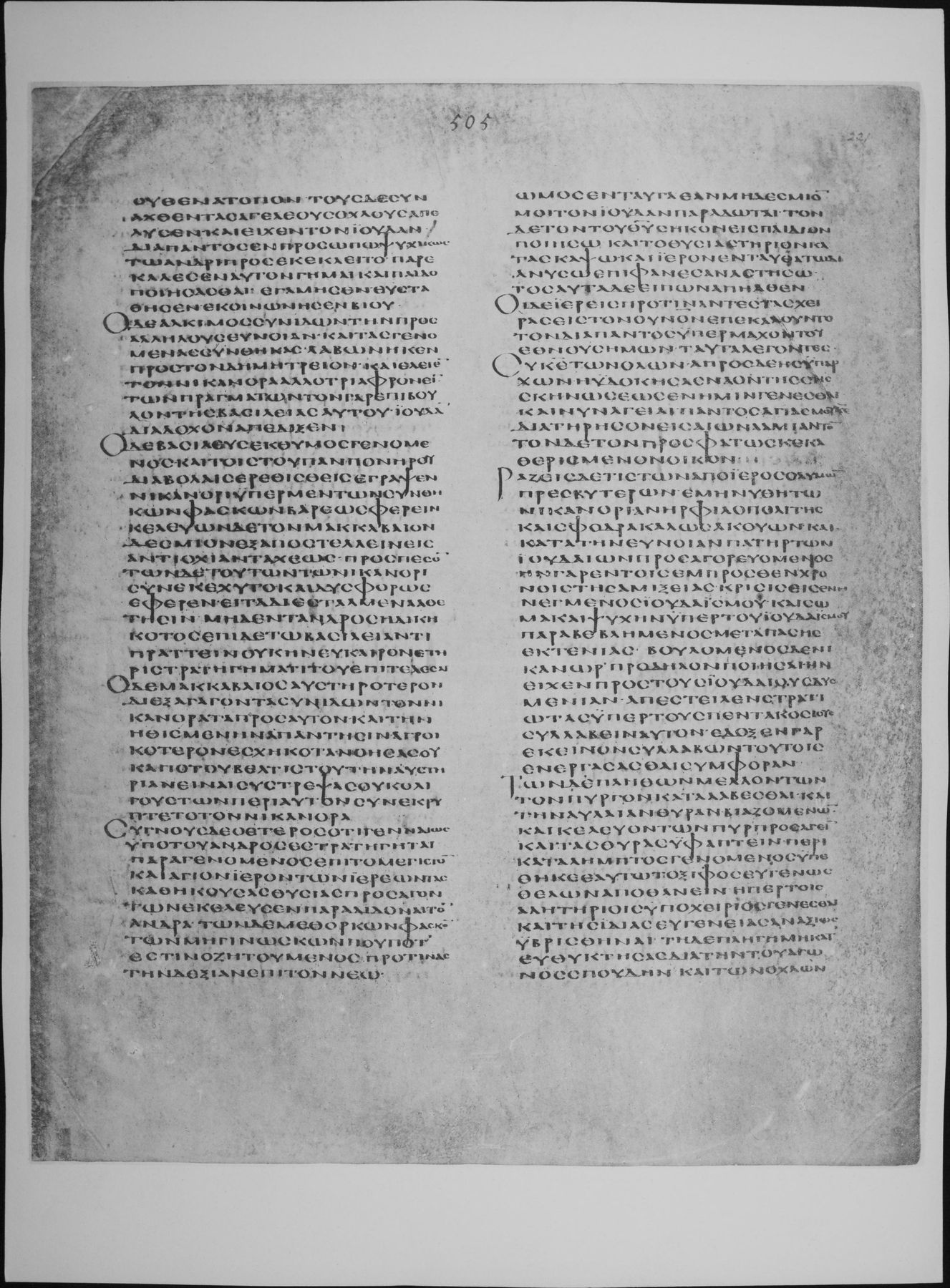
2 Maccabees 14:17-23 is on fol. 504v (full-size facsimile of 1879-83, Internet Archive codex-alexandrinus leaf 1015). The 1957 reduced facsimile prints beneath this page: 2 Maccabees xiv. 4-xiv. 23. Checked on the plate: the page begins inside 2 Maccabees 14:4 (first words read: ΔΗΜΗΤΡΙΟΝ ΩΣ ΠΡΩΤΩ ΚΑΙ ΕΚΑΤΟΣΤΩ ΚΑΙ ΠΕΝΤΗΚΟΣΤΩ ΕΤΕΙ). 2 Maccabees 14:23-24 is on fol. 505r (full-size facsimile of 1879-83, Internet Archive codex-alexandrinus leaf 1016). The 1957 reduced facsimile prints beneath this page: 2 Maccabees xiv. 23-xiv. 43. Checked on the plate: the page begins inside 2 Maccabees 14:23 (first words read: ΟΥΘΕΝ ΑΤΟΠΟΝ ΤΟΥΣ ΔΕ ΣΥΝΑΧΘΕΝΤΑΣ ΑΓΕΛΑΙΟΥΣ ΟΧΛΟΥΣ ΑΠΕΛΥΣΕΝ).
17Σίμων δὲ ὁ ἀδελφὸς Ἰούδα συμβεβληκὼς ἦν τῷ Νικάνορι, βραδέως δέ, διὰ τὴν ἐφνίδιον τῶν ἀντιπάλων ἀφασίαν ἐπταικώς. 18ὅμως δὲ ἀκούων ὁ Νικάνωρ ἣν εἶχον οἱ περὶ τὸν Ἰούδαν ἀνδραγαθίαν καὶ ἐν τοῖς περὶ τῆς πατρίδος ἀγῶσιν εὐψυχίαν, ὑπευλαβεῖτο τὴν κρίσιν δι᾽ αἱμάτων ποιήσασθαι. 19διόπερ ἔπεμψεν Ποσιδώνιον καὶ Θεόδοτον καὶ Ματταθίαν, δοῦναι καὶ λαβεῖν δεξιάς. 20πλείονος δὲ γενομένης περὶ τούτων ἐπισκέψεως, καὶ τοῦ ἡγουμένου τοῖς πλήθεσιν ἀνακοινωσαμένου, καὶ φανείσης ὁμοιοψήφου συγγνώμης, ἐπένευσαν ταῖς συνθήκαις. 21ἐτάξαντο δὲ ἡμέραν ἐν ᾗ κατ᾽ ἰδίαν ἥξουσιν εἰς τὸ αὐτό· καὶ προῆλθεν παρ᾽ ἑκάστου δίφραξ, ἔθεσαν δίφρους. 22διέταξεν Ἰούδας ἐνόπλους ἑτοίμους ἐν τοῖς ἐπικαίροις τόποις, μή ποτε ἐκ τῶν πολεμίων ἐφνιδίως κακουργία γένηται· τὴν ἁρμόζουσαν ἐποιήσαντο κοινολογίαν. 23διέτριβεν ὁ Νικάνωρ ἐν Ἰεροσολύμοις, καὶ ἔπραττεν οὐθὲν ἄτοπον· τοὺς δὲ συναχθέντας ἀγελαίους ὄχλους ἀπέλυσεν. 24καὶ εἶχεν τὸν Ἰούδαν διὰ παντὸς ἐν προσώπῳ· ψυχικῶς τῷ ἀνδρὶ προσεκέκλιτο.
17Now Simon, Judas' brother, had joined battle with Nicanor, but was somewhat discomfited through the sudden silence of his enemies. 18Nevertheless Nicanor, hearing of the manliness of them that were with Judas, and the courageousness that they had to fight for their country, durst not try the matter by the sword. 19Wherefore he sent Posidonius, and Theodotus, and Mattathias, to make peace. 20So when they had taken long advisement thereupon, and the captain had made the multitude acquainted therewith, and it appeared that they were all of one mind, they consented to the covenants, 21and appointed a day to meet in together by themselves: and when the day came, and stools were set for either of them, 22Judas placed armed men ready in convenient places, lest some treachery should be suddenly practised by the enemies: so they made a peaceable conference. 23Now Nicanor abode in Jerusalem, and did no hurt, but sent away the people that came flocking unto him. 24And he would not willingly have Judas out of his sight: for he loved the man from his heart.
Where on the image
2 Maccabees 14:25-32 is on fol. 505r (full-size facsimile of 1879-83, Internet Archive codex-alexandrinus leaf 1016). The 1957 reduced facsimile prints beneath this page: 2 Maccabees xiv. 23-xiv. 43. Checked on the plate: the page begins inside 2 Maccabees 14:23 (first words read: ΟΥΘΕΝ ΑΤΟΠΟΝ ΤΟΥΣ ΔΕ ΣΥΝΑΧΘΕΝΤΑΣ ΑΓΕΛΑΙΟΥΣ ΟΧΛΟΥΣ ΑΠΕΛΥΣΕΝ).
25παρεκάλεσεν αὐτὸν γῆμαι καὶ παιδοποιήσασθαι· ἐγάμησεν, εὐστάθησεν, ἐκοινώνησεν βίου. 26Ὁ δὲ Ἄλκιμος συνιδὼν τὴν πρὸς ἀλλήλους εὔνοιαν καὶ τὰς γενομένας συνθήκας λαβὼν ἧκεν πρὸς τὸν Δημήτριον, καὶ ἔλεγεν τὸν Νικάνορα ἀλλότρια φρονεῖν τῶν πραγμάτων· τὸν γὰρ ἐπίβουλον τῆς βασιλείας αὐτοῦ Ἰούδαν διάδοχον ἀπέδειξεν. 27ὁ δὲ βασιλεὺς ἔκθυμος γενόμενος καὶ ταῖς τοῦ πανπονήρου διαβολαῖς ἐρεθισθείς, ἔγραψεν Νικάνορι ὑπὲρ μὲν τῶν συνθηκῶν φάσκων βαρέως φέρειν, κελεύων δὲ τὸν Μακκαβαῖον δέσμιον ἐξαποστέλλειν εἰς Ἀντιοχίαν ταχέως. 28προσπεσόντων δὲ τούτων τῷ Νικάνορι, συνεκέχυτο, καὶ δυσφόρως ἔφερεν, εἰ τὰ διεσταλμένα ἀθετήσει μηδὲν τἀνδρὸς ἠδικηκότος. 29ἐπεὶ δὲ τῷ βασιλεῖ ἀντιπράττειν οὐκ ἦν, εὔκαιρον ἐτήρει στρατηγήματι τοῦ ἐπιτελέσαι. 30ὁ δὲ Μακκαβαῖος αὐστηρότερον διεξαγαγόντα συνιδὼν τὸν Νικάνορα τὰ πρὸς αὐτόν, καὶ τὴν ἠθισμένην ἀπάντησιν ἀγροικότερον ἐσχηκότα, νοήσας οὐκ ἀπὸ τοῦ βελτίστου τὴν αὐστηρίαν εἶναι, συστρέψας οὐκ ὀλίγους τῶν περὶ αὐτόν, συνεκρύπτετο τὸν Νικάνορα. 31Συγγνοὺς δὲ ὁ ἕτερος ὅτι γενναίως ὑπὸ τοῦ ἀνδρὸς ἐστρατήγηται, παραγενόμενος ἐπὶ τὸ μέγιστον καὶ ἅγιον ἱερόν, τῶν ἱερέων τὰς καθηκούσας θυσίας προσαγόντων, ἐκέλευσεν παραδιδόναι τὸν ἄνδρα. 32τῶν δὲ μεθ᾽ ὅρκων φασκόντων μὴ γινώσκειν ποῦ ποτ᾽ ἐστὶν ὁ ζητούμενος,
25He prayed him also to take a wife, and to beget children: so he married, was quiet, and took part of this life. 26But Alcimus, perceiving the love that was betwixt them, and considering the covenants that were made, came to Demetrius, and told him that Nicanor was not well affected toward the state: for that he had ordained Judas, a traitor to his realm, to be the king's successor. 27Then the king being in a rage, and provoked with the accusations of the most wicked man, wrote to Nicanor, signifying that he was much displeased with the covenants, and commanding him that he should send Maccabeus prisoner in all haste unto Antioch. 28When this came to Nicanor's hearing, he was much confounded in himself, and took it grievously that he should make void the articles which were agreed upon, the man being in no fault. 29But because there was no dealing against the king, he watched his time to accomplish this thing by policy. 30Notwithstanding, when Maccabeus saw that Nicanor began to be churlish unto him, and that he entreated him more roughly than he was wont, perceiving that such sour behaviour came not of good, he gathered together not a few of his men, and withdrew himself from Nicanor. 31But the other, knowing that he was notably prevented by Judas' policy, came into the great and holy temple, and commanded the priests, that were offering their usual sacrifices, to deliver him the man. 32And when they sware that they could not tell where the man was whom he sought,
Where on the image
2 Maccabees 14:33-40 is on fol. 505r (full-size facsimile of 1879-83, Internet Archive codex-alexandrinus leaf 1016). The 1957 reduced facsimile prints beneath this page: 2 Maccabees xiv. 23-xiv. 43. Checked on the plate: the page begins inside 2 Maccabees 14:23 (first words read: ΟΥΘΕΝ ΑΤΟΠΟΝ ΤΟΥΣ ΔΕ ΣΥΝΑΧΘΕΝΤΑΣ ΑΓΕΛΑΙΟΥΣ ΟΧΛΟΥΣ ΑΠΕΛΥΣΕΝ).
33προτείνας τὴν δεξιὰν ἐπὶ τὸν νεώ, ὤμοσεν ταῦτα Ἐὰν μὴ δέσμιόν μοι τὸν Ἰούδαν παραδῶτε, τόνδε τὸν τοῦ θεοῦ σηκὸν εἰς πεδίον ποιήσω, καὶ τὸ θυσιαστήριον κατασκάψω, καὶ ἱερὸν ἐνταῦθα τῷ Διονύσῳ ἐπιφανὲς ἀναστήσω. 34τοσαῦτα δὲ εἰπὼν ἀπῆλθεν· οἱ δὲ ἱερεῖς προτείναντες τὰς χεῖρας εἰς τὸν οὐρανὸν ἐπεκαλοῦντο τὸν διὰ παντὸς ὑπέρμαχον τοῦ ἔθνους ἡμῶν, ταῦτα λέγοντες 35Σύ, Κύριε, τῶν ὅλων ἀπροσδεὴς ὑπάρχων, ηὐδόκησας ναὸν τῆς σῆς σκηνώσεως ἐν ἡμῖν γενέσθαι. 36καὶ νῦν, ἅγιε παντὸς ἁγιασμοῦ κύριε, διατήρησον εἰς αἰῶνα ἀμίαντον τόνδε τὸν προσφάτως κεκαθερισμένον οἶκον. 37Ῥαζεὶς δέ τις τῶν ἀπὸ Ἰεροσολύμων πρεσβυτέρων ἐμηνύθη τῷ Νικάνορι ἀνὴρ φιλοπολίτης καὶ σφόδρα καλῶς ἀκούων, καὶ κατὰ τὴν εὔνοιαν πατὴρ τῶν Ἰουδαίων προσαγορευόμενος. 38ἦν γὰρ ἐν τοῖς ἔμπροσθεν χρόνοις τῆς ἀμιξίας κρίσεις εἰσενηνεγμένος Ἰουδαισμοῦ, καὶ σῶμα καὶ ψυχὴν ὑπὲρ τοῦ Ἰουδαισμοῦ παραβεβλημένος μετὰ πάσης ἐκτενίας. 39βουλόμενος δὲ Νικάνωρ πρόδηλον ποιῆσαι ἣν εἶχεν πρὸς τοὺς Ἰουδαίους δυσμενίαν, ἀπέστειλεν στρατιώτας ὑπὲρ τοὺς πεντακοσίους συλλαβεῖν αὐτόν. 40ἔδοξεν γὰρ ἐκεῖνον συλλαβὼν τούτοις ἐνεργάσασθαι συμφοράν.
33he stretched out his right hand toward the temple, and made an oath in this manner: If ye will not deliver me Judas as a prisoner, I will lay this temple of God even with the ground, and I will break down the altar, and erect a notable temple unto Bacchus. 34After these words, he departed. Then the priests lifted up their hands toward heaven, and besought him that was ever a defender of their nation, saying in this manner; 35Thou, O Lord of all things, who hast need of nothing, wast pleased that the temple of thine habitation should be among us: 36therefore now, O holy Lord of all holiness, keep this house ever undefiled, which lately was cleansed, and stop every unrighteous mouth. 37Now was there accused unto Nicanor one Razis, one of the elders of Jerusalem, a lover of his countrymen, and a man of very good report, who for his kindness was called a father of the Jews. 38For in the former times, when they mingled not themselves with the Gentiles, he had been accused of Judaism, and did boldly jeopard his body and life with all vehemency for the religion of the Jews. 39So Nicanor, willing to declare the hate that he bare unto the Jews, sent above five hundred men of war to take him: 40for he thought by taking him to do the Jews much hurt.
Where on the image
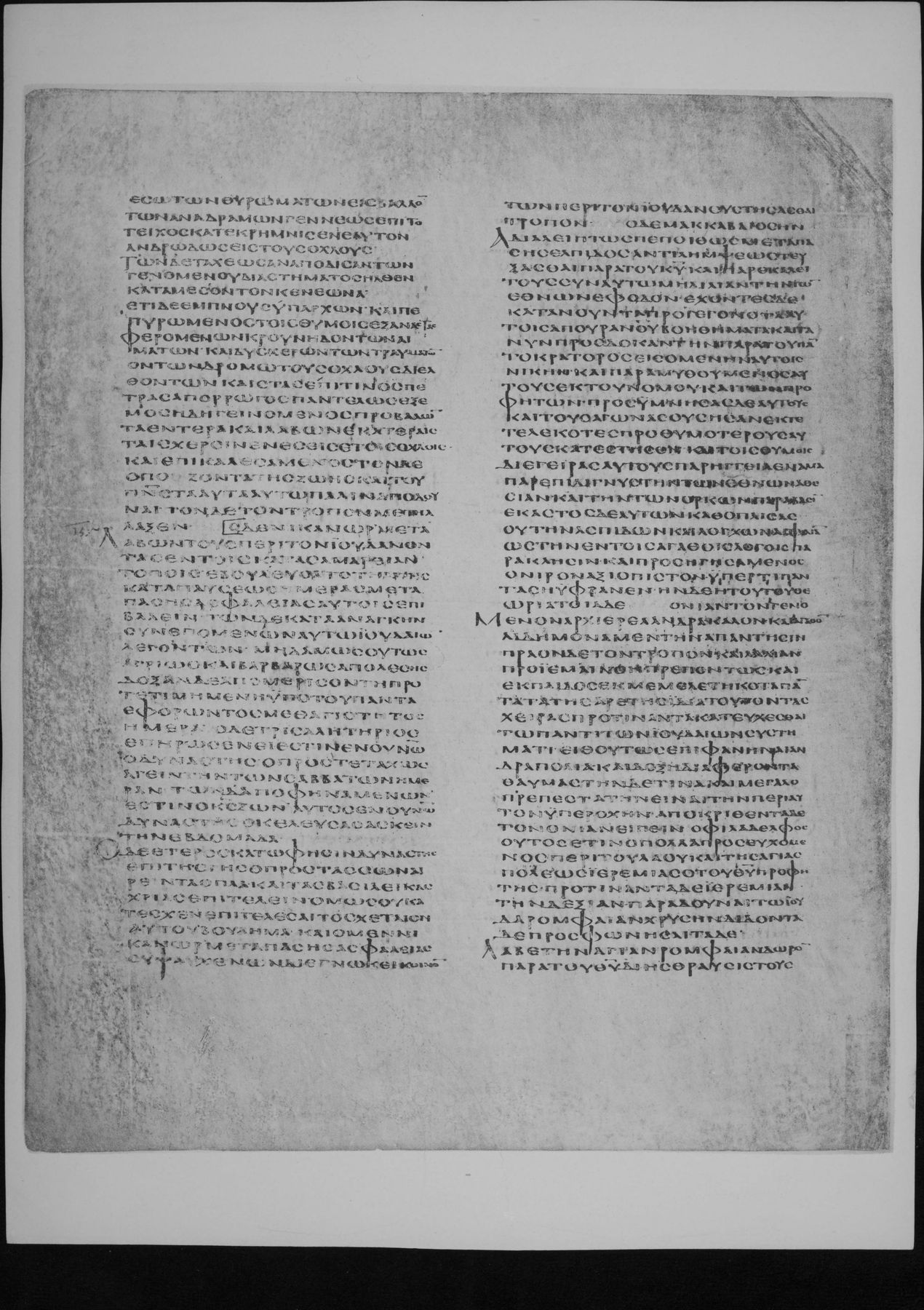
2 Maccabees 14:41-43 is on fol. 505r (full-size facsimile of 1879-83, Internet Archive codex-alexandrinus leaf 1016). The 1957 reduced facsimile prints beneath this page: 2 Maccabees xiv. 23-xiv. 43. Checked on the plate: the page begins inside 2 Maccabees 14:23 (first words read: ΟΥΘΕΝ ΑΤΟΠΟΝ ΤΟΥΣ ΔΕ ΣΥΝΑΧΘΕΝΤΑΣ ΑΓΕΛΑΙΟΥΣ ΟΧΛΟΥΣ ΑΠΕΛΥΣΕΝ). 2 Maccabees 14:43-46 is on fol. 505v (full-size facsimile of 1879-83, Internet Archive codex-alexandrinus leaf 1017). The 1957 reduced facsimile prints beneath this page: 2 Maccabees xiv. 43-xv. 16. Checked on the plate: the page begins inside 2 Maccabees 14:43 (first words read: ΕΣΩ ΤΩΝ ΘΥΡΩΜΑΤΩΝ ΕΙΣΒΙΑΖΟΜΕΝΩΝ ΑΝΑΔΡΑΜΩΝ ΓΕΝΝΑΙΩΣ ΕΠΙ ΤΟ ΤΕΙΧΟΣ ΚΑΤΕΚΡΗΜΝΙΣΕΝ ΕΑΥΤΟΝ).
41τῶν δὲ πληθῶν μελλόντων τὸν πύργον καταλαβέσθαι καὶ τὴν αὐλαίαν θύραν βιαζομένων καὶ κελευόντων πῦρ προσάγειν καὶ τὰς θύρας ὑφάπτειν, περικατάλημπτος γενόμενος ὑπέθηκεν ἑαυτῷ τὸ ξίφος· 42εὐγενῶς θέλων ἀποθανεῖν ἤπερ τοῖς ἀλιτηρίοις ὑποχείριος γενέσθαι, καὶ τῆς ἰδίας εὐγενείας ἀναξίως ὑβρισθῆναι. 43τῇ δὲ πληγῇ μὴ κατευθικτήσας διὰ τὴν τοῦ ἀγῶνος σπουδήν, καὶ τῶν ὄχλων ἔσω τῶν θυρωμάτων εἰσβαλλόντων, ἀναδραμὼν γενναίως ἐπὶ τὸ τεῖχος, κατεκρήμνισεν ἑαυτὸν ἀνδρωδῶς εἰς τοὺς ὄχλους. 44τῶν δὲ ταχέως ἀναποδισάντων, γενομένου διαστήματος, ἦλθεν κατὰ μέσον τὸν κενεῶνα. 45ἔτι δὲ ἔμπνους ὑπάρχων καὶ πεπυρωμένος τοῖς θυμοῖς, ἐξαναστὰς φερομένων κρουνηδὸν τῶν αἱμάτων, καὶ δυσχερῶν τῶν τραυμάτων ὄντων, δρόμῳ τοὺς ὄχλους διελθών, καὶ στὰς ἐπί τινος πέτρας ἀπορρῶγος, 46παντελῶς ἔξαιμος ἤδη γινόμενος, προβαλὼν τὰ ἔντερα καὶ λαβὼν ἑκατέραις ταῖς χερσίν, ἐνέσεισε τοῖς ὄχλοις· καὶ ἐπικαλεσάμενος τὸν δεσπόζοντα τῆς ζωῆς καὶ τοῦ πνεύματος τὰ αὐτὰ αὐτῷ πάλιν ἀποδοῦναι, τόνδε τὸν τρόπον μετήλλαξεν.
41Now when the multitude would have taken the tower, and violently broken into the outer door, and bade that fire should be brought to burn it, he being ready to be taken on every side fell upon his sword; 42choosing rather to die manfully, than to come into the hands of the wicked, to be abused otherwise than beseemed his noble birth: 43but missing his stroke through haste, the multitude also rushing within the doors, he ran boldly up to the wall, and cast himself down manfully among the thickest of them. 44But they quickly giving back, and a space being made, he fell down into the midst of the void place. 45Nevertheless, while there was yet breath within him, being inflamed with anger, he rose up; and though his blood gushed out like spouts of water, and his wounds were grievous, yet he ran through the midst of the throng; and standing upon a steep rock, 46when as his blood was now quite gone, he plucked out his bowels, and taking them in both his hands, he cast them upon the throng, and calling upon the Lord of life and spirit to restore him those again, he thus died.
Cite
Sources
- Source: Codex Alexandrinus (British Library Royal MS 1 D. VI) via the British Museum photographic facsimiles of 1879-83 and 1957 (Internet Archive) + Swete's Septuagint + Brenton's English (holding institution)
- Critical edition: H. B. Swete, The Old Testament in Greek according to the Septuagint (1909)
← previous · → next · v cycle view · l back to library