2 Maccabees, Chapter 15 (Codex Alexandrinus)
Introduction
2 Maccabees 15 in the Greek Old Testament (the Septuagint) as written in Codex Alexandrinus, a Greek Bible copied in the fifth century, probably in Egypt, and now in the British Library (Royal MS 1 D. VI, the second of its four volumes). It is one of the three great early codices of the whole Greek Bible, with Codex Vaticanus and Codex Sinaiticus.
This entry meets the strict three-criteria standard of the Theosis Library:
- Manuscript scan: the pages of Codex Alexandrinus carrying this chapter (fol. 505v, fol. 506r, fol. 506v), from the full-size photographic (autotype) facsimile published by the British Museum in 1879-1883, as digitised on the Internet Archive. The verse range of every page comes from the reduced photographic facsimile of 1957, which prints it beneath each plate, and the opening words of every page were read on the plate to confirm the page and the verse it begins with. Each section links to the page or pages that hold its verses. Folio numbers are those written at the head of each leaf and visible on the plates.
- Original text: Swete's edition, which in the books of Maccabees prints the text of Codex Alexandrinus itself (Codex Vaticanus does not contain these books), with the readings of other manuscripts in his apparatus. Swete adds accents, breathings and punctuation and expands the abbreviated sacred names, so the plate shows the same text in unaccented capitals.
- English translation: Sir Lancelot C. L. Brenton, The Septuagint Version of the Old Testament (1844; 1851 edition), a translation of the Greek, public domain, from the eBible.org text.
How was this verified? (Provenance)
Where on the image
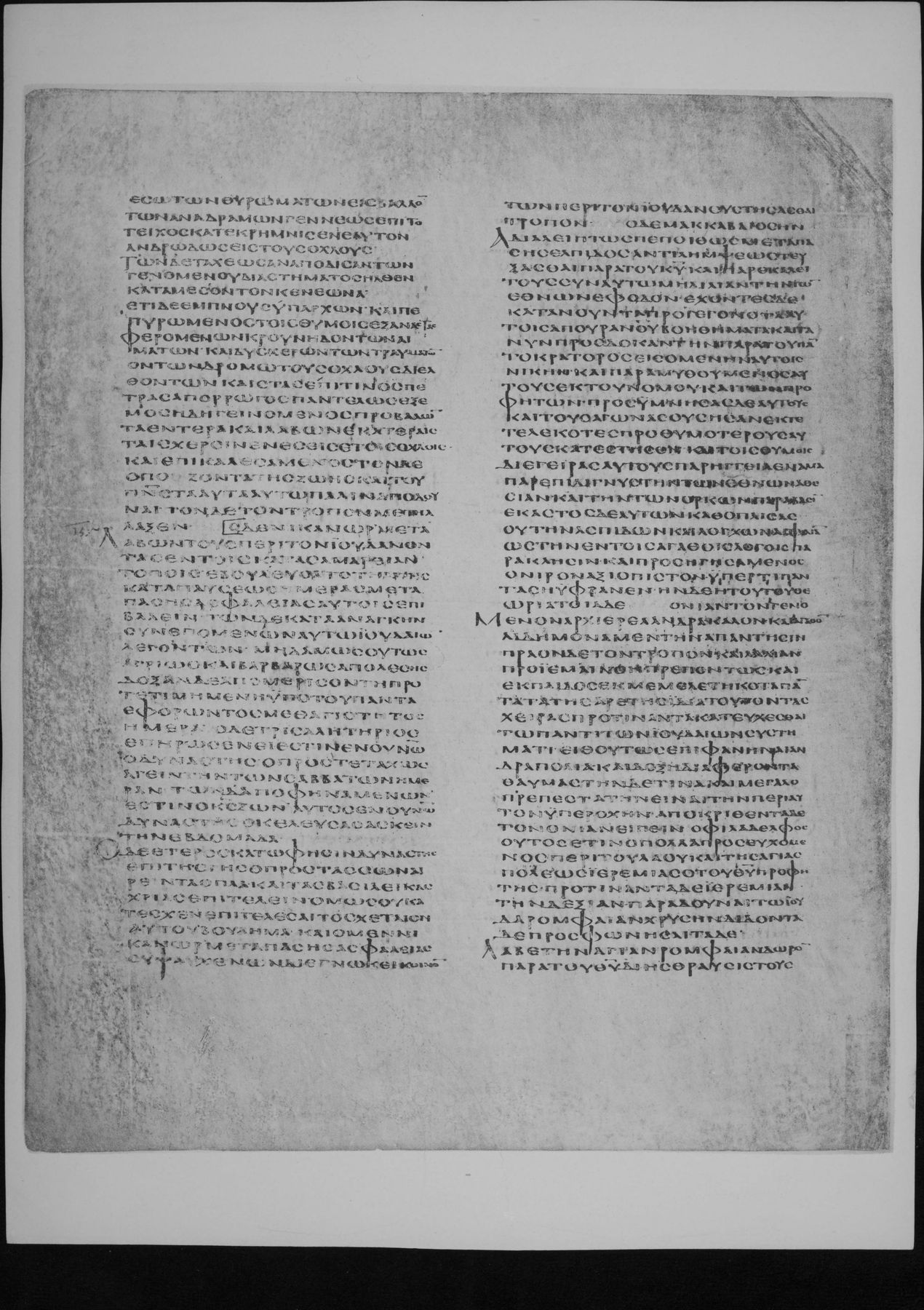
2 Maccabees 15:1-8 is on fol. 505v (full-size facsimile of 1879-83, Internet Archive codex-alexandrinus leaf 1017). The 1957 reduced facsimile prints beneath this page: 2 Maccabees xiv. 43-xv. 16. Checked on the plate: the page begins inside 2 Maccabees 14:43 (first words read: ΕΣΩ ΤΩΝ ΘΥΡΩΜΑΤΩΝ ΕΙΣΒΙΑΖΟΜΕΝΩΝ ΑΝΑΔΡΑΜΩΝ ΓΕΝΝΑΙΩΣ ΕΠΙ ΤΟ ΤΕΙΧΟΣ ΚΑΤΕΚΡΗΜΝΙΣΕΝ ΕΑΥΤΟΝ).
1Ὁ δὲ Νικάνωρ μεταλαβὼν τοὺς περὶ τὸν Ἰούδαν ὄντας ἐν τοῖς κατὰ Σαμάρειαν τόποις, ἐβουλεύσατο τῇ τῆς καταπαύσεως ἡμέρᾳ μετὰ πάσης ἀσφαλείας αὐτοῖς ἐπιβαλεῖν. 2τῶν δὲ κατὰ ἀνάγκην συνεπομένων αὐτῷ Ἰουδαίων λεγόντων Μηδαμῶς οὕτως ἀγρίως καὶ βαρβάρως ἀπολέσῃς, δόξαν δὲ ἀπομέρισον τῇ προτετιμημένῃ ὑπὸ τοῦ πάντα ἐφορῶντος μεθ᾽ ἁγιότητος ἡμέρᾳ· 3ὁ δὲ τρισαλιτήριος ἐπηρώτησεν εἰ ἔστιν ἐν οὐρανῷ ὁ δυνάστης ὁ προστεταχὼς ἄγειν τὴν τῶν σαββάτων ἡμέραν· 4τῶν δ᾽ ἀποφηναμένων Ἔστιν ὁ κύριος ζῶν αὐτὸς ἐν οὐρανῷ δυνάστης ὁ κελεύσας ἀσκεῖν τὴν ἑβδομάδα· 5ὁ δὲ ἕτερος Κἀγώ, φησίν, δυνάστης ἐπὶ τῆς γῆς, ὁ προστάσσων αἴρειν τὰ ὅπλα καὶ τὰς βασιλικὰς χρείας ἐπιτελεῖν. ὅμως οὐ κατέσχεν ἐπιτελέσαι τό σχέτλιον αὐτοῦ βούλημα. 6Καὶ ὁ μὲν Νικάνωρ μετὰ πάσης ἀσφαλείας ὑψαυχενῶν, διεγνώκει κοινὸν τῶν περὶ τὸν Ἰούδαν συστήσασθαι τρόπον. 7ὁ δὲ Μακκαβαῖος ἦν ἀδιαλείπτως πεποιθὼς μετὰ πάσης ἐλπίδος ἀντιλήμψεως τεύξασθαι παρὰ τοῦ κυρίου. 8καὶ παρεκάλει τοὺς σὺν αὐτῷ μὴ δειλιᾷν τὴν τῶν ἐθνῶν ἔφοδον, ἔχοντας δὲ κατὰ νοῦν τὰ προγεγονότα αὐτοῖς ἀπ᾽ οὐρανοῦ βοηθήματα, καὶ τὰ νῦν προσδοκᾷν τὴν παρὰ τοῦ παντοκράτορος ἐσομένην αὐτοῖς νίκην.
1But Nicanor, hearing that Judas and his company were in the strong places about Samaria, resolved without any danger to set upon them on the sabbath day. 2Nevertheless the Jews that were compelled to go with him said, O destroy not so cruelly and barbarously, but give honour to that day, which he, that seeth all things, hath honoured with holiness above other days. 3Then the most ungracious wretch demanded, if there were a Mighty one in heaven, that had commanded the sabbath day to be kept. 4And when they said, There is in heaven a living Lord, and mighty, who commanded the seventh day to be kept: 5then said the other, And I also am mighty upon earth, and I command to take arms, and to do the king's business. Yet he obtained not to have his wicked will done. 6So Nicanor in exceeding pride and haughtiness determined to set up a public monument of his victory over Judas and them that were with him. 7But Maccabeus had ever sure confidence that the Lord would help him: 8wherefore he exhorted his people not to fear the coming of the heathen against them, but to remember the help which in former times they had received from heaven, and now to expect the victory and aid, which should come unto them from the Almighty.
Where on the image
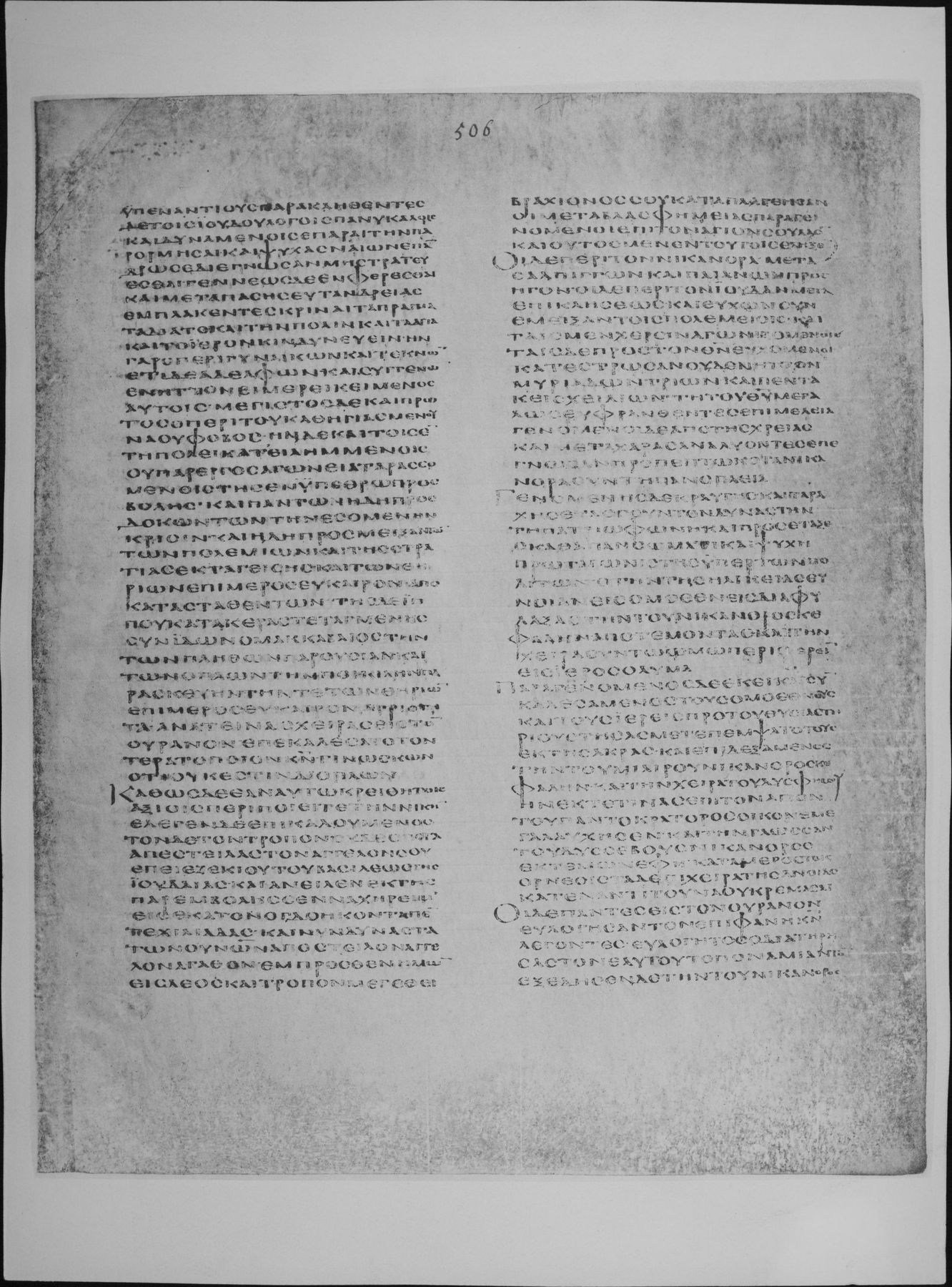
2 Maccabees 15:9-16 is on fol. 505v (full-size facsimile of 1879-83, Internet Archive codex-alexandrinus leaf 1017). The 1957 reduced facsimile prints beneath this page: 2 Maccabees xiv. 43-xv. 16. Checked on the plate: the page begins inside 2 Maccabees 14:43 (first words read: ΕΣΩ ΤΩΝ ΘΥΡΩΜΑΤΩΝ ΕΙΣΒΙΑΖΟΜΕΝΩΝ ΑΝΑΔΡΑΜΩΝ ΓΕΝΝΑΙΩΣ ΕΠΙ ΤΟ ΤΕΙΧΟΣ ΚΑΤΕΚΡΗΜΝΙΣΕΝ ΕΑΥΤΟΝ). 2 Maccabees 15:16 is on fol. 506r (full-size facsimile of 1879-83, Internet Archive codex-alexandrinus leaf 1018). The 1957 reduced facsimile prints beneath this page: 2 Maccabees xv. 16-xv. 35. Checked on the plate: the page begins inside 2 Maccabees 15:16 (first words read: ΥΠΕΝΑΝΤΙΟΥΣ ΠΑΡΑΚΛΗΘΕΝΤΕΣ ΔΕ ΤΟΙΣ ΙΟΥΔΟΥ ΛΟΓΟΙΣ ΠΑΝΥ ΚΑΛΟΙΣ).
9καὶ παραμυθούμενος αὐτοὺς ἐκ τοῦ νόμου καὶ τῶν προφητῶν, προσυμνήσας δὲ αὐτοὺς καὶ τοὺς ἀγῶνας οὓς ἦσαν ἐκτετελεκότες, προθυμοτέρους αὐτοὺς κατέστησεν. 10καὶ τοῖς θυμοῖς διεγείρας αὐτοὺς παρήγγειλεν, ἅμα παρεπιδεικνὺς τὴν τῶν ἐθνῶν ἀθεσίαν καὶ τὴν τῶν ὅρκων παράβασιν. 11ἕκαστον δὲ αὐτῶν καθοπλίσας οὐ τὴν ἀσπίδων καὶ λογχῶν ἀσφαλίαν, ὡς τὴν ἐν τοῖς ἀγαθοῖς λόγοις παράκλησιν, καὶ προσηγησάμενος ὄνειρον ἀξιόπιστον ὑπέρ τι πάντας ηὔφρανεν. 12ἦν δὲ ἡ τούτου θεωρία τοιάδε· Ὀνίαν τὸν γενόμενον ἀρχιερέα ἄνδρα καλὸν καὶ ἀγαθόν, αἰδήμονα μέν τὴν ἀπάντησιν, πρᾷον δὲ τὸν τρόπον, καὶ λαλιὰν προιέμενον πρεπόντως καὶ ἐκ παιδὸς ἐκμεμελετηκότα πάντα τὰ τῆς ἀρετῆς ἴδια, τοῦτον τὰς χεῖρας προτείναντά κατεύχεσθαι τῷ παντὶ τῶν Ἰουδαίων συστήματι· 13εἶθ᾽ οὕτως ἐπιφανῆναι ἄνδρα πολιᾷ καὶ δόξῃ διαφέροντα, θαυμαστὴν δέ τινα καὶ μεγαλοπρεπεστάτην εἶναι τὴν περὶ αὐτὸν ὑπεροχήν· 14ἀποκριθέντα δὲ τὸν Ὀνίαν εἰπεῖν Ὁ φιλάδελφος οὗτός ἐστιν ὁ πολλὰ προσευχόμενος περὶ τοῦ λαοῦ καὶ τῆς ἁγίας πόλεως Ἰερεμίας ὁ τοῦ θεοῦ προφήτης. 15προτείναντα δὲ Ἰερεμίαν τὴν δεξιὰν παραδοῦναι τῷ Ἰούδᾳ ῥομφαίαν χρυσῆν, διδόντα δὲ προσφωνῆσαι τάδε 16Λάβε τὴν ἁγίαν ῥομφαίαν δῶρον παρὰ τοῦ θεοῦ, δι᾽ ἧς θραύσεις τοὺς ὑπεναντίους.
9And so comforting them out of the law and the prophets, and withal putting them in mind of the battles that they won afore, he made them more cheerful. 10And when he had stirred up their minds, he gave them their charge, shewing them therewithal the falsehood of the heathen, and the breach of oaths. 11Thus he armed every one of them, not so much with defence of shields and spears, as with comfortable and good words: and beside that, he told them a dream worthy to be believed, as if it had been so indeed, which did not a little rejoice them. 12And this was his vision: That Onias, who had been high priest, a virtuous and a good man, reverend in conversation, gentle in condition, well spoken also, and exercised from a child in all points of virtue, holding up his hands prayed for the whole body of the Jews. 13This done, in like manner there appeared a man with gray hairs, and exceeding glorious, who was of a wonderful and excellent majesty. 14Then Onias answered, saying, This is a lover of the brethren, who prayeth much for the people, and for the holy city, to wit, Jeremias the prophet of God. 15Whereupon Jeremias holding forth his right hand gave to Judas a sword of gold, and in giving it spake thus, 16Take this holy sword, a gift from God, with the which thou shalt wound the adversaries.
Where on the image
2 Maccabees 15:17-24 is on fol. 506r (full-size facsimile of 1879-83, Internet Archive codex-alexandrinus leaf 1018). The 1957 reduced facsimile prints beneath this page: 2 Maccabees xv. 16-xv. 35. Checked on the plate: the page begins inside 2 Maccabees 15:16 (first words read: ΥΠΕΝΑΝΤΙΟΥΣ ΠΑΡΑΚΛΗΘΕΝΤΕΣ ΔΕ ΤΟΙΣ ΙΟΥΔΟΥ ΛΟΓΟΙΣ ΠΑΝΥ ΚΑΛΟΙΣ).
17Παρακληθέντες δὲ τοῖς Ἰούδου λόγοις πάνυ καλοῖς καὶ δυναμένοις ἐπ᾽ ἀρετὴν παρορμῆσαι καὶ ψυχὰς νέων ἐπανδρῶσαι, διέγνωσαν μὴ στρατεύεσθαι, γενναίως δὲ ἐνφέρεσθαι, καὶ μετὰ πάσης εὐανδρείας ἐμπλακέντες κρῖναι τὰ πράγματα, διὰ τὸ καὶ τὴν πόλιν καὶ τὰ ἅγια καὶ τὸ ἱερὸν κινδυνεύειν. 18ἦν γὰρ ὁ περὶ γυναικῶν καὶ τέκνων, ἔτι δὲ ἀδελφῶν καὶ συγγενῶν, ἐν ἥττονι μέρει κείμενος αὐτοῖς, μέγιστος δὲ καὶ πρῶτος ὁ περὶ τοῦ καθηγιασμένου ναοῦ φόβος. 19ἦν δὲ καὶ τοῖς ἐν τῇ πόλει κατειλημμένοις οὐ πάρεργος ἀγωνία, ταρασσομένοις τῆς ἐν ὑπαίθρῳ προσβολῆς. 20Καὶ πάντων ἤδη προσδοκώντων τὴν ἐσομένην κρίσιν, καὶ ἤδη προσμιξάντων τῶν πολεμίων καὶ τῆς στρατιᾶς ἐκταγείσης, καὶ τῶν θηρίων ἐπὶ μέρος εὔκαιρον ἀποκατασταθέντων, τῆς δὲ ἵππου κατὰ κέρας τεταγμένης· 21συνιδὼν ὁ Μακκαβαῖος τὴν τῶν πληθῶν παρουσίαν καὶ τῶν ὅπλων τὴν ποικίλην παρασκευήν, τήν τε τῶν θηρίων ἐπὶ μέρος εὔκαιρον ἀγριότητα, ἀνατείνας χεῖρας εἰς τὸν οὐρανόν, ἐπεκαλέσατο τὸν τερατοποιὸν κύριον, γινώσκων ὅτι οὐκ ἔστιν δι᾽ ὅπλων, καθὼς δὲ ἐὰν αὐτῷ κριθῇ, τοῖς ἀξίοις περιποιεῖται τὴν νίκην. 22ἔλεγεν δὲ ἐπικαλούμενος τόνδε τὸν τρόπον Σύ, δέσποτα, ἀπέστειλας τὸν ἄγγελόν σου ἐπὶ Ἑζεκίου τοῦ βασιλέως τῆς Ἰουδαίας, καὶ ἀνεῖλεν ἐκ τῆς παρεμβολῆς Σενναχηρεὶμ εἰς ἑκατὸν ὀγδοήκοντα πέντε χιλιάδας. 23καὶ νῦν, δυνάστα τῶν οὐρανῶν, ἀπόστειλον ἄγγελον ἀγαθὸν ἔμπροσθεν ἡμῶν εἰς δέος καὶ τρόμον· 24μεγέθει βραχίονός σου καταπλαγείησαν οἱ μετὰ βλασφημίας παραγινόμενοι ἐπὶ τὸν ἅγιόν σου λαόν. καὶ οὗτος μὲν ἐν τούτοις ἔληξεν.
17Thus being well comforted by the words of Judas, which were very good, and able to stir them up to valour, and to encourage the hearts of the young men, they determined not to pitch camp, but courageously to set upon them, and manfully to try the matter by conflict, because the city and the sanctuary and the temple were in danger. 18For the care that they took for their wives, and their children, their brethren, and kinsfolks, was in least account with them: but the greatest and principal fear was for the holy temple. 19Also they that were in the city took not the least care, being troubled for the conflict abroad. 20And now, when as all looked what should be the trial, and the enemies were already come near, and the army was set in array, and the beasts conveniently placed, and the horsemen set in wings, 21Maccabeus seeing the coming of the multitude, and the divers preparations of armour, and the fierceness of the beasts, stretched out his hands toward heaven, and called upon the Lord that worketh wonders, knowing that victory cometh not by arms, but even as it seemeth good to him, he giveth it to such as are worthy: 22therefore in his prayer he said after this manner: O Lord, thou didst send thine angel in the time of Ezekias king of Judea, and didst slay in the host of Sennacherib an hundred fourscore and five thousand: 23wherefore now also, O Lord of heaven, send a good angel before us for a fear and dread unto them; 24and through the might of thine arm let those be stricken with terror, that come against thy holy people to blaspheme. And he ended thus.
Where on the image
2 Maccabees 15:25-32 is on fol. 506r (full-size facsimile of 1879-83, Internet Archive codex-alexandrinus leaf 1018). The 1957 reduced facsimile prints beneath this page: 2 Maccabees xv. 16-xv. 35. Checked on the plate: the page begins inside 2 Maccabees 15:16 (first words read: ΥΠΕΝΑΝΤΙΟΥΣ ΠΑΡΑΚΛΗΘΕΝΤΕΣ ΔΕ ΤΟΙΣ ΙΟΥΔΟΥ ΛΟΓΟΙΣ ΠΑΝΥ ΚΑΛΟΙΣ).
25Οἱ δὲ περὶ τὸν Νικάνορα μετὰ σαλπίγγων καὶ παιάνων προσῆγον· 26οἱ δὲ περὶ τὸν Ἰούδαν μετὰ ἐπικλήσεως καὶ εὐχῶν συνέμιξαν τοῖς πολεμίοις. 27καὶ ταῖς μὲν χερσὶν ἀγωνιζόμενοι, ταῖς δὲ καρδίαις πρὸς τὸν θεὸν εὐχόμενοι, κατέστρωσαν οὐδὲν ἧττον μυριάδων τριῶν καὶ πεντακισχιλίων, τῇ τοῦ θεοῦ μεγάλως εὐφρανθέντες ἐπιμελείᾳ. 28Γενόμενοι δὲ ἀπὸ τῆς χρείας καὶ μετὰ χαρᾶς ἀναλύοντες, ἐπέγνωσαν προπεπτωκότα Νικάνορα σὺν τῇ πανοπλίᾳ. 29γενομένης δὲ κραυγῆς καὶ ταραχῆς, εὐλόγουν τὸν δυνάστην τῇ πατρίῳ φωνῇ. 30καὶ προσέταξεν ὁ καθ᾽ ἅπαν σώματι καὶ ψυχῇ πρωταγωνιστὴς ὑπὲρ τῶν πολιτῶν, ὁ τὴν τῆς ἡλικίας εὔνοιαν εἰς ὁμοεθνεῖς διαφυλάξας, τὴν τοῦ Νικάνορος κεφαλὴν ἀποτεμόντας, καὶ τὴν χεῖρα σὺν τῷ ὤμῳ, περιφέρειν εἰς Ἰεροσόλυμα. 31παραγενόμενος δὲ ἐκεῖ, καὶ συνκαλεσάμενος τοὺς ὁμοεθνεῖς καὶ τοὺς ἱερεῖς πρὸ τοῦ θυσιαστηρίου στήσας, μετεπέμψατο τοὺς ἐκ τῆς ἄκρας. 32καὶ ἐπιδεξάμενος τὴν τοῦ μιεροῦ Νικάνορος κεφαλὴν καὶ τὴν χεῖρα τοῦ δυσφήμου, ἣν ἐκτείνας ἐπὶ τὸν ἅγιον τοῦ παντοκράτορος οἶκον ἐμεγαλαύχησεν,
25Then Nicanor and they that were with him came forward with trumpets and songs. 26But Judas and his company encountered the enemies with invocation and prayer. 27So that fighting with their hands, and praying unto God with their hearts, they slew no less than thirty and five thousand men: for through the appearance of God they were greatly cheered. 28Now when the battle was done, returning again with joy, they knew that Nicanor lay dead in his harness. 29Then they made a great shout and a noise, praising the Almighty in their own language. 30And Judas, who was ever the chief defender of the citizens both in body and mind, and who continued his love toward his countrymen all his life, commanded to strike off Nicanor's head, and his hand with his shoulder, and bring them to Jerusalem. 31So when he was there, and had called them of his nation together, and set the priests before the altar, he sent for them that were of the tower, 32and shewed them vile Nicanor's head, and the hand of that blasphemer, which with proud brags he had stretched out against the holy temple of the Almighty.
Where on the image
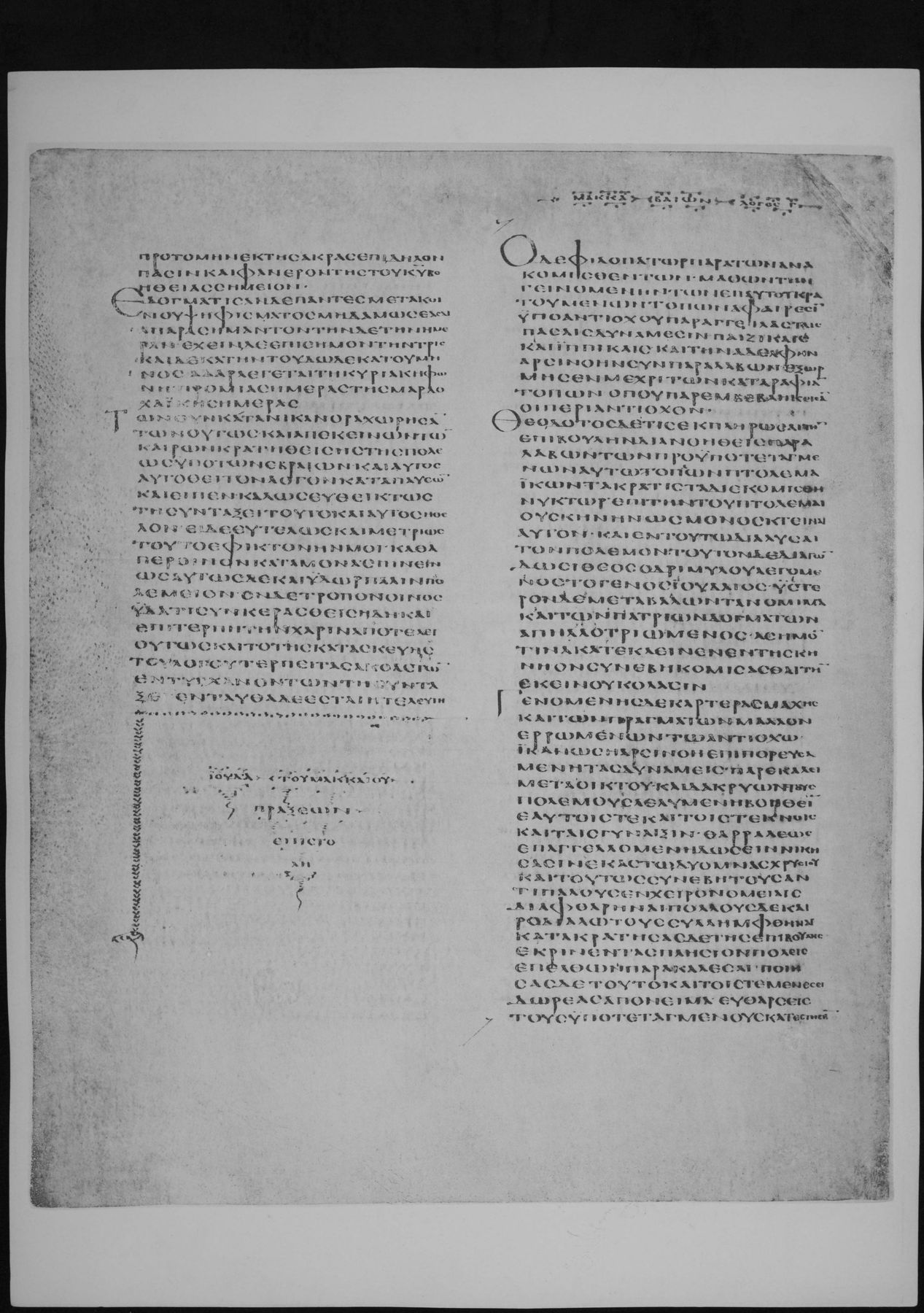
2 Maccabees 15:33-35 is on fol. 506r (full-size facsimile of 1879-83, Internet Archive codex-alexandrinus leaf 1018). The 1957 reduced facsimile prints beneath this page: 2 Maccabees xv. 16-xv. 35. Checked on the plate: the page begins inside 2 Maccabees 15:16 (first words read: ΥΠΕΝΑΝΤΙΟΥΣ ΠΑΡΑΚΛΗΘΕΝΤΕΣ ΔΕ ΤΟΙΣ ΙΟΥΔΟΥ ΛΟΓΟΙΣ ΠΑΝΥ ΚΑΛΟΙΣ). 2 Maccabees 15:35-39 is on fol. 506v (full-size facsimile of 1879-83, Internet Archive codex-alexandrinus leaf 1019). The 1957 reduced facsimile prints beneath this page: 2 Maccabees xv. 35-xv. 39 [end], 3 Maccabees i. 1-i. 7. Checked on the plate: the page begins inside 2 Maccabees 15:35 (first words read: ΠΡΟΤΟΜΗΝ ΕΚ ΤΗΣ ΑΚΡΑΣ ΕΠΙΔΗΛΟΝ ΠΑΣΙΝ ΚΑΙ ΦΑΝΕΡΟΝ ΤΗΣ ΤΟΥ ΚΥ ΒΟΗΘΕΙΑΣ ΣΗΜΕΙΟΝ).
33καὶ τὴν γλῶσσαν τοῦ δυσσεβοῦς Νικάνορος ἐκτεμών, ἔφη μετὰ μέρος τοῖς ὀρνέοις, τὰ δ᾽ ἐπίχειρα τῆς ἀνοίας κατέναντι τοῦ ναοῦ κρεμάσαι. 34οἱ δὲ πάντες εἰς τὸν οὐρανὸν εὐλόγησαν τὸν ἐπιφανῆ κύριον, λέγοντες Εὐλογητὸς ὁ διατηρήσας τὸν ἑαυτοῦ τόπον ἀμίαντον. 35ἐξέδησεν δὲ τὴν τοῦ Νικάνορος προτομὴν ἐκ τῆς ἄκρας ἐπίδηλον πᾶσιν, καὶ φανερὸν τῆς τοῦ κυρίου βοηθείας σημεῖον. 36ἐδογμάτισαν δὲ πάντες μετὰ κοινοῦ ψηφίσματος μηδαμῶς ἐᾶσαι ἀπαρασήμαντον τὴνδε τὴν ἡμέραν· ἔχειν δὲ ἐπίσημον τὴν τρισκαιδεκάτην τοῦ δωδεκάτου μηνός Ἀδὰρ λέγεται τῇ κυριακῇ φωνῇ πρὸ μιᾶς ἡμέρας τῆς Μαρδοχαικῆς ἡμέρας. 37Τῶν οὖν κατὰ Νικάνορα χωρησάντων οὕτως, καὶ ἀπ᾽ ἐκείνων τῶν καιρῶν κρατηθείσης τῆς πόλεως ὑπὸ τῶν Ἐβραίων, καὶ αὐτὸς αὐτόθι τὸν λόγον καταπαύσω. 38καὶ εἰ μὲν καλῶς, εὐθίκτως τῇ συντάξει, τοῦτο καὶ αὐτὸς ἤθελον· εἰ δὲ εὐτελῶς καὶ μετρίως, τοῦτο ἐφικτὸν ἦν μοι. 39καθάπερ οἶνον κατὰ μόνας πίνειν, ὡσαύτως δὲ καὶ ὕδωρ πάλιν πολέμιον· ὃν δὲ τρόπον οἶνος ὕδατι συνκερασθεὶς ἤδη καὶ ἐπιτερπῆ τὴν χάριν ἀποτελεῖ, οὕτως καὶ τὸ τῆς κατασκευῆς τοῦ λόγου τέρπει τὰς ἀκοὰς τῶν ἐντυγχανόντων τῇ συντάξει. Ἐνταῦθα δὲ ἔσται ἡ τελευτή.
33And when he had cut out the tongue of that ungodly Nicanor, he commanded that they should give it by pieces unto the fowls, and hang up the reward of his madness before the temple. 34So every man praised toward the heaven the glorious Lord, saying, Blessed be he that hath kept his own place undefiled. 35He hanged also Nicanor's head upon the tower, an evident and manifest sign unto all of the help of the Lord. 36And they ordained all with a common decree in no case to let that day pass without solemnity, but to celebrate the thirteenth day of the twelfth month, which in the Syrian tongue is called Adar, the day before Mardocheus' day. 37Thus went it with Nicanor: and from that time forth the Hebrews had the city in their power. And here will I make an end. 38And if I have done well, and as is fitting the story, it is that which I desired: but if slenderly and meanly, it is that which I could attain unto. 39For as it is hurtful to drink wine or water alone; and as wine mingled with water is pleasant, and delighteth the taste: even so speech finely framed delighteth the ears of them that read the story. And here shall be an end.
Cite
Sources
- Source: Codex Alexandrinus (British Library Royal MS 1 D. VI) via the British Museum photographic facsimiles of 1879-83 and 1957 (Internet Archive) + Swete's Septuagint + Brenton's English (holding institution)
- Critical edition: H. B. Swete, The Old Testament in Greek according to the Septuagint (1909)
← previous · → next · v cycle view · l back to library