3 Kingdoms (1 Kings), Chapter 13 (Codex Alexandrinus)
Introduction
3 Kingdoms (1 Kings) 13 in the Greek Old Testament (the Septuagint) as written in Codex Alexandrinus, a Greek Bible copied in the fifth century, probably in Egypt, and now in the British Library (Royal MS 1 D. V, the first of its four volumes). It is one of the three great early codices of the whole Greek Bible, with Codex Vaticanus and Codex Sinaiticus.
Verses not in Swete's text: Swete's Greek (Codex Vaticanus) has no verse numbered 27 in this chapter. In the books of Kingdoms and Chronicles Codex Alexandrinus often follows the Hebrew text more closely and may have text at such points; any such lines on the pages shown have no Greek column here. Brenton, translating a Vaticanus-type text, mostly lacks them too.
This entry meets the strict three-criteria standard of the Theosis Library:
- Manuscript scan: the pages of Codex Alexandrinus carrying this chapter (fol. 212v, fol. 213r, fol. 213v), from the full-size photographic (autotype) facsimile published by the British Museum in 1879-1883, as digitised on the Internet Archive. The verse range of every page comes from the reduced photographic facsimile of 1930, which prints it beneath each plate, and the opening words of every page were read on the plate to confirm the page and the verse it begins with. Each section links to the page or pages that hold its verses. Folio numbers are those written at the head of each leaf and visible on the plates.
- Original text: Swete's edition, which here prints the text of Codex Vaticanus (Vat. gr. 1209), the base of his edition, and gives the readings of Alexandrinus only in his apparatus. The Greek column is therefore Vaticanus' text; where Alexandrinus differs, the plate shows what Alexandrinus reads.
- English translation: Sir Lancelot C. L. Brenton, The Septuagint Version of the Old Testament (1844; 1851 edition), a translation of the Greek, public domain, from the eBible.org text.
How was this verified? (Provenance)
Where on the image
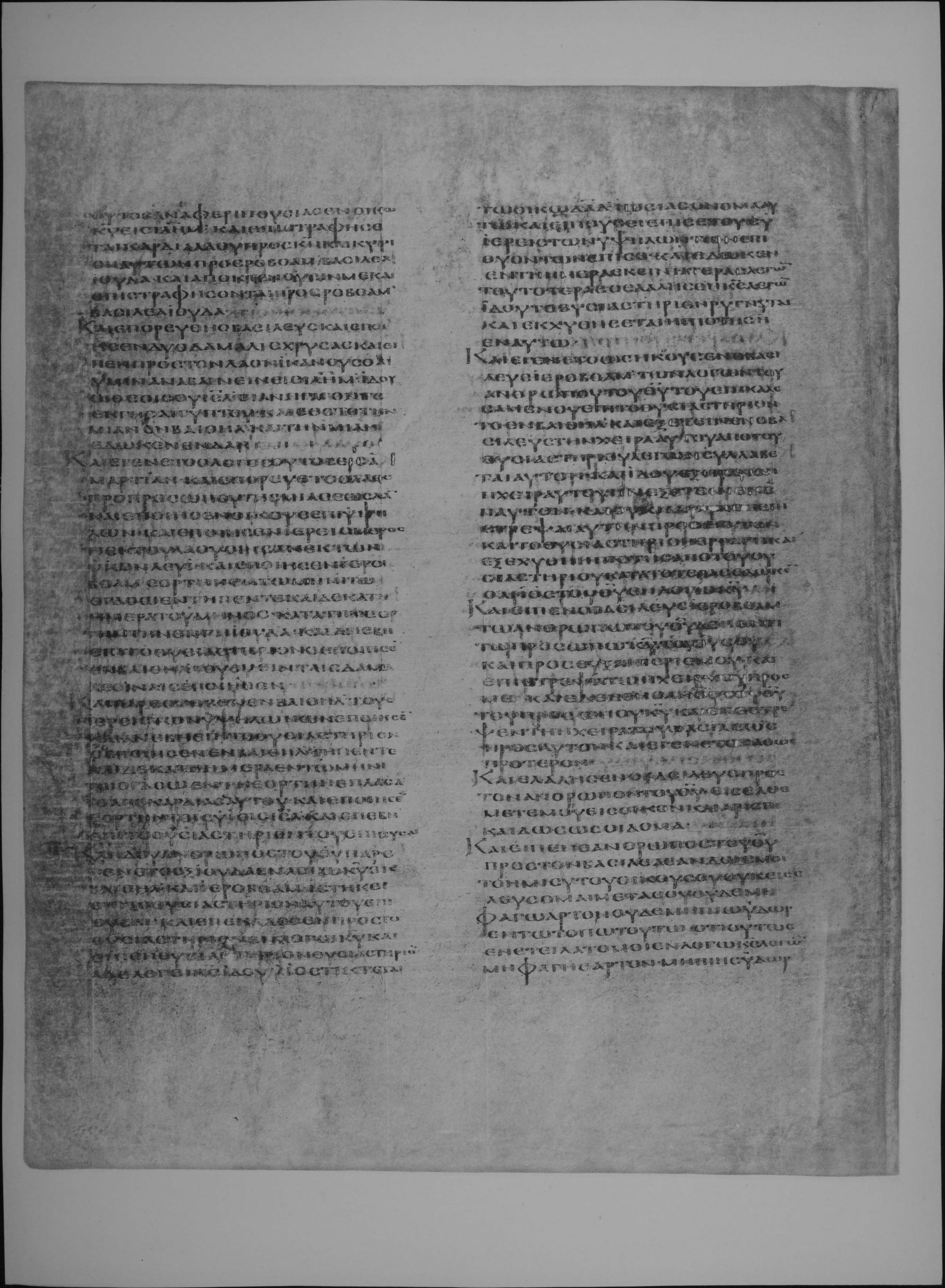
3 Kingdoms (1 Kings) 13:1-8 is on fol. 212v (full-size facsimile of 1879-83, Internet Archive codex-alexandrinus leaf 443). The 1930 reduced facsimile prints beneath this page: 1 Kings xii. 27-xiii. 9. Checked on the plate: the page begins inside 3 Kingdoms (1 Kings) 12:27 (first words read: ΚΑΙ ΕΠΙΣΤΡΑΦΗΣΕΤΑΙ ΚΑΡΔΙΑ ΤΟΥ ΛΑΟΥ ΠΡΟΣ ΚΝ).
1Καὶ ἰδοὺ ἄνθρωπος τοῦ θεοῦ ἐξ Ἰούδα παρεγένετο ἐν λόγῳ Κυρίου εἰς Βαιθήλ, καὶ Ἰεροβοὰμ εἱστήκει ἐπὶ τὸ θυσιαστήριον ἐπιθῦσαι. 2καὶ ἐπεκάλεσεν πρὸς τὸ θυσιαστήριον ἐν λόγῳ Κυρίου Θυσιαστήριον, θυσιαστήριον, τάδε λέγει Κύριος Ἰδοὺ υἱὸς τίκτεται τῷ οἴκῳ Δαυείδ, Ἰωσείας ὄνομα αὐτῷ, καὶ θύσει ἐπὶ σὲ τοὺς ἱερεῖς τῶν ὑψηλῶν τῶν ἐπιθυόντων ἐπὶ σέ, καὶ ὀστᾶ ἀνθρώπων καύσει ἐπὶ σέ· 3καὶ δώσει ἐν τῇ ἡμέρᾳ ἐκείνῃ τέρας, λέγων Τοῦτο τὸ ῥῆμα ὃ ἐλάλησεν Κύριος λέγων Ἰδοὺ τὸ θυσιαστήριον ῥήγνυται, καὶ ἐκχυθήσεται ἡ πιότης ἡ ἐπ᾽ αὐτῷ. 4καὶ ἐγένετο ὡς ἤκουσεν ὁ βασιλεὺς Ἰεροβοὰμ τῶν λόγων τοῦ ἀνθρώπου τοῦ θεοῦ τοῦ ἐπικαλεσαμένου ἐπὶ τὸ θυσιαστήριον τὸ ἐν Βαιθήλ, καὶ ἐξέτεινεν ὁ βασιλεὺς τὴν χεῖρα αὐτοῦ ἀπὸ τοῦ θυσιαστηρίου λέγων Συλλάβετε αὐτόν· καὶ ἰδοὺ ἐξηράνθη ἡ χεὶρ αὐτοῦ ἣν ἐξέτεινεν ἐπ᾽ αὐτόν, καὶ οὐκ ἠδυνήθη ἐπιστρέψαι αὐτὴν πρὸς αὐτόν. 5καὶ τὸ θυσιαστήριον ἐρράγη, καὶ ἐξεχύθη ἡ πιότης ἀπὸ τοῦ θυσιαστηρίου κατὰ τὸ τέρας ὃ ἔδωκεν ὁ ἄνθρωπος τοῦ θεοῦ ἐν λόγῳ Κυρίου. 6καὶ εἶπεν ὁ βασιλεὺς Ἰεροβοὰμ τῷ ἀνθρώπῳ τοῦ θεοῦ Δεήθητι τοῦ θεοῦ σου, καὶ ἐπιστρεψάτω ἡ χείρ μου πρὸς μέ. καὶ ἐδεήθη ὁ ἄνθρωπος τοῦ θεοῦ τοῦ προσώπου Κυρίου, καὶ ἐπέστρεψεν τὴν χεῖρα τοῦ βασιλέως πρὸς αὐτόν, καὶ ἐγένετο καθὼς τὸ πρότερον. 7καὶ ἐλάλησεν ὁ βασιλεὺς πρὸς τὸν ἄνθρωπον τοῦ θεοῦ Εἴσελθε μετ᾽ ἐμοῦ εἰς οἶκον καὶ ἀρίστησον, καὶ δώσω σοι δόμα. 8καὶ εἶπεν ὁ ἄνθρωπος τοῦ θεοῦ πρὸς τὸν βασιλὲα Ἐάν μοι δῷς τὸ ἥμισυ τοῦ οἴκου σου, οὐκ εἰσελεύσομαι μετὰ σοῦ, οὐδὲ μὴ φάγω ἄρτον οὐδὲ μὴ πίω ὕδωρ ἐν τῷ τόπῳ τούτῳ.
1And, behold, there came a man of God out of Juda by the word of the Lord to Bæthel, and Jeroboam stood at the altar to sacrifice. 2And he cried against the altar by the word of the Lord, and said, O altar, altar, thus saith the Lord, Behold, a son is to be born to the house of David, Josias by name; and he shall offer upon thee the priests of the high places, even of them that sacrifice upon thee, and he shall burn men's bones upon thee. 3And in that day one shall give a sign, saying, This is the word which the Lord has spoken, saying, Behold, the altar is rent, and the fatness upon it shall be poured out. 4And it came to pass when king Jeroboam heard the words of the man of God who called on the altar that was in Bæthel, that the king stretched forth his hand from the altar, saying, Take hold of him. And, behold, his hand, which he stretched forth against him, withered, and he could not draw it back to himself. 5And the altar was rent, and the fatness was poured out from the altar, according to the sign which the man of God gave by the word of the Lord. 6And king Jeroboam said to the man of God, Intreat the Lord thy God, and let my hand be restored to me. And the man of God intreated the Lord, and he restored the king's hand to him, and it became as before. 7And the king said to the man of God, Enter with me into the house, and dine, and I will give thee a gift. 8And the man of God said to the king, If thou shouldest give me the half of thine house, I would not go in with thee, neither will I eat bread, neither will I drink water in this place; for thus the Lord charged me by his word, saying,
Where on the image
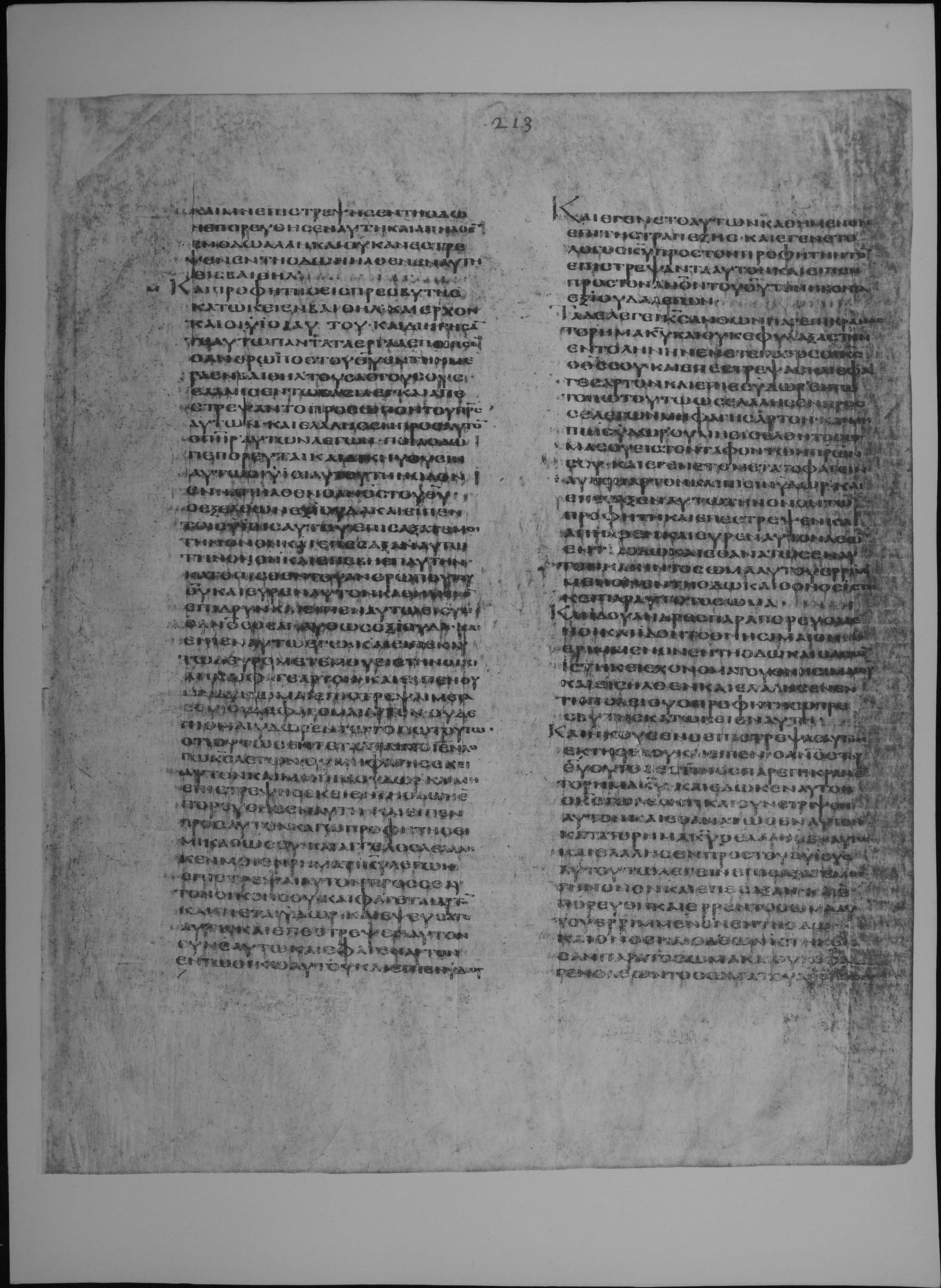
3 Kingdoms (1 Kings) 13:9 is on fol. 212v (full-size facsimile of 1879-83, Internet Archive codex-alexandrinus leaf 443). The 1930 reduced facsimile prints beneath this page: 1 Kings xii. 27-xiii. 9. Checked on the plate: the page begins inside 3 Kingdoms (1 Kings) 12:27 (first words read: ΚΑΙ ΕΠΙΣΤΡΑΦΗΣΕΤΑΙ ΚΑΡΔΙΑ ΤΟΥ ΛΑΟΥ ΠΡΟΣ ΚΝ). 3 Kingdoms (1 Kings) 13:9-16 is on fol. 213r (full-size facsimile of 1879-83, Internet Archive codex-alexandrinus leaf 444). The 1930 reduced facsimile prints beneath this page: 1 Kings xiii. 9-29. Checked on the plate: the page begins inside 3 Kingdoms (1 Kings) 13:9 (first words read: ΚΑΙ ΜΗ ΕΠΙΣΤΡΕΨΗΣ ΕΝ ΤΗ ΟΔΩ Η ΕΠΟΡΕΥΘΗΣ ΕΝ ΑΥΤΗ ΚΑΙ ΑΠΗΛΘΕΝ ΕΝ ΟΔΩ ΑΛΛΗ).
9ὅτι οὕτως ἐνετείλατό μοι ἐν λόγῳ Κύριος λέγων Μὴ φάγῃς ἄρτον καὶ μὴ πίῃς ὕδωρ καὶ μὴ ἐπιστρέψῃς ἐν τῇ ὁδῷ ᾗ ἐπορεύθης ἐν αὐτῇ. 10καὶ ἀπῆλθεν ἐν ὁδῷ ἄλλῃ, καὶ οὐκ ἀνέστρεψεν ἐν τῇ ὁδῷ ᾗ ἦλθεν ἐν αὐτῇ εἰς Βαιθήλ. 11Καὶ πρεσβύτης εἷς προφήτης κατῴκει εἰς Βαιθήλ, καὶ ἔρχονται οἱ υἱοὶ αὐτοῦ καὶ διηγήσαντο αὐτῷ ἅπαντα τὰ ἔργα ἃ ἐποίησεν ὁ ἄνθρωπος τοῦ θεοῦ ἐν τῇ ἡμέρᾳ ἐν Βαιθήλ, τοὺς λόγους οὓς ἐλάλησεν τῷ βασιλεῖ· καὶ ἐπέστρεψαν τὸ πρόσωπον τοῦ πατρὸς αὐτῶν. 12καὶ ἐλάλησεν πρὸς αὐτοὺς ὁ πατὴρ αὐτῶν λέγων Ποίᾳ ὁδῷ πεπόρευται; καὶ δεικνύουσιν αὐτῷ οἱ υἱοὶ αὐτοῦ τὴν ὁδὸν ἐν ᾗ ἀνῆλθεν ὁ ἄνθρωπος τοῦ θεοῦ ὁ ἐλθὼν ἐξ Ἰούδα. 13καὶ εἶπεν τοῖς υἱοῖς αὐτοῦ Ἐπισάξατέ μοι τὸν ὄνον· καὶ ἐπέσαξαν αὐτῷ τὸν ὄνον, καὶ ἐπέβη ἐπ᾽ αὐτόν. 14καὶ ἐπορεύθη κατόπισθεν τοῦ ἀνθρώπου τοῦ θεοῦ, καὶ εὗρεν αὐτὸν καθήμενον ὑπὸ δρῦν καὶ εἶπεν αὐτῷ Εἰ σὺ εἶ ὁ ἄνθρωπος τοῦ θεοῦ ὁ ἐληλυθὼς ἐξ Ἰούδα; καὶ εἶπεν αὐτῷ Ἐγώ. 15καὶ εἶπεν αὐτῷ Δεῦρο μετ᾽ ἐμοῦ καὶ φάγε ἄρτον. 16καὶ εἶπεν Οὐ μὴ δύνωμαι τοῦ ἐπιστρέψαι μετὰ σοῦ, οὐδὲ μὴ φάγομαι ἄρτον οὐδὲ πίομαι ὕδωρ ἐν τῷ τόπῳ τούτῳ.
9Eat no bread, and drink no water, and return not by the way by which thou camest. 10So he departed by another way, and returned not by the way by which he came to Bæthel. 11And there dwelt an old prophet in Bæthel; and his sons came and told him all the works that the man of God did on that day in Bæthel, and the words which he spoke to the king: and they turned the face of their father. 12And their father spoke to them, saying, Which way went he? and his sons shew him the way by which the man of God who came out of Juda went up. 13And he said to his sons, Saddle me the ass: and they saddled him the ass, and he mounted it, 14and went after the man of God, and found him sitting under an oak: and he said to him, Art thou the man of God that came out of Juda? And he said to him, I am. 15And he said to him, Come with me, and eat bread. 16And he said, I shall not by any means be able to return with thee, neither will I eat bread, neither will I drink water in this place.
Where on the image
3 Kingdoms (1 Kings) 13:17-24 is on fol. 213r (full-size facsimile of 1879-83, Internet Archive codex-alexandrinus leaf 444). The 1930 reduced facsimile prints beneath this page: 1 Kings xiii. 9-29. Checked on the plate: the page begins inside 3 Kingdoms (1 Kings) 13:9 (first words read: ΚΑΙ ΜΗ ΕΠΙΣΤΡΕΨΗΣ ΕΝ ΤΗ ΟΔΩ Η ΕΠΟΡΕΥΘΗΣ ΕΝ ΑΥΤΗ ΚΑΙ ΑΠΗΛΘΕΝ ΕΝ ΟΔΩ ΑΛΛΗ).
17ὅτι οὕτως ἐντέταλταί μοι ἐν λόγῳ Κύριος λέγων Μὴ φάγῃς ἄρτον ἐκεῖ καὶ μὴ πίῃς ὕδωρ, καὶ μὴ ἐπιστρέψῃς ἐκεῖ ἐν τῇ ὁδῷ ᾗ ἐπορεύθης ἐν αὐτῇ. 18καὶ εἶπεν πρὸς αὐτόν Κἀγὼ προφήτης εἰμὶ καθὼς σύ, καὶ ἄγγελος λελάληκεν πρὸς μὲ ἐν ῥήματι Κυρίου λέγων Ἐπίστρεψον αὐτὸν πρὸς σεαυτὸν εἰς τὸν οἶκόν σου, καὶ φαγέτω ἄρτον καὶ πιέτω ὕδωρ· καὶ ἐψεύσατο αὐτῷ. 19καὶ ἐπέστρεψεν αὐτόν, καὶ ἔφαγεν ἄρτον ἐν τῷ οἴκῳ αὐτοῦ καὶ ἔπιεν ὕδωρ. 20καὶ ἐγένετο αὐτῶν καθημένων, καὶ ἐγένετο λόγος Κυρίου πρὸς τὸν προφήτην τὸν ἐπιστρέψαντα αὐτόν· 21καὶ εἶπεν πρὸς τὸν ἄνθρωπον τοῦ θεοῦ τὸν ἥκοντα ἐξ Ἰούδα λέγων Τάδε λέγει Κύριος Ἀνθ᾽ ὧν παρεπίκρανας τὸ ῥῆμα Κυρίου, καὶ οὐκ ἐφύλαξας τὴν ἐντολὴν ἣν ἐνετείλατό σοι Κύριος ὁ θεός σου, 22καὶ ἐπέστρεψας, καὶ ἔφαγες ἄρτον καὶ ἔπιες ὕδωρ ἐν τῷ τόπῳ τούτῳ ᾧ ἐλάλησεν πρὸς σὲ λέγων Οὐ μὴ φάγῃς ἄρτον καὶ μὴ πίῃς ὕδωρ· οὐ μὴ εἰσέλθῃ τὸ σῶμά σου εἰς τὸν τάφον τῶν πατέρων σου. 23καὶ ἐγένετο μετὰ τὸ φαγεῖν ἄρτον καὶ πιεῖν ὕδωρ, καὶ ἐπέσαξεν αὐτῷ τὸν ὄνον, καὶ ἐπέστρεψεν καὶ ἀπῆλθεν. 24καὶ εὗρεν αὐτὸν λέων ἐν τῇ ὁδῷ καὶ ἐθανάτωσεν αὐτόν· καὶ ἦν τὸ σῶμα αὐτοῦ ἐρριμμένον ἐν τῇ ὁδῷ, καὶ ὁ ὄνος εἱστήκει παρ᾽ αὐτό, καὶ ὁ λέων εἱστήκει παρὰ τὸ σῶμα.
17For thus the Lord commanded me by word, saying, Eat not bread there, and drink not water, and return not thither by the way by which thou camest. 18And he said to him, I also am a prophet as thou art; and an angel spoke to me by the word of the Lord, saying, Bring him back to thee into thy house, and let him eat bread and drink water: but he lied to him. 19And he brought him back, and he ate bread and drank water in his house. 20And it came to pass while they were sitting at the table, that the word of the Lord came to the prophet that brought him back; 21and he spoke to the man of God that came out of Juda, saying, Thus saith the Lord, Because thou hast resisted the word of the Lord, and hast not kept the commandment which the Lord thy God commanded thee, 22but hast returned, and eaten bread and drunk water in the place of which he spoke to thee, saying, Thou shalt not eat bread, and shalt not drink water; therefore thy body shall in nowise enter into the sepulchre of thy fathers. 23And it came to pass after he had eaten bread and drunk water, that he saddled the ass for him, and he turned and departed. 24And a lion found him in the way, and slew him; and his body was cast out in the way, and the ass was standing by it, and the lion also was standing by the body.
Where on the image
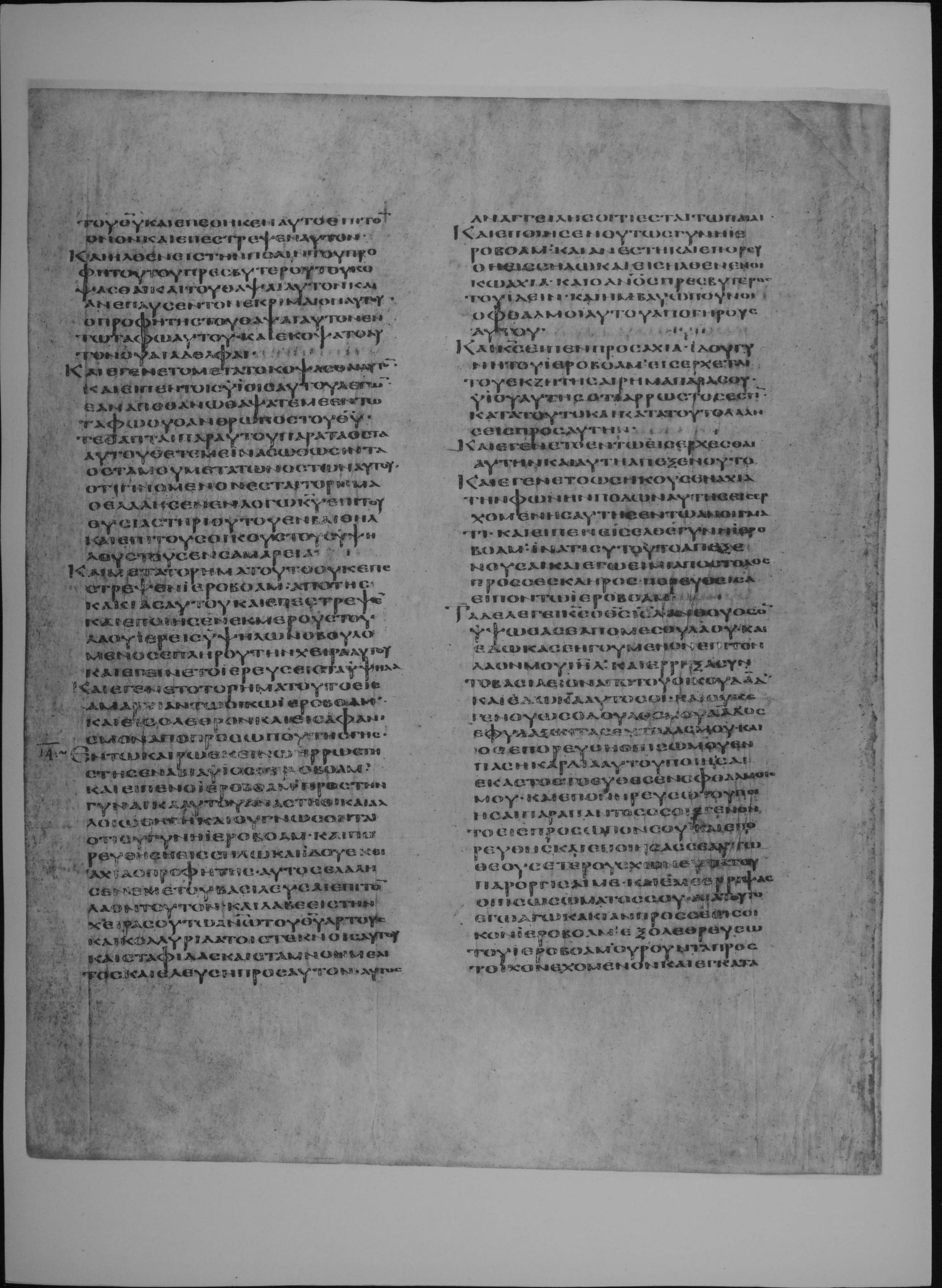
3 Kingdoms (1 Kings) 13:25-29 is on fol. 213r (full-size facsimile of 1879-83, Internet Archive codex-alexandrinus leaf 444). The 1930 reduced facsimile prints beneath this page: 1 Kings xiii. 9-29. Checked on the plate: the page begins inside 3 Kingdoms (1 Kings) 13:9 (first words read: ΚΑΙ ΜΗ ΕΠΙΣΤΡΕΨΗΣ ΕΝ ΤΗ ΟΔΩ Η ΕΠΟΡΕΥΘΗΣ ΕΝ ΑΥΤΗ ΚΑΙ ΑΠΗΛΘΕΝ ΕΝ ΟΔΩ ΑΛΛΗ). 3 Kingdoms (1 Kings) 13:29-34 is on fol. 213v (full-size facsimile of 1879-83, Internet Archive codex-alexandrinus leaf 445). The 1930 reduced facsimile prints beneath this page: 1 Kings xiii. 29-xiv. 10. Checked on the plate: the page begins inside 3 Kingdoms (1 Kings) 13:29 (first words read: ΤΟΥ ΘΥ ΚΑΙ ΕΠΕΘΗΚΕΝ ΑΥΤΟ ΕΠΙ ΤΟΝ ΟΝΟΝ ΚΑΙ ΕΠΕΣΤΡΕΨΕΝ ΑΥΤΟΝ).
25καὶ ἰδοὺ ἄνδρες παραπορευόμενοι καὶ εἶδον τὸ θνησιμαῖον ἐρριμμένον ἐν τῇ ὁδῷ, καὶ ὁ λέων εἱστήκει ἐχόμενα τοῦ θνησιμαίου· καὶ εἰσῆλθον καὶ ἐλάλησαν ἐν τῇ πόλει οὗ ὁ προφήτης ὁ πρεσβύτης κατῴκει ἐν αὐτῇ. 26καὶ ἤκουσεν ὁ ἐπιστρέψας αὐτὸν ἐκ τῆς ὁδοῦ, καὶ εἶπεν Ὁ ἄνθρωπος τοῦ θεοῦ οὗτός ἐστιν ὃς παρεπίκρανε τὸ ῥῆμα Κυρίου. 28καὶ ἐπορεύθη καὶ εὗρεν τὸ σῶμα αὐτοῦ ἐρριμμένον ἐν τῇ ὁδῷ, καὶ ὁ ὄνος καὶ ὁ λέων εἱστήκεισαν παρὰ τὸ σῶμα, καὶ οὐκ ἔφαγεν ὁ λέων τὸ σῶμα τοῦ ἀνθρώπου τοῦ θεοῦ, καὶ οὐ συνέτριψεν τὸν ὄνον. 29καὶ ἦρεν ὁ προφήτης τὸ σῶμα τοῦ ἀνθρώπου τοῦ θεοῦ καὶ ἐπέθηκεν αὐτὸ ἐπὶ τὸν ὄνον, καὶ ἐπέστρεψεν αὐτὸν εἰς τὴν πόλιν 30ὁ προφήτης τοῦ θάψαι αὐτὸν ἐν τῷ τάφῳ ἑαυτοῦ· καὶ ἐκόψαντο αὐτόν Οὐαὶ ἀδελφέ. 31καὶ ἐγένετο μετὰ τὸ κόψασθαι αὐτὸν καὶ εἶπεν τοῖς υἱοῖς αὐτοῦ λέγων Ἐὰν ἀποθάνω, θάψατέ με ἐν τῷ τάφῳ τούτῳ οὗ ὁ ἄνθρωπος τοῦ θεοῦ τέθαπται ἐν αὐτῷ· παρὰ τὰ ὀστᾶ αὐτοῦ θέτε με, ἵνα σωθῶσι τὰ ὀστᾶ μοῦ μετὰ τῶν ὀστῶν αὐτοῦ. 32ὅτι γινόμενον ἔσται τὸ ῥῆμα ὃ ἐλάλησεν ἐν λόγῳ Κυρίου ἐπὶ τοῦ θυσιαστηρίου ἐν Βαιθὴλ καὶ ἐπὶ τοὺς οἴκους τοὺς ὑψηλοὺς τοὺς ἐν Σαμαρείᾳ. 33Καὶ μετὰ τὸ ῥῆμα τοῦτο οὐκ ἐπέστρεψεν Ἰεροβοὰμ ἀπὸ τῆς κακίας αὐτοῦ, καὶ ἐπέστρεψεν καὶ ἐποίησεν ἐκ μέρους τοῦ λαοῦ ἱερεῖς ὑψηλῶν· ὁ βουλόμενος, ἐπλήρου τὴν χεῖρα αὐτοῦ, καὶ ἐγένετο ἱερεὺς εἰς τὰ ὑψηλά. 34καὶ ἐγένετο τὸ ῥῆμα τοῦτο εἰς ἁμαρτίαν τῷ οἴκῳ Ἰεροβοὰμ καὶ εἰς ὄλεθρον καὶ εἰς ἀφανισμὸν ἀπὸ προσώπου τῆς γῆς.
25And, behold, men were passing by, and saw the carcase cast in the way, and the lion was standing near the carcase: and they went in and spoke of it in the city where the old prophet dwelt. 26And the prophet that turned him back out of the way heard, and said, This is the man of God who rebelled against the word of the Lord. 28And he went and found the body cast in the way, and the ass and the lion were standing by the body: and the lion had not devoured the body of the man of God, and had not torn the ass. 29And the prophet took up the body of the man of God, and laid it on his ass; and the prophet brought him back to his city, to bury him in his own tomb, 30and they bewailed him, saying, Alas, brother. 31And it came to pass after he had lamented him, that he spoke to his sons, saying, Whenever I die, bury me in this tomb wherein the man of God is buried; lay me by his bones, that my bones may be preserved with his bones. 32For the word will surely come to pass which he spoke by the word of the Lord against the altar in Bæthel, and against the high houses in Samaria. 33And after this Jeroboam turned not from his sin, but he turned and made of part of the people priests of the high places: whoever would, he consecrated him, and he became a priest for the high places. 34And this thing became sin to the house of Jeroboam, even to its destruction and its removal from the face of the earth.
Cite
Sources
- Source: Codex Alexandrinus (British Library Royal MS 1 D. V) via the British Museum photographic facsimiles of 1879-83 and 1930 (Internet Archive) + Swete's Septuagint + Brenton's English (holding institution)
- Critical edition: H. B. Swete, The Old Testament in Greek according to the Septuagint (1909)
← previous · → next · v cycle view · l back to library