3 Maccabees, Chapter 2 (Codex Alexandrinus)
Introduction
3 Maccabees 2 in the Greek Old Testament (the Septuagint) as written in Codex Alexandrinus, a Greek Bible copied in the fifth century, probably in Egypt, and now in the British Library (Royal MS 1 D. VI, the second of its four volumes). It is one of the three great early codices of the whole Greek Bible, with Codex Vaticanus and Codex Sinaiticus.
This entry meets the strict three-criteria standard of the Theosis Library:
- Manuscript scan: the pages of Codex Alexandrinus carrying this chapter (fol. 507v, fol. 508r), from the full-size photographic (autotype) facsimile published by the British Museum in 1879-1883, as digitised on the Internet Archive. The verse range of every page comes from the reduced photographic facsimile of 1957, which prints it beneath each plate, and the opening words of every page were read on the plate to confirm the page and the verse it begins with. Each section links to the page or pages that hold its verses. Folio numbers are those written at the head of each leaf and visible on the plates.
- Original text: Swete's edition, which in the books of Maccabees prints the text of Codex Alexandrinus itself (Codex Vaticanus does not contain these books), with the readings of other manuscripts in his apparatus. Swete adds accents, breathings and punctuation and expands the abbreviated sacred names, so the plate shows the same text in unaccented capitals.
- English translation: Sir Lancelot C. L. Brenton, The Septuagint Version of the Old Testament (1844; 1851 edition), a translation of the Greek, public domain, from the eBible.org text.
How was this verified? (Provenance)
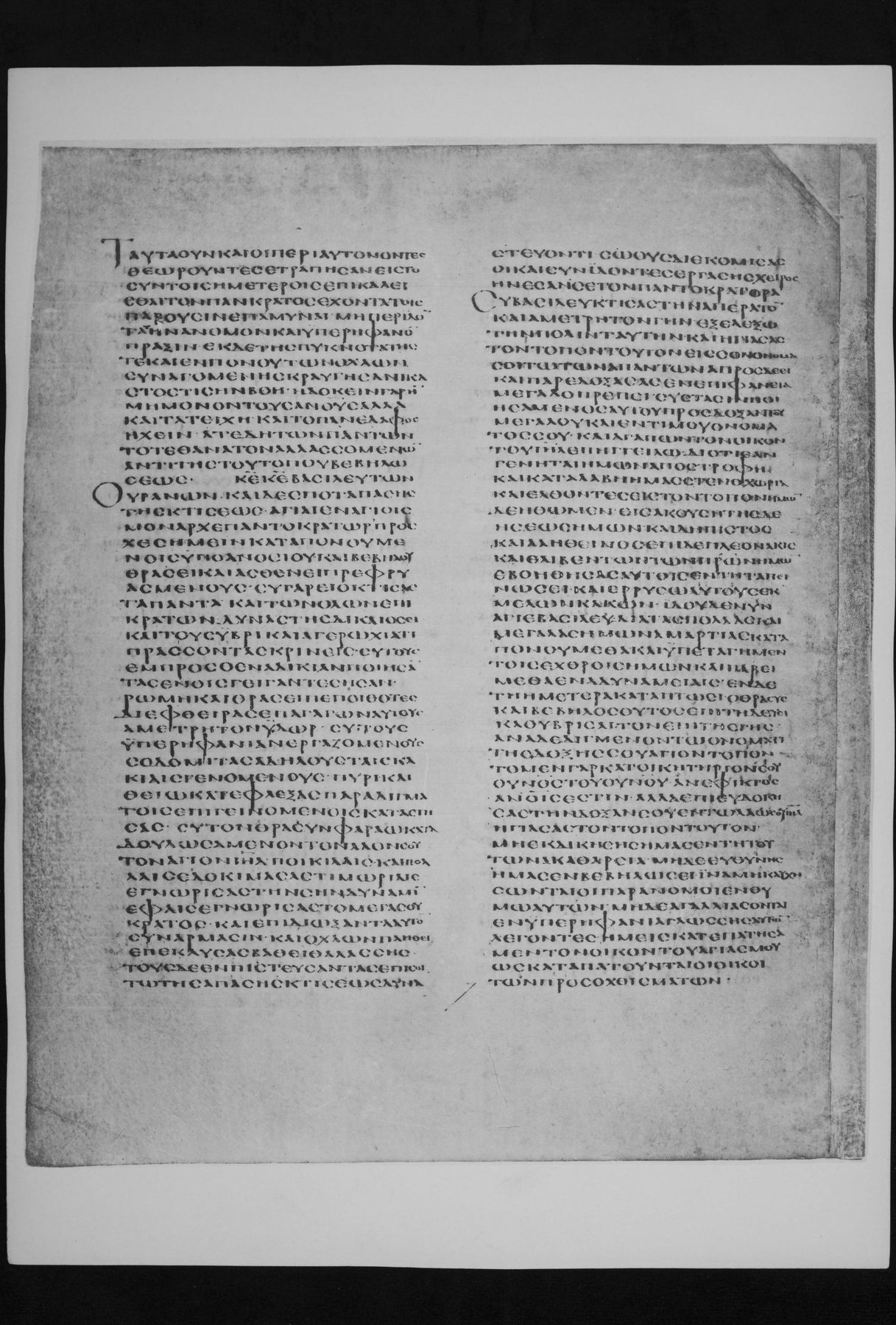
Where on the image
3 Maccabees 2:2-9 is on fol. 507v (full-size facsimile of 1879-83, Internet Archive codex-alexandrinus leaf 1021). The 1957 reduced facsimile prints beneath this page: 3 Maccabees i. 27-ii. 18. Checked on the plate: the page begins at the start of 3 Maccabees 1:27 (first words read: ΤΑΥΤΑ ΟΥΝ ΚΑΙ ΟΙ ΠΕΡΙ ΑΥΤΟΝ ΟΝΤΕΣ ΘΕΩΡΟΥΝΤΕΣ ΕΤΡΑΠΗΣΑΝ ΕΙΣ ΤΟ ΣΥΝ ΤΟΙΣ ΗΜΕΤΕΡΟΙΣ).
2Κύριε, Κύριε, βασιλεῦ τῶν οὐρανῶν, καὶ δέσποτα πάσης τῆς κτίσεως, ἅγιε ἐν ἁγίοις, μόναρχε, παντοκράτωρ, πρόσχες ἡμῖν καταπονουμένοις ὑπὸ ἀνοσίου καὶ βεβήλου, θράσει καὶ σθένει πεφρυασμένου. 3σὺ γὰρ εἶ ὁ κτίσας τὰ πάντα, καὶ τῶν ὅλων ἐπικρατῶν· δυνάστης δίκαιος εἶ, καὶ τοὺς ὕβρει καὶ ἀγερωχίᾳ τι πράσσοντας κρίνεις. 4σὺ τοὺς ἔμπροσθεν ἀδικίαν ποιήσαντας, ἐν οἷς γίγαντες ἦσαν ῥώμῃ καὶ θράσει πεποιθότες, διέφθειρας, ἐπαγαγὼν αὐτοῖς ἀμέτρητον ὕδωρ. 5σὺ τοὺς ὑπερηφανίαν ἐργαζομένους Σοδομίτας, ἀδήλους ταῖς κακίαις γενομένους, πυρὶ καὶ θείῳ κατέφλεξας, παράδειγμα τοῖς ἐπιγινομένοις καταστήσας. 6σὺ τὸν θρασὺν Φαραώ, καταδουλωσάμενον τὸν λαόν σου τὸν ἅγιον Ἰσραήλ, ποικίλαις καὶ πολλαῖς δοκιμάσας τιμωρίαις ἐγνώρισας τὴν σὴν δύναμιν, ἐφ᾽ αἷς ἐγνώρισας τὸ μέγα σου κράτος. 7καὶ ἐπιδιώξαντα αὐτὸν σὺν ἅρμασιν καὶ ὄχλων πλήθει, ἐπέκλυσας βάθει θαλάσσης, τοὺς δὲ ἐνπιστεύσαντας ἐπὶ σοὶ τῷ τῆς ἁπάσης κτίσεως δυναστεύοντι, σῴους διεκόμισας. 8οἳ καὶ συνιδόντες ἔργα σῆς χειρός, ἤνεσάν σε τὸν παντοκράτορα. 9σύ, βασιλεῦ, κτίσας τὴν ἀπέρατον καὶ ἀμέτρητον γῆν, ἐξελέξω τὴν πόλιν ταύτην, καὶ ἡγίασας τὸν τόπον τοῦτον εἰς σὸν ὄνομά σοι τῷ τῶν ἁπάντων ἀπροσδεεῖ, καὶ παρεδόξασας ἐν ἐπιφανείᾳ μεγαλοπρεπεῖ, σύστασιν ποιησάμενος αὐτοῦ πρὸς δόξαν τοῦ μεγάλου καὶ ἐντίμου ὀνόματός σου.
2O Lord, Lord, King of the heavens, and Ruler of the whole creation, Holy among the holy, sole Governor, Almighty, give ear to us who are oppressed by a wicked and profane one, who exulteth in his confidence and strength. 3It is thou, the Creator of all, the Lord of the universe, who art a righteous Governor, and judgest all who act with pride and insolence. 4It was thou who didst destroy the former workers of unrighteousness, among whom were the giants, who trusted in their strength and hardihood, by covering them with a measureless flood. 5It was thou who didst make the Sodomites, those workers of exceeding iniquity, men notorious for their vices, an example to after generations, when thou didst consume them with fire and brimstone. 6Thou didst make known thy power when thou causedst the bold Pharaoh, the enslaver of thy people, to pass through the ordeal of many and diverse inflictions. 7And thou rolledst the depths of the sea over him, when he made pursuit with chariots, and with a multitude of followers, and gavest a safe passage to those who put their trust in thee, the Lord of the whole creation. 8These saw and felt the works of thine hands, and praised thee the Almighty. 9Thou, O King, when thou createdst the illimitable and measureless earth, didst choose out this city: thou didst make this place sacred to thy name, albeit thou needest nothing: thou didst glorify it with thy illustrious presence, after constructing it to the glory of thy great and honourable name.
Where on the image
3 Maccabees 2:10-17 is on fol. 507v (full-size facsimile of 1879-83, Internet Archive codex-alexandrinus leaf 1021). The 1957 reduced facsimile prints beneath this page: 3 Maccabees i. 27-ii. 18. Checked on the plate: the page begins at the start of 3 Maccabees 1:27 (first words read: ΤΑΥΤΑ ΟΥΝ ΚΑΙ ΟΙ ΠΕΡΙ ΑΥΤΟΝ ΟΝΤΕΣ ΘΕΩΡΟΥΝΤΕΣ ΕΤΡΑΠΗΣΑΝ ΕΙΣ ΤΟ ΣΥΝ ΤΟΙΣ ΗΜΕΤΕΡΟΙΣ).
10καὶ ἀγαπῶν τὸν οἶκον τοῦ Ἰσραήλ, ἐπηγγείλω διότι ἐὰν γένηται ἡμῶν ἀποστροφὴ καὶ καταλάβῃ ἡμᾶς στενοχωρία, καὶ ἐλθόντες εἰς τὸν τόπον ἡμῶν δεηθῶμεν, εἰσακούσῃ τῆς δεήσεως ἡμῶν. 11καὶ δὴ πιστὸς καὶ ἀληθινός. 12ἐπεὶ δὲ πλεονάκις καὶ θλιβέντων τῶν πατέρων ἡμῶν ἐβοήθησας αὐτοῖς ἐν τῇ ταπεινώσει, καὶ ἐρρύσω αὐτοὺς ἐκ μεγάλων κακῶν· 13ἰδοὺ δὲ νῦν, ἅγιε βασιλεῦ, διὰ τὰς πολλὰς καὶ μεγάλας ἡμῶν ἁμαρτίας καταπονούμεθα, καὶ ὑπετάγημεν τοῖς ἐχθροῖς ἡμῶν, καὶ παρείμεθα ἐν ἀδυναμίαις. 14ἐν δὲ τῇ ἡμετέρᾳ καταπτώσει ὁ θρασὺς καὶ βέβηλος οὗτος ἐπιτηδεύει καθυβρίσαι τὸν ἐπὶ τῆς γῆς ἀναδεδιγμένον τῷ ὀνόματι τῆς δόξης σου ἅγιον τόπον. 15τὸ μὲν γὰρ κατοικητήριόν σου οὐρανὸς τοῦ οὐρανοῦ ἀνέφικτος ἀνθρώποις ἐστίν. 16ἀλλὰ ἐπεὶ εὐδόκησας τὴν δόξαν σου ἐν τῷ λαῷ σου Ἰσραήλ, ἡγίασας τὸν τόπον τοῦτον. 17μὴ ἐκδικήσῃς ἡμᾶς ἐν τῇ τούτων ἀκαθαρσίᾳ, μηδὲ εὐθύνῃς ἡμᾶς ἐν βεβηλώσει, ἵνα μὴ καυχήσωνται οἱ παράνομοι ἐν θυμῷ αὐτῶν, μηδὲ ἀγαλλιάσωνται ἐν ὑπερηφανίᾳ γλώσσης αὐτῶν, λέγοντες
10And thou didst promise, out of love to the house of Israel, that should we fall away from thee, and become afflicted, and then come to this house and pray, thou wouldest hear our prayer. 11Verily thou art faithful and true. 12And whereas thou didst often aid our fathers when hard pressed, and in low estate, and deliveredst them out of great dangers, 13see now, holy King, how through our many and great sins we are borne down, and made subject to our enemies, and are become weak and powerless. 14We being in this low condition, this bold and profane man seeks to dishonour this thy holy place, consecrated out of the earth to the name of thy Majesty. 15Thy dwelling-place, the heaven of heavens, is indeed unapproachable to men. 16But since it seemed good to thee to exhibit thy glory among thy people Israel, thou didst sanctify this place. 17Punish us not by means of the uncleanness of their men, nor chastise us by means of their profanity; lest the lawless ones should boast in their rage, and exult in exuberant pride of speech, and say,
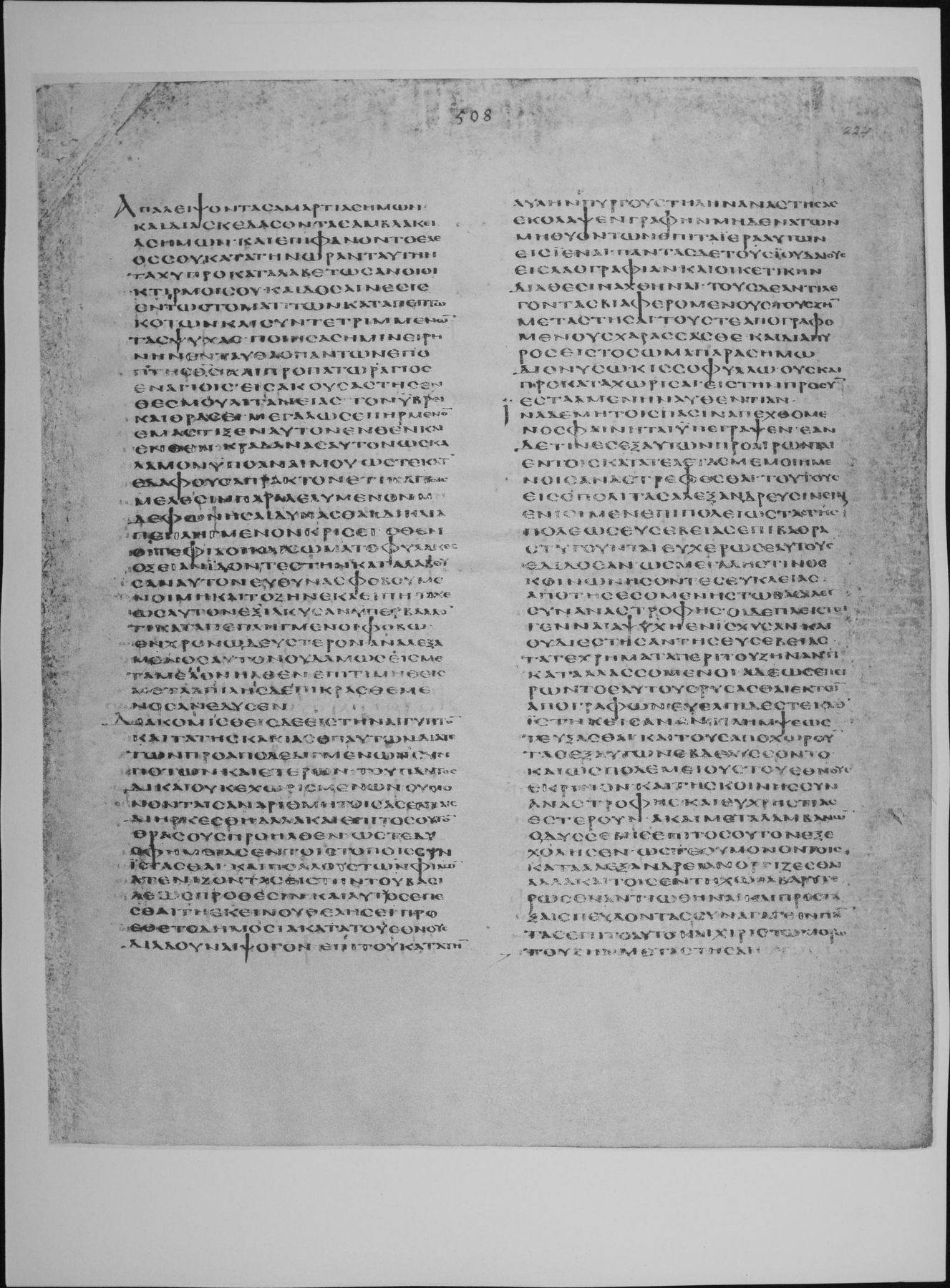
Where on the image
3 Maccabees 2:18 is on fol. 507v (full-size facsimile of 1879-83, Internet Archive codex-alexandrinus leaf 1021). The 1957 reduced facsimile prints beneath this page: 3 Maccabees i. 27-ii. 18. Checked on the plate: the page begins at the start of 3 Maccabees 1:27 (first words read: ΤΑΥΤΑ ΟΥΝ ΚΑΙ ΟΙ ΠΕΡΙ ΑΥΤΟΝ ΟΝΤΕΣ ΘΕΩΡΟΥΝΤΕΣ ΕΤΡΑΠΗΣΑΝ ΕΙΣ ΤΟ ΣΥΝ ΤΟΙΣ ΗΜΕΤΕΡΟΙΣ). 3 Maccabees 2:19-25 is on fol. 508r (full-size facsimile of 1879-83, Internet Archive codex-alexandrinus leaf 1022). The 1957 reduced facsimile prints beneath this page: 3 Maccabees ii. 19-iii. 1. Checked on the plate: the page begins at the start of 3 Maccabees 2:19 (first words read: ΑΠΑΛΕΙΨΟΝ ΤΑΣ ΑΜΑΡΤΙΑΣ ΗΜΩΝ ΚΑΙ ΔΙΑΣΚΕΔΑΣΟΝ ΤΑΣ ΑΜΠΛΑΚΙΑΣ ΗΜΩΝ).
18Ἡμεῖς κατεπατήσαμεν τὸν οἶκον τοῦ ἁγιασμοῦ, ὡς καταπατοῦνται οἱ οἶκοι τῶν προσοχθισμάτων. 19ἀπάλειψον τὰς ἁμαρτίας ἡμῶν, καὶ διασκέδασον τὰς ἀμβλακίας ἡμῶν, καὶ ἐπίφανον τὸ ἔλεός σου κατὰ τὴν ὥραν ταύτην. 20ταχὺ προκαταλαβέτωσαν οἱ οἰκτιρμοί σου· καὶ δὸς αἰνέσεις ἐν τῷ στόματι τῶν καταπεπτωκότων καὶ συντετριμμένων τὰς ψυχάς, ποιήσας ἡμῖν εἰρήνην. 21Ἐνταῦθα ὁ πάντων ἐπόπτης θεὸς καὶ προπάτωρ ἅγιος ἐν ἁγίοις εἰσακούσας τῆς ἐνθέσμου λιτανείας, τὸν ὕβρει καὶ θράσει μεγάλως ἐπηρμένον ἐμάστιξεν αὐτόν, 22ἔνθεν καὶ ἔνθεν κραδάνας αὐτὸν ὡς κάλαμον ὑπὸ ἀνέμου, ὥστε κατ᾽ ἐδάφους ἄπρακτον ἔτι καὶ τοῖς μέλεσιν παραλελυμένον, μηδὲ φωνῆσαι δύνασθαι δικαίᾳ πεπληγμένον κρίσει. 23ὅθεν οἵ τε φίλοι καὶ σωματοφύλακες ὀξεῖαν ἰδόντες τὴν καταλαβοῦσαν αὐτὸν εὔθυναν, φοβούμενοι μὴ καὶ τὸ ζῇν ἐκλείπῃ, ταχέως αὐτὸν ἐξείλκυσαν ὑπερβάλλοντι καταπεπληγμένοι φόβῳ. 24ἐν χρόνῳ δὲ ὕστερον ἀναλεξάμενος αὑτόν, οὐδαμῶς εἰς μετάμελον ἦλθεν ἐπιτιμηθείς, μετὰ ἀπειλῆς δὲ πικρᾶς θέμενος ἀνέλυσεν. 25Διακομισθεὶς δὲ εἰς τὴν Αἴγυπτον, καὶ τὰ τῆς κακίας ἐπαύξων, διά τε τῶν προαποδεδιγμένων συνποτῶν καὶ ἑταίρων τοῦ παντὸς δικαίου κεχωρισμένων,
18We have trampled upon the holy house, as idolatrous houses are trampled upon. 19Blot out our iniquities, and do away with our errors, and shew forth thy compassion in this hour. 20Let thy mercies quickly go before us. Grant us peace, that the cast down and broken hearted may praise thee with their mouth. 21At that time God, who seeth all things, who is beyond all Holy among the holy, heard that prayer, so suitable; and scourged the man greatly uplifted with scorn and insolence. 22Shaking him to and fro as a reed is shaken with the wind, he cast him upon the pavement, powerless, with limbs paralyzed; by a righteous judgment deprived of the faculty of speech. 23His friends and body-guards, beholding the swift recompense which had suddenly overtaken him, struck with exceeding terror, and fearing that he would die, speedily removed him. 24When in course of time he had come to himself, this severe check caused no repentance within him, but he departed with bitter threatenings. 25He proceeded to Egypt, grew worse in wickedness through his beforementioned companions in wine, who were lost to all goodness;
Where on the image
3 Maccabees 2:26-33 is on fol. 508r (full-size facsimile of 1879-83, Internet Archive codex-alexandrinus leaf 1022). The 1957 reduced facsimile prints beneath this page: 3 Maccabees ii. 19-iii. 1. Checked on the plate: the page begins at the start of 3 Maccabees 2:19 (first words read: ΑΠΑΛΕΙΨΟΝ ΤΑΣ ΑΜΑΡΤΙΑΣ ΗΜΩΝ ΚΑΙ ΔΙΑΣΚΕΔΑΣΟΝ ΤΑΣ ΑΜΠΛΑΚΙΑΣ ΗΜΩΝ).
26οὐ μόνον ταῖς ἀναριθμήτοις ἀσελγίαις διηρκέσθη, ἀλλὰ καὶ ἐπὶ τοσοῦτον θράσους προῆλθεν, ὥστε δυσφημίας ἐν τοῖς τόποις συνίστασθαι, καὶ πολλοὺς τῶν φίλων ἀτενίζοντας εἰς τὴν τοῦ βασιλέως πρόθεσιν καὶ αὐτοὺς ἕπεσθαι τῇ ἐκείνου θελήσει. 27προέθετο δημοσίᾳ κατὰ τοῦ ἔθνους διαδοῦναι ψόγον· ἐπὶ τοῦ κατὰ τὴν αὐλὴν πύργου στήλην ἀναστήσας, ἐκόλαψεν γραφήν 28Μηδένα τῶν μὴ θυόντων ἐπὶ τὰ ἱερὰ αὐτῶν εἰσιέναι, πάντας δὲ τοὺς Ἰουδαίους εἰς λαογραφίαν καὶ οἰκετικὴν διάθεσιν ἀχθῆναι, τοὺς δὲ ἀντιλέγοντας βίᾳ φερομένους τοῦ ζῇν μεταστῆσαι· 29τούς τε ἀπογραφομένους χαράσσεσθαι καὶ διὰ πυρὸς εἰς τὸ σῶμα παρασήμῳ Διονύσου κισσοφύλλῳ· οὓς καὶ προκαταχωρίσαι εἰς τὴν προσυνεσταλμένην αὐθεντίαν. 30ἵνα δὲ μὴ τοῖς πᾶσιν ἀπεχθόμενος φαίνηται, ὑπέγραψεν Ἐὰν δέ τινες ἐξ αὐτῶν προαιρῶνται ἐν τοῖς κατὰ τελετὰς μεμυημένοις ἀναστρέφεσθαι, τούτους ἰσοπολίτας Ἀλεξανδρεῦσιν εἶναι. 31Ἔνιοι μὲν ἐπιπολαίως τὰς τῆς πόλεως εὐσεβείας ἐπιβάθρας στυγοῦντες, εὐχερῶς ἑαυτοὺς ἐδίδοσαν, ὡς μεγάλης τινὸς κοινωνήσοντες εὐκλείας ἀπὸ τῆς ἐσομένης τῷ βασιλεῖ συναναστροφῆς. 32οἱ δὲ πλεῖστοι γενναίᾳ ψυχῇ ἐνίσχυσαν, καὶ οὐ διέστησαν τῆς εὐσεβείας· τά τε χρήματα περὶ τοῦ ζῇν ἀντικαταλλασσόμενοι ἀδεῶς ἐπειρῶντο ἑαυτοὺς ῥύσασθαι ἐκ τῶν ἀπογραφῶν. 33εὐέλπιδές τε καθιστήκεισαν ἀντιλήμψεως τεύξασθαι, καὶ τοὺς ἀποχωροῦντας ἐξ αὐτῶν ἐβδελύσσοντο, καὶ ὡς πολεμίους τοῦ ἔθνους ἔκρινον, καὶ τῆς κοινῆς συναναστροφῆς καὶ εὐχρηστίας ἐστέρουν.
26and not satisfied with countless acts of impiety, his audacity so increased that he raised evil reports there, and many of his friends, watching his purpose attentively, joined in furthering his will. 27His purpose was to inflict a public stigma upon our race; wherefore he erected a pillar at the tower-porch, and caused the following inscription to be engraven upon it: 28That entrance to their own temple was to be refused to all those who would not sacrifice; that all the Jews were to be registered among the common people; that those who resisted were to be forcibly seized and put to death; 29that those who were thus registered, were to be marked on their persons by the ivy-leaf symbol of Dionysus, and to be set apart with these limited rights. 30To do away with the appearance of hating them all, he had it written underneath, that if any of them should elect to enter the community of those initiated in the rites, these should have equal rights with the Alexandrians. 31Some of those who were over the city, therefore, abhorring any approach to the city of piety, unhesitatingly gave in to the king, and expected to derive some great honour from a future connection with him. 32A nobler spirit, however, prompted the majority to cling to their religious observances, and by paying money that they might live unmolested, these sought to escape the registration: 33cheerfully looking forward to future aid, they abhorred their own apostates, considering them to be national foes, and debarring them from the common usages of social intercourse.
Cite
Sources
- Source: Codex Alexandrinus (British Library Royal MS 1 D. VI) via the British Museum photographic facsimiles of 1879-83 and 1957 (Internet Archive) + Swete's Septuagint + Brenton's English (holding institution)
- Critical edition: H. B. Swete, The Old Testament in Greek according to the Septuagint (1909)
← previous · → next · v cycle view · l back to library