3 Maccabees, Chapter 7 (Codex Alexandrinus)
Introduction
3 Maccabees 7 in the Greek Old Testament (the Septuagint) as written in Codex Alexandrinus, a Greek Bible copied in the fifth century, probably in Egypt, and now in the British Library (Royal MS 1 D. VI, the second of its four volumes). It is one of the three great early codices of the whole Greek Bible, with Codex Vaticanus and Codex Sinaiticus.
This entry meets the strict three-criteria standard of the Theosis Library:
- Manuscript scan: the pages of Codex Alexandrinus carrying this chapter (fol. 512v, fol. 513r), from the full-size photographic (autotype) facsimile published by the British Museum in 1879-1883, as digitised on the Internet Archive. The verse range of every page comes from the reduced photographic facsimile of 1957, which prints it beneath each plate, and the opening words of every page were read on the plate to confirm the page and the verse it begins with. Each section links to the page or pages that hold its verses. Folio numbers are those written at the head of each leaf and visible on the plates.
- Original text: Swete's edition, which in the books of Maccabees prints the text of Codex Alexandrinus itself (Codex Vaticanus does not contain these books), with the readings of other manuscripts in his apparatus. Swete adds accents, breathings and punctuation and expands the abbreviated sacred names, so the plate shows the same text in unaccented capitals.
- English translation: Sir Lancelot C. L. Brenton, The Septuagint Version of the Old Testament (1844; 1851 edition), a translation of the Greek, public domain, from the eBible.org text.
How was this verified? (Provenance)
Where on the image
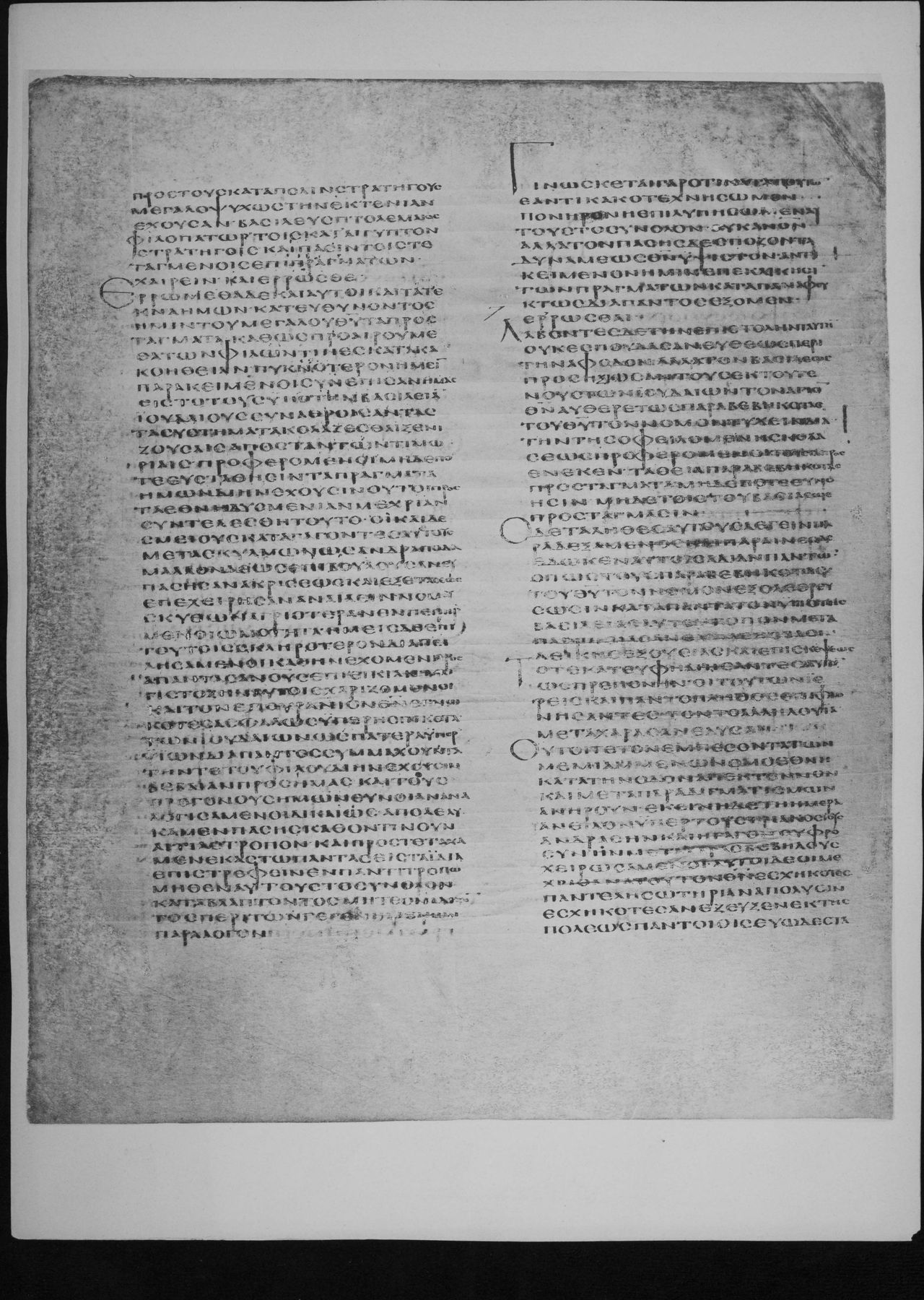
3 Maccabees 7:1-8 is on fol. 512v (full-size facsimile of 1879-83, Internet Archive codex-alexandrinus leaf 1031). The 1957 reduced facsimile prints beneath this page: 3 Maccabees vi. 41-vii. 16. Checked on the plate: the page begins inside 3 Maccabees 6:41 (first words read: ΠΡΟΣ ΤΟΥΣ ΚΑΤΑ ΠΟΛΙΝ ΣΤΡΑΤΗΓΟΥΣ ΜΕΓΑΛΟΨΥΧΩΣ ΤΗΝ ΕΚΤΕΝΙΑΝ ΕΧΟΥΣΑΝ).
1Βασιλεὺς Πτολεμαῖος Φιλοπάτωρ τοῖς κατ᾽ Αἴγυπτον στρατηγοῖς καὶ πᾶσιν τοῖς τεταγμένοις ἐπὶ πραγμάτων χαίρειν καὶ ἐρρῶσθαι. 2ἐρρώμεθα δὲ καὶ αὐτοὶ καὶ τὰ τέκνα ἡμῶν, κατευθύνοντος ἡμῖν τοῦ μεγάλου θεοῦ τὰ προστάγματα, καθὼς προαιρούμεθα. 3τῶν φίλων τινὲς κατὰ κακοήθειαν πυκνότερον ἡμῖν παρακείμενοι, συνέπεισαν ἡμᾶς εἰς τὸ τοὺς ὑπὸ τὴν βασιλείαν Ἰουδαίους συναθροίσαντας τὰ συστήματα κολάζεσθαι ξενιζούσαις ἀποστάντων τιμωρίαις· 4προφερόμενοι μηδέποτε εὐσταθήσειν τὰ πράγματα ἡμῶν, δι᾽ ἣν ἔχουσιν οὗτοι πρὸς τὰ ἔθνη δυσμενίαν, μέχρι ἂν συντελεσθῇ τοῦτο. 5οἳ καὶ δεσμίους καταγαγόντες αὐτοὺς μετὰ σκυλμῶν ὡς ἀνδράποδα, μᾶλλον δὲ ὡς ἐπιβούλους, ἄνευ πάσης ἀνακρίσεως καὶ ἐξετάσεως ἐπεχείρησαν ἀνελεῖν, νόμου Σκυθῶν ἀγριοτέραν ἐνπεπηρμένοι ὠμότητα. 6ἡμεῖς δὲ ἐπὶ τούτοις σκληρότερον διαπειλησάμενοι, καθ᾽ ἣν ἔχομεν πρὸς ἅπαντας ἀνθρώπους ἐπιεικίαν, μόγις τὸ ζῇν αὐτοῖς χαριζόμενοι, καὶ τὸν ἐπουράνιον θεὸν ἐγνωκότες ἀσφαλῶς ὑπερησπικότα τῶν Ἰουδαίων, ὡς πατέρα ὑπὲρ υἱῶν διὰ παντὸς συμμαχοῦντα, 7τήν τε τοῦ φίλου ἣν ἔχουσιν βεβαίαν πρὸς ἡμᾶς καὶ τοὺς προγόνους ἡμῶν εὔνοιαν ἀναλογισάμενοι, δικαίως ἀπολελύκαμεν πάσης καθ᾽ ὁντινοῦν αἰτίας τρόπον. 8καὶ προστετάχαμεν ἑκάστῳ πάντας εἰς τὰ ἴδια ἐπιστρέφειν, ἐν παντὶ τρόπῳ μηθενὸς αὐτοὺς τὸ σύνολον καταβλάπτοντος, μήτε ὀνειδίζοντος περὶ τῶν γεγενημένων παρὰ λόγον.
1King Ptolemy Philopator to the commanders throughout Egypt, and to all who are set over affairs, joy and strength. 2We, too, and our children are well; and God has directed our affairs as we wish. 3Certain of our friends did of malice vehemently urge us to punish the Jews of our realm in a body, with the infliction of a monstrous punishment. 4They pretended that our affairs would never be in a good state till this took place. Such, they said, was the hatred borne by the Jews to all other people. 5They brought them fettered in grievous chains as slaves, nay, as traitors. Without enquiry or examination they endeavoured to annihilate them. They buckled themselves with a savage cruelty, worse than Scythian custom. 6For this cause we severely threatened them; yet, with the clemency which we are wont to extend to all men, we at length permitted them to live. Finding that the God of heaven cast a shield of protection over the Jews so as to preserve them, and that he fought for them as a father always fights for his sons; 7and taking into consideration their constancy and fidelity towards us and towards our ancestors, we have, as we ought, acquitted them of every sort of charge. 8And we have dismissed them to their several homes; bidding all men everywhere to do them no wrong, or unrighteously revile them about the past.
Where on the image
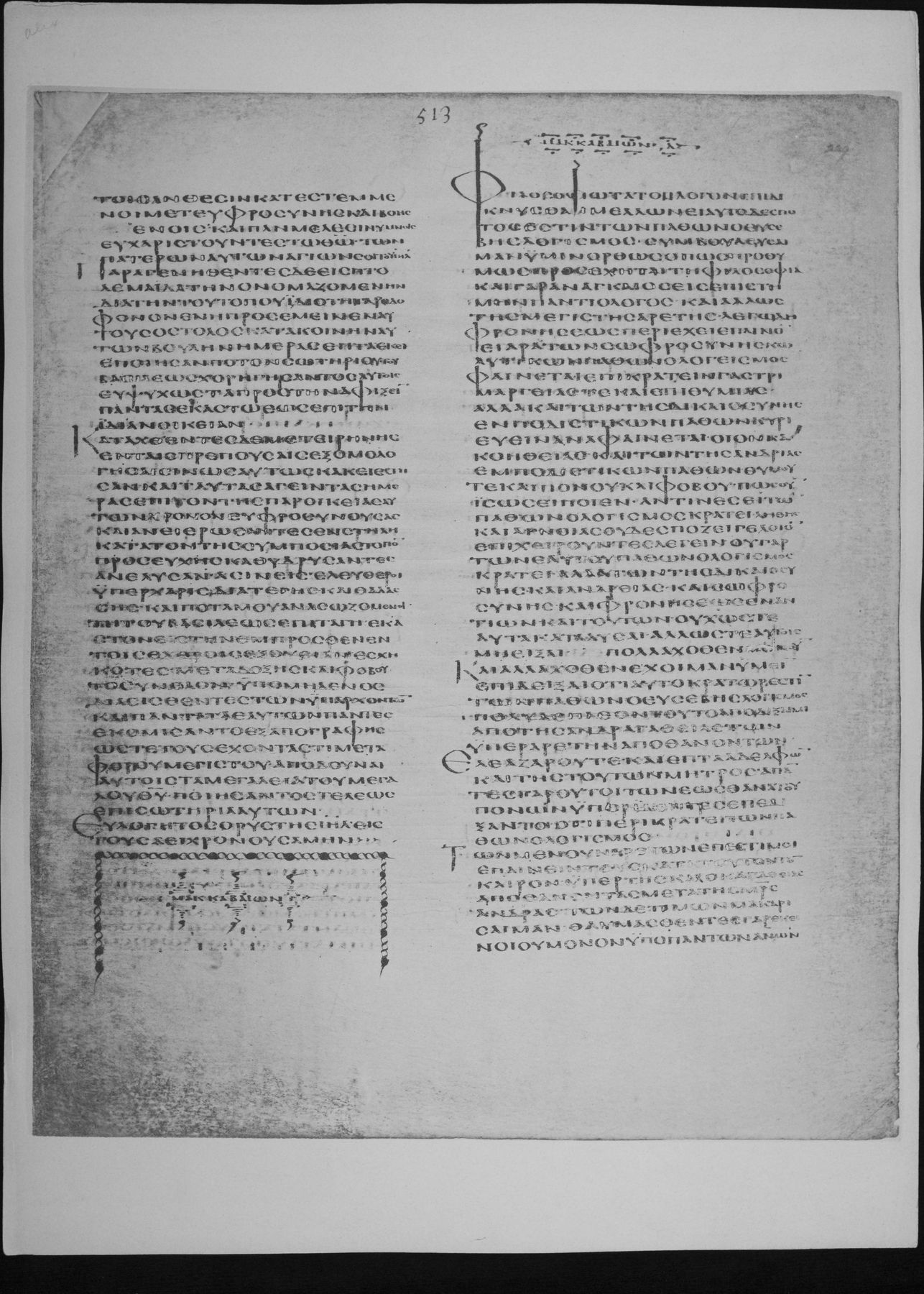
3 Maccabees 7:9-16 is on fol. 512v (full-size facsimile of 1879-83, Internet Archive codex-alexandrinus leaf 1031). The 1957 reduced facsimile prints beneath this page: 3 Maccabees vi. 41-vii. 16. Checked on the plate: the page begins inside 3 Maccabees 6:41 (first words read: ΠΡΟΣ ΤΟΥΣ ΚΑΤΑ ΠΟΛΙΝ ΣΤΡΑΤΗΓΟΥΣ ΜΕΓΑΛΟΨΥΧΩΣ ΤΗΝ ΕΚΤΕΝΙΑΝ ΕΧΟΥΣΑΝ). 3 Maccabees 7:16 is on fol. 513r (full-size facsimile of 1879-83, Internet Archive codex-alexandrinus leaf 1032). The 1957 reduced facsimile prints beneath this page: 3 Maccabees vii. 16-vii. 23 [end], 4 Maccabees i. 1-i. 11. Checked on the plate: the page begins inside 3 Maccabees 7:16 (first words read: ΤΟΙΣ ΑΝΘΕΣΙΝ ΚΑΤΕΣΤΕΜΜΕΝΟΙ ΜΕΤ ΕΥΦΡΟΣΥΝΗΣ ΚΑΙ ΒΟΗΣ).
9γινώσκετε γὰρ ὅτι κατὰ τούτων ἐάν τι κακοτεχνήσωμεν πονηρόν, ἢ ἐπιλυπήσωμεν αὐτοὺς τὸ σύνολον, οὐκ ἄνθρωπον, ἀλλὰ τὸν πάσης δεσπόζοντα δυνάμεως θεὸν ὕψιστον ἀντικείμενον ἡμῖν ἐπ᾽ ἐκδίκησιν τῶν πραγμάτων κατὰ πᾶν ἀφεύκτως διὰ παντὸς ἕξομεν. ἔρρωσθε. 10Λαβόντες δὲ τὴν ἐπιστολὴν ταύτην, οὐκ ἐσπούδασαν εὐθέως περὶ τὴν ἄφοδον, ἀλλὰ τὸν βασιλέα προσηξίωσαν τοὺς ἐκ τοῦ γένους τῶν Ἰουδαίων τὸν ἅγιον θεὸν αὐθαιρέτως παραβεβηκότας τοῦ θεοῦ τὸν νόμον, τυχεῖν δι᾽ αὐτῶν τῆς ὀφειλομένης κολάσεως· 11προφερόμενοι τοὺς γαστρὸς ἕνεκεν τὰ θεῖα παραβεβηκότας προστάγματα μηδέποτε εὐνοήσειν μηδὲ τοῖς τοῦ βασιλέως προστάγμασιν. 12ὁ δὲ τἀληθὲς αὐτοὺς λέγειν παραδεξάμενος καὶ παραινέσας, ἔδωκεν αὐτοῖς ἄδειαν πάντων, ὅπως τοὺς παραβεβηκότας τοῦ θεοῦ τὸν νόμον ἐξολεθρεύσωσιν κατὰ πάντα τὸν ὑπὸ τῆς βασιλείας αὐτοῦ τόπον μετὰ παρρησίας, ἄνευ πάσης βασιλικῆς ἐξουσίας καὶ ἐπισκέψεως. 13τότε κατευφημήσαντες αὐτόν, ὡς πρέπον ἦν, οἱ τούτων ἱερεῖς καὶ πᾶν τὸ πλῆθος, ἐπιφωνήσαντες τὸ ἁλληλουιά, μετὰ χαρᾶς ἀνέλυσαν· 14οὗτοί τε τὸν ἐμπεσόντα τῶν μεμιαμμένων ὁμοεθνῆ κατὰ τὴν ὁδὸν ἀπέκτεννον, καὶ μετὰ παραδιγματισμῶν ἀνῄρουν. 15ἐκείνῃ δὲ τῇ ἡμέρᾳ ἀνεῖλον ὑπὲρ τοὺς τριακοσίους ἄνδρας, ἣν καὶ ἤγαγον εὐφροσύνην μετὰ χαρᾶς βεβήλους χειρωσάμενοι. 16αὐτοὶ δὲ οἱ μέχρι θανάτου τὸν θεὸν ἐσχηκότες, παντελῆ σωτηρίαν ἀπόλυσιν ἐσχηκότες, ἀνέζευξαν ἐκ τῆς πόλεως παντοίοις εὐωδεστάτοις ἄνθεσιν κατεστεμμένοι μετ᾽ εὐφροσύνης καὶ βοῆς, ἐν αἴνοις καὶ πανμελέσιν ὕμνοις εὐχαριστοῦντες τῷ θεῷ τῶν πατέρων αὐτῶν ἁγίῳ σωτῆρι τοῦ Ἰσραήλ.
9For know ye, that should we conceive any evil design against, or in any manner aggrieve them, we shall ever have as our opposite, not man, but the highest God, the ruler of all might. From Him there will be no escape, as the avenger of such deeds. Fare ye well. 10When they had received this letter, they were not forward to depart immediately. They petitioned the king to be allowed to inflict fitting punishment upon those of their race who had willingly transgressed the holy God, and the law of God. 11They alleged that men who had for their bellies' sake transgressed the ordinances of God, would never be faithful to the interests of the king. 12The king admitted the truth of this reasoning, and commended them. Full power was given them, without warrant or special commission, to destroy those who had transgressed the law of God boldly in every part of the king's dominions. 13Their priests, then, as it was meet, saluted him with good wishes, and all the people echoed with the Hallelujah. They then joyfully departed. 14Then they punished and destroyed with ignominy every polluted Jew that fell in their way; 15slaying thus, in that day, above three hundred men, and esteeming this destruction of the wicked a season of joy. 16They themselves having held fast their God unto death, and having enjoyed a full deliverance, departed from the city garlanded with sweet-flowered wreaths of every kind. Uttering exclamations of joy, with songs of praise, and melodious hymns they thanked the God of their fathers, the eternal Saviour of Israel.
Where on the image
3 Maccabees 7:17-23 is on fol. 513r (full-size facsimile of 1879-83, Internet Archive codex-alexandrinus leaf 1032). The 1957 reduced facsimile prints beneath this page: 3 Maccabees vii. 16-vii. 23 [end], 4 Maccabees i. 1-i. 11. Checked on the plate: the page begins inside 3 Maccabees 7:16 (first words read: ΤΟΙΣ ΑΝΘΕΣΙΝ ΚΑΤΕΣΤΕΜΜΕΝΟΙ ΜΕΤ ΕΥΦΡΟΣΥΝΗΣ ΚΑΙ ΒΟΗΣ).
17Παραγενηθέντες δὲ εἰς Πτολεμαίδα τὴν ὀνομαζομένην διὰ τὴν τοῦ τόπου ἰδιότητα ῥοδοφόρον, ἐν ᾗ προσέμεινεν αὐτοὺς ὁ στόλος κατὰ κοινὴν αὐτῶν βουλὴν ἡμέρας ἑπτά, 18ἐκεῖ ἐποίησαν πότον σωτηρίου, τοῦ βασιλέως χορηγήσαντος αὐτοῖς εὐψύχως τὰ πρὸς τὴν ἄφιξιν πάντα ἑκάστῳ ἕως ἐπὶ τὴν ἰδίαν οἰκίαν. 19καταχθέντες δὲ μετ᾽ εἰρήνης ἐν ταῖς πρεπούσαις ἐξομολογήσεσιν, ὡσαύτως κἀκεῖ ἔστησαν καὶ ταύτας ἄγειν τὰς ἡμέρας ἐπὶ τὸν τῆς παροικίας αὐτῶν χρόνον εὐφροσύνους· 20ἃς καὶ ἀνιερώσαντες ἐν στήλῃ, κατὰ τὸν τῆς συμποσίας τόπον προσευχῆς καθιδρύσαντες, ἀνέλυσαν ἀσινεῖς, ἐλεύθεροι, ὑπερχαρεῖς, διά τε γῆς καὶ θαλάσσης καὶ ποταμοῦ ἀνασωζόμενοι τῇ τοῦ βασιλέως ἐπιταγῇ, ἕκαστος εἰς τὴν 21ἔμπροσθεν, ἐν τοῖς ἐχθροῖς ἐξουσίαν ἐσχηκότες μετὰ δόξης καὶ φόβου, τὸ σύνολον ὑπὸ μηδενὸς διασεισθέντες τῶν ὑπαρχόντων. 22καὶ πάντα τὰ ἑαυτῶν πάντες ἐκομίσαντο ἐξ ἀπογραφῆς, ὥστε τοὺς ἔχοντάς τι μετὰ φόρου μεγίστου ἀποδοῦναι αὐτοῖς, τὰ μεγαλεῖα τοῦ μεγάλου θεοῦ ποιήσαντος τελέως ἐπὶ σωτηρίᾳ αὐτῶν. 23Εὐλογητὸς ὁ ῥύστης Ἰσραὴλ εἰς τοὺς ἀεὶ χρόνους. ἀμήν.
17Having arrived at Ptolemais, called from the specialty of that district Rose-bearing, where the fleet, in accordance with the general wish, waited for them seven days, 18they partook of a banquet of deliverance, for the king generously granted them severally the means of securing a return home. 19They were accordingly brought back in peace, while they gave utterance to becoming thanks; and they determined to keep these days during their sojourn as days of joyfulness. 20These they registered as sacred upon a pillar, when they had dedicated the place of their festivity to be one of prayer. They departed unharmed, free, abundant in joy, preserved by the king's command, by land, by sea, and by river, each to his own home. 21They had more weight than before among their enemies; and were honoured and feared, and no one in any way robbed them of their goods. 22Every man received back his own, according to inventory; those who had obtained their goods, giving them up with the greatest terror. For the greatest God wrought with perfectness wonders for their salvation. 23Blessed be the Redeemer of Israel unto everlasting. Amen.
Cite
Sources
- Source: Codex Alexandrinus (British Library Royal MS 1 D. VI) via the British Museum photographic facsimiles of 1879-83 and 1957 (Internet Archive) + Swete's Septuagint + Brenton's English (holding institution)
- Critical edition: H. B. Swete, The Old Testament in Greek according to the Septuagint (1909)
← previous · → next · v cycle view · l back to library