4 Maccabees, Chapter 1 (Codex Alexandrinus)
Introduction
4 Maccabees 1 in the Greek Old Testament (the Septuagint) as written in Codex Alexandrinus, a Greek Bible copied in the fifth century, probably in Egypt, and now in the British Library (Royal MS 1 D. VI, the second of its four volumes). It is one of the three great early codices of the whole Greek Bible, with Codex Vaticanus and Codex Sinaiticus.
This entry meets the strict three-criteria standard of the Theosis Library:
- Manuscript scan: the pages of Codex Alexandrinus carrying this chapter (fol. 513r, fol. 513v), from the full-size photographic (autotype) facsimile published by the British Museum in 1879-1883, as digitised on the Internet Archive. The verse range of every page comes from the reduced photographic facsimile of 1957, which prints it beneath each plate, and the opening words of every page were read on the plate to confirm the page and the verse it begins with. Each section links to the page or pages that hold its verses. Folio numbers are those written at the head of each leaf and visible on the plates.
- Original text: Swete's edition, which in the books of Maccabees prints the text of Codex Alexandrinus itself (Codex Vaticanus does not contain these books), with the readings of other manuscripts in his apparatus. Swete adds accents, breathings and punctuation and expands the abbreviated sacred names, so the plate shows the same text in unaccented capitals.
- English translation: Sir Lancelot C. L. Brenton, The Septuagint Version of the Old Testament (1844; 1851 edition), a translation of the Greek, public domain, from the eBible.org text.
How was this verified? (Provenance)
Where on the image
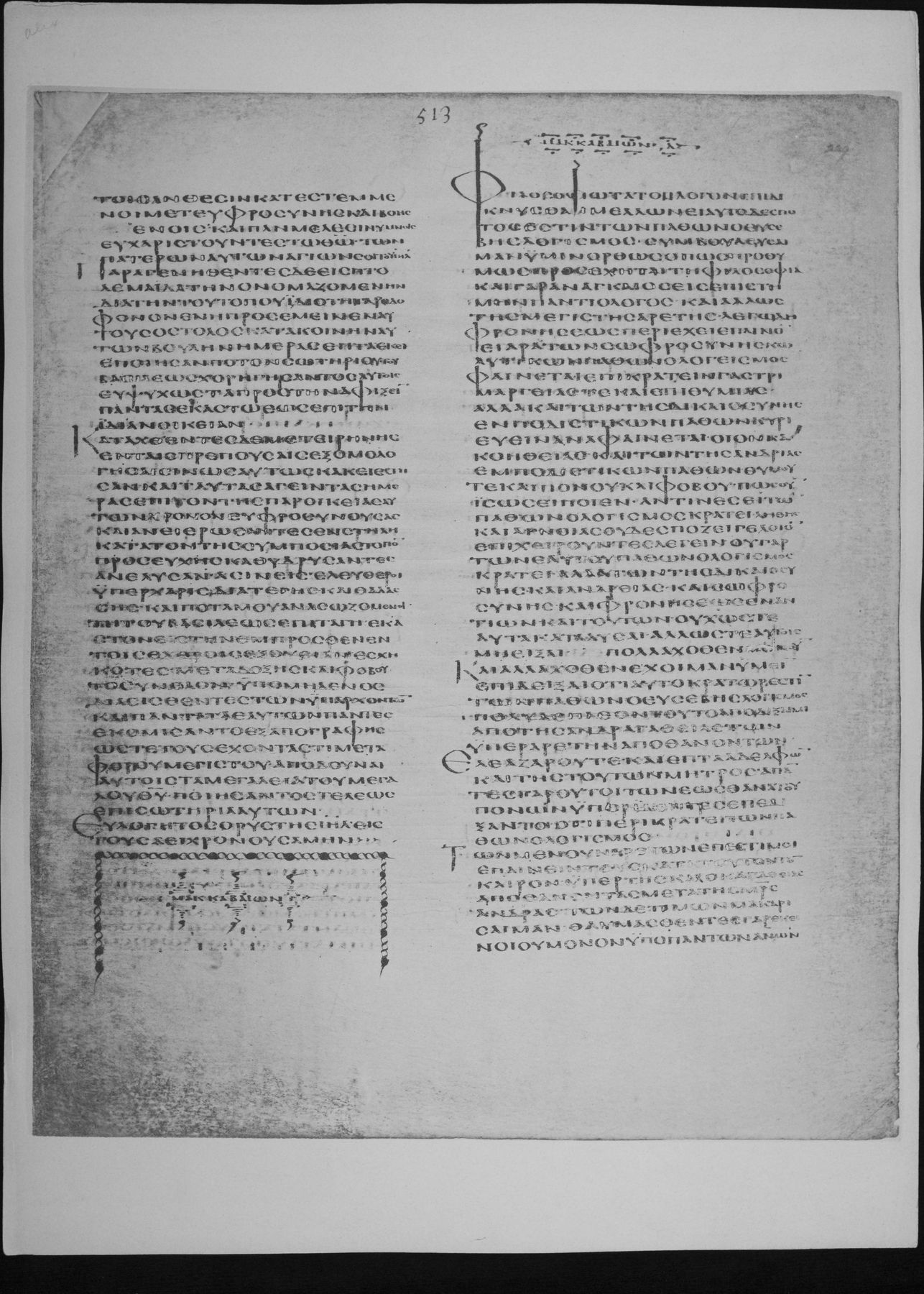
4 Maccabees 1:1-8 is on fol. 513r (full-size facsimile of 1879-83, Internet Archive codex-alexandrinus leaf 1032). The 1957 reduced facsimile prints beneath this page: 3 Maccabees vii. 16-vii. 23 [end], 4 Maccabees i. 1-i. 11. Checked on the plate: the page begins inside 3Ma 7:16 (first words read: ΤΟΙΣ ΑΝΘΕΣΙΝ ΚΑΤΕΣΤΕΜΜΕΝΟΙ ΜΕΤ ΕΥΦΡΟΣΥΝΗΣ ΚΑΙ ΒΟΗΣ).
1ΦΙΛΟΣΟΦΩΤΑΤΟΝ λόγον ἐπιδείκνυσθαι μέλλων, εἰ αὐτοδέσποτός ἐστιν τῶν παθῶν ὁ εὐσεβὴς λογισμός, συμβουλεύσαιμ᾽ ἂν ὑμῖν ὀρθῶς ὅπως προθύμως προσέχητε τῇ φιλοσοφίᾳ. 2καὶ γὰρ ἀναγκαῖος εἰς ἐπιστήμην παντὶ ὁ λόγος, καὶ ἄλλως τῆς μεγίστης ἀρετῆς, λέγω δὴ φρονήσεως, περιέχει ἔπαινον. 3εἰ ἄρα τῶν σωφροσύνης κωλυτικῶν παθῶν ὁ λογισμὸς φαίνεται ἐπικρατεῖν, γαστριμαργίας τε καὶ ἐπιθυμίας· 4ἀλλὰ καὶ τῶν τῆς δικαιοσύνης ἐμποδιστικῶν παθῶν κυριεύειν ἀναφαίνεται, οἷον κακοηθείας, καὶ τῶν τῆς ἀνδρίας ἐμποδιστικῶν παθῶν, θυμοῦ τε καὶ πόνου καὶ φόβου. 5πῶς οὖν, ἴσως εἴποιεν ἄν τινες, εἰ τῶν παθῶν ὁ λογισμὸς κρατεῖ, λήθης καὶ ἀγνοίας οὐ δεσπόζει; γελοῖον ἐπιχειροῦντες λέγειν· 6οὐ γὰρ τῶν ἑαυτοῦ παθῶν ὁ λογισμὸς κρατεῖ, ἀλλὰ τῶν τῆς δικαιοσύνης καὶ ἀνδρείας καὶ σωφροσύνης καὶ φρονήσεως ἐναντίων· καὶ τούτων, οὐχ ὥστε αὐτὰ καταλῦσαι, ἀλλ᾽ ὥστε αὐτοῖς μὴ εἶξαι. 7Πολλαχόθεν μὲν οὖν καὶ ἀλλαχόθεν ἔχοιμ᾽ ἂν ὑμῖν ἐπιδεῖξαι, ὅτι αὐτοκράτωρ ἐστὶν τῶν παθῶν ὁ εὐσεβὴς λογισμός. 8πολὺ δὲ πλέον τοῦτο ἀποδείξαιμι ἀπὸ τῆς ἀνδραγαθείας τῶν ὑπὲρ ἀρετὴν ἀποθανόντων, Ἐλεαζάρου τε καὶ ἑπτὰ ἀδελφῶν καὶ τῆς τούτων μητρός.
1As I am going to demonstrate a most philosophical proposition, namely, that religious reasoning is absolute master of the passions, I would willingly advise you to give the utmost heed to philosophy. 2For reason is necessary to every one as a step to science: and more especially does it embrace the praise of prudence, the highest virtue. 3If, then, reasoning appears to hold the mastery over the passions which stand in the way of temperance, such as gluttony and lust, 4it surely also and manifestly has the rule over the affections which are contrary to justice, such as malice; and of those which are hindrances to manliness, as wrath, and pain, and fear. 5How, then, is it, perhaps some may say, that reasoning, if it rule the affections, is not also master of forgetfulness and ignorance? They attempt a ridiculous argument. 6For reasoning does not rule over its own affections, but over such as are contrary to justice, and manliness, and temperance, and prudence; and yet over these, so as to withstand, without destroying them. 7I might prove to you, from many other considerations, that religious reasoning is sole master of the passions; 8but I shall prove it with the greatest force from the fortitude of Eleazar, and seven brethren, and their mother, who suffered death in defence of virtue.
Where on the image
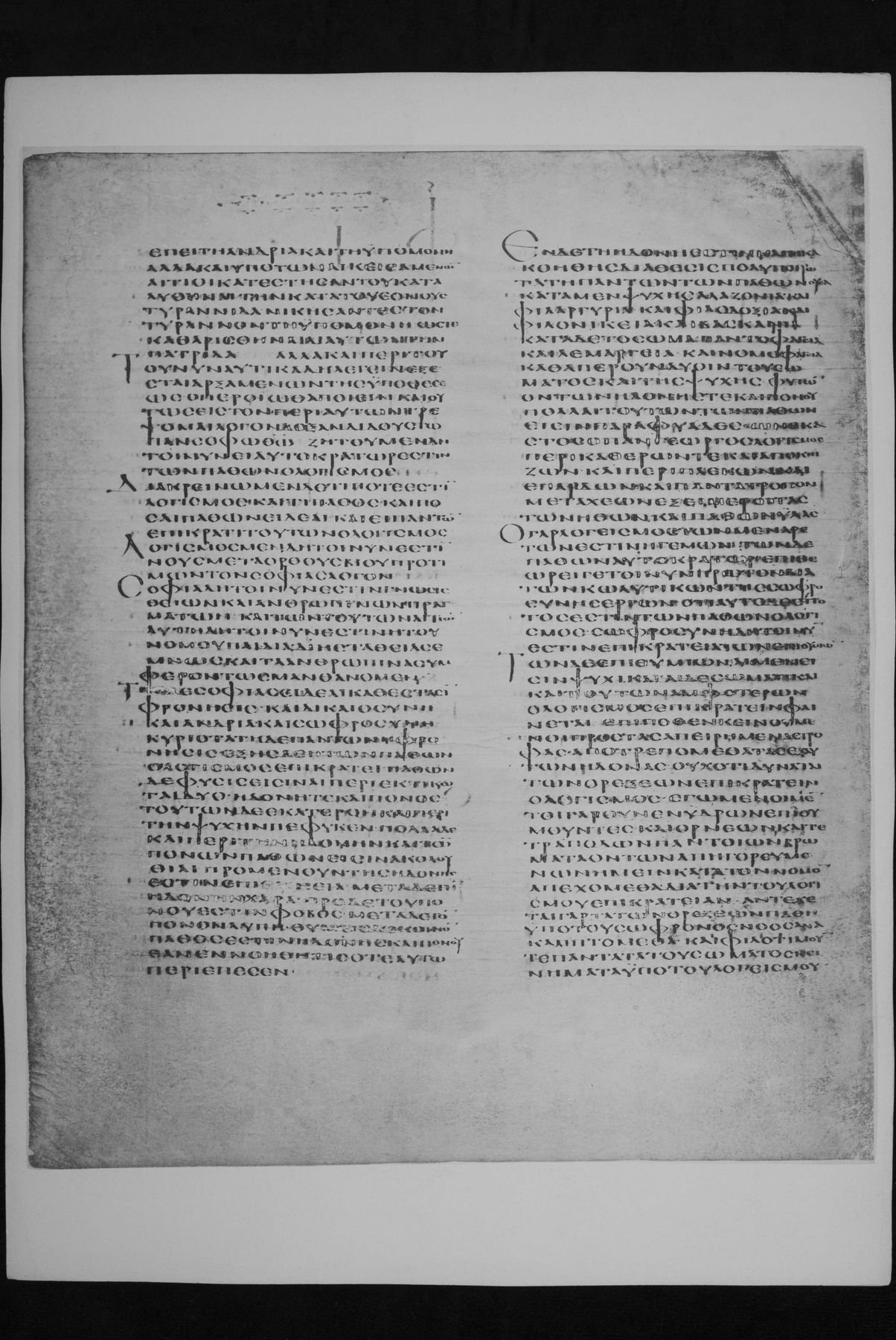
4 Maccabees 1:9-11 is on fol. 513r (full-size facsimile of 1879-83, Internet Archive codex-alexandrinus leaf 1032). The 1957 reduced facsimile prints beneath this page: 3 Maccabees vii. 16-vii. 23 [end], 4 Maccabees i. 1-i. 11. Checked on the plate: the page begins inside 3Ma 7:16 (first words read: ΤΟΙΣ ΑΝΘΕΣΙΝ ΚΑΤΕΣΤΕΜΜΕΝΟΙ ΜΕΤ ΕΥΦΡΟΣΥΝΗΣ ΚΑΙ ΒΟΗΣ). 4 Maccabees 1:11-16 is on fol. 513v (full-size facsimile of 1879-83, Internet Archive codex-alexandrinus leaf 1033). The 1957 reduced facsimile prints beneath this page: 4 Maccabees i. 11-i. 35. Checked on the plate: the page begins inside 4 Maccabees 1:11 (first words read: ΕΠΙ ΤΗ ΑΝΔΡΙΑ ΚΑΙ ΤΗ ΥΠΟΜΟΝΗ ΑΛΛΑ ΚΑΙ ΥΠΟ ΤΩΝ ΑΙΚΙΣΑΜΕΝΩΝ).
9ἅπαντες γὰρ οὗτοι τῶν ἕως θανάτου πόνων ὑπεριδόντες ἐπεδείξαντο ὅτι περικρατεῖ τῶν παθῶν ὁ λογισμός. 10τῶν μὲν οὖν ἀρετῶν ἔπεστί μοι ἐπαινεῖν τοὺς κατὰ τοῦτον τὸν καιρὸν ὑπὲρ τῆς καλοκἀγαθίας ἀποθανόντας μετὰ τῆς μητρὸς ἄνδρας· τῶν δὲ τιμῶν μακαρίσαιμ᾽ ἄν. 11θαυμασθέντες γὰρ ἐκεῖνοι οὐ μόνον ὑπὸ πάντων ἀνθρώπων ἐπὶ τῇ ἀνδρίᾳ καὶ τῇ ὑπομονῇ, ἀλλὰ καὶ ὑπὸ τῶν αἰκισαμένων, αἴτιοι κατέστησαν τοῦ καταλυθῆναι τὴν κατὰ τοῦ ἔθνους τυραννίδα, νικήσαντες τὸν τύραννον τῇ ὑπομονῇ, ὥστε καθαρισθῆναι δι᾽ αὐτῶν τὴν πατρίδα. 12ἀλλὰ καὶ περὶ τούτου νῦν αὐτίκα δὴ λέγειν ἐξέσται, ἀρξαμένων τῆς ὑποθέσεως, ὅπερ εἴωθα ποιεῖν, καὶ οὕτως εἰς τὸν περὶ αὐτῶν τρέψομαι λόγον, δόξαν διδοὺς τῷ πανσόφῳ θεῷ. 13Ζητοῦμεν δὴ τοίνυν, εἰ αὐτοκράτωρ ἐστὶν τῶν παθῶν ὁ λογισμός. 14διακρίνωμεν δέ, τί ποτέ ἐστιν λογισμός, καὶ τί πάθος, καὶ πόσαι παθῶν εἰδέαι, καὶ εἰ πάντων ἐπικρατεῖ τούτων ὁ λογισμός. 15λογισμὸς μὲν δὴ τοίνυν ἐστὶν νοῦς μετὰ ὀρθοῦ βίου προτιμῶν τὸν σοφίας λόγον. 16σοφία δὴ τοίνυν ἐστὶν γνῶσις θείων καὶ ἀνθρωπίνων πραγμάτων, καὶ τῶν τούτων αἰτιῶν.
9For all these, contemning pains even unto death, by this contempt, demonstrated that reasoning has command over the passions. 10For their virtues, then, it is right that I should commend those men who died with their mother at this time in behalf of rectitude; and for their honours, I may count them happy. 11For they, winning admiration not only from men in general, but even from their persecutors, for their manliness and endurance, became the means of the destruction of the tyranny against their nation, having conquered the tyrant by their endurance, so that by them their country was purified. 12But we may now at once enter upon the question, having commenced, as is our wont, with laying down the doctrine, and so proceed to the account of these persons, giving glory to the all wise God. 13The question, therefore, is, whether reasoning be absolute master of the passions. 14Let us determine, then, What is reasoning? and what passion? and how many forms of the passions? and whether reasoning bears sway over all of these? 15Reasoning is, then, intellect accompanied by a life of rectitude, putting foremost the consideration of wisdom. 16And wisdom is a knowledge of divine and human things, and of their causes.
Where on the image
4 Maccabees 1:17-24 is on fol. 513v (full-size facsimile of 1879-83, Internet Archive codex-alexandrinus leaf 1033). The 1957 reduced facsimile prints beneath this page: 4 Maccabees i. 11-i. 35. Checked on the plate: the page begins inside 4 Maccabees 1:11 (first words read: ΕΠΙ ΤΗ ΑΝΔΡΙΑ ΚΑΙ ΤΗ ΥΠΟΜΟΝΗ ΑΛΛΑ ΚΑΙ ΥΠΟ ΤΩΝ ΑΙΚΙΣΑΜΕΝΩΝ).
17αὕτη δὴ τοίνυν ἐστὶν ἡ τοῦ νόμου παιδία, δι᾽ ἧς τὰ θεῖα σεμνῶς καὶ τὰ ἀνθρώπινα συμφερόντως μανθάνομεν. 18Τῆς δὲ σοφίας εἰδέαι καθεστᾶσιν φρόνησις καὶ δικαιοσύνη καὶ ἀνδρία καὶ σωφροσύνη. 19κυριωτάτη δὲ πάντων ἡ φρόνησις, ἐξ ἧς δὴ τῶν παθῶν ὁ λογισμὸς ἐπικρατεῖ. 20παθῶν δὲ φύσεις εἰσὶν αἱ περιεκτικώταται δύο, ἡδονή τε καὶ πόνος· τούτων δὲ ἑκάτερον καὶ περὶ τὴν ψυχὴν πέφυκεν. 21πολλαὶ δὲ καὶ περὶ τὴν ἡδονὴν καὶ τὸν πόνον παθῶν εἰσιν ἀκολουθίαι. 22πρὸ μὲν οὖν τῆς ἡδονῆς ἐστιν ἐπιθυμία· μετὰ δὲ τὴν ἡδονήν, χαρά. 23πρὸ δὲ τοῦ πόνου ἐστὶν φόβος· μετὰ δὲ τὸν πόνον, λύπη. 24θυμὸς δὲ κοινὸν πάθος ἐστὶν ἡδονῆς καὶ πόνου, ἐὰν ἐννοηθῇ τις ὅτε αὐτῷ περιέπεσεν.
17And this is contained in the education of the law; by means of which we learn divine things reverently, and human things profitably. 18And the forms of wisdom are prudence, and justice, and manliness, and temperance. 19The leading one of these is prudence; by whose means, indeed, it is that reasoning bears rule over the passions. 20Of the passions, pleasure and pain are the two most comprehensive; and they also by nature refer to the soul. 21And there are many attendant affections surrounding pleasure and pain. 22Before pleasure is lust; and after pleasure, joy. 23And before pain is fear; and after pain, sorrow. 24Wrath is an affection, common to pleasure and to pain, if any one will pay attention when it comes upon him.
Where on the image
4 Maccabees 1:25-32 is on fol. 513v (full-size facsimile of 1879-83, Internet Archive codex-alexandrinus leaf 1033). The 1957 reduced facsimile prints beneath this page: 4 Maccabees i. 11-i. 35. Checked on the plate: the page begins inside 4 Maccabees 1:11 (first words read: ΕΠΙ ΤΗ ΑΝΔΡΙΑ ΚΑΙ ΤΗ ΥΠΟΜΟΝΗ ΑΛΛΑ ΚΑΙ ΥΠΟ ΤΩΝ ΑΙΚΙΣΑΜΕΝΩΝ).
25ἐν δὲ τῇ ἡδονῇ ἐστιν καὶ ἡ κακοήθης διάθεσις, πολυτροπωτάτη πάντων τῶν παθῶν οὖσα. 26κατὰ μὲν ψυχῆς ἀλαζονία καὶ φιλαργυρία καὶ φιλοδοξία καὶ φιλονεικία καὶ βασκανία. 27κατὰ δὲ τὸ σῶμα παντοφαγία καὶ λαιμαργία καὶ μονοφαγία. 28καθάπερ οὖν δυοῖν τοῦ σώματος καὶ τῆς ψυχῆς φυτῶν ὄντων ἡδονῆς τε καὶ πόνου, πολλαὶ τούτων τῶν παθῶν εἰσιν παραφυάδες· 29ὧν ἕκαστος ὁ πανγέωργος λογισμὸς περικαθαίρων τε καὶ ἀποκνίζων καὶ περιπλέκων καὶ ἐπάρδων καὶ πάντα τρόπον μεταχέων ἐξημεροῖ τὰς τῶν ἠθῶν καὶ παθῶν ὕλας. 30Ὁ γὰρ λογισμὸς τῶν μὲν ἀρετῶν ἐστιν ἡγεμών, τῶν δὲ παθῶν αὐτοκράτωρ. ἐπιθεώρει γε τοίνυν πρῶτον διὰ τῶν κωλυτικῶν τῆς σωφροσύνης ἔργων, ὅτι αὐτοδέσποτός ἐστιν τῶν παθῶν ὁ λογισμός. 31σωφροσύνη δὴ τοίνυν ἐστὶν ἐπικράτεια τῶν ἐπιθυμιῶν. 32τῶν δὲ ἐπιθυμιῶν αἱ μέν εἰσιν ψυχικαί, αἱ δὲ σωματικαί· καὶ τούτων ἀμφοτέρων ὁ λογισμὸς ἐπικρατεῖν φαίνεται.
25And there exists in pleasure a malicious disposition, which is the most multiform of all the affections. 26In the soul it is arrogance, and love of money, and vaingloriousness, and contention, and faithlessness, and the evil eye. 27In the body it is greediness and gormandizing, and solitary gluttony. 28As pleasure and pain are, therefore, two growths of the body and the soul, so there are many offshoots of these passions. 29And reasoning, the universal husbandman, purging, and pruning these severally, and binding round, and watering, and transplanting, in every way improves the materials of the morals and affections. 30For reasoning is the leader of the virtues, but it is the sole ruler of the passions. Observe then first, through the very things which stand in the way of temperance, that reasoning is absolute ruler of the passions. 31Now temperance consists of a command over the lusts. 32But of the lusts, some belong to the soul, others to the body: and over each of these classes the reasoning appears to bear sway.
Where on the image
4 Maccabees 1:33-35 is on fol. 513v (full-size facsimile of 1879-83, Internet Archive codex-alexandrinus leaf 1033). The 1957 reduced facsimile prints beneath this page: 4 Maccabees i. 11-i. 35. Checked on the plate: the page begins inside 4 Maccabees 1:11 (first words read: ΕΠΙ ΤΗ ΑΝΔΡΙΑ ΚΑΙ ΤΗ ΥΠΟΜΟΝΗ ΑΛΛΑ ΚΑΙ ΥΠΟ ΤΩΝ ΑΙΚΙΣΑΜΕΝΩΝ).
33ἐπεὶ πόθεν κινούμενοι πρὸς τὰς ἀπειρημένας τροφάς, ἀποτρεπόμεθα τὰς ἐξ αὑτῶν ἡδονάς; οὐχ ὅτι δύναται τῶν ὀρέξεων ἐπικρατεῖν ὁ λογισμός; ἐγὼ μὲν οἶμαι. 34τοιγαροῦν ἐνύδρων ἐπιθυμοῦντες καὶ ὀρνέων καὶ τετραπόδων, παντοίων βρωμάτων τῶν ἀπηγορευμένων ἡμῖν κατὰ τὸν νόμον ἀπεχόμεθα διὰ τὴν τοῦ λογισμοῦ ἐπικράτειαν. 35ἀντέχεται γὰρ τὰ τῶν ὀρέξεων πάθη ὑπὸ τοῦ σώφρονος νοὸς ἀνακαμπτόμενα· καὶ φιλοτιμοῦνται πάντα τὰ τοῦ σώματος κινήματα ὑπὸ τοῦ λογισμοῦ.
33For whence is it, otherwise, that when urged on to forbidden meats, we reject the gratification which would ensue from them? Is it not because reasoning is able to command the appetites? I believe so. 34Hence it is, then, that when lusting after water-animals and birds, and fourfooted beasts, and all kinds of food which are forbidden us by the law, we withhold ourselves through the mastery of reasoning. 35For the affections of our appetites are resisted by the temperate understanding, and bent back again, and all the impulses of the body are reined in by reasoning.
Cite
Sources
- Source: Codex Alexandrinus (British Library Royal MS 1 D. VI) via the British Museum photographic facsimiles of 1879-83 and 1957 (Internet Archive) + Swete's Septuagint + Brenton's English (holding institution)
- Critical edition: H. B. Swete, The Old Testament in Greek according to the Septuagint (1909)
← previous · → next · v cycle view · l back to library