4 Kingdoms (2 Kings), Chapter 5 (Codex Alexandrinus)
Introduction
4 Kingdoms (2 Kings) 5 in the Greek Old Testament (the Septuagint) as written in Codex Alexandrinus, a Greek Bible copied in the fifth century, probably in Egypt, and now in the British Library (Royal MS 1 D. V, the first of its four volumes). It is one of the three great early codices of the whole Greek Bible, with Codex Vaticanus and Codex Sinaiticus.
This entry meets the strict three-criteria standard of the Theosis Library:
- Manuscript scan: the pages of Codex Alexandrinus carrying this chapter (fol. 225r, fol. 225v), from the full-size photographic (autotype) facsimile published by the British Museum in 1879-1883, as digitised on the Internet Archive. The verse range of every page comes from the reduced photographic facsimile of 1930, which prints it beneath each plate, and the opening words of every page were read on the plate to confirm the page and the verse it begins with. Each section links to the page or pages that hold its verses. Folio numbers are those written at the head of each leaf and visible on the plates.
- Original text: Swete's edition, which here prints the text of Codex Vaticanus (Vat. gr. 1209), the base of his edition, and gives the readings of Alexandrinus only in his apparatus. The Greek column is therefore Vaticanus' text; where Alexandrinus differs, the plate shows what Alexandrinus reads.
- English translation: Sir Lancelot C. L. Brenton, The Septuagint Version of the Old Testament (1844; 1851 edition), a translation of the Greek, public domain, from the eBible.org text.
How was this verified? (Provenance)
Where on the image
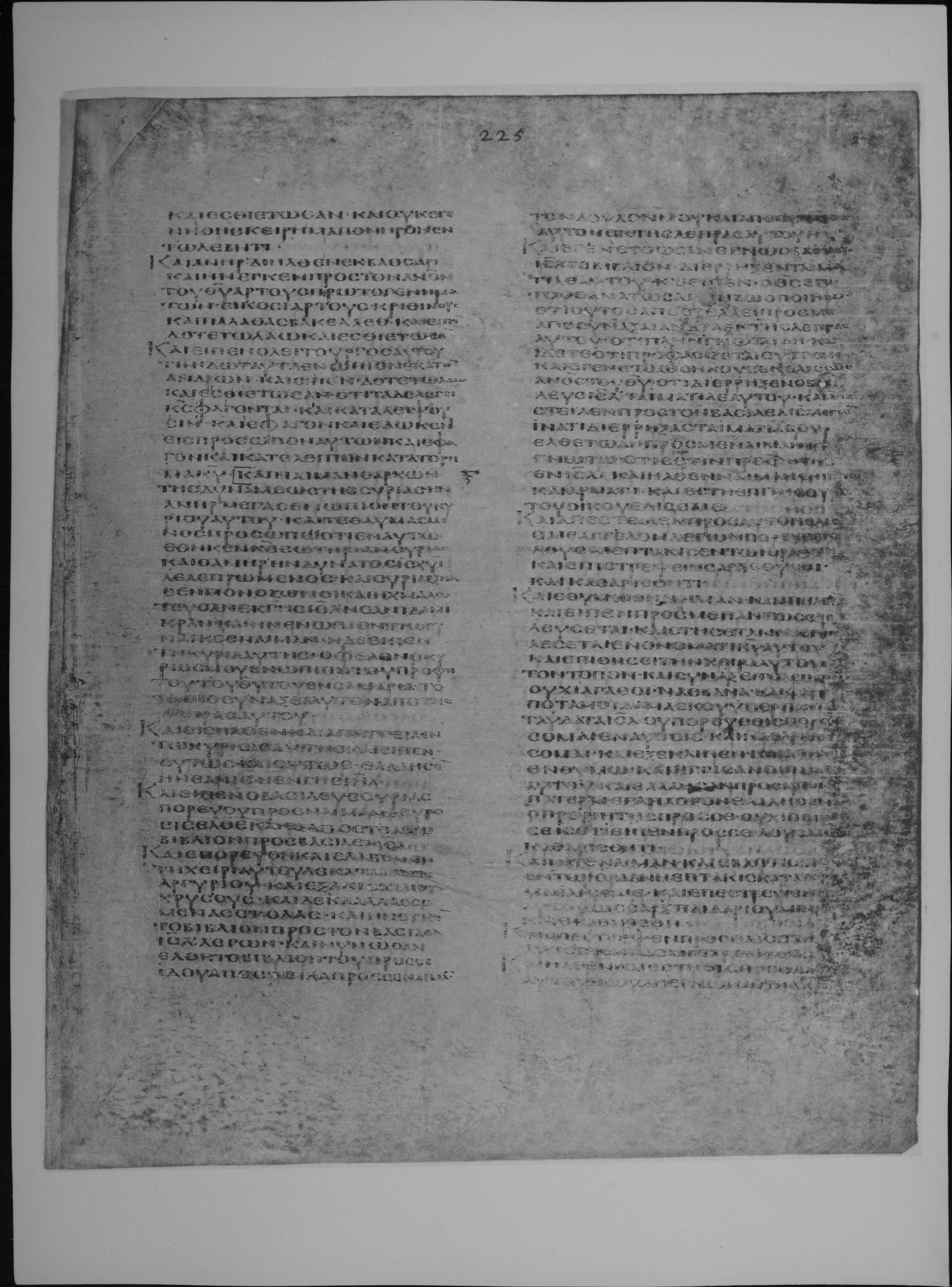
4 Kingdoms (2 Kings) 5:1-8 is on fol. 225r (full-size facsimile of 1879-83, Internet Archive codex-alexandrinus leaf 468). The 1930 reduced facsimile prints beneath this page: 2 Kings iv. 41-v. 15. Checked on the plate: the page begins inside 4 Kingdoms (2 Kings) 4:41 (first words read: ΚΑΙ ΕΙΠΕΝ ΕΓΧΕΑΤΕ ΤΩ ΛΑΩ ΚΑΙ ΕΣΘΙΕΤΩΣΑΝ ΚΑΙ ΟΥΚ ΕΓΕΝΗΘΗ ΕΚΕΙ ΡΗΜΑ ΠΟΝΗΡΟΝ ΕΝ ΤΩ ΛΕΒΗΤΙ).
1Καὶ Ναιμὰν ὁ ἄρχων τῆς δυνάμεως Συρίας ἦν ἀνὴρ μέγας ἐνώπιον τοῦ κυρίου αὐτοῦ καὶ τεθαυμασμένος προσώπῳ, ὅτι ἐν αὐτῷ ἔδωκεν Κύριος σωτηρίαν Συρίᾳ· καὶ ὁ ἀνὴρ ἦν δυνατὸς ἰσχύι, λελεπρωμένος. 2καὶ Συρία ἐξῆλθον μονόζωνοι καὶ ᾐχμαλώτευσαν ἐκ γῆς Ἰσραὴλ νεάνιδα μικράν, καὶ ἦν ἐνώπιον τῆς γυναικὸς Ναιμάν. 3ἡ δὲ εἶπεν τῇ κυρίᾳ αὐτῆς Ὄφελον ὁ κύριός μου ἐνώπιον τοῦ προφήτου τοῦ θεοῦ τοῦ ἐν Σαμαρείᾳ, τότε ἀποσυνάξει αὐτὸν ἀπὸ τῆς λέπρας αὐτοῦ. 4καὶ εἰσῆλθεν καὶ ἀπήγγειλεν τῷ κυρίῳ ἑαυτῆς καὶ εἶπεν Οὕτως καὶ οὕτως ἐλάλησεν ἡ νεᾶνις ἡ ἐκ γῆς Ἰσραήλ. 5καὶ εἶπεν βασιλεὺς Συρίας πρὸς Ναιμάν Δεῦρο εἴσελθε, καὶ ἐξαποστελῶ βιβλίον πρὸς βασιλέα Ἰσραήλ· καὶ ἐπορεύθη καὶ ἔλαβεν ἐν τῇ χειρὶ αὐτοῦ δέκα τάλαντα ἀργυρίου καὶ ἑξακισχιλίους χρυσοῦς καὶ δέκα ἀλλασσομένας στολὰς. 6καὶ ἤνεγκεν τὸ βιβλίον πρὸς τὸν βασιλέα Ἰσραὴλ λέγων Καὶ νῦν ὡς ἂν ἔλθῃ τὸ βιβλίον τοῦτο πρὸς σέ, ἰδοὺ ἀπέστειλα πρὸς σὲ Ναιμὰν τὸν δοῦλόν μου, καὶ ἀποσυνάξεις αὐτὸν ἀπὸ τῆς λέπρας αὐτοῦ. 7καὶ ἐγένετο ὡς ἀνέγνω βασιλεὺς Ἰσραὴλ τὸ βιβλίον, διέρρηξεν τὰ ἱμάτια αὐτοῦ καὶ εἶπεν Ὁ θεὸς ἐγὼ τοῦ θανατῶσαι καὶ ζωοποιῆσαι, ὅτι οὗτος ἀποστέλλει πρὸς μὲ ἀποσυνάξαι ἄνδρα ἀπὸ τῆς λέπρας αὐτοῦ; ὅτι πλὴν γνῶτε δὴ καὶ ἴδετε ὅτι προφασίζεται οὗτός μοι. 8καὶ ἐγένετο ὡς ἤκουσεν Ἐλεισαῖε ὅτι διέρρηξεν ὁ βασιλεὺς Ἰσραὴλ τὰ ἱμάτια ἑαυτοῦ, καὶ ἀπέστειλεν πρὸς τὸν βασιλέα Ἰσραὴλ λέγων Ἵνα τί διέρρηξας τὰ ἱμάτιά σου; ἐλθέτω δὴ πρὸς μὲ Ναιμὰν καὶ γνώτω ὅτι ἔστιν προφήτης ἐν Ἰσραήλ.
1Now Naiman, the captain of the host of Syria, was a great man before his master, and highly respected, because by him the Lord had given deliverance to Syria, and the man was mighty in strength, but a leper. 2And the Syrians went forth in small bands, and took captive out of the land of Israel a little maid: and she waited on Naiman's wife. 3And she said to her mistress, O that my lord were before the prophet of God in Samaria; then he would recover him from his leprosy. 4And she went in and told her lord, and said, Thus and thus spoke the maid from the land of Israel. 5And the king of Syria said to Naiman, Go to, go, and I will send a letter to the king of Israel. And he went, and took in his hand ten talents of silver, and six thousand pieces of gold, and ten changes of raiment. 6And he brought the letter to the king of Israel, saying, Now then, as soon as this letter shall reach thee, behold, I have sent to thee my servant Naiman, and thou shalt recover him from his leprosy. 7And it came to pass, when the king of Israel read the letter, that he rent his garments, and said, Am I God, to kill and to make alive, that this man sends to me to recover a man of his leprosy? consider, however, I pray you, and see that this man seeks an occasion against me. 8And it came to pass, when Elisaie heard that the king of Israel had rent his garments, that he sent to the king of Israel, saying, Wherefore hast thou rent thy garments? Let Naiman, I pray thee, come to me, and let him know that there is a prophet in Israel.
Where on the image
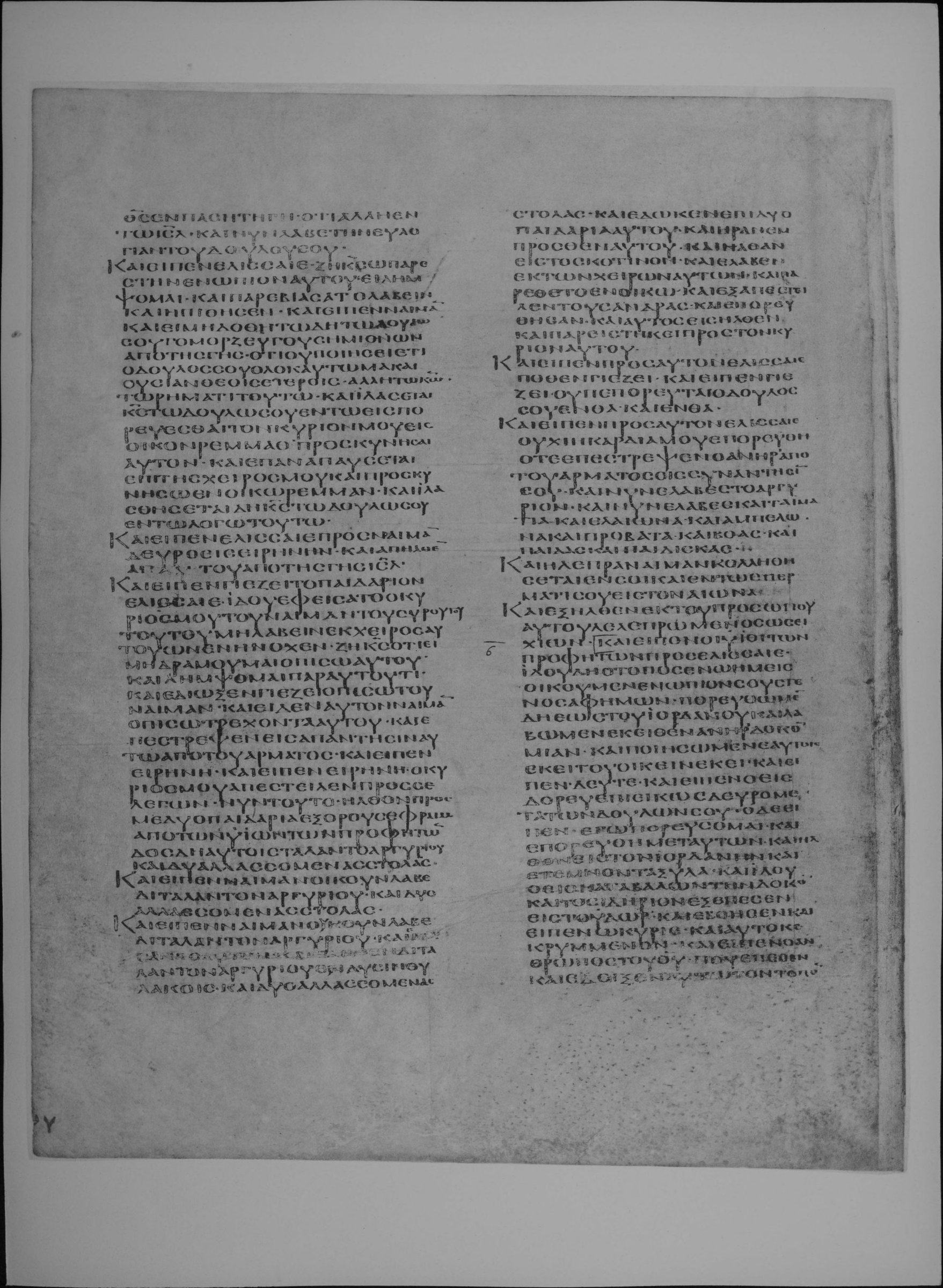
4 Kingdoms (2 Kings) 5:9-15 is on fol. 225r (full-size facsimile of 1879-83, Internet Archive codex-alexandrinus leaf 468). The 1930 reduced facsimile prints beneath this page: 2 Kings iv. 41-v. 15. Checked on the plate: the page begins inside 4 Kingdoms (2 Kings) 4:41 (first words read: ΚΑΙ ΕΙΠΕΝ ΕΓΧΕΑΤΕ ΤΩ ΛΑΩ ΚΑΙ ΕΣΘΙΕΤΩΣΑΝ ΚΑΙ ΟΥΚ ΕΓΕΝΗΘΗ ΕΚΕΙ ΡΗΜΑ ΠΟΝΗΡΟΝ ΕΝ ΤΩ ΛΕΒΗΤΙ). 4 Kingdoms (2 Kings) 5:15-16 is on fol. 225v (full-size facsimile of 1879-83, Internet Archive codex-alexandrinus leaf 469). The 1930 reduced facsimile prints beneath this page: 2 Kings v. 15-vi. 6. Checked on the plate: the page begins inside 4 Kingdoms (2 Kings) 5:15 (first words read: ΟΥΚ ΕΣΤΙΝ ΘΣ ΕΝ ΠΑΣΗ ΤΗ ΓΗ ΟΤΙ ΑΛΛ Η ΕΝ ΤΩ ΙΣΡΑΗΛ ΚΑΙ ΝΥΝ ΛΑΒΕ ΤΗΝ ΕΥΛΟΓΙΑΝ).
9καὶ ἦλθεν Ναιμὰν ἐν ἵππῳ καὶ ἅρματι, καὶ ἔστη ἐπὶ θύρας οἴκου Ἐλεισαῖε. 10καὶ ἀπέστειλεν Ἐλεισαῖε ἄγγελον πρὸς αὐτὸν λέγων Πορευθεὶς λοῦσαι ἑπτάκις ἐν τῷ Ἰορδάνῃ, καὶ ἐπιστρέψει ἡ σάρξ σού σοι καὶ καθαρισθήσῃ. 11καὶ ἐθυμώθη Ναιμάν, καὶ ἀπῆλθεν καὶ εἶπεν Ἰδοὺ εἶπον Πρὸς μὲ πάντως ἐξελεύσεται καὶ ἐπικαλέσεται ἐν ὀνόματι θεοῦ αὐτοῦ, καὶ ἐπιθήσει τὴν χεῖρα αὐτοῦ ἐπὶ τὸν τόπον, καὶ ἀποσυνάξει τὸ λεπρόν. 12οὐχὶ ἀγαθὸς Ἀβανὰ καὶ Ἀφαρφὰ ποταμοὶ Δαμασκοῦ ὑπὲρ πάντα τὰ ὕδατα Ἰσραὴλ; οὐχὶ πορευθεὶς λούσομαι ἐν αὐτοῖς καὶ καθαρισθήσομαι; καὶ ἐξέκλινεν καὶ ἀπῆλθεν ἐν θυμῷ. 13καὶ ἤγγισαν οἱ παῖδες αὐτοῦ καὶ ἐλάλησαν πρὸς αὐτόν Μέγαν λόγον ἐλάλησεν ὁ προφήτης πρὸς σέ, οὐχὶ ποιήσεις; καὶ ὅτι εἶπεν πρὸς σέ Λοῦσαι καὶ καθαρίσθητι. 14καὶ κατέβη Ναιμὰν καὶ ἐβαπτίσατο ἐν τῷ Ἰορδάνῃ ἑπτάκι κατὰ τὸ ῥῆμα Ἐλεισαῖε· καὶ ἐπέστρεψεν ἡ σὰρξ αὐτοῦ ὡς σὰρξ παιδαρίου μικροῦ, καὶ ἐκαθαρίσθη. 15καὶ ἐπέστρεψεν πρὸς Ἐλεισαῖε αὐτὸς καὶ πᾶσα ἡ παρεμβολὴ αὐτοῦ, καὶ ἦλθεν καὶ ἔστη καὶ εἶπεν Ἰδοὺ ἔγνωκα ὅτι οὐκ ἔστιν θεὸς ἐν πάσῃ τῇ γῇ ὅτι ἀλλ᾽ ἢ ἐν τῷ Ἰσραήλ· καὶ νῦν λάβε τὴν εὐλογίαν παρὰ τοῦ δούλου σου. 16καὶ εἶπεν Ἐλεισαῖε Ζῇ Κύριος ᾧ παρέστην ἐνώπιον αὐτοῦ, εἰ λήμψομαι· καὶ παρεβιάσατο αὐτὸν λαβεῖν, καὶ ἠπείθησεν.
9So Naiman came with horse and chariot, and stood at the door of the house of Elisaie. 10And Elisaie sent a messenger to him, saying, Go and wash seven times in Jordan, and thy flesh shall return to thee, and thou shalt be cleansed. 11And Naiman was angry, and departed, and said, Behold, I said, He will by all means come out to me, and stand, and call on the name of his God, and lay his hand upon the place, and recover the leper. 12Are not Abana and Pharphar, rivers of Damascus, better than all the waters of Israel? may I not go and wash in them, and be cleansed? and he turned and went away in a rage. 13And his servants came near and said to him, Suppose the prophet had spoken a great thing to thee, wouldest thou not perform it? yet he has but said to thee, Wash, and be cleansed. 14So Naiman went down, and dipped himself seven times in Jordan, according to the word of Elisaie: and his flesh returned to him as the flesh of a little child, and he was cleansed. 15And he and all his company returned to Elisaie, and he came and stood before him, and said, Behold, I know that there is no God in all the earth, save only in Israel: and now receive a blessing of thy servant. 16And Elisaie said, As the Lord lives, before whom I stand, I will not take one. And he pressed him to take one: but he would not.
Where on the image
4 Kingdoms (2 Kings) 5:17-24 is on fol. 225v (full-size facsimile of 1879-83, Internet Archive codex-alexandrinus leaf 469). The 1930 reduced facsimile prints beneath this page: 2 Kings v. 15-vi. 6. Checked on the plate: the page begins inside 4 Kingdoms (2 Kings) 5:15 (first words read: ΟΥΚ ΕΣΤΙΝ ΘΣ ΕΝ ΠΑΣΗ ΤΗ ΓΗ ΟΤΙ ΑΛΛ Η ΕΝ ΤΩ ΙΣΡΑΗΛ ΚΑΙ ΝΥΝ ΛΑΒΕ ΤΗΝ ΕΥΛΟΓΙΑΝ).
17καὶ εἶπεν Ναιμάν Καὶ εἰ μή, δοθήτω δὴ τῷ δούλῳ σου γόμορ, ζεύγη ἡμιόνων, ὅτι οὐ ποιήσει ἔτι ὁ δοῦλός σου ὁλοκαύτωμα καὶ θυσίασμα θεοῖς ἑτέροις ἀλλ᾽ ἢ τῷ κυρίῳ. 18τῷ ῥήματι τούτῳ καὶ ἱλάσεται Κύριος τῷ δούλῳ σου, ἐν τῷ εἰσπορεύεσθαι τὸν κύριόν μου εἰς οἶκον Ῥεμμὰν προσκυνῆσαι ἐκεῖ· καὶ αὐτὸς ἐπαναπαύσεται ἐπὶ τῆς χειρός μου, καὶ προσκυνήσω ἐν οἴκῳ Ῥεμμὰν ἐν τῷ προσκυνεῖν αὐτὸν ἐν οἴκῳ Ῥεμμάν· καὶ ἱλάσεται δὴ Κύριος τῷ δούλῳ σου ἐν τῷ λόγῳ τούτῳ. 19καὶ εἶπεν Ἐλεισαῖε πρὸς Ναιμάν Δεῦρο εἰς εἰρήνην· καὶ ἀπῆλθεν παρ᾽ αὐτοῦ εἰς δεβραθὰ τῆς γῆς. 20Καὶ εἶπεν Γιεζεὶ τὸ παιδάριον Ἐλεισαῖε Ἰδοὺ ἐφείσατο ὁ κύριός μου τοῦ Ναιμὰν τοῦ Σύρου τούτου, τοῦ μὴ λαβεῖν ἐκ χειρὸς αὐτοῦ ἃ ἐνήνοχεν· ζῇ Κύριος ὅτι εἰ μὴ δραμοῦμαι ὀπίσω αὐτοῦ καὶ λήμψομαι παρ᾽ αὐτοῦ τι. 21καὶ ἐδίωξε Γιεζεὶ ὀπίσω τοῦ Ναιμάν· καὶ εἶδεν αὐτὸν Ναιμὰν τρέχοντα ὀπίσω αὐτοῦ, καὶ ἐπέστρεψεν ἀπὸ τοῦ ἅρματος εἰς ἀπαντὴν αὐτοῦ. 22καὶ εἶπεν Εἰρήνη· ὁ κύριός μου ἀπέστειλέν με λέγων Ἰδοὺ νῦν ἦλθον πρὸς μὲ δύο παιδάρια ἐξ ὄρους Ἐφράιμ ἀπὸ τῶν υἱῶν τῶν προφητῶν· δὸς δὴ αὐτοῖς τάλαντον ἀργυρίου καὶ δύο ἀλλασσομένας στολάς. 23καὶ εἶπεν Ναιμάν Λάβε διτάλαντον ἀργυρίου· καὶ ἔλαβεν ἐν δυσὶ θυλάκοις, καὶ δύο ἀλλασσομένας στολάς· καὶ ἔδωκεν ἐπὶ δύο παιδάρια αὐτοῦ, καὶ ᾖρον ἔμπροσθεν αὐτοῦ. 24καὶ ἦλθον εἰς τὸ σκοτεινόν, καὶ ἔλαβεν ἐκ τῶν χειρῶν αὐτῶν καὶ παρέθετο ἐν οἴκῳ, καὶ ἐξαπέστειλεν τοὺς ἄνδρας.
17And Naiman said, Well then, if not, let there be given to thy servant, I pray thee, the load of a yoke of mules; and thou shalt give me of the red earth: for henceforth thy servant will not offer whole-burnt-offering or sacrifice to other gods, but only to the Lord by reason of this thing. 18And let the Lord be propitious to thy servant when my master goes into the house of Remman to worship there, and he shall lean on my hand, and I shall bow down in the house of Remman when he bows down in the house of Remman; even let the Lord, I pray, be merciful to thy servant in this matter. 19And Elisaie said to Naiman, Go in peace. And he departed from him a little way. 20And Giezi the servant of Elisaie said, Behold, my Lord has spared this Syrian Naiman, so as not to take of his hand what he has brought: as the Lord lives, I will surely run after him, and take somewhat of him. 21So Giezi followed after Naiman: and Naiman saw him running after him, and turned back from his chariot to meet him. 22And Giezi said, All is well: my master has sent me, saying, Behold, now are there come to me two young men of the sons of the prophets from mount Ephraim; give them, I pray thee, a talent of silver, and two changes of raiment. 23And Naiman said, Take two talents of silver. And he took two talents of silver in two bags, and two changes of raiment, and put them upon two of his servants, and they bore them before him. 24And he came to a secret place, and took them from their hands, and laid them up in the house, and dismissed the men.
Where on the image
4 Kingdoms (2 Kings) 5:25-27 is on fol. 225v (full-size facsimile of 1879-83, Internet Archive codex-alexandrinus leaf 469). The 1930 reduced facsimile prints beneath this page: 2 Kings v. 15-vi. 6. Checked on the plate: the page begins inside 4 Kingdoms (2 Kings) 5:15 (first words read: ΟΥΚ ΕΣΤΙΝ ΘΣ ΕΝ ΠΑΣΗ ΤΗ ΓΗ ΟΤΙ ΑΛΛ Η ΕΝ ΤΩ ΙΣΡΑΗΛ ΚΑΙ ΝΥΝ ΛΑΒΕ ΤΗΝ ΕΥΛΟΓΙΑΝ).
25καὶ αὐτὸς εἰσῆλθεν καὶ παρειστήκει πρὸς τὸν κύριον αὐτοῦ· καὶ εἶπεν πρὸς αὐτὸν Ἐλεισαῖε Πόθεν Γιεζεί; καὶ εἶπεν Γιεζεί Οὐ πεπόρευται ὁ δοῦλός σου ἔνθα καὶ ἔνθα. 26καὶ εἶπεν πρὸς αὐτὸν Ἐλεισαῖε Οὐχὶ ἡ καρδία μου ἐπορεύθη μετὰ σοῦ ὅτε ἐπέστρεψεν ὁ ἀνὴρ ἀπὸ τοῦ ἅρματος εἰς συναντήν σοι; καὶ νῦν ἔλαβες τὸ ἀργύριον, καὶ νῦν ἔλαβες τὰ ἱμάτια καὶ ἐλαιῶνας καὶ ἀμπελῶνας καὶ πρόβατα καὶ βόας καὶ παῖδας καὶ παιδίσκας· 27καὶ ἡ λέπρα Ναιμὰν κολληθήσεται ἐν σοὶ καὶ ἐν τῷ σπέρματί σου εἰς τὸν αἰῶνα. καὶ ἐξῆλθεν ἐκ προσώπου αὐτοῦ λελεπρωμένος ὡσεὶ χιών.
25And he went in himself and stood before his master; and Elisaie said to him, 26Whence comest thou, Giezi? and Giezi said, Thy servant has not been hither or thither. And Elisaie said to him, Went not my heart with thee, when the man returned from his chariot to meet thee? and now thou hast received silver, and now thou hast received raiment, and oliveyards, and vineyards, and sheep, and oxen, and menservants, and maidservants. 27The leprosy also of Naiman shall cleave to thee, and to thy seed for ever. And he went out from his presence leprous, like snow.
Cite
Sources
- Source: Codex Alexandrinus (British Library Royal MS 1 D. V) via the British Museum photographic facsimiles of 1879-83 and 1930 (Internet Archive) + Swete's Septuagint + Brenton's English (holding institution)
- Critical edition: H. B. Swete, The Old Testament in Greek according to the Septuagint (1909)
← previous · → next · v cycle view · l back to library