4 Kingdoms (2 Kings), Chapter 6 (Codex Alexandrinus)
Introduction
4 Kingdoms (2 Kings) 6 in the Greek Old Testament (the Septuagint) as written in Codex Alexandrinus, a Greek Bible copied in the fifth century, probably in Egypt, and now in the British Library (Royal MS 1 D. V, the first of its four volumes). It is one of the three great early codices of the whole Greek Bible, with Codex Vaticanus and Codex Sinaiticus.
This entry meets the strict three-criteria standard of the Theosis Library:
- Manuscript scan: the pages of Codex Alexandrinus carrying this chapter (fol. 225v, fol. 226r, fol. 226v), from the full-size photographic (autotype) facsimile published by the British Museum in 1879-1883, as digitised on the Internet Archive. The verse range of every page comes from the reduced photographic facsimile of 1930, which prints it beneath each plate, and the opening words of every page were read on the plate to confirm the page and the verse it begins with. Each section links to the page or pages that hold its verses. Folio numbers are those written at the head of each leaf and visible on the plates.
- Original text: Swete's edition, which here prints the text of Codex Vaticanus (Vat. gr. 1209), the base of his edition, and gives the readings of Alexandrinus only in his apparatus. The Greek column is therefore Vaticanus' text; where Alexandrinus differs, the plate shows what Alexandrinus reads.
- English translation: Sir Lancelot C. L. Brenton, The Septuagint Version of the Old Testament (1844; 1851 edition), a translation of the Greek, public domain, from the eBible.org text.
How was this verified? (Provenance)
Where on the image
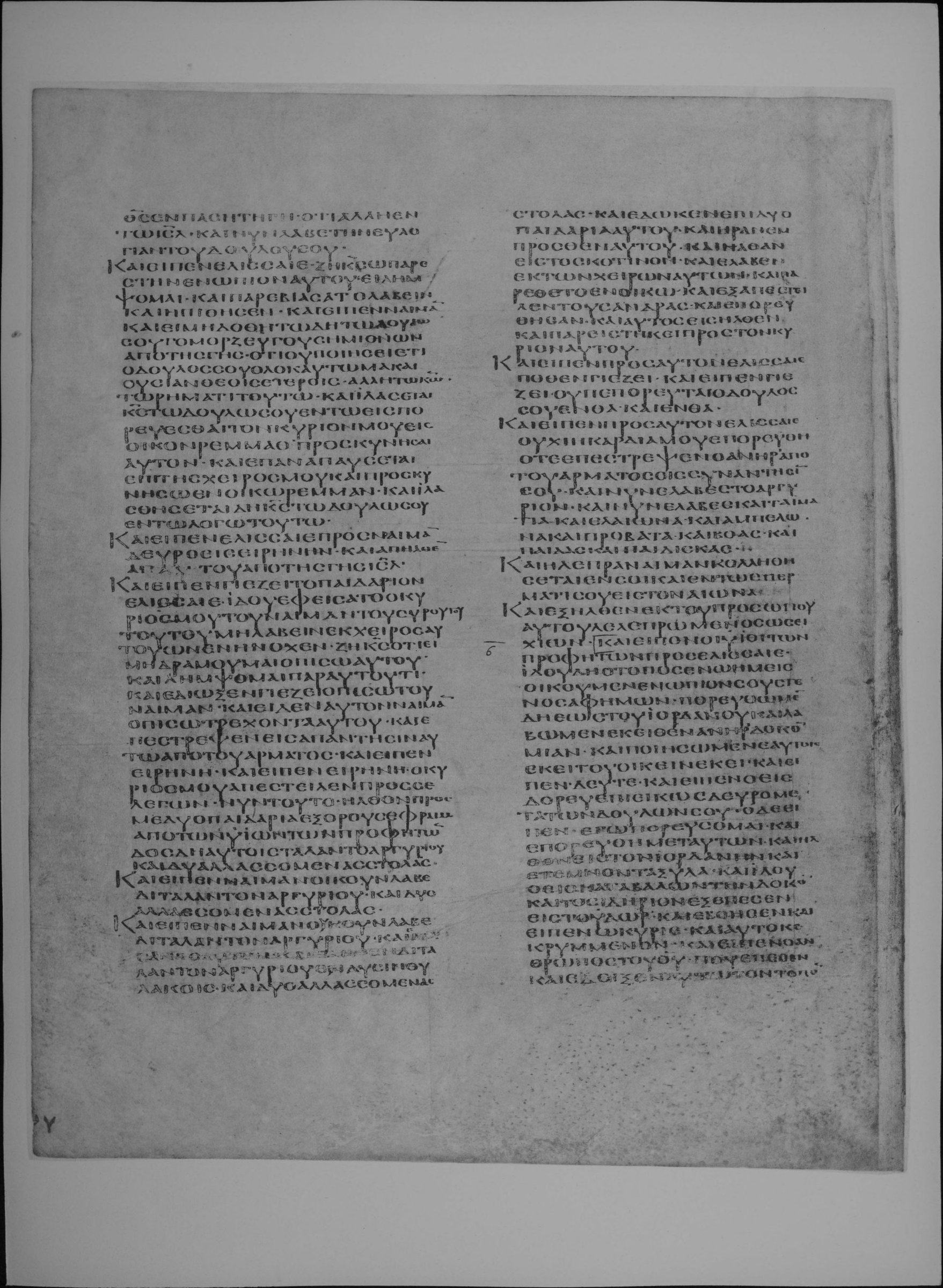
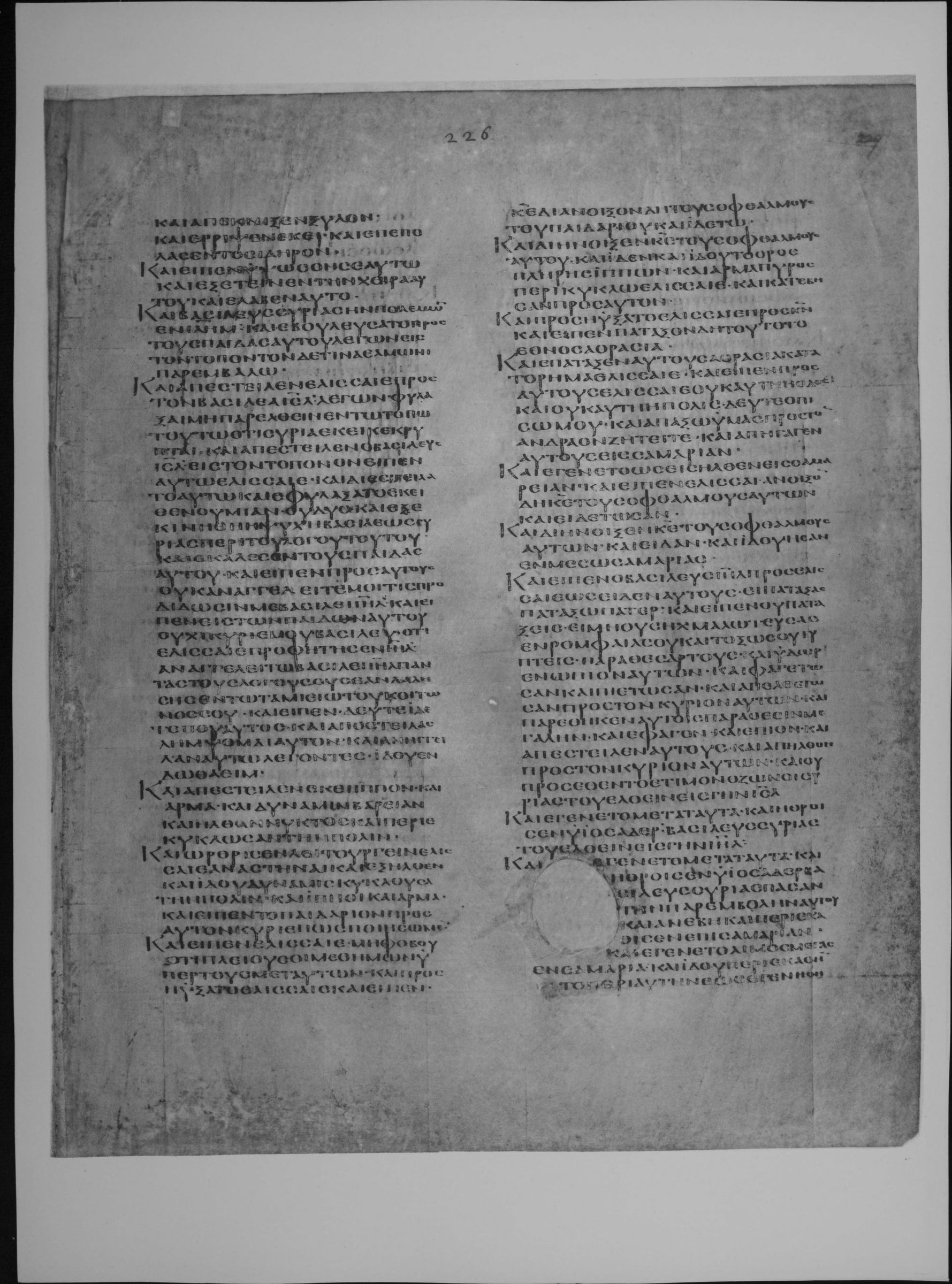
4 Kingdoms (2 Kings) 6:1-6 is on fol. 225v (full-size facsimile of 1879-83, Internet Archive codex-alexandrinus leaf 469). The 1930 reduced facsimile prints beneath this page: 2 Kings v. 15-vi. 6. Checked on the plate: the page begins inside 4 Kingdoms (2 Kings) 5:15 (first words read: ΟΥΚ ΕΣΤΙΝ ΘΣ ΕΝ ΠΑΣΗ ΤΗ ΓΗ ΟΤΙ ΑΛΛ Η ΕΝ ΤΩ ΙΣΡΑΗΛ ΚΑΙ ΝΥΝ ΛΑΒΕ ΤΗΝ ΕΥΛΟΓΙΑΝ). 4 Kingdoms (2 Kings) 6:6-8 is on fol. 226r (full-size facsimile of 1879-83, Internet Archive codex-alexandrinus leaf 470). The 1930 reduced facsimile prints beneath this page: 2 Kings vi. 6-25. Checked on the plate: the page begins inside 4 Kingdoms (2 Kings) 6:6 (first words read: ΚΑΙ ΑΠΕΚΝΙΣΕΝ ΞΥΛΟΝ ΚΑΙ ΕΡΡΙΨΕΝ ΕΚΕΙ ΚΑΙ ΕΠΕΠΟΛΑΣΕΝ ΤΟ ΣΙΔΗΡΙΟΝ).
1Καὶ εἶπον οἱ υἱοὶ τῶν προφητῶν πρὸς Ἐλεισαῖε Ἰδοὺ δὴ ὁ τόπος ἐν ᾧ ἡμεῖς οἰκοῦμεν ἐνώπιόν σου στενὸς ἀφ᾽ ἡμῶν· 2πορευθῶμεν δὴ ἕως τοῦ Ἰορδάνου καὶ λάβωμεν ἐκεῖθεν ἀνὴρ εἷς δοκὸν μίαν, καὶ ποιήσωμεν ἑαυτοῖς ἐκεῖ τοῦ οἰκεῖν ἐκεῖ. καὶ εἶπεν Δεῦτε. 3καὶ εἶπεν ὁ εἷς Ἐπιεικῶς, δεῦρο μετὰ τῶν δούλων σου· καὶ εἶπεν Ἐγὼ πορεύσομαι. 4καὶ ἐπορεύθη μετ᾽ αὐτῶν, καὶ ἦλθον εἰς τὸν Ἰορδάνην καὶ ἔτεμνον τὰ ξύλα. 5καὶ ἰδοὺ ὁ εἷς καταβάλλων τὴν δοκόν, καὶ τὸ σιδήριον ἐξέπεσεν εἰς τὸ ὕδωρ· καὶ ἐβόησεν Ὤ, κύριε· καὶ αὐτὸ κεκρυμμένον. 6καὶ εἶπεν ὁ ἄνθρωπος τοῦ θεοῦ Ποῦ ἔπεσεν; καὶ ἔδειξεν αὐτῷ τὸν τόπον· καὶ ἀπέκνισεν ξύλον καὶ ἔρριψεν ἐκεῖ, καὶ ἐπεπόλασεν τὸ σιδήριον. 7καὶ εἴρηκεν Ὕψωσον σαυτῷ· καὶ ἐξέτεινεν τὴν χεῖρα καὶ ἔλαβεν αὐτό. 8Καὶ βασιλεὺς Συρίας ἦν πολεμῶν ἐν Ἰσραήλ, καὶ ἐβουλεύσατο πρὸς τοὺς παῖδας αὐτοῦ λέγων Εἰς τὸν τόπον τόνδε τινὰ ἐλιμωνὶ παρεμβαλῶ.
1And the sons of the prophets said to Elisaie, Behold now, the place wherein we dwell before thee is too narrow for us. 2Let us go, we pray thee, unto Jordan, and take thence every man a beam, and make for ourselves a habitation there. 3And he said, Go. And one of them said gently, Come with thy servants. And he said, I will go. 4And he went with them, and they came to Jordan, and began to cut down wood. 5And behold, one was cutting down a beam, and the axe head fell into the water: and he cried out, Alas! master: and it was hidden. 6And the man of God said, Where did it fall? and he shewed him the place: and he broke off a stick, and threw it in there, and the iron came to the surface. 7And he said, Take it up to thyself. And he stretched out his hand, and took it. 8And the king of Syria was at war with Israel: and he consulted with his servants, saying, I will encamp in such a place.
Where on the image
4 Kingdoms (2 Kings) 6:9-16 is on fol. 226r (full-size facsimile of 1879-83, Internet Archive codex-alexandrinus leaf 470). The 1930 reduced facsimile prints beneath this page: 2 Kings vi. 6-25. Checked on the plate: the page begins inside 4 Kingdoms (2 Kings) 6:6 (first words read: ΚΑΙ ΑΠΕΚΝΙΣΕΝ ΞΥΛΟΝ ΚΑΙ ΕΡΡΙΨΕΝ ΕΚΕΙ ΚΑΙ ΕΠΕΠΟΛΑΣΕΝ ΤΟ ΣΙΔΗΡΙΟΝ).
9καὶ ἀπέστειλεν Ἐλεισαῖε πρὸς βασιλέα Ἰσραὴλ λέγων Φύλαξαι μὴ παρελθεῖν ἐν τῷ τόπῳ τούτῳ, ὅτι ἐκεῖ Συρία κέκρυπται. 10καὶ ἀπέστειλεν ὁ βασιλεὺς Ἰσραὴλ εἰς τὸν τόπον ὃν εἶπεν αὐτῷ Ἐλεισαῖε, καὶ ἐφυλάξατο ἐκεῖθεν οὐ μίαν οὐδὲ δύο. 11καὶ ἐξεκινήθη ἡ ψυχὴ βασιλέως Συρίας περὶ τοῦ λόγου τούτου, καὶ ἐκάλεσεν τοὺς παῖδας αὐτοῦ καὶ εἶπεν πρὸς αὐτούς Οὐκ ἀναγγελεῖτέ μοι τίς προδίδωσίν με βασιλεῖ Ἰσραήλ; 12καὶ εἶπεν εἷς τῶν παίδων αὐτοῦ Οὐχί, κύριε μου βασιλεῦ, ὅτι Ἐλεισαῖε ὁ προφήτης ὁ ἐν Ἰσραὴλ ἀναγγέλλει τῷ βασιλεῖ Ἰσραὴλ πάντας τοὺς λόγους οὓς ἐὰν λαλήσῃς ἐν τῷ ταμείῳ τοῦ κοιτῶνός σου. 13καὶ εἶπεν Δεῦτε ἴδετε ποῦ οὗτος, καὶ ἀποστείλας λήμψομαι αὐτόν· καὶ ἀνήγγειλαν αὐτῷ λέγοντες Ἰδοὺ ἐν Δωθάειμ. 14καὶ ἀπέστειλεν ἐκεῖ ἵππον καὶ ἅρμα καὶ δύναμιν βαρεῖαν, καὶ ἦλθον νυκτὸς καὶ περιεκύκλωσαν τὴν πόλιν. 15καὶ ὤρθρισεν ὁ λειτουργὸς Ἐλεισαῖε ἀναστῆναι καὶ ἐξῆλθεν, καὶ ἰδοὺ δύναμις κυκλοῦσα τὴν πόλιν καὶ ἵππος καὶ ἅρμα· καὶ εἶπεν τὸ παιδάριον πρὸς αὐτόν Ὤ, κύριε· πῶς ποιήσωμεν; 16καὶ εἶπεν Ἐλεισαῖε Μὴ φοβοῦ, ὅτι πλείους οἱ μεθ᾽ ἡμῶν ὑπὲρ τοὺς μετ᾽ αὐτῶν.
9And Elisaie sent to the king of Israel, saying, Take heed that thou pass not by that place, for the Syrians are hidden there. 10And the king of Israel sent to the place which Elisaie mentioned to him, and saved himself thence not once or twice. 11And the mind of the king of Syria was very much disturbed concerning this thing; and he called his servants, and said to them, Will ye not tell me who betrays me to the king of Israel? 12And one of his servants said, Nay, my Lord, O king, for Elisaie the prophet that is in Israel reports to the king of Israel all the words whatsoever thou mayest say in thy bedchamber. 13And he said, Go, see where this man is, and I will send and take him. And they sent word to him, saying, Behold, he is in Dothaim. 14And he sent thither horses, and chariots, and a mighty host: and they came by night, and compassed about the city. 15And the servant of Elisaie rose up early and went out; and, behold, a host compassed the city, and horses and chariots: and the servant said to him, O master, what shall we do? 16And Elisaie said, Fear not, for they who are with us are more than they that are with them.
Where on the image
4 Kingdoms (2 Kings) 6:17-24 is on fol. 226r (full-size facsimile of 1879-83, Internet Archive codex-alexandrinus leaf 470). The 1930 reduced facsimile prints beneath this page: 2 Kings vi. 6-25. Checked on the plate: the page begins inside 4 Kingdoms (2 Kings) 6:6 (first words read: ΚΑΙ ΑΠΕΚΝΙΣΕΝ ΞΥΛΟΝ ΚΑΙ ΕΡΡΙΨΕΝ ΕΚΕΙ ΚΑΙ ΕΠΕΠΟΛΑΣΕΝ ΤΟ ΣΙΔΗΡΙΟΝ).
17καὶ προσεύξατο Ἐλεισαῖε καὶ εἶπεν Κύριε, διάνοιξον τοὺς ὀφθαλμοὺς τοῦ παιδαρίου καὶ ἰδέτω· καὶ διήνοιξεν Κύριος τοὺς ὀφθαλμοὺς αὐτοῦ, καὶ εἶδεν· καὶ ἰδοὺ τὸ ὄρος πλῆρες ἵππων, καὶ ἅρμα πυρὸς περικύκλῳ Ἐλεισαῖε. 18καὶ κατέβησαν πρὸς αὐτόν· καὶ προσηύξατο πρὸς Κύριον καὶ εἶπεν Πάταξον δὴ τοῦτο τὸ ἔθνος ἀορασίᾳ· καὶ ἐπάταξεν αὐτοὺς ἀορασίᾳ κατὰ τὸ ῥῆμα Ἐλεισαῖε. 19καὶ εἶπεν πρὸς αὐτοὺς Ἐλεισαῖε Οὐχ αὕτη ἡ πόλις καὶ αὕτη ἡ ὁδός· δεῦτε ὀπίσω μου, καὶ ἄξω ὑμᾶς πρὸς τὸν ἄνδρα ὃν ζητεῖτε· καὶ ἀπήγαγεν αὐτοὺς πρὸς Σαμάρειαν. 20καὶ ἐγένετο ὡς εἰσῆλθον εἰς Σαμάρειαν, καὶ εἶπεν Ἐλεισαῖε Ἄνοιξον δή, Κύριε, τοὺς ὀφθαλμοὺς αὐτῶν καὶ ἰδέτωσαν· καὶ διήνοιξεν τοὺς ὀφθαλμοὺς αὐτῶν, καὶ εἶδον· καὶ ἰδοὺ ἦσαν ἐν μέσῳ Σαμαρείας. 21καὶ εἶπεν ὁ βασιλεὺς Ἰσραήλ, ὡς εἶδεν αὐτούς Εἰ πατάξας πατάξω, πάτερ; 22καὶ εἶπεν Οὐ πατάξεις, εἰ μὴ οὓς ᾐχμαλώτευσας ἐν ῥομφαίᾳ σου καὶ τόξῳ σου σὺ τύπτεις· παράθες ἄρτους καὶ ὕδωρ ἐνώπιον αὐτῶν, καὶ φαγέτωσαν καὶ πιέτωσαν, καὶ ἀπελθέτωσαν πρὸς τὸν κύριον αὐτῶν. 23καὶ παρέθηκεν αὐτοῖς παράθεσιν μεγάλην, καὶ ἔφαγον καὶ ἔπιον· καὶ ἀπέστειλεν αὐτοὺς πρὸς τὸν κύριον αὐτῶν· καὶ οὐ προσέθεντο ἔτι μονόζωνοι Συρίας τοῦ ἐλθεῖν εἰς γῆν Ἰσραήλ. 24Καὶ ἐγένετο μετὰ ταῦτα καὶ ἤθροισεν υἱὸς Ἁδὲρ βασιλεὺς Συρίας πᾶσαν τὴν παρεμβολὴν αὐτοῦ καὶ ἀνέβη, καὶ περιεκάθισαν Σαμάρειαν.
17And Elisaie prayed, and said, Lord, open, I pray thee, the eyes of the servant, and let him see. And the Lord opened his eyes, and he saw: and, behold, the mountain was full of horses, and there were chariots of fire round about Elisaie. 18And they came down to him; and he prayed to the Lord, and said, Smite, I pray thee, this people with blindness. And he smote them with blindness, according to the word of Elisaie. 19And Elisaie said to them, This is not the city, and this is not the way: follow me, and I will bring you to the man whom ye seek. And he led them away to Samaria. 20And it came to pass when they entered into Samaria, that Elisaie said, Open, I pray thee, O Lord, their eyes, and let them see. And the Lord opened their eyes, and they saw; and, behold, they were in the midst of Samaria. 21And the king of Israel said to Elisaie, when he saw them, Shall I not verily smite them, my father? 22And he said, Thou shalt not smite them, unless thou wouldest smite those whom thou hast taken captive with thy sword and with thy bow: set bread and water before them, and let them eat and drink, and depart to their master. 23And he set before them a great feast, and they ate and drank: and he dismissed them, and they departed to their master. And the bands of Syria came no longer into the land of Israel. 24And it came to pass after this, that the son of Ader king of Syria gathered all his army, and went up, and besieged Samaria.
Where on the image
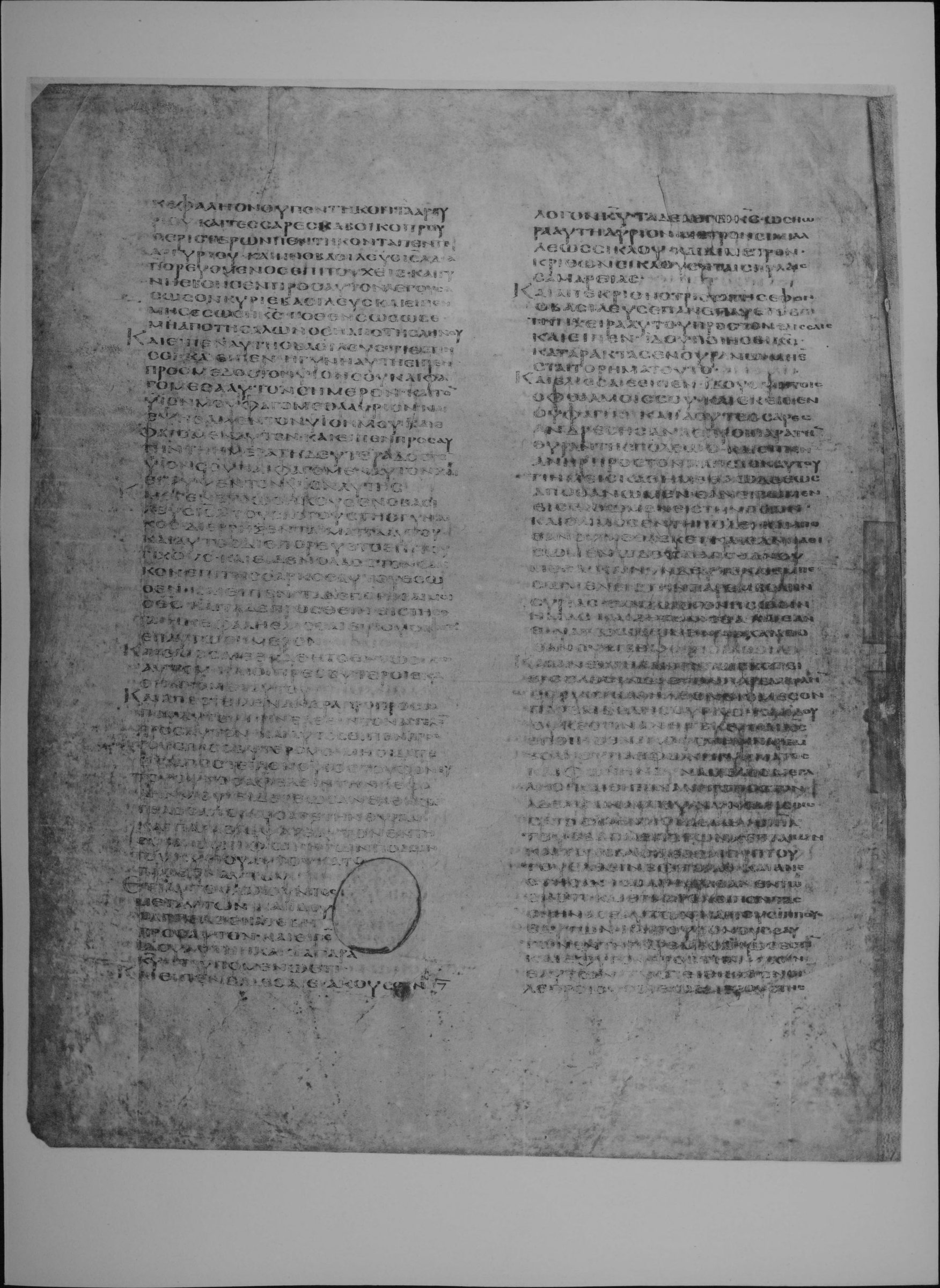
4 Kingdoms (2 Kings) 6:25 is on fol. 226r (full-size facsimile of 1879-83, Internet Archive codex-alexandrinus leaf 470). The 1930 reduced facsimile prints beneath this page: 2 Kings vi. 6-25. Checked on the plate: the page begins inside 4 Kingdoms (2 Kings) 6:6 (first words read: ΚΑΙ ΑΠΕΚΝΙΣΕΝ ΞΥΛΟΝ ΚΑΙ ΕΡΡΙΨΕΝ ΕΚΕΙ ΚΑΙ ΕΠΕΠΟΛΑΣΕΝ ΤΟ ΣΙΔΗΡΙΟΝ). 4 Kingdoms (2 Kings) 6:25-33 is on fol. 226v (full-size facsimile of 1879-83, Internet Archive codex-alexandrinus leaf 471). The 1930 reduced facsimile prints beneath this page: 2 Kings vi. 25-vii. 8. Checked on the plate: the page begins inside 4 Kingdoms (2 Kings) 6:25 (first words read: ΚΕΦΑΛΗ ΟΝΟΥ ΠΕΝΤΗΚΟΝΤΑ ΣΙΚΛΩΝ ΑΡΓΥΡΙΟΥ ΚΑΙ ΤΕΤΑΡΤΟΝ ΤΟΥ ΚΑΒ ΚΟΠΡΟΥ ΠΕΡΙΣΤΕΡΩΝ ΠΕΝΤΕ ΣΙΚΛΩΝ ΑΡΓΥΡΙΟΥ).
25καὶ ἐγένετο λιμὸς μέγας ἐν Σαμαρείᾳ, καὶ ἰδοὺ περιεκάθηντο ἐπ᾽ αὐτὴν ἕως οὗ ἐγενήθη κεφαλὴ ὄνου πεντήκοντα ἀργυρίου καὶ τέταρτον τοῦ κάβου κόπρου περιστερῶν πέντε ἀργυρίου. 26καὶ ἦν ὁ βασιλεὺς Ἰσραὴλ διαπορευόμενος ἐπὶ τοῦ τείχους, καὶ γυνὴ ἐβόησεν πρὸς αὐτὸν λέγουσα Σῶσον, κύριε βασιλεῦ. 27καὶ εἶπεν αὐτῇ Μή σε σώσαι Κύριος· πόθεν σώσω σε; μὴ ἀπὸ ἅλωνος ἢ ἀπὸ ληνοῦ; 28καὶ εἶπεν αὐτῇ ὁ βασιλεύς Τί ἔστιν σοι; καὶ εἶπεν ἡ γυνή Αὕτη εἶπεν πρὸς μέ Δὸς τὸν υἱόν σου, καὶ φαγόμεθα αὐτὸν σήμερον· καὶ τὸν υἱόν μου, καὶ φαγόμεθα αὐτὸν αὔριον. 29καὶ ἡψήσαμεν τὸν υἱόν μου καὶ ἐφάγομεν αὐτόν, καὶ εἶπον πρός αὐτὴν τῇ ἡμέρᾳ τῇ δευτέρᾳ Δὸς τὸν υἱόν σου καὶ φάγωμεν αὐτόν· καὶ ἔκρυψεν τὸν υἱὸν αὐτῆς. 30καὶ ἐγένετο ὡς ἤκουσεν ὁ βασιλεὺς τοὺς λόγους τῆς γυναικός, διέρρηξεν τὰ ἱμάτια αὐτοῦ, καὶ αὐτὸς διεπορεύετο ἐπὶ τοῦ τείχους, καὶ εἶδεν ὁ λαὸς τὸν σάκκον ἐπὶ τῆς σαρκὸς αὐτοῦ ἔσωθεν. 31καὶ εἶπεν Τάδε ποιήσαι μοι ὁ θεὸς καὶ τάδε προσθείη, εἰ στήσεται ἡ κεφαλὴ Ἐλεισαῖε ἐπ᾽ αὐτῷ σήμερον. 32καὶ Ἐλεισαῖε ἐκάθητο ἐν τῷ οἴκῳ αὐτοῦ, καὶ οἱ πρεσβύτεροι ἐκάθηντο μετ᾽ αὐτοῦ· καὶ ἀπέστειλεν ἄνδρα πρὸ προσώπου αὐτοῦ πρὶν ἐλθεῖν τὸν ἄγγελον πρὸς αὐτόν· καὶ εἶπεν πρὸς τοὺς πρεσβυτέρους Εἰ ᾔδειτε ὅτι ἀπέστειλεν ὁ υἱὸς τοῦ φονευτοῦ ἀφελεῖν τὴν κεφαλήν μου; ἴδετε ὡς ἂν ἔλθῃ ὁ ἄγγελος, ἀποκλείσατε τὴν θύραν καὶ παραθλίψατε αὐτὸν ἐν τῇ θύρᾳ· οὐχὶ φωνὴ τῶν ποδῶν τοῦ κυρίου αὐτοῦ κατόπισθεν αὐτοῦ; 33ἔτι αὐτοῦ λαλοῦντος μετ᾽ αὐτῶν, καὶ ἰδοὺ ἄγγελος κατέβη πρὸς αὐτὸν καὶ εἶπεν Ἰδοὺ αὕτη ἡ κακία παρὰ Κυρίου· τί ὑπομείνω τῷ κυρίῳ ἔτι;
25And there was a great famine in Samaria: and, behold, they besieged it, until an ass's head was valued at fifty pieces of silver, and the fourth part of a cab of dove's dung at five pieces of silver. 26And the king of Israel was passing by on the wall, and a woman cried to him, saying, Help, my lord, O king. 27And he said to her, Unless the Lord help thee, whence shall I help thee? from the corn-floor, or from the wine-press? 28And the king said to her, What is the matter with thee? And the woman said to him, This woman said to me, Give thy son, and we will eat him to-day, and we will eat my son to-morrow. 29So we boiled my son, and ate him; and I said to her on the second day, Give thy son, and let us eat him: and she has hidden her son. 30And it came to pass, when the king of Israel heard the words of the woman, that he rent his garments; and he passed by on the wall, and the people saw sackcloth within upon his flesh. 31And he said, God do so to me and more also, if the head of Elisaie shall stand upon him this day. 32And Elisaie was sitting in his house, and the elders were sitting with him; and the king sent a man before him: before the messenger came to him, he also said to the elders, Do ye see that this son of a murderer has sent to take away my head? See, as soon as the messenger shall have come, shut the door, and forcibly detain him at the door: is not the sound of his master's feet behind him? 33While he was yet speaking with them, behold, a messenger came to him: and he said, Behold, this evil is of the Lord; why should I wait for the Lord any longer?
Cite
Sources
- Source: Codex Alexandrinus (British Library Royal MS 1 D. V) via the British Museum photographic facsimiles of 1879-83 and 1930 (Internet Archive) + Swete's Septuagint + Brenton's English (holding institution)
- Critical edition: H. B. Swete, The Old Testament in Greek according to the Septuagint (1909)
← previous · → next · v cycle view · l back to library