4 Kingdoms (2 Kings), Chapter 7 (Codex Alexandrinus)
Introduction
4 Kingdoms (2 Kings) 7 in the Greek Old Testament (the Septuagint) as written in Codex Alexandrinus, a Greek Bible copied in the fifth century, probably in Egypt, and now in the British Library (Royal MS 1 D. V, the first of its four volumes). It is one of the three great early codices of the whole Greek Bible, with Codex Vaticanus and Codex Sinaiticus.
This entry meets the strict three-criteria standard of the Theosis Library:
- Manuscript scan: the pages of Codex Alexandrinus carrying this chapter (fol. 226v, fol. 227r), from the full-size photographic (autotype) facsimile published by the British Museum in 1879-1883, as digitised on the Internet Archive. The verse range of every page comes from the reduced photographic facsimile of 1930, which prints it beneath each plate, and the opening words of every page were read on the plate to confirm the page and the verse it begins with. Each section links to the page or pages that hold its verses. Folio numbers are those written at the head of each leaf and visible on the plates.
- Original text: Swete's edition, which here prints the text of Codex Vaticanus (Vat. gr. 1209), the base of his edition, and gives the readings of Alexandrinus only in his apparatus. The Greek column is therefore Vaticanus' text; where Alexandrinus differs, the plate shows what Alexandrinus reads.
- English translation: Sir Lancelot C. L. Brenton, The Septuagint Version of the Old Testament (1844; 1851 edition), a translation of the Greek, public domain, from the eBible.org text.
How was this verified? (Provenance)
Where on the image
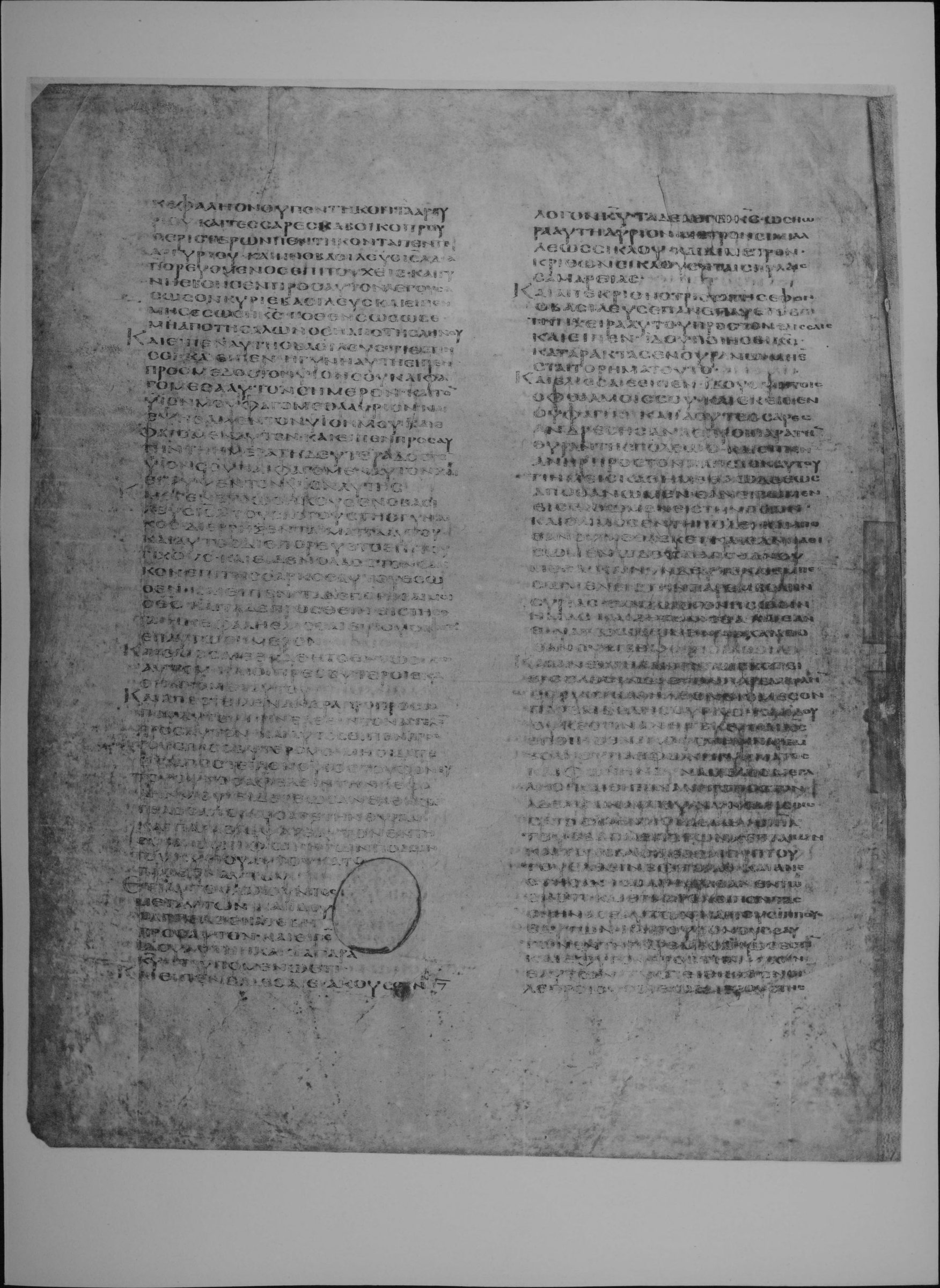
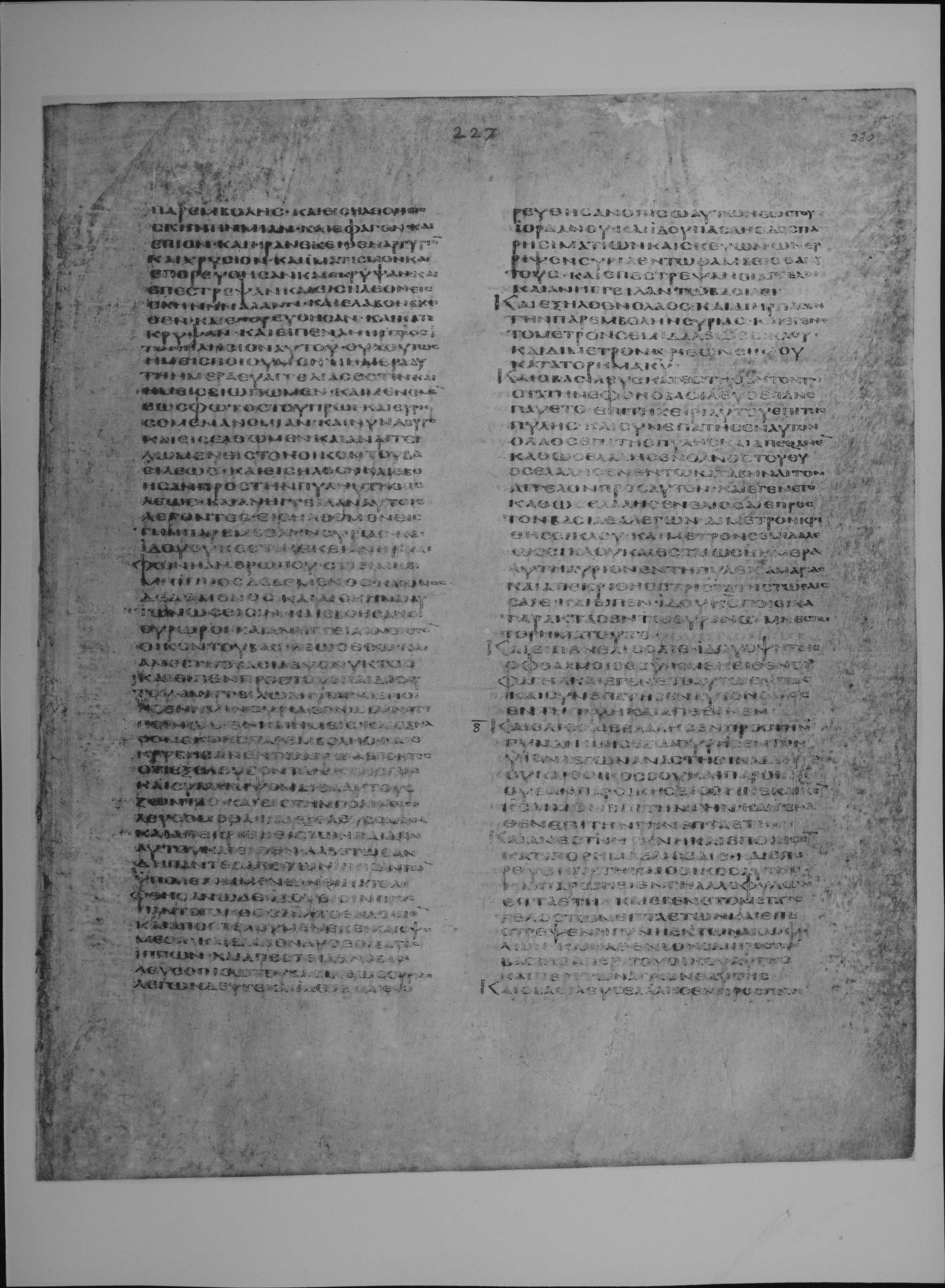
4 Kingdoms (2 Kings) 7:1-8 is on fol. 226v (full-size facsimile of 1879-83, Internet Archive codex-alexandrinus leaf 471). The 1930 reduced facsimile prints beneath this page: 2 Kings vi. 25-vii. 8. Checked on the plate: the page begins inside 4 Kingdoms (2 Kings) 6:25 (first words read: ΚΕΦΑΛΗ ΟΝΟΥ ΠΕΝΤΗΚΟΝΤΑ ΣΙΚΛΩΝ ΑΡΓΥΡΙΟΥ ΚΑΙ ΤΕΤΑΡΤΟΝ ΤΟΥ ΚΑΒ ΚΟΠΡΟΥ ΠΕΡΙΣΤΕΡΩΝ ΠΕΝΤΕ ΣΙΚΛΩΝ ΑΡΓΥΡΙΟΥ). 4 Kingdoms (2 Kings) 7:8 is on fol. 227r (full-size facsimile of 1879-83, Internet Archive codex-alexandrinus leaf 472). The 1930 reduced facsimile prints beneath this page: 2 Kings vii. 8-viii. 4. Checked on the plate: the page begins inside 4 Kingdoms (2 Kings) 7:8 (first words read: ΠΑΡΕΜΒΟΛΗΣ ΚΑΙ ΕΙΣΗΛΘΟΝ ΕΙΣ ΣΚΗΝΗΝ ΜΙΑΝ ΚΑΙ ΕΦΑΓΟΝ ΚΑΙ ΕΠΙΟΝ ΚΑΙ ΗΡΑΝ ΕΚΕΙΘΕΝ ΑΡΓΥΡΙΟΝ ΚΑΙ ΧΡΥΣΙΟΝ).
1καὶ εἶπεν Ἐλεισαῖε Ἄκουσον λόγον Κυρίου Τάδε λέγει Κύριος Ὡς ἡ ὥρα αὕτη αὔριον, μέτρον σεμιδάλεως σίκλου ἐν ταῖς πύλαις Σαμαρείας. 2καὶ ἀπεκρίθη ὁ τριστάτης ἐφ᾽ ὃν ὁ βασιλεὺς ἐπανεπαύετο ἐπὶ τὴν χεῖρα αὐτοῦ τῷ Ἐλεισαῖε καὶ εἶπεν Ἰδοὺ ποιήσει Κύριος καταράκτας ἐν οὐρανῷ· μὴ ἔσται τὸ ῥῆμα τοῦτο; καὶ Ἐλεισαῖε εἶπεν Ἰδοὺ ὄψῃ τοῖς ὀφθαλμοῖς, καὶ ἐκεῖθεν οὐ φάγῃ. 3Καὶ τέσσαρες ἄνδρες ἦσαν λεπροὶ παρὰ τὴν θύραν τῆς πόλεως, καὶ εἶπεν ἀνὴρ πρὸς τὸν πλησίον αὐτοῦ Τί ἡμεῖς καθήμεθα ὧδε ἕως ἀποθάνωμεν; 4ἐὰν εἴπωμεν Εἰσέλθωμεν εἰς τὴν πόλιν, καὶ ὁ λιμὸς ἐν τῇ πόλει καὶ ἀποθανούμεθα ἐκεῖ· καὶ ἐὰν καθίσωμεν ὧδε, καὶ ἀποθανούμεθα. καὶ νῦν δεῦτε καὶ ἐμπέσωμεν εἰς τὴν παρεμβολὴν Συρίας· ἐὰν ξωογονήσωσιν ἡμᾶς, καὶ ζησόμεθα· καὶ ἐὰν θανατώσωσιν ἡμᾶς, καὶ ἀποθανούμεθα. 5καὶ ἀνέστησαν ἐν τῷ σκότει εἰσελθεῖν εἰς τὴν παρεμβολὴν Συρίας· καὶ ἦλθον εἰς μέσον τῆς παρεμβολῆς Συρίας, καὶ ἰδοὺ οὐκ ἔστιν ἀνὴρ ἐκεῖ. 6καὶ Κύριος ἀκουστὴν ἐποίησεν τὴν παρεμβολὴν Συρίας φωνὴν ἅρματος καὶ φωνὴν ἵππου, φωνὴν δυνάμεως μεγάλης· καὶ εἶπεν ἀνὴρ πρὸς τὸν ἀδελφὸν αὐτοῦ Νῦν ἐμισθώσατο ἐφ᾽ ἡμᾶς βασιλεὺς Ἰσραὴλ τοὺς βασιλέας τῶν Χετταίων καὶ τοὺς βασιλέας Αἰγύπτου τοῦ ἐλθεῖν πρὸς ἡμᾶς. 7καὶ ἀνέστησαν καὶ ἀπέδρασαν ἐν τῷ σκότει· καὶ ἐνκατέλιπαν τὰς σκηνὰς αὐτῶν καὶ τοὺς ἵππους αὐτῶν καὶ τοὺς ὄνους αὐτῶν ἐν τῇ παρεμβολῇ ὡς ἔστιν, καὶ ἔφυγον πρὸς τὴν ψυχὴν ἑαυτῶν. 8καὶ εἰσῆλθον οἱ λεπροὶ οὗτοι ἕως μέρους τῆς παρεμβολῆς, καὶ εἰσῆλθον εἰς σκηνὴν μίαν καὶ ἔφαγον καὶ ἔπιον, καὶ ἦραν ἐκεῖθεν ἀργύριον καὶ χρυσίον καὶ ἱματισμόν· καὶ ἐπορεύθησαν καὶ ἐπέστρεψαν ἐκεῖθεν καὶ εἰσῆλθον εἰς σκηνὴν ἄλλην, καὶ ἔλαβον ἐκεῖθεν καὶ ἐπορεύθησαν καὶ κατέκρυψαν.
1And Elisaie said, Hear thou the word of the Lord; Thus saith the Lord, As at this time, to-morrow a measure of fine flour shall be sold for a shekel, and two measures of barley for a shekel, in the gates of Samaria. 2And the officer on whose hand the king rested, answered Elisaie, and said, Behold, if the Lord shall make flood-gates in heaven, might this thing be? and Elisaie said, Behold, thou shalt see with thine eyes, but shalt not eat thereof. 3And there were four leprous men by the gate of the city: and one said to his neighbour, Why sit we here until we die? 4If we should say, Let us go into the city, then there is famine in the city, and we shall die there: and if we sit here, then we shall die. Now then come, and let us fall upon the camp of the Syrians: if they should take us alive, then we shall live; and if they should put us to death, then we shall only die. 5And they rose up while it was yet night, to go into the camp of Syria; and they came into a part of the camp of Syria, and behold, there was no man there. 6For the Lord had made the army of Syria to hear a sound of chariots, and a sound of horses, even the sound of a great host: and each man said to his fellow, Now has the king of Israel hired against us the kings of the Chettites, and the kings of Egypt, to come against us. 7And they arose and fled while it was yet dark, and left their tents, and their horses, and their asses in the camp, as they were, and fled for their lives. 8And these lepers entered a little way into the camp, and went into one tent, and ate and drank, and took thence silver, and gold, and raiment; and they went and returned thence, and entered into another tent, and took thence, and went and hid the spoil.
Where on the image
4 Kingdoms (2 Kings) 7:9-16 is on fol. 227r (full-size facsimile of 1879-83, Internet Archive codex-alexandrinus leaf 472). The 1930 reduced facsimile prints beneath this page: 2 Kings vii. 8-viii. 4. Checked on the plate: the page begins inside 4 Kingdoms (2 Kings) 7:8 (first words read: ΠΑΡΕΜΒΟΛΗΣ ΚΑΙ ΕΙΣΗΛΘΟΝ ΕΙΣ ΣΚΗΝΗΝ ΜΙΑΝ ΚΑΙ ΕΦΑΓΟΝ ΚΑΙ ΕΠΙΟΝ ΚΑΙ ΗΡΑΝ ΕΚΕΙΘΕΝ ΑΡΓΥΡΙΟΝ ΚΑΙ ΧΡΥΣΙΟΝ).
9καὶ εἶπεν ἀνὴρ πρὸς τὸν πλησίον αὐτοῦ Οὐχ οὕτως ἡμεῖς ποιοῦμεν· ἡ ἡμέρα αὕτη ἡμέρα εὐαγγελίας ἐστίν, καὶ ἡμεῖς σιωπῶμεν· καὶ μένομεν ἕως φωτὸς τοῦ πρωί, καὶ εὑρήσομεν ἀνομίαν. καὶ νῦν δεῦρο καὶ εἰσέλθωμεν καὶ ἀναγγείλωμεν εἰς τὸν οἶκον τοῦ βασιλέως. 10καὶ εἰσῆλθον καὶ ἐβόησαν πρὸς τὴν πύλην τῆς πόλεως, καὶ ἀνήγγειλαν αὐτοῖς λέγοντες Εἰσήλθομεν εἰς τὴν παρεμβολὴν Συρίας, καὶ ἰδοὺ οὐκ ἔστιν ἐκεῖ ἀνὴρ καὶ φωνὴ ἀνθρώπου, ὅτι εἰ μὴ ἵππος δεδεμένος καὶ ὄνος καὶ αἱ σκηναὶ αὐτῶν ὡς εἰσίν. 11καὶ ἐβόησαν οἱ θυρωροὶ καὶ ἀνήγγειλαν εἰς τὸν οἶκον τοῦ βασιλέως ἔσω. 12καὶ ἔστη ὁ βασιλεὺς νυκτὸς καὶ εἶπεν πρὸς τοὺς παῖδας αὐτοῦ Ἀναγγελῶ δὴ ὑμῖν ἃ ἐποίησεν ἡμῖν Συρία· ἔγνωσαν ὅτι πεινῶμεν ἡμεῖς, καὶ ἐξῆλθαν ἐκ τῆς παρεμβολῆς καὶ ἐκρύβησαν ἐν τῷ ἀγρῷ, λέγοντες ὅτι Ἐξελεύσονται ἐκ τῆς πόλεως, καὶ συλλημψόμεθα αὐτοὺς ζῶντας καὶ εἰς τὴν πόλιν εἰσελευσόμεθα. 13καὶ ἀπεκρίθη εἷς τῶν παίδων αὐτοῦ καὶ εἶπεν Λαβέτωσαν δὴ πέντε τῶν ἵππων τῶν ὑπολελιμμένων οἳ κατελείφθησαν ὧδε, ἰδού εἰσιν πρὸς πᾶν τὸ πλῆθος Ἰσραὴλ τὸ ἐκλεῖπον, καὶ ἀποστελοῦμεν ἐκεῖ καὶ ὀψόμεθα. 14καὶ ἔλαβον δύο ἐπιβάτας ἵππων, καὶ ἀπέστειλεν ὁ βασιλεὺς Ἰσραὴλ ὀπίσω τοῦ βασιλέως Συρίας λέγων Δεῦτε καὶ ἴδετε. 15καὶ ἐπορεύθησαν ὀπίσω αὐτῶν ἕως τοῦ Ἰορδάνου, καὶ ἰδοὺ πᾶσα ἡ ὁδὸς πλήρης ἱματίων καὶ σκευῶν ὧν ἔρριψεν Συρία ἐν τῷ θαμβεῖσθαι αὐτούς· καὶ ἐπέστρεψαν οἱ ἄγγελοι καὶ ἀνήγγειλαν τῷ βασιλεῖ. 16καὶ ἐξῆλθεν ὁ λαὸς καὶ διήρπασεν τὴν παρεμβολὴν Συρίας· καὶ ἐγένετο μέτρον σεμιδάλεως σίκλου, κατὰ τὸ ῥῆμα Κυρίου, καὶ δίμετρον κριθῶν σίκλου.
9And one man said to his neighbour, We are not doing well thus: this day is a day of glad tidings, and we hold our peace, and are waiting till the morning light, and shall find mischief: now then come, and let us go into the city, and report to the house of the king. 10So they went and cried toward the gate of the city, and reported to them, saying, We went into the camp of Syria, and, behold, there is not there a man, nor voice of man, only horses tied and asses, and their tents as they were. 11And the porters cried aloud, and reported to the house of the king within. 12And the king rose up by night, and said to his servants, I will now tell you what the Syrians have done to us. They knew that we are hungry; and they have gone forth from the camp and hidden themselves in the field, saying, They will come out of the city, and we shall catch them alive, and go into the city. 13And one of his servants answered and said, Let them now take five of the horses that were left, which were left here; behold, they are the number left to all the multitude of Israel; and we will send thither and see. 14So they took two horsemen; and the king of Israel sent after the king of Syria, saying, Go, and see. 15And they went after them even to Jordan: and, behold, all the way was full of garments and vessels, which the Syrians had cast away in their panic. And the messengers returned, and brought word to the king. 16And the people went out, and plundered the camp of Syria: and a measure of fine flour was sold for a shekel, according to the word of the Lord, and two measures of barley for a shekel.
Where on the image
4 Kingdoms (2 Kings) 7:17-20 is on fol. 227r (full-size facsimile of 1879-83, Internet Archive codex-alexandrinus leaf 472). The 1930 reduced facsimile prints beneath this page: 2 Kings vii. 8-viii. 4. Checked on the plate: the page begins inside 4 Kingdoms (2 Kings) 7:8 (first words read: ΠΑΡΕΜΒΟΛΗΣ ΚΑΙ ΕΙΣΗΛΘΟΝ ΕΙΣ ΣΚΗΝΗΝ ΜΙΑΝ ΚΑΙ ΕΦΑΓΟΝ ΚΑΙ ΕΠΙΟΝ ΚΑΙ ΗΡΑΝ ΕΚΕΙΘΕΝ ΑΡΓΥΡΙΟΝ ΚΑΙ ΧΡΥΣΙΟΝ).
17Καὶ ὁ βασιλεὺς κατέστησεν τὸν τριστάτην ἐφ᾽ ὃν ὁ βασιλεὺς ἐπανεπαύετο τῇ χειρὶ αὐτοῦ ἐπὶ τῆς πύλης, καὶ συνεπάτησεν αὐτὸν ὁ λαὸς ἐν τῇ πύλῃ, καὶ ἀπέθανεν καθὰ ἐλάλησεν ὁ ἄνθρωπος τοῦ θεοῦ, ὃς ἐλάλησεν ἐν τῷ καταβῆναι τὸν ἄγγελον πρὸς αὐτόν. 18καὶ ἐγένετο καθὰ ἐλάλησεν Ἐλεισαῖε πρὸς τὸν βασιλέα λέγων Δίμετρον κριθῆς σίκλου καὶ μέτρον σεμιδάλεως σίκλου, καὶ ἔσται ὡς ἡ ὥρα αὔριον ἐν τῇ πύλῃ Σαμαρείας· 19καὶ ἀπεκρίθη ὁ τριστάτης τῷ Ἐλεισαῖε καὶ εἶπεν Ἰδοὺ Κύριος ποιεῖ καταράκτας ἐν τῷ οὐρανῷ, οὐ μὴ ἔσται τὸ ῥῆμα τοῦτο· καὶ εἶπεν Ἐλεισαῖε Ἰδοὺ ὄψῃ τοῖς ὀφθαλμοῖς σου, καὶ ἐκεῖθεν οὐ μὴ φάγῃ. 20καὶ ἐγένετο οὕτως, καὶ συνεπάτησεν αὐτὸν ὁ λαὸς ἐν τῇ πύλῃ, καὶ ἀπέθανεν.
17And the king appointed the officer on whose hand the king leaned to have charge over the gate: and the people trampled on him in the gate, and he died, as the man of God had said, who spoke when the messenger came down to him. 18So it came to pass as Elisaie had spoken to the king, saying, Two measures of barley shall be sold for a shekel, and a measure of fine flour for a shekel; and it shall be as at this time to-morrow in the gate of Samaria. 19And the officer answered Elisaie, and said, Behold, if the Lord makes flood-gates in heaven, shall this thing be? and Elisaie said, Behold, thou shalt see it with thine eyes, but thou shalt not eat thereof. 20And it was so: for the people trampled on him in the gate, and he died.
Cite
Sources
- Source: Codex Alexandrinus (British Library Royal MS 1 D. V) via the British Museum photographic facsimiles of 1879-83 and 1930 (Internet Archive) + Swete's Septuagint + Brenton's English (holding institution)
- Critical edition: H. B. Swete, The Old Testament in Greek according to the Septuagint (1909)
← previous · → next · v cycle view · l back to library