4 Maccabees, Chapter 15 (Codex Alexandrinus)
Introduction
4 Maccabees 15 in the Greek Old Testament (the Septuagint) as written in Codex Alexandrinus, a Greek Bible copied in the fifth century, probably in Egypt, and now in the British Library (Royal MS 1 D. VI, the second of its four volumes). It is one of the three great early codices of the whole Greek Bible, with Codex Vaticanus and Codex Sinaiticus.
This entry meets the strict three-criteria standard of the Theosis Library:
- Manuscript scan: the pages of Codex Alexandrinus carrying this chapter (fol. 520v, fol. 521r), from the full-size photographic (autotype) facsimile published by the British Museum in 1879-1883, as digitised on the Internet Archive. The verse range of every page comes from the reduced photographic facsimile of 1957, which prints it beneath each plate, and the opening words of every page were read on the plate to confirm the page and the verse it begins with. Each section links to the page or pages that hold its verses. Folio numbers are those written at the head of each leaf and visible on the plates.
- Original text: Swete's edition, which in the books of Maccabees prints the text of Codex Alexandrinus itself (Codex Vaticanus does not contain these books), with the readings of other manuscripts in his apparatus. Swete adds accents, breathings and punctuation and expands the abbreviated sacred names, so the plate shows the same text in unaccented capitals.
- English translation: Sir Lancelot C. L. Brenton, The Septuagint Version of the Old Testament (1844; 1851 edition), a translation of the Greek, public domain, from the eBible.org text.
How was this verified? (Provenance)
Where on the image
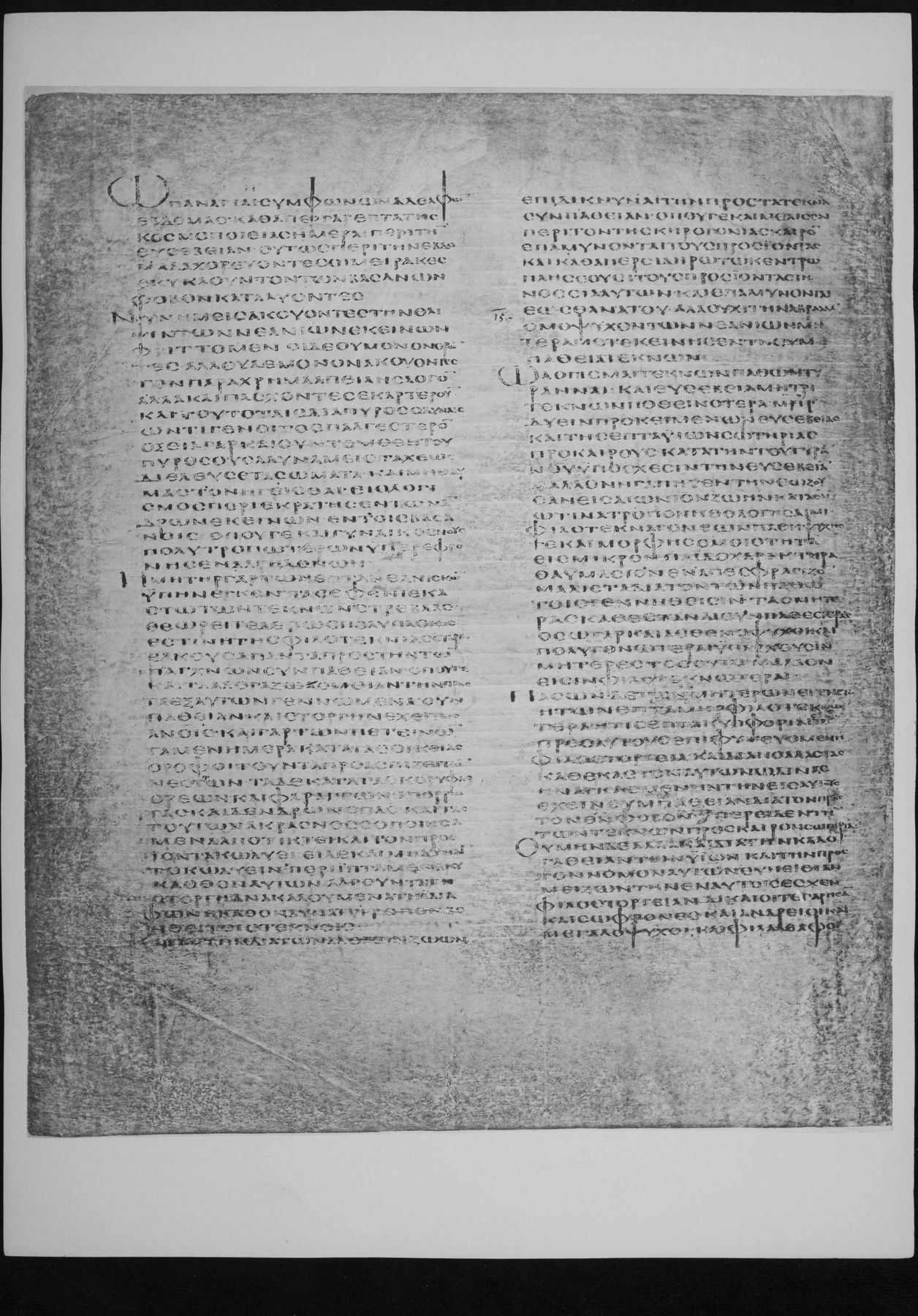
4 Maccabees 15:1-8 is on fol. 520v (full-size facsimile of 1879-83, Internet Archive codex-alexandrinus leaf 1047). The 1957 reduced facsimile prints beneath this page: 4 Maccabees xiv. 7-xv. 10. Checked on the plate: the page begins at the start of 4 Maccabees 14:7 (first words read: Ω ΠΑΝΑΓΙΑ ΣΥΜΦΩΝΩΝ ΑΔΕΛΦΩΝ ΕΒΔΟΜΑΣ ΚΑΘΑΠΕΡ ΓΑΡ ΕΠΤΑ ΤΗΣ ΚΟΣΜΟΠΟΙΙΑΣ ΗΜΕΡΑΙ).
1Ὦ λογισμὲ τέκνων παθῶν τύραννε, καὶ εὐσέβεια μητρὶ τέκνων ποθεινοτέρα. 2μήτηρ δυεῖν προκειμένων, εὐσεβείας, καὶ τῆς ἑπτὰ υἱῶν σωτηρίας προσκαίρου κατὰ τὴν τοῦ τυράννου ὑπόσχεσιν· 3τὴν εὐσέβειαν μᾶλλον ἠγάπησεν τὴν σώζουσαν εἰς αἰώνιον ζωὴν κατὰ θεόν. 4Ὦ τίνα τρόπον ἠθολογήσαιμι φιλότεκνα γονέων πάθη, ψυχῆς τε καὶ μορφῆς ὁμοιότητα εἰς μικρὸν παιδοχαρακτῆρα θαυμάσιον ἐναποσφραγίζον[τα], μάλιστα διὰ τὸ τῶν πατέρων τοῖς γεννηθεῖσιν τὰς μητέρας καθεστάναι συνπαθεστέρας. 5ὅσῳ γὰρ καὶ ἀσθενόψυχοι καὶ πολυγονώτεραι ὑπάρχουσιν μητέρες, τοσούτῳ μᾶλλόν εἰσιν φιλοτεκνώτεραι. 6πασῶν δὲ τῶν μητέρων ἐγένετο ἡ τῶν ἑπτὰ μήτηρ φιλοτεκνωτέρα, ἥτις ἑπτὰ κυοφορίαις τὴν πρὸς αὐτοὺς ἐπιφυτευομένη φιλοστοργίαν, 7καὶ διὰ πολλὰς τὰς καθ᾽ ἕκαστον αὐτῶν ὠδῖνας ἠναγκασμένην τὴν εἰς αὐτοὺς ἔχειν συμπάθειαν, 8διὰ τὸν πρὸς τὸν θεὸν φόβον ὑπερεῖδεν τὴν τῶν τέκνων πρόσκαιρον σωτηρίαν.
1O reasoning of the sons, lord over the passions, and religion more desirable to a mother than progeny! 2The mother, when two things were set before her, religion and the safety of her seven sons for a time, on the conditional promise of a tyrant, 3rather elected the religion which according to God preserves to eternal life. 4O in what way can I describe ethically the affections of parents toward their children, the resemblance of soul and of form engrafted into the small type of a child in a wonderful manner, especially through the greater sympathy of mothers with the feelings of those born of them! 5for by how much mothers are by nature weak in disposition and prolific in offspring, by so much the fonder they are of children. 6And of all mothers the mother of the seven was the fondest of children, who in seven childbirths had deeply engendered love toward them; 7and through her many pains undergone in connection with each one, was compelled to feel sympathy with them; 8yet, through fear of God, she neglected the temporary salvation of her children.
Where on the image
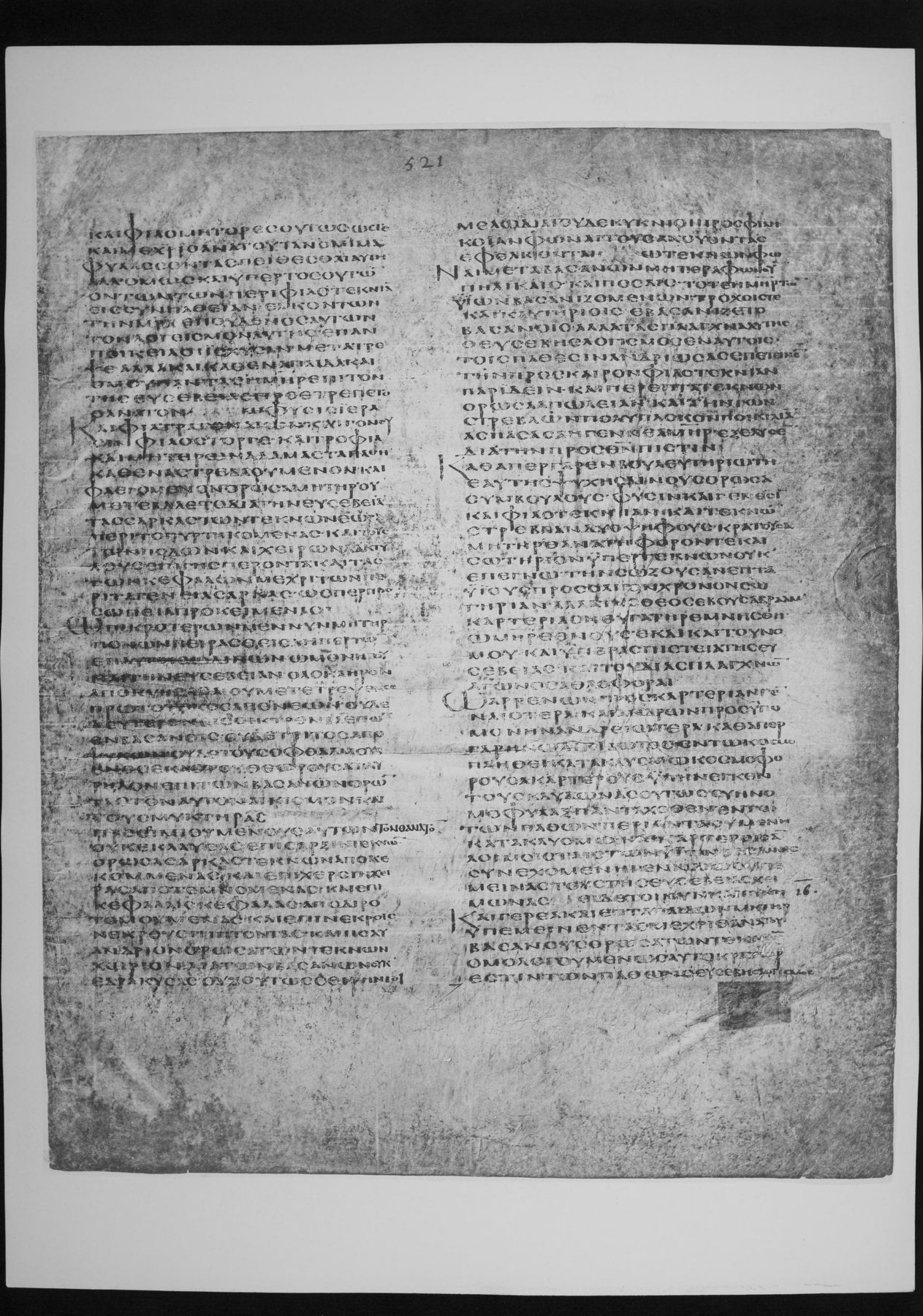
4 Maccabees 15:9-10 is on fol. 520v (full-size facsimile of 1879-83, Internet Archive codex-alexandrinus leaf 1047). The 1957 reduced facsimile prints beneath this page: 4 Maccabees xiv. 7-xv. 10. Checked on the plate: the page begins at the start of 4 Maccabees 14:7 (first words read: Ω ΠΑΝΑΓΙΑ ΣΥΜΦΩΝΩΝ ΑΔΕΛΦΩΝ ΕΒΔΟΜΑΣ ΚΑΘΑΠΕΡ ΓΑΡ ΕΠΤΑ ΤΗΣ ΚΟΣΜΟΠΟΙΙΑΣ ΗΜΕΡΑΙ). 4 Maccabees 15:10-16 is on fol. 521r (full-size facsimile of 1879-83, Internet Archive codex-alexandrinus leaf 1048). The 1957 reduced facsimile prints beneath this page: 4 Maccabees xv. 10-xvi. 1. Checked on the plate: the page begins inside 4 Maccabees 15:10 (first words read: ΚΑΙ ΦΙΛΟΜΗΤΟΡΕΣ ΟΥΤΩΣ ΩΣΤΕ ΚΑΙ ΜΕΧΡΙ ΘΑΝΑΤΟΥ ΤΑ ΝΟΜΙΜΑ).
9οὐ μὴν δέ, ἀλλὰ καὶ διὰ τὴν καλοκἀγαθίαν τῶν υἱῶν καὶ τὴν πρὸς τὸν νόμον αὐτῶν εὐπειθίαν, μείζω τὴν ἐν αὐτοῖς ἔσχεν φιλοστοργίαν. 10δίκαιοί τε γὰρ ἦσαν καὶ σώφρονες καὶ ἀνδρεῖοι καὶ μεγαλόψυχοι καὶ φιλάδελφοι, καὶ φιλομήτορες οὕτως, ὥστε καὶ μέχρι θανάτου τὰ νόμιμα φυλάσσοντας πείθεσθαι αὐτῇ· 11ἀλλ᾽ ὅμως, καίπερ τοσούτων ὄντων τῶν περὶ φιλοτεκνίαν εἰς συνπάθειαν ἑλκόντων τὴν μητέρα, ἐπ᾽ οὐδενὸς αὐτῶν τὸν λογισμὸν αὐτῆς αἱ πανποίκιλοι βάσανοι ἴσχυσαν μετατρέψαι. 12ἀλλὰ καὶ καθ᾽ ἕνα παῖδα καὶ ὁμοῦ πάντας ἡ μήτηρ ἐπὶ τὸν τῆς εὐσεβείας προετρέπετο θάνατον. 13Ὦ φύσις ἱερά, καὶ φίλτρα γονέων καὶ γονεῦσιν φιλόστοργε, καὶ τροφεῖα, καὶ μητέρων ἀδάμαστα πάθη. 14καθ᾽ ἕνα στρεβλούμενον καὶ φλεγομενον ὁρῶσα μήτηρ, οὐ μετεβάλετο διὰ τὴν εὐσέβειαν. 15τὰς σάρκας τῶν τέκνων ἑώρα περὶ τὸ πῦρ τηκομένας, καὶ τοὺς τῶν ποδῶν καὶ χειρῶν δακτύλους ἐπὶ γῆς σπαίροντας, καὶ τὰς τῶν κεφαλῶν μέχρι τῶν περὶ τὰ γένεια σάρκας ὥσπερ προσωπεῖα προκειμένας. 16ὦ πικροτέρων μὲν νῦν μήτηρ πόνων πειρασθεῖσα, ἤπερ τῶν ἐπ᾽ αὐτοῖς ὠδίνων.
9Not but that, on account of the excellent disposition of her sons, and their obedience to the law, her maternal affection toward them was increased. 10For they were both just and temperate, and manly, and high-minded, and fond of their brethren, and so fond of their mother that even unto death they obeyed her by observing the law. 11And yet, though there were so many circumstances connected with love of children to draw on a mother to sympathy, in the case of none of them were the various tortures able to pervert her principle. 12But she inclined each one separately and all together to death for religion. 13O holy nature and parental feeling, and reward of bringing up children, and unconquerable maternal affection! 14At the racking and roasting of each one of them, the observant mother was prevented by religion from changing. 15She beheld her children's flesh dissolving around the fire; and their extremities quivering on the ground, and the flesh of their heads dropped forwards down to their beards, like masks. 16O thou mother, who wast tried at this time with bitterer pangs than those of parturition!
Where on the image
4 Maccabees 15:17-24 is on fol. 521r (full-size facsimile of 1879-83, Internet Archive codex-alexandrinus leaf 1048). The 1957 reduced facsimile prints beneath this page: 4 Maccabees xv. 10-xvi. 1. Checked on the plate: the page begins inside 4 Maccabees 15:10 (first words read: ΚΑΙ ΦΙΛΟΜΗΤΟΡΕΣ ΟΥΤΩΣ ΩΣΤΕ ΚΑΙ ΜΕΧΡΙ ΘΑΝΑΤΟΥ ΤΑ ΝΟΜΙΜΑ).
17ὦ μόνη γύναι τὴν εὐσέβειαν ὁλόκληρον ἀποκυήσασα. 18οὐ μετέτρεψέν σε πρωτότοκος ἀποπνέων· οὐδὲ δεύτερος εἰς οἰκτρὸν βλέπων ἐν βασάνοις· οὐδὲ τρίτος ἀποψύχων. 19οὐδὲ τοὺς ὀφθαλμοὺς ἑνὸς ἑκάστου θεωροῦσα ταυρηδὸν ἐπὶ τῶν βασάνων ὁρῶντας τὸν αὐτὸν αἰκισμόν, καὶ τοὺς μυκτῆρας προσημειουμένους αὐτῶν τὸν θάνατον, οὐκ ἔκλαυσας. 20ἐπὶ σαρξὶν τέκνων ὁρῶσα σάρκας τέκνων ἀποκεκομμένας, καὶ ἐπὶ χερσὶν χεῖρας ἀποτεμνομένας, καὶ ἐπὶ κεφαλαῖς κεφαλὰς ἀποδειροτομουμὲνας, καὶ ἐπὶ νεκροῖς νεκροὺς πίπτοντας, καὶ πολυάνδριον ὁρῶσα τῶν τέκνων χωρίον διὰ τῶν βασάνων, οὐκ ἐδάκρυσας. 21οὐχ οὕτως σειρήνιοι μελῳδίαι οὐδὲ κύκνιοι πρὸς φιληκοίαν φωναὶ τοὺς ἀκούοντας ἐφέλκονται, ὦ τέκνων φωναὶ μετὰ βασάνων μητέρα φωνούντων. 22πηλίκαις καὶ πόσαις τότε ἡ μήτηρ, τῶν υἱῶν βασανιζομένων τροχοῖς τε καὶ καυτηρίοις, ἐβασανίζετο βασάνοις; 23ἀλλὰ τὰ σπλάγχνα αὐτῆς ὁ εὐσεβὴς λογισμὸς ἐν αὐτοῖς τοῖς πάθεσιν ἀνδρειώσας ἐπέτεινεν τὴν πρόσκαιρον φιλοτεκνίαν παριδεῖν. 24καίπερ ἑπτὰ τέκνων ὁρῶσα ἀπώλειαν καὶ τὴν τῶν στρεβλῶν πολύπλοκον ποικιλίαν, ἀσπάσασα ἡ γενναία μήτηρ ἐξέλυσεν διὰ τὴν πρὸς θεὸν πίστιν.
17O thou only woman who hast brought forth perfect holiness! 18Thy first-born, expiring, turned thee not; nor the second, looking miserable in his torments; nor the third, breathing out his soul. 19Nor when thou didst behold the eyes of each of them looking sternly upon their tortures, and their nostrils foreboding death, didst thou weep! 20When thou didst see children's flesh heaped upon children's flesh that had been torn off, hands upon hands cut off, heads decapitated upon heads, dead falling upon the dead, and a choir of children turned through torture into a burying-ground, thou lamentedst not. 21Not so do siren melodies, or songs of swans, attract the hearers to listening, O voices of children calling upon your mother in the midst of torments! 22With what and what manner of torments was the mother herself tortured, as her sons were undergoing the wheel and the fires! 23But religious reasoning, having strengthened her courage in the midst of sufferings, enabled her to forego, for the time, parental love. 24Although beholding the destruction of seven children, the noble mother, after one embrace, stripped off [her feelings] through faith in God.
Where on the image
4 Maccabees 15:25-32 is on fol. 521r (full-size facsimile of 1879-83, Internet Archive codex-alexandrinus leaf 1048). The 1957 reduced facsimile prints beneath this page: 4 Maccabees xv. 10-xvi. 1. Checked on the plate: the page begins inside 4 Maccabees 15:10 (first words read: ΚΑΙ ΦΙΛΟΜΗΤΟΡΕΣ ΟΥΤΩΣ ΩΣΤΕ ΚΑΙ ΜΕΧΡΙ ΘΑΝΑΤΟΥ ΤΑ ΝΟΜΙΜΑ).
25καθάπερ γὰρ ἐν βουλευτηρίῳ τῇ ἑαυτῆς ψυχῇ δεινοὺς ὁρῶσα συμβούλους, φύσιν καὶ γένεσιν καὶ φιλοτεκνίαν καὶ τέκνων στρέβλαν, 26δύο ψήφους κρατοῦσα μήτηρ, θανατηφόρον τε καὶ σωτήριον ὑπὲρ τέκνων, 27οὐκ ἐπέγνω τὴν σώζουσαν ἑπτὰ υἱοὺς πρὸς ὀλίγον χρόνον σωτηρίαν· 28ἀλλὰ τῆς θεοσεβοῦς Ἀβραὰμ καρτερίας ἡ θυγάτηρ ἐμνήσθη. 29Ὦ μήτηρ ἔθνους, ἔκδικε τοῦ νόμου, καὶ ὑπερασπίστεια τῆς εὐσεβείας, καὶ τοῦ διὰ σπλάγχνων ἀγῶνος ἀθλοφόρε. 30ὦ ἀρρένων πρὸς καρτερίαν γενναιοτέρα, καὶ ἀνδρῶν πρὸς ὑπομονὴν ἀνδρειοτέρα. 31καθάπερ γὰρ ἡ Νῶε κιβωτὸς ἐν τῷ κοσμοπληθεῖ κατακλυσμῷ κοσμοφοροῦσα καρτεροὺς ὑπήνεγκεν τοὺς κλύδωνας· 32οὕτως σύ, ἡ νομοφύλαξ, πανταχόθεν ἐν τῷ τῶν παθῶν περιαντλουμένη κατακλυσμῷ, καὶ καρτεροῖς ἀνέμοις ταῖς τῶν υἱῶν βασάνοις συνεχομένη, γενναίως ὑπέμεινας τοὺς τῆς εὐσεβείας χειμῶνας.
25For just as in a council-room, beholding in her own soul vehement counsellors, nature and parentage and love of her children, and the racking of her children, 26she holding two votes, one for the death, the other for the preservation of her children, 27did not lean to that which would have saved her children for the safety of a brief space. 28But this daughter of Abraham remembered his holy fortitude. 29O mother of a nation, avenger of the law, and defender of religion, and prime bearer in the battle of the affections! 30O thou nobler in endurance than males, and more manly than men in patience! 31For as the ark of Noah, bearing the world in the world-filling flood, bore up against the waves, 32so thou, the guardian of the law, when surrounded on every side by the flood of passions, and straitened by violent storms which were the torments of thy children, didst bear up nobly against the storms against religion.
Cite
Sources
- Source: Codex Alexandrinus (British Library Royal MS 1 D. VI) via the British Museum photographic facsimiles of 1879-83 and 1957 (Internet Archive) + Swete's Septuagint + Brenton's English (holding institution)
- Critical edition: H. B. Swete, The Old Testament in Greek according to the Septuagint (1909)
← previous · → next · v cycle view · l back to library