4 Maccabees, Chapter 16 (Codex Alexandrinus)
Introduction
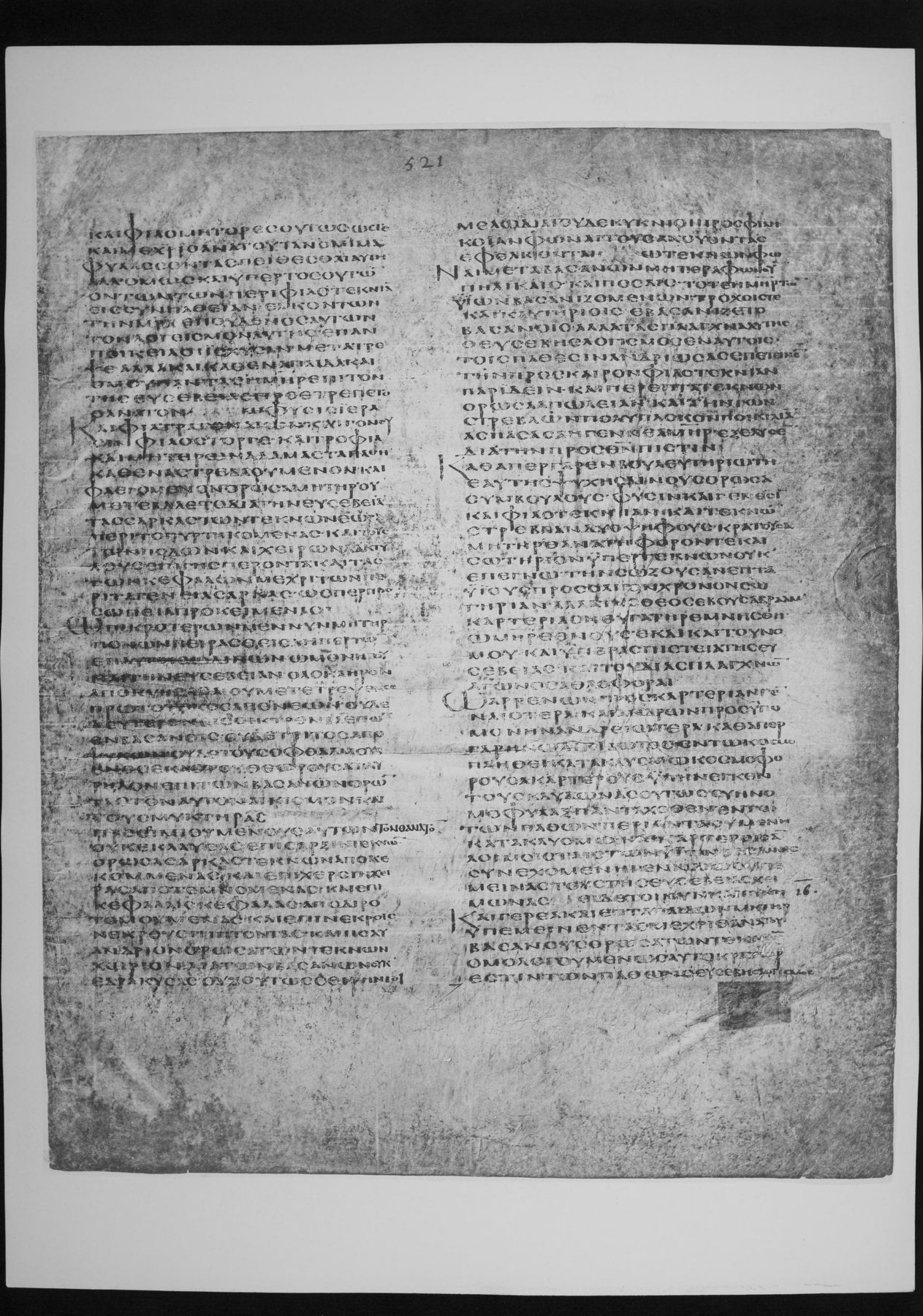
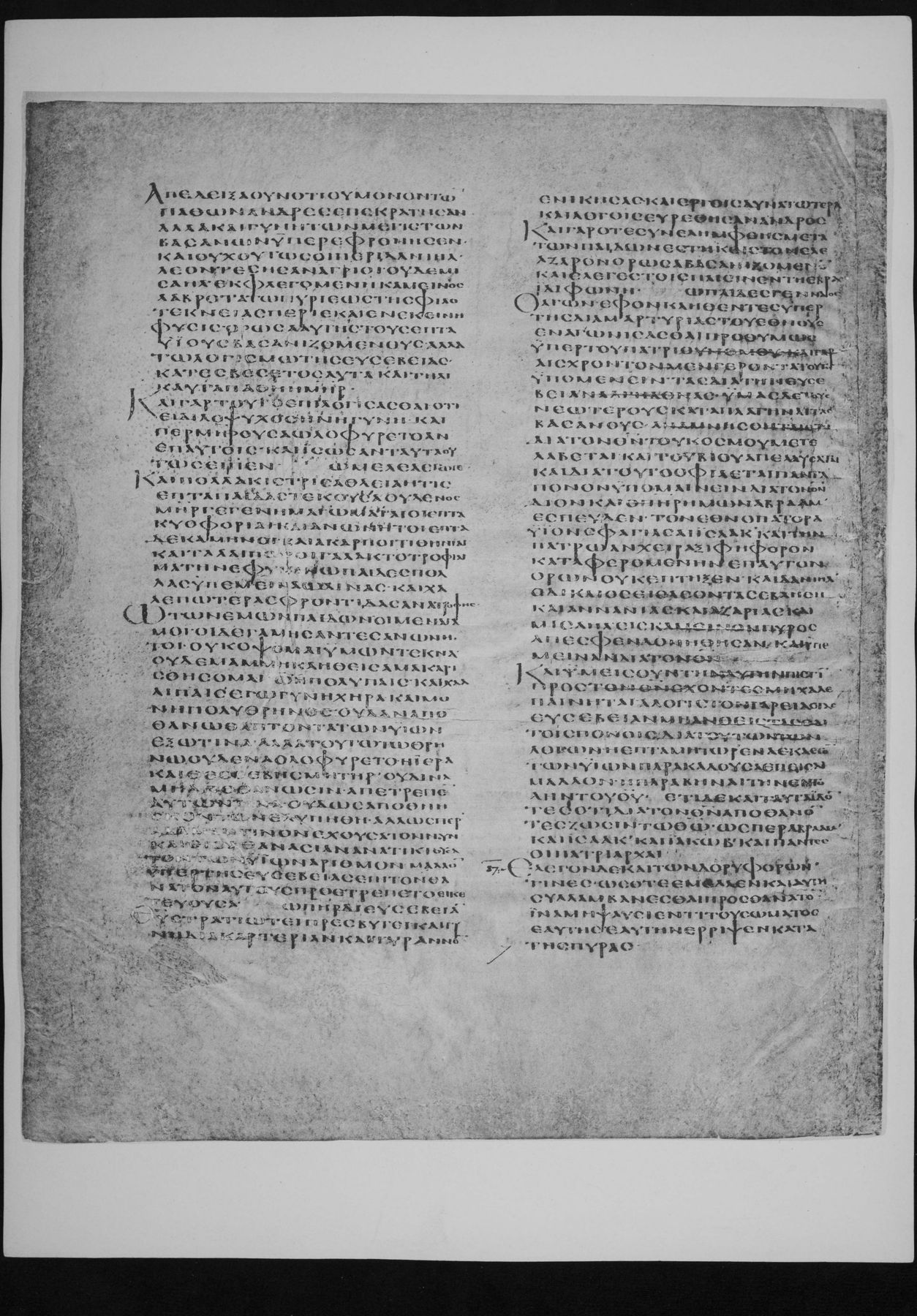
4 Maccabees 16 in the Greek Old Testament (the Septuagint) as written in Codex Alexandrinus, a Greek Bible copied in the fifth century, probably in Egypt, and now in the British Library (Royal MS 1 D. VI, the second of its four volumes). It is one of the three great early codices of the whole Greek Bible, with Codex Vaticanus and Codex Sinaiticus.
This entry meets the strict three-criteria standard of the Theosis Library:
- Manuscript scan: the pages of Codex Alexandrinus carrying this chapter (fol. 521r, fol. 521v), from the full-size photographic (autotype) facsimile published by the British Museum in 1879-1883, as digitised on the Internet Archive. The verse range of every page comes from the reduced photographic facsimile of 1957, which prints it beneath each plate, and the opening words of every page were read on the plate to confirm the page and the verse it begins with. Each section links to the page or pages that hold its verses. Folio numbers are those written at the head of each leaf and visible on the plates.
- Original text: Swete's edition, which in the books of Maccabees prints the text of Codex Alexandrinus itself (Codex Vaticanus does not contain these books), with the readings of other manuscripts in his apparatus. Swete adds accents, breathings and punctuation and expands the abbreviated sacred names, so the plate shows the same text in unaccented capitals.
- English translation: Sir Lancelot C. L. Brenton, The Septuagint Version of the Old Testament (1844; 1851 edition), a translation of the Greek, public domain, from the eBible.org text.
How was this verified? (Provenance)
Where on the image
4 Maccabees 16:1 is on fol. 521r (full-size facsimile of 1879-83, Internet Archive codex-alexandrinus leaf 1048). The 1957 reduced facsimile prints beneath this page: 4 Maccabees xv. 10-xvi. 1. Checked on the plate: the page begins inside 4 Maccabees 15:10 (first words read: ΚΑΙ ΦΙΛΟΜΗΤΟΡΕΣ ΟΥΤΩΣ ΩΣΤΕ ΚΑΙ ΜΕΧΡΙ ΘΑΝΑΤΟΥ ΤΑ ΝΟΜΙΜΑ). 4 Maccabees 16:2-8 is on fol. 521v (full-size facsimile of 1879-83, Internet Archive codex-alexandrinus leaf 1049). The 1957 reduced facsimile prints beneath this page: 4 Maccabees xvi. 2-xvii. 1. Checked on the plate: the page begins at the start of 4 Maccabees 16:2 (first words read: ΑΠΕΔΕΙΞΑ ΟΥΝ ΟΤΙ ΟΥ ΜΟΝΟΝ ΤΩΝ ΠΑΘΩΝ ΑΝΔΡΕΣ ΕΠΕΚΡΑΤΗΣΑΝ ΑΛΛΑ ΚΑΙ ΓΥΝΗ ΤΩΝ ΜΕΓΙΣΤΩΝ ΒΑΣΑΝΩΝ ΥΠΕΡΕΦΡΟΝΗΣΕΝ).
1Εἰ δὲ τοίνυν καὶ γυνὴ καὶ γεραιὰ καὶ ἑπτὰ παίδων μήτηρ ὑπέμεινεν τὰς μέχρι θανάτου βασάνους ὁρῶσα τῶν τέκνων· ὁμολογουμένως αὐτοκράτωρ ἐστὶν τῶν παθῶν ὁ εὐσεβὴς λογισμός. 2ἀπέδειξα οὖν ὅτι οὐ μόνον τῶν παθῶν ἄνδρες ἐπεκράτησαν, ἀλλὰ καὶ γυνὴ τῶν μεγίστων βασάνων ὑπερεφρόνησεν. 3καὶ οὐχ οὕτως οἱ περὶ Δανιὴλ λέοντες ἦσαν ἄγριοι, οὐδὲ Μισαὴλ ἐκφλεγομένη κάμινος λαβροτάτῳ πυρί, ὡς τῆς φιλοτεκνίας περιέκαιεν ἐκείνη φύσις, ὁρῶσα αὑτῆς τοὺς ἑπτὰ υἱοὺς βασανιζομένους. 4ἀλλὰ τῷ λογισμῷ τῆς εὐσεβείας κατέσβεσε τοσαῦτα καὶ τηλικαῦτα πάθη ἡ μήτηρ. 5καὶ γὰρ τοῦτο ἐπιλογίσασθαι, ὅτι εἰ δειλόψυχος ἦν ἡ γυνή, καίπερ μήτηρ οὖσα, ὠλοφύρετο ἂν ἐπ᾽ αὐτοῖς· καὶ ἴσως ἂν ταῦτα οὕτως εἶπεν 6Ὦ μελέα ἔγωγε καὶ πολλάκις τρισαθλία, ἥτις ἑπτὰ παῖδας τεκοῦσα, οὐδενὸς μήτηρ γεγένημαι. 7ὦ μάταιοι ἑπτὰ κυοφορίαι, καὶ ἀνόνητοι ἑπτὰ δεκάμηνοι, καὶ ἄκαρποι τιθηνίαι, καὶ ταλαίπωροι γαλακτοτροφίαι. 8μάτην ἐφ᾽ ὑμῖν, ὦ παῖδες, πολλὰς ὑπέμεινα ὠδῖνας καὶ χαλεπωτέρας φροντίδας ἀνατροφῆς.
1If, then, even a woman, and that an aged one, and the mother of seven children, endured to see her children's torments even unto death, confessedly religious reasoning is master even of the passions. 2I have proved, then, that not only men have obtained the mastery of their passions, but also that a woman despised the greatest torments. 3And not so fierce were the lions round Daniel, nor the furnace of Misael burning with most vehement fire, as that natural love of children burned within her, when she beheld her seven sons tortured. 4But with the reasoning of religion the mother quenched passions so great and powerful. 5For we must consider also this: that, had the woman been faint-hearted, as being their mother, she would have lamented over them; and perhaps might have spoken thus: 6Ah! wretched I, and many times miserable; who having born seven sons, have become the mother of none. 7O seven useless childbirths, and seven profitless periods of labour, and fruitless givings of suck, and miserable nursings at the breast. 8Vainly, for your sakes, O sons, have I endured many pangs, and the more difficult anxieties of rearing.
Where on the image
4 Maccabees 16:9-16 is on fol. 521v (full-size facsimile of 1879-83, Internet Archive codex-alexandrinus leaf 1049). The 1957 reduced facsimile prints beneath this page: 4 Maccabees xvi. 2-xvii. 1. Checked on the plate: the page begins at the start of 4 Maccabees 16:2 (first words read: ΑΠΕΔΕΙΞΑ ΟΥΝ ΟΤΙ ΟΥ ΜΟΝΟΝ ΤΩΝ ΠΑΘΩΝ ΑΝΔΡΕΣ ΕΠΕΚΡΑΤΗΣΑΝ ΑΛΛΑ ΚΑΙ ΓΥΝΗ ΤΩΝ ΜΕΓΙΣΤΩΝ ΒΑΣΑΝΩΝ ΥΠΕΡΕΦΡΟΝΗΣΕΝ).
9ὦ τῶν ἐμῶν παίδων, οἱ μὲν ἄγαμοι, οἱ δὲ γαμήσαντες ἀνόνητοι, οὐκ ὄψομαι ὑμῶν τέκνα, οὐδὲ μάμμη κληθεῖσα μακαρισθήσομαι. 10ὦ ἡ πολύπαις καὶ καλλίπαις ἐγὼ γυνὴ χήρα καὶ μόνη πολύθρηνος· 11οὐδ᾽ ἂν ἀποθάνω, θάπτοντα τῶν υἱῶν ἕξω τινά. ἀλλὰ τούτῳ τῷ θρήνῳ οὐδένα ὀλοφύρετο ἡ ἱερὰ καὶ θεοσεβὴς μήτηρ, 12οὐδ᾽ ἵνα μὴ ἀποθάνωσιν ἀπέτρεπεν αὐτῶν τινα, οὐδ᾽ ὡς ἀποθνησκόντων ἐλυπήθη. 13ἀλλ᾽ ὥσπερ ἀδαμάντινον ἔχουσα τὸν νοῦν, καὶ εἰς ἀθανασίαν ἀνατίκτουσα τὸν τῶν υἱῶν ἀριθμόν, μᾶλλον ὑπὲρ τῆς εὐσεβείας ἐπὶ τὸν θάνατον αὐτοὺς προετρέπετο ἱκετεύουσα. 14Ὦ μήτηρ δι᾽ εὐσέβειαν θεοῦ στρατιῶτι, πρεσβῦτι καὶ γυνή, διὰ καρτερίαν καὶ τύραννον ἐνίκησας, καὶ ἔργοις δυνατωτέρα καὶ λόγοις εὑρέθης ἂν ἀνδρός. 15καὶ γὰρ ὅτε συνελήμφθης μετὰ τῶν παίδων, εἱστήκεις τὸν Ἐλεάζαρον ὁρῶσα βασανιζόμενον, καὶ ἔλεγες τοῖς παισὶν ἐν τῇ Ἐβραΐδι φωνῇ 16Ὦ παῖδες, γενναῖος ὁ ἀγών· ἐφ᾽ ὃν κληθέντες ὑπὲρ τῆς διαμαρτυρίας τοῦ ἔθνους, ἐναγωνίσασθε προθύμως ὑπὲρ τοῦ πατρίου νόμου.
9Alas, of my children, some of you unmarried, and some who have married to no profit, I shall not see your children, nor be felicitated as a grandmother. 10Ah, that I who had many and fair children, should be a lone widow full of sorrows! 11Nor, should I die, shall I have a son to bury me. 12Nor did she divert any of them from death, nor grieve for them as for the dead. 13But as one possessed with an adamantine mind, and as one bringing forth again her full number of sons to immortality, she rather with supplications exhorted them to death in behalf of religion. 14O woman, soldier of God for religion, thou, aged and a female, hast conquered through endurance even a tyrant; and though but weak, hast been found more powerful in deeds and words. 15For when thou wast seized along with thy children, thou stoodest looking upon Eleazar in torments, and saidst to thy sons in the Hebrew tongue, 16O sons, noble is the contest; to which you being called as a witness for the nation, strive zealously for the laws of your country.
Where on the image
4 Maccabees 16:17-25 is on fol. 521v (full-size facsimile of 1879-83, Internet Archive codex-alexandrinus leaf 1049). The 1957 reduced facsimile prints beneath this page: 4 Maccabees xvi. 2-xvii. 1. Checked on the plate: the page begins at the start of 4 Maccabees 16:2 (first words read: ΑΠΕΔΕΙΞΑ ΟΥΝ ΟΤΙ ΟΥ ΜΟΝΟΝ ΤΩΝ ΠΑΘΩΝ ΑΝΔΡΕΣ ΕΠΕΚΡΑΤΗΣΑΝ ΑΛΛΑ ΚΑΙ ΓΥΝΗ ΤΩΝ ΜΕΓΙΣΤΩΝ ΒΑΣΑΝΩΝ ΥΠΕΡΕΦΡΟΝΗΣΕΝ).
17καὶ γὰρ αἰσχρὸν τὸν μὲν γέροντα τοῦτον ὑπομένειν τὰς διὰ τὴν εὐσέβειαν ἀλγηδόνας, ὑμᾶς δὲ τοὺς νεωτέρους καταπλαγῆναι τὰς βασάνους. 18ἀναμνήσθητε ὅτι διὰ τὸν θεὸν τοῦ κόσμου μετελάβετε, καὶ τοῦ βίου ἀπελαύσατε· 19καὶ διὰ τοῦτο ὀφίλετε πάντα πόνον ὑπομένειν διὰ τὸν θεόν. 20δι᾽ ὃν καὶ ὁ πατὴρ ἡμῶν Ἀβραὰμ ἔσπευδεν τὸν ἐθνοπάτορα υἱὸν σφαγιάσαι Ἰσαάκ, καὶ τὴν πατρῴαν χεῖρα ξιφηφόρον καταφερομένην ἐπ᾽ αὐτὸν ὁρῶν οὐκ ἔπτηξεν. 21καὶ Δανιὴλ ὁ δίκαιος εἰς λέοντας ἐβλήθη· καὶ Ἁνανίας καὶ Ἀζαρίας καὶ Μισαὴλ εἰς κάμινον πυρὸς ἀπεσφενδονήθησαν, καὶ ὑπέμειναν διὰ τὸν θεόν. 22καὶ ὑμεῖς οὖν τὴν αὐτὴν πίστιν πρὸς τὸν θεὸν ἔχοντες, μὴ χαλεπαίνητε· 23ἀλόγιστον γὰρ εἰδότας εὐσέβειαν μὴ ἀνθίστασθαι τοῖς πόνοις. 24Διὰ τούτων τῶν λόγων ἡ ἑπταμήτωρ ἕνα ἕκαστον τῶν υἱῶν παρακαλοῦσα ἔπεισε μᾶλλον ἀποθανεῖν, ἢ παραβῆναι τὴν ἐντολὴν τοῦ θεοῦ· 25ἔτι δὲ καὶ ταῦτα ἰδόντες ὅτι διὰ τὸν θεὸν ἀποθανόντες ζῶσιν τῷ θεῷ, ὥσπερ Ἀβραὰμ καὶ Ἰσαὰκ καὶ Ἰακώβ, καὶ πάντες οἱ πατριάρχαι.
17For it were disgraceful that this old man should endure pains for the sake of righteousness, and that you who are younger should be afraid of the tortures. 18Remember that through God ye obtained existence, and have enjoyed it. 19And on this account ye ought to bear every affliction because of God. 20For whom also our father Abraham was forward to sacrifice Isaac our progenitor, and shuddered not at the sight of his own paternal hand descending down with the sword upon him. 21And the righteous Daniel was cast unto the lions; and Ananias, and Azarias, and Misael, were slung out into a furnace of fire; yet they endured through God. 22You, then, having the same faith towards God, be not troubled. 23For it is unreasonable that they who know religion should not stand up against troubles. 24With these arguments, the mother of seven, exhorting each of her sons, over-persuaded them from transgressing the commandment of God. 25And they saw this, too, that they who die for God, live to God; as Abraham, and Isaac, and Jacob, and all the patriarchs.
Cite
Sources
- Source: Codex Alexandrinus (British Library Royal MS 1 D. VI) via the British Museum photographic facsimiles of 1879-83 and 1957 (Internet Archive) + Swete's Septuagint + Brenton's English (holding institution)
- Critical edition: H. B. Swete, The Old Testament in Greek according to the Septuagint (1909)
← previous · → next · v cycle view · l back to library