Amos, Chapter 7 (Codex Alexandrinus)
Introduction
Amos 7 in the Greek Old Testament (the Septuagint) as written in Codex Alexandrinus, a Greek Bible copied in the fifth century, probably in Egypt, and now in the British Library (Royal MS 1 D. VI, the second of its four volumes). It is one of the three great early codices of the whole Greek Bible, with Codex Vaticanus and Codex Sinaiticus.
This entry meets the strict three-criteria standard of the Theosis Library:
- Manuscript scan: the pages of Codex Alexandrinus carrying this chapter (fol. 283v, fol. 284r), from the full-size photographic (autotype) facsimile published by the British Museum in 1879-1883, as digitised on the Internet Archive. The verse range of every page comes from the reduced photographic facsimile of 1936, which prints it beneath each plate, and the opening words of every page were read on the plate to confirm the page and the verse it begins with. Each section links to the page or pages that hold its verses. Folio numbers are those written at the head of each leaf and visible on the plates.
- Original text: Swete's edition, which here prints the text of Codex Vaticanus (Vat. gr. 1209), the base of his edition, and gives the readings of Alexandrinus only in his apparatus. The Greek column is therefore Vaticanus' text; where Alexandrinus differs, the plate shows what Alexandrinus reads.
- English translation: Sir Lancelot C. L. Brenton, The Septuagint Version of the Old Testament (1844; 1851 edition), a translation of the Greek, public domain, from the eBible.org text.
How was this verified? (Provenance)
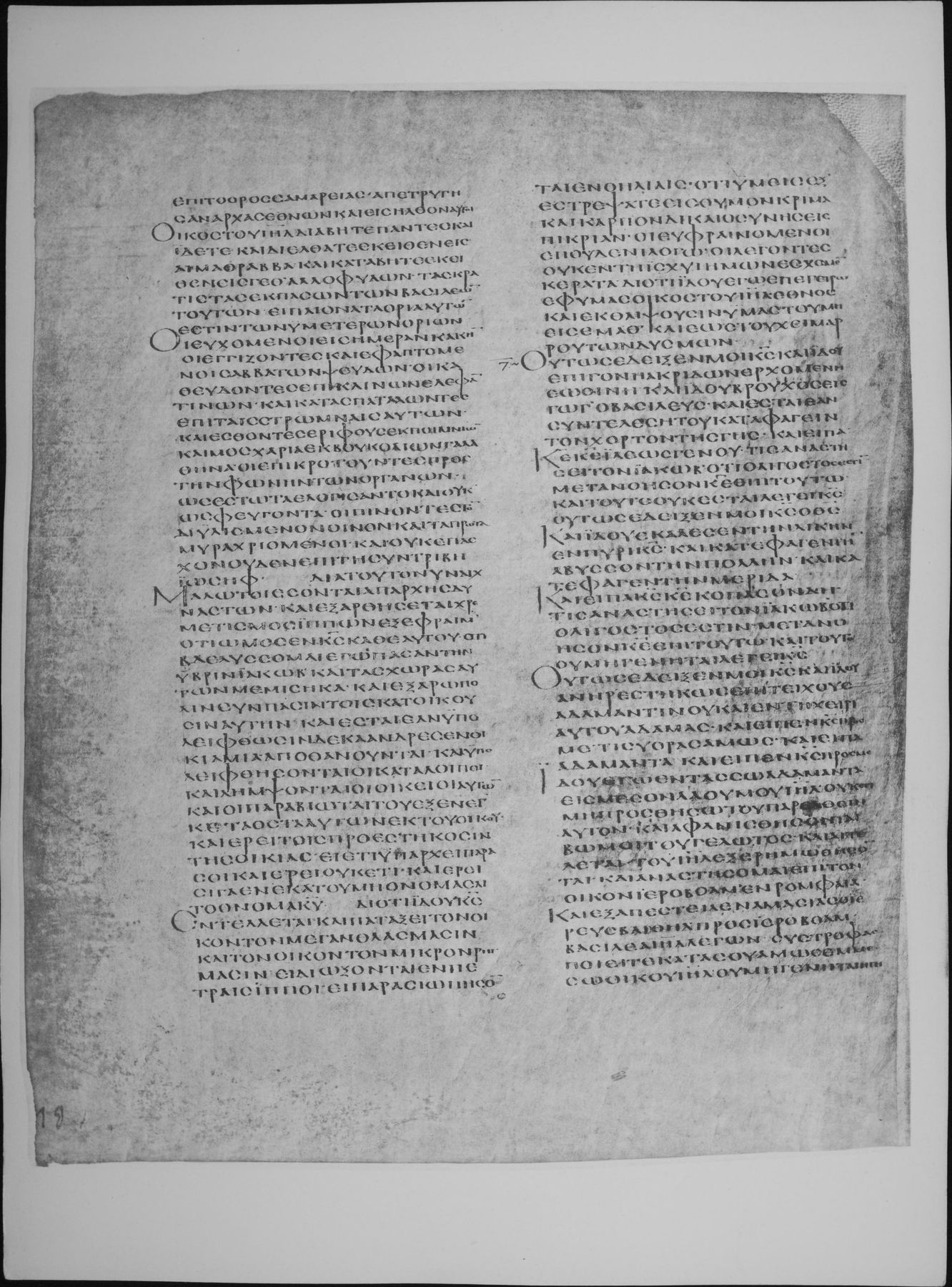
Where on the image
Amos 7:1-8 is on fol. 283v (full-size facsimile of 1879-83, Internet Archive codex-alexandrinus leaf 591). The 1936 reduced facsimile prints beneath this page: Amos vi. 1-vii. 10. Checked on the plate: the page begins inside Amos 6:1 (first words read: ΕΠΙ ΤΟ ΟΡΟΣ ΣΑΜΑΡΕΙΑΣ ΑΠΕΤΡΥΓΗΣΑΝ ΑΡΧΑΣ ΕΘΝΩΝ ΚΑΙ ΕΙΣΗΛΘΟΝ ΑΥΤΟΙ ΟΙΚΟΣ ΤΟΥ ΙΣΡΑΗΛ).
1Οὕτως ἔδειξέν μοι Κύριος ὁ θεός, καὶ ἰδοὺ ἐπιγονὴ ἀκρίδων ἐρχομένη ἑωθινή, καὶ ἰδοὺ βροῦχος εἷς Γὼγ ὁ Βασιλεύς. 2καὶ ἔσται ἐὰν συντελέσῃ τοῦ καταφαγεῖν τὸν χόρτον τῆς γῆς, καὶ εἶπα Κύριε Κύριε, ἵλεως γενοῦ· τίς ἀναστήσει τὸν Ἰακώβ; ὅτι ὀλιγοστός ἐστιν· 3μετανόησον, Κύριε, ἐπὶ τούτῳ. Καὶ τοῦτο οὐκ ἔσται, λέγει Κύριος. 4Οὕτως ἔδειξέν μοι Κύριος, καὶ ἰδοὺ ἐκάλεσεν τὴν δίκην ἐν πυρὶ Κύριος, καὶ κατέφαγε τὴν ἄβυσσον τὴν πολλήν, καὶ κατέφαγεν τὴν μερίδα Κυρίου. 5καὶ εἶπα Κύριε, κόπασον δή· τίς ἀναστήσει τὸν Ἰακώβ; ὅτι ὀλιγοστός ἐστιν· 6μετανόησον, Κύριε, ἐπὶ τούτῳ. Καὶ τοῦτο οὐ μὴ γένηται, λέγει Κύριος. 7Οὕτως ἔδειξέν μοι Κύριος, καὶ ἰδοὺ ἑστηκὼς ἐπὶ τείχους ἀδαμαντίνου, καὶ ἐν τῇ χειρὶ αὐτοῦ ἀδάμας. 8καὶ εἶπεν Κύριος πρὸς μέ Τί σὺ ὁρᾷς, Ἀμώς; καὶ εἶπα Ἀδάμαντα. καὶ εἶπεν Κύριος πρὸς μέ Ἰδοὺ ἐγὼ ἐντάσσω ἀδάμαντα ἐν μέσῳ λαοῦ μου Ἰσραήλ, οὐκέτι μὴ προσθῶ τοῦ παρελθεῖν αὐτόν·
1Thus has the Lord God shewed me; and, behold, a swarm of locusts coming from the east; and, behold, one caterpillar, king Gog. 2And it came to pass when he had finished devouring the grass of the land, that I said, Lord God, be merciful; who shall raise up Jacob? for he is small in number. 3Repent, O Lord, for this. And this shall not be, saith the Lord. 4Thus has the Lord shewed me; and, behold, the Lord called for judgment by fire, and it devoured the great deep, and devoured the Lord's portion. 5Then I said, O Lord, cease, I pray thee: who shall raise up Jacob? for he is small in number. Repent, O Lord, for this. 6This also shall not be, saith the Lord. 7Thus the Lord shewed me; and behold, he stood upon a wall of adamant, and in his hand was an adamant. 8And the Lord said to me, What seest thou, Amos? And I said, An adamant. And the Lord said to me, Behold, I appoint an adamant in the midst of my people Israel: I will not pass by them any more.
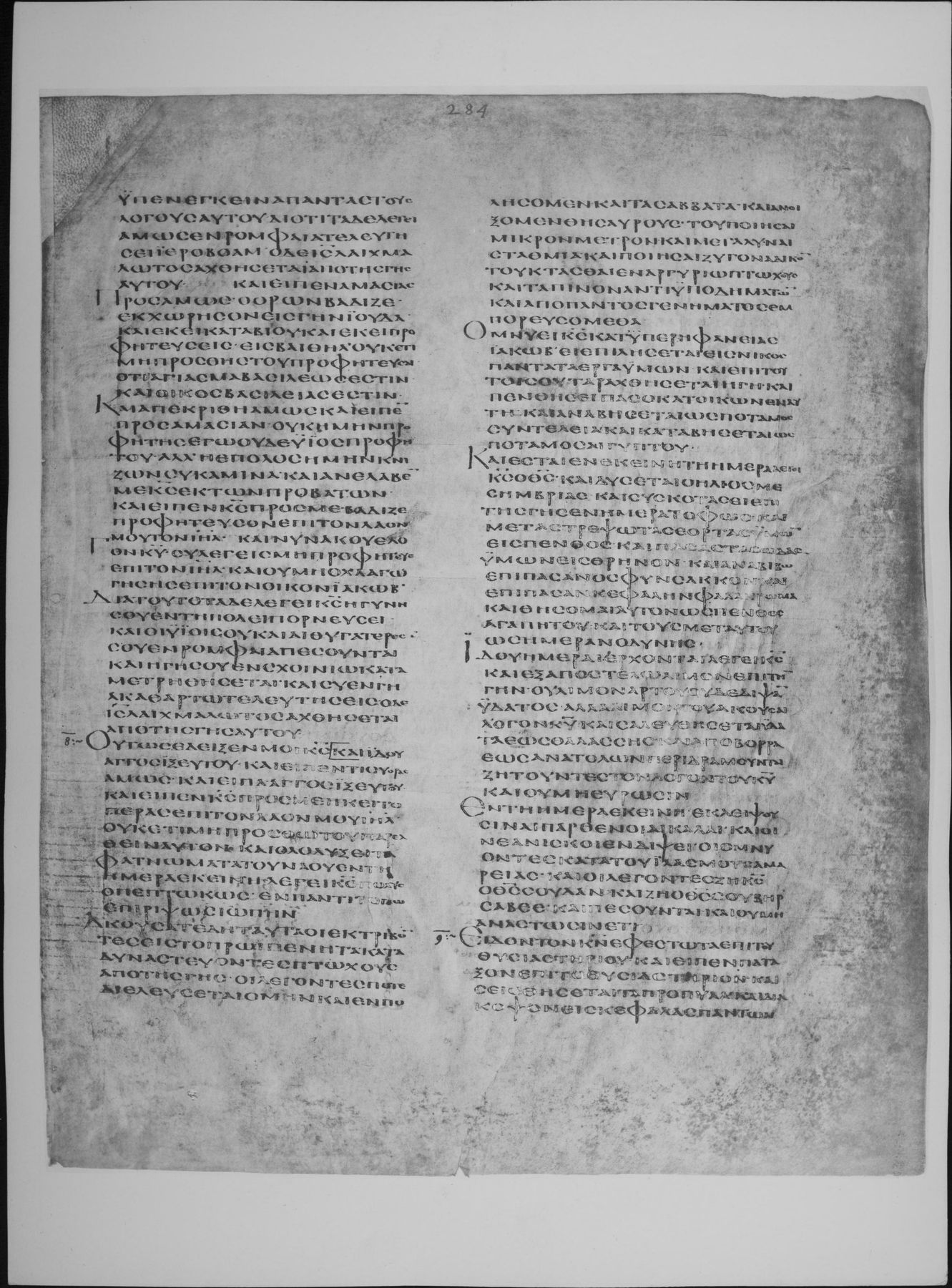
Where on the image
Amos 7:9-10 is on fol. 283v (full-size facsimile of 1879-83, Internet Archive codex-alexandrinus leaf 591). The 1936 reduced facsimile prints beneath this page: Amos vi. 1-vii. 10. Checked on the plate: the page begins inside Amos 6:1 (first words read: ΕΠΙ ΤΟ ΟΡΟΣ ΣΑΜΑΡΕΙΑΣ ΑΠΕΤΡΥΓΗΣΑΝ ΑΡΧΑΣ ΕΘΝΩΝ ΚΑΙ ΕΙΣΗΛΘΟΝ ΑΥΤΟΙ ΟΙΚΟΣ ΤΟΥ ΙΣΡΑΗΛ). Amos 7:10-17 is on fol. 284r (full-size facsimile of 1879-83, Internet Archive codex-alexandrinus leaf 592). The 1936 reduced facsimile prints beneath this page: Amos vii. 10-ix. 1. Checked on the plate: the page begins inside Amos 7:10 (first words read: ΥΠΕΝΕΓΚΕΙΝ ΑΠΑΝΤΑΣ ΤΟΥΣ ΛΟΓΟΥΣ ΑΥΤΟΥ ΔΙΟΤΙ ΤΑΔΕ ΛΕΓΕΙ ΑΜΩΣ ΕΝ ΡΟΜΦΑΙΑ ΤΕΛΕΥΤΗΣΕΙ ΙΕΡΟΒΟΑΜ).
9καὶ ἀφανισθήσονται βωμοὶ τοῦ γέλωτος, καὶ αἱ τελεταὶ τοῦ Ἰσραὴλ ἐρημωθήσονται, καὶ ἀναστήσομαι ἐπὶ τὸν οἶκον Ἰεροβοὰμ ἐν ῥομφαίᾳ. 10Καὶ ἐξαπέστειλεν Ἀμασίας ὁ ἱερεὺς Βαιθὴλ πρὸς Ἰεροβοὰμ βασιλέα Ἰσραὴλ λέγων Συστροφὰς ποιεῖται κατὰ σοῦ Ἀμὼς ἐν μέσῳ οἴκου Ἰσραήλ· οὐ μὴ δύνηται ἡ γῆ ὑπενεγκεῖν πάντας τοὺς λόγους αὐτοῦ. 11διότι τάδε λέγει Ἀμώς Ἐν ῥομφαίᾳ τελευτήσει Ἰεροβοάμ, ὁ δὲ Ἰσραὴλ αἰχμάλωτος ἀχθήσεται ἀπὸ τῆς γῆς αὐτοῦ. 12καὶ εἶπεν Ἀμασίας πρὸς Ἀμώς Ὁ ὁρῶν, βάδιζε, ἐκχώρησον σὺ εἰς γῆν Ἰούδα, καὶ ἐκεῖ καταβίου, καὶ ἐκεῖ προφητεύσεις· 13εἰς δὲ Βαιθὴλ οὐκέτι προσθήσεις τοῦ προφητεῦσαι, ὅτι ἁγίασμα βασιλέως ἐστίν, καὶ οἶκος βασιλείας ἐστίν. 14καὶ ἀπεκρίθη Ἀμὼς καὶ εἶπεν πρὸς Ἀμασίαν Οὐκ ἤμην προφήτης ἐγὼ οὐδὲ υἱὸς προφήτου, ἀλλ᾽ ἢ αἰπόλος ἤμην καὶ κνίζων συκάμινα. 15καὶ ἀνέλαβέν με Κύριος ἐκ τῶν προβάτων, καὶ εἶπεν Κύριος πρὸς μέ Βάδιζε, προφήτευσον ἐπὶ τὸν λαόν μου Ἰσραήλ. 16καὶ νῦν ἄκουε λόγον Κυρίου Σὺ λέγεις Μὴ προφήτευε ἐπὶ τὸν Ἰσραήλ, καὶ οὐ μὴ ὀχλαγωγήσεις ἐπὶ τὸν οἶκον Ἰακώβ· 17διὰ τοῦτο τάδε λέγει Κύριος Ἡ γυνή σου ἐν τῇ πόλει πορνεύσει, καὶ οἱ υἱοί σου καὶ αἱ θυγατέρες σου ἐν ῥομφαίᾳ πεσοῦνται, καὶ ἡ γῆ σου ἐν σχοινίῳ καταμετρηθήσεται, καὶ σὺ ἐν γῇ ἀκαθάρτῳ τελευτήσεις, ὁ δὲ Ἰσραὴλ αἰχμάλωτος ἀχθήσεται ἀπὸ τῆς γῆς αὐτοῦ.
9And the joyful altars shall be abolished, and the sacrifices of Israel shall be set aside; and I will rise up against the house of Jeroboam with the sword. 10Then Amasias the priest of Bæthel sent to Jeroboam king of Israel, saying, Amos is forming conspiracies against thee in the midst of the house of Israel: the land will be utterly unable to bear all his words. 11For thus says Amos, Jeroboam shall die by the sword, and Israel shall be led away captive from his land. 12And Amasias said to Amos, Go, seer, remove thou into the land of Juda, and live there, and thou shalt prophesy there: 13but thou shalt no longer prophesy at Bæthel: for it is the king's sanctuary, and it is the royal house. 14And Amos answered, and said to Amasias, I was not a prophet, nor the son of a prophet; but I was a herdman, and a gatherer of sycamore fruits. 15And the Lord took me from the sheep, and the Lord said to me, Go, and prophesy to my people Israel. 16And now hear the word of the Lord: Thou sayest, Prophesy not to Israel, and raise not a tumult against the house of Jacob. 17Therefore thus saith the Lord; Thy wife shall be a harlot in the city, and thy sons and thy daughters shall fall by the sword, and thy land shall be measured with the line; and thou shalt die in an unclean land; and Israel shall be led captive out of his land. Thus has the Lord God shewed me.
Cite
Sources
- Source: Codex Alexandrinus (British Library Royal MS 1 D. VI) via the British Museum photographic facsimiles of 1879-83 and 1936 (Internet Archive) + Swete's Septuagint + Brenton's English (holding institution)
- Critical edition: H. B. Swete, The Old Testament in Greek according to the Septuagint (1909)
← previous · → next · v cycle view · l back to library