Amos, Chapter 9 (Codex Alexandrinus)
Introduction
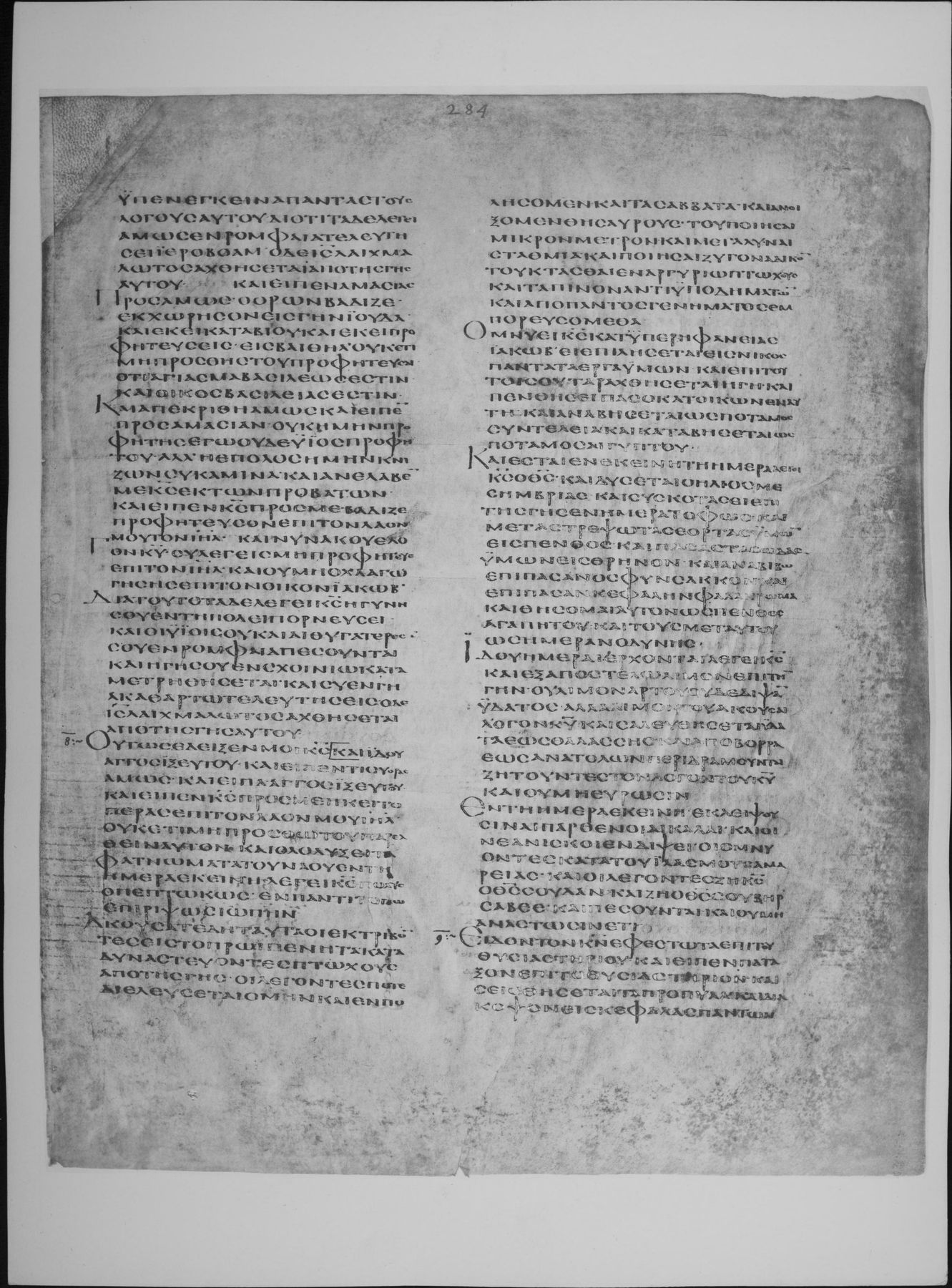
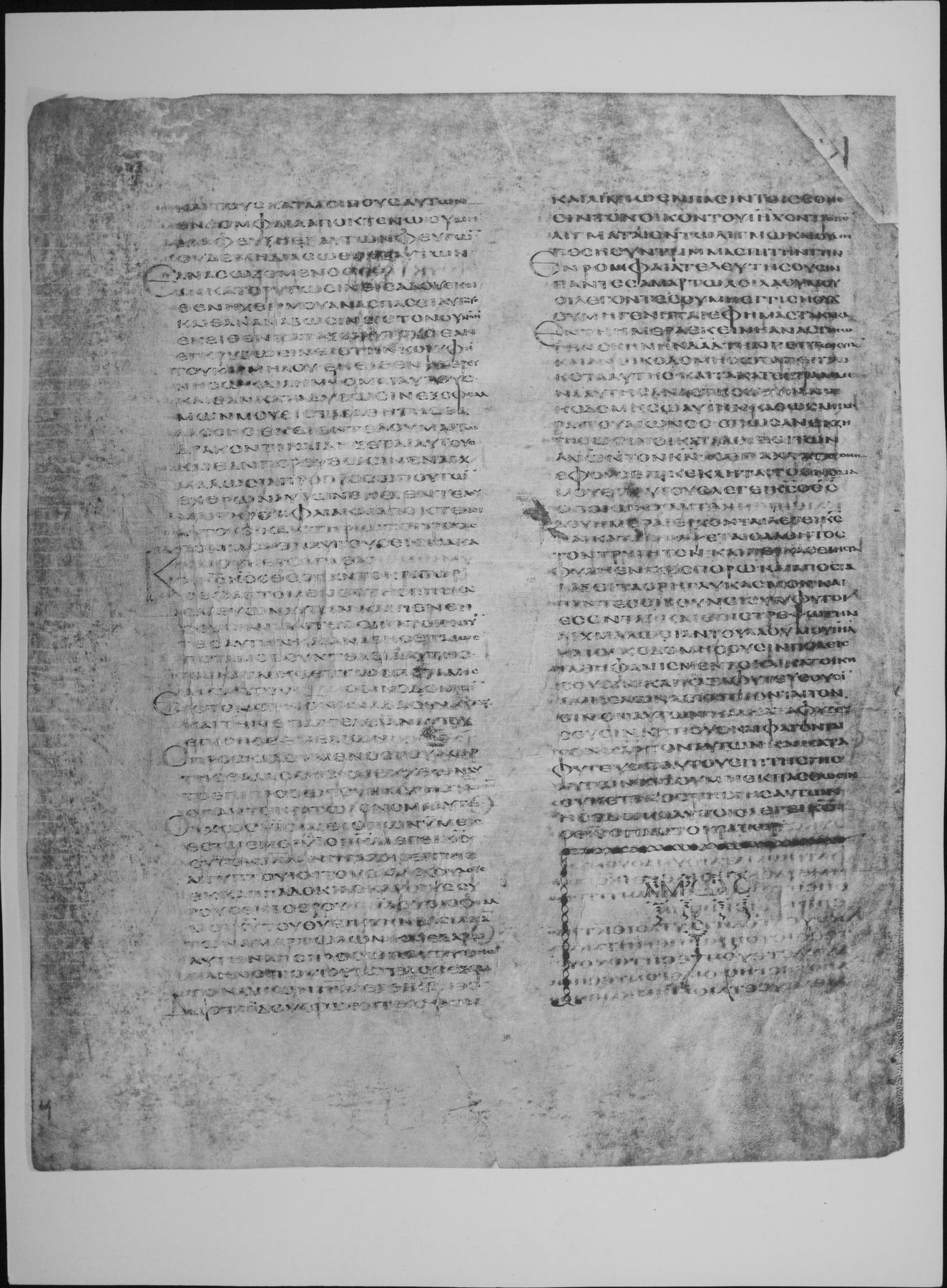
Amos 9 in the Greek Old Testament (the Septuagint) as written in Codex Alexandrinus, a Greek Bible copied in the fifth century, probably in Egypt, and now in the British Library (Royal MS 1 D. VI, the second of its four volumes). It is one of the three great early codices of the whole Greek Bible, with Codex Vaticanus and Codex Sinaiticus.
Numbering: Swete's Greek and Brenton's English number or divide some verses of this chapter differently (Swete 9:1-2 = Brenton 9:1-2). Each column keeps its own verse numbers, and sections are cut only where the two texts agree, so each section holds the same passage in both languages.
This entry meets the strict three-criteria standard of the Theosis Library:
- Manuscript scan: the pages of Codex Alexandrinus carrying this chapter (fol. 284r, fol. 284v), from the full-size photographic (autotype) facsimile published by the British Museum in 1879-1883, as digitised on the Internet Archive. The verse range of every page comes from the reduced photographic facsimile of 1936, which prints it beneath each plate, and the opening words of every page were read on the plate to confirm the page and the verse it begins with. Each section links to the page or pages that hold its verses. Folio numbers are those written at the head of each leaf and visible on the plates.
- Original text: Swete's edition, which here prints the text of Codex Vaticanus (Vat. gr. 1209), the base of his edition, and gives the readings of Alexandrinus only in his apparatus. The Greek column is therefore Vaticanus' text; where Alexandrinus differs, the plate shows what Alexandrinus reads.
- English translation: Sir Lancelot C. L. Brenton, The Septuagint Version of the Old Testament (1844; 1851 edition), a translation of the Greek, public domain, from the eBible.org text.
How was this verified? (Provenance)
Where on the image
Amos 9:1 is on fol. 284r (full-size facsimile of 1879-83, Internet Archive codex-alexandrinus leaf 592). The 1936 reduced facsimile prints beneath this page: Amos vii. 10-ix. 1. Checked on the plate: the page begins inside Amos 7:10 (first words read: ΥΠΕΝΕΓΚΕΙΝ ΑΠΑΝΤΑΣ ΤΟΥΣ ΛΟΓΟΥΣ ΑΥΤΟΥ ΔΙΟΤΙ ΤΑΔΕ ΛΕΓΕΙ ΑΜΩΣ ΕΝ ΡΟΜΦΑΙΑ ΤΕΛΕΥΤΗΣΕΙ ΙΕΡΟΒΟΑΜ). Amos 9:1-8 is on fol. 284v (full-size facsimile of 1879-83, Internet Archive codex-alexandrinus leaf 593). The 1936 reduced facsimile prints beneath this page: Amos ix. 1-15. Checked on the plate: the page begins inside Amos 9:1 (first words read: ΤΟΥΣ ΚΑΤΑΛΟΙΠΟΥΣ ΑΥΤΩΝ ΕΝ ΡΟΜΦΑΙΑ ΑΠΟΚΤΕΝΩ ΟΥ ΔΙΑΦΕΥΞΕΤΑΙ ΕΞ ΑΥΤΩΝ ΦΕΥΓΩΝ).
1Εἶδον τὸν κύριον ἐφεστῶτα ἐπὶ τοῦ θυσιαστηρίου, καὶ εἶπεν Πάταξον ἐπὶ τὸ ἱλαστήριον καὶ σεισθήσεται τὰ πρόπυλα, καὶ διάκοψον εἰς κεφαλὰς πάντων· καὶ τοὺς καταλοίπους αὐτῶν ἐν ῥομφαίᾳ ἀποκτενῶ, οὐ μὴ διαφύγῃ ἐξ αὐτῶν φεύγων, καὶ οὐ μὴ διασωθῇ ἐξ αὐτῶν ἀνασωζόμενος. 2ἐὰν κατακρυβῶσιν εἰς ᾅδου, ἐκεῖθεν ἡ χείρ μου ἀνασπάσει αὐτούς· καὶ ἐὰν ἀναβῶσιν εἰς τὸν οὐρανόν, ἐκεῖθεν κατάξω αὐτούς· 3ἐὰν ἐγκατακρυβῶσιν εἰς τὴν κορυφὴν τοῦ Καρμήλου, ἐκεῖθεν ἐξερευνήσω καὶ λήμψομαι αὐτούς· καὶ ἐὰν καταδύσωσιν ἐξ ὀφθαλμῶν μου εἰς τὰ βάθη τῆς θαλάσσης, ἐκεῖ ἐντελοῦμαι τῷ δράκοντι καὶ δήξεται αὐτούς· 4καὶ ἐὰν πορευθῶσιν ἐν αἰχμαλωσίᾳ πρὸ προσώπου τῶν ἐχθρῶν αὐτῶν, ἐκεῖ ἐντελοῦμαι τῇ ῥομφαίᾳ καὶ ἀποκτενεῖ αὐτούς· καὶ στηριῶ τοὺς ὀφθαλμούς μου ἐπ᾽ αὐτοὺς εἰς κακὰ καὶ οὐκ εἰς ἀγαθά. 5καὶ κύριος Κύριος ὁ θεὸς ὁ παντοκράτωρ, ὁ ἐφαπτόμενος τῆς γῆς καὶ σαλεύων αὐτήν, καὶ πενθήσουσιν πάντες οἱ κατοικοῦντες αὐτήν, καὶ ἀναβήσεται ὡς ποταμὸς συντέλεια αὐτῆς, καὶ καταβήσεται ὡς ποταμὸς Αἰγύπτου· 6ὁ οἰκοδομῶν εἰς τὸν οὐρανὸν ἀνάβασιν αὐτοῦ, καὶ τὴν ἐπαγγελίαν αὐτοῦ ἐπὶ τῆς γῆς θεμελιῶν, ὁ προσκαλούμενος τὸ ὕδωρ τῆς θαλάσσης καὶ ἐκχέων αὐτὸ ἐπὶ πρόσωπον τῆς γῆς· Κύριος Παντοκράτωρ ὄνομα αὐτῷ. 7οὐχ ὡς υἱοὶ Αἰθιόπων ὑμεῖς ἐστε ἐμοῦ, υἱοὶ Ἰσραήλ; λέγει Κύριος· οὐ τὸν Ἰσραὴλ ἀνήγαγον ἐκ γῆς Αἰγύπτου, καὶ τοὺς ἀλλοφύλους ἐκ Καππαδοκίας, καὶ τοὺς Σύρους ἐκ βόθρου; 8ἰδοὺ οἱ ὀφθαλμοὶ Κυρίου τοῦ θεοῦ ἐπὶ τὴν βασιλείαν τῶν ἁμαρτωλῶν, καὶ ἐξαρῶ αὐτὴν ἀπὸ προσώπου τῆς γῆς· πλὴν ὅτι οὐκ εἰς τέλος ἐξαρῶ τὸν οἶκον Ἰακώβ, λέγει Κύριος.
1I saw the Lord standing on the altar: and he said, 2Though they hide themselves in hell, thence shall my hand drag them forth; and though they go up to heaven, thence will I bring them down. 3If they hide themselves in the top of Carmel, thence will I search them out and take them; and if they should go down from my presence into the depths of the sea, there will I command the serpent, and he shall bite them. 4And if they should go into captivity before the face of their enemies, there will I command the sword, and it shall slay them: and I will set mine eyes against them for evil, and not for good. 5And the Lord, the Lord God Almighty, is he that takes hold of the land, and causes it to shake, and all that inhabit it shall mourn; and its destruction shall go up as a river, and shall descend as the river of Egypt. 6It is he that builds his ascent up to the sky, and establishes his promise on the earth; who calls the water of the sea, and pours it out on the face of the earth; the Lord Almighty is his name. 7Are not ye to me as the sons of the Ethiopians, O children of Israel? saith the Lord. Did I not bring Israel up out of the land of Egypt, and the Philistines from Cappadocia, and the Syrians out of the deep? 8Behold, the eyes of the Lord God are upon the kingdom of sinners, and I will cut it off from the face of the earth; only I will not utterly cut off the house of Jacob, saith the Lord.
Where on the image
Amos 9:9-15 is on fol. 284v (full-size facsimile of 1879-83, Internet Archive codex-alexandrinus leaf 593). The 1936 reduced facsimile prints beneath this page: Amos ix. 1-15. Checked on the plate: the page begins inside Amos 9:1 (first words read: ΤΟΥΣ ΚΑΤΑΛΟΙΠΟΥΣ ΑΥΤΩΝ ΕΝ ΡΟΜΦΑΙΑ ΑΠΟΚΤΕΝΩ ΟΥ ΔΙΑΦΕΥΞΕΤΑΙ ΕΞ ΑΥΤΩΝ ΦΕΥΓΩΝ).
9διότι ἐγὼ ἐντέλλομαι, καὶ λικμήσω ἐν πᾶσι τοῖς ἔθνεσιν τὸν οἶκον Ἰσραὴλ ὃν τρόπον λικμᾶται ἐν τῷ λικμῷ, καὶ οὐ μὴ πέσῃ σύντριμμα ἐπὶ τὴν γῆν· 10ἐν ῥομφαίᾳ τελευτήσουσι πάντες ἁμαρτωλοὶ λαοῦ μου, οἱ λέγοντες Οὐ μὴ ἐγγίσῃ οὐδὲ μὴ γένηται ἐφ᾽ ἡμᾶς τὰ κακά. 11Ἐν τῇ ἡμέρᾳ ἐκείνῃ ἀναστήσω τὴν σκηνὴν Δαυεὶδ τὴν πεπτωκυῖαν, καὶ ἀνοικοδομήσω τὰ πεπτωκότα αὐτῆς, καὶ τὰ κατεσκαμμένα αὐτῆς ἀναστήσω, καὶ ἀνοικοδομήσω αὐτὴν καθὼς αἱ ἡμέραι τοῦ αἰῶνος, 12ὅπως ἐκζητήσωσιν οἱ κατάλοιποι τῶν ἀνθρώπων, καὶ πάντα τὰ ἔθνη ἐφ᾽ οὓς ἐπικέκληται τὸ ὄνομά μου ἐπ᾽ αὐτούς, λέγει Κύριος ὁ ποιῶν ταῦτα. 13ἰδοὺ ἡμέραι ἔρχονται, λέγει Κύριος, καὶ καταλήμψεται ὁ ἀμητὸς τὸν τρυγητόν, καὶ περκάσει ἡ σταφυλὴ ἐν τῷ σπόρῳ, καὶ ἀποσταλάξει τὰ ὄρη γλυκασμόν, καὶ πάντες οἱ βουνοὶ σύμφυτοι ἔσονται· 14καὶ ἐπιστρέψω τὴν αἰχμαλωσίαν λαοῦ μου Ἰσραήλ, καὶ οἰκοδομήσουσιν πόλεις τὰς ἠφανισμένας καὶ κατοικήσουσιν, καὶ καταφυτεύσουσιν ἀμπελῶνα καὶ πίονται τὸν οἶνον αὐτῶν, καὶ φυτεύσουσιν κήπους καὶ φάγονται τοὺς καρποὺς αὐτῶν· 15καὶ καταφυτεύσω αὐτοὺς ἐπὶ τῆς γῆς αὐτῶν, καὶ οὐ μὴ ἐκσπασθῶσιν οὐκέτι ἀπὸ τῆς γῆς ἧς ἔδωκα αὐτοῖς, λέγει Κύριος ὁ θεὸς ὁ παντοκράτωρ.
9For I will give commandment, and sift the house of Israel among all the Gentiles, as corn is sifted in a sieve, and yet a fragment shall not in any wise fall upon the earth. 10All the sinners of my people shall die by the sword, who say, Calamities shall certainly not draw near, nor come upon us. 11In that day I will raise up the tabernacle of David that is fallen, and will rebuild the ruins of it, and will set up the parts thereof that have been broken down, and will build it up as in the ancient days: 12that the remnant of men, and all the Gentiles upon whom my name is called, may earnestly seek me, saith the Lord who does all these things. 13Behold, the days come, saith the Lord, when the harvest shall overtake the vintage, and the grapes shall ripen at seedtime; and the mountains shall drop sweet wine, and all the hills shall be planted. 14And I will turn the captivity of my people Israel, and they shall rebuild the ruined cities, and shall inhabit them; and they shall plant vineyards, and shall drink the wine from them; and they shall form gardens, and eat the fruit of them. 15And I will plant them on their land, and they shall no more be plucked up from the land which I have given them, saith the Lord God Almighty.
Cite
Sources
- Source: Codex Alexandrinus (British Library Royal MS 1 D. VI) via the British Museum photographic facsimiles of 1879-83 and 1936 (Internet Archive) + Swete's Septuagint + Brenton's English (holding institution)
- Critical edition: H. B. Swete, The Old Testament in Greek according to the Septuagint (1909)
← previous · → next · v cycle view · l back to library