Deuteronomy, Chapter 21 (Codex Alexandrinus)
Introduction
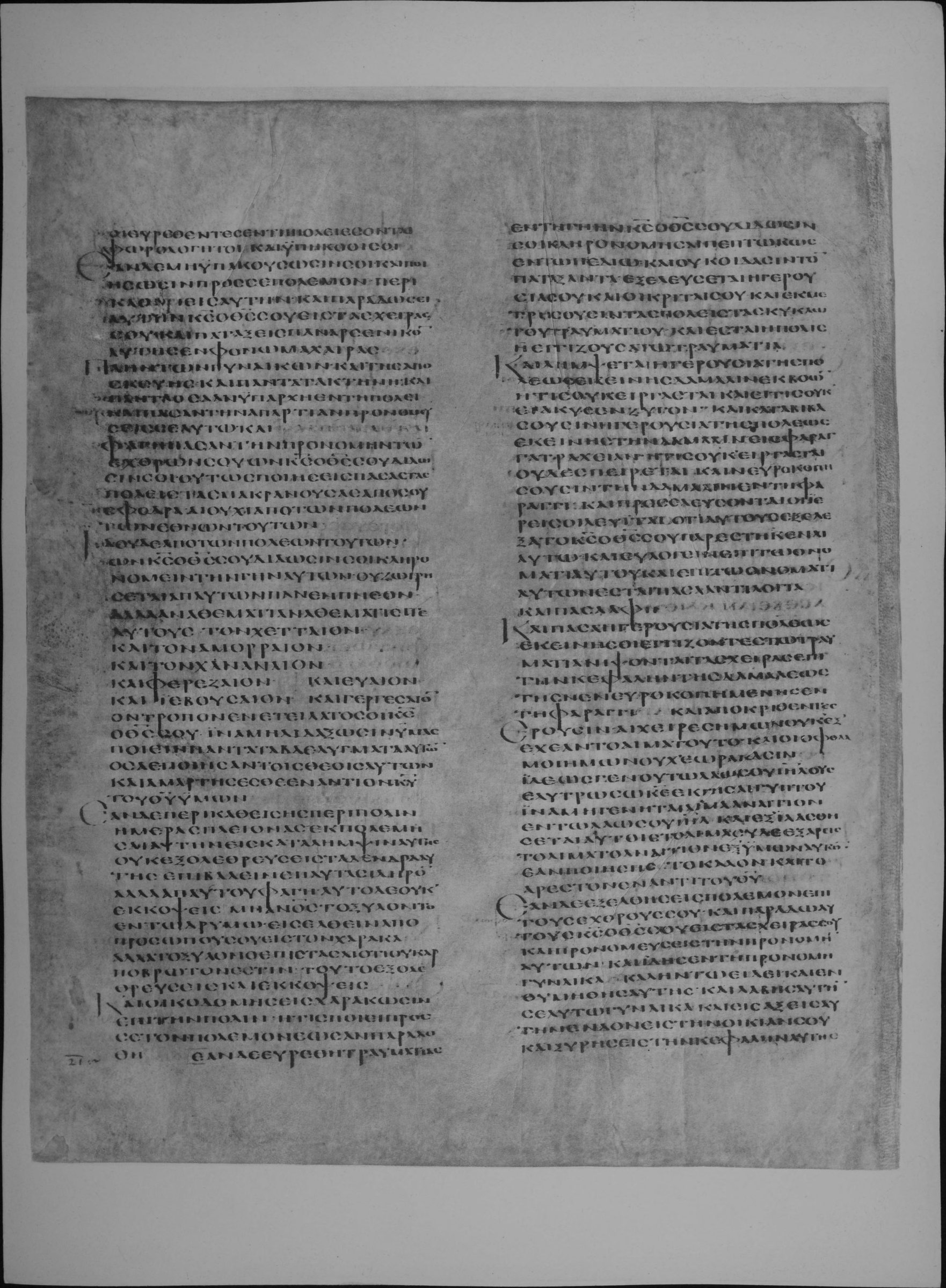
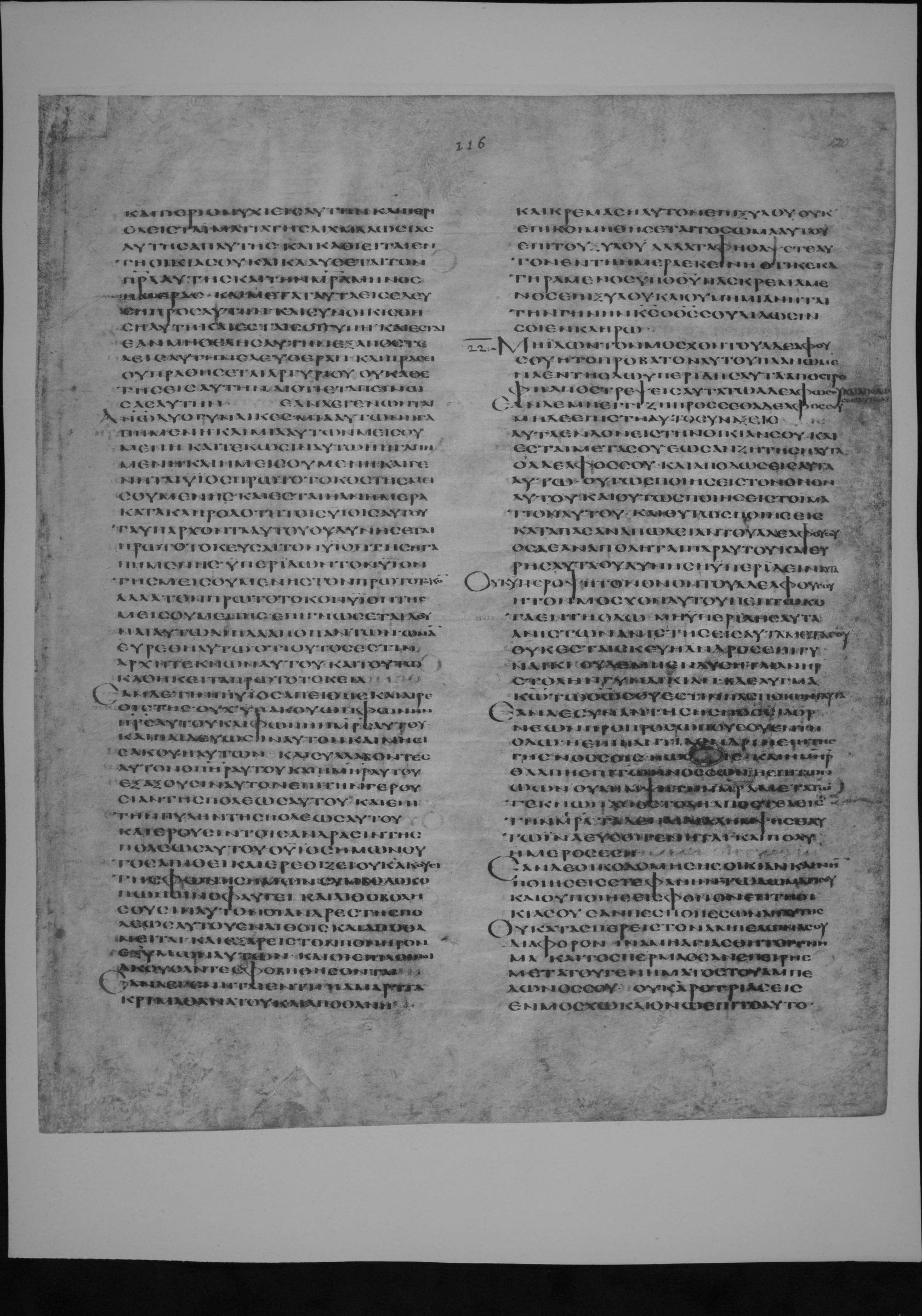
Deuteronomy 21 in the Greek Old Testament (the Septuagint) as written in Codex Alexandrinus, a Greek Bible copied in the fifth century, probably in Egypt, and now in the British Library (Royal MS 1 D. V, the first of its four volumes). It is one of the three great early codices of the whole Greek Bible, with Codex Vaticanus and Codex Sinaiticus, and for Genesis 1:1-46:28, which Codex Vaticanus has lost, it is the oldest surviving complete Greek text (older papyri such as the Berlin Genesis papyrus and Chester Beatty 961 survive only in part).
This entry meets the strict three-criteria standard of the Theosis Library:
- Manuscript scan: the pages of Codex Alexandrinus carrying this chapter (fol. 115v, fol. 116r), from the full-size photographic (autotype) facsimile published by the British Museum in 1879-1883, as digitised on the Internet Archive. The verse range of every page comes from the reduced photographic facsimile of 1915, which prints it beneath each plate, and the opening words of every page were read on the plate to confirm the page and the verse it begins with. Each section links to the page or pages that hold its verses. Folio numbers are those written at the head of each leaf and visible on the plates.
- Original text: Swete's edition, which here prints the text of Codex Vaticanus (Vat. gr. 1209), the base of his edition, and gives the readings of Alexandrinus only in his apparatus. The Greek column is therefore Vaticanus' text; where Alexandrinus differs, the plate shows what Alexandrinus reads.
- English translation: Sir Lancelot C. L. Brenton, The Septuagint Version of the Old Testament (1844; 1851 edition), a translation of the Greek, public domain, from the eBible.org text.
How was this verified? (Provenance)
Where on the image
Deuteronomy 21:1-8 is on fol. 115v (full-size facsimile of 1879-83, Internet Archive codex-alexandrinus leaf 251). The 1915 reduced facsimile prints beneath this page: Deut. xx. 11-xxi. 12. Checked on the plate: the page begins inside Deuteronomy 20:11 (first words read: ΟΙ ΕΥΡΕΘΕΝΤΕΣ ΕΝ ΑΥΤΗ ΕΣΟΝΤΑΙ ΣΟΙ ΦΟΡΟΛΟΓΗΤΟΙ ΚΑΙ ΥΠΗΚΟΟΙ ΣΟΥ ΕΑΝ ΔΕ ΜΗ ΥΠΑΚΟΥΣΩΣΙΝ).
1Ἐὰν δὲ εὑρεθῇ τραυματίας ἐν τῇ γῇ ᾗ Κύριος ὁ θεός σου δίδωσίν σοι κληρονομῆσαι, πεπτωκὼς ἐν τῷ πεδίῳ, καὶ οὐκ οἴδασιν τὸν πατάξαντα, 2ἐξελεύσεται ἡ γερουσία σου καὶ οἱ κριταί σου, καὶ ἐκμετρήσουσιν ἐπὶ τὰς πόλεις τὰς κύκλῳ τοῦ τραυματίου· 3καὶ ἔσται ἡ πόλις ἡ ἐγγίζουσα τῷ τραυματίᾳ, καὶ λήμψεται ἡ γερουσία τῆς πόλεως ἐκείνης δάμαλιν ἐκ βοῶν, ἥτις οὐκ εἴργασται καὶ ἥτις οὐχ εἵλκυσεν ζυγόν· 4καὶ καταβιβάσουσιν ἡ γερουσία τῆς πόλεως ἐκείνης δάμαλιν εἰς φάραγγα τραχεῖαν, ἥτις οὐκ εἴργασται οὐδὲ σπείρεται, καὶ νευροκοπήσουσιν τὴν δάμαλιν ἐν τῇ φάραγγι. 5καὶ προσελεύσονται οἱ ἱερεῖς οἱ Λευεῖται, ὅτι αὐτοὺς ἐπέλεξεν Κύριος ὁ θεὸς παρεστηκέναι αὐτῷ καὶ εὐλογεῖν ἐπὶ τῷ ὀνόματι αὐτοῦ, καὶ ἐπὶ τῷ στόματι αὐτῶν ἔσται πᾶσα ἀντιλογία καὶ πᾶσα ἁφή· 6καὶ πᾶσα ἡ γερουσία τῆς πόλεως ἐκείνης οἱ ἐγγίζοντες τῷ τραυματίᾳ νίψονται τὰς χεῖρας ἐπὶ τὴν κεφαλὴν τῆς δαμάλεως τῆς νενευροκοπημένης ἐν τῇ φάραγγι, 7καὶ ἀποκριθέντες ἐροῦσιν Αἱ χεῖρες ἡμῶν οὐκ ἐξέχεαν τὸ αἷμα τοῦτο, καὶ οἱ ὀφθαλμοὶ ἡμῶν οὐχ ἑωράκασιν· 8ἵλεως γενοῦ τῷ λαῷ σου Ἰσραήλ, οὓς ἐλυτρώσω, Κύριε, ἵνα μὴ γένηται αἷμα ἀναίτιον ἐν τῷ λαῷ σου Ἰσραήλ. καὶ ἐξιλασθήσεται αὐτοῖς τὸ αἷμα.
1And if one be found slain with the sword in the land, which the Lord thy God gives thee to inherit, having fallen in the field, and they do not know who has smitten him; 2thine elders and thy judges shall come forth, and shall measure the distances of the cities round about the slain man: 3and it shall be that the city which is nearest to the slain man the elders of that city shall take a heifer of the herd, which has not laboured, and which has not borne a yoke. 4And the elders of that city shall bring down the heifer into a rough valley, which has not been tilled and is not sown, and they shall slay the heifer in the valley. 5And the priests the Levites shall come, because the Lord God has chosen them to stand by him, and to bless in his name, and by their word shall every controversy and every stroke be decided. 6And all the elders of that city who draw nigh to the slain man shall wash their hands over the head of the heifer which was slain in the valley; 7and they shall answer and say, Our hands have not shed this blood, and our eyes have not seen it. 8Be merciful to thy people Israel, whom thou hast redeemed, O Lord, that innocent blood may not be charged on thy people Israel: and the blood shall be atoned for to them.
Where on the image
Deuteronomy 21:9-12 is on fol. 115v (full-size facsimile of 1879-83, Internet Archive codex-alexandrinus leaf 251). The 1915 reduced facsimile prints beneath this page: Deut. xx. 11-xxi. 12. Checked on the plate: the page begins inside Deuteronomy 20:11 (first words read: ΟΙ ΕΥΡΕΘΕΝΤΕΣ ΕΝ ΑΥΤΗ ΕΣΟΝΤΑΙ ΣΟΙ ΦΟΡΟΛΟΓΗΤΟΙ ΚΑΙ ΥΠΗΚΟΟΙ ΣΟΥ ΕΑΝ ΔΕ ΜΗ ΥΠΑΚΟΥΣΩΣΙΝ). Deuteronomy 21:12-16 is on fol. 116r (full-size facsimile of 1879-83, Internet Archive codex-alexandrinus leaf 252). The 1915 reduced facsimile prints beneath this page: Deut. xxi. 12-xxii. 10. Checked on the plate: the page begins inside Deuteronomy 21:12 (first words read: ΚΑΙ ΠΕΡΙΟΝΥΧΙΕΙΣ ΑΥΤΗΝ ΚΑΙ ΠΕΡΙΕΛΕΙΣ ΤΑ ΙΜΑΤΙΑ ΤΗΣ ΑΙΧΜΑΛΩΣΙΑΣ ΑΠ ΑΥΤΗΣ).
9σὺ δὲ ἐξαρεῖς τὸ αἷμα τὸ ἀναίτιον ἐξ ὑμῶν αὐτῶν, ἐὰν ποιήσῃς τὸ καλὸν καὶ τὸ ἀρεστὸν ἔναντι Κυρίου τοῦ θεοῦ σου. 10Ἐὰν δὲ ἐξελθὼν εἰς πόλεμον ἐπὶ τοὺς ἐχθρούς σου, καὶ παραδῷ σοι Κύριος ὁ θεός σου εἰς τὰς χεῖράς σου, καὶ προνομεύσεις τὴν προνομὴν αὐτῶν, 11καὶ ἴδῃς ἐν τῇ προνομῇ γυναῖκα καλὴν τῷ εἴδει, καὶ ἐνθυμηθῇς αὐτῆς καὶ λάβῃς αὐτὴν σαυτῷ γυναῖκα, 12καὶ εἰσάξεις αὐτὴν ἔνδον εἰς τὴν οἰκίαν σου, καὶ ξυρήσεις τὴν κεφαλὴν αὐτῆς καὶ περιονυχιεῖς αὐτήν· 13καὶ περιελεῖς τὰ ἱμάτια τῆς αἰχμαλωσίας ἀπ᾽ αὐτῆς, καὶ καθιεῖται ἐν τῇ οἰκίᾳ σου καὶ κλαύσεται τὸν πατέρα καὶ τὴν μητέρα μηνὸς ἡμέρας· καὶ μετὰ ταῦτα εἰσελεύσῃ πρὸς αὐτὴν καὶ συνοικισθήσῃ αὐτῇ, καὶ ἔσται σου γυνή. 14καὶ ἔσται ἐὰν μὴ θέλῃς αὐτήν, ἐξαποστελεῖς αὐτὴν ἐλευθέραν, καὶ πράσει οὐ πραθήσεται ἀργυρίου· οὐκ ἀθετήσεις αὐτήν, διότι ἐταπείνωσας αὐτήν. 15Ἐὰν δὲ γένωνται ἀνθρώπῳ δύο γυναῖκες, μία αὐτῶν ἠγαπημένη καὶ μία αὐτῶν μισουμένη, καὶ τέκωσιν αὐτῷ ἡ ἠγαπημένη καὶ ἡ μισουμένη, καὶ γένηται υἱὸς πρωτότοκος τῆς μισουμένης· 16καὶ ἔσται ᾗ ἂν ἡμέρᾳ κατακληρονομῇ τοῖς υἱοῖς αὐτοῦ τὰ ὑπάρχοντα αὐτοῦ, οὐ δυνήσεται πρωτοτοκεῦσαι τῷ υἱῷ τῆς ἠγαπημένης, ὑπεριδὼν τὸν υἱὸν τῆς μισουμένης τὸν πρωτότοκον·
9And thou shalt take away innocent blood from among you, if thou shouldest do that which is good and pleasing before the Lord thy God. 10And if when thou goest out to war against thine enemies, the Lord thy God should deliver them into thine hands, and thou shouldest take their spoil, 11and shouldest see among the spoil a woman beautiful in countenance, and shouldest desire her, and take her to thyself for a wife, 12and shouldest bring her within thine house: then shalt thou shave her head, and pare her nails; 13and shalt take away her garments of captivity from off her, and she shall abide in thine house, and shall bewail her father and mother the days of a month; and afterwards thou shalt go in to her and dwell with her, and she shall be thy wife. 14And it shall be if thou do not delight in her, thou shalt send her out free; and she shall not by any means be sold for money, thou shalt not treat her contemptuously, because thou hast humbled her. 15And if a man have two wives, the one loved and the other hated, and both the loved and the hated should have born him children, and the son of the hated should be first-born; 16then it shall be that whensoever he shall divide by inheritance his goods to his sons, he shall not be able to give the right of the first-born to the son of the loved one, having overlooked the son of the hated, which is the first-born.
Where on the image
Deuteronomy 21:17-23 is on fol. 116r (full-size facsimile of 1879-83, Internet Archive codex-alexandrinus leaf 252). The 1915 reduced facsimile prints beneath this page: Deut. xxi. 12-xxii. 10. Checked on the plate: the page begins inside Deuteronomy 21:12 (first words read: ΚΑΙ ΠΕΡΙΟΝΥΧΙΕΙΣ ΑΥΤΗΝ ΚΑΙ ΠΕΡΙΕΛΕΙΣ ΤΑ ΙΜΑΤΙΑ ΤΗΣ ΑΙΧΜΑΛΩΣΙΑΣ ΑΠ ΑΥΤΗΣ).
17ἀλλὰ τὸν πρωτότοκον υἱὸν τῆς μισουμένης ἐπιγνώσεται δοῦναι αὐτῷ διπλᾶ ἀπὸ πάντων ὧν ἂν εὑρεθῇ αὐτῷ, ὅτι οὗτός ἐστιν ἀρχὴ τέκνων αὐτοῦ, καὶ τούτῳ καθήκει τὰ πρωτοτοκεῖα. 18Ἐὰν δέ τινι ᾖ υἱὸς ἀπειθὴς καὶ ἐρεθιστής, οὐχ ὑπακούων φωνὴν πατρὸς καὶ φωνὴν μητρός, καὶ παιδεύσωσιν αὐτὸν καὶ μὴ εἰσακούῃ αὐτῶν· 19καὶ συλλαβόντες αὐτὸν ὁ πατὴρ αὐτοῦ καὶ ἡ μήτηρ αὐτοῦ καὶ ἐξάξουσιν αὐτὸν ἐπὶ τὴν γερουσίαν τῆς πόλεως αὐτοῦ καὶ ἐπὶ τὴν πύλην τοῦ τόπου, 20καὶ ἐροῦσιν τοῖς ἀνδράσιν τῆς πόλεως αὐτῶν Ὁ υἱὸς ἡμῶν οὗτος ἀπειθεῖ καὶ ἐρεθίζει, οὐχ ὑπακούει τῆς φωνῆς ἡμῶν, συμβολοκοπῶν οἰνοφλυγεῖ· 21καὶ λιθοβολήσουσιν αὐτὸν οἱ ἄνδρες τῆς πόλεως αὐτοῦ ἐν λίθοις, καὶ ἀποθανεῖται· καὶ ἐξαρεῖς τὸν πονηρὸν ἐξ ὑμῶν αὐτῶν, καὶ οἱ ἐπίλοιποι ἀκούσαντες φοβηθήσονται. 22Ἐὰν δὲ γένηται ἔν τινι ἁμαρτία κρίμα θανάτου, καὶ ἀποθάνῃ, καὶ κρεμάσητε αὐτὸν ἐπὶ ξύλου· 23οὐ κοιμηθήσεται τὸ σῶμα αὐτοῦ ἐπὶ τοῦ ξύλου, ἀλλὰ ταφῇ θάψετε αὐτὸ ἐν τῇ ἡμέρᾳ ἐκείνῃ, ὅτι κεκαταραμένος ὑπὸ θεοῦ πᾶς κρεμάμενος ἐπὶ ξύλου· καὶ οὐ μιανεῖτε τὴν γῆν ἣν Κύριος ὁ θεός σου δίδωσίν σοι ἐν κλήρῳ.
17But he shall acknowledge the first-born of the hated one to give to him double of all things which shall be found by him, because he is the first of his children, and to him belongs the birthright. 18And if any man has a disobedient and contentious son, who hearkens not to the voice of his father and the voice of his mother, and they should correct him, and he should not hearken to them; 19then shall his father and his mother take hold of him, and bring him forth to the elders of his city, and to the gate of the place: 20and they shall say to the men of their city, This our son is disobedient and contentious, he hearkens not to our voice, he is a reveller and a drunkard. 21And the men of his city shall stone him with stones, and he shall die; and thou shalt remove the evil one from yourselves, and the rest shall hear and fear. 22And if there be sin in any one, and the judgment of death be upon him, and he be put to death, and ye hang him on a tree: 23his body shall not remain all night upon the tree, but ye shall by all means bury it in that day; for every one that is hanged on a tree is cursed of God; and ye shall by no means defile the land which the Lord thy God gives thee for an inheritance.
Cite
Sources
- Source: Codex Alexandrinus (British Library Royal MS 1 D. V) via the British Museum photographic facsimiles of 1879-83 and 1915 (Internet Archive) + Swete's Septuagint + Brenton's English (holding institution)
- Critical edition: H. B. Swete, The Old Testament in Greek according to the Septuagint (1909)
← previous · → next · v cycle view · l back to library