Esther, Chapter 10 (Codex Alexandrinus)
Introduction
Esther 10 in the Greek Old Testament (the Septuagint) as written in Codex Alexandrinus, a Greek Bible copied in the fifth century, probably in Egypt, and now in the British Library (Royal MS 1 D. VI, the second of its four volumes). It is one of the three great early codices of the whole Greek Bible, with Codex Vaticanus and Codex Sinaiticus.
The Greek additions: the Greek book of Esther has six passages that the Hebrew book lacks (often lettered A to F; in the Latin Bible they are gathered as 10:4-16:24). Swete prints them in their places in the story, inside the verses they follow (1:1, 3:13, 4:17, 5:1-2, 8:12 and 10:3), marking their own verses with numbers in square brackets, and Brenton's English does the same. The captions of the 1936 facsimile name them by letter and by their Latin chapter and verse.
This entry meets the strict three-criteria standard of the Theosis Library:
- Manuscript scan: the page of Codex Alexandrinus carrying this chapter (fol. 423v), from the full-size photographic (autotype) facsimile published by the British Museum in 1879-1883, as digitised on the Internet Archive. The verse range of every page comes from the reduced photographic facsimile of 1936, which prints it beneath each plate, and the opening words of every page were read on the plate to confirm the page and the verse it begins with. Each section links to the page or pages that hold its verses. Folio numbers are those written at the head of each leaf and visible on the plates.
- Original text: Swete's edition, which here prints the text of Codex Vaticanus (Vat. gr. 1209), the base of his edition, and gives the readings of Alexandrinus only in his apparatus. The Greek column is therefore Vaticanus' text; where Alexandrinus differs, the plate shows what Alexandrinus reads.
- English translation: Sir Lancelot C. L. Brenton, The Septuagint Version of the Old Testament (1844; 1851 edition), a translation of the Greek, public domain, from the eBible.org text.
How was this verified? (Provenance)
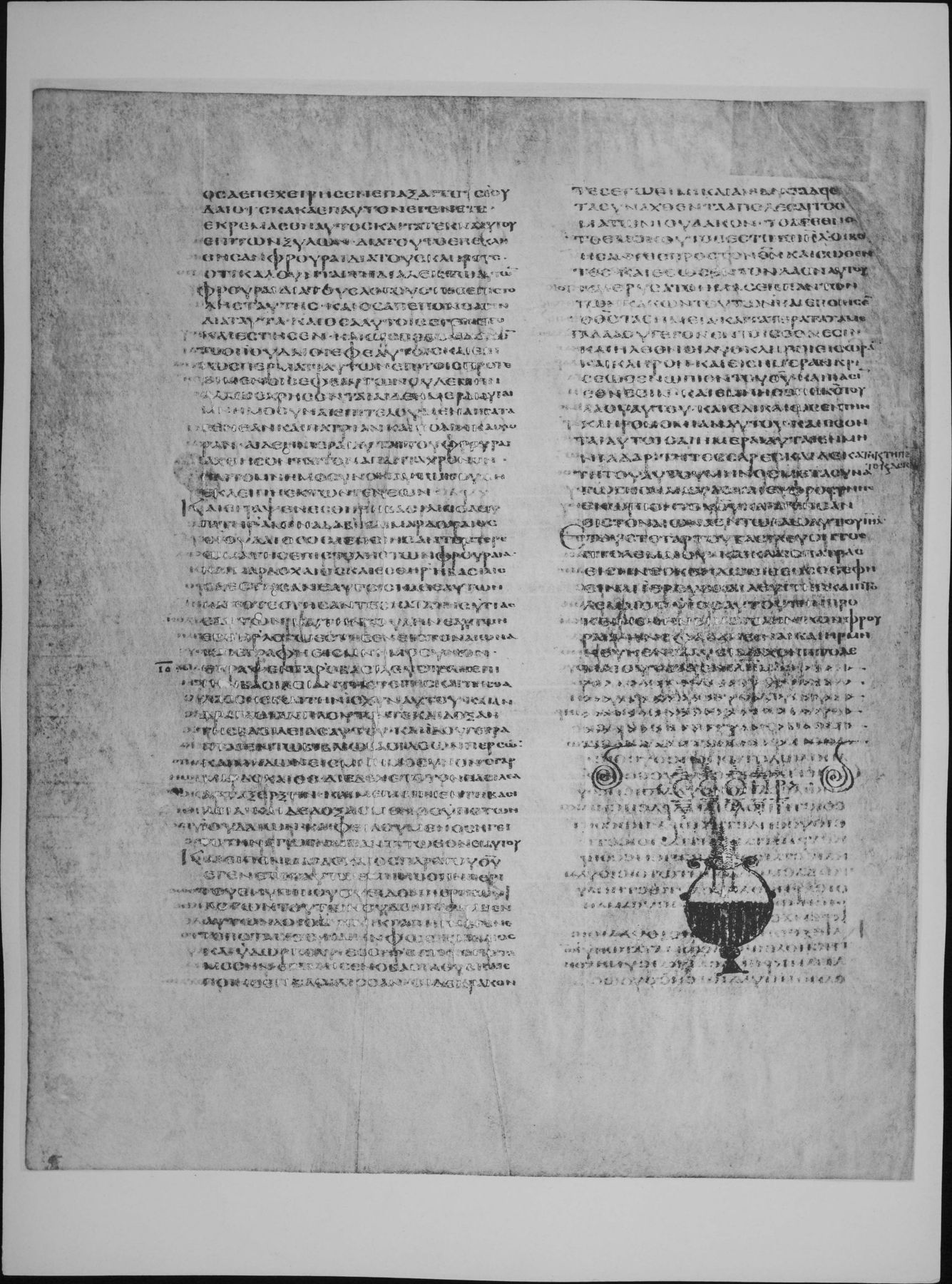
Where on the image
Esther 10:1-3 is on fol. 423v (full-size facsimile of 1879-83, Internet Archive codex-alexandrinus leaf 871). The 1936 reduced facsimile prints beneath this page: Esther ix. 25-[xi. 1]. Checked on the plate: the page begins inside Esther 9:25 (first words read: ΟΣΑ ΕΠΕΧΕΙΡΗΣΕΝ ΕΠΑΞΑΙ ΤΟΥΣ ΙΟΥΔΑΙΟΥΣ ΚΑΚΑ ΕΠ ΑΥΤΟΝ ΕΓΕΝΕΤΟ ΕΚΡΕΜΑΣΘΗ ΑΥΤΟΣ ΚΑΙ ΤΑ ΤΕΚΝΑ ΑΥΤΟΥ).
1Ἔγραψεν δὲ ὁ βασιλεὺς ἐπὶ τὴν βασιλείαν τῆς γῆς καὶ τῆς θαλάσσης. 2καὶ τὴν ἰσχὺν αὐτοῦ καὶ ἀνδραγαθίαν, πλοῦτόν τε καὶ δόξαν τῆς βασιλείας αὐτοῦ, ἰδοὺ γέγραπται ἐν βιβλίῳ βασιλέων Περσῶν καὶ Μήδων εἰς μνημόσυνον. 3ὁ δὲ Μαρδοχαῖος διεδέχετο τὸν βασιλέα Ἀρταξέρξην, καὶ μέγας ἦν ἐν τῇ βασιλείᾳ καὶ δεδοξασμένος ὑπὸ τῶν Ἰουδαίων· καὶ φιλούμενος διηγεῖτο τὴν ἀγωγὴν παντὶ τῷ ἔθνει αὐτοῦ. [1] Καὶ εἶπεν Μαρδοχαῖος Παρὰ τοῦ θεοῦ ἐγένετο ταῦτα. [2] ἐμνήσθην γὰρ περὶ τοῦ ἐνυπνίου οὗ εἶδον περὶ τῶν λόγων τούτων, οὐδὲ γὰρ παρῆλθεν ἀπ᾽ αὐτῶν λόγος· [3] ἡ μικρὰ πηγὴ ἣ ἐγένετο ποταμός, καὶ ἦν φῶς καὶ ἥλιος καὶ ὕδωρ πολύ. Ἐσθήρ ἐστιν ὁ ποταμός, ἣν ἐγάμησεν ὁ βασιλεὺς καὶ ἐποίησεν βασίλισσαν· [4] οἱ δὲ δύο δράκοντες, ἐγώ εἰμι καὶ Ἁμάν· [5] τὰ δὲ ἔθνη, τὰ ἐπισυναχθέντα ἀπολέσαι τὸ ὄνομα τῶν Ἰουδαίων· [6] τὸ δὲ ἔθνος τὸ ἐμόν, οὗτός ἐστιν Ἰσραὴλ οἱ βοήσαντες πρὸς τὸν θεὸν καὶ σωθέντες. καὶ ἔσωσεν Κύριος τὸν λαὸν αὐτοῦ, καὶ ἐρρύσατο Κύριος ἡμᾶς ἐκ πάντων τῶν κακῶν τούτων· καὶ ἐποίησεν ὁ θεὸς τὰ σημεῖα καὶ τὰ τέρατα τὰ μεγάλα ἃ οὐ γέγονεν ἐν τοῖς ἔθνεσιν. [7] διὰ τοῦτο ἐποίησεν κλήρους δύο, ἕνα τῷ λαῷ τοῦ θεοῦ καὶ ἕνα πᾶσι τοῖς ἔθνεσιν· [8] καὶ ἦλθον οἱ δύο κλῆροι οὗτοι εἰς ὥραν καὶ καιρὸν καὶ εἰς ἡμέραν κρίσεως ἐνώπιον τοῦ θεοῦ καὶ πᾶσι τοῖς ἔθνεσιν, [9] καὶ ἐμνήσθη ὁ θεὸς τοῦ λαοῦ αὐτοῦ, καὶ ἐδικαίωσεν τὴν κληρονομίαν ἑαυτοῦ. [10] καὶ ἔσονται αὐτοῖς αἱ ἡμέραι αὗται ἐν μηνὶ Ἀδάρ, τῇ τεσσαρεσκαιδεκάτῃ καὶ τῇ πεντεκαιδεκάτῃ τοῦ αὐτοῦ μηνός, μετὰ συναγωγῆς καὶ χαρᾶς καὶ εὐφροσύνης ἐνώπιον τοῦ θεοῦ κατὰ γενεὰς εἰς τὸν αἰῶνα ἐν τῷ λαῷ αὐτοῦ Ἰσραήλ. [11] Ἔτους τετάρτου βασιλεύοντος Πτολεμαίου καὶ Κλεοπάτρας εἰσήνεγκεν Δοσίθεος, ὃς ἔφη εἶναι ἱερεὺς καὶ Λευείτης, καὶ Πτολεμαῖος ὁ υἱὸς αὐτοῦ τὴν προκειμένην ἐπιστολὴν τῶν Φρουραί, ἣν ἔφασαν εἶναι καὶ ἑρμηνευκέναι Λυσίμαχον Πτολεμαίου τῶν ἐν Ἰερουσαλήμ.
1And the king levied a tax upon his kingdom both by land and sea. 2And as for his strength and valour, and the wealth and glory of his kingdom, behold, they are written in the book of the Persians and Medes, for a memorial. 3And Mardochæus was viceroy to king Artaxerxes, and was a great man in the kingdom, and honoured by the Jews, and passed his life beloved of all his nation. [And Mardochæus said, These things have been done of God. For I remember the dream which I had concerning these matters: for not one particular of them has failed. There was the little fountain, which became a river, and there was light, and the sun, and much water. The river is Esther, whom the king married, and made queen. And the two serpents are I and Aman. And the nations are those nations that combined to destroy the name of the Jews. But as for my nation, this is Israel, even they that cried to God, and were delivered: for the Lord delivered his people, and the Lord rescued us out of all these calamities; and God wrought such signs and great wonders as have not been done among the nations. Therefore did he ordain two lots, one for the people of God, and one for all the other nations. And these two lots came for an appointed season, and for a day of judgment, before God, and for all the nations. And God remembered his people, and vindicated his inheritance. And they shall observe these days, in the month Adar, on the fourteenth and on the fifteenth day of the month, with an assembly, and joy and gladness before God, throughout the generations for ever among his people Israel. In the fourth year of the reign of Ptolemy and Cleopatra, Dositheus, who said that he was a priest and a Levite, and Ptolemy his son, brought in the published letter of Phruræ, which they said existed, and which Lysimachus the son of Ptolemy, who was in Jerusalem, had interpreted.]
Cite
Sources
- Source: Codex Alexandrinus (British Library Royal MS 1 D. VI) via the British Museum photographic facsimiles of 1879-83 and 1936 (Internet Archive) + Swete's Septuagint + Brenton's English (holding institution)
- Critical edition: H. B. Swete, The Old Testament in Greek according to the Septuagint (1909)
← previous · → next · v cycle view · l back to library