Tobit, Chapter 1 (Codex Alexandrinus)
Introduction
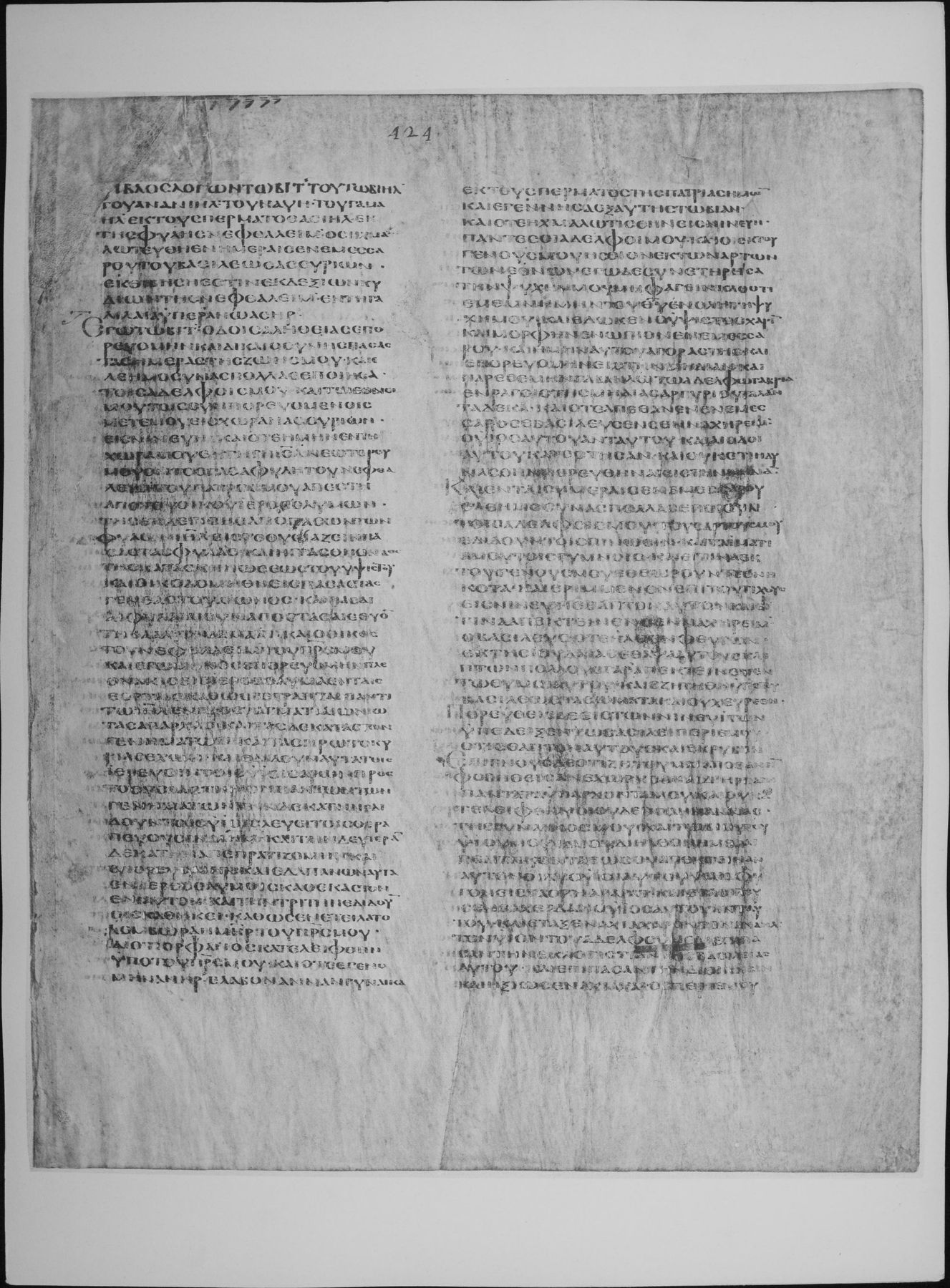
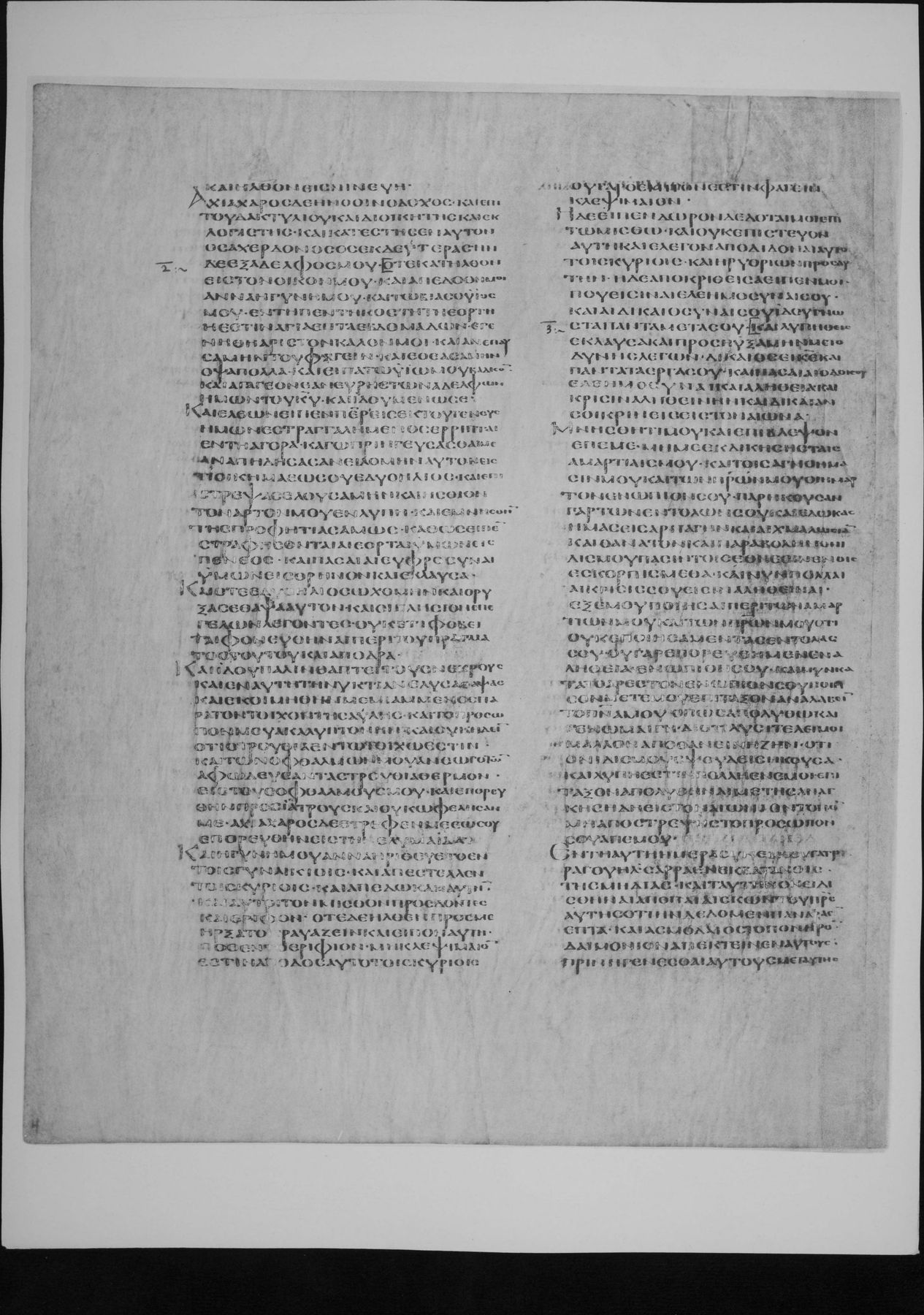
Tobit 1 in the Greek Old Testament (the Septuagint) as written in Codex Alexandrinus, a Greek Bible copied in the fifth century, probably in Egypt, and now in the British Library (Royal MS 1 D. VI, the second of its four volumes). It is one of the three great early codices of the whole Greek Bible, with Codex Vaticanus and Codex Sinaiticus.
Two Greek forms of Tobit: Tobit survives in a shorter and a longer Greek form. Codex Alexandrinus, like Codex Vaticanus, has the shorter form, which Swete prints from Vaticanus as his main text (he prints the longer form of Codex Sinaiticus beneath it; that form is not used here). Brenton's English also translates the shorter form.
Numbering: Swete's Greek and Brenton's English number or divide some verses of this chapter differently (Swete 1:6-7 = Brenton 1:6-7). Each column keeps its own verse numbers, and sections are cut only where the two texts agree, so each section holds the same passage in both languages.
This entry meets the strict three-criteria standard of the Theosis Library:
- Manuscript scan: the pages of Codex Alexandrinus carrying this chapter (fol. 424r, fol. 424v), from the full-size photographic (autotype) facsimile published by the British Museum in 1879-1883, as digitised on the Internet Archive. The verse range of every page comes from the reduced photographic facsimile of 1936, which prints it beneath each plate, and the opening words of every page were read on the plate to confirm the page and the verse it begins with. Each section links to the page or pages that hold its verses. Folio numbers are those written at the head of each leaf and visible on the plates.
- Original text: Swete's edition, which here prints the text of Codex Vaticanus (Vat. gr. 1209), the base of his edition, and gives the readings of Alexandrinus only in his apparatus. The Greek column is therefore Vaticanus' text; where Alexandrinus differs, the plate shows what Alexandrinus reads.
- English translation: Sir Lancelot C. L. Brenton, The Septuagint Version of the Old Testament (1844; 1851 edition), a translation of the Greek, public domain, from the eBible.org text.
How was this verified? (Provenance)
Where on the image
Tobit 1:1-8 is on fol. 424r (full-size facsimile of 1879-83, Internet Archive codex-alexandrinus leaf 872). The 1936 reduced facsimile prints beneath this page: Tobit i. 1-22. Checked on the plate: the page begins at the start of Tobit 1:1 (first words read: ΒΙΒΛΟΣ ΛΟΓΩΝ ΤΩΒΙΤ ΤΟΥ ΤΩΒΙΗΛ ΤΟΥ ΑΝΑΝΙΗΛ ΤΟΥ ΑΔΟΥΗΛ ΤΟΥ ΓΑΒΑΗΛ).
1ΒΙΒΛΟΣ λόγων Τωβεὶτ τοῦ Τωβιὴλ τοῦ Ἁνανιὴλ τοῦ Ἀδουὴλ τοῦ Γαβαήλ, ἐκ τοῦ σπέρματος Ἀσιήλ, ἐκ τῆς φυλῆς Νεφθαλείμ, 2ὃς ᾐχμαλωτεύθη ἐν ἡμέραις Ἐνεμεσσάρου τοῦ βασιλέως Ἀσσυρίων ἐκ Θίσβης, ἥ ἐστιν ἐκ δεξιῶν Κυδιὼς τῆς Νεφθαλεὶμ ἐν τῇ Γαλειλαίᾳ ὑπεράνω Ἀσήρ. 3Ἐγὼ Τωβεὶτ ὁδοῖς ἀληθείας ἐπορευόμην καὶ δικαιοσύνῃ πάσας τὰς ἡμέρας τῆς ζωῆς μου. καὶ ἐλεημοσύνας πολλὰς ἐποίησα τοῖς ἀδελφοῖς μου καὶ τῷ ἔθνει τοῖς προπορευθεῖσιν μετ᾽ ἐμοῦ εἰς χώραν Ἀσσυρίων εἰς Νινευή. 4καὶ ὅτε ἤμην ἐν τῇ χώρᾳ μου ἐν τῇ γῇ Ἰσραήλ, νεωτέρου μου ὄντος, πᾶσα φυλὴ τοῦ Νεφθαλεὶμ τοῦ πατρός μου ἀπέστη ἀπὸ τοῦ οἴκου Ἰεροσολύμων, τῆς ἐκλεγείσης ἀπὸ πασῶν τῶν φυλῶν Ἰσραὴλ εἰς τὸ θυσιάζειν πάσας τὰς φυλάς· καὶ ἡγιάσθη ὁ ναὸς τῆς κατασκηνώσεως τοῦ ὑψίστου καὶ ᾠκοδομήθη εἰς πάσας τὰς γενεὰς τοῦ αἰῶνος· 5καὶ πᾶσαι αἱ φυλαὶ αἱ συναποστᾶσαι ἔθυον τῇ Βάαλ τῇ δαμάλει, καὶ ὁ οἶκος Νεφθαλεὶμ τοῦ πατρός μου. 6κἀγὼ μόνος ἐπορευόμην πλεονάκις ἐν Ἰεροσολύμοις ταῖς ἑορταῖς, καθὼς γέγραπται παντὶ τῷ Ἰσραὴλ ἐν προστάγματι αἰωνίῳ, τὰς ἀπαρχὰς καὶ τὰς δεκάτας τῶν γενημάτων καὶ τὰς προκουρίας ἔχων· 7καὶ ἐδίδουν αὐτὰς τοῖς ἱερεῦσιν τοῖς υἱοῖς Ἀαρὼν πρὸς τὸ θυσιαστήριον τῶν γενημάτων· τὴν δεκάτην ἐδίδουν τοῖς υἱοῖς Λευεὶ τοῖς θεραπεύουσιν εἰς Ἰερουσαλήμ, καὶ τὴν δευτέραν δεκάτην ἀπεπρατιζόμην, καὶ ἐπορευόμην καὶ ἐδαπάνων αὐτὰ ἐν Ἰεροσολύμοις καθ᾽ ἕκαστον ἐνιαυτόν· 8καὶ τὴν τρίτην ἐδίδουν οἷς καθήκει, καθὼς ἐνετείλατο Δεββώρα ἡ μήτηρ τοῦ πατρός μου, διότι ὀρφανὸς κατελείφθην ὑπὸ τοῦ πατρός μου.
1The book of the words of Tobit, the son of Tobiel, the son of Ananiel, the son of Aduel, the son of Gabael, of the seed of Asael, of the tribe of Nephthali; 2who in the time of Enemessar king of the Assyrians was led captive out of Thisbe, which is at the right hand of that city, which is called properly Nephthali in Galilee above Aser. 3I Tobit have walked all the days of my life in the way of truth and justice, and I did many alms-deeds to my brethren, and my nation, who came with me to Nineve, into the land of the Assyrians. 4And when I was in mine own country, in the land of Israel, being but young, all the tribe of Nephthali my father fell from the house of Jerusalem, which was chosen out of all the tribes of Israel, that all the tribes should sacrifice there, and, where the temple of the habitation of the most High was consecrated and built for all ages. 5Now all the tribes which together revolted, and the house of my father Nephthali, sacrificed unto the heifer Baal. 6But I alone went often to Jerusalem at the feasts, as it was ordained unto all the people of Israel by an everlasting decree, having the first-fruits and tenths of increase, with that which was first shorn; and them gave I at the altar to the priests the children of Aaron. 7The first tenth part of all increase I gave to the sons of Aaron, who ministered at Jerusalem: another tenth part I sold away, and went, and spent it every year at Jerusalem: 8and the third I gave unto them to whom it was meet, as Debora my father's mother had commanded me, because I was left an orphan by my father.
Where on the image
Tobit 1:9-16 is on fol. 424r (full-size facsimile of 1879-83, Internet Archive codex-alexandrinus leaf 872). The 1936 reduced facsimile prints beneath this page: Tobit i. 1-22. Checked on the plate: the page begins at the start of Tobit 1:1 (first words read: ΒΙΒΛΟΣ ΛΟΓΩΝ ΤΩΒΙΤ ΤΟΥ ΤΩΒΙΗΛ ΤΟΥ ΑΝΑΝΙΗΛ ΤΟΥ ΑΔΟΥΗΛ ΤΟΥ ΓΑΒΑΗΛ).
9καὶ ὅτε ἐγενόμην ἀνήρ, ἔλαβον Ἅνναν γυναῖκα ἐκ τοῦ σπέρματος τῆς πατριᾶς ἡμῶν, καὶ ἐγέννησα ἐξ αὐτῆς Τωβίαν. 10καὶ ὅτε ᾐχμαλωτίσθημεν εἰς Νινευή, πάντες οἱ ἀδελφοί μου καὶ οἱ ἐκ τοῦ γένους ἤσθιον ἐκ τῶν ἄρτων τῶν ἐθνῶν· 11ἐγὼ δὲ συνετήρησα τὴν ψυχήν μου μὴ φαγεῖν, 12καθότι ἐμεμνήμην τοῦ θεοῦ ἐν ὅλῃ τῇ ψυχῇ μου. 13καὶ ἔδωκεν ὁ ὕψιστος χάριν καὶ μορφὴν ἐνώπιον Ἐνεμεσσάρου, καὶ ἤμην αὐτοῦ ἀγοραστής. 14ἐπορευόμην εἰς τὴν Μηδίαν, καὶ παρεθέμην Γαβαήλῳ τῷ ἀδελφῷ Γαβρία ἐν Ῥάγοις τῆς Μηδίας ἀργυρίου τάλαντα δέκα. 15Καὶ ὅτε ἀπέθανεν Ἐνεμεσσάρ, ἐβασίλευσεν Ἀχηρεὶλ ὁ υἱὸς αὐτοῦ ἀντ᾽ αὐτοῦ, καὶ αἱ ὁδοί αὐτοῦ ἠκαταστάτησαν καὶ οὐκέτι ἠδυνάσθην πορευθῆναι εἰς τὴν Μηδείαν. 16καὶ ἐν ταῖς ἡμέραις Ἐνεμεσσάρου ἐλεημοσύνας πολλὰς ἐποίουν τοῖς ἀδελφοῖς μου·
9Furthermore, when I was come to the age of a man, I married Anna of mine own kindred, and of her I begat Tobias. 10And when we were carried away captives to Nineve, all my brethren and those that were of my kindred did eat of the bread of the Gentiles. 11But I kept myself from eating; 12because I remembered God with all my heart. 13And the most High gave me grace and favour before Enemessar, so that I was his purveyor. 14And I went into Media, and left in trust with Gabael, the brother of Gabrias, at Rages a city of Media, ten talents of silver. 15Now when Enemessar was dead, Sennacherib his son reigned in his stead; whose estate was troubled, that I could not go into Media. 16And in the time of Enemessar I gave many alms to my brethren, and gave my bread to the hungry,
Where on the image
Tobit 1:17-22 is on fol. 424r (full-size facsimile of 1879-83, Internet Archive codex-alexandrinus leaf 872). The 1936 reduced facsimile prints beneath this page: Tobit i. 1-22. Checked on the plate: the page begins at the start of Tobit 1:1 (first words read: ΒΙΒΛΟΣ ΛΟΓΩΝ ΤΩΒΙΤ ΤΟΥ ΤΩΒΙΗΛ ΤΟΥ ΑΝΑΝΙΗΛ ΤΟΥ ΑΔΟΥΗΛ ΤΟΥ ΓΑΒΑΗΛ). Tobit 1:22 is on fol. 424v (full-size facsimile of 1879-83, Internet Archive codex-alexandrinus leaf 873). The 1936 reduced facsimile prints beneath this page: Tobit i. 22-iii. 8. Checked on the plate: the page begins inside Tobit 1:22 (first words read: ΚΑΙ ΗΛΘΟΝ ΕΙΣ ΝΙΝΕΥΗ ΑΧΙΑΧΑΡΟΣ ΔΕ ΗΝ Ο ΟΙΝΟΧΟΟΣ ΚΑΙ ΕΠΙ ΤΟΥ ΔΑΚΤΥΛΙΟΥ).
17τοὺς ἄρτους μου ἐδίδουν τοῖς πεινῶσιν καὶ ἱμάτια τοῖς γυμνοῖς, καὶ εἴ τινα ἐκ τοῦ γένους μου ἐθεώρουν τεθνηκότα καὶ ῥεριμμένον ὀπίσω τοῦ τείχους Νινευή, ἔθαπτον αὐτόν. 18καὶ εἴ τινα ἀπέκτεινεν Ἀχηρεὶλ ὁ βασιλεύς, ὅτε ἦλθεν φεύγων ἐκ τῆς Ἰουδαίας, ἔθαψα αὐτοὺς κλέπτων· πολλοὺς γὰρ ἀπέκτεινεν ἐν τῷ θυμῷ αὐτοῦ· καὶ ἐζητήθη ὑπὸ τοῦ βασιλέως τὰ σώματα, καὶ οὐχ εὑρέθη. 19πορευθεὶς δὲ εἷς τῶν ἐν Νινευὴ ὑπέδειξε τῷ βασιλεῖ περὶ ἐμοῦ ὅτι θάπτω αὐτούς, καὶ ἐκρύβην· ἐπιγνοὺς δὲ ὅτι ζητοῦμαι ἀποθανεῖν, φοβηθεὶς ἀνεχώρησα. 20καὶ διηρπάγη πάντα τὰ ὑπάρχοντά μου, καὶ οὐ κατελείφθη μοι οὐδὲν πλὴν Ἅννας τῆς γυναικός μου καὶ Τωβεὶτ τοῦ υἱοῦ μου. 21καὶ οὐ διῆλθον ἡμέραι πεντήκοντα ἕως οὗ ἀπέκτειναν αὐτὸν οἱ δύο υἱοὶ αὐτοῦ, καὶ ἔφυγον εἰς τὰ ὄρη Ἀραράθ· καὶ ἐβασίλευσεν Σαχερδονὸς ὁ υἱὸς αὐτοῦ ἀντ᾽ αὐτοῦ, καὶ ἔταξεν Ἀχιάχαρον τὸν Ἁναὴλ υἱὸν τοῦ ἀδελφοῦ μου ἐπὶ πᾶσαν τὴν ἐκλογιστείαν τῆς βασιλείας αὐτοῦ καὶ ἐπὶ πᾶσαν τὴν διοίκησιν. 22καὶ ἠξίωσεν Ἀχιάχαρος περὶ ἐμοῦ, καὶ ἦλθον εἰς Νινευή. Ἀχιάχαρος δὲ ἦν ὁ οἰνοχόος καὶ ἐπὶ τοῦ δακτυλίου καὶ διοικητὴς καὶ ἐκλογιστής, καὶ κατέστησεν αὐτὸν ὁ Σαχερδονός, υἱὸς ἐκ δευτέρας· ἦν δὲ ἐξάδελφός μου.
17and my clothes to the naked: and if I saw any of my nation dead, or cast about the walls of Nineve, I buried him. 18And if the king Sennacherib had slain any, when he was come, and fled from Judea, I buried them privily; for in his wrath he killed many; but the bodies were not found, when they were sought for of the king. 19And when one of the Ninevites went and complained of me to the king, that I buried them, and hid myself; understanding that I was sought for to be put to death, I withdrew myself for fear. 20Then all my goods were forcibly taken away, neither was there any thing left me, beside my wife Anna and my son Tobias. 21And there passed not fifty days, before two of his sons killed him, and they fled into the mountains of Ararath; and Sarchedonus his son reigned in his stead; who appointed over his father's accounts, and over all his affairs, Achiacharus my brother Anael's son. 22And Achiacharus intreating for me, I returned to Nineve. Now Achiacharus was cupbearer, and keeper of the signet, and steward, and overseer of the accounts: and Sarchedonus appointed him next unto him: and he was my brother's son.
Cite
Sources
- Source: Codex Alexandrinus (British Library Royal MS 1 D. VI) via the British Museum photographic facsimiles of 1879-83 and 1936 (Internet Archive) + Swete's Septuagint + Brenton's English (holding institution)
- Critical edition: H. B. Swete, The Old Testament in Greek according to the Septuagint (1909)
← previous · → next · v cycle view · l back to library