Esther, Chapter 2 (Codex Alexandrinus)
Introduction
Esther 2 in the Greek Old Testament (the Septuagint) as written in Codex Alexandrinus, a Greek Bible copied in the fifth century, probably in Egypt, and now in the British Library (Royal MS 1 D. VI, the second of its four volumes). It is one of the three great early codices of the whole Greek Bible, with Codex Vaticanus and Codex Sinaiticus.
The Greek additions: the Greek book of Esther has six passages that the Hebrew book lacks (often lettered A to F; in the Latin Bible they are gathered as 10:4-16:24). Swete prints them in their places in the story, inside the verses they follow (1:1, 3:13, 4:17, 5:1-2, 8:12 and 10:3), marking their own verses with numbers in square brackets, and Brenton's English does the same. The captions of the 1936 facsimile name them by letter and by their Latin chapter and verse.
This entry meets the strict three-criteria standard of the Theosis Library:
- Manuscript scan: the pages of Codex Alexandrinus carrying this chapter (fol. 418v, fol. 419r), from the full-size photographic (autotype) facsimile published by the British Museum in 1879-1883, as digitised on the Internet Archive. The verse range of every page comes from the reduced photographic facsimile of 1936, which prints it beneath each plate, and the opening words of every page were read on the plate to confirm the page and the verse it begins with. Each section links to the page or pages that hold its verses. Folio numbers are those written at the head of each leaf and visible on the plates.
- Original text: Swete's edition, which here prints the text of Codex Vaticanus (Vat. gr. 1209), the base of his edition, and gives the readings of Alexandrinus only in his apparatus. The Greek column is therefore Vaticanus' text; where Alexandrinus differs, the plate shows what Alexandrinus reads.
- English translation: Sir Lancelot C. L. Brenton, The Septuagint Version of the Old Testament (1844; 1851 edition), a translation of the Greek, public domain, from the eBible.org text.
How was this verified? (Provenance)
Where on the image
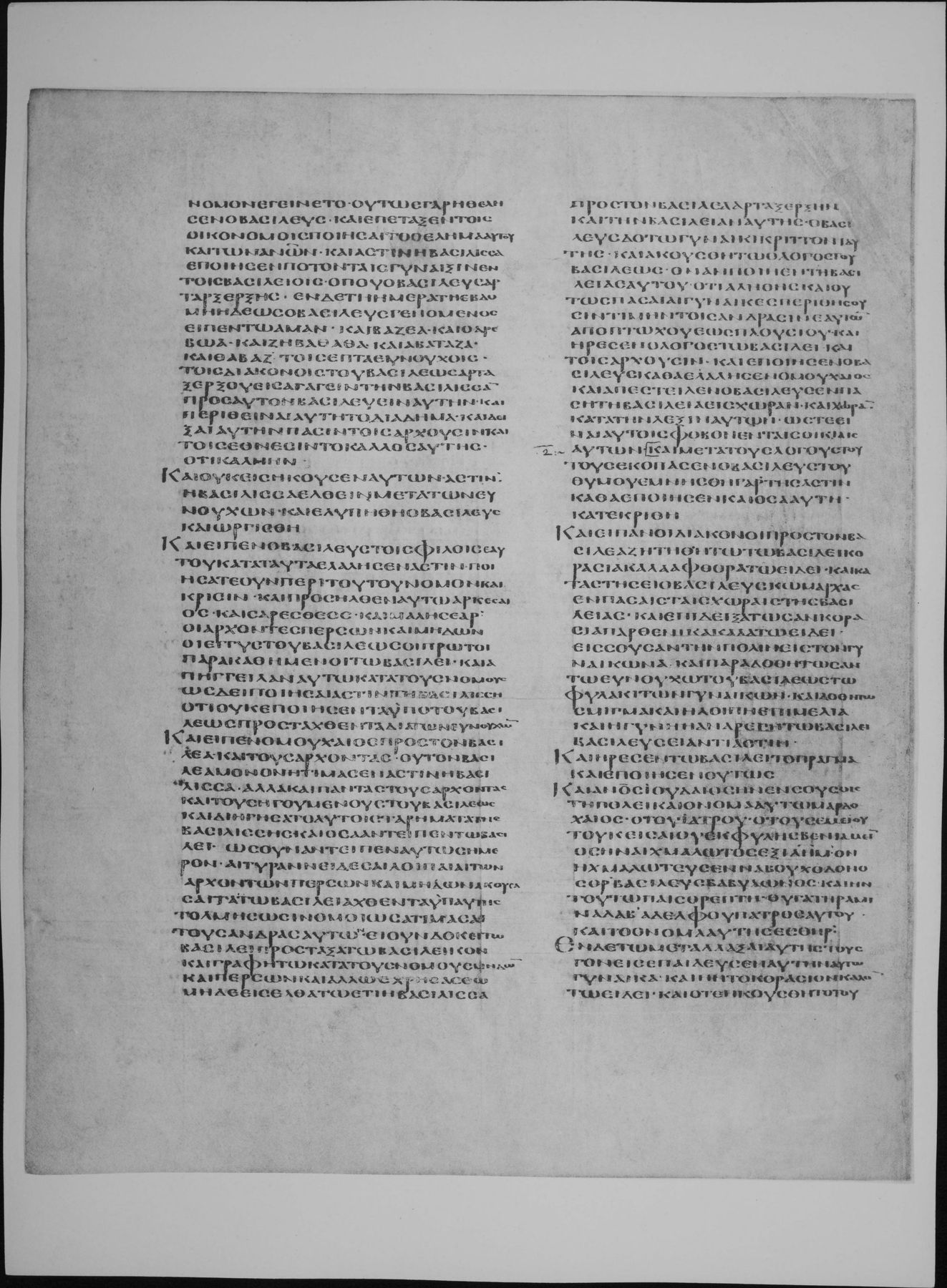
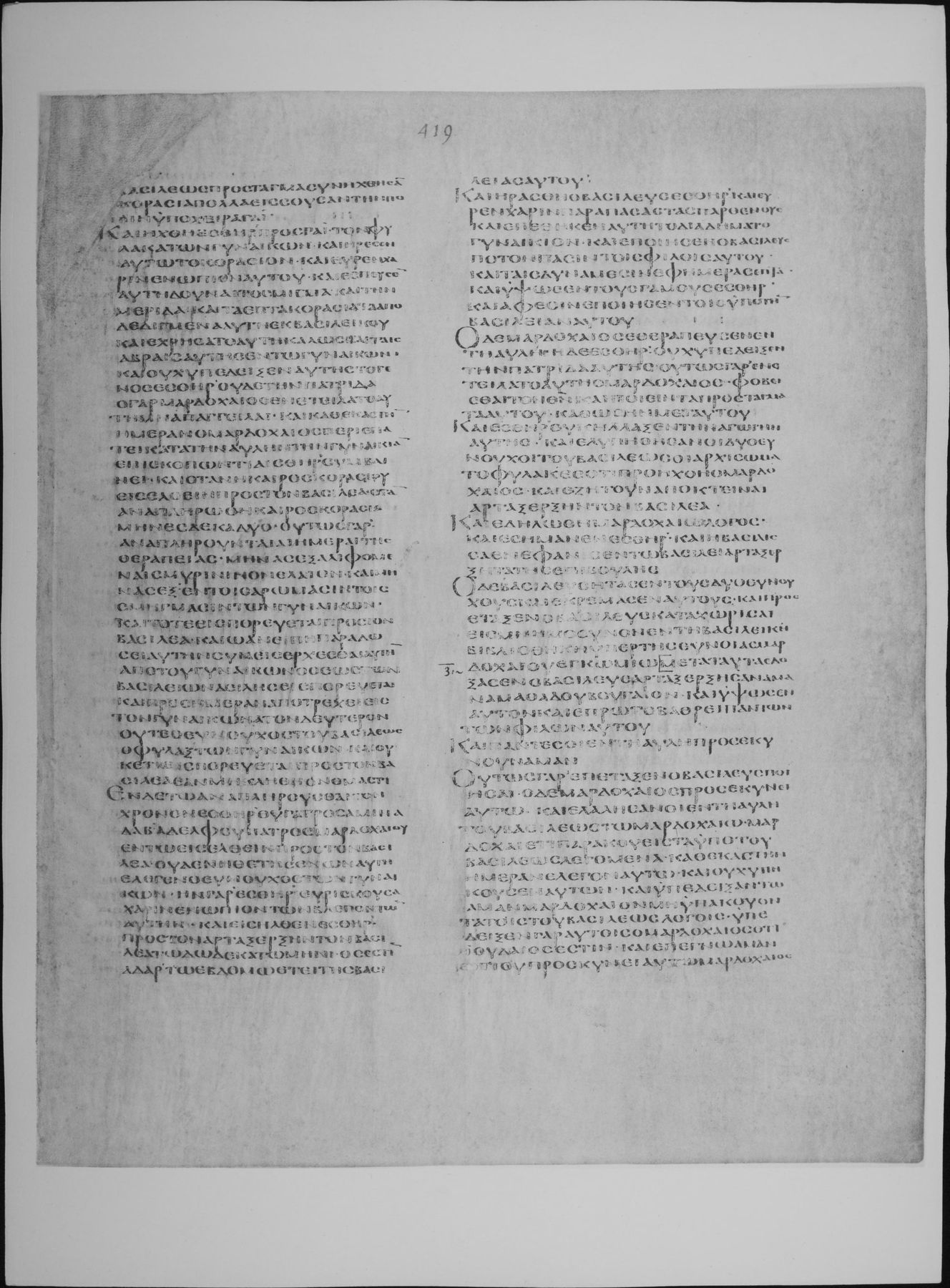
Esther 2:1-8 is on fol. 418v (full-size facsimile of 1879-83, Internet Archive codex-alexandrinus leaf 861). The 1936 reduced facsimile prints beneath this page: Esther i. 8-ii. 8. Checked on the plate: the page begins inside Esther 1:8 (first words read: ΝΟΜΟΝ ΕΓΕΙΝΕΤΟ ΟΥΤΩΣ ΓΑΡ ΗΘΕΛΗΣΕΝ Ο ΒΑΣΙΛΕΥΣ ΚΑΙ ΕΠΕΤΑΞΕΝ ΤΟΙΣ ΟΙΚΟΝΟΜΟΙΣ). Esther 2:8 is on fol. 419r (full-size facsimile of 1879-83, Internet Archive codex-alexandrinus leaf 862). The 1936 reduced facsimile prints beneath this page: Esther ii. 8-iii. 5. Checked on the plate: the page begins inside Esther 2:8 (first words read: ΣΙΛΕΩΣ ΠΡΟΣΤΑΓΜΑ ΣΥΝΗΧΘΗΣΑΝ ΚΟΡΑΣΙΑ ΠΟΛΛΑ ΕΙΣ ΣΟΥΣΑΝ ΤΗΝ ΠΟΛΙΝ ΥΠΟ ΧΕΙΡΑ ΓΑΙ). Note: the first letters of the column are hidden by a fold in the leaf.
1Καὶ μετὰ τοὺς λόγους τούτους ἐκόπασεν ὁ βασιλεὺς τοῦ θυμοῦ, καὶ οὐκέτι ἐμνήσθη τῆς Ἀστίν, μνημονεύων οἷα ἐλάλησεν καὶ ὡς κατέκρινεν αὐτήν. 2καὶ εἶπαν οἱ διάκονοι τοῦ βασιλέως Ζητηθήτω τῷ βασιλεῖ κοράσια ἄφθορα καλὰ τῷ εἴδει· 3καὶ καταστήσει ὁ βασιλεὺς κωμάρχας ἐν πάσαις ταῖς χώραις τῆς βασιλείας αὐτοῦ, καὶ ἐπιλεξάτωσαν κοράσια παρθενικὰ καλὰ τῷ εἴδει εἰς Σουσὰν τὴν πόλιν εἰς τὸν γυναικῶνα, καὶ παραδοθήτωσαν τῷ εὐνούχῳ τοῦ βασιλέως τῷ φύλακι τῶν γυναικῶν, καὶ δοθήτω σμῆγμα καὶ ἡ λοιπὴ ἐπιμέλεια· 4καὶ ἡ γυνὴ ἣ ἂν ἀρέσῃ τῷ βασιλεῖ βασιλεύσει ἀντὶ Ἀστίν. καὶ ἤρεσεν τῷ βασιλεῖ τὸ πρόσταγμα, καὶ ἐποίησεν οὕτως. 5Καὶ ἄνθρωπος ἦν Ἰουδαῖος ἐν Σούσοις τῇ πόλει, καὶ ὄνομα αὐτῷ Μαρδοχαῖος ὁ τοῦ Ἰαείρου τοῦ Σεμεείου τοῦ Κεισαίου ἐκ φυλῆς Βενιαμείν, 6ὃς ἦν αἰχμάλωτος ἐξ Ἰερουσαλὴμ ἣν ᾐχμαλώτευσεν Ναβουχοδονοσὸρ βασιλεὺς Βαβυλῶνος. 7καὶ ἦν τούτῳ παῖς θρεπτή, θυγάτηρ Ἀμειναδὰβ ἀδελφοῦ πατρὸς αὐτοῦ, καὶ ὄνομα αὐτῇ Ἐσθήρ· ἐν δὲ τῷ μεταλλάξαι αὐτῆς τοὺς γονεῖς ἐπαίδευσεν αὐτὴν ἑαυτῷ εἰς γυναῖκα· καὶ ἦν τὸ κοράσιον καλὸν τῷ εἴδει. 8καὶ ὅτε ἠκούσθη τὸ τοῦ βασιλέως πρόσταγμα, συνήχθησαν κοράσια πολλὰ εἰς Σουσὰν τὴν πόλιν ὑπὸ χεῖρα Γαί, καὶ ἤχθη Ἐσθὴρ πρὸς Γαὶ τὸν φύλακα τῶν γυναικῶν.
1And after this the king's anger was pacified, and he no more mentioned Astin, bearing in mind what she had said, and how he had condemned her. 2Then the servants of the king said, Let there be sought for the king chaste and beautiful young virgins. 3And let the king appoint local governors in all the provinces of his kingdom, and let them select fair and chaste young damsels and bring them to the city Susa, into the women's apartment, and let them be consigned to the king's chamberlain, the keeper of the women; and let things for purification and other attendance be given to them. 4And let the woman who shall please the king be queen instead of Astin. And the thing pleased the king; and he did so. 5Now there was a Jew in the city Susa, and his name was Mardochæus, the son of Jairus, the son of Semeias, the son of Cisæus, of the tribe of Benjamin; 6who had been brought a prisoner from Jerusalem, which Nabuchodonosor king of Babylon had carried into captivity. 7And he had a foster-child, daughter of Aminadab his father's brother, and her name was Esther; and when her parents were dead, he brought her up for a wife for himself: and the damsel was beautiful. 8And because the king's ordinance was published, many damsels were gathered to the city Susa under the hand of Gai; and Esther was brought to Gai the keeper of the women.
Where on the image
Esther 2:9-16 is on fol. 419r (full-size facsimile of 1879-83, Internet Archive codex-alexandrinus leaf 862). The 1936 reduced facsimile prints beneath this page: Esther ii. 8-iii. 5. Checked on the plate: the page begins inside Esther 2:8 (first words read: ΣΙΛΕΩΣ ΠΡΟΣΤΑΓΜΑ ΣΥΝΗΧΘΗΣΑΝ ΚΟΡΑΣΙΑ ΠΟΛΛΑ ΕΙΣ ΣΟΥΣΑΝ ΤΗΝ ΠΟΛΙΝ ΥΠΟ ΧΕΙΡΑ ΓΑΙ). Note: the first letters of the column are hidden by a fold in the leaf.
9καὶ ἤρεσεν αὐτῷ τὸ κοράσιον, καὶ εὗρεν χάριν ἐνώπιον αὐτοῦ· καὶ ἔσπευσεν αὐτῇ δοῦναι τὸ σμῆγμα καὶ τὴν μερίδα καὶ τὰ ἑπτὰ κοράσια τὰ ἀποδεδιγμένα αὐτῇ ἐκ βασιλικοῦ, καὶ ἐχρήσατο αὐτῇ καλῶς καὶ ταῖς ἅβραις αὐτῆς ἐν τῷ γυναικῶνι· 10καὶ οὐχ ὑπέδειξεν Ἐσθὴρ τὸ γένος αὐτῆς οὐδὲ τὴν πατρίδα· ὁ γὰρ Μαρδοχαῖος ἐνετείλατο αὐτῇ μὴ ἀπαγγεῖλαι. 11καθ᾽ ἑκάστην δὲ ἡμέραν ὁ Μαρδοχαῖος περιεπάτει κατὰ τὴν αὐλὴν τὴν γυναικείαν, ἐπισκοπῶν τί Ἐσθὴρ συμβήσεται. 12οὗτος δὲ ἦν καιρὸς κορασίου εἰσελθεῖν πρὸς τὸν βασιλέα, ὅταν ἀναπληρώσῃ μῆνας ιβ᾽· οὕτως γὰρ ἀναπληροῦνται αἱ ἡμέραι τῆς θεραπείας, μῆνας ἓξ ἀλιφόμεναι ἐν σμυρνίνῳ ἐλαίῳ, καὶ μῆνας ἓξ ἐν τοῖς ἀρώμασιν καὶ ἐν τοῖς σμήγμασιν τῶν γυναικῶν, 13καὶ τότε εἰσπορεύεται πρὸς τὸν βασιλέα· καὶ ᾧ ἐὰν εἴπῃ, παραδώσει αὐτὴν συνεισέρχεσθαι αὐτῷ ἀπὸ τοῦ γυναικῶνος ἕως τῶν βασιλείων. 14δείλης εἰσπορεύεται, καὶ πρὸς ἡμέραν ἀποτρέχει εἰς τὸν γυναικῶνα τὸν δεύτερον οὗ Γαὶ ὁ εὐνοῦχος τοῦ βασιλέως ὁ φύλαξ τῶν γυναικῶν, καὶ οὐκέτι εἰσπορεύεται πρὸς τὸν βασιλέα ἐὰν μὴ κληθῇ ὀνόματι. 15ἐν δὲ τῷ ἀναπληροῦσθαι τὸν χρόνον Ἐσθὴρ τῆς θυγατρὸς Ἀμειναδὰβ ἀδελφοῦ πατρὸς Μαρδοχαίου εἰσελθεῖν πρὸς τὸν βασιλέα, οὐδὲν ἠθέτησεν ὧν ἐνετείλατο ὁ εὐνοῦχος ὁ φύλαξ τῶν γυναικῶν· ἦν γὰρ Ἐσθὴρ εὑρίσκουσα χάριν παρὰ πάντων τῶν βλεπόντων αὐτήν. 16καὶ εἰσῆλθεν Ἐσθὴρ πρὸς Ἀρταξέρξην τὸν βασιλέα τῷ δωδεκάτῳ μηνὶ ὅς ἐστιν Ἀδάρ, τῷ ἑβδόμῳ ἔτει τῆς βασιλείας αὐτοῦ.
9And the damsel pleased him, and she found favour in his sight; and he hasted to give her the things for purification, and her portion, and the seven maidens appointed her out of the palace: and he treated her and her maidens well in the women's apartment. 10But Esther discovered not her family nor her kindred: for Mardochæus had charged her not to tell. 11But Mardochæus used to walk every day by the women's court, to see what would become of Esther. 12Now this was the time for a virgin to go in to the king, when she should have fulfilled twelve months; for so are the days of purification fulfilled, six months while they are anointing themselves with oil of myrrh, and six months with spices and women's purifications. 13And then the damsel goes in to the king; and the officer to whomsoever he shall give the command, will bring her to come in with him from the women's apartment to the king's chamber. 14She enters in the evening, and in the morning she departs to the second women's apartment, where Gai the king's chamberlain is keeper of the women: and she goes not in to the king again, unless she should be called by name. 15And when the time was fulfilled for Esther the daughter of Aminadab the brother of Mardochæus' father to go in to the king, she neglected nothing which the chamberlain, the women's keeper, commanded; for Esther found grace in the sight of all that looked upon her. 16So Esther went in to king Artaxerxes in the twelfth month, which is Adar, in the seventh year of his reign.
Where on the image
Esther 2:17-23 is on fol. 419r (full-size facsimile of 1879-83, Internet Archive codex-alexandrinus leaf 862). The 1936 reduced facsimile prints beneath this page: Esther ii. 8-iii. 5. Checked on the plate: the page begins inside Esther 2:8 (first words read: ΣΙΛΕΩΣ ΠΡΟΣΤΑΓΜΑ ΣΥΝΗΧΘΗΣΑΝ ΚΟΡΑΣΙΑ ΠΟΛΛΑ ΕΙΣ ΣΟΥΣΑΝ ΤΗΝ ΠΟΛΙΝ ΥΠΟ ΧΕΙΡΑ ΓΑΙ). Note: the first letters of the column are hidden by a fold in the leaf.
17καὶ ἠράσθη ὁ βασιλεὺς Ἐσθήρ, καὶ εὗρεν χάριν παρὰ πάσας τὰς παρθένους, καὶ ἐπέθηκεν αὐτῇ τὸ διάδημα τὸ γυναικεῖον. 18καὶ ἐποίησεν ὁ βασιλεὺς πότον πᾶσι τοῖς φίλοις αὐτοῦ καὶ ταῖς δυνάμεσιν ἐπὶ ἡμέρας ἑπτά, καὶ ὕψωσεν τοὺς γάμους Ἐσθήρ, καὶ ἄφεσιν ἐποίησεν τοῖς ὑπὸ τὴν βασιλείαν αὐτοῦ. 19ὁ δὲ Μαρδοχαῖος ἐθεράπευεν ἐν τῇ αὐλῇ. 20ἡ δὲ Ἐσθὴρ οὐχ ὑπέδειξεν τὴν πατρίδα αὐτῆς· οὕτως γὰρ ἐνετείλατο αὐτῇ Μαρδοχαῖος, φοβεῖσθαι τὸν θεὸν καὶ ποιεῖν τὰ προστάγματα αὐτοῦ, καθὼς ἦν μετ᾽ αὐτοῦ· καὶ Ἐσθὴρ οὐ μετήλλαξεν τὴν ἀγωγὴν αὐτῆς. 21καὶ ἐλυπήθησαν οἱ δύο εὐνοῦχοι τοῦ βασιλέως οἱ ἀρχισωματοφύλακες ὅτι προήχθη Μαρδοχαῖος, καὶ ἐζήτουν ἀποκτεῖναι Ἀρταξέρξην τὸν βασιλέα. 22καὶ ἐδηλώθη Μαρδοχαίῳ ὁ λόγος, καὶ ἐσήμανεν Ἐσθήρ, καὶ αὐτὴ ἐνεφάνισεν τῷ βασιλεῖ τὰ τῆς ἐπιβουλῆς. 23ὁ δὲ βασιλεὺς ἤτασεν τοὺς δύο εὐνούχους καὶ ἐκρέμασεν αὐτούς· καὶ προσέταξεν ὁ βασιλεὺς καταχωρίσαι εἰς μνημόσυνον ἐν τῇ βασιλικῇ βιβλιοθήκῃ ὑπὲρ τῆς εὐνοίας Μαρδοχαίου ἐν ἐγκωμίῳ.
17And the king loved Esther, and she found favour beyond all the other virgins: and he put on her the queen's crown. 18And the king made a banquet for all his friends and great men for seven days, and he highly celebrated the marriage of Esther; and he made a release to those who were under his dominion. 19But Mardochæus served in the palace. 20Now Esther had not discovered her kindred; for so Mardochæus commanded her, to fear God, and perform his commandments, as when she was with him: and Esther changed not her manner of life. 21And two chamberlains of the king, the chiefs of the body-guard, were grieved, because Mardochæus was promoted; and they sought to kill king Artaxerxes. 22And the matter was discovered to Mardochæus, and he made it known to Esther, and she declared to the king the matter of the conspiracy. 23And the king examined the two chamberlains, and hanged them: and the king gave orders to make a note for a memorial in the royal records of the good offices of Mardochæus, as a commendation.
Cite
Sources
- Source: Codex Alexandrinus (British Library Royal MS 1 D. VI) via the British Museum photographic facsimiles of 1879-83 and 1936 (Internet Archive) + Swete's Septuagint + Brenton's English (holding institution)
- Critical edition: H. B. Swete, The Old Testament in Greek according to the Septuagint (1909)
← previous · → next · v cycle view · l back to library