Esther, Chapter 3 (Codex Alexandrinus)
Introduction
Esther 3 in the Greek Old Testament (the Septuagint) as written in Codex Alexandrinus, a Greek Bible copied in the fifth century, probably in Egypt, and now in the British Library (Royal MS 1 D. VI, the second of its four volumes). It is one of the three great early codices of the whole Greek Bible, with Codex Vaticanus and Codex Sinaiticus.
The Greek additions: the Greek book of Esther has six passages that the Hebrew book lacks (often lettered A to F; in the Latin Bible they are gathered as 10:4-16:24). Swete prints them in their places in the story, inside the verses they follow (1:1, 3:13, 4:17, 5:1-2, 8:12 and 10:3), marking their own verses with numbers in square brackets, and Brenton's English does the same. The captions of the 1936 facsimile name them by letter and by their Latin chapter and verse.
This entry meets the strict three-criteria standard of the Theosis Library:
- Manuscript scan: the pages of Codex Alexandrinus carrying this chapter (fol. 419r, fol. 419v, fol. 420r), from the full-size photographic (autotype) facsimile published by the British Museum in 1879-1883, as digitised on the Internet Archive. The verse range of every page comes from the reduced photographic facsimile of 1936, which prints it beneath each plate, and the opening words of every page were read on the plate to confirm the page and the verse it begins with. Each section links to the page or pages that hold its verses. Folio numbers are those written at the head of each leaf and visible on the plates.
- Original text: Swete's edition, which here prints the text of Codex Vaticanus (Vat. gr. 1209), the base of his edition, and gives the readings of Alexandrinus only in his apparatus. The Greek column is therefore Vaticanus' text; where Alexandrinus differs, the plate shows what Alexandrinus reads.
- English translation: Sir Lancelot C. L. Brenton, The Septuagint Version of the Old Testament (1844; 1851 edition), a translation of the Greek, public domain, from the eBible.org text.
How was this verified? (Provenance)
Where on the image
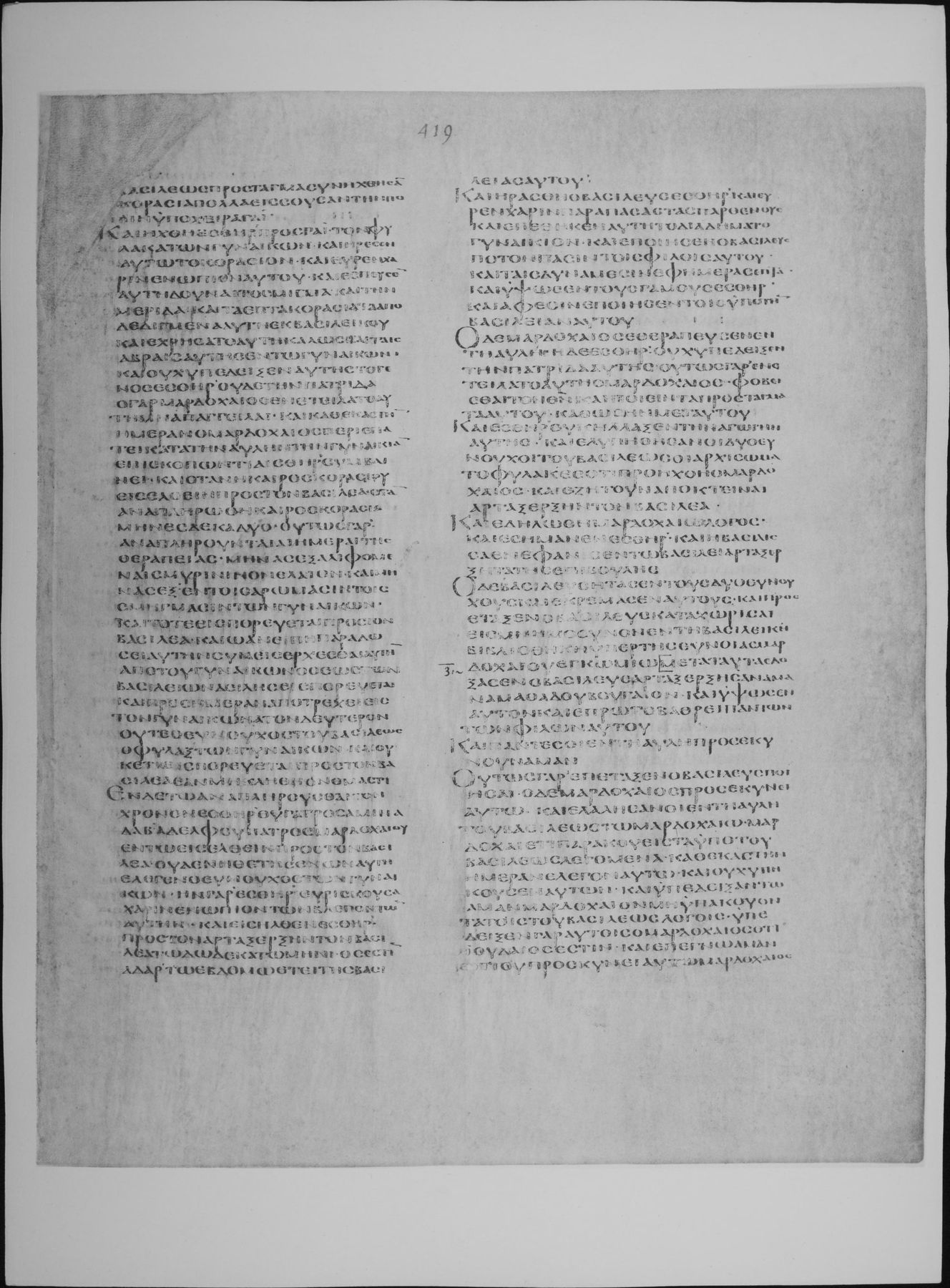
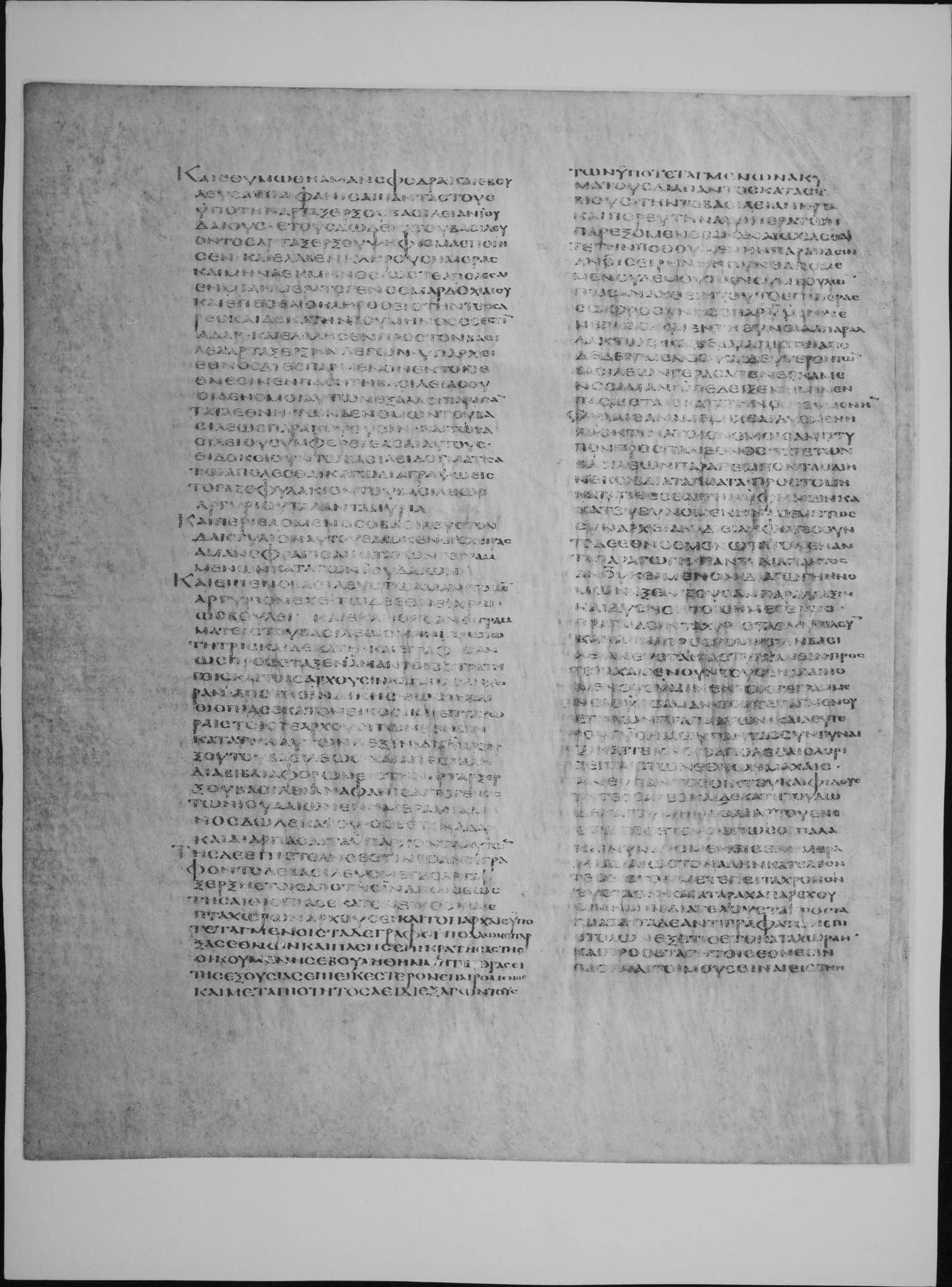
Esther 3:1-5 is on fol. 419r (full-size facsimile of 1879-83, Internet Archive codex-alexandrinus leaf 862). The 1936 reduced facsimile prints beneath this page: Esther ii. 8-iii. 5. Checked on the plate: the page begins inside Esther 2:8 (first words read: ΣΙΛΕΩΣ ΠΡΟΣΤΑΓΜΑ ΣΥΝΗΧΘΗΣΑΝ ΚΟΡΑΣΙΑ ΠΟΛΛΑ ΕΙΣ ΣΟΥΣΑΝ ΤΗΝ ΠΟΛΙΝ ΥΠΟ ΧΕΙΡΑ ΓΑΙ). Note: the first letters of the column are hidden by a fold in the leaf. Esther 3:5-8 is on fol. 419v (full-size facsimile of 1879-83, Internet Archive codex-alexandrinus leaf 863). The 1936 reduced facsimile prints beneath this page: Esther iii. 5-13, [B=xiii. 1-7], iii. 14. Checked on the plate: the page begins inside Esther 3:5 (first words read: ΚΑΙ ΕΘΥΜΩΘΗ ΑΜΑΝ ΣΦΟΔΡΑ ΚΑΙ ΕΒΟΥΛΕΥΣΑΤΟ ΑΦΑΝΙΣΑΙ ΠΑΝΤΑΣ ΤΟΥΣ ΥΠΟ ΤΗΝ ΑΡΤΑΞΕΡΞΟΥ ΒΑΣΙΛΕΙΑΝ ΙΟΥΔΑΙΟΥΣ).
1Μετὰ δὲ ταῦτα ἐδόξασεν ὁ βασιλεὺς Ἀρταξέρξης Ἁμὰν Ἁμαδάθου Βουγαῖον, καὶ ὕψωσεν αὐτὸν καὶ ἐπρωτοβάθρει πάντων τῶν φίλων αὐτοῦ. 2καὶ πάντες οἱ ἐν τῇ αὐλῇ προσεκύνουν αὐτῷ, οὕτως γὰρ προσέταξεν ὁ βασιλεὺς ποιῆσαι· ὁ δὲ Μαρδοχαῖος οὐ προσεκύνει αὐτῷ. 3καὶ ἐλάλησαν οἱ ἐν τῇ αὐλῇ τοῦ βασιλέως τῷ Μαρδοχαίῳ Μαρδοχαῖε, τί παρακούεις τὰ ὑπὸ τοῦ βασιλέως λεγόμενα; 4καθ᾽ ἑκάστην ἡμέραν ἐλάλουν αὐτῷ, καὶ οὐχ ὑπήκουεν αὐτῶν· καὶ ὑπέδειξαν τῷ Ἁμὰν Μαρδοχαῖον τοῖς τοῦ βασιλέως λόγοις ἀντιτασσόμενον· καὶ ὑπέδειξεν αὐτοῖς ὁ Μαρδοχαῖος ὅτι Ἰουδαῖός ἐστιν. 5καὶ ἐπιγνοὺς Ἁμὰν ὅτι οὐ προσκυνεῖ αὐτῷ Μαρδοχαῖος, ἐθυμώθη σφόδρα, 6καὶ ἐβουλεύσατο ἀφανίσαι πάντας τοὺς ὑπὸ τὴν Ἀρταξέρξου βασιλείαν Ἰουδαίους. 7καὶ ἐποίησεν ψήφισμα ἐν ἔτει δωδεκάτῳ τῆς βασιλείας Ἀρταξέρξου, καὶ ἔβαλεν κλήρους ἡμέραν ἐξ ἡμέρας καὶ μῆνα ἐκ μηνὸς ὥστε ἀπολέσαι ἐν μιᾷ ἡμέρᾳ τὸ γένος Μαρδοχαίου, καὶ ἔπεσεν ὁ κλῆρος εἰς τὴν τεσσαρεσκαιδεκάτην τοῦ μηνὸς ὅς ἐστιν Ἀδάρ. 8καὶ ἐλάλησεν πρὸς τὸν βασιλέα Ἀρταξέρξην λέγων Ὑπάρχει ἔθνος διεσπαρμένον ἐν τοῖς ἔθνεσιν ἐν πάσῃ τῇ βασιλείᾳ σου, οἱ δὲ νόμοι αὐτῶν ἔξαλλοι παρὰ πάντα τὰ ἔθνη, τῶν δὲ νόμων τοῦ βασιλέως παρακούουσιν, καὶ οὐ συμφέρει τῷ βασιλεῖ ἐᾶσαι αὐτούς.
1And after this king Artaxerxes highly honoured Aman son of Amadathes, the Bugæan, and exalted him, and set his seat above all his friends. 2And all in the palace did him obeisance, for so the king had given orders to do: but Mardochæus did not do him obeisance. 3And they in the king's palace said to Mardochæus, Mardochæus, why dost thou transgress the commands of the king? 4Thus they spoke daily to him, but he hearkened not unto them; so they represented to Aman that Mardochæus resisted the commands of the king: and Mardochæus had shewn to them that he was a Jew. 5And when Aman understood that Mardochæus did not obeisance to him, he was greatly enraged, 6and took counsel to destroy utterly all the Jews who were under the rule of Artaxerxes. 7And he made a decree in the twelfth year of the reign of Artaxerxes, and cast lots daily and monthly, to slay in one day the race of Mardochæus: and the lot fell on the fourteenth day of the month which is Adar. 8And he spoke to king Artaxerxes, saying, There is a nation scattered among the nations in all thy kingdom, and their laws differ from those of all the other nations; and they disobey the laws of the king; and it is not expedient for the king to let them alone.
Where on the image
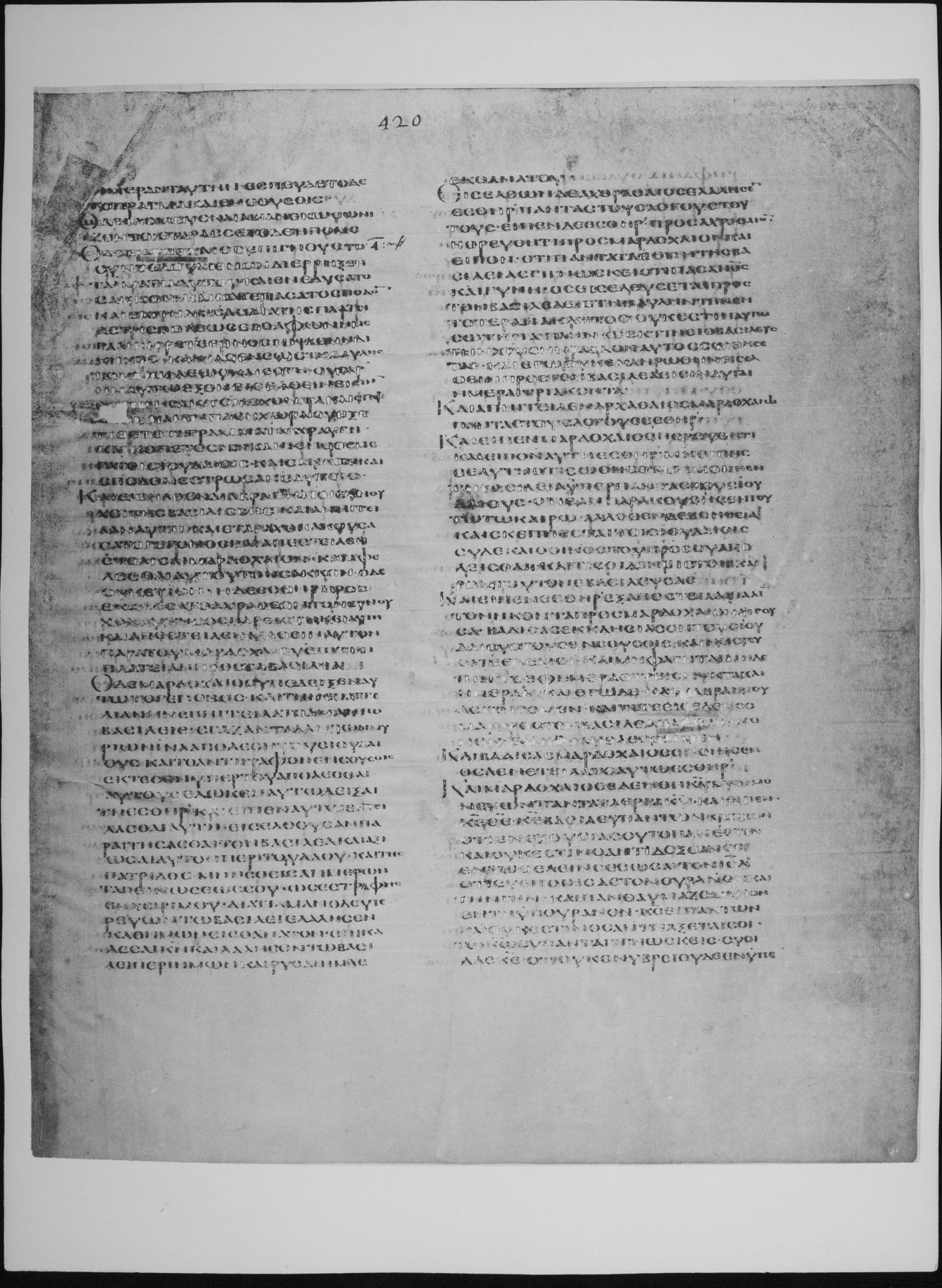
Esther 3:9-14 is on fol. 419v (full-size facsimile of 1879-83, Internet Archive codex-alexandrinus leaf 863). The 1936 reduced facsimile prints beneath this page: Esther iii. 5-13, [B=xiii. 1-7], iii. 14. Checked on the plate: the page begins inside Esther 3:5 (first words read: ΚΑΙ ΕΘΥΜΩΘΗ ΑΜΑΝ ΣΦΟΔΡΑ ΚΑΙ ΕΒΟΥΛΕΥΣΑΤΟ ΑΦΑΝΙΣΑΙ ΠΑΝΤΑΣ ΤΟΥΣ ΥΠΟ ΤΗΝ ΑΡΤΑΞΕΡΞΟΥ ΒΑΣΙΛΕΙΑΝ ΙΟΥΔΑΙΟΥΣ). Esther 3:14-15 is on fol. 420r (full-size facsimile of 1879-83, Internet Archive codex-alexandrinus leaf 864). The 1936 reduced facsimile prints beneath this page: Esther iii. 14-iv. 17, [C=xiii. 8-12]. Checked on the plate: the page begins inside Esther 3:14 (first words read: ΗΜΕΡΑΝ ΤΑΥΤΗΝ ΕΣΠΕΥΔΕΤΟ ΔΕ ΤΟ ΠΡΑΓΜΑ ΚΑΙ ΕΙΣ ΣΟΥΣΑΝ). Note: the first words of the column are hidden by a fold in the leaf.
9εἰ δοκεῖ τῷ βασιλεῖ, δογματισάτω ἀπολέσαι αὐτούς, κἀγὼ διαγράψω εἰς τὸ γαζοφυλάκιον τοῦ βασιλέως ἀργυρίου τάλαντα μύρια. 10καὶ περιελόμενος ὁ βασιλεὺς τὸν δακτύλιον ἔδωκεν εἰς χεῖρα τῷ Ἁμάν, σφραγίσαι κατὰ τῶν γεγραμμένων κατὰ τῶν Ἰουδαίων. 11καὶ εἶπεν ὁ βασιλεὺς τῷ Ἁμάν Τὸ μὲν ἀργύριον ἔχε, τῷ δὲ ἔθνει χρῶ ὡς βούλει. 12καὶ ἐκλὴθησαν οἱ γραμματεῖς τοῦ βασιλέως μηνὶ πρώτῳ τῇ τρισκαιδεκάτῃ, καὶ ἔγραψαν ὡς ἐπέταξεν Ἁμὰν τοῖς στρατηγοῖς καὶ τοῖς ἄρχουσιν κατὰ πᾶσαν χώραν ἀπὸ Ἰνδικῆς ἕως τῆς Αἰθιοπίας, ταῖς ἑκατὸν εἴκοσι ἑπτὰ χώραις, τοῖς τε ἄρχουσι τῶν ἐθνῶν κατὰ τὴν αὐτῶν λέξιν, δι᾽ Ἀρταξέρξου τοῦ βασιλέως. 13καὶ ἀπεστάλη διὰ βιβλιαφόρων εἰς τὴν Ἀρταξέρξου βασιλείαν, ἀφανίσαι τὸ γένος τῶν Ἰουδαίων ἐν ἡμέρᾳ μιᾷ μηνὸς δωδεκάτου, ὅς ἐστιν Ἀδάρ, καὶ διαρπάσαι τὰ ὑπάρχοντα αὐτῶν. [1] Τῆς δὲ ἐπιστολῆς ἐστὶν τὸ ἀντίγραφον τόδε Βασιλεὺς μέγας Ἀρταξέρξης τοῖς ἀπὸ τῆς Ἰνδικῆς ἕως τῆς Αἰθιοπίας ἑκατὸν εἴκοσι ἑπτὰ χωρῶν ἄρχουσι καὶ τοπάρχαις ὑποτεταγμένοις τάδε γράφει. [2] πολλῶν ἐπάρξας ἐθνῶν καὶ πάσης ἐπικρατήσας οἰκουμένης, ἐβουλήθην, μὴ τῷ θράσει τῆς ἐξουσίας ἐπαιρόμενος ἐπιεικέστερον δὲ καὶ μετὰ ἠπιότητος ἀεὶ διεξάγων, τοὺς τῶν ὑποτεταγμένων ἀκυμάτους διὰ παντὸς καταστῆσαι βίους, τήν τε βασιλείαν ἥμερον καὶ πορευτὴν μέχρι περάτων παρεξόμενος ἀνανεώσασθαί τε τὴν ποθουμένην τοῖς πᾶσιν ἀνθρώποις εἰρήνην. [3] πυθομένου δέ μου τῶν συμβούλων πῶς ἂν ἀχθείη τοῦτο ἐπὶ πέρας, σωφροσύνῃ παρ᾽ ἡμῖν διενέγκας καὶ ἐν τῇ εὐνοίᾳ ἀπαραλλάκτως καὶ βεβαίᾳ πίστει ἀποδεδιγμένος καὶ δεύτερον τῶν βασιλειῶν γέρας ἀπενηνεγμένος Ἁμὰν [4] ἐπέδειξεν ἡμῖν, ἐν πάσαις ταῖς κατὰ τὴν οἰκουμένην φυλαῖς ἀναμεμίχθαι δυσμενῆ λαόν τινα, τοῖς νόμοις ἀντίθετον πρὸς πᾶν ἔθνος, τά τε τῶν βασιλέων παραπέμποντας διηνεκῶς προστάγματα, πρὸς τὸ μὴ κατατίθεσθαι τὴν ὑφ᾽ ἡμῶν κατευθυνομένην ἀμέμπτως συναρχίαν. [5] διειληφότες οὖν τόδε τὸ ἔθνος μονώτατον ἐν ἀντιπαραγωγῇ παντὶ διὰ παντὸς ἀνθρώπῳ κείμενον, διαγωγὴν νόμων ξενίζουσαν παραλλάσσον, καὶ δυσνοοῦν τοῖς ἡμετέροις πράγμασιν τὰ χείριστα συντελοῦν κακὰ καὶ πρὸς τὸ μὴ τὴν βασιλείαν εὐσταθίας τυγχάνειν· [6] προστετάχαμεν οὖν τοὺς σημαινομένους ὑμῖν ἐν τοῖς γεγραμμένοις ὑπὸ Ἁμὰν τοῦ τεταγμένου ἐπὶ τῶν πραγμάτων καὶ δευτέρου πατρὸς ἡμῶν, πάντας σὺν γυναιξὶ καὶ τέκνοις ἀπολέσαι ὁλορριζεὶ ταῖς τῶν ἐχθρῶν μαχαίραις ἄνευ παντὸς οἴκτου καὶ φειδοῦς τῇ τεσσαρεσκαιδεκαίτῃ τοῦ δωδεκάτου μηνὸς Ἀδὰρ τοῦ ἐνεστῶτος ἔτους, [7] ὅπως οἱ πάλαι καὶ νῦν δυσμενεῖς ἐν ἡμέρᾳ μιᾷ βιαίως εἰς τὸν ᾅδην κατελθόντες εἰς τὸν μετέπειτα χρόνον εὐσταθῆ καὶ ἀτάραχα παρέχωσιν ἡμῖν διὰ τέλους τὰ πράγματα. 14τὰ δὲ ἀντίγραφα τῶν ἐπιστολῶν ἐξετίθετο κατὰ χώραν· καὶ προσετάγη πᾶσι τοῖς ἔθνεσιν ἑτοίμους εἶναι εἰς τὴν ἡμέραν ταύτην. 15ἐσπεύδετο δὲ τὸ πρᾶγμα καὶ εἰς Σουσάν· ὁ δὲ βασιλεὺς καὶ Ἁμὰν ἐκωθωνίζοντο, ἐταράσσετο δὲ ἡ πόλις.
9If it seem good to the king, let him make a decree to destroy them: and I will remit into the king's treasury ten thousand talents of silver. 10And the king took off his ring, and gave it into the hands of Aman, to seal the decrees against the Jews. 11And the king said to Aman, Keep the silver, and treat the nation as thou wilt. 12So the king's recorders were called in the first month, on the thirteenth day, and they wrote as Aman commanded to the captains and governors in every province, from India even to Ethiopia, to a hundred and twenty-seven provinces; and to the rulers of the nations according to their several languages, in the name of king Artaxerxes. 13And the message was sent by posts throughout the kingdom of Artaxerxes, to destroy utterly the race of the Jews on the first day of the twelfth month, which is Adar, and to plunder their goods. [And the following is the copy of the letter; The great king Artaxerxes writes thus to the rulers and inferior governors of a hundred and twenty-seven provinces, from India even to Ethiopia, who hold authority under him. Ruling over many nations, and having obtained dominion over the whole world, I was minded, (not elated by the confidence of power, but ever conducting myself with great moderation and with gentleness,) to make the lives of my subjects continually tranquil, desiring both to maintain the kingdom quiet and orderly to its utmost limits, and to restore the peace desired by all men. But when I had enquired of my counsellors how this should be brought to pass, Aman, who excels in soundness of judgment among us, and has been manifestly well inclined without wavering and with unshaken fidelity, and has obtained the second post in the kingdom, informed us that a certain ill-disposed people is mixed up with all the tribes throughout the world, opposed in their laws to every other nation, and continually neglecting the commands of the kings, so that the united government blamelessly administered by us is not quietly established. Having then conceived that this nation alone of all others is continually set in opposition to every man, introducing as a change a foreign code of laws, and injuriously plotting to accomplish the worst of evils against our interests, and against the happy establishment of the monarchy; we have accordingly appointed those who are signified to you in the letters written by Aman, who is set over the public affairs and is our second governor, to destroy them all utterly with their wives and children by the swords of the enemies, without pitying or sparing any, on the fourteenth day of the twelfth month Adar, of the present year; that the people aforetime and now ill-disposed to us having been violently consigned to death in one day, may hereafter secure to us continually a well constituted and quiet state of affairs.] 14And the copies of the letters were published in every province; and an order was given to all the nations to be ready against that day. 15And the business was hastened, and that at Susa: and the king and Aman began to drink; but the city was troubled.
Cite
Sources
- Source: Codex Alexandrinus (British Library Royal MS 1 D. VI) via the British Museum photographic facsimiles of 1879-83 and 1936 (Internet Archive) + Swete's Septuagint + Brenton's English (holding institution)
- Critical edition: H. B. Swete, The Old Testament in Greek according to the Septuagint (1909)
← previous · → next · v cycle view · l back to library