Esther, Chapter 4 (Codex Alexandrinus)
Introduction
Esther 4 in the Greek Old Testament (the Septuagint) as written in Codex Alexandrinus, a Greek Bible copied in the fifth century, probably in Egypt, and now in the British Library (Royal MS 1 D. VI, the second of its four volumes). It is one of the three great early codices of the whole Greek Bible, with Codex Vaticanus and Codex Sinaiticus.
The Greek additions: the Greek book of Esther has six passages that the Hebrew book lacks (often lettered A to F; in the Latin Bible they are gathered as 10:4-16:24). Swete prints them in their places in the story, inside the verses they follow (1:1, 3:13, 4:17, 5:1-2, 8:12 and 10:3), marking their own verses with numbers in square brackets, and Brenton's English does the same. The captions of the 1936 facsimile name them by letter and by their Latin chapter and verse.
This entry meets the strict three-criteria standard of the Theosis Library:
- Manuscript scan: the pages of Codex Alexandrinus carrying this chapter (fol. 420r, fol. 420v, fol. 421r), from the full-size photographic (autotype) facsimile published by the British Museum in 1879-1883, as digitised on the Internet Archive. The verse range of every page comes from the reduced photographic facsimile of 1936, which prints it beneath each plate, and the opening words of every page were read on the plate to confirm the page and the verse it begins with. Each section links to the page or pages that hold its verses. Folio numbers are those written at the head of each leaf and visible on the plates.
- Original text: Swete's edition, which here prints the text of Codex Vaticanus (Vat. gr. 1209), the base of his edition, and gives the readings of Alexandrinus only in his apparatus. The Greek column is therefore Vaticanus' text; where Alexandrinus differs, the plate shows what Alexandrinus reads.
- English translation: Sir Lancelot C. L. Brenton, The Septuagint Version of the Old Testament (1844; 1851 edition), a translation of the Greek, public domain, from the eBible.org text.
How was this verified? (Provenance)
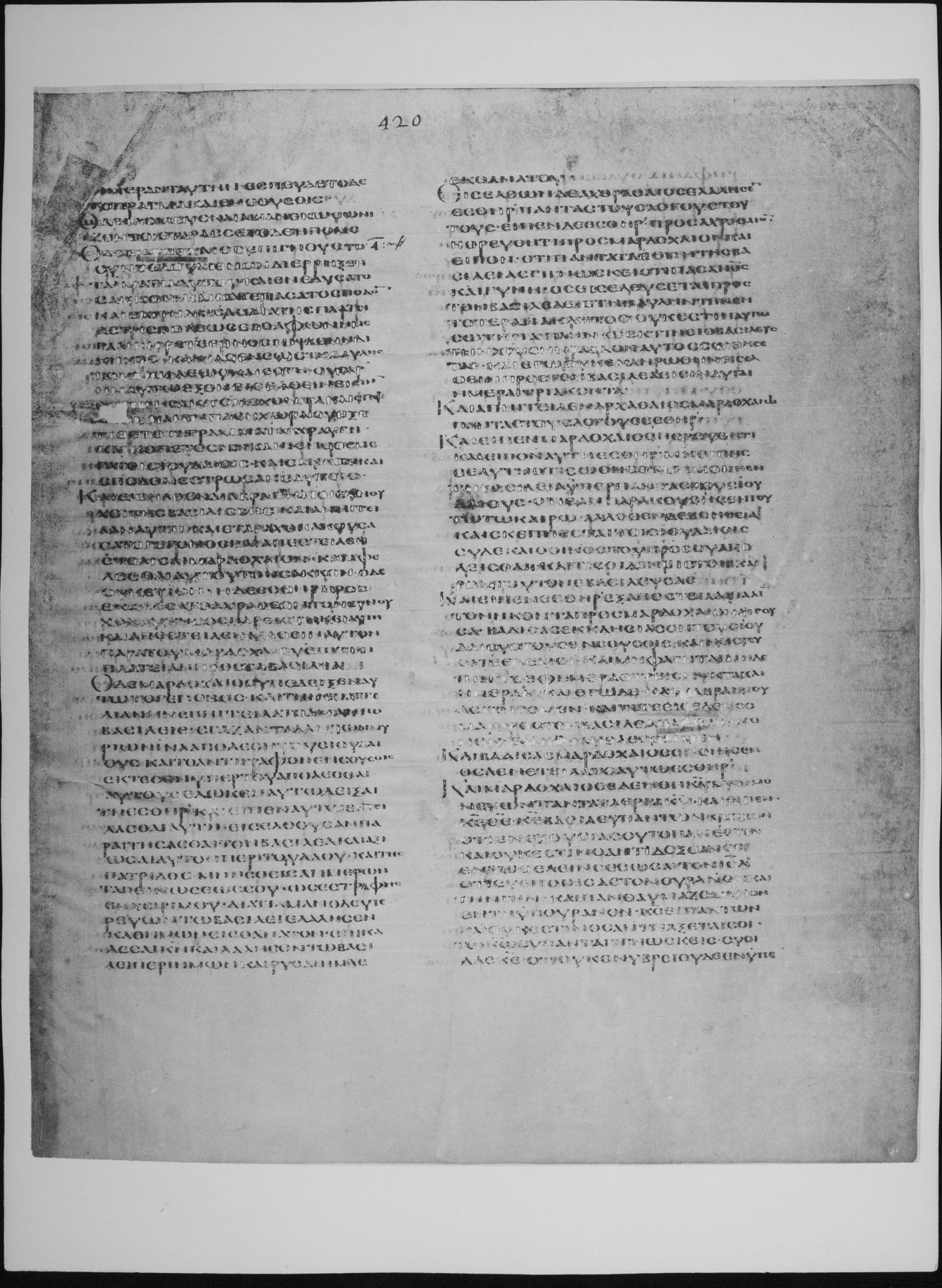
Where on the image
Esther 4:1-9 is on fol. 420r (full-size facsimile of 1879-83, Internet Archive codex-alexandrinus leaf 864). The 1936 reduced facsimile prints beneath this page: Esther iii. 14-iv. 17, [C=xiii. 8-12]. Checked on the plate: the page begins inside Esther 3:14 (first words read: ΗΜΕΡΑΝ ΤΑΥΤΗΝ ΕΣΠΕΥΔΕΤΟ ΔΕ ΤΟ ΠΡΑΓΜΑ ΚΑΙ ΕΙΣ ΣΟΥΣΑΝ). Note: the first words of the column are hidden by a fold in the leaf.
1Ὁ δὲ Μαρδοχαῖος ἐπιγνοὺς τὸ συντελούμενον διέρρηξεν τὰ ἱμάτια ἑαυτοῦ, καὶ ἐνεδύσατο σάκκον καὶ κατεπάσατο σποδόν, καὶ ἐκπηδήσας διὰ τῆς πλατείας τῆς πόλεως ἐβόα φωνῇ μεγάλῃ Αἴρεται ἔθνος μηδὲν ἠδικηκός. 2καὶ ἦλθεν ἕως τῆς πύλης τοῦ βασιλέως, καὶ ἔστη· οὐ γὰρ ἦν ἐξὸν αὐτῷ εἰσελθεῖν εἰς τὴν αὐλὴν σάκκον ἔχοντι καὶ σποδόν. 3καὶ ἐν πάσῃ χώρᾳ οὗ ἐξετίθετο τὰ γράμματα κραυγὴ καὶ κοπετὸς καὶ πένθος μέγα τοῖς Ἰουδαίοις, σάκκον καὶ σποδὸν ἔστρωσαν ἑαυτοῖς. 4καὶ εἰσῆλθον αἱ ἅβραι καὶ οἱ εὐνοῦχοι τῆς βασιλίσσης καὶ ἀνήγγειλαν αὐτῇ· καὶ ἐταράχθη ἀκούσασα τὸ γεγονός, καὶ ἀπέστειλεν στολίσαι τὸν Μαρδοχαῖον καὶ ἀφελέσθαι αὐτοῦ τὸν σάκκον· ὁ δὲ οὐκ ἐπείσθη. 5ἡ δὲ Ἐσθὴρ προσεκαλέσατο Ἁχραθαῖον τὸν εὐνοῦχον αὐτῆς, ὃς παριστήκει αὐτῇ, καὶ ἀπέστειλεν μαθεῖν αὐτῇ παρὰ τοῦ Μαρδοχαίου τὸ ἀκριβές. 7ὁ δὲ Μαρδοχαῖος ὑπέδειξεν αὐτῷ τὸ γεγονὸς καὶ τὴν ἐπαγγελίαν ἥν ἐπηγγείλατο Ἁμὰν τῷ βασιλεῖ εἰς τὴν γάζαν μυρίων ταλάντων, ἵνα ἀπολέσῃ τοὺς Ἰουδαίους. 8καὶ τὸ ἀντίγραφον τὸ ἐν Σούσοις ἐκτεθὲν ὑπὲρ τοῦ ἀπολέσθαι αὐτοὺς ἔδωκεν αὐτῷ δεῖξαι τῇ Ἐσθήρ· καὶ εἶπεν αὐτῷ ἐντείλασθαι αὐτῇ εἰσελθούσῃ παραιτήσασθαι τὸν βασιλέα καὶ ἀξιῶσαι αὐτὸν περὶ τοῦ λαοῦ, μνησθεῖσα ἡμερῶν ταπεινώσεώς σου ὡς ἐτράφης ἐν χειρί μου, διότι Ἁμὰν ὁ δευτερεύων τῷ βασιλεῖ ἐλάλησεν καθ᾽ ἡμῶν εἰς θάνατον· ἐπικάλεσαι τὸν κύριον καὶ λὰλησον τῷ βασιλεῖ περὶ ἡμῶν καὶ ῥῦσαι ἡμᾶς ἐκ θανάτου. 9εἰσελθὼν δὲ ὁ Ἁχραθαῖος ἐλάλησεν αὐτῇ πάντας τοὺς λόγους τούτους.
1But Mardochæus having perceived what was done, rent his garments, and put on sackcloth, and sprinkled dust upon himself; and having rushed forth through the open street of the city, he cried with a loud voice, A nation that has done no wrong is going to be destroyed. 2And he came to the king's gate, and stood; for it was not lawful for him to enter into the palace, wearing sackcloth and ashes. 3And in every province where the letters were published, there was crying and lamentation and great mourning on the part of the Jews: they spread for themselves sackcloth and ashes. 4And the queen's maids and chamberlains went in and told her: and when she had heard what was done, she was disturbed; and she sent to clothe Mardochæus, and take away his sackcloth; but he consented not. 5So Esther called for her chamberlain Achrathæus, who waited upon her; and she sent to learn the truth from Mardochæus. 7And Mardochæus shewed him what was done, and the promise which Aman had made the king of ten thousand talents to be paid into the treasury, that he might destroy the Jews. 8And he gave him the copy of the writing that was published in Susa concerning their destruction, to shew to Esther; and told him to charge her to go in and intreat the king, and to beg him for the people, remembering, said he, the days of thy low estate, how thou wert nursed by my hand: because Aman who holds the next place to the king has spoken against us for death. Do thou call upon the Lord, and speak to the king concerning us, to deliver us from death. 9So Achrathæus went in and told her all these words.
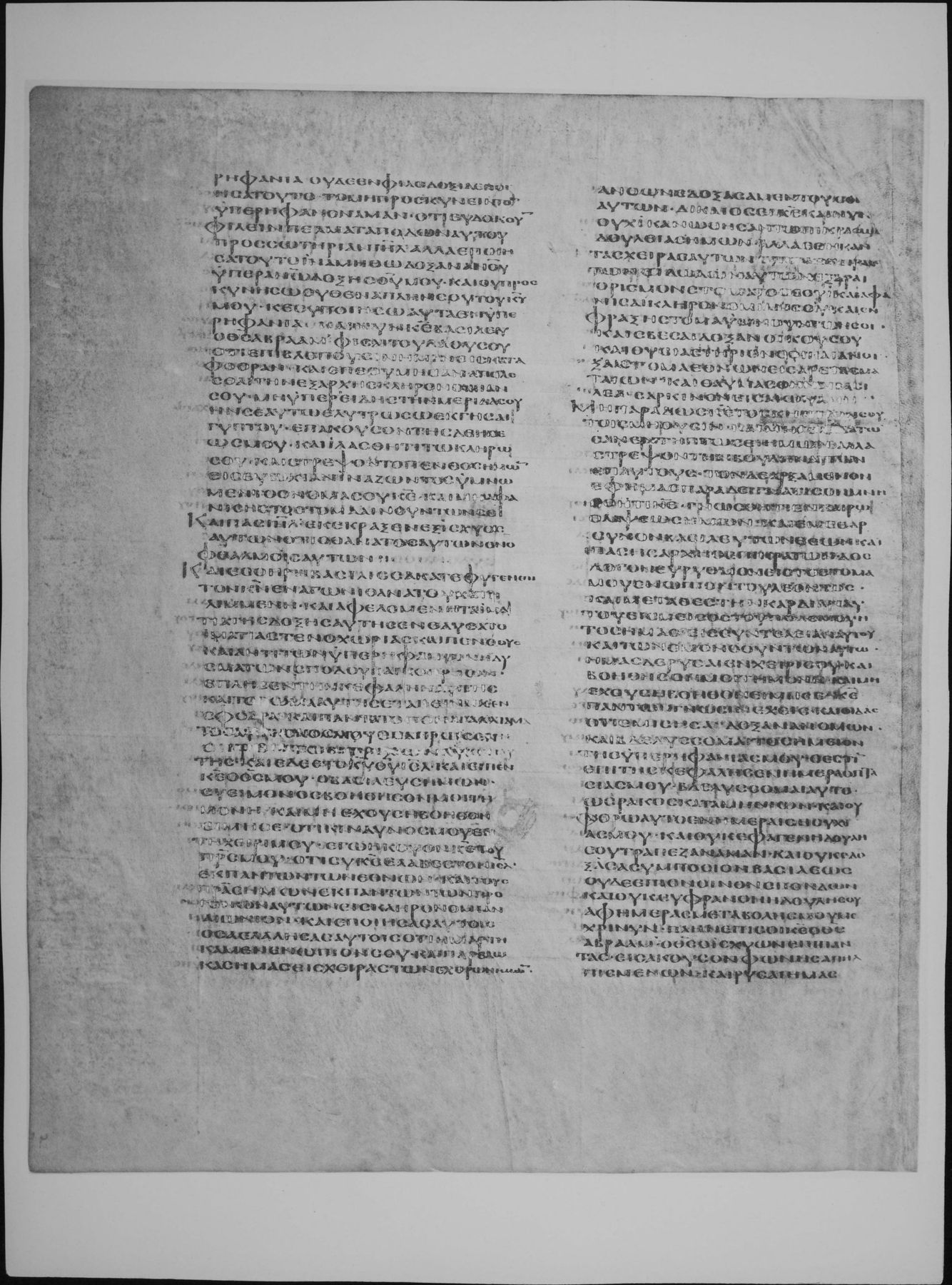
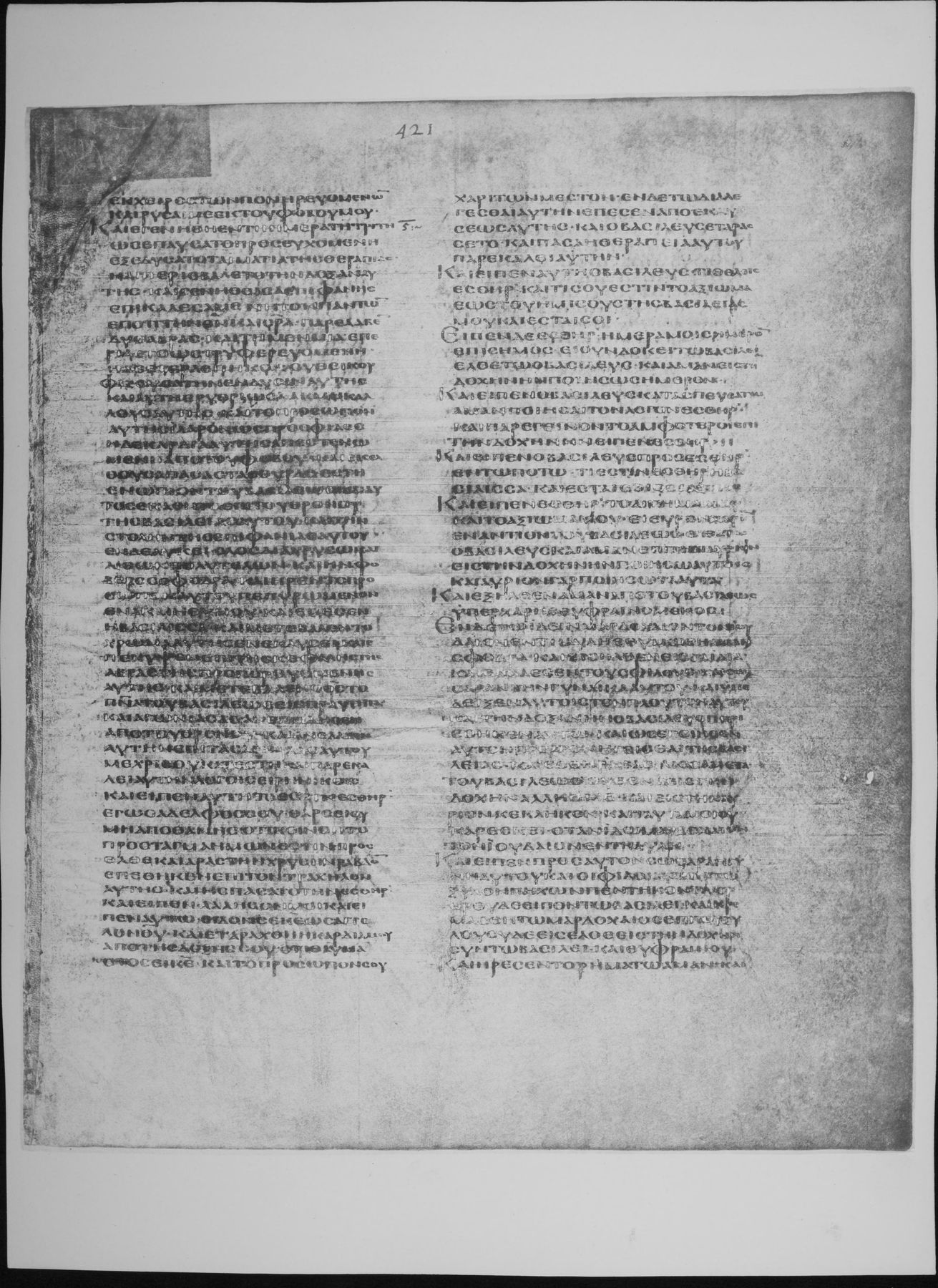
Where on the image
Esther 4:10-17 is on fol. 420r (full-size facsimile of 1879-83, Internet Archive codex-alexandrinus leaf 864). The 1936 reduced facsimile prints beneath this page: Esther iii. 14-iv. 17, [C=xiii. 8-12]. Checked on the plate: the page begins inside Esther 3:14 (first words read: ΗΜΕΡΑΝ ΤΑΥΤΗΝ ΕΣΠΕΥΔΕΤΟ ΔΕ ΤΟ ΠΡΑΓΜΑ ΚΑΙ ΕΙΣ ΣΟΥΣΑΝ). Note: the first words of the column are hidden by a fold in the leaf. Esther 4:17 is on fol. 420v (full-size facsimile of 1879-83, Internet Archive codex-alexandrinus leaf 865). The 1936 reduced facsimile prints beneath this page: Esther [C=xiii. 12-xiv. 19]. Checked on the plate: the page begins inside Esther 4:17 (first words read: ΡΗΦΑΝΙΑ ΟΥΔΕ ΕΝ ΦΙΛΟΔΟΞΙΑ ΕΠΟΙΗΣΑ ΤΟΥΤΟ ΤΟ ΜΗ ΠΡΟΣΚΥΝΕΙΝ ΤΟΝ ΥΠΕΡΗΦΑΝΟΝ ΑΜΑΝ). Esther 4:17 is on fol. 421r (full-size facsimile of 1879-83, Internet Archive codex-alexandrinus leaf 866). The 1936 reduced facsimile prints beneath this page: Esther [C=xiv. 19, D=xv. 1-16], v. 3-14. Checked on the plate: the page begins inside Esther 4:17 (first words read: ΕΚ ΧΕΙΡΟΣ ΤΩΝ ΠΟΝΗΡΕΥΟΜΕΝΩΝ ΚΑΙ ΡΥΣΑΙ ΜΕ ΕΚ ΤΟΥ ΦΟΒΟΥ ΜΟΥ).
10εἶπεν δὲ Ἐσθὴρ πρὸς Ἁχραθαῖον Πορεύθητι πρὸς Μαρδοχαῖον καὶ εἰπὸν 11ὅτι Τὰ ἔθνη πάντα τῆς βασιλείας γινώσκει, ὅτι πᾶς ἄνθρωπος ἢ γυνὴ ὃς εἰσελεύσεται πρὸς τὸν βασιλέα εἰς τὴν αὐλὴν τὴν ἐσωτέραν ἄκλητος, οὐκ ἔστιν αὐτῷ σωτηρία· πλὴν ᾧ ἐκτείνει ὁ βασιλεὺς τὴν χρυσῆν ῥάβδον, οὗτος σωθήσεται· κἀγὼ οὐ κέκλημαι εἰσελθεῖν πρὸς τὸν βασιλέα, εἰσὶν αὗται ἡμέραι τριάκοντα. 12καὶ ἀπήγγειλεν Ἁχραθαῖος Μαρδοχαίῳ πάντας τοὺς λόγους Ἐσθήρ. 13καὶ εἶπεν Μαρδοχαῖος πρὸς Ἁχραθαῖον Πορεύθητι καὶ εἰπὸν αὐτῇ Ἐσθήρ, μὴ εἴπῃς σεαυτῇ ὅτι σωθήσῃ μόνη ἐν τῇ βασιλείᾳ παρὰ πάντας τοὺς Ἰουδαίους· 14ὡς ὅτι ἐὰν παρακούσῃς ἐν τούτῳ τῷ καιρῷ, ἄλλοθεν βοήθεια καὶ σκέπη ἔσται τοῖς Ἰουδαίοις· σὺ δὲ καὶ ὁ οἶκος τοῦ πατρός σου ἀπολεῖσθε. καὶ τίς οἶδεν εἰ εἰς τὸν καιρὸν τοῦτον ἐβασίλευσας; 15καὶ ἐξαπέστειλεν Ἐσθὴρ τὸν ἥκοντα πρὸς αὐτὴν πρὸς Μαρδοχαῖον λέγουσα 16Βαδίσας ἐκκλησίασον τοὺς Ἰουδαίους τοὺς ἐν Σούσοις, καὶ νηστεύσατε ἐπ᾽ ἐμοί, καὶ μὴ φάγητε μηδὲ πίητε ἐπὶ ἡμέρας τρεῖς νύκτα καὶ ἡμέραν· κἀγὼ δὲ καὶ αἱ ἅβραι μου ἀσιτήσομεν· καὶ τότε εἰσελεύσομαι πρὸς τὸν βασιλέα παρὰ τὸν νόμον, ἐὰν καὶ ἀπολέσθαι με ᾖ. 17Καὶ βαδίσας Μαρδοχαῖος ἐποίησεν ὅσα ἐνετείλατο αὐτῷ Ἐσθήρ· [1] καὶ ἐδεήθη Κυρίου, μνημονεύων πάντα τὰ ἔργα Κυρίου, [2] καὶ εἶπεν Κύριε, κύριε βασιλεῦ πάντων κρατῶν, ὅτι ἐν ἐξουσίᾳ σου τὸ πᾶν ἐστιν, καὶ οὐκ ἔστιν ὁ ἀντιδοξῶν σοι ἐν τῷ θέλειν σε σῶσαι τὸν Ἰσραήλ· [3] ὅτι σὺ ἐποίησας τὸν οὐρανὸν καὶ τὴν γῆν καὶ πᾶν θαυμαζόμενον ἐν τῇ ὑπ᾽ οὐρανόν, [4] καὶ κύριος εἶ πάντων, καὶ οὐκ ἔστιν ὃς ἀντιτάξεταί σοι τῷ κυρίῳ· [5] σὺ πάντα γινώσκεις, σὺ οἶδας, Κύριε, ὅτι οὐκ ἐν ὕβρει οὐδὲ ἐν ὑπερηφανίᾳ οὐδὲ ἐν φιλοδοξίᾳ ἐποίησα τοῦτο, τὸ μὴ προσκυνεῖν τὸν ὑπερήφανον Ἁμάν. [6] ὅτι ηὐδόκουν φιλεῖν πέλματα ποδῶν αὐτοῦ πρὸς σωτηρίαν Ἰσραήλ, [7] ἀλλὰ ἐποίησα τοῦτο ἵνα μὴ θῶ δόξαν ἀνθρώπου ὑπεράνω δόξης θεοῦ· καὶ οὐ προσκυνήσω οὐδένα πλὴν σοῦ τοῦ κυρίου μου, καὶ οὐ ποιήσω αὐτὰ ἐν ὑπερηφανίᾳ. [8] καὶ νῦν, Κύριε ὁ θεὸς ὁ βασιλεὺς ὁ θεὸς Ἀβραάμ, φεῖσαι τοῦ λαοῦ σου, ὅτι ἐπιβλέπουσιν ἡμῖν εἰς καταφθορὰν καὶ ἐπεθύμησαν ἀπολέσαι τὴν ἐξ ἀρχῆς κληρονομίαν σου· [9] μὴ ὑπερίδῃς τὴν μερίδα σου ἣν σεαυτῷ ἐλυτρώσω ἐκ γῆς Αἰγύπτου· [10] ἐπάκουσον τῆς δεήσεώς μου καὶ ἱλάσθητι τῷ κλήρῳ σου, καὶ στρέψον τὸ πένθος ἡμῶν εἰς εὐωχίαν, ἵνα ζῶντες ὑμνῶμέν σου τὸ ὄνομα, Κύριε, καὶ μὴ ἀφανίσῃς στόμα αἰνούντων σοι. [11] καὶ πᾶς Ἰσραὴλ ἐκέκραξαν ἐξ ἰσχύος αὐτῶν, ὅτι θάνατος αὐτῶν ἐν ὀφθαλμοῖς αὐτῶν. [12] Καὶ Ἐσθὴρ ἡ βασίλισσα κατέφυγεν ἐπὶ τὸν κύριον ἐν ἀγῶνι θανάτον κατειλημμένη, [13] καὶ ἀφελομένη τὰ ἱμάτια τῆς δόξης αὐτῆς ἐνεδύσατο ἱμάτια στενοχωρίας καὶ πένθους, καὶ ἀντὶ τῶν ὑπερηφάνων ἡδυσμάτων σποδοῦ καὶ κοπριῶν ἔπλησεν τὴν κεφαλήν· καὶ τὸ σῶμα ἐταπείνωσεν σφόδρα, καὶ πάντα τόπον κόσμου ἀγαλλιάματος αὐτῆς ἔπλησε στρεπτῶν τριχῶν αὐτῆς· [14] καὶ ἐδεῖτο Κυρίου θεοῦ Ἰσραὴλ καὶ εἶπεν Κύριέ μου, ὁ βασιλεὺς ἡμῶν, σὺ εἶ μόνος· βοήθησόν μοι τῇ μόνῃ καὶ μὴ ἐχούσῃ βοηθὸν εἰ μὴ σέ, [15] ὅτι κίνδυνός μου ἐν χειρί μου. [16] ἐγὼ ἤκουον ἐκ γενετῆς μου ἐν φυλῇ πατριᾶς μου, ὅτι σύ, Κύριε, ἔλαβες τὸν Ἰσραὴλ ἐκ πάντων τῶν ἐθνῶν καὶ τοὺς πατέρας ἡμῶν ἐκ πάντων τῶν προγόνων αὐτῶν εἰς κληρονομίαν αἰώνιον, καὶ ἐποίησας αὐτοῖς ὅσα ἐλάλησας. [17] καὶ νῦν ἡμάρτομεν ἐνώπιόν σου, καὶ παρέδωκας ἡμᾶς εἰς χεῖρας τῶν ἐχθρῶν ἡμῶν· [18] ἀνθ᾽ ὧν ἐδοξάσαμεν τοὺς θεοὺς αὐτῶν. δίκαιος εἶ, Κύριε· [19] καὶ νῦν οὐχ ἱκανώθησαν ἐν πικρασμῷ δουλείας ἡμῶν, ἀλλὰ ἔθηκαν τὰς χεῖρας αὐτῶν, [20] ἐξᾶραι ὁρισμὸν στόματός σου καὶ ἀφανίσαι κληρονομίαν σου, καὶ ἐμφράξαι στόμα αἰνούντων σοι καὶ σβέσαι δόξαν οἴκου σου καὶ θυσιαστήριόν σου, [21] καὶ ἀνοῖξαι στόμα ἐθνῶν εἰς ἀρετὰς ματαίων καὶ θαυμασθῆναι βασιλέα σάρκινον εἰς αἰῶνα. [22] μὴ παραδῷς, Κύριε, τὸ σκῆπτρόν σου τοῖς μὴ οὖσιν, καὶ μὴ καταγελασάτωσαν ἐν τῇ πτώσει ἡμῶν, ἀλλὰ στρέψον τὴν βουλὴν αὐτῶν ἐπ᾽ αὐτούς· τὸν δὲ ἀρξάμενον ἐφ᾽ ἡμᾶς παραδιγμάτισον. [23] μνήσθητι, Κύριε, γνώσθητι ἐν καιρῷ θλίψεως ἡμῶν, καὶ ἐμὲ θάρσυνον, βασιλεῦ τῶν θεῶν καὶ πάσης ἀρχῆς ἐπικρατῶν· [24] δὸς λόγον εὔρυθμον εἰς τὸ στόμα μου ἐνώπιον τοῦ λέοντος, καὶ μετάθες τὴν καρδίαν αὐτοῦ εἰς μῖσος τοῦ πολεμοῦντος ἡμᾶς, εἰς συντέλειαν αὐτοῦ καὶ τῶν ὁμονοούντων αὐτῷ· [25] ἡμᾶς δὲ ῥῦσαι ἐν χειρί σου, καὶ βοήθησόν μοι τῇ μόνῃ καὶ μὴ ἐχούσῃ εἰ μὴ σέ, Κύριε. πάντων γνῶσιν ἔχεις, [26] καὶ οἶδας ὅτι ἐμίσησα δόξαν ἀνόμων, καὶ βδελύσσομαι κοίτην ἀπεριτμήτων καὶ παντὸς ἀλλοτρίου. [27] σὺ οἶδας τὴν ἀνάγκην μου, ὅτι βδελύσσομαι τὸ σημεῖον τῆς ὑπερηφανίας μου ὅ ἐστιν ἐπὶ τῆς κεφαλῆς μου ἐν ἡμέραις ὁπτασίας μου· βδελύσσομαι αὐτὸ ὡς ῥάκος καταμηνίων, καὶ οὐ φορῶ αὐτὸ ἐν ἡμέραις ἡσυχίας μου. [28] καὶ οὐκ ἔφαγεν ἡ δούλη σου τράπεζαν Ἁμάν, καὶ οὐκ ἐδόξασα συμπόσιον βασιλέως, οὐδὲ ἔπιον οἶνον σπονδῶν· [29] καὶ οὐκ ηὐφράνθη ἡ δούλη σου ἀφ᾽ ἡμέρας μεταβολῆς μου μέχρι νῦν πλὴν ἐπὶ σοί, Κύριε ὁ θεὸς Ἁβραάμ. [30] ὁ θεὸς ὁ ἰσχύων ἐπὶ πάντας, εἰσάκουσον φωνὴν ἀπηλπισμένων καὶ ῥῦσαι ἡμᾶς ἐκ χειρὸς τῶν πονηρευομένων, καὶ ῥῦσαί με ἐκ τοῦ φόβου μου.
10And Esther said to Achrathæus, Go to Mardochæus, and say, 11All the nations of the empire know, that whoever, man or woman, shall go in to the king into the inner court uncalled, that person cannot live: only to whomsoever the king shall stretch out his golden sceptre, he shall live: and I have not been called to go in to the king, for these thirty days. 12And Achrathæus reported to Mardochæus all the words of Esther. 13Then Mardochæus said to Achrathæus, Go, and say to her, Esther, say not to thyself that thou alone wilt escape in the kingdom, more than all the other Jews. 14For if thou shalt refuse to hearken on this occasion, help and protection will be to the Jews from another quarter; but thou and thy father's house will perish: and who knows, if thou hast been made queen for this very occasion? 15And Esther sent the man that came to her to Mardochæus, saying, 16Go and assemble the Jews that are in Susa, and fast ye for me, and eat not and drink not for three days, night and day: and I also and my maidens will fast; and then I will go in to the king contrary to the law, even if I must die. 17So Mardochæus went and did all that Esther commanded him. [And he besought the Lord, making mention of all the works of the Lord; and he said, Lord God, king ruling over all, for all things are in thy power, and there is no one that shall oppose thee in thy purpose to save Israel.— For thou hast made the heaven and the earth, and every wonderful thing in the world under heaven. And thou art Lord of all, and there is no one who shall resist thee the Lord. Thou knowest all things: thou knowest, Lord, that it is not in insolence, nor haughtiness, nor love of glory, that I have done this, to refuse obeisance to the haughty Aman. For I would gladly have kissed the soles of his feet for the safety of Israel. But I have done this, that I might not set the glory of man above the glory of God: and I will not worship any one except thee, my Lord, and I will not do these things in haughtiness. And now, O Lord God, the King, the God of Abraam, spare thy people, for our enemies are looking upon us to our destruction, and they have desired to destroy thine ancient inheritance. Do not overlook thy peculiar people, whom thou hast redeemed for thyself out of the land of Egypt. Hearken to my prayer, and be propitious to thine inheritance, and turn our mourning into gladness, that we may live and sing praise to thy name, O Lord; and do not utterly destroy the mouth of them that praise thee, O Lord. And all Israel cried with all their might, for their death was before their eyes. And queen Esther betook herself for refuge to the Lord, being taken as it were in the agony of death. And having taken off her glorious apparel, she put on garments of distress and mourning; and instead of grand perfumes she filled her head with ashes and dung, and she greatly brought down her body, and she filled every place of her glad adorning with the torn curls of her hair. O my Lord, thou alone art our king: help me who am destitute, and have no helper but thee, for my danger is near at hand. I have heard from my birth, in the tribe of my kindred, that thou, Lord, tookest Israel out of all the nations, and our fathers out of all their kindred for a perpetual inheritance, and hast wrought for them all that thou hast said. And now we have sinned before thee, and thou hast delivered us into the hands of our enemies, because we honoured their gods: thou art righteous, O Lord. But now they have not been contented with the bitterness of our slavery, but have laid their hands on the hands of their idols, in order to abolish the decree of thy mouth, and utterly to destroy thine inheritance, and to stop the mouth of them that praise thee, and to extinguish the glory of thine house and thine altar, and to open the mouth of the Gentiles to speak the praises of vanities, and in order that a mortal king should be admired for ever. O Lord, do not resign thy sceptre to them that are not, and let them not laugh at our fall, but turn their counsel against themselves, and make an example of him who has begun to injure us. Remember us, O Lord, manifest thyself in the time of our affliction, and encourage me, O king of gods, and ruler of all dominion. Put harmonious speech into my mouth before the lion, and turn his heart to hate him that fights against us, to the utter destruction of him and of them that consent with him. But deliver us by thine hand, and help me who am destitute, and have none but thee, O Lord. Thou knowest all things, and knowest that I hate the glory of transgressors, and that I abhor the couch of the uncircumcised, and of every stranger. Thou knowest my necessity, for I abhor the symbol of my proud station, which is upon my head in the days of my splendour: I abhor it as a menstruous cloth, and I wear it not in the days of my tranquillity. And thy handmaid has not eaten at the table of Aman, and I have not honoured the banquet of the king, neither have I drunk wine of libations. Neither has thy handmaid rejoiced since the day of my promotion until now, except in thee, O Lord God of Abraam. O God, who hast power over all, hearken to the voice of the desperate, and deliver us from the hand of them that devise mischief; and deliver me from my fear.
Cite
Sources
- Source: Codex Alexandrinus (British Library Royal MS 1 D. VI) via the British Museum photographic facsimiles of 1879-83 and 1936 (Internet Archive) + Swete's Septuagint + Brenton's English (holding institution)
- Critical edition: H. B. Swete, The Old Testament in Greek according to the Septuagint (1909)
← previous · → next · v cycle view · l back to library