Esther, Chapter 5 (Codex Alexandrinus)
Introduction
Esther 5 in the Greek Old Testament (the Septuagint) as written in Codex Alexandrinus, a Greek Bible copied in the fifth century, probably in Egypt, and now in the British Library (Royal MS 1 D. VI, the second of its four volumes). It is one of the three great early codices of the whole Greek Bible, with Codex Vaticanus and Codex Sinaiticus.
The Greek additions: the Greek book of Esther has six passages that the Hebrew book lacks (often lettered A to F; in the Latin Bible they are gathered as 10:4-16:24). Swete prints them in their places in the story, inside the verses they follow (1:1, 3:13, 4:17, 5:1-2, 8:12 and 10:3), marking their own verses with numbers in square brackets, and Brenton's English does the same. The captions of the 1936 facsimile name them by letter and by their Latin chapter and verse.
This entry meets the strict three-criteria standard of the Theosis Library:
- Manuscript scan: the pages of Codex Alexandrinus carrying this chapter (fol. 421r, fol. 421v), from the full-size photographic (autotype) facsimile published by the British Museum in 1879-1883, as digitised on the Internet Archive. The verse range of every page comes from the reduced photographic facsimile of 1936, which prints it beneath each plate, and the opening words of every page were read on the plate to confirm the page and the verse it begins with. Each section links to the page or pages that hold its verses. Folio numbers are those written at the head of each leaf and visible on the plates.
- Original text: Swete's edition, which here prints the text of Codex Vaticanus (Vat. gr. 1209), the base of his edition, and gives the readings of Alexandrinus only in his apparatus. The Greek column is therefore Vaticanus' text; where Alexandrinus differs, the plate shows what Alexandrinus reads.
- English translation: Sir Lancelot C. L. Brenton, The Septuagint Version of the Old Testament (1844; 1851 edition), a translation of the Greek, public domain, from the eBible.org text.
How was this verified? (Provenance)
Where on the image
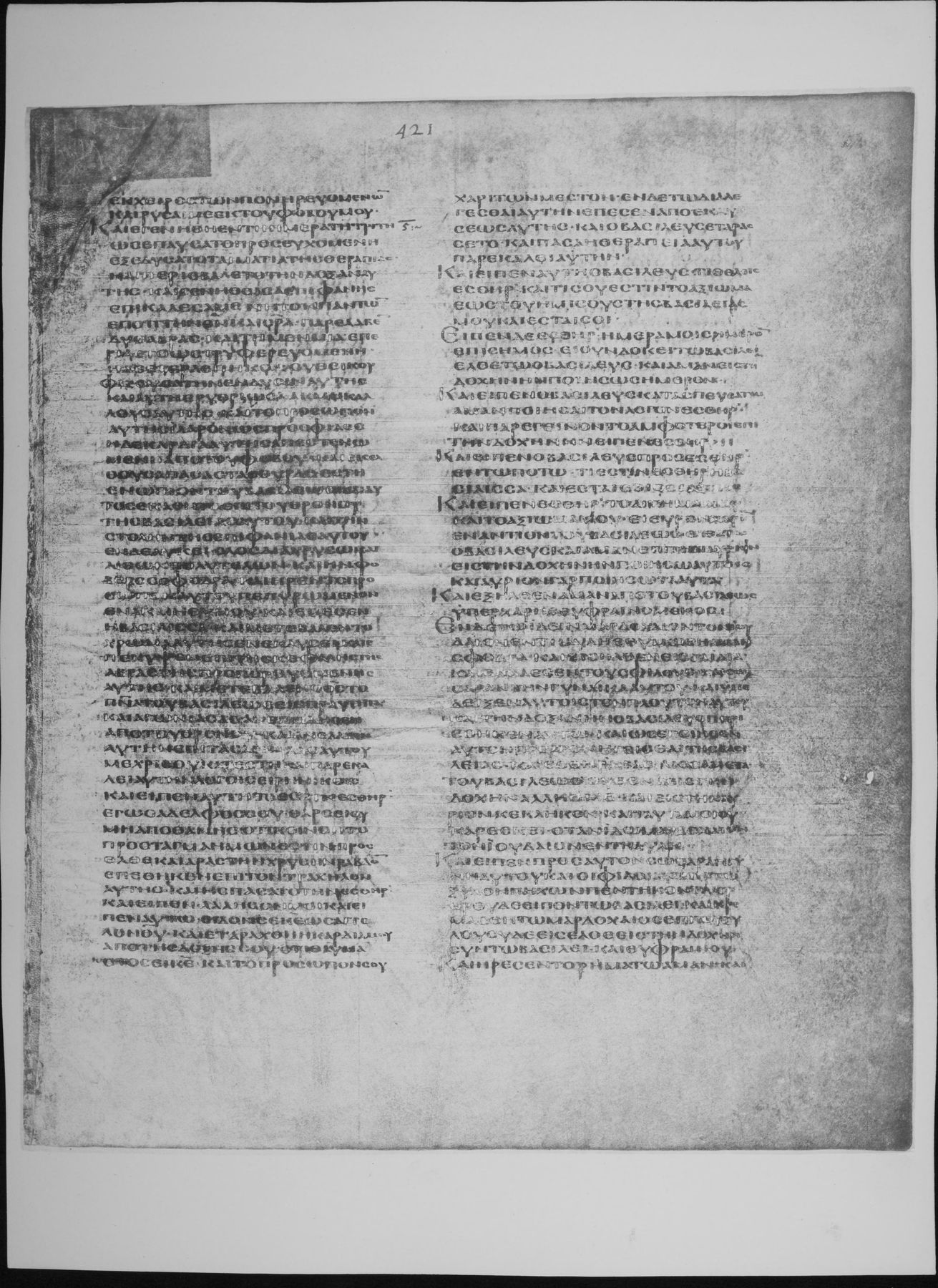
Esther 5:1-8 is on fol. 421r (full-size facsimile of 1879-83, Internet Archive codex-alexandrinus leaf 866). The 1936 reduced facsimile prints beneath this page: Esther [C=xiv. 19, D=xv. 1-16], v. 3-14. Checked on the plate: the page begins inside Esther 4:17 (first words read: ΕΚ ΧΕΙΡΟΣ ΤΩΝ ΠΟΝΗΡΕΥΟΜΕΝΩΝ ΚΑΙ ΡΥΣΑΙ ΜΕ ΕΚ ΤΟΥ ΦΟΒΟΥ ΜΟΥ).
1[1] Καὶ ἐγενήθη ἐν τῇ ἡμέρᾳ τῇ τρίτῃ ὡς ἐπαύσατο προσευχομένη, ἐξεδύσατο τὰ ἱμάτια τῆς θεραπείας καὶ περιεβάλετο τὴν δόξαν αὐτῆς· [2] καὶ γενηθεῖσα ἐπιφανής, ἐπικαλεσαμένη τὸν πάντων ἐπόπτην θεὸν καὶ σωτῆρα, παρέλαβεν τὰς δύο ἅβρας, [3] καὶ τῇ μὲν μιᾷ ἐπηρείδετο ὡς τρυφερευομένη, [4] ἡ δὲ ἑτέρα ἐπηκολούθει κουφίζουσα τὴν ἔνδυσιν αὐτῆς· [5] καὶ αὐτὴ ἐρυθριῶσα ἀκμῇ κάλλους αὐτῆς, καὶ τὸ πρόσωπον αὐτῆς ἱλαρὸν ὡς προσφιλές, ἡ δὲ καρδία αὐτῆς ἀπεστενωμένη ἀπὸ τοῦ φόβου. [6] καὶ εἰσελθοῦσα πάσας τὰς θύρας κατέστη ἐνώπιον τοῦ βασιλέως· καὶ αὐτὸς ἐκάθητο ἐπὶ τοῦ θρόνου τῆς βασιλείας αὐτοῦ, καὶ πᾶσαν στολὴν τῆς ἐπιφανείας αὐτοῦ ἐνεδεδύκει, ὅλος διὰ χρυσοῦ καὶ λίθων πολυτελῶν, καὶ ἦν φοβερὸς σφόδρα. [7] καὶ ἄρας τὸ πρόσωπον αὐτοῦ πεπυρωμένον δόξῃ ἐν ἀκμῇ θυμοῦ ἔβλεψεν· καὶ ἔπεσεν ἡ βασίλισσα καὶ μετέβαλεν τὸ χρῶμα αὐτῆς ἐν ἐκλύσει, καὶ κατεπέκυψεν ἐπὶ τὴν κεφαλὴν τῆς ἅβρας τῆς προπορευομένης. [8] καὶ μετέβαλεν ὁ θεὸς τὸ πνεῦμα τοῦ βασιλέως εἰς πραύτητα, καὶ ἀγωνιάσας ἀνεπήδησεν ἀπὸ τοῦ θρόνου αὐτοῦ, καὶ ἀνέλαβεν αὐτὴν ἐπὶ τὰς ἀγκάλας αὐτοῦ μέχρις οὗ κατέστη, καὶ παρεκάλει αὐτὴν λόγοις εἰρηνικοῖς [9] καὶ εἶπεν αὐτῇ Τί ἐστιν, Ἐσθήρ; ἐγὼ ὁ ἀδελφός σου, θάρσει, [10] οὐ μὴ ἀποθάνῃς· ὅτι κοινὸν τὸ πρόσταγμα ἡμῶν ἐστίν· [11] πρόσελθε. 2[12] καὶ ἄρας τὴν χρυσῆν ῥάβδον ἐπέθηκεν ἐπὶ τὸν τράχηλον αὐτῆς, καὶ ἠσπάσατο αὐτὴν καὶ εἶπεν Λάλησόν μοι. [13] καὶ εἶπεν αὐτῷ Εἶδόν σε, κύριε, ὡς ἄγγελον θεοῦ, καὶ ἐταράχθη ἡ καρδία μου ἀπὸ φόβου τῆς δόξης σου. [14] ὅτι θαυμαστὸς εἶ, κύριε, καὶ τὸ πρόσωπόν σου χαρίτων μεστόν. [15] ἐν δὲ τῷ διαλέγεσθαι αὐτὴν ἔπεσεν ἀπὸ ἐκλύσεως· [16] καὶ ὁ βασιλεὺς ἐταράσσετο, καὶ πᾶσα ἡ θεραπεία αὐτοῦ παρεκάλει αὐτήν. 3καὶ εἶπεν ὁ βασιλεύς Τί θέλεις, Ἐσθήρ; καὶ τί σού ἐστιν τὸ ἀξίωμα; ἕως τοῦ ἡμίσους τῆς βασιλείας μου, καὶ ἔσται σοι. 4εἶπεν δὲ Ἐσθήρ Ἡμέρα μου ἐπίσημος σήμερόν ἐστιν· εἰ οὖν δοκεῖ τῷ βασιλεῖ, ἐλθάτω καὶ αὐτὸς καὶ Ἁμὰν εἰς τὴν δοχὴν ἣν ποιήσω σήμερον. 5καὶ εἶπεν ὁ βασιλεύς Κατασπεύσατε Ἁμὰν ὅπως ποιήσωμεν τὸν λόγον Ἐσθήρ· καὶ παραγίνονται ἀμφότεροι εἰς τὴν δοχὴν ἣν εἶπεν Ἐσθήρ. 6ἐν δὲ τῷ πότῳ εἶπεν ὁ βασιλεὺς πρὸς Ἐσθήρ Τί ἐστιν, βασίλισσα Ἐσθήρ; καὶ ἔσται ὅσα ἀξιοῖς. 7καὶ εἶπεν Τὸ αἴτημά μου καὶ τὸ ἀξίωμα· 8εἰ εὗρον χάριν ἐνώπιον τοῦ βασιλέως, ἐλθάτω ὁ βασιλεὺς καὶ Ἁμὰν ἔτι τὴν αὔριον εἰς τὴν δοχὴν ἣν ποιήσω αὐτοῖς, καὶ αὔριον ποιήσω τὰ αὐτά.
1And it came to pass on the third day, when she had ceased praying, that she put off her mean dress, and put on her glorious apparel. And being splendidly arrayed, and having called upon God the Overseer and Preserver of all things, she took her two maids, and she leaned upon one, as a delicate female, and the other followed bearing her train. And she was blooming in the perfection of her beauty; and her face was cheerful, as it were benevolent, but her heart was straitened for fear. And having passed through all the doors, she stood before the king: and he was sitting upon his royal throne, and he had put on all his glorious apparel, covered all over with gold and precious stones, and was very terrible. And having raised his face resplendent with glory, he looked with intense anger: and the queen fell, and changed her colour as she fainted; and she bowed herself upon the head of the maid that went before her. But God changed the spirit of the king to gentleness, and in intense feeling he sprang from off his throne, and took her into his arms, until she recovered: and he comforted her with peaceable words, and said to her, What is the matter, Esther? I am thy brother; be of good cheer, thou shalt not die, for our command is openly declared to thee, Draw nigh. 2And having raised the golden sceptre he laid it upon her neck, and embraced her, and said, Speak to me. And she said to him, I saw thee, my lord, as an angel of God, and my heart was troubled for fear of thy glory; for thou, my lord, art to be wondered at, and thy face is full of grace. And while she was speaking, she fainted and fell. Then the king was troubled, and all his servants comforted her.] 3And the king said, What wilt thou, Esther? and what is thy request? ask even to the half of my kingdom, and it shall be thine. 4And Esther said, To-day is my great day: if then it seem good to the king, let both him and Aman come to the feast which I will prepare this day. 5And the king said, Hasten Aman hither, that we may perform the word of Esther. So they both come to the feast of which Esther had spoken. 6And at the banquet the king said to Esther, What is thy request, queen Esther? speak, and thou shalt have all that thou requirest. 7And she said, My request and my petition are: 8if I have found favour in the sight of the king, let the king and Aman come again to-morrow to the feast which I shall prepare for them, and to-morrow I will do the same.
Where on the image
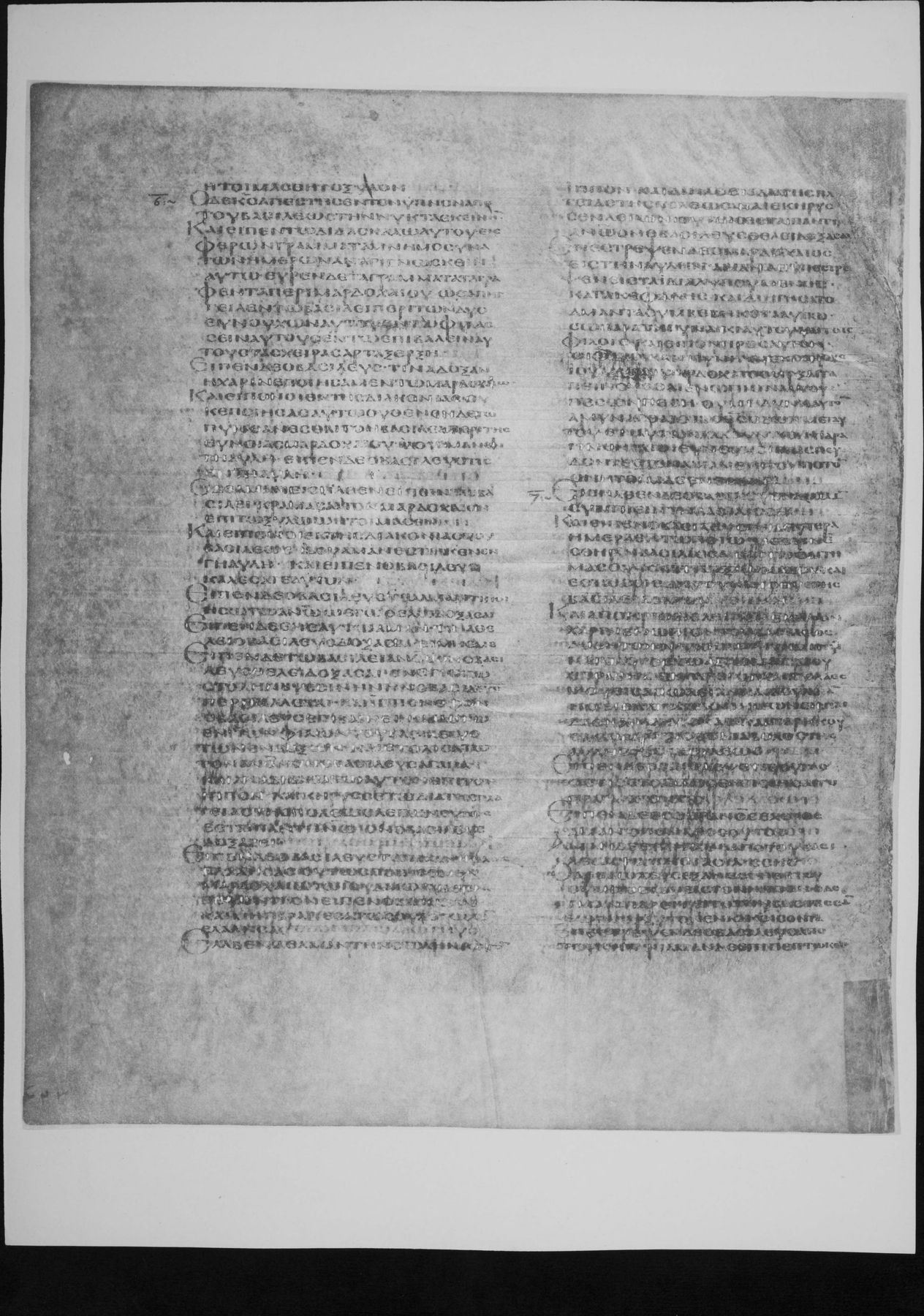
Esther 5:9-14 is on fol. 421r (full-size facsimile of 1879-83, Internet Archive codex-alexandrinus leaf 866). The 1936 reduced facsimile prints beneath this page: Esther [C=xiv. 19, D=xv. 1-16], v. 3-14. Checked on the plate: the page begins inside Esther 4:17 (first words read: ΕΚ ΧΕΙΡΟΣ ΤΩΝ ΠΟΝΗΡΕΥΟΜΕΝΩΝ ΚΑΙ ΡΥΣΑΙ ΜΕ ΕΚ ΤΟΥ ΦΟΒΟΥ ΜΟΥ). Esther 5:14 is on fol. 421v (full-size facsimile of 1879-83, Internet Archive codex-alexandrinus leaf 867). The 1936 reduced facsimile prints beneath this page: Esther v. 14-vii. 8. Checked on the plate: the page begins inside Esther 5:14 (first words read: ΗΤΟΙΜΑΣΘΗ ΤΟ ΞΥΛΟΝ Ο ΔΕ ΚΣ ΑΠΕΣΤΗΣΕΝ ΤΟΝ ΥΠΝΟΝ ΑΠΟ ΤΟΥ ΒΑΣΙΛΕΩΣ ΤΗΝ ΝΥΚΤΑ ΕΚΕΙΝΗΝ).
9Καὶ ἐξῆλθεν ὁ Ἁμὰν ἀπὸ τοῦ βασιλέως ὑπερχαρὴς εὐφραινόμενος· ἐν δὲ τῷ ἰδεῖν Ἁμὰν Μαρδοχαῖον τὸν Ἰουδαῖον ἐν τῇ αὐλῇ ἐθυμώθη σφόδρα. 10καὶ εἰσελθὼν εἰς τὰ ἴδια ἐκάλεσεν τοὺς φίλους καὶ Ζωσάραν τὴν γυναῖκα αὐτοῦ, 11καὶ ὑπέδειξεν αὐτοῖς τὸν πλοῦτον αὐτοῦ καὶ τὴν δόξαν ἣν ὁ βασιλεὺς αὐτῷ περιέθηκεν, καὶ ὡς ἐποίησεν αὐτὸν πρωτεύειν καὶ ἡγεῖσθαι τῆς βασιλείας. 12καὶ εἶπεν Ἁμάν Οὐ κέκληκεν ἡ βασίλισσα μετὰ τοῦ βασιλέως οὐδένα εἰς τὴν δοχὴν ἀλλ᾽ ἢ ἐμέ· καὶ εἰς τὴν αὔριον κέκλημαι. 13καὶ ταῦτά μοι οὐκ ἀρέσκει, ὅταν ἴδω Μαρδοχαῖον τὸν Ἰουδαῖον ἐν τῇ αὐλῇ. 14καὶ εἶπεν πρὸς αὐτὸν Ζωσάρα ἡ γυνὴ αὐτοῦ καὶ οἱ φίλοι Κοπήτω σοι ξύλον πηχῶν πεντήκοντα, ὄρθρου δὲ εἰπὸν τῷ βασιλεῖ καὶ κρεμασθήτω Μαρδοχαῖος ἐπὶ τοῦ ξύλου· σὺ δὲ εἴσελθε εἰς τὴν δοχὴν σὺν τῷ βασιλεῖ καὶ εὐφραίνου. καὶ ἤρεσεν τὸ ῥῆμα τῷ Ἁμάν, καὶ ἡτοιμάσθη τὸ ξύλον.
9So Aman went out from the king very glad and merry: but when Aman saw Mardochæus the Jew in the court, he was greatly enraged. 10And having gone into his own house, he called his friends, and his wife Zosara. 11And he shewed them his wealth, and the glory with which the king had invested him, and how he had caused him to take precedence and bear chief rule in the kingdom. 12And Aman said, The queen has called no one to the feast with the king but me, and I am invited to-morrow. 13But these things please me not, while I see Mardochæus the Jew in the court. 14And Zosara his wife and his friends said to him, Let there be a gallows made for thee of fifty cubits, and in the morning do thou speak to the king, and let Mardochæus be hanged on the gallows: but do thou go in to the feast with the king, and be merry. And the saying pleased Aman, and the gallows was prepared.
Cite
Sources
- Source: Codex Alexandrinus (British Library Royal MS 1 D. VI) via the British Museum photographic facsimiles of 1879-83 and 1936 (Internet Archive) + Swete's Septuagint + Brenton's English (holding institution)
- Critical edition: H. B. Swete, The Old Testament in Greek according to the Septuagint (1909)
← previous · → next · v cycle view · l back to library