Esther, Chapter 6 (Codex Alexandrinus)
Introduction
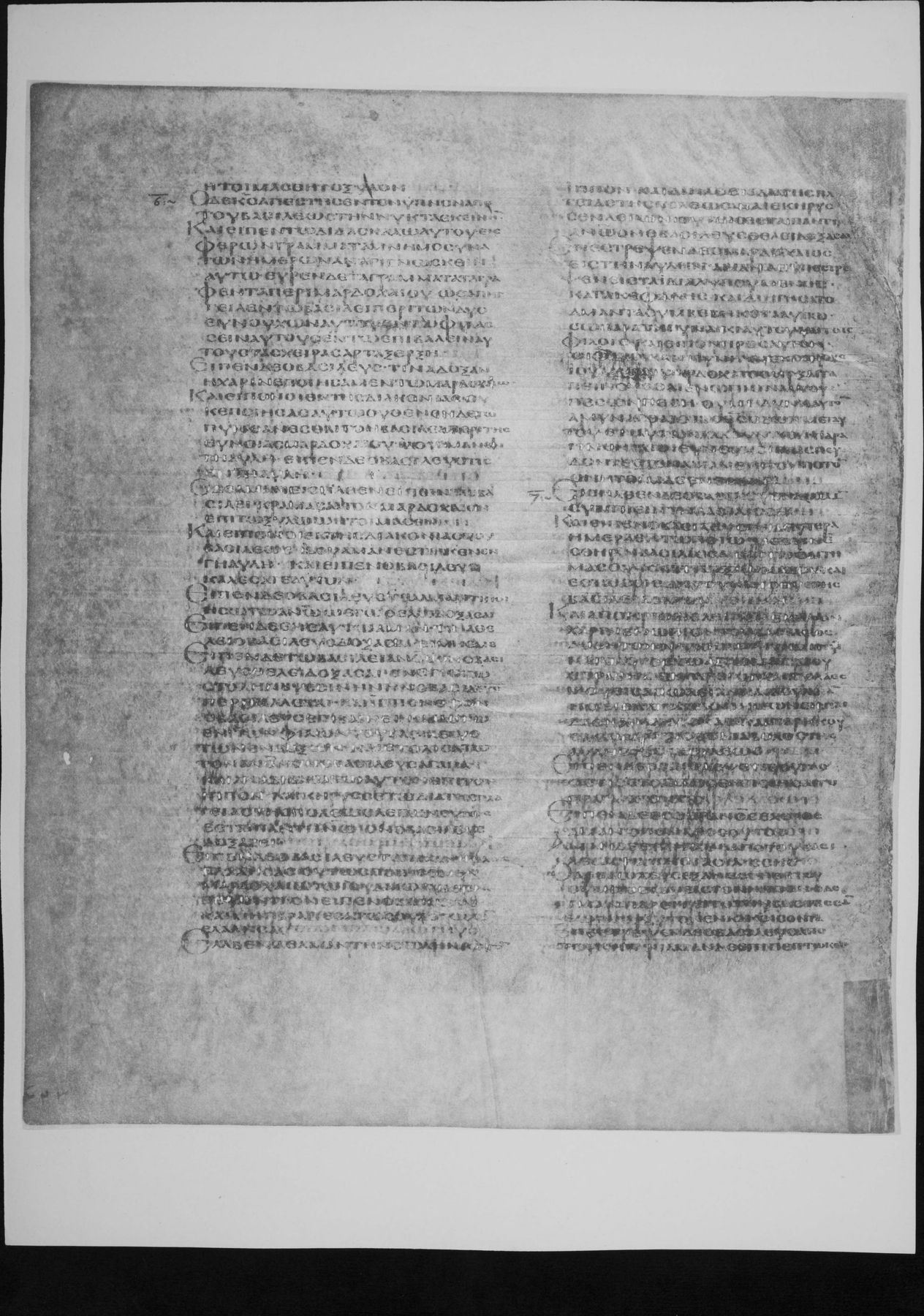
Esther 6 in the Greek Old Testament (the Septuagint) as written in Codex Alexandrinus, a Greek Bible copied in the fifth century, probably in Egypt, and now in the British Library (Royal MS 1 D. VI, the second of its four volumes). It is one of the three great early codices of the whole Greek Bible, with Codex Vaticanus and Codex Sinaiticus.
The Greek additions: the Greek book of Esther has six passages that the Hebrew book lacks (often lettered A to F; in the Latin Bible they are gathered as 10:4-16:24). Swete prints them in their places in the story, inside the verses they follow (1:1, 3:13, 4:17, 5:1-2, 8:12 and 10:3), marking their own verses with numbers in square brackets, and Brenton's English does the same. The captions of the 1936 facsimile name them by letter and by their Latin chapter and verse.
This entry meets the strict three-criteria standard of the Theosis Library:
- Manuscript scan: the page of Codex Alexandrinus carrying this chapter (fol. 421v), from the full-size photographic (autotype) facsimile published by the British Museum in 1879-1883, as digitised on the Internet Archive. The verse range of every page comes from the reduced photographic facsimile of 1936, which prints it beneath each plate, and the opening words of every page were read on the plate to confirm the page and the verse it begins with. Each section links to the page or pages that hold its verses. Folio numbers are those written at the head of each leaf and visible on the plates.
- Original text: Swete's edition, which here prints the text of Codex Vaticanus (Vat. gr. 1209), the base of his edition, and gives the readings of Alexandrinus only in his apparatus. The Greek column is therefore Vaticanus' text; where Alexandrinus differs, the plate shows what Alexandrinus reads.
- English translation: Sir Lancelot C. L. Brenton, The Septuagint Version of the Old Testament (1844; 1851 edition), a translation of the Greek, public domain, from the eBible.org text.
How was this verified? (Provenance)
Where on the image
Esther 6:1-8 is on fol. 421v (full-size facsimile of 1879-83, Internet Archive codex-alexandrinus leaf 867). The 1936 reduced facsimile prints beneath this page: Esther v. 14-vii. 8. Checked on the plate: the page begins inside Esther 5:14 (first words read: ΗΤΟΙΜΑΣΘΗ ΤΟ ΞΥΛΟΝ Ο ΔΕ ΚΣ ΑΠΕΣΤΗΣΕΝ ΤΟΝ ΥΠΝΟΝ ΑΠΟ ΤΟΥ ΒΑΣΙΛΕΩΣ ΤΗΝ ΝΥΚΤΑ ΕΚΕΙΝΗΝ).
1Ὁ δὲ κύριος ἀπέστησεν τὸν ὕπνον ἀπὸ τοῦ βασιλέως τὴν νύκτα ἐκείνην, καὶ εἶπεν τῷ διδασκάλῳ αὐτοῦ εἰσφέρειν γράμματα μνημόσυνα τῶν ἡμερῶν ἀναγινώσκειν αὐτῷ. 2εὗρεν δὲ τὰ γράμματα τὰ γραφέντα περὶ Μαρδοχαίου, ὡς ἀπήγγειλεν τῷ βασιλεῖ περὶ τῶν δύο εὐνούχων τοῦ βασιλέως ἐν τῷ φυλάσσειν αὐτοὺς καὶ ζητῆσαι ἐπιβαλεῖν τὰς χεῖρας Ἀρταξέρξῃ. 3εἶπεν δὲ ὁ βασιλεύς Τίνα δόξαν ἢ χάριν ἐποιήσαμεν τῷ Μαρδοχαίῳ; καὶ εἶπαν οἱ διάκονοι τοῦ βασιλέως Οὐκ ἐποίησας αὐτῷ οὐδέν. 4ἐν δὲ τῷ πυνθάνεσθαι τὸν βασιλέα περὶ τῆς εὐνοίας Μαρδοχαίου, ἰδοὺ Ἁμὰν ἐν τῇ αὐλῇ· εἶπεν δὲ ὁ βασιλεύς Τίς ἐν τῇ αὐλῇ; ὁ δὲ Ἁμὰν εἰσῆλθεν εἰπεῖν τῷ βασιλεῖ κρεμάσαι τὸν Μαρδοχαῖον ἐπὶ τῷ ξύλῳ ᾧ ἡτοίμασεν. 5καὶ εἶπαν οἱ διάκονοι τοῦ βασιλέως Ἰδοὺ Ἁμὰν ἕστηκεν ἐν τῇ αὐλῇ· καὶ εἶπεν ὁ βασιλεύς Καλέσατε αὐτόν. 6εἶπεν δὲ ὁ βασιλεὺς τῷ Ἁμάν Τί ποιήσω τῷ ἀνθρώπῳ ὃν ἐγὼ θέλω δοξάσαι; εἶπεν δὲ ἐν ἑαυτῷ ὁ Ἁμάν Τίνα θέλει ὁ βασιλεὺς δοξάσαι εἰ μὴ ἐμέ; 7εἶπεν δὲ πρὸς τὸν βασιλέα Ἄνθρωπον ὃν ὁ βασιλεὺς θέλει δοξάσαι, 8ἐνεγκάτωσαν οἱ παῖδες τοῦ βασιλέως στολὴν βυσσίνην ἣν ὁ βασιλεὺς περιβάλλεται, καὶ ἵππον ἐφ᾽ ὃν ὁ βασιλεὺς ἐπιβαίνει,
1But the Lord removed sleep from the king that night: and he told his servant to bring in the books, the registers of daily events, to read to him. 2And he found the records written concerning Mardochæus, how he had told the king concerning the two chamberlains of the king, when they were keeping guard, and sought to lay hands on Artaxerxes. 3And the king said, What honour or favour have we done to Mardochæus? And the king's servants said, Thou hast not done anything to him. 4And while the king was enquiring about the kindness of Mardochæus, behold, Aman was in the court. And the king said, Who is in the court? Now Aman was come in to speak to the king, that he should hang Mardochæus on the gallows, which he had prepared. 5And the king's servants said, Behold, Aman stands in the court. And the king said, Call him. 6And the king said to Aman, What shall I do to the man whom I wish to honour? And Aman said within himself, Whom would the king honour but myself? 7and he said to the king, As for the man whom the king wishes to honour, 8let the king's servants bring the robe of fine linen which the king puts on, and the horse on which the king rides,
Where on the image
Esther 6:9-14 is on fol. 421v (full-size facsimile of 1879-83, Internet Archive codex-alexandrinus leaf 867). The 1936 reduced facsimile prints beneath this page: Esther v. 14-vii. 8. Checked on the plate: the page begins inside Esther 5:14 (first words read: ΗΤΟΙΜΑΣΘΗ ΤΟ ΞΥΛΟΝ Ο ΔΕ ΚΣ ΑΠΕΣΤΗΣΕΝ ΤΟΝ ΥΠΝΟΝ ΑΠΟ ΤΟΥ ΒΑΣΙΛΕΩΣ ΤΗΝ ΝΥΚΤΑ ΕΚΕΙΝΗΝ).
9καὶ δότω ἑνὶ τῶν φίλων τοῦ βασιλέως τῶν ἐνδόξων καὶ στολισάτω τὸν ἄνθρωπον ὃν ὁ βασιλεὺς ἀγαπᾷ, καὶ ἀναβιβασάτω αὐτὸν ἐπὶ τὸν ἵππον, καὶ κηρυσσέτω διὰ τῆς πλατείας τῆς πόλεως λέγων Οὕτως ἔσται παντὶ ἀνθρώπῳ ὃν ὁ βασιλεὺς δοξάζει. 10εἶπεν δὲ ὁ βασιλεὺς τῷ Ἁμάν Καλῶς ἐλάλησας· οὕτως ποίησον τῷ Μαρδοχαίῳ τῷ Ἰουδαίῳ τῷ θεραπεύοντι ἐν τῇ αὐλῇ, καὶ μὴ παραπεσάτω σου λόγος ὧν ἐλάλησας. 11ἔλαβεν δὲ Ἁμὰν τὴν στολὴν καὶ τὸν ἵππον, καὶ ἐστόλισεν τὸν Μαρδοχαῖον καὶ ἀνεβίβασεν αὐτὸν ἐπὶ τὸν ἵππον, καὶ διῆλθεν διὰ τῆς πλατείας τῆς πόλεως καὶ ἐκήρυσσεν λέγων Οὕτως ἔσται παντὶ ἀνθρώπῳ ὃν ὁ βασιλεὺς θέλει δοξάσαι. 12ἐπέστρεψεν δὲ ὁ Μαρδοχαῖος εἰς τὴν αὐλήν· Ἁμὰν δὲ ὑπέστρεψεν εἰς τὰ ἴδια λυπούμενος κατὰ κεφαλῆς. 13καὶ διηγήσατο Ἁμὰν τὰ συμβεβηκότα αὐτῷ Ζωσάρᾳ τῇ γυναικὶ αὐτοῦ καὶ τοῖς φίλοις· καὶ εἶπαν πρὸς αὐτὸν οἱ φίλοι καὶ ἡ γυνή Εἰ ἐκ γένους Ἰουδαίων Μαρδοχαῖος, ἦρξαι ταπεινοῦσθαι ἐνώπιον αὐτοῦ, πεσὼν πεσῇ· οὐ μὴ δύνῃ αὐτὸν ἀμύνασθαι, ὅτι θεὸς ζῶν μετ᾽ αὐτοῦ. 14ἔτι αὐτῶν λαλούντων παραγίνονται οἱ εὐνοῦχοι ἐπισπεύδοντες τὸν Ἁμὰν ἐπὶ τὸν πότον ὃν ἡτοίμασεν Ἐσθήρ.
9and let him give it to one of the king's noble friends, and let him array the man whom the king loves; and let him mount him on the horse, and proclaim through the street of the city, saying, Thus shall it be done to every man whom the king honours. 10Then the king said to Aman, Thou hast well said: so do to Mardochæus the Jew, who waits in the palace, and let not a word of what thou hast spoken be neglected. 11So Aman took the robe and the horse, and arrayed Mardochæus, and mounted him on the horse, and went through the street of the city, and proclaimed, saying, Thus shall it be to every man whom the king wishes to honour. 12And Mardochæus returned to the palace: but Aman went home mourning, and having his head covered. 13And Aman related the events that had befallen him to Zosara his wife, and to his friends: and his friends and his wife said to him, If Mardochæus be of the race of the Jews, and thou hast begun to be humbled before him, thou wilt assuredly fall, and thou wilt not be able to withstand him, for the living God is with him. 14While they were yet speaking, the chamberlains arrived, to hasten Aman to the banquet which Esther had prepared.
Cite
Sources
- Source: Codex Alexandrinus (British Library Royal MS 1 D. VI) via the British Museum photographic facsimiles of 1879-83 and 1936 (Internet Archive) + Swete's Septuagint + Brenton's English (holding institution)
- Critical edition: H. B. Swete, The Old Testament in Greek according to the Septuagint (1909)
← previous · → next · v cycle view · l back to library