Esther, Chapter 8 (Codex Alexandrinus)
Introduction
Esther 8 in the Greek Old Testament (the Septuagint) as written in Codex Alexandrinus, a Greek Bible copied in the fifth century, probably in Egypt, and now in the British Library (Royal MS 1 D. VI, the second of its four volumes). It is one of the three great early codices of the whole Greek Bible, with Codex Vaticanus and Codex Sinaiticus.
The Greek additions: the Greek book of Esther has six passages that the Hebrew book lacks (often lettered A to F; in the Latin Bible they are gathered as 10:4-16:24). Swete prints them in their places in the story, inside the verses they follow (1:1, 3:13, 4:17, 5:1-2, 8:12 and 10:3), marking their own verses with numbers in square brackets, and Brenton's English does the same. The captions of the 1936 facsimile name them by letter and by their Latin chapter and verse.
This entry meets the strict three-criteria standard of the Theosis Library:
- Manuscript scan: the pages of Codex Alexandrinus carrying this chapter (fol. 422r, fol. 422v, fol. 423r), from the full-size photographic (autotype) facsimile published by the British Museum in 1879-1883, as digitised on the Internet Archive. The verse range of every page comes from the reduced photographic facsimile of 1936, which prints it beneath each plate, and the opening words of every page were read on the plate to confirm the page and the verse it begins with. Each section links to the page or pages that hold its verses. Folio numbers are those written at the head of each leaf and visible on the plates.
- Original text: Swete's edition, which here prints the text of Codex Vaticanus (Vat. gr. 1209), the base of his edition, and gives the readings of Alexandrinus only in his apparatus. The Greek column is therefore Vaticanus' text; where Alexandrinus differs, the plate shows what Alexandrinus reads.
- English translation: Sir Lancelot C. L. Brenton, The Septuagint Version of the Old Testament (1844; 1851 edition), a translation of the Greek, public domain, from the eBible.org text.
How was this verified? (Provenance)
Where on the image
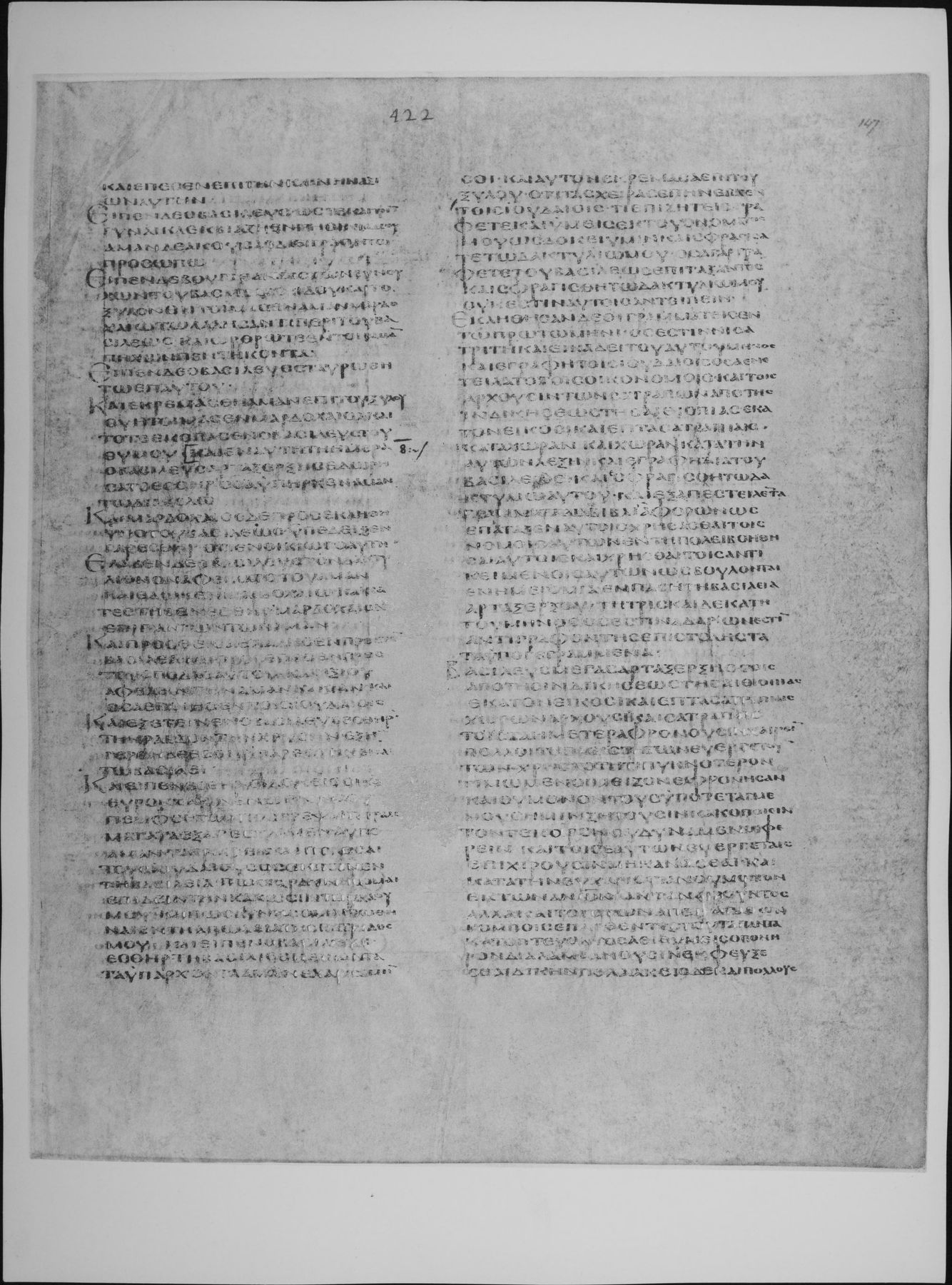
Esther 8:1-8 is on fol. 422r (full-size facsimile of 1879-83, Internet Archive codex-alexandrinus leaf 868). The 1936 reduced facsimile prints beneath this page: Esther vii. 8-viii. 12, [E=xvi. 1-5]. Checked on the plate: the page begins inside Esther 7:8 (first words read: ΕΙΠΕΝ ΔΕ Ο ΒΑΣΙΛΕΥΣ ΩΣΤΕ ΚΑΙ ΤΗΝ ΓΥΝΑΙΚΑ ΒΙΑΖΗ). Note: the first lines of the column are faint on the plate; the words given are the first that can be read with confidence (the third line, ΕΙΠΕΝ ΔΕ Ο ΒΑΣΙΛΕΥΣ, is inside Esth. 7:8, as the caption shows).
1Καὶ ἐν αὐτῇ τῇ ἡμέρᾳ ὁ βασιλεὺς Ἀρταξέρξης ἐδωρήσατο Ἐσθὴρ ὅσα ὑπῆρχεν Ἁμὰν τῷ διαβόλῳ, καὶ Μαρδοχαῖος προσεκλήθη ὑπὸ τοῦ βασιλέως· ὑπέδειξεν γὰρ Ἐσθὴρ ὅτι ἐνοικείωται αὐτῇ. 2ἔλαβεν δὲ ὁ βασιλεὺς τὸν δακτύλιον ὃν ἀφείλατο Ἁμὰν καὶ ἔδωκεν αὐτὸν Μαρδοχαίῳ, καὶ κατέστησεν Ἐσθὴρ Μαρδοχαῖον ἐπὶ πάντων τῶν Ἁμάν. 3καὶ προσθεῖσα ἐλάλησεν πρὸς τὸν βασιλέα, καὶ προσέπεσεν πρὸς τοὺς πόδας αὐτοῦ, καὶ ἠξίου ἀφελεῖν τὴν Ἀμὰν κακίαν καὶ ὅσα ἐποίησεν τοῖς Ἰουδαίοις. 4ἐξέτεινεν δὲ ὁ βασιλεὺς Ἐσθὴρ τὴν ῥάβδον τὴν χρυσῆν· ἐξηγέρθη δὲ Ἐσθὴρ παρεστηκέναι τῷ βασιλεῖ. 5καὶ εἶπεν Ἐσθήρ Εἰ δοκεῖ σοι καὶ εὗρον χάριν, πεμφθήτω ἀποστραφῆναι τὰ γράμματα τὰ ἀπεσταλμένα ὑπὸ Ἁμάν, τὰ γραφέντα ἀπολέσθαι τοὺς Ἰουδαίους οἵ εἰσιν ἐν τῇ βασιλείᾳ σου. 6πῶς γὰρ δυνήσομαι ἰδεῖν τὴν κάκωσιν τοῦ λαοῦ μου, καὶ πῶς δυνήσομαι σωθῆναι ἐν τῇ ἀπωλείᾳ τῆς πατρίδος μου; 7καὶ εἶπεν ὁ βασιλεὺς πρὸς Ἐσθήρ Εἰ πάντα τὰ ὑπάρχοντα Ἁμὰν ἔδωκα καὶ ἐχαρισάμην σοι, καὶ αὐτὸν ἐκρέμασα ἐπὶ ξύλου ὅτι τὰς χεῖρας ἐπήνεγκε τοῖς Ἰουδαίοις, τί ἔτι ἐπιζητεῖς; 8γράψατε καὶ ὑμεῖς ἐκ τοῦ ὀνόματός μου ὡς δοκεῖ ὑμῖν, καὶ σφραγίσατε τῷ δακτυλίῳ μου· ὅσα γὰρ γράφεται τοῦ βασιλέως ἐπιτάξαντος καὶ σφραγισθῇ τῷ δακτυλίῳ μου, οὐκ ἔστιν αὐτοῖς ἀντειπεῖν.
1And in that day king Artaxerxes gave to Esther all that belonged to Aman the slanderer: and Mardochæus was called by the king; for Esther had shewn that he was related to her. 2And the king took the ring which he had taken away from Aman, and gave it to Mardochæus: and Esther appointed Mardochæus over all that had been Aman's. 3And she spoke yet again to the king, and fell at his feet, and besought him to do away the mischief of Aman, and all that he had done against the Jews. 4Then the king stretched out to Esther the golden sceptre: and Esther arose to stand near the king. 5And Esther said, If it seem good to thee, and I have found favour in thy sight, let an order be sent that the letters sent by Aman may be reversed, that were written for the destruction of the Jews, who are in thy kingdom. 6For how shall I be able to look upon the affliction of my people, and how shall I be able to survive the destruction of my kindred? 7And the king said to Esther, If I have given and freely granted thee all that was Aman's, and hanged him on a gallows, because he laid his hands upon the Jews, what dost thou yet further seek? 8Write ye also in my name, as it seems good to you, and seal it with my ring: for whatever orders are written at the command of the king, and sealed with my ring, it is not lawful to gainsay them.
Where on the image
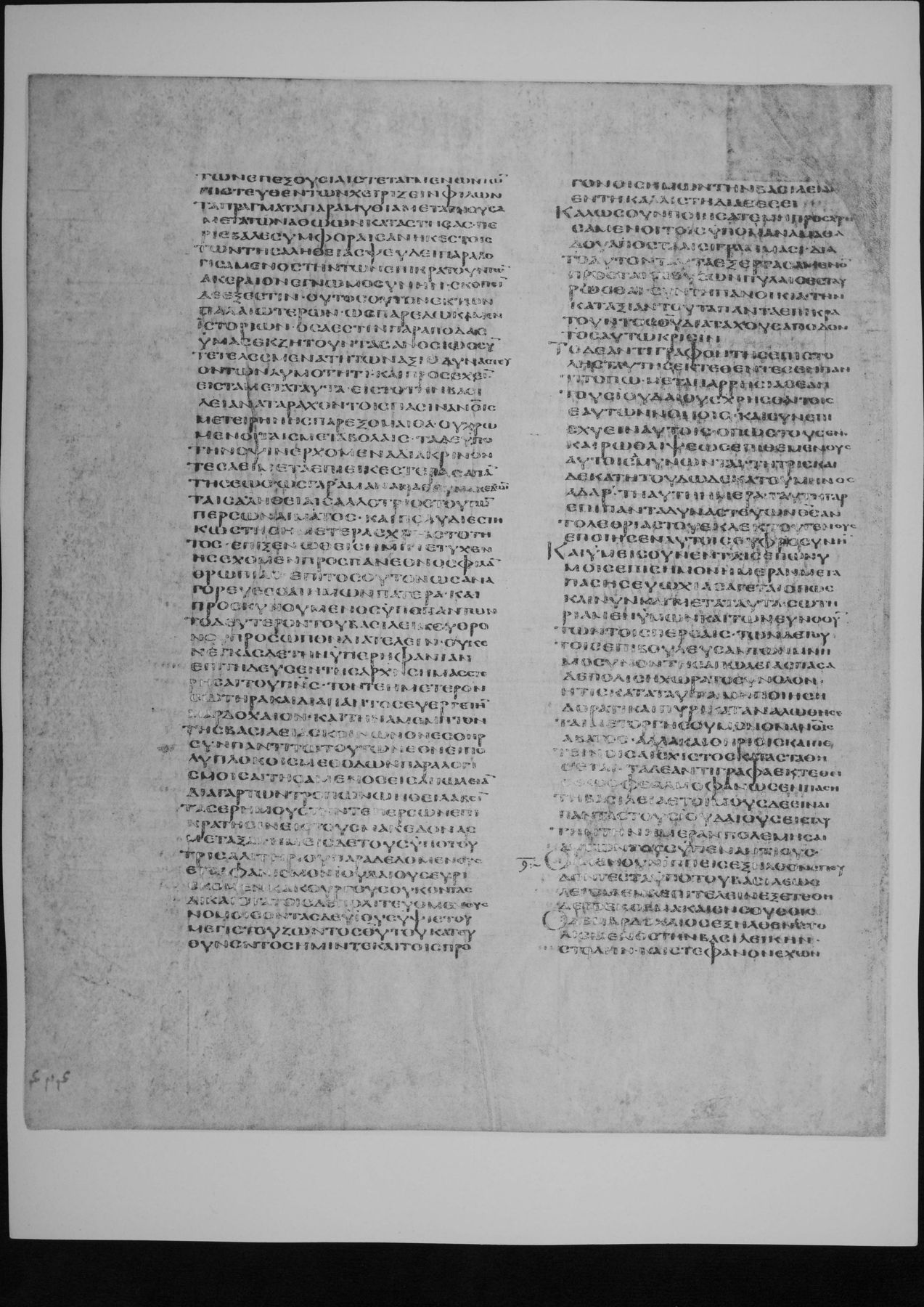
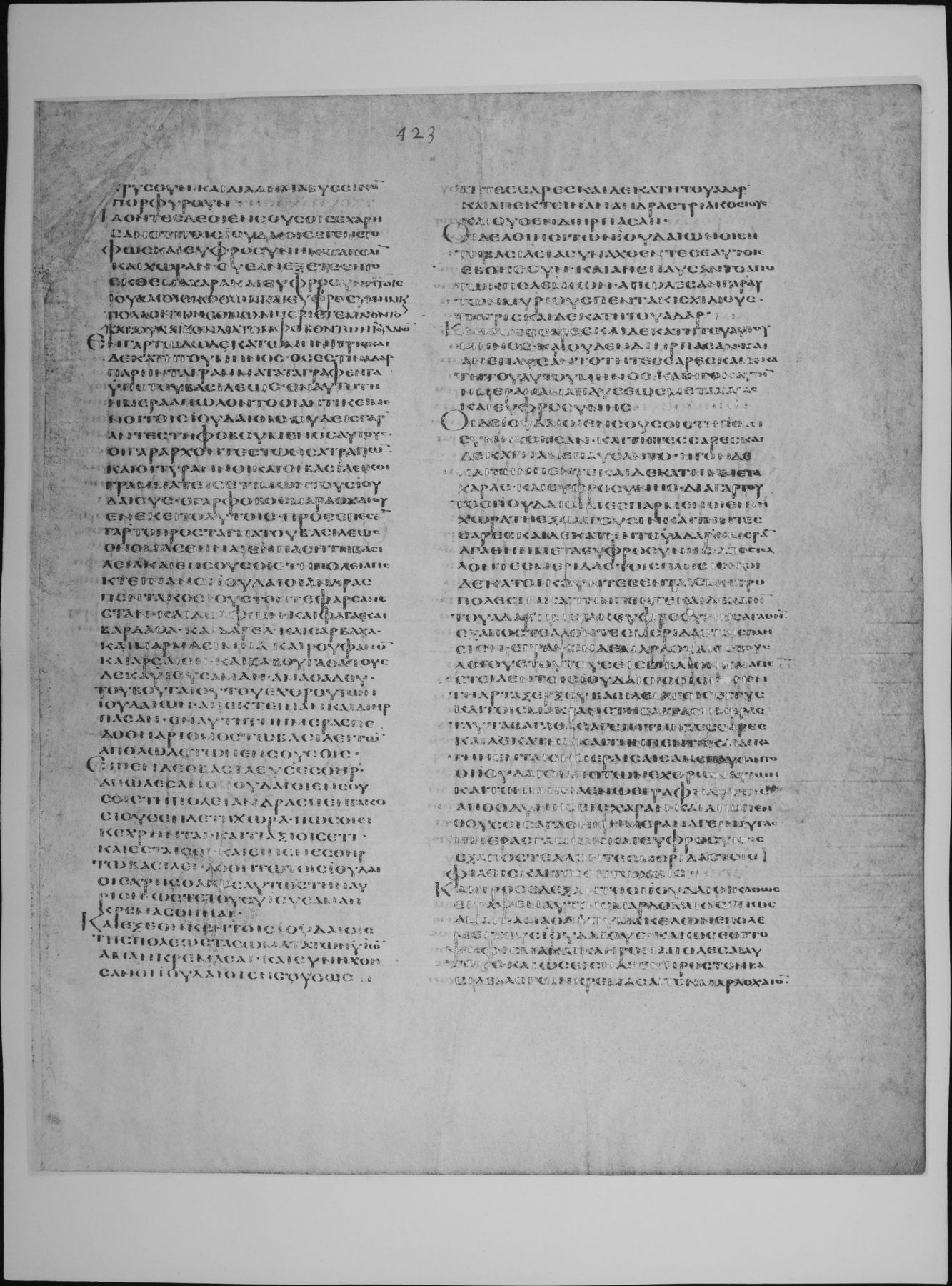
Esther 8:9-12 is on fol. 422r (full-size facsimile of 1879-83, Internet Archive codex-alexandrinus leaf 868). The 1936 reduced facsimile prints beneath this page: Esther vii. 8-viii. 12, [E=xvi. 1-5]. Checked on the plate: the page begins inside Esther 7:8 (first words read: ΕΙΠΕΝ ΔΕ Ο ΒΑΣΙΛΕΥΣ ΩΣΤΕ ΚΑΙ ΤΗΝ ΓΥΝΑΙΚΑ ΒΙΑΖΗ). Note: the first lines of the column are faint on the plate; the words given are the first that can be read with confidence (the third line, ΕΙΠΕΝ ΔΕ Ο ΒΑΣΙΛΕΥΣ, is inside Esth. 7:8, as the caption shows). Esther 8:12-15 is on fol. 422v (full-size facsimile of 1879-83, Internet Archive codex-alexandrinus leaf 869). The 1936 reduced facsimile prints beneath this page: Esther [E=xvi. 5-24], viii. 13-15. Checked on the plate: the page begins inside Esther 8:12 (first words read: ΤΩΝ ΕΠ ΕΞΟΥΣΙΑΙΣ ΤΕΤΑΓΜΕΝΩΝ ΠΙΣΤΕΥΘΕΝΤΩΝ ΧΕΙΡΙΖΕΙΝ ΦΙΛΩΝ ΤΑ ΠΡΑΓΜΑΤΑ). Esther 8:15-17 is on fol. 423r (full-size facsimile of 1879-83, Internet Archive codex-alexandrinus leaf 870). The 1936 reduced facsimile prints beneath this page: Esther viii. 15-ix. 25. Checked on the plate: the page begins inside Esther 8:15 (first words read: ΧΡΥΣΟΥΝ ΚΑΙ ΔΙΑΔΗΜΑ ΒΥΣΣΙΝΟΝ ΠΟΡΦΥΡΟΥΝ ΙΔΟΝΤΕΣ ΔΕ ΟΙ ΕΝ ΣΟΥΣΟΙΣ ΕΧΑΡΗΣΑΝ).
9ἐκλήθησαν δὲ οἱ γραμματεῖς ἐν τῷ πρώτῳ μηνὶ ὅς ἐστι Νισά, τρίτῃ καὶ εἰκάδι τοῦ αὐτοῦ ἔτους, καὶ ἐγράφη τοῖς Ἰουδαίοις ὅσα ἐνετείλατο τοῖς οἰκονόμοις καὶ τοῖς ἄρχουσιν τῶν σατραπῶν ἀπὸ τῆς Ἰνδικῆς ἕως τῆς Αἰθιοπίας, ἑκατὸν εἴκοσι ἑπτὰ σατραπίαις κατὰ χώραν καὶ χώραν, κατὰ τὴν ἑαυτῶν λέξιν. 10ἐγράφη δὲ διὰ τοῦ βασιλέως καὶ ἐσφραγίσθη τῷ δακτυλίῳ αὐτοῦ, καὶ ἐξαπέστειλαν τὰ γράμματα διὰ βιβλιαφόρων, 11ὡς ἐπέταξεν αὐτοῖς χρῆσθαι τοῖς νόμοις αὐτῶν ἐν πάσῃ τῇ πόλει, βοηθῆσαί τε αὑτοῖς καὶ χρῆσθαι τοῖς ἀντιδίκοις αὐτῶν καὶ τοῖς ἀντικειμένοις αὐτῶν ὡς βούλονται, 12ἐν ἡμέρᾳ μιᾷ ἐν πάσῃ τῇ βασιλείᾳ Ἀρταξέρξου, τῇ τρισκαιδεκάτῃ τοῦ δωδεκάτου μηνὸς ὅς ἐστιν Ἀδάρ. [1] Ὧν ἐστιν ἀντίγραφον τῆς ἐπιστολῆς τὰ ὑπογεγραμμένα Βασιλεὺς μέγας Ἀρταξέρξης τοῖς ἀπὸ τῆς Ἰνδικῆς ἕως τῆς Αἰθιοπίας ἑκατὸν εἴκοσι ἑπτὰ σατραπείαις χωρῶν ἄρχουσι καὶ τοῖς τὰ ἡμέτερα φρονοῦσι χαίρειν. [2] πολλοὶ τῇ πλείστῃ τῶν εὐεργετούντων χρηστότητι πυκνότερον τιμώμενοι μεῖζον ἐφρόνησαν, [3] καὶ οὐ μόνον τοὺς ὑποτεταγμένους ἡμῖν ζητοῦσι κακοποιεῖν, τόν τε κόρον οὐ δυνάμενοι φέρειν καὶ τοῖς ἑαυτῶν εὐεργέταις ἐπιχειροῦσι μηχανᾶσθαι· [4] καὶ τὴν εὐχαριστίαν οὐ μόνον ἐκ τῶν ἀνθρώπων ἀνταναιροῦντες, ἀλλὰ καὶ τοῖς τῶν ἀπειραγάθων κόμποις ἐπαρθέντες, τοῦ τὰ πάντα κατοπτεύοντος ἀεὶ θεοῦ μισοπόνηρον ὑπολαμβάνουσιν ἐκφεύξεσθαι δίκην. [5] πολλάκις δὲ καὶ πολλοὺς τῶν ἐπ᾽ ἐξουσίαις τεταγμένεν τῶν πιστευθέντων χειρίζειν φίλων τὰ πράγματα παραμυθία μετόχους αἱμάτων ἀθῴων καταστήσασα περιέβαλε συμφοραῖς ἀνηκέστοις, [6] τῷ τῆς κακοηθείας ψευδεῖ παραλογισμῷ παραλογισαμένων τὴν τῶν ἐπικρατούντων ἀκέραιον εὐγνωμοσύνην. [7] σκοπεῖν δὲ ἔξεστιν, οὐ τοσοῦτον ἐκ τῶν παλαιοτέρων ὡς παρεδώκαμεν ἱστοριῶν, ὅσα ἐστὶν παρὰ πόδας ὑμᾶς ἐκζητοῦντας ἀνοσίως συντετελεσμένα τῇ τῶν ἀνάξια δυναστευόντων λοιμότητι, [8] καὶ προσέχειν εἰς τὰ μετὰ ταῦτα, εἰς τὸ τὴν βασιλείαν ἀτάραχον τοῖς πᾶσιν ἀνθρώποις μετ᾽ εἰρήνης παρεξόμεθα, [9] χρώμενοι ταῖς μεταβολαῖς, τὰ δὲ ὑπὸ τὴν ὄψιν ἐρχόμενα διακρίνοντες ἀεὶ μετ᾽ ἐπιεικεστέρας ἀπαντήσεως. [10] ὡς γὰρ Ἁμὰν Ἁμαδάθου Μακεδὼν ταῖς ἀληθείαις ἀλλότριος τοῦ τῶν Περσῶν αἵματος καὶ πολὺ διεστηκὼς τῆς ἡμετέρας χρηστότητος, ἐπιξενωθεὶς ἡμῖν [11] ἔτυχεν ἧς ἔχομεν πρὸς πᾶν ἔθνος φιλανθρωπίας ἐπὶ τοσοῦτον ὥστε ἀναγορεύεσθαι ἡμῶν πατέρα καὶ προσκυνούμενον ὑπὸ πάντων τὸ δεύτερον τοῦ βασιλικοῦ θρόνου πρόσωπον διατελεῖν· [12] οὐκ ἐνέγκας δὲ τὴν ὑπερηφανίαν ἐπετήδευσεν τῆς ἀρχῆς στερῆσαι ἡμᾶς καὶ τοῦ πνεύματος, [13] τόν τε ἡμέτερον σωτῆρα καὶ διὰ παντὸς εὐεργέτην Μαρδοχαῖον καὶ τὴν ἄμεμπτον τῆς βασιλείας κοινωνὸν Ἐσθὴρ σὺν παντὶ τῷ τούτων ἔθνει πολυπλόκοις μεθόδων παραλογισμοῖς αἰτησάμενος εἰς ἀπωλίαν· [14] διὰ γὰρ τῶν τρόπων τούτων ᾠήθη λαβὼν ἡμᾶς ἐρήμους τὴν τῶν Περσῶν ἐπικράτησιν εἰς τοὺς Μακεδόνας μετάξαι. [15] ἡμεῖς δὲ τοὺς ὑπὸ τοῦ τρίσαλιτηρίου παραδεδομένους εἰς ἀφανισμὸν Ἰουδαίους εὑρίσκομεν οὐ κακούργους ὄντας, δικαιοτάτοις δὲ πολιτευομένους νόμοις, [16] ὄντας δὲ υἱοὺς τοῦ ὑψίστου μεγίστου ζῶντος θεοῦ τοῦ κατευθύνοντος ἡμῖν τε καὶ τοῖς προγόνοις ἡμῶν τὴν βασιλείαν ἐν τῇ καλλίστῃ διαθέσει. [17] καλῶς οὖν ποιήσετε μὴ προσχρησάμενοι τοῖς ὑπὸ Ἁμὰν Ἁμαδάθου ἀποσταλεῖσι γράμμασιν, [18] διὰ τὸ αὐτὸν τὸν ταῦτα ἐξεργασάμενον πρὸς ταῖς Σούσων πύλαις ἐσταυρῶσθαι σὺν τῇ πανοικίᾳ, τὴν καταξίαν τοῦ τὰ πάντα ἐπικρατοῦντος θεοῦ διὰ τάχους ἀποδόντος αὐτῷ κρίσιν· [19] τὸ δὲ ἀντίγραφον τῆς ἐπιστολῆς ταύτης ἐκθέντες ἐν παντὶ τόπῳ μετὰ παρρησίας, ἐᾷν τοὺς Ἰουδαίους χρῆσθαι τοῖς ἑαυτῶν νομίμοις, [20] καὶ συνεπισχύειν αὐτοῖς ὅπως τοὺς ἐν καιρῷ θλίψεως ἐπιθεμένους αὐτοῖς ἀμύνωνται τῇ τρισκαιδεκάτῃ τοῦ δωδεκάτου μηνὸς Ἀδὰρ τῇ αὐτῇ ἡμέρᾳ· [21] ταύτην γὰρ ὁ πάντα δυναστεύων θεὸς ἀντ᾽ ὀλεθρίας τοῦ ἐκλεκτοῦ γένους ἐποίησεν αὐτοῖς εὐφροσύνην. [22] καὶ ὑμεῖς οὖν ἐν ταῖς ἐπωνύμοις ὑμῶν ἑορταῖς ἐπίσημον ἡμέραν μετὰ πάσης εὐωχίας ἄγετε, [23] ὅπως καὶ νῦν καὶ μετὰ ταῦτα σωτηρία ἡμῖν καὶ τοῖς εὐνοοῦσιν Πέρσαις, τοῖς δὲ ἡμῖν ἐπιβουλεύουσιν μνημόσυνον τῆς ἀπωλείας. [24] πᾶσα δὲ πόλις ἢ χώρα τὸ σύνολον ἥτις κατὰ ταῦτα μὴ ποιήσῃ δόρατι καὶ πυρὶ καταναλωθήσεται μετ᾽ ὀργῆς· οὐ μόνον ἀνθρώποις ἄβατος, ἀλλὰ καὶ θηρίοις καὶ πετεινοῖς εἰς τὸν ἅπαντα χρόνον ἔχθιστος κατασταθήσεται. 13τὰ δὲ ἀντίγραφα ἐκτιθέσθωσαν ὀφθαλμοφανῶς ἐν πάσῃ τῇ βασιλείᾳ, ἑτοίμους τε εἶναι πάντας τοὺς Ἰουδαίους εἰς ταύτην τὴν ἡμέραν πολεμῆσαι αὐτῶν τοὺς ὑπεναντίους. 14Οἱ μὲν οὖν ἱππεῖς ἐξῆλθον σπεύδοντες τὰ ὑπὸ τοῦ βασιλέως λεγόμενα ἐπιτελεῖν· ἐξετέθη δὲ τὸ πρόσταγμα καὶ ἐν Σούσοις. 15ὁ δὲ Μαρδοχαῖος ἐξῆλθεν ἐστολισμένος τὴν βασιλικὴν στολὴν καὶ στέφανον ἔχων χρυσοῦν καὶ διάδημα βύσσινον πορφυροῦν· ἰδόντες δὲ οἱ ἐν Σούσοις ἐχάρησαν. 16τοῖς δὲ Ἰουδαίοις ἐγένετο φῶς καὶ εὐφροσύνη 17κατὰ πόλιν καὶ χώραν οὗ ἂν ἐξετέθη τὸ πρόσταγμα, οὗ ἂν ἐξετέθη τὸ ἔκθεμα· χαρὰ καὶ εὐφροσύνη τοῖς Ἰουδαίοις, κώθων καὶ εὐφροσύνη· καὶ πολλοὶ τῶν ἐθνῶν περιετέμοντο καὶ ἰουδάιζον διὰ τὸν φόβον τῶν Ἰουδαίων.
9So the scribes were called in the first month, which is Nisan, on the three and twentieth day of the same year; and orders were written to the Jews, whatever the king had commanded to the local governors and chiefs of the satraps, from India even to Ethiopia, a hundred and twenty-seven satraps, according to the several provinces, according to their dialects. 10And they were written by order of the king, and sealed with his ring, and they sent the letters by the posts: 11wherein he charged them to use their own laws in every city, and to help each other, and to treat their adversaries, and those who attacked them, as they pleased, 12on one day in all the kingdom of Artaxerxes, on the thirteenth day of the twelfth month, which is Adar. And the following is the copy of the letter of the orders. [The great king Artaxerxes sends greeting to the rulers of provinces in a hundred and twenty-seven satrapies, from India to Ethiopia, even to those who are faithful to our interests. Many who have been frequently honoured by the most abundant kindness of their benefactors have conceived ambitious designs, and not only endeavour to hurt our subjects, but moreover, not being able to bear prosperity, they also endeavour to plot against their own benefactors. And they not only would utterly abolish gratitude from among men, but also, elated by the boastings of men who are strangers to all that is good, they suppose that they shall escape the sin-hating vengeance of the ever-seeing God. And oftentimes evil exhortation has made partakers of the guilt of shedding innocent blood, and has involved in irremediable calamities, many of those who were appointed to offices of authority, who had been entrusted with the management of their friends' affairs; while men, by the false sophistry of an evil disposition, have deceived the simple candour of the ruling powers. And it is possible to see this, not so much from more ancient traditionary accounts, as it is immediately in your power to see it by examining what things have been wickedly perpetrated by the baseness of men unworthily holding power. And it is right to take heed with regard to the future, that we may maintain the government in undisturbed peace for all men, adopting needful changes, and ever judging those cases which come under our notice, with truly equitable decision. For whereas Aman, a Macedonian, the son of Amadathes, in reality an alien from the blood of the Persians, and differing widely from our mild course of government, having been hospitably entertained by us, obtained so large a share of our universal kindness, as to be called our father, and to continue the person next to the royal throne, reverenced of all; he, however, overcome by the pride of his station, endeavoured to deprive us of our dominion, and our life; having by various and subtle artifices demanded for destruction both Mardochæus our deliverer and perpetual benefactor, and Esther the blameless consort of our kingdom, with their whole nation. For by these methods he thought, having surprised us in a defenceless state, to transfer the dominion of the Persians to the Macedonians. But we find that the Jews, who have been consigned to destruction by the most abominable of men, are not malefactors, but living according to the justest laws, and being the sons of the living God, the most high and mighty, who maintains the kingdom, to us as well as to our forefathers, in the most excellent order. Ye will therefore do well in refusing to obey the letters sent by Aman the son of Amadathes, because he that has done these things, has been hanged with his whole family at the gates of Susa, Almighty God having swiftly returned to him a worthy recompence. We enjoin you then, having openly published a copy of this letter in every place, to give the Jews permission to use their own lawful customs, and to strengthen them, that on the thirteenth of the twelfth month Adar, on the self-same day, they may defend themselves against those who attacked them in a time of affliction. For in the place of the destruction of the chosen race, Almighty God has granted them this time of gladness. Do ye therefore also, among your notable feasts, keep a distinct day with all festivity, that both now and hereafter it may be a day of deliverance to us and those who are well disposed toward the Persians, but to those that plotted against us a memorial of destruction. And every city and province collectively, which shall not do accordingly, shall be consumed with vengeance by spear and fire: it shall be made not only inaccessible to men, but also most hateful to wild beasts and birds for ever.] 13And let the copies be posted in conspicuous places throughout the kingdom, and let all the Jews be ready against this day, to fight against their enemies. 14So the horsemen went forth with haste to perform the king's commands; and the ordinance was also published in Susa. 15And Mardochæus went forth robed in the royal apparel, and wearing a golden crown, and a diadem of fine purple linen: and the people in Susa saw it and rejoiced. 16And the Jews had light and gladness, 17in every city and province wherever the ordinance was published: wherever the proclamation took place, the Jews had joy and gladness, feasting and mirth: and many of the Gentiles were circumcised, and became Jews, for fear of the Jews.
Cite
Sources
- Source: Codex Alexandrinus (British Library Royal MS 1 D. VI) via the British Museum photographic facsimiles of 1879-83 and 1936 (Internet Archive) + Swete's Septuagint + Brenton's English (holding institution)
- Critical edition: H. B. Swete, The Old Testament in Greek according to the Septuagint (1909)
← previous · → next · v cycle view · l back to library