Genesis, Chapter 12 (Codex Alexandrinus)
Introduction
Genesis 12 in the Greek Old Testament (the Septuagint) as written in Codex Alexandrinus, a Greek Bible copied in the fifth century, probably in Egypt, and now in the British Library (Royal MS 1 D. V, the first of its four volumes). It is one of the three great early codices of the whole Greek Bible, with Codex Vaticanus and Codex Sinaiticus, and for Genesis 1:1-46:28, which Codex Vaticanus has lost, it is the oldest surviving complete Greek text (older papyri such as the Berlin Genesis papyrus and Chester Beatty 961 survive only in part).
This entry meets the strict three-criteria standard of the Theosis Library:
- Manuscript scan: the page of Codex Alexandrinus carrying this chapter (fol. 7r), from the full-size photographic (autotype) facsimile published by the British Museum in 1879-1883, as digitised on the Internet Archive. The verse range of every page comes from the reduced photographic facsimile of 1915, which prints it beneath each plate, and the opening words of every page were read on the plate to confirm the page and the verse it begins with. Each section links to the page or pages that hold its verses. Folio numbers are those written at the head of each leaf and visible on the plates.
- Original text: Swete's edition, which in Genesis 1:1-46:28 prints the text of Codex Alexandrinus itself (Codex Vaticanus has lost these chapters), with the spelling of A for the most part. Swete adds accents, breathings and punctuation and expands the abbreviated sacred names, so the plate shows the same text in unaccented capitals.
- English translation: Sir Lancelot C. L. Brenton, The Septuagint Version of the Old Testament (1844; 1851 edition), a translation of the Greek, public domain, from the eBible.org text.
How was this verified? (Provenance)
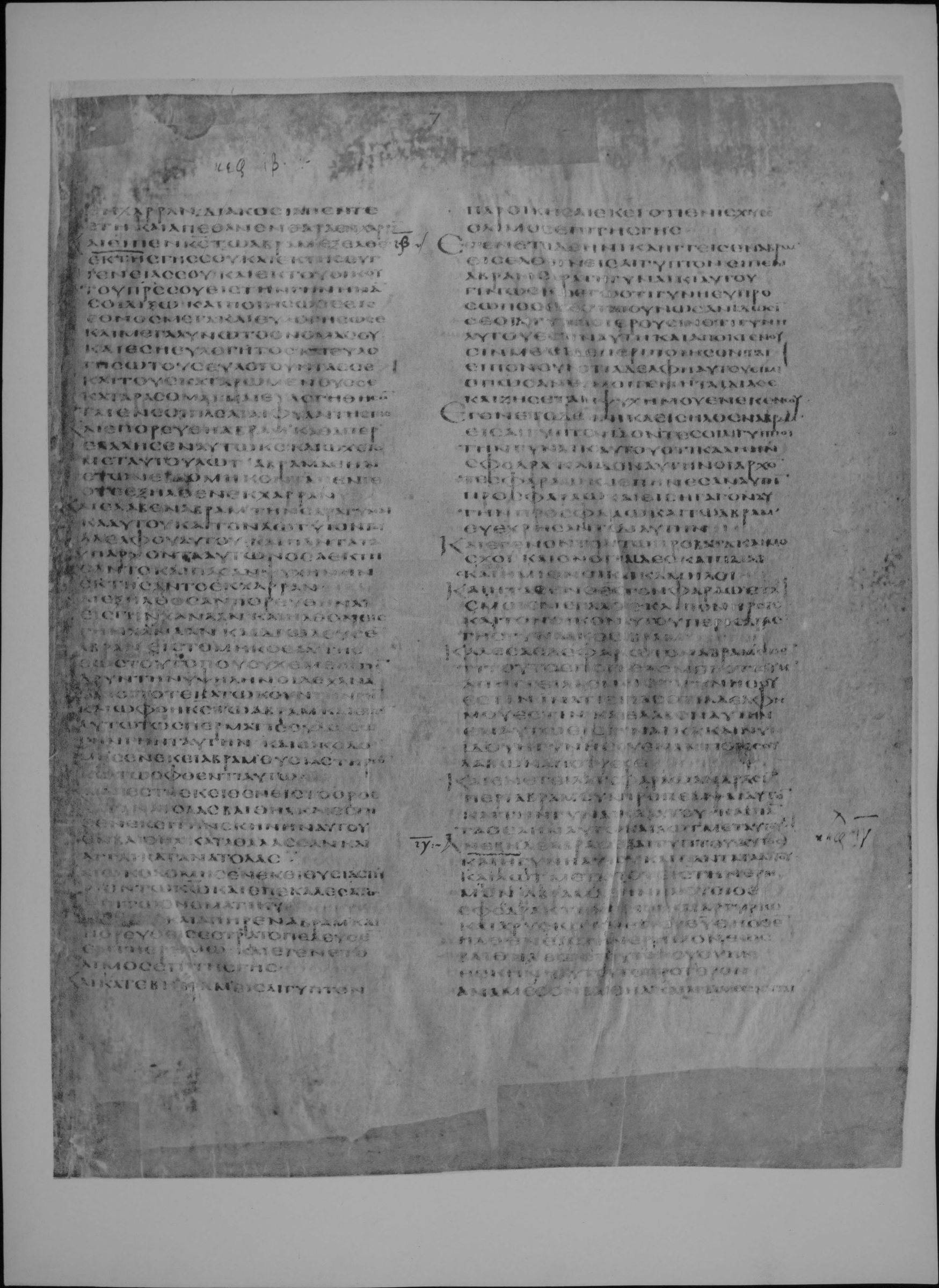
Where on the image
Genesis 12:1-8 is on fol. 7r (full-size facsimile of 1879-83, Internet Archive codex-alexandrinus leaf 34). The 1915 reduced facsimile prints beneath this page: Gen. xi. 32-xiii. 3. Checked on the plate: the page begins inside Genesis 11:32 (first words read: ΕΝ ΧΑΡΡΑΝ ΔΙΑΚΟΣΙΑ ΠΕΝΤΕ ΕΤΗ ΚΑΙ ΑΠΕΘΑΝΕΝ ΘΑΡΡΑ).
1Καὶ εἶπεν Κύριος τῷ Ἀβράμ Ἔξελθε ἐκ τῆς γῆς σου καὶ ἐκ τῆς συγγενείας σου καὶ ἐκ τοῦ οἴκου τοῦ πατρός σου, εἰς τὴν γῆν ἣν ἄν σοι δείξω. 2καὶ ποιήσω σε εἰς ἔθνος μέγα καὶ εὐλογήσω σε καὶ μεγαλυνῶ τὸ ὄνομά σου, καὶ ἔσῃ εὐλογητός· 3καὶ εὐλογήσω τοὺς εὐλογοῦντάς σε, καὶ τοὺς καταρωμένους σε καταράσομαι, καὶ εὐλογηθήσονται ἐν σοὶ πᾶσαι αἱ φυλαὶ τῆς γῆς. 4καὶ ἐπορεύθη Ἀβρὰμ καθάπερ ἐλάλησεν αὐτῷ Κύριος, καὶ ᾤχετο μετ᾽ αὐτοῦ Λώτ· Ἀβρὰμ δὲ ἦν ἐτῶν ἑβδομήκοντα πέντε ὅτε ἐξῆλθεν ἐκ Χαρράν. 5καὶ ἔλαβεν Ἀβρὰμ τὴν Σαρὰ γυναῖκα αὐτοῦ καὶ τὸν Λὼτ υἱὸν τοῦ ἀδελφοῦ αὐτοῦ καὶ πάντα τὰ ὑπάρχοντα αὐτῶν ὅσα ἐκτήσαντο καὶ πᾶσαν ψυχὴν ἣν ἐκτήσαντο ἐκ Χαρράν, καὶ ἐξήλθοσαν πορευθῆναι εἰς γῆν Χανάαν· καὶ ἦλθον εἰς γῆν Χανάαν. 6καὶ διώδευσεν Ἀβρὰμ εἰς τὸ μῆκος αὐτῆς ἕως τοῦ τόπου Συχέμ, ἐπὶ τὴν δρῦν τὴν ὑψηλήν· οἱ δὲ Χαναναῖοι τότε κατῴκουν τὴν γῆν. 7καὶ ὤφθη Κύριος τῷ Ἀβρὰμ καὶ εἶπεν αὐτῷ Τῷ σπέρματί σου δώσω τὴν γῆν ταύτην· καὶ ᾠκοδόμησεν ἐκεῖ Ἀβρὰμ θυσιαστήριον Κυρίῳ τῷ ὀφθέντι αὐτῷ. 8καὶ ἀπέστη ἐκεῖθεν εἰς τὸ ὄρος κατ᾽ ἀνατολὰς Βαιθήλ, καὶ ἔστησεν ἐκεῖ τὴν σκηνὴν αὐτοῦ ἐν Βαιθὴλ κατὰ θάλασσαν καὶ Ἁγγαὶ κατ᾽ ἀνατολάς· καὶ ᾠκοδόμησεν ἐκεῖ θυσιαστήριον τῷ κυρίῳ καὶ ἐπεκαλέσατο ἐπὶ τῷ ὀνόματι Κυρίου.
1And the Lord said to Abram, Go forth out of thy land and out of thy kindred, and out of the house of thy father, and come into the land which I shall shew thee. 2And I will make thee a great nation, and I will bless thee and magnify thy name, and thou shalt be blessed. 3And I will bless those that bless thee, and curse those that curse thee, and in thee shall all the tribes of the earth be blessed. 4And Abram went as the Lord spoke to him, and Lot departed with him, and Abram was seventy-five years old, when he went out of Charrhan. 5And Abram took Sara his wife, and Lot the son of his brother, and all their possessions, as many as they had got, and every soul which they had got in Charrhan, and they went forth to go into the land of Chanaan. 6And Abram traversed the land lengthwise as far as the place Sychem, to the high oak, and the Chananites then inhabited the land. 7And the Lord appeared to Abram, and said to him, I will give this land to thy seed. And Abram built an altar there to the Lord, who appeared to him. 8And he departed thence to the mountain eastward of Bæthel, and there he pitched his tent in Bæthel near the sea, and Aggai toward the east, and there he built an altar to the Lord, and called on the name of the Lord.
Where on the image
Genesis 12:9-16 is on fol. 7r (full-size facsimile of 1879-83, Internet Archive codex-alexandrinus leaf 34). The 1915 reduced facsimile prints beneath this page: Gen. xi. 32-xiii. 3. Checked on the plate: the page begins inside Genesis 11:32 (first words read: ΕΝ ΧΑΡΡΑΝ ΔΙΑΚΟΣΙΑ ΠΕΝΤΕ ΕΤΗ ΚΑΙ ΑΠΕΘΑΝΕΝ ΘΑΡΡΑ).
9καὶ ἀπῆρεν Ἀβρὰμ καὶ πορευθεὶς ἐστρατοπέδευσεν ἐν τῇ ἐρήμῳ. 10Καὶ ἐγένετο λιμὸς ἐπὶ τῆς γῆς· καὶ κατέβη Ἀβρὰμ εἰς Αἴγυπτον παροικῆσαι ἐκεῖ, ὅτι ἐνίσχυσεν ὁ λιμὸς ἐπὶ τῆς γῆς. 11ἐγένετο δὲ ἡνίκα ἤγγισεν Ἀβρὰμ εἰσελθεῖν εἰς Αἴγυπτον, εἶπεν Ἀβρὰμ Σάρᾳ τῇ γυναικὶ αὐτοῦ Γινώσκω ἐγὼ ὅτι γυνὴ εὐπρόσωπος εἶ· 12ἔσται οὖν ὡς ἂν ἴδωσίν σε οἱ Αἰγύπτιοι, ἐροῦσιν ὅτι Γυνὴ αὐτοῦ ἐστὶν αὐτή· καὶ ἀποκτενοῦσίν με, σὲ δὲ περιποιήσονται. 13εἰπὸν οὖν ὅτι Ἀδελφὴ αὐτοῦ εἰμί, ὅπως ἂν εὖ μοι γένηται διὰ σέ, καὶ ζήσεται ἡ ψυχή μου ἕνεκεν σοῦ. 14ἐγένετο δὲ ἡνίκα εἰσῆλθεν Ἀβρὰμ εἰς Αἴγυπτον, ἰδόντες οἱ Αἰγύπτιοι τὴν γυναῖκα αὐτοῦ ὅτι καλὴ ἦν σφόδρα, 15καὶ ἴδον αὐτὴν οἱ ἄρχοντες Φαραὼ καὶ ἐπῄνεσαν αὐτὴν πρὸς Φαραὼ καὶ εἰσήγαγον αὐτὴν πρὸς Φαραώ. 16καὶ τῷ Ἀβρὰμ εὖ ἐχρήσαντο δι᾽ αὐτήν, καὶ ἐγένοντο αὐτῷ πρόβατα καὶ μόσχοι καὶ ὄνοι, παῖδες καὶ παιδίσκαι, ἡμίονοι καὶ κάμηλοι.
9And Abram departed and went and encamped in the wilderness. 10And there was a famine in the land, and Abram went down to Egypt to sojourn there, because the famine prevailed in the land. 11And it came to pass when Abram drew nigh to enter into Egypt, Abram said to Sara his wife, I know that thou art a fair woman. 12It shall come to pass then that when the Egyptians shall see thee, they shall say, This is his wife, and they shall slay me, but they shall save thee alive. 13Say, therefore, I am his sister, that it may be well with me on account of thee, and my soul shall live because of thee. 14And it came to pass when Abram entered into Egypt—the Egyptians having seen his wife that she was very beautiful— 15that the princes of Pharao saw her, and praised her to Pharao and brought her into the house of Pharao. 16And they treated Abram well on her account, and he had sheep, and calves, and asses, and men-servants, and women-servants, and mules, and camels.
Where on the image
Genesis 12:17-20 is on fol. 7r (full-size facsimile of 1879-83, Internet Archive codex-alexandrinus leaf 34). The 1915 reduced facsimile prints beneath this page: Gen. xi. 32-xiii. 3. Checked on the plate: the page begins inside Genesis 11:32 (first words read: ΕΝ ΧΑΡΡΑΝ ΔΙΑΚΟΣΙΑ ΠΕΝΤΕ ΕΤΗ ΚΑΙ ΑΠΕΘΑΝΕΝ ΘΑΡΡΑ).
17καὶ ἤτασεν ὁ θεὸς τὸν Φαραὼ ἐτασμοῖς μεγάλοις καὶ πονηροῖς καὶ τὸν οἶκον αὐτοῦ περὶ Σάρας τῆς γυναικὸς Ἀβράμ. 18καλέσας δὲ Φαραὼ τὸν Ἀβρὰμ εἶπεν Τί τοῦτο ἐποίησάς μοι, ὅτι οὐκ ἀπήγγειλάς μοι ὅτι γυνή σού ἐστιν; 19ἵνα τί εἶπας ὅτι Ἀδελφή μού ἐστιν; καὶ ἔλαβον αὐτὴν ἐμαυτῷ εἰς γυναῖκα. καὶ νῦν ἰδοὺ ἡ γυνή σου ἐναντίον σου· λαβὼν ἀπότρεχε. 20καὶ ἐνετείλατο Φαραὼ ἀνδράσιν περὶ Ἀβράμ, συνπροπέμψαι αὐτὸν καὶ τὴν γυναῖκα αὐτοῦ καὶ πάντα ὅσα ἦν αὐτῷ, καὶ Λὼτ μετ᾽ αὐτοῦ.
17And God afflicted Pharao with great and severe afflictions, and his house, because of Sara, Abram's wife. 18And Pharao having called Abram, said, What is this thou hast done to me, that thou didst not tell me that she was thy wife? 19Wherefore didst thou say, She is my sister? and I took her for a wife to myself; and now, behold, thy wife is before thee, take her and go quickly away. 20And Pharao gave charge to men concerning Abram, to join in sending him forward, and his wife, and all that he had.
Cite
Sources
- Source: Codex Alexandrinus (British Library Royal MS 1 D. V) via the British Museum photographic facsimiles of 1879-83 and 1915 (Internet Archive) + Swete's Septuagint + Brenton's English (holding institution)
- Critical edition: H. B. Swete, The Old Testament in Greek according to the Septuagint (1909)
← previous · → next · v cycle view · l back to library