Isaiah, Chapter 22 (Codex Alexandrinus)
Introduction
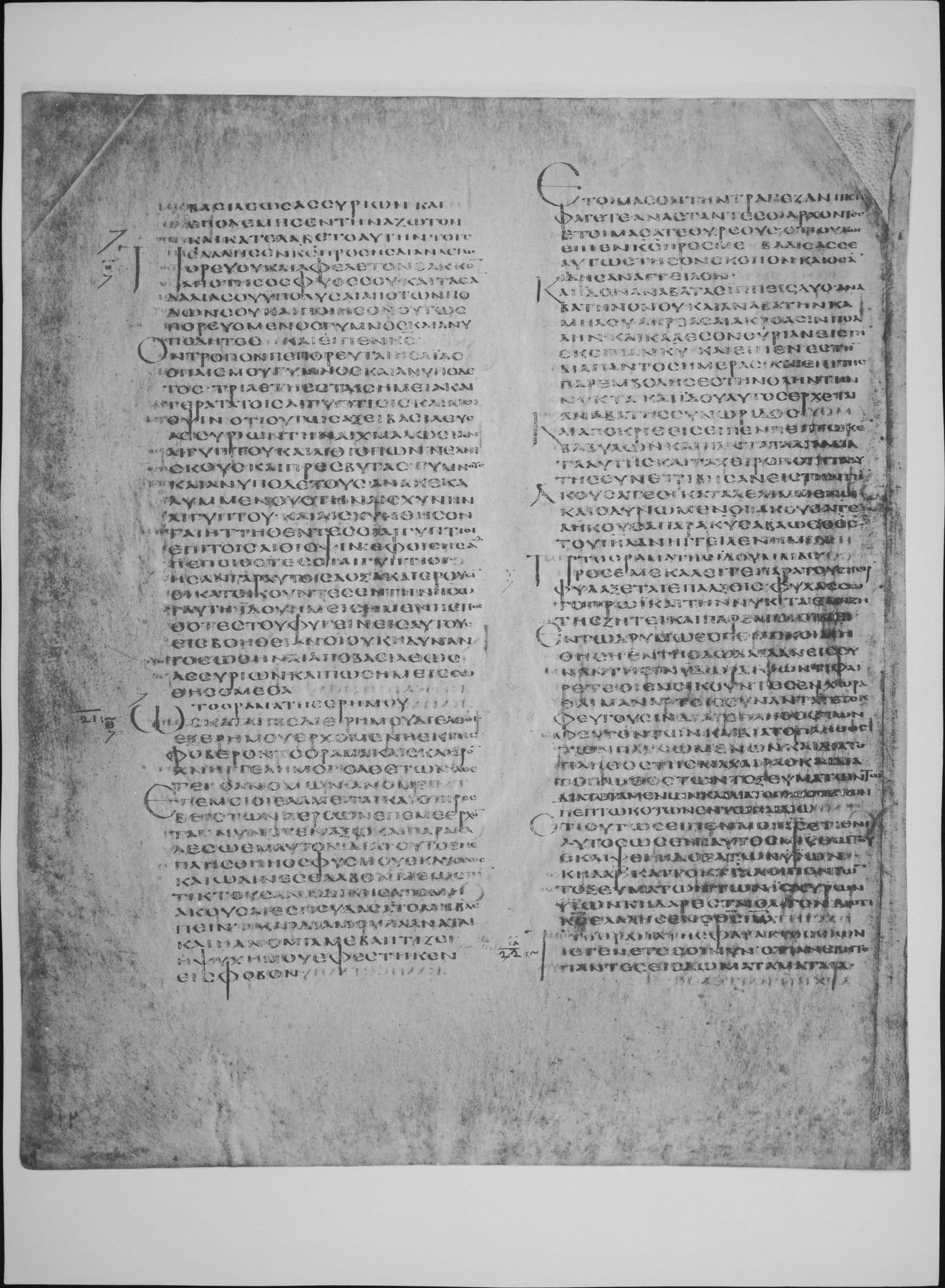
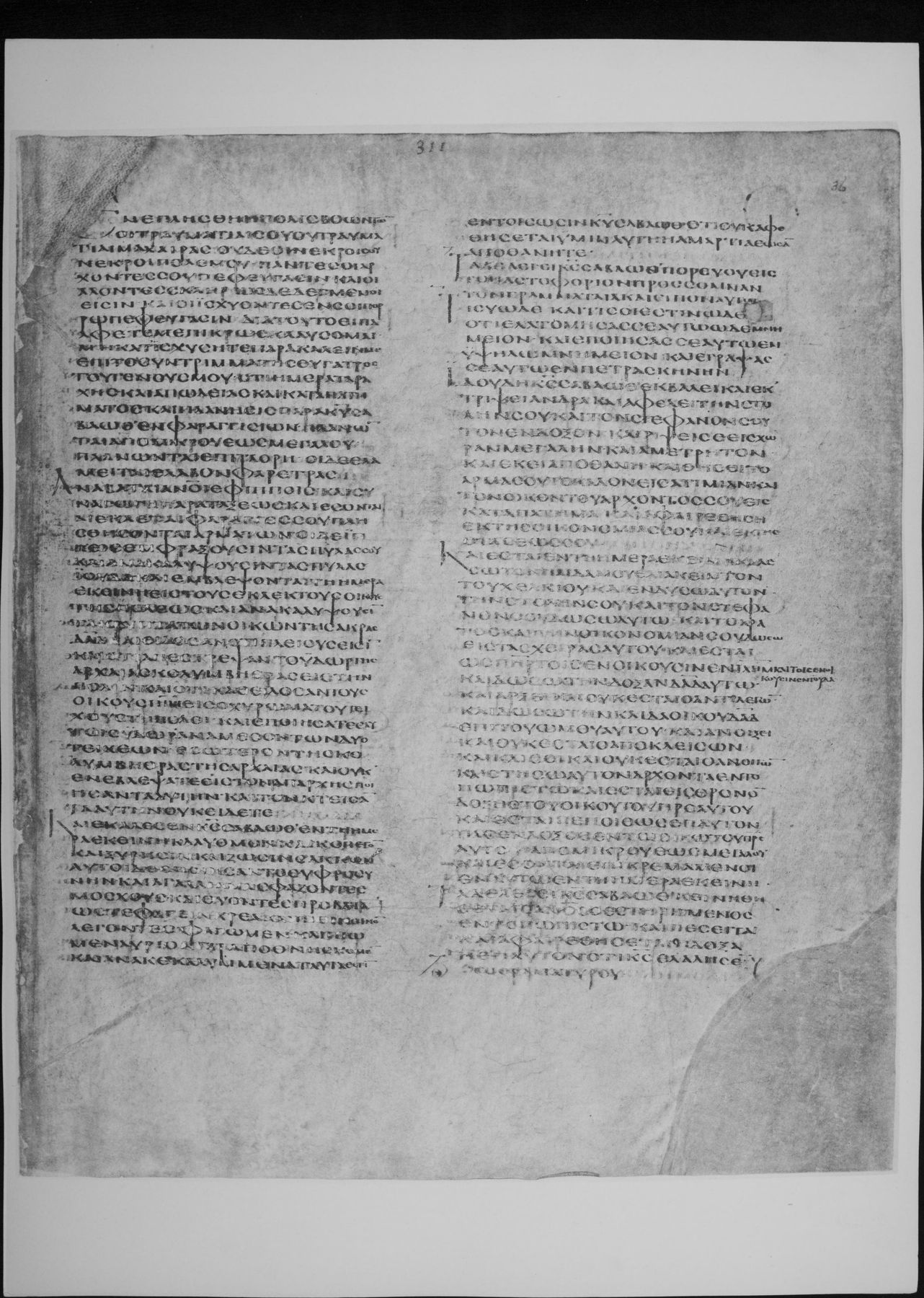
Isaiah 22 in the Greek Old Testament (the Septuagint) as written in Codex Alexandrinus, a Greek Bible copied in the fifth century, probably in Egypt, and now in the British Library (Royal MS 1 D. VI, the second of its four volumes). It is one of the three great early codices of the whole Greek Bible, with Codex Vaticanus and Codex Sinaiticus.
This entry meets the strict three-criteria standard of the Theosis Library:
- Manuscript scan: the pages of Codex Alexandrinus carrying this chapter (fol. 310v, fol. 311r), from the full-size photographic (autotype) facsimile published by the British Museum in 1879-1883, as digitised on the Internet Archive. The verse range of every page comes from the reduced photographic facsimile of 1936, which prints it beneath each plate, and the opening words of every page were read on the plate to confirm the page and the verse it begins with. Each section links to the page or pages that hold its verses. Folio numbers are those written at the head of each leaf and visible on the plates.
- Original text: Swete's edition, which here prints the text of Codex Vaticanus (Vat. gr. 1209), the base of his edition, and gives the readings of Alexandrinus only in his apparatus. The Greek column is therefore Vaticanus' text; where Alexandrinus differs, the plate shows what Alexandrinus reads.
- English translation: Sir Lancelot C. L. Brenton, The Septuagint Version of the Old Testament (1844; 1851 edition), a translation of the Greek, public domain, from the eBible.org text.
How was this verified? (Provenance)
Where on the image
Isaiah 22:1 is on fol. 310v (full-size facsimile of 1879-83, Internet Archive codex-alexandrinus leaf 645). The 1936 reduced facsimile prints beneath this page: Is. xx. 1-xxii. 1. Checked on the plate: the page begins inside Isaiah 20:1 (first words read: ΒΑΣΙΛΕΩΣ ΑΣΣΥΡΙΩΝ ΚΑΙ ΕΠΟΛΕΜΗΣΕΝ ΤΗΝ ΑΖΩΤΟΝ ΚΑΙ ΚΑΤΕΛΑΒΕΤΟ ΑΥΤΗΝ). Isaiah 22:2-8 is on fol. 311r (full-size facsimile of 1879-83, Internet Archive codex-alexandrinus leaf 646). The 1936 reduced facsimile prints beneath this page: Is. xxii. 2-25. Checked on the plate: the page begins at the start of Isaiah 22:2 (first words read: ΕΝΕΠΛΗΣΘΗ Η ΠΟΛΙΣ ΒΟΩΝΤΩΝ ΟΙ ΤΡΑΥΜΑΤΙΑΙ ΣΟΥ ΟΥ ΤΡΑΥΜΑΤΙΑΙ ΜΑΧΑΙΡΑΣ ΟΥΔΕ ΟΙ ΝΕΚΡΟΙ ΣΟΥ).
1Τὸ ῥῆμα τῆς φάραγγος Σειών. Τί ἐγένετό σοι ὅτι νῦν ἀνέβητε πάντες εἰς δώματα μάταια; 2ἐνεπλήσθη ἡ πόλις βοώντων, οἱ τραυματίαι σου οὐ τραυματίαι ἐν μαχαίραις, οὐδὲ οἱ νεκροί σου νεκροὶ πολέμῳ. 3πάντες οἱ ἄρχοντές σου πεφεύγασιν, καὶ ἁλόντες σκληρῶς δεδεμένοι εἰσίν, καὶ οἱ ἰσχύοντες ἐν σοὶ πόρρω πεφεύγασιν. 4διὰ τοῦτο εἶπα Ἄφετέ με, πικρῶς κλαύσομαι· μὴ κατισχύσητε παρακαλεῖν με ἐπὶ τὸ σύντριμμα τῆς θυγατρὸς τοῦ γένους μου. 5ὅτι ἡμέρα ταραχῆς καὶ ἀπωλείας, καὶ καταπάτημα καὶ πλάνησις παρὰ κυρίου σαβαώθ· ἐν φάραγγι Σειὼν πλανῶνται, ἀπὸ μικροῦ ἕως μεγάλου πλανῶνται ἐπὶ τὰ ὄρη. 6οἱ δὲ Ἐλαμεῖται ἔλαβον φαρέτρας, ἀναβάται ἄνθρωποι ἐφ᾽ ἵππους, καὶ συναγωγὴ παρατάξεως. 7καὶ ἔσονται αἱ ἐκλεκταὶ φάραγγές σου, πλησθήσονται ἁρμάτων, οἱ δὲ ἱππεῖς ἐμφράξουσι τὰς πύλας σου, 8καὶ ἀνακαλύψουσιν τὰς πύλας Ἰούδα· καὶ ἐμβλέψονται τῇ ἡμέρᾳ ἐκείνῃ εἰς τοὺς ἐκλεκτοὺς οἴκους τῆς πόλεως,
1The Word of the Valley of Sion. 2The city is filled with shouting men: thy slain are not slain with swords, nor are thy dead those who have died in battle. 3All thy princes have fled, and thy captives are tightly bound, and the mighty men in thee have fled far away. 4Therefore I said, Let me alone, I will weep bitterly; labour not to comfort me for the breach of the daughter of my people. 5For it is a day of trouble, and of destruction, and of treading down, and there is perplexity sent from the Lord of hosts: they wander in the valley of Sion; they wander from the least to the greatest on the mountains. 6And the Elamites took their quivers, and there were men mounted on horses, and there was a gathering for battle. 7And it shall be that thy choice valleys shall be filled with chariots, and horsemen shall block up thy gates. 8And they shall uncover the gates of Juda, and they shall look in that day on the choice houses of the city.
Where on the image
Isaiah 22:9-16 is on fol. 311r (full-size facsimile of 1879-83, Internet Archive codex-alexandrinus leaf 646). The 1936 reduced facsimile prints beneath this page: Is. xxii. 2-25. Checked on the plate: the page begins at the start of Isaiah 22:2 (first words read: ΕΝΕΠΛΗΣΘΗ Η ΠΟΛΙΣ ΒΟΩΝΤΩΝ ΟΙ ΤΡΑΥΜΑΤΙΑΙ ΣΟΥ ΟΥ ΤΡΑΥΜΑΤΙΑΙ ΜΑΧΑΙΡΑΣ ΟΥΔΕ ΟΙ ΝΕΚΡΟΙ ΣΟΥ).
9καὶ ἀνακαλύψουσιν τὰ κρυπτὰ τῶν οἴκων τῆς ἄκρας Δαυείδ. καὶ εἴδοσαν ὅτι πλείους εἰσίν, καὶ ὅτι ἀπέστρεψεν τὸ ὕδωρ τῆς ἀρχαίας κολυμβήθρας εἰς τὴν πόλιν, 10καὶ ὅτι καθείλοσαν τοὺς οἴκους Ἰερουσαλὴμ εἰς ὀχυρώματα τείχους τῇ πόλει. 11καὶ ἐποιήσατε ἑαυτοῖς ὕδωρ ἀνὰ μέσον τῶν δύο τειχῶν ἐσώτερον τῆς κολυμβήθρας τῆς ἀρχαίας, καὶ οὐκ ἐνεβλέψατε εἰς τὸν ἀπ᾽ ἀρχῆς ποιήσαντα αὐτήν, καὶ τὸν κτίσαντα αὐτὴν οὐκ εἴδετε. 12καὶ ἐκάλεσεν κύριος Κύριος σαβαὼθ ἐν τῇ ἡμέρᾳ ἐκείνῃ κλαυθμὸν καὶ κοπετὸν καὶ ξύρησιν καὶ ζῶσιν σάκκων, 13αὐτοὶ δὲ ἐποιήσαντο εὐφροσύνην καὶ ἀγαλλίαμα, σφάζοντες μόσχους καὶ θύοντες πρόβατα, ὥστε φαγεῖν κρέα καὶ πιεῖν οἶνον Φάγωμεν καὶ πίωμεν, αὔριον γὰρ ἀποθνήσκομεν. 14καὶ ἀνακεκαλυμμένα ταῦτά ἐστιν ἐν τοῖς ὠσὶν Κυρίου σαβαώθ, ὅτι οὐκ ἀφεθήσεται ὑμῖν αὕτη ἡ ἁμαρτία ἕως ἂν ἀποθάνητε. 15Τάδε λέγει Κύριος σαβαώθ Πορεύου εἰς τὸ παστοφόριον πρὸς Σόμναν τὸν ταμίαν καὶ εἰπὸν αὐτῷ 16Τί σὺ ὧδε, καὶ τί σοί ἐστιν ὧδε ὅτι ἐλατόμησας σεαυτῷ ὧδε μνημεῖον, καὶ ἐποίησας σεαυτῷ ἐν ὑψηλῷ μνημεῖον, καὶ ἔγραψας σεαυτῷ ἐν πέτρᾳ σκηνήν;
9And they shall uncover the secret places of the houses of the citadel of David: and they saw that they were many, and that one had turned the water of the old pool into the city; 10and that they had pulled down the houses of Jerusalem, to fortify the wall of the city. 11And ye procured to yourselves water between the two walls within the ancient pool: but ye looked not to him that made it from the beginning, and regarded not him that created it. 12And the Lord, the Lord of hosts, called in that day for weeping, and lamentation, and baldness, and for girding with sackcloth: 13but they engaged in joy and gladness, slaying calves, and killing sheep, so as to eat flesh, and drink wine; saying, Let us eat and drink; for to-morrow we die. 14And these things are revealed in the ears of the Lord of hosts: for this sin shall not be forgiven you, until ye die. 15Thus saith the Lord of hosts, Go into the chamber, to Somnas the treasurer, and say to him, Why art thou here? 16and what hast thou to do here, that thou hast here hewn thyself a sepulchre, and madest thyself a sepulchre on high, and hast graven for thyself a dwelling in the rock?
Where on the image
Isaiah 22:17-25 is on fol. 311r (full-size facsimile of 1879-83, Internet Archive codex-alexandrinus leaf 646). The 1936 reduced facsimile prints beneath this page: Is. xxii. 2-25. Checked on the plate: the page begins at the start of Isaiah 22:2 (first words read: ΕΝΕΠΛΗΣΘΗ Η ΠΟΛΙΣ ΒΟΩΝΤΩΝ ΟΙ ΤΡΑΥΜΑΤΙΑΙ ΣΟΥ ΟΥ ΤΡΑΥΜΑΤΙΑΙ ΜΑΧΑΙΡΑΣ ΟΥΔΕ ΟΙ ΝΕΚΡΟΙ ΣΟΥ).
17ἰδοὺ δὴ Κύριος σαβαὼθ ἐκβάλλει καὶ ἐκτρίψει ἄνδρα, καὶ ἀφελεῖ τὴν στολήν σου καὶ τὸν στέφανόν σου τὸν ἔνδοξον, 18καὶ ῥίψει σε εἰς χώραν μεγάλην καὶ ἀμέτρητον, καὶ ἐκεῖ ἀποθανῇ· καὶ θήσει τὸ ἅρμα σου τὸ καλὸν εἰς ἀτιμίαν, καὶ τὸν οἶκον τοῦ ἄρχοντός σου, 19καὶ ἀφαιρεθήσει ἐκ τῆς οἰκονομίας σου καὶ ἐκ τῆς στάσεώς σου. 20καὶ ἔσται ἐν τῇ ἡμέρᾳ ἐκείνῃ καὶ καλέσω τὸν παῖδά μου Ἐλιακεὶμ τὸν τοῦ Χελκίου, 21καὶ ἐνδύσω αὐτὸν τὴν στολήν σου, καὶ τὸν στέφανόν σου δώσω αὐτῷ κατὰ κράτος, καὶ τὴν οἰκονομίαν σου δώσω εἰς τὰς χεῖρας αὐτοῦ· καὶ ἔσται ὡς πατὴρ τοῖς ἐνοικοῦσιν ἐν Ἰερουσαλὴμ καὶ τοῖς ἐνοικοῦσιν ἐν Ἰούδᾳ. 22καὶ δώσω τὴν δόξαν Δαυεὶδ αὐτῷ, καὶ ἄρξει, καὶ οὐκ ἔσται ὁ ἀντιλέγων, καὶ κλείσει καὶ οὐκ ἔστιν ὁ ἀνοίγων. 23καὶ στηλῶ αὐτὸν ἄρχοντα ἐν τόπῳ πιστῷ, καὶ ἔσται εἰς θρόνον δόξης τοῦ οἴκου τοῦ πατρὸς αὐτοῦ. 24καὶ ἔσται πεποιθὼς ἐπ᾽ αὐτὸν πᾶς ἔνδοξος ἐν τῷ οἴκῳ τοῦ πατρὸς αὐτοῦ ἀπὸ μικροῦ ἕως μεγάλου, καὶ ἔσονται ἐπικρεμάμενοι αὐτῷ 25τῇ ἡμέρᾳ ἐκείνῃ. τάδε λέγει Κύριος σαβαώθ· κινηθήσεται ὁ ἄνθρωπος ὁ ἐστηριγμένος ἐν τόπῳ πιστῷ, καὶ ἀφαιρεθήσεται καὶ πεσεῖται, καὶ ἐξολεθρευθήσεται ἡ δόξα ἡ ἐπ᾽ αὐτόν, ὅτι Κύριος ἐλάλησεν.
17Behold now, the Lord of hosts casts forth and will utterly destroy such a man, and will take away thy robe and thy glorious crown, 18and will cast thee into a great and unmeasured land, and there thou shalt die: and he will bring thy fair chariot to shame, and the house of thy prince to be trodden down. 19And thou shalt be removed from thy stewardship, and from thy place. 20And it shall come to pass in that day, that I will call my servant Eliakim the son of Chelcias: 21and I will put on him thy robe, and I will grant him thy crown with power, and I will give thy stewardship into his hands: and he shall be as a father to them that dwell in Jerusalem, and to them that dwell in Juda. 22And I will give him the glory of David; and he shall rule, and there shall be none to speak against him: and I will give him the key of the house of David upon his shoulder; and he shall open, and there shall be none to shut; and he shall shut, and there shall be none to open. 23And I will make him a ruler in a sure place, and he shall be for a glorious throne of his father's house. 24And every one that is glorious in the house of his father shall trust in him, from the least to the greatest; and they shall depend upon him in that day. 25Thus saith the Lord of hosts, The man that is fastened in the sure place shall be removed and be taken away, and shall fall; and the glory that is upon him shall be utterly destroyed: for the Lord has spoken it.
Cite
Sources
- Source: Codex Alexandrinus (British Library Royal MS 1 D. VI) via the British Museum photographic facsimiles of 1879-83 and 1936 (Internet Archive) + Swete's Septuagint + Brenton's English (holding institution)
- Critical edition: H. B. Swete, The Old Testament in Greek according to the Septuagint (1909)
← previous · → next · v cycle view · l back to library