Isaiah, Chapter 28 (Codex Alexandrinus)
Introduction
Isaiah 28 in the Greek Old Testament (the Septuagint) as written in Codex Alexandrinus, a Greek Bible copied in the fifth century, probably in Egypt, and now in the British Library (Royal MS 1 D. VI, the second of its four volumes). It is one of the three great early codices of the whole Greek Bible, with Codex Vaticanus and Codex Sinaiticus.
Numbering: Swete's Greek and Brenton's English number or divide some verses of this chapter differently (Swete 28:16-17 = Brenton 28:16-17). Each column keeps its own verse numbers, and sections are cut only where the two texts agree, so each section holds the same passage in both languages.
This entry meets the strict three-criteria standard of the Theosis Library:
- Manuscript scan: the pages of Codex Alexandrinus carrying this chapter (fol. 313r, fol. 313v), from the full-size photographic (autotype) facsimile published by the British Museum in 1879-1883, as digitised on the Internet Archive. The verse range of every page comes from the reduced photographic facsimile of 1936, which prints it beneath each plate, and the opening words of every page were read on the plate to confirm the page and the verse it begins with. Each section links to the page or pages that hold its verses. Folio numbers are those written at the head of each leaf and visible on the plates.
- Original text: Swete's edition, which here prints the text of Codex Vaticanus (Vat. gr. 1209), the base of his edition, and gives the readings of Alexandrinus only in his apparatus. The Greek column is therefore Vaticanus' text; where Alexandrinus differs, the plate shows what Alexandrinus reads.
- English translation: Sir Lancelot C. L. Brenton, The Septuagint Version of the Old Testament (1844; 1851 edition), a translation of the Greek, public domain, from the eBible.org text.
How was this verified? (Provenance)
Where on the image
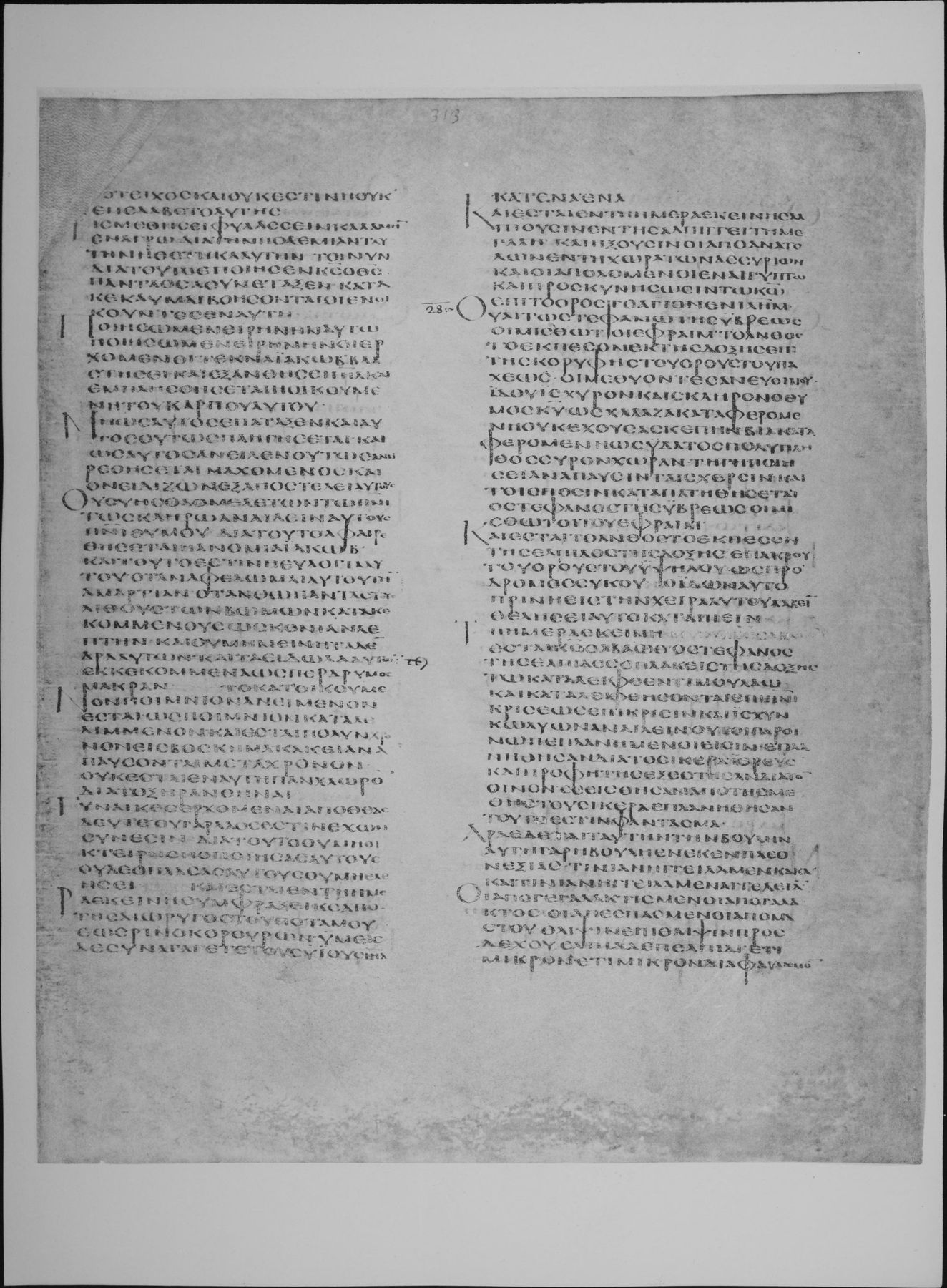
Isaiah 28:1-8 is on fol. 313r (full-size facsimile of 1879-83, Internet Archive codex-alexandrinus leaf 650). The 1936 reduced facsimile prints beneath this page: Is. xxvii. 3-xxviii. 11. Checked on the plate: the page begins inside Isaiah 27:3 (first words read: ΤΕΙΧΟΣ ΚΑΙ ΟΥΚ ΕΣΤΙΝ Η ΟΥΚ ΕΠΕΛΑΒΕΤΟ ΑΥΤΗΣ ΤΙΣ ΜΕ ΘΗΣΕΙ ΦΥΛΑΣΣΕΙΝ ΚΑΛΑΜΗΝ ΕΝ ΑΓΡΩ). Note: the first line holds the last word of 27:3 (ΤΕΙΧΟΣ); 27:4 follows.
1Οὐαὶ τῷ στεφάνῳ τῆς ὕβρεως, οἱ μισθωτοὶ Ἐφράιμ, τὸ ἄνθος τὸ ἐκπεσὸν ἐκ τῆς δόξης ἐπὶ τῆς κορυφῆς τοῦ ὄρους τοῦ παχέος, οἱ μεθύοντες ἄνευ οἴνου. 2ἰδοὺ ἰσχυρὸν καὶ σκληρὸν ὁ θυμὸς Κυρίου, ὡς χάλαζα καταφερομένη οὐκ ἔχουσα σκέπην, βίᾳ καταφερομένη· ὡς ὕδατος πολὺ πλῆθος σῦρον χώραν, τῇ γῇ ποιήσει ἀνάπαυμα· ταῖς χερσὶν 3καὶ τοῖς ποσὶν καταπατηθήσεται ὁ στέφανος τῆς ὕβρεως, οἱ μισθωτοὶ Ἐφράιμ. 4καὶ ἔσται τὸ ἄνθος τὸ ἐκπεσὸν τῆς ἐλπίδος τῆς ζωῆς ἐπ᾽ ἄκρου τοῦ ὄρους τοῦ ὑψηλοῦ ὡς πρόδρομος σύκου· ὁ ἰδὼν αὐτό, πρὶν εἰς τὴν χεῖρα αὐτοῦ λαβεῖν αὐτό, θελήσει αὐτὸ καταπιεῖν. 5τῇ ἡμέρᾳ ἐκείνῃ ἔσται Κύριος σαβαὼθ ὁ στέφανος τῆς ἐλπίδος ὁ πλεκεὶς τῆς δόξης τῷ καταλειφθέντι τοῦ λαοῦ· 6καταλειφθήσονται ἐπὶ πνεύματι κρίσεως ἐπὶ κρίσιν καὶ ἰσχὺν κωλύων ἀνελεῖν. 7οὗτοι γὰρ οἴνῳ πεπλημμελημένοι εἰσίν· ἐπλανήθησαν διὰ τὸ σίκερα, ἱερεὺς καὶ προφήτης ἐξέστησαν διὰ τὸ σίκερα, κατεπόθησαν διὰ τὸν οἶνον, ἐσείσθησαν ἀπὸ τῆς μέθης, ἐπλανήθησαν· τοῦτ᾽ ἔστι φάσμα. 8ἀρὰ ἔδεται ταύτην τὴν βουλήν· αὕτη γὰρ ἡ βουλὴ ἕνεκεν πλεονεξίας.
1Woe to the crown of pride, the hirelings of Ephraim, the flower that has fallen from the glory of the top of the fertile mountain, they that are drunken without wine. 2Behold, the anger of the Lord is strong and severe, as descending hail where there is no shelter, violently descending; as a great body of water sweeping away the soil, he shall make rest for the land. 3The crown of pride, the hirelings of Ephraim, shall be beaten down with the hands and with the feet. 4And the fading flower of the glorious hope on the top of the high mountain shall be as the early fig; he that sees it, before he takes it into his hand, will desire to swallow it down. 5In that day the Lord of hosts shall be the crown of hope, the woven crown of glory, to the remnant of the people. 6They shall be left in the spirit of judgment for judgment, and for the strength of them that hinder slaying. 7For these have trespassed through wine; they have erred through strong drink: the priest and the prophet are mad through strong drink, they are swallowed up by reason of wine, they have staggered through drunkenness; they have erred: this is their vision. 8A curse shall devour this counsel, for this is their counsel for the sake of covetousness.
Where on the image
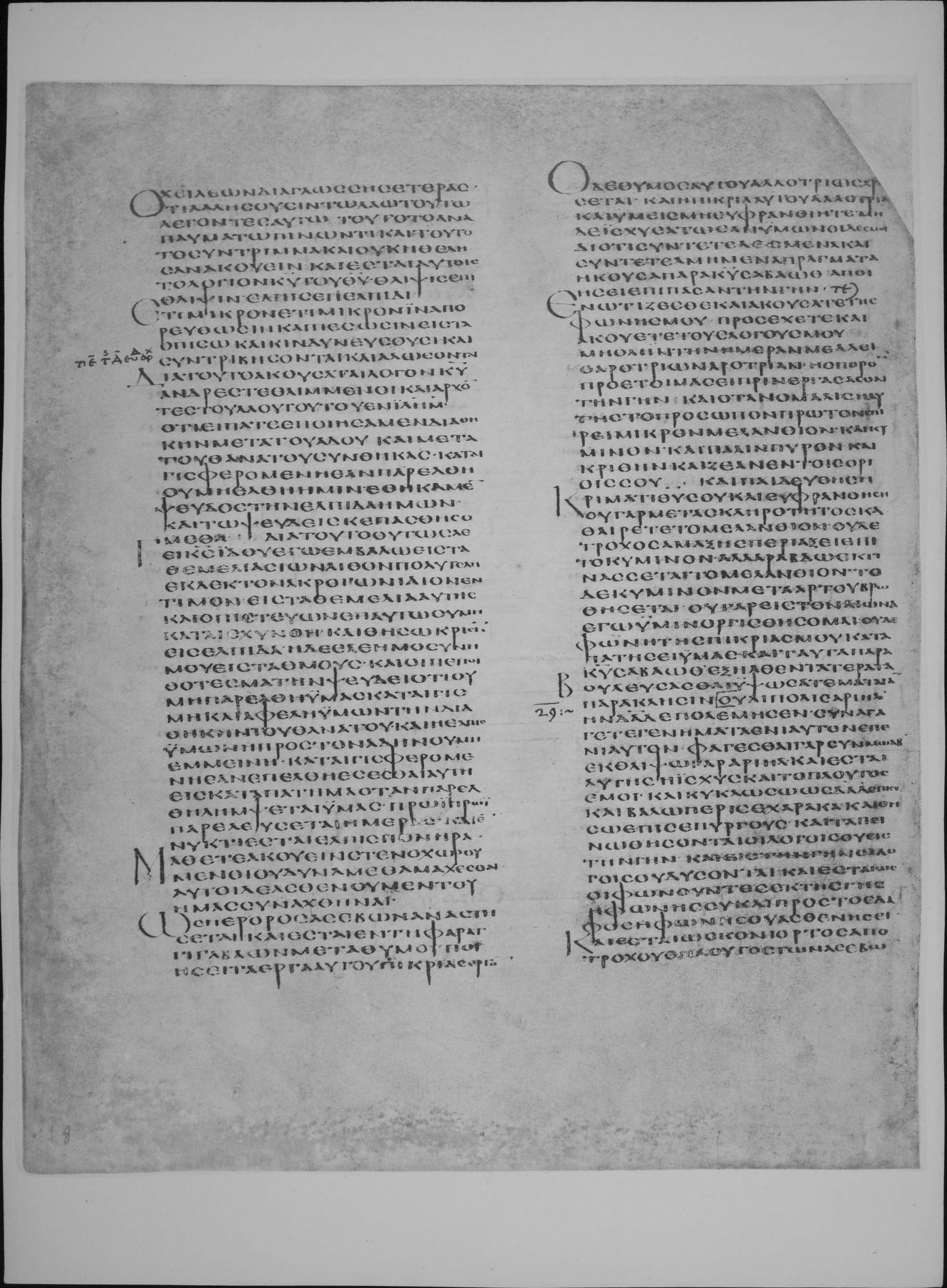
Isaiah 28:9-11 is on fol. 313r (full-size facsimile of 1879-83, Internet Archive codex-alexandrinus leaf 650). The 1936 reduced facsimile prints beneath this page: Is. xxvii. 3-xxviii. 11. Checked on the plate: the page begins inside Isaiah 27:3 (first words read: ΤΕΙΧΟΣ ΚΑΙ ΟΥΚ ΕΣΤΙΝ Η ΟΥΚ ΕΠΕΛΑΒΕΤΟ ΑΥΤΗΣ ΤΙΣ ΜΕ ΘΗΣΕΙ ΦΥΛΑΣΣΕΙΝ ΚΑΛΑΜΗΝ ΕΝ ΑΓΡΩ). Note: the first line holds the last word of 27:3 (ΤΕΙΧΟΣ); 27:4 follows. Isaiah 28:11-17 is on fol. 313v (full-size facsimile of 1879-83, Internet Archive codex-alexandrinus leaf 651). The 1936 reduced facsimile prints beneath this page: Is. xxviii. 11-xxix. 5. Checked on the plate: the page begins inside Isaiah 28:11 (first words read: ΧΕΙΛΕΩΝ ΔΙΑ ΓΛΩΣΣΗΣ ΕΤΕΡΑΣ ΟΤΙ ΛΑΛΗΣΟΥΣΙΝ ΤΩ ΛΑΩ ΤΟΥΤΩ ΛΕΓΟΝΤΕΣ ΑΥΤΩ).
9τίνι ἀνηγγείλαμεν κακά, καὶ τίνι ἀνηγγείλαμεν ἀγγελίαν; οἱ ἀπογεγαλακτισμένοι ἀπὸ γάλακτος, οἱ ἀποσπασμένοι ἀπὸ μαστοῦ. 10θλίψιν ἐπὶ θλίψιν προσδέχου, ἐλπίδα ἐπ᾽ ἐλπίδι, ἔτι μικρὸν ἔτι μικρόν, 11διὰ φαυλισμὸν χειλέων, διὰ γλώσσης ἑτέρας· ὅτι λαλήσουσιν τῷ λαῷ τούτῳ 12λέγοντες αὐτοῖς Τοῦτο τὸ ἀνάπαυμα τῷ πεινῶντι καὶ τοῦτο τὸ σύντριμμα, καὶ οὐκ ἠθέλησαν ἀκούειν. 13καὶ ἔσται αὐτοῖς τὸ λόγιον Κυρίου θλίψις ἐπὶ θλίψιν, ἐλπὶς ἐπὶ ἐλπίδι, ἔτι μικρὸν ἔτι μικρόν, ἵνα πορεύσωσιν καὶ πέσωσιν ὀπίσω, καὶ συντριβήσονται καὶ κινδυνεύσουσιυ καὶ ἁλώσονται. 14Διὰ τοῦτο ἀκούσατε λόγον Κυρίου, ἄνδρες τεθλιμμένοι καὶ ἄρχοντες τοῦ λαοῦ τούτου τοῦ ἐν Ἰερουσαλήμ, 15ὅτι εἴπατε Ἐποιήσαμεν διαθήκην μετὰ τοῦ ᾅδου, καὶ μετὰ τοῦ θανάτου συνθήκας· καταιγὶς φερομένη ἐὰν παρέλθῃ, οὐ μὴ ἔλθῃ ἐφ᾽ ἡμᾶς· ἐθήκαμεν ψεῦδος τὴν ἐλπίδα ἡμῶν, καὶ τῷ ψεύδει σκεπασθησόμεθα. 16διὰ τοῦτο οὕτως λέγει κύριος Κύριος Ἰδοὺ ἐγὼ ἐμβάλλω εἰς τὰ θεμέλια Σειὼν λίθον πολυτελῆ ἐκλεκτὸν ἀκρογωνιαῖον ἔντιμον, εἰς τὰ θεμέλια αὐτῆς, καὶ ὁ πιστεύων οὐ μὴ καταισχυνθῇ. 17καὶ θήσω κρίσιν εἰς ἐλπίδα, ἡ δὲ ἐλεημοσύνη μου εἰς σταθμούς, καὶ οἱ πεποιθότες μάτην ψεύδει· ὅτι μὴ παρέλθῃ ὑμᾶς καταιγίς,
9To whom have we reported evils? and to whom have we reported a message? even to those that are weaned from the milk, who are drawn from the breast. 10Expect thou affliction on affliction, hope upon hope: yet a little, and yet a little, 11by reason of the contemptuous words of the lips, by means of another language: for they shall speak to this people, saying to them, 12This is the rest to him that is hungry, and this is the calamity: but they would not hear. 13Therefore the oracle of God shall be to them affliction on affliction, hope on hope, yet a little, and yet a little, that they may go and fall backward; and they shall be crushed and shall be in danger, and shall be taken. 14Therefore hear ye the word of the Lord, ye afflicted men, and ye princes of this people that is in Jerusalem. 15Because ye have said, We have made a covenant with Hades, and agreements with death; if the rushing storm should pass, it shall not come upon us: we have made falsehood our hope, and by falsehood shall we be protected: 16therefore thus saith the Lord, even the Lord, 17And I will cause judgment to be for hope, and my compassion shall be for just measures, and ye that trust vainly in falsehood shall fall: for the storm shall by no means pass by you,
Where on the image
Isaiah 28:18-25 is on fol. 313v (full-size facsimile of 1879-83, Internet Archive codex-alexandrinus leaf 651). The 1936 reduced facsimile prints beneath this page: Is. xxviii. 11-xxix. 5. Checked on the plate: the page begins inside Isaiah 28:11 (first words read: ΧΕΙΛΕΩΝ ΔΙΑ ΓΛΩΣΣΗΣ ΕΤΕΡΑΣ ΟΤΙ ΛΑΛΗΣΟΥΣΙΝ ΤΩ ΛΑΩ ΤΟΥΤΩ ΛΕΓΟΝΤΕΣ ΑΥΤΩ).
18μὴ καὶ ἀφέλῃ ὑμῶν τὴν διαθήκην τοῦ θανάτου, καὶ ἡ ἐλπὶς ὑμῶν ἡ πρὸς τὸν ᾅδην οὐ μὴ ἐμμείνῃ· καταιγὶς φερομένη ἐὰν ἐπέλθῃ, ἔσεσθε αὐτῇ εἰς καταπάτημα. 19ὅταν παρέλθῃ, λήμψεται ὑμᾶς· πρωὶ πρωὶ παρελεύσεται ἡμέρας, καὶ ἐν νυκτὶ ἔσται ἐλπὶς πονηρά. μάθετε ἀκούειν 20στενοχωρούμενοι· οὐ δυνάμεθα μάχεσθαι, αὐτοὶ δὲ ἀσθενοῦμεν τοῦ ἡμᾶς συναχθῆναι. 21ὥσπερ ὄρος ἀσεβῶν ἀναστήσεται Κύριος, καὶ ἔσται ἐν τῇ φάραγγι Γαβαών, μετὰ θυμοῦ ποιήσει τὰ ἔργα αὐτοῦ, πικρίας ἔργον· ὁ δὲ θυμὸς αὐτοῦ ἀλλοτρίως χρήσεται, καὶ ἡ σαπρία αὐτοῦ ἀλλοτρία. 22καὶ ὑμεῖς μὴ εὐφρανθείητε, μηδὲ ἰσχυσάτωσαν ὑμῶν οἱ δεσμοί· διότι συντετελεσμένα καὶ συντετμημένα πράγματα ἤκουσα παρὰ Κυρίου σαβαὼθ ἃ ποιήσει ἐπὶ πᾶσαν τὴν γῆν. 23Ἐνωτίζεσθε καὶ ἀκούετε τῆς φωνῆς μου, προσέχετε καὶ ἀκούετε τοὺς λόγους μου. 24μὴ ὅλην τὴν ἡμέραν ἀροτριάσει ὁ ἀροτριῶν; ἢ σπόρον προετοιμάσει πρὶν ἐργάσασθαι τὴν γῆν; 25οὐχ ὅταν ὁμαλίσῃ τὸ πρόσωπον αὐτῆς, τότε σπείρει μικρὸν μελάνθιον καὶ κύμινον, καὶ πάλιν σπείρει πυρόν, κριθὴν καὶ κέγχρον καὶ ζέαν ἐν τοῖς ὁρίοις σου;
18except it also take away your covenant of death, and your trust in Hades shall by no means stand: if the rushing storm should come upon you, ye shall be beaten down by it. 19Whenever it shall pass by, it shall take you; morning by morning it shall pass by in the day, and in the night there shall be an evil hope. 20ye that are distressed; we cannot fight, but we are ourselves too weak for you to be gathered. 21The Lord shall rise up as a mountain of ungodly men, and shall be in the valley of Gabaon; he shall perform his works with wrath, even a work of bitterness, and his wrath shall deal strangely, and his destruction shall be strange. 22Therefore do not ye rejoice, neither let your bands be made strong; for I have heard of works finished and cut short by the Lord of hosts, which he will execute upon all the earth. 23Hearken, and hear my voice; attend, and hear my words. 24Will the ploughman plough all the day? or will he prepare the seed beforehand, before he tills the ground? 25Does he not, when he has levelled the surface thereof, then sow the small black poppy, or cumin, and afterward sow wheat, and barley, and millet, and bread-corn in thy borders?
Where on the image
Isaiah 28:26-29 is on fol. 313v (full-size facsimile of 1879-83, Internet Archive codex-alexandrinus leaf 651). The 1936 reduced facsimile prints beneath this page: Is. xxviii. 11-xxix. 5. Checked on the plate: the page begins inside Isaiah 28:11 (first words read: ΧΕΙΛΕΩΝ ΔΙΑ ΓΛΩΣΣΗΣ ΕΤΕΡΑΣ ΟΤΙ ΛΑΛΗΣΟΥΣΙΝ ΤΩ ΛΑΩ ΤΟΥΤΩ ΛΕΓΟΝΤΕΣ ΑΥΤΩ).
26καὶ παιδευθήσει κρίματι θεοῦ, καὶ εὐφρανθήσῃ. 27οὐ γὰρ μετὰ σκληρότητος καθαίρεται τὸ μελάνθιον, οὐδὲ τροχὸς ἁμάξης περιάξει ἐπὶ τὸ κύμινον· ἀλλὰ ῥάβδῳ τινάσσεται τὸ μελάνθιον, τὸ δὲ κύμινον 28μετὰ ἄρτου βρωθήσεται. οὐ γὰρ εἰς τὸν αἰῶνα ἐγὼ ὑμῖν ὀργισθήσομαι, οὐδὲ φωνὴ τῆς πικρίας μου καταπατήσει ὑμᾶς. 29καὶ ταῦτα παρὰ Κυρίου σαβαὼθ ἐξῆλθεν τὰ τέρατα· βουλεύσασθε, ὑψώσατε ματαίαν παράκλησιν.
26So thou shalt be chastened by the judgment of thy God, and shalt rejoice. 27For the black poppy is not cleansed with harsh treatment, nor will a waggon-wheel pass over the cumin; but the black poppy is threshed with a rod, and the cumin shall be eaten with bread; 28for I will not be wroth with you for ever, neither shall the voice of my anger crush you. 29And these signs came forth from the Lord of hosts. Take counsel, exalt vain comfort.
Cite
Sources
- Source: Codex Alexandrinus (British Library Royal MS 1 D. VI) via the British Museum photographic facsimiles of 1879-83 and 1936 (Internet Archive) + Swete's Septuagint + Brenton's English (holding institution)
- Critical edition: H. B. Swete, The Old Testament in Greek according to the Septuagint (1909)
← previous · → next · v cycle view · l back to library