Isaiah, Chapter 29 (Codex Alexandrinus)
Introduction
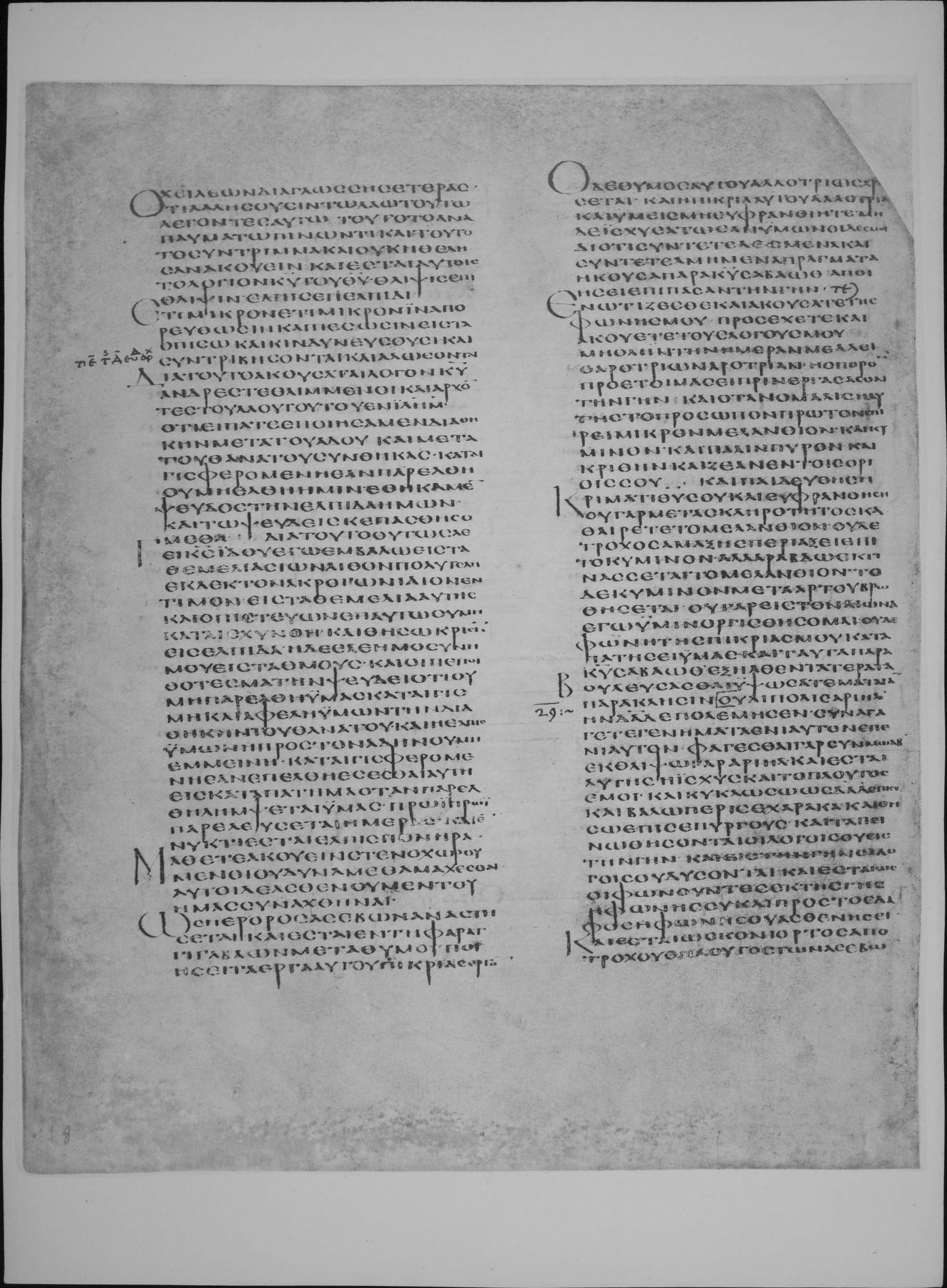
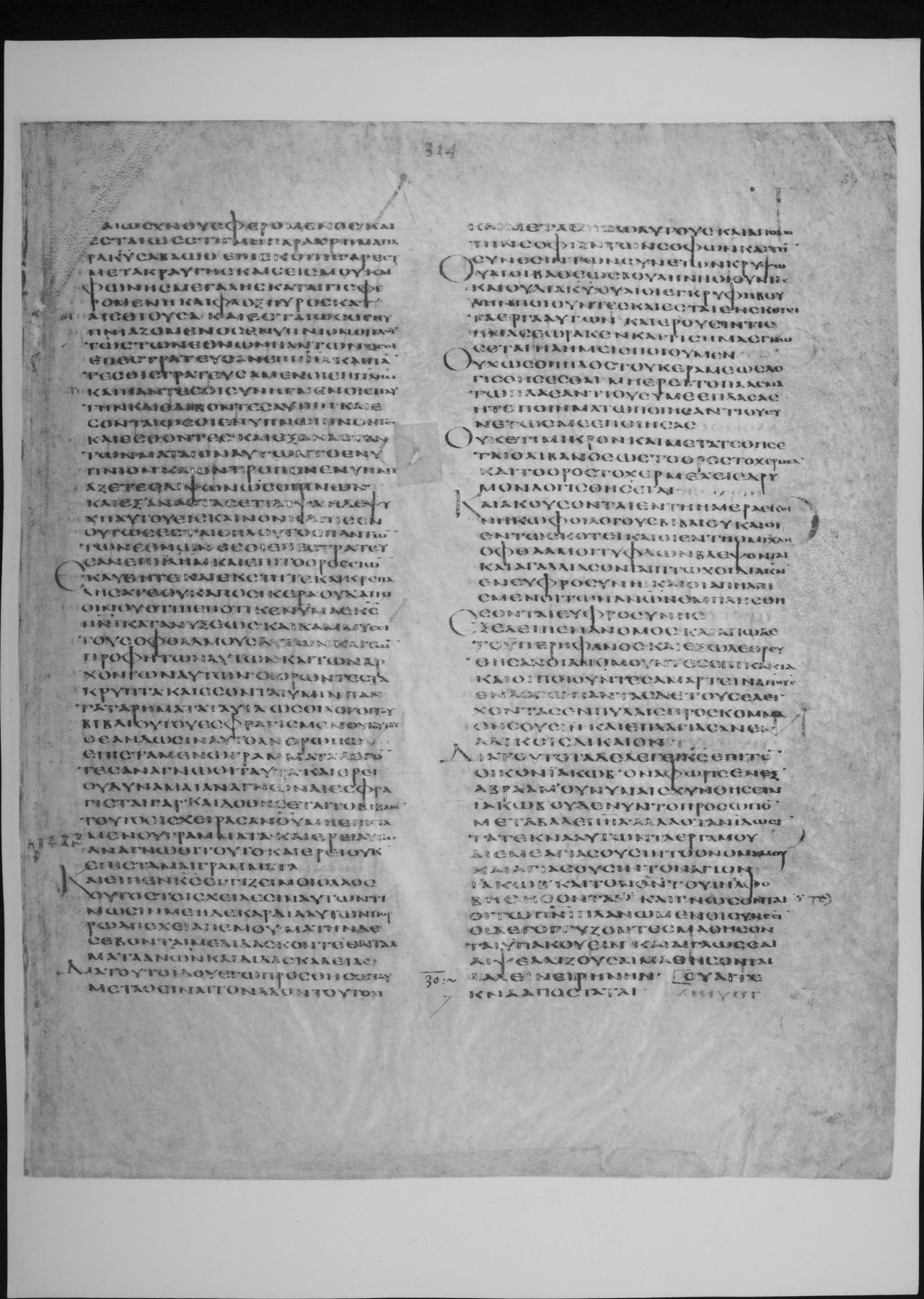
Isaiah 29 in the Greek Old Testament (the Septuagint) as written in Codex Alexandrinus, a Greek Bible copied in the fifth century, probably in Egypt, and now in the British Library (Royal MS 1 D. VI, the second of its four volumes). It is one of the three great early codices of the whole Greek Bible, with Codex Vaticanus and Codex Sinaiticus.
This entry meets the strict three-criteria standard of the Theosis Library:
- Manuscript scan: the pages of Codex Alexandrinus carrying this chapter (fol. 313v, fol. 314r), from the full-size photographic (autotype) facsimile published by the British Museum in 1879-1883, as digitised on the Internet Archive. The verse range of every page comes from the reduced photographic facsimile of 1936, which prints it beneath each plate, and the opening words of every page were read on the plate to confirm the page and the verse it begins with. Each section links to the page or pages that hold its verses. Folio numbers are those written at the head of each leaf and visible on the plates.
- Original text: Swete's edition, which here prints the text of Codex Vaticanus (Vat. gr. 1209), the base of his edition, and gives the readings of Alexandrinus only in his apparatus. The Greek column is therefore Vaticanus' text; where Alexandrinus differs, the plate shows what Alexandrinus reads.
- English translation: Sir Lancelot C. L. Brenton, The Septuagint Version of the Old Testament (1844; 1851 edition), a translation of the Greek, public domain, from the eBible.org text.
How was this verified? (Provenance)
Where on the image
Isaiah 29:1-5 is on fol. 313v (full-size facsimile of 1879-83, Internet Archive codex-alexandrinus leaf 651). The 1936 reduced facsimile prints beneath this page: Is. xxviii. 11-xxix. 5. Checked on the plate: the page begins inside Isaiah 28:11 (first words read: ΧΕΙΛΕΩΝ ΔΙΑ ΓΛΩΣΣΗΣ ΕΤΕΡΑΣ ΟΤΙ ΛΑΛΗΣΟΥΣΙΝ ΤΩ ΛΑΩ ΤΟΥΤΩ ΛΕΓΟΝΤΕΣ ΑΥΤΩ). Isaiah 29:5-8 is on fol. 314r (full-size facsimile of 1879-83, Internet Archive codex-alexandrinus leaf 652). The 1936 reduced facsimile prints beneath this page: Is. xxix. 5-xxx. 1. Checked on the plate: the page begins inside Isaiah 29:5 (first words read: ΩΣ ΧΝΟΥΣ ΦΕΡΟΜΕΝΟΣ ΚΑΙ ΕΣΤΑΙ ΩΣ ΣΤΙΓΜΗ ΠΑΡΑΧΡΗΜΑ ΠΑΡΑ ΚΥ ΣΑΒΑΩΘ). Note: Codex Alexandrinus' wording here differs from Swete's (Codex Vaticanus) text, so the opening words were identified by eye in Alexandrinus' wording of this verse.
1Οὐαὶ Ἀριὴλ πόλις, ἣν ἐπολέμησεν Δαυείδ. συναγάγετε γενήματα ἐνιαυτὸν ἐπὶ ἐνιαυτόν· φάγεσθε, φάγεσθε γὰρ σὺν Μωάβ. 2ἐκθλίψω γὰρ Ἀριήλ, καὶ ἔσται αὐτῆς ἡ ἰσχὺς καὶ ὁ πλοῦτος ἐμοί. 3καὶ κυκλώσω ὡς Δαυεὶδ ἐπὶ σέ, καὶ βαλῶ περὶ σὲ χάρακα, καὶ θήσω περὶ σὲ πύργους, 4καὶ ταπεινωθήσονται εἰς τὴν γῆν οἱ λόγοι σου, καὶ εἰς τὴν γῆν οἱ λόγοι σου δύσονται· καὶ ἔσονται ὡς οἱ φωνοῦντες ἐκ τῆς γῆς ἡ φωνή σου, καὶ πρὸς τὸ ἔδαφος ἡ φωνή σου ἀσθενήσει. 5καὶ ἔσται ὡς κονιορτὸς ἀπὸ τοίχου ὁ πλοῦτος τῶν ἀσεβῶν, καὶ ὡς χνοῦς φερόμενος τὸ πλῆθος τῶν καταδυναστευόντων σε, καὶ ἔσται ὡς στιγμὴ παραχρῆμα 6παρὰ Κυρίου σαβαώθ· ἐπισκοπὴ γὰρ ἔσται μετὰ βροντῆς καὶ σεισμοῦ καὶ φωνὴ μεγάλη, καταιγὶς φερομένη καὶ φλὸξ πυρὸς κατεσθίουσα. 7καὶ ἔσται ὡς ἐνυπνιαζόμενος καθ᾽ ὕπνους νυκτὸς ὁ πλοῦτος ἁπάντων τῶν ἐθνῶν ὅσοι ἐπεστράτευσαν ἐπὶ Ἰερουσαλήμ, καὶ πάντες οἱ στρατευόμενοι ἐπὶ Ἰερουσαλήμ, καὶ πάντες οἱ συνηγμένοι ἐπ᾽ αὐτὴν καὶ οἱ θλίβοντες αὐτήν. 8καὶ ὡς οἱ ἐν τῷ ὕπνῳ πίνοντες καὶ ἔσθοντες, καὶ ἐξαναστάντων μάταιον τὸ ἐνύπνιον· καὶ ὃν τρόπον ἐνυπνιάζεται ὁ διψῶν ὡς πίνων, καὶ ἐξαναστὰς ἔτι διψᾷ, ἡ δὲ ψυχὴ αὐτοῦ εἰς κενὸν ἤλπισεν, οὕτως ἔσται ὁ πλοῦτος πάντων τῶν ἐθνῶν ὅσοι ἐπεστράτευσαν ἐπὶ τὸ ὄρος Σειών.
1Alas for the city Ariel, which David besieged. Gather ye fruits year by year; eat ye, for ye shall eat with Moab. 2For I will grievously afflict Ariel: and her strength and her wealth shall be mine. 3And I will compass thee about like David, and will raise a mound about thee, and set up towers round thee. 4And thy words shall be brought down to the earth, and thy words shall sink down to the earth, and thy voice shall be as they that speak out of the earth, and thy voice shall be lowered to the ground. 5But the wealth of the ungodly shall be as dust from a wheel, and the multitude of them that oppress thee as flying chaff, and it shall be suddenly as a moment, 6from the Lord of hosts: for there shall be a visitation with thunder, and earthquake, and a loud noise, a rushing tempest, and devouring flame of fire. 7And the wealth of all the nations together, as many as have fought against Ariel, and all they that war against Jerusalem, and all who are gathered against her, and they that distress her, shall be as one that dreams in sleep by night. 8And as men drink and eat in sleep, and when they have arisen, the dream is vain: and as a thirsty man dreams as if he drank, and having arisen is still thirsty, and his soul has desired in vain: so shall be the wealth of all the nations, as many as have fought against the mount Sion.
Where on the image
Isaiah 29:9-16 is on fol. 314r (full-size facsimile of 1879-83, Internet Archive codex-alexandrinus leaf 652). The 1936 reduced facsimile prints beneath this page: Is. xxix. 5-xxx. 1. Checked on the plate: the page begins inside Isaiah 29:5 (first words read: ΩΣ ΧΝΟΥΣ ΦΕΡΟΜΕΝΟΣ ΚΑΙ ΕΣΤΑΙ ΩΣ ΣΤΙΓΜΗ ΠΑΡΑΧΡΗΜΑ ΠΑΡΑ ΚΥ ΣΑΒΑΩΘ). Note: Codex Alexandrinus' wording here differs from Swete's (Codex Vaticanus) text, so the opening words were identified by eye in Alexandrinus' wording of this verse.
9Ἐκλύθητε καὶ ἔκστητε, κραιπαλήσατε οὐκ ἀπὸ σίκερα οὐδὲ ἀπὸ οἴνου· 10ὅτι πεπότικεν ὑμᾶς Κύριος πνεύματι κατανύξεως, καὶ καμμύσει τοὺς ὀφθαλμοὺς αὐτῶν καὶ τῶν προφητῶν αὐτῶν καὶ τῶν ἀρχόντων αὐτῶν, οἱ ὁρῶντες τὰ κρυπτά. 11καὶ ἔσται ὑμῖν τὰ ῥήματα πάντα ταῦτα ὡς οἱ λόγοι τοῦ βιβλίου τοῦ ἐσφραγισμένου, ὃ ἂν δῶσιν αὐτὸ ἀνθρώπῳ ἐπισταμένῳ γράμματα λέγοντες Ἀνάγνωθι ταῦτα, καὶ ἐρεῖ Οὐ δύναμαι ἀναγνῶναι, ἐσφράγισται γάρ. 12καὶ δοθήσεται τὸ βιβλίον τοῦτο εἰς χεῖρας ἀνθρώπου μὴ ἐπισταμένου γράμματα, καὶ ἐρεῖ αὐτῷ Ἀνάγνωθι τοῦτο· καὶ ἐρεῖ Οὐκ ἐπίσταμαι γράμματα. 13καὶ εἶπεν Κύριος Ἐγγίζει μοι ὁ λαὸς οὗτος ἐν τῷ στόματι αὐτοῦ, καὶ ἐν τοῖς χείλεσιν αὐτῶν τιμῶσίν με, ἡ δὲ καρδία αὐτῶν πόρρω ἀπέχει ἀπ᾽ ἐμοῦ· μάτην δὲ σέβονταί με διδάσκοντες ἐντάλματα ἀνθρώπων καὶ διδασκαλίας. 14διὰ τοῦτο ἰδοὺ προσθήσω τοῦ μεταθεῖναι τὸν λαὸν τοῦτον· καὶ μεταθήσω αὐτούς, καὶ ἀπολῶ τὴν σοφίαν τῶν σοφῶν, καὶ τὴν σύνεσιν τῶν συνετῶν κρύψω. 15Οὐαὶ οἱ βαθέως βουλὴν ποιοῦντες καὶ ἔσται ἐν σκότει τὰ ἔργα αὐτῶν, καὶ ἐροῦσιν Τίς ἑόρακεν ἡμᾶς; καὶ τίς ἡμᾶς γνώσεται ἢ ἃ ἡμεῖς ποιοῦμεν; 16οὐχ ὡς ὁ πηλὸς τοῦ κεραμέως λογισθήσεσθε; μὴ ἐρεῖ τὸ πλάσμα τῷ πλάσαντι αὐτό Οὐ σύ με ἔπλασας; ἢ τὸ ποίημα τῷ ποιήσαντι Οὐ συνετῶς με ἐποίησας;
9Faint ye, and be amazed, and be overpowered, not with strong drink nor with wine. 10For the Lord has made you to drink a spirit of deep sleep; and he shall close their eyes, and the eyes of their prophets and of their rulers, who see secret things. 11And all these things shall be to you as the words of this sealed book, which if they shall give to a learned man, saying, Read this, he shall then say, I cannot read it, for it is sealed. 12And this book shall be given into the hands of a man that is unlearned, and one shall say to him, Read this; and he shall say, I am not learned. 13And the Lord has said, This people draw nigh to me with their mouth, and they honour me with their lips, but their heart is far from me: but in vain do they worship me, teaching the commandments and doctrines of men. 14Therefore behold I will proceed to remove this people, and I will remove them: and I will destroy the wisdom of the wise, and will hide the understanding of the prudent. 15Woe to them that deepen their counsel, and not by the Lord. Woe to them that take secret counsel, and whose works are in darkness, and they say, Who has seen us? and who shall know us, or what we do? 16Shall ye not be counted as clay of the potter? Shall the thing formed say to him that formed it, Thou didst not form me? or the work to the maker, Thou hast not made me wisely?
Where on the image
Isaiah 29:17-24 is on fol. 314r (full-size facsimile of 1879-83, Internet Archive codex-alexandrinus leaf 652). The 1936 reduced facsimile prints beneath this page: Is. xxix. 5-xxx. 1. Checked on the plate: the page begins inside Isaiah 29:5 (first words read: ΩΣ ΧΝΟΥΣ ΦΕΡΟΜΕΝΟΣ ΚΑΙ ΕΣΤΑΙ ΩΣ ΣΤΙΓΜΗ ΠΑΡΑΧΡΗΜΑ ΠΑΡΑ ΚΥ ΣΑΒΑΩΘ). Note: Codex Alexandrinus' wording here differs from Swete's (Codex Vaticanus) text, so the opening words were identified by eye in Alexandrinus' wording of this verse.
17οὐκέτι μικρὸν καὶ μετατεθήσεται ὁ Λίβανος ὡς τὸ ὄρος τὸ Χερμέλ, καὶ τὸ Χερμὲλ εἰς δρυμὸν λογισθήσεται. 18καὶ ἀκούσονται ἐν τῇ ἡμέρᾳ ἐκείνῃ κωφοὶ λόγους βιβλίου, καὶ οἱ ἐν τῷ σκότει καὶ οἱ ἐν τῇ ὁμίχλῃ ὀφθαλμοὶ τυφλῶν ὄψονται, 19καὶ ἀγαλλιάσονται πτωχοὶ διὰ Κύριον ἐν εὐφροσύνῃ, καὶ οἱ ἀπηλπισμένοι τῶν ἀνθρώπων ἐμπλησθήσονται εὐφροσύνης. 20ἐξέλιπεν ἄνομος, καὶ ἀπώλετο ὑπερήφανος, καὶ ἐξωλεθρεύθησαν οἱ ἀνομοῦντες ἐπὶ κακίᾳ, 21καὶ οἱ ποιοῦντες ἁμαρτεῖν ἀνθρώπους ἐν λόγῳ· πάντας δὲ τοὺς ἐλέγχοντας ἐν πύλαις πρόσκομμα θήσουσιν, ὅτι ἐπλαγίασαν ἐν ἀδίκοις δίκαιον. 22διὰ τοῦτο τάδε λέγει Κύριος ἐπὶ τὸν οἶκον Ἰακώβ, ὃν ἀφώρισεν ἐξ Ἀβραάμ Οὐ νῦν αἰσχυνθήσεται Ἰακώβ, οὐδὲ νῦν τὸ πρόσωπον μεταβαλεῖ· 23ἀλλ᾽ ὅταν ἴδωσιν τὰ τέκνα αὐτῶν τὰ ἔργα μου, δι᾽ ἐμὲ ἁγιάσωσιν τὸ ὄνομά μου, καὶ ἁγιάσωσιν τὸν ἅγιον Ἰακώβ, καὶ τὸν θεὸν τοῦ Ἰσραὴλ φοβηθήσονται. 24καὶ γνώσονται πλανώμενοι τῷ πνεύματι σύνεσιν, οἱ δὲ γογγύζοντες μαθήσονται ὑπακούειν, καὶ αἱ γλῶσσαι αἱ ψελλίζουσαι μαθήσονται λαλεῖν εἰρήνην.
17Is it not yet a little while, and Libanus shall be changed as the mountain of Chermel, and Chermel shall be reckoned as a forest? 18And in that day the deaf shall hear the words of the book, and they that are in darkness, and they that are in mist: the eyes of the blind shall see, 19and the poor shall rejoice with joy because of the Lord, and they that had no hope among men shall be filled with joy. 20The lawless man has come to nought, and the proud man has perished, and they that transgress mischievously have been utterly destroyed: 21and they that cause men to sin by a word: and men shall make all that reprove in the gates an offence, because they have unjustly turned aside the righteous. 22Therefore thus saith the Lord concerning the house of Jacob, whom he set apart from Abraam, Jacob shall not now be ashamed, neither shall he now change countenance. 23But when their children shall have seen my works, they shall sanctify my name for my sake, and they shall sanctify the Holy One of Jacob, and shall fear the God of Israel. 24And they that erred in spirit shall know understanding, and the murmurers shall learn obedience, and the stammering tongues shall learn to speak peace.
Cite
Sources
- Source: Codex Alexandrinus (British Library Royal MS 1 D. VI) via the British Museum photographic facsimiles of 1879-83 and 1936 (Internet Archive) + Swete's Septuagint + Brenton's English (holding institution)
- Critical edition: H. B. Swete, The Old Testament in Greek according to the Septuagint (1909)
← previous · → next · v cycle view · l back to library