Isaiah, Chapter 30 (Codex Alexandrinus)
Introduction
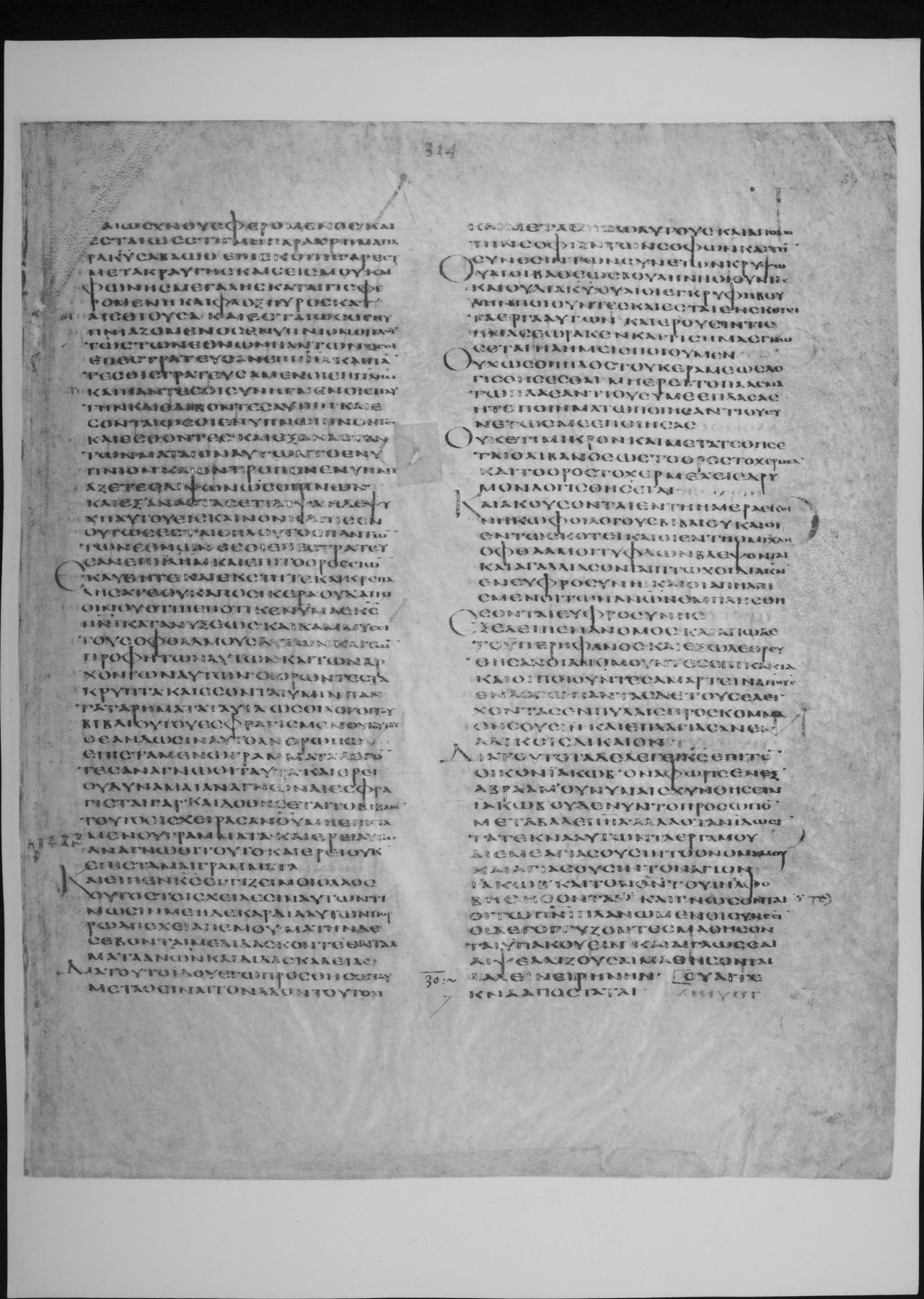
Isaiah 30 in the Greek Old Testament (the Septuagint) as written in Codex Alexandrinus, a Greek Bible copied in the fifth century, probably in Egypt, and now in the British Library (Royal MS 1 D. VI, the second of its four volumes). It is one of the three great early codices of the whole Greek Bible, with Codex Vaticanus and Codex Sinaiticus.
Numbering: Swete's Greek and Brenton's English number or divide some verses of this chapter differently (Swete 30:5-6 = Brenton 30:5-6). Each column keeps its own verse numbers, and sections are cut only where the two texts agree, so each section holds the same passage in both languages.
This entry meets the strict three-criteria standard of the Theosis Library:
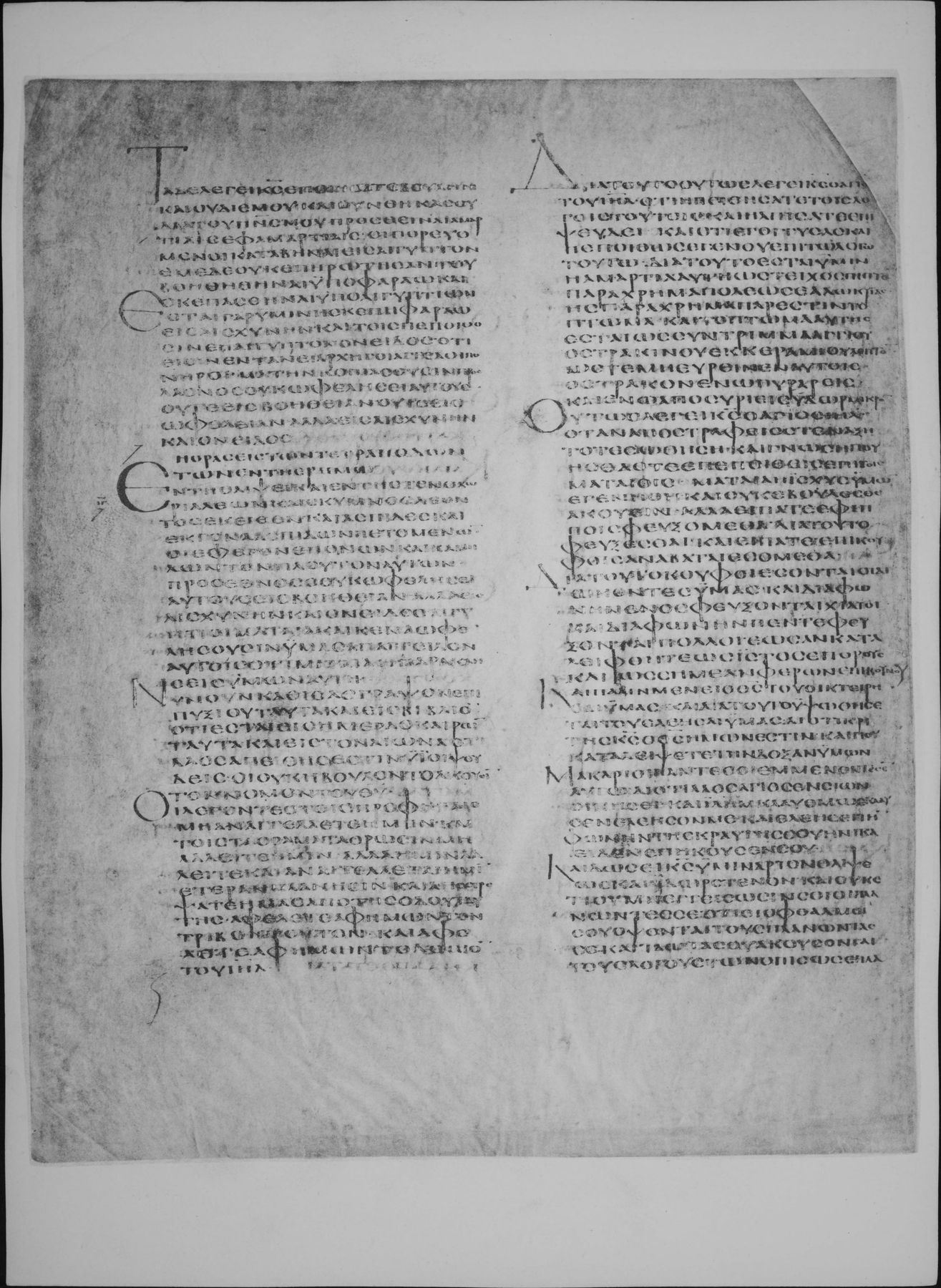
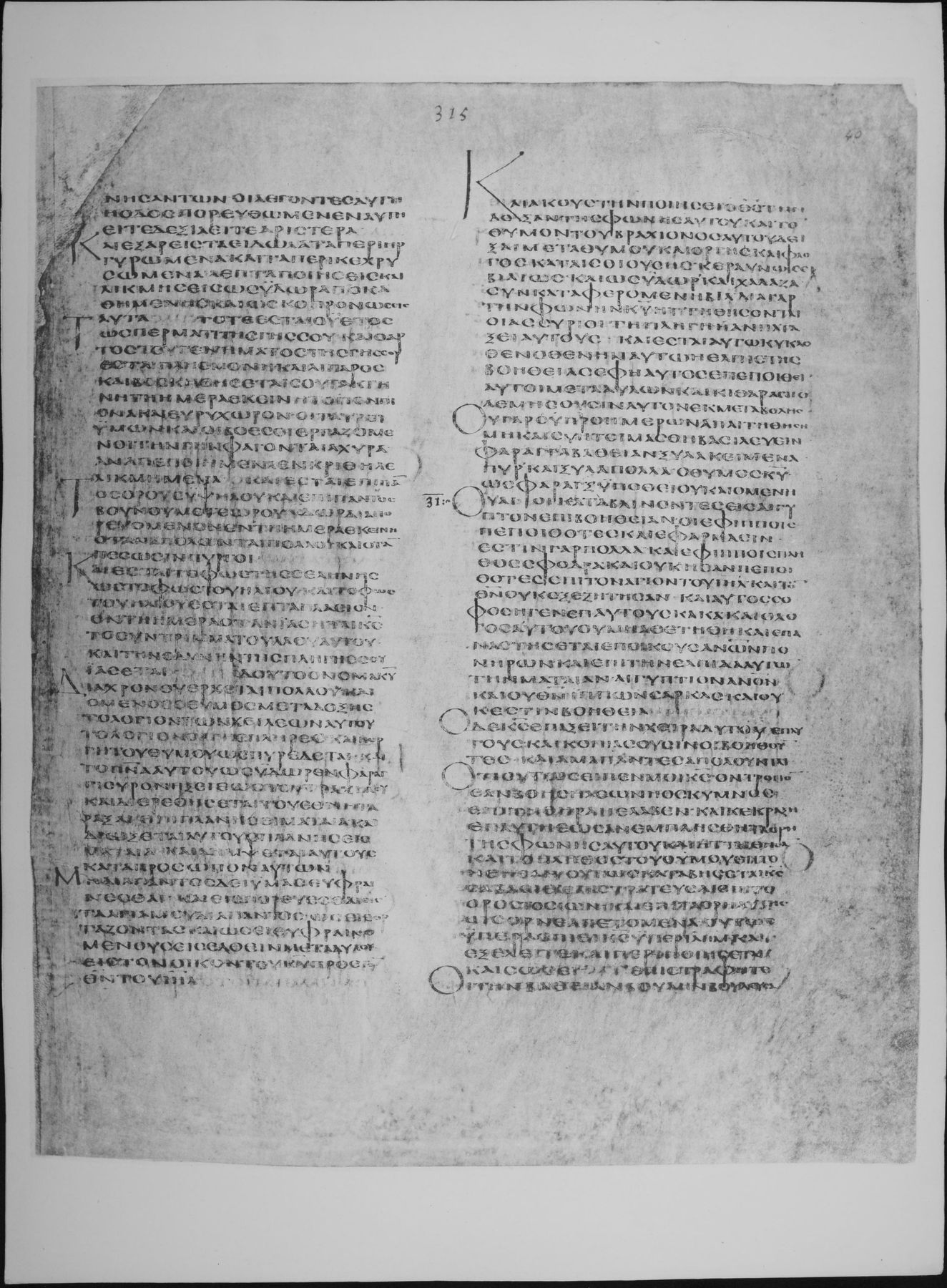
- Manuscript scan: the pages of Codex Alexandrinus carrying this chapter (fol. 314r, fol. 314v, fol. 315r), from the full-size photographic (autotype) facsimile published by the British Museum in 1879-1883, as digitised on the Internet Archive. The verse range of every page comes from the reduced photographic facsimile of 1936, which prints it beneath each plate, and the opening words of every page were read on the plate to confirm the page and the verse it begins with. Each section links to the page or pages that hold its verses. Folio numbers are those written at the head of each leaf and visible on the plates.
- Original text: Swete's edition, which here prints the text of Codex Vaticanus (Vat. gr. 1209), the base of his edition, and gives the readings of Alexandrinus only in his apparatus. The Greek column is therefore Vaticanus' text; where Alexandrinus differs, the plate shows what Alexandrinus reads.
- English translation: Sir Lancelot C. L. Brenton, The Septuagint Version of the Old Testament (1844; 1851 edition), a translation of the Greek, public domain, from the eBible.org text.
How was this verified? (Provenance)
Where on the image
Isaiah 30:1 is on fol. 314r (full-size facsimile of 1879-83, Internet Archive codex-alexandrinus leaf 652). The 1936 reduced facsimile prints beneath this page: Is. xxix. 5-xxx. 1. Checked on the plate: the page begins inside Isaiah 29:5 (first words read: ΩΣ ΧΝΟΥΣ ΦΕΡΟΜΕΝΟΣ ΚΑΙ ΕΣΤΑΙ ΩΣ ΣΤΙΓΜΗ ΠΑΡΑΧΡΗΜΑ ΠΑΡΑ ΚΥ ΣΑΒΑΩΘ). Note: Codex Alexandrinus' wording here differs from Swete's (Codex Vaticanus) text, so the opening words were identified by eye in Alexandrinus' wording of this verse. Isaiah 30:1-8 is on fol. 314v (full-size facsimile of 1879-83, Internet Archive codex-alexandrinus leaf 653). The 1936 reduced facsimile prints beneath this page: Is. xxx. 1-21. Checked on the plate: the page begins inside Isaiah 30:1 (first words read: ΤΑΔΕ ΛΕΓΕΙ ΚΣ ΟΥΑΙ ΤΕΚΝΑ ΑΠΟΣΤΑΤΑΙ ΕΠΟΙΗΣΑΤΕ ΒΟΥΛΗΝ ΟΥ ΔΙ ΕΜΟΥ). Note: Isa. 30:1 is divided between this page and the preceding one, as both captions show (xxx. 1); this page begins ΤΑΔΕ ΛΕΓΕΙ ΚΣ, where Codex Alexandrinus' word order differs from Swete's.
1Οὐαὶ τέκνα ἀποστάται, λέγει Κύριος· ἐποιήσατε βουλὴν οὐ δι᾽ ἐμοῦ, καὶ συνθήκας οὐ διὰ τοῦ πνεύματός μου, προσθεῖναι ἁμαρτίας ἐφ᾽ ἁμαρτίας· 2οἱ πορευόμενοι καταβῆναι εἰς Αἴγυπτον, ἐμὲ δὲ οὐκ ἐπερώτησαν, τοῦ βοηθηθῆναι ὑπὸ Φαραὼ καὶ σκεπασθῆναι ὑπὸ Αἰγυπτίων. 3ἔσται γὰρ ὑμῖν σκέπη Φαραὼ εἰς αἰσχύνην, καὶ τοῖς πεποιθόσιν ἐπ᾽ Αἴγυπτον ὄνειδος. 4ὅτι εἰσὶν ἐν Τάνει ἀρχηγοὶ ἄγγελοι πονηροί· 5μάτην κοπιάσουσιν πρὸς λαὸν ὃς οὐκ ὠφελήσει αὐτοὺς εἰς βοήθειαν ἀλλὰ εἰς αἰσχύνην καὶ ὄνειδος. 6Ἡ ὅρασις τῶν τετραπόδων τῶν ἐν τῇ ἐρήμῳ. Ἐν τῇ θλίψει καὶ τῇ στενοχωρίᾳ λέων καὶ σκύμνος λέοντος, ἐκεῖθεν καὶ ἀσπίδες καὶ ἔκγονα ἀσπίδων, οἳ ἔφερον ἐπ᾽ ὄνων καὶ καμήλων τὸν πλοῦτον αὐτῶν πρὸς ἔθνος ὃ οὐκ ὠφελήσει αὐτούς. 7Αἰγύπτιοι μάταια καὶ κενὰ ὠφελήσουσιν ὑμᾶς· ἀπάγγειλον αὐτοῖς ὅτι ματαία ἡ παράκλησις ὑμῶν αὕτη. 8νῦν οὖν καθίσας γράψον ἐπὶ πυξίου ταῦτα καὶ εἰς βιβλίον, ὅτι ἔσται εἰς ἡμέρας ταῦτα καιρῷ καὶ ἕως εἰς τὸν αἰῶνα.
1Woe to the apostate children, saith the Lord: ye have framed counsel, not by me, and covenants not by my Spirit, to add sins to sins: 2even they that proceed to go down into Egypt, but they have not enquired of me, that they might be helped by Pharao, and protected by the Egyptians. 3For the protection of Pharao shall be to you a disgrace, and there shall be a reproach to them that trust in Egypt. 4For there are princes in Tanes, evil messengers. 5In vain shall they labour in seeking to a people, which shall not profit them for help, but shall be for a shame and reproach. 6The Vision of the Quadrupeds in the Desert. 7The Egyptians shall help you utterly in vain: tell them, This your consolation is vain. 8Now then sit down and write these words on a tablet, and in a book; for these things shall be for many long days, and even for ever.
Where on the image
Isaiah 30:9-16 is on fol. 314v (full-size facsimile of 1879-83, Internet Archive codex-alexandrinus leaf 653). The 1936 reduced facsimile prints beneath this page: Is. xxx. 1-21. Checked on the plate: the page begins inside Isaiah 30:1 (first words read: ΤΑΔΕ ΛΕΓΕΙ ΚΣ ΟΥΑΙ ΤΕΚΝΑ ΑΠΟΣΤΑΤΑΙ ΕΠΟΙΗΣΑΤΕ ΒΟΥΛΗΝ ΟΥ ΔΙ ΕΜΟΥ). Note: Isa. 30:1 is divided between this page and the preceding one, as both captions show (xxx. 1); this page begins ΤΑΔΕ ΛΕΓΕΙ ΚΣ, where Codex Alexandrinus' word order differs from Swete's.
9ὅτι λαὸς ἀπειθής ἐστιν, υἱοὶ ψευδεῖς οἳ οὐκ ἠβούλοντο ἀκούειν τὸν νόμον τοῦ θεοῦ, 10οἱ λέγοντες τοῖς προφήταις Μὴ ἀναγγέλλετε ἡμῖν, καὶ τοῖς τὰ ὁράματα ὁρῶσιν Μὴ λαλεῖτε ἡμῖν, ἀλλὰ ἡμῖν λαλεῖτε καὶ ἀναγγέλλετε ἡμῖν ἑτέραν πλάνησιν, 11καὶ ἀποστρέψατε ἡμᾶς ἀπὸ τῆς ὁδοῦ ταύτης· ἀφέλετε ἀφ᾽ ἡμῶν τὸν τρίβον τοῦτον, καὶ ἀφέλετε ἀφ᾽ ἡμῶν τὸ λόγιον τοῦ Ἰσραήλ. 12διὰ τοῦτο τάδε λέγει ὁ ἅγιος τοῦ Ἰσραήλ Ὅτι ἠπειθήσατε τοῖς λόγοις τούτοις καὶ ἠλπίσατε ἐπὶ ψεύδει, καὶ ὅτι ἐγόγγυσας καὶ πεποιθὼς ἐγένου ἐπὶ τῷ λόγῳ τούτῳ, 13διὰ τοῦτο ἔσται ὑμῖν ἡ ἁμαρτία αὕτη ὡς τεῖχος πίπτον παραχρῆμα πόλεως ὀχυρᾶς ἑαλωκυίας, ἧς παραχρῆμα πάρεστιν τὸ πτῶμα· 14καὶ τὸ πτῶμα αὐτῆς ἔσται ὡς σύντριμμα ἀγγίου ὀστρακίνου, ἐκ κεραμίου λεπτὰ ὥστε μὴ εὑρεῖν ἐν αὐτοῖς ὄστρακον ἐν ᾧ πῦρ ἀρεῖς, καὶ ἐν ᾧ ἀποσυριεῖς ὕδωρ μικρόν. 15οὕτω λέγει κύριος Κύριος ὁ ἅγιος τοῦ Ἰσραήλ Ὅταν ἀποστραφεὶς στενάξῃς, τότε σωθήσῃ καὶ γνώσῃ ποῦ ἦσθα· ὅτε ἐπεποίθεις ἐπὶ τοῖς ματαίοις, ματαία ἡ ἰσχὺς ὑμῶν ἐγενήθη. καὶ οὐκ ἠβούλεσθε ἀκούειν, 16ἀλλ᾽ εἴπατε Ἐφ᾽ ἵππων φευξόμεθα· διὰ τοῦτο φεύξεσθε· καὶ ἐπὶ κούφοις ἀναβάταις ἐσόμεθα· διὰ τοῦτο κοῦφοι ἔσονται οἱ διώκοντες ὑμᾶς.
9For the people is disobedient, false children, who would not hear the law of God: 10who say to the prophets, Report not to us; and to them that see visions, Speak them not to us, but speak and report to us another error; 11and turn us aside from this way; remove from us this path, and remove from us the oracle of Israel. 12Therefore thus saith the Holy One of Israel, Because ye have refused to obey these words, and have trusted in falsehood; and because thou hast murmured, and been confident in this respect: 13therefore shall this sin be to you as a wall suddenly falling when a strong city has been taken, of which the fall is very near at hand. 14And the fall thereof shall be as the breaking of an earthen vessel, as small fragments of a pitcher, so that thou shouldest not find among them a sherd, with which thou mightest take up fire, and with which thou shouldest draw a little water. 15Thus saith the Lord, the Holy Lord of Israel; When thou shalt turn and mourn, then thou shalt be saved; and thou shalt know where thou wast, when thou didst trust in vanities: then your strength became vain, yet ye would not hearken: 16but ye said, We will flee upon horses; therefore shall ye flee: and, We will be aided by swift riders; therefore shall they that pursue you be swift.
Where on the image
Isaiah 30:17-21 is on fol. 314v (full-size facsimile of 1879-83, Internet Archive codex-alexandrinus leaf 653). The 1936 reduced facsimile prints beneath this page: Is. xxx. 1-21. Checked on the plate: the page begins inside Isaiah 30:1 (first words read: ΤΑΔΕ ΛΕΓΕΙ ΚΣ ΟΥΑΙ ΤΕΚΝΑ ΑΠΟΣΤΑΤΑΙ ΕΠΟΙΗΣΑΤΕ ΒΟΥΛΗΝ ΟΥ ΔΙ ΕΜΟΥ). Note: Isa. 30:1 is divided between this page and the preceding one, as both captions show (xxx. 1); this page begins ΤΑΔΕ ΛΕΓΕΙ ΚΣ, where Codex Alexandrinus' word order differs from Swete's. Isaiah 30:21-24 is on fol. 315r (full-size facsimile of 1879-83, Internet Archive codex-alexandrinus leaf 654). The 1936 reduced facsimile prints beneath this page: Is. xxx. 21-xxxi. 6. Checked on the plate: the page begins inside Isaiah 30:21 (first words read: ΠΛΑΝΗΘΕΝΤΩΝ ΟΙ ΛΕΓΟΝΤΕΣ ΑΥΤΗ Η ΟΔΟΣ ΠΟΡΕΥΘΩΜΕΝ ΕΝ ΑΥΤΗ ΕΙΤΕ ΔΕΞΙΑ ΕΙΤΕ ΑΡΙΣΤΕΡΑ).
17χίλιοι διὰ φωνὴν ἑνὸς φεύξονται, καὶ διὰ φωνὴν πέντε φεύξονται πολλοί, ἕως ἂν καταλειφθῆτε ὡς ἱστὸς ἐπ᾽ ὄρους, καὶ ὡς σημαίαν φέρων ἐπὶ βουνοῦ. 18καὶ πάλιν μενεῖ ὁ θεὸς τοῦ οἰκτειρῆσαι ὑμᾶς, καὶ διὰ τοῦτο ὑψωθήσεται τοῦ ἐλεῆσαι ὑμᾶς, διότι κριτὴς Κύριος ὁ θεὸς ὑμῶν· μακάριοι οἱ ἐμμένοντες ἐπ᾽ αὐτῷ. 19Διότι λαὸς ἅγιος ἐν Σειὼν οἰκήσει· καὶ Ἰερουσαλὴμ κλαυθμῷ ἔκλαυσεν Ἐλέησόν με· ἐλεήσει σε, τὴν φωνὴν τῆς κραυγῆς σου ἡνίκα εἶδεν, ἐπήκουσέν σου. 20καὶ δώσει Κύριος ὑμῖν ἄρτον θλίψεως καὶ ὕδωρ στενόν, καὶ οὐκέτι μὴ ἐγγίσωσίν σοι οἱ πλανῶντές σε· ὅτι οἱ ὀφθαλμοί σου ὄψονται τοὺς πλανῶντάς σε, 21καὶ τὰ ὦτά σου ἀκούσονται τοὺς λόγους τῶν ὀπίσω σε πλανησάντων, οἱ λέγοντες Αὕτη ἡ ὁδός, πορευθῶμεν ἐν αὐτῇ εἴτε δεξιὰ εἴτε ἀριστερά. 22καὶ μιανεῖς τὰ εἴδωλα τὰ περιηργυρωμένα καὶ περικεχρυσωμένα, λεπτὰ ποιήσεις καὶ λικμήσεις ὡς ὕδωρ ἀποκαθημένης, καὶ ὡς κόπρον ὤσεις αὐτά. 23τότε ἔσται ὁ ὑετὸς τῷ σπέρματι τῆς γῆς σου, καὶ ὁ ἄρτος τοῦ γενήματος τῆς γῆς σου ἔσται πλησμονὴ καὶ λιπαρός· καὶ βοσκηθήσεταί σου τὰ κτήνη τῇ ἡμέρᾳ ἐκείνῃ τόπον πίονα καὶ εὐρύχωρον, 24οἱ ταῦροι ὑμῶν καὶ οἱ βόες οἱ ἐργαζόμενοι τὴν γῆν ἄχυρα ἀναπεποιημένα φάγονται ἐν κριθῇ λελικμημένῃ.
17A thousand shall flee because of the voice of one, and many shall flee on account of the voice of five; until ye be left as a signal-post upon a mountain, and as one bearing an ensign upon a hill. 18And the Lord will again wait, that he may pity you, and will therefore be exalted that he may have mercy upon you: because the Lord your God is a judge: blessed are they that stay themselves upon him. 19For the holy people shall dwell in Sion: and whereas Jerusalem has wept bitterly, saying, Pity me; he shall pity thee: when he perceived the voice of thy cry, he hearkened to thee. 20And though the Lord shall give you the bread of affliction and scant water, yet they that cause thee to err shall no more at all draw nigh to thee; for thine eyes shall see those that cause thee to err, 21and thine ears shall hear the words of them that went after thee to lead thee astray, who say, This is the way, let us walk in it, whether to the right or to the left. 22And thou shalt pollute the plated idols, and thou shalt grind to powder the gilt ones, and shalt scatter them as the water of a removed woman, and thou shalt thrust them forth as dung. 23Then shall there be rain to the seed of thy land; and the bread of the fruit of thy land shall be plenteous and rich: and thy cattle shall feed in that day in a fertile and spacious place. 24Your bulls and your oxen that till the ground, shall eat chaff mixed with winnowed barley.
Where on the image
Isaiah 30:25-33 is on fol. 315r (full-size facsimile of 1879-83, Internet Archive codex-alexandrinus leaf 654). The 1936 reduced facsimile prints beneath this page: Is. xxx. 21-xxxi. 6. Checked on the plate: the page begins inside Isaiah 30:21 (first words read: ΠΛΑΝΗΘΕΝΤΩΝ ΟΙ ΛΕΓΟΝΤΕΣ ΑΥΤΗ Η ΟΔΟΣ ΠΟΡΕΥΘΩΜΕΝ ΕΝ ΑΥΤΗ ΕΙΤΕ ΔΕΞΙΑ ΕΙΤΕ ΑΡΙΣΤΕΡΑ).
25καὶ ἔσται ἐπὶ παντὸς ὄρους ὑψηλοῦ καὶ ἐπὶ παντὸς βουνοῦ μετεώρου ὕδωρ διαπορευόμενον ἐν τῇ ἡμέρᾳ ἐκείνῃ, ὅταν ἀπόλωνται πολλοί, ὅταν πέσωσιν πύργοι. 26καὶ ἔσται τὸ φῶς τῆς σελήνης ὡς τὸ φῶς τοῦ ἡλίου, καὶ τὸ φῶς τοῦ ἡλίου ἔσται ἑπταπλάσιον, ἐν τῇ ἡμέρᾳ ὅταν ἰάσηται Κύριος τὸ σύντριμμα τοῦ λαοῦ αὐτοῦ, καὶ τὴν ὀδύνην τῆς πληγῆς σου ἰάσεται. 27Ἰδοὺ τὸ ὄνομα Κυρίου ἔρχεται διὰ χρόνου, καιόμενος θυμός· μετὰ δόξης τὸ λόγιον τῶν χειλέων αὐτοῦ, τὸ λόγιον ὀργῆς πλῆρες, καὶ ἡ ὀργὴ τοῦ θυμοῦ ὡς πῦρ ἔδεται· 28καὶ τὸ πνεῦμα αὐτοῦ ὡς ὕδωρ ἐν φάραγγι σῦρον ἥξει ἕως τοῦ τραχήλου, καὶ διαιρεθήσεται τοῦ ταράξαι ἔθνη ἐπὶ πλανήσει ματαίᾳ, καὶ διώξεται αὐτοὺς πλάνησις καὶ λήμψεται αὐτοὺς κατὰ πρόσωπον αὐτῶν. 29μὴ διὰ παντὸς δεῖ ὑμᾶς εὐφραίνεσθαι, καὶ εἰσπορεύεσθαι εἰς τὰ ἅγιά μου διὰ παντὸς ὡσεὶ ἑορτάζοντας, καὶ ὡσεὶ εὐφραινομένους εἰσελθεῖν μετὰ αὐλοῦ εἰς τὸ ὄρος Κυρίου πρὸς τὸν θεὸν τοῦ Ἰσραήλ; 30καὶ ἀκουστὴν ποιήσει Κύριος τὴν δόξαν τῆς φωνῆς αὐτοῦ καὶ τὸν θυμὸν τοῦ βραχίονος αὐτοῦ δεῖξαι μετὰ θυμοῦ καὶ ὀργῆς καὶ φλογὸς κατεσθιούσης, κεραυνώσει βιαίῳ, καὶ ὡς ὕδωρ καὶ χάλαζα συνκαταφερομένη βίᾳ. 31διὰ γὰρ τῆς φωνῆς Κυρίου ἡττηθήσονται Ἀσσύριοι, τῇ πληγῇ ᾗ ἂν πατάξῃ αὐτούς. 32καὶ ἔσται αὐτῷ κυκλόθεν, ὅθεν ἦν αὐτῶν ἡ ἐλπὶς τῆς βοηθείας, ἐφ᾽ ᾗ αὐτὸς πεποίθει· αὐτοὶ μετὰ τυμπάνων καὶ κιθάρας πολεμήσουσιν αὐτὸν ἐκ μεταβολῆς. 33σὺ γὰρ πρὸ ἡμερῶν ἀπαιτηθήσῃ· μὴ καὶ σοὶ βασιλεύειν ἡτοιμάσθη, φάραγγα βαθεῖαν, ξύλα κείμενα, πῦρ καὶ ξύλα πολλά; ὁ θυμὸς Κυρίου ὡς φάραγξ ὑπὸ θείου καιομένη.
25And there shall be upon every lofty mountain and upon every high hill, water running in that day, when many shall perish, and when the towers shall fall. 26And the light of the moon shall be as the light of the sun, and the light of the sun shall be sevenfold in the day when the Lord shall heal the breach of his people, and shall heal the pain of thy wound. 27Behold, the name of the Lord comes after a long time, burning wrath: the word of his lips is with glory, a word full of anger, and the anger of his wrath shall devour as fire. 28And his breath, as rushing water in a valley, shall reach as far as the neck, and be divided, to confound the nations for their vain error: error also shall pursue them, and overtake them. 29Must ye always rejoice, and go into my holy places continually, as they that keep a feast? and must ye go with a pipe, as those that rejoice, into the mountain of the Lord, to the God of Israel? 30And the Lord shall make his glorious voice to be heard, and the wrath of his arm, to make a display with wrath and anger and devouring flame: he shall lighten terribly, and his wrath shall be as water and violent hail. 31For by the voice of the Lord the Assyrians shall be overcome, even by the stroke wherewith he shall smite them. 32And it shall happen to him from every side, that they from whom their hope of assistance was, in which he trusted, themselves shall war against him in turn with drums and with harp. 33For thou shalt be required before thy time: has it been prepared for thee also to reign? nay, God has prepared for thee a deep trench, wood piled, fire and much wood: the wrath of the Lord shall be as a trench kindled with sulphur.
Cite
Sources
- Source: Codex Alexandrinus (British Library Royal MS 1 D. VI) via the British Museum photographic facsimiles of 1879-83 and 1936 (Internet Archive) + Swete's Septuagint + Brenton's English (holding institution)
- Critical edition: H. B. Swete, The Old Testament in Greek according to the Septuagint (1909)
← previous · → next · v cycle view · l back to library