Jeremiah, Chapter 3 (Codex Alexandrinus)
Introduction
Jeremiah 3 in the Greek Old Testament (the Septuagint) as written in Codex Alexandrinus, a Greek Bible copied in the fifth century, probably in Egypt, and now in the British Library (Royal MS 1 D. VI, the second of its four volumes). It is one of the three great early codices of the whole Greek Bible, with Codex Vaticanus and Codex Sinaiticus.
This entry meets the strict three-criteria standard of the Theosis Library:
- Manuscript scan: the pages of Codex Alexandrinus carrying this chapter (fol. 332r, fol. 332v), from the full-size photographic (autotype) facsimile published by the British Museum in 1879-1883, as digitised on the Internet Archive. The verse range of every page comes from the reduced photographic facsimile of 1936, which prints it beneath each plate, and the opening words of every page were read on the plate to confirm the page and the verse it begins with. Each section links to the page or pages that hold its verses. Folio numbers are those written at the head of each leaf and visible on the plates.
- Original text: Swete's edition, which here prints the text of Codex Vaticanus (Vat. gr. 1209), the base of his edition, and gives the readings of Alexandrinus only in his apparatus. The Greek column is therefore Vaticanus' text; where Alexandrinus differs, the plate shows what Alexandrinus reads.
- English translation: Sir Lancelot C. L. Brenton, The Septuagint Version of the Old Testament (1844; 1851 edition), a translation of the Greek, public domain, from the eBible.org text.
How was this verified? (Provenance)
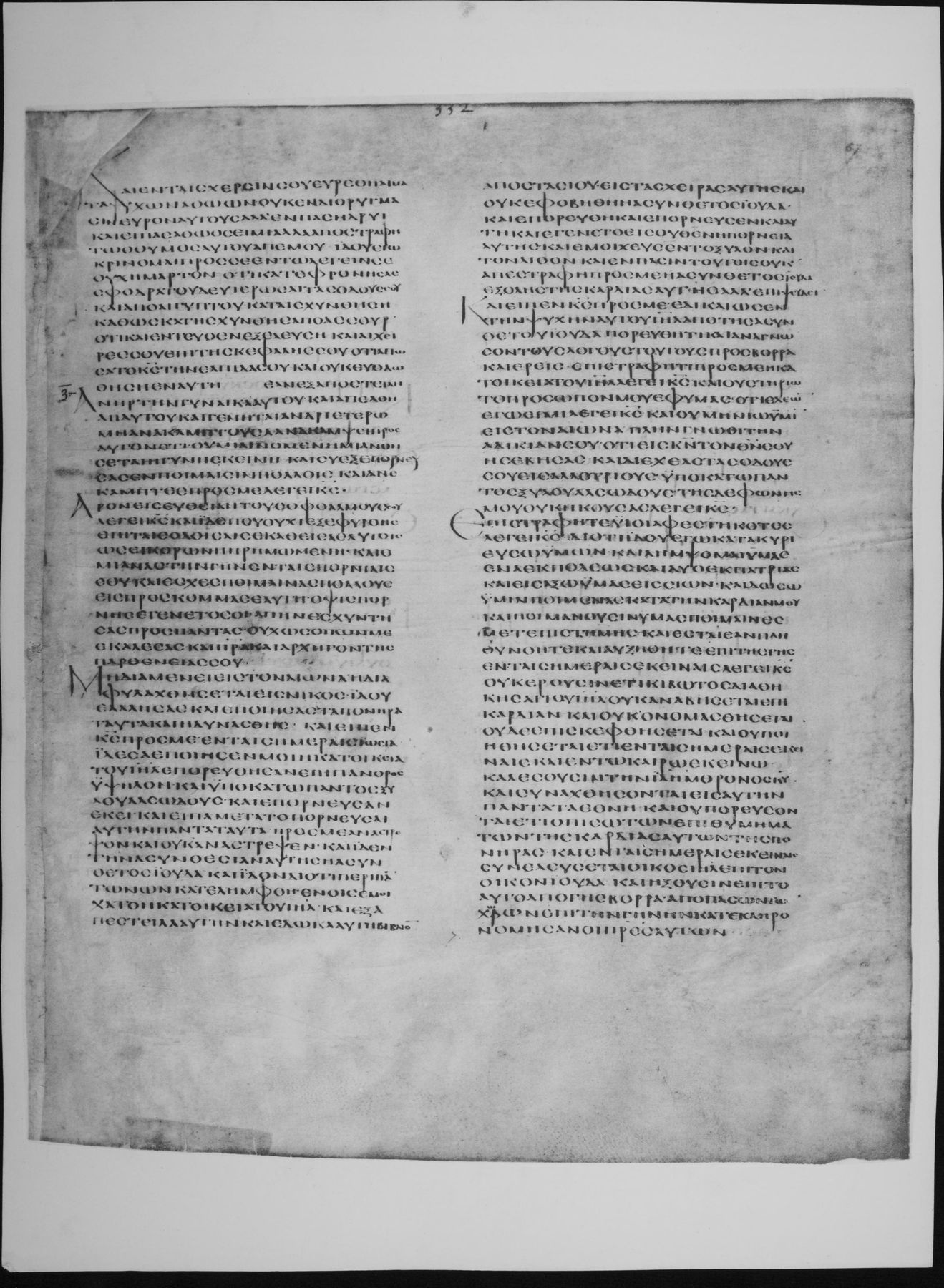
Where on the image
Jeremiah 3:1-8 is on fol. 332r (full-size facsimile of 1879-83, Internet Archive codex-alexandrinus leaf 688). The 1936 reduced facsimile prints beneath this page: Jer. ii. 34-iii. 18. Checked on the plate: the page begins at the start of Jeremiah 2:34 (first words read: ΚΑΙ ΕΝ ΤΑΙΣ ΧΕΡΣΙΝ ΣΟΥ ΕΥΡΕΘΗΣΑΝ ΑΙΜΑΤΑ ΨΥΧΩΝ ΑΘΩΩΝ ΟΥΚ ΕΝ ΔΙΟΡΥΓΜΑΣΙΝ ΕΥΡΟΝ ΑΥΤΟΥΣ).
1Ἐὰν ἐξαποστείλῃ ἀνὴρ τὴν γυναῖκα αὐτοῦ, καὶ ἀπέλθῃ ἀπ᾽ αὐτοῦ καὶ γένηται ἀνδρὶ ἑτέρῳ, μὴ ἀνακάμπτουσα ἀνακάμψει πρὸς αὐτὸν ἔτι; οὐ μιαινομένη μιανθήσεται ἡ γυνὴ ἐκείνη; καὶ σὺ ἐξεπόρνευσας ἐν ποιμέσιν πολλοῖς, καὶ ἀνέκαμπτες πρὸς μέ; λέγει Κύριος. 2ἆρον εἰς εὐθεῖαν τοὺς ὀφθαλμούς σου καὶ ἴδε· ποῦ οὐχὶ ἐξεφύρθης; ἐπὶ ταῖς ὁδοῖς ἐκάθισας αὐτοῖς ὡσεὶ κορώνη ἐρημουμένη, καὶ ἐμίανας τὴν γῆν ἐν ταῖς πορνίαις σου καὶ ἐν ταῖς κακίαις σου, 3καὶ ἔσχες ποιμένας πολλοὺς εἰς πρόσκομμα σεαυτῇ· ὄψις πόρνης ἐγένετό σοι, ἀπηναισχύντησας πρὸς πάντας. 4οὐχ ὡς οἶκόν με ἐκάλεσας καὶ πατέρα καὶ ἀρχηγὸν τῆς παρθενίας σου; 5μὴ διαμενεῖ εἰς τὸν αἰῶνα, ἢ φυλαχθήσεται εἰς νῖκος; ἰδοὺ ἐλάλησας καὶ ἐποίησας τὰ πονηρὰ ταῦτα καὶ ἠδυνάσθης. 6Καὶ εἶπεν Κύριος πρὸς μὲ ἐν ταῖς ἡμέραις Ἰωσείου τοῦ βασιλέως Εἶδες ἃ ἐποίησέν μοι ἡ κατοικία τοῦ Ἰσραήλ; ἐπορεύθησαν ἐπὶ πᾶν ὄρος ὑψηλὸν καὶ ὑποκάτω παντὸς ξύλου ἀλσώδους καὶ ἐπόρνευσαν ἐκεῖ. 7καὶ εἶπα μετὰ τὸ πορνεῦσαι αὐτὴν ταῦτα πάντα Πρὸς μὲ ἀνάστρεψον· καὶ οὐκ ἀνέστρεψεν, καὶ εἶδεν τὴν ἀσυνθεσίαν αὐτῆς ἡ ἀσύνθετος Ἰουδά. 8καὶ εἶδον διότι περὶ πάντων ὧν καὶ εἶδον, περὶ πάντων ὧν κατελήμφθη ἐν οἷς ἐμοιχᾶτο ἡ κατοικία τοῦ Ἰσραήλ, καὶ ἐξαπέστειλα αὐτὴν καὶ ἔδωκα αὐτῇ βιβλίον ἀποστασίου εἰς τὰς χεῖρας αὐτῆς· καὶ οὐκ ἐφοβήθη ἡ ἀσύνθετος Ἰουδά, καὶ ἐπορεύθη καὶ ἐπόρνευσεν καὶ αὐτή,
1If a man put away his wife, and she depart from him, and become another man's, shall she return to him any more at all? shall not that woman be utterly defiled? yet thou hast gone a-whoring with many shepherds, and hast returned to me, saith the Lord. 2Lift up thine eyes to look straight forward, and see where thou hast not been utterly defiled. Thou hast sat for them by the wayside as a deserted crow, and hast defiled the land with thy fornications and thy wickedness. 3And thou didst retain many shepherds for a stumbling-block to thyself: thou hadst a whore's face, thou didst become shameless toward all. 4Hast thou not called me as it were a home, and the father and guide of thy virgin-time? 5Will God's anger continue for ever, or be preserved to the end? Behold, thou hast spoken and done these bad things, and hadst power to do them. 6And the Lord said to me in the days of Josias the king, Hast thou seen what things the house of Israel has done to me? they have gone on every high mountain, and under every shady tree, and have committed fornication there. 7And I said after she had committed all these acts of fornication, Turn again to me. Yet she returned not. And faithless Juda saw her faithlessness. 8And I saw that (for all the sins of which she was convicted, wherein the house of Israel committed adultery, and I put her away, and gave into her hands a bill of divorcement,) yet faithless Juda feared not, but went and herself also committed fornication.
Where on the image
Jeremiah 3:9-16 is on fol. 332r (full-size facsimile of 1879-83, Internet Archive codex-alexandrinus leaf 688). The 1936 reduced facsimile prints beneath this page: Jer. ii. 34-iii. 18. Checked on the plate: the page begins at the start of Jeremiah 2:34 (first words read: ΚΑΙ ΕΝ ΤΑΙΣ ΧΕΡΣΙΝ ΣΟΥ ΕΥΡΕΘΗΣΑΝ ΑΙΜΑΤΑ ΨΥΧΩΝ ΑΘΩΩΝ ΟΥΚ ΕΝ ΔΙΟΡΥΓΜΑΣΙΝ ΕΥΡΟΝ ΑΥΤΟΥΣ).
9καὶ ἐγένετο εἰς οὐθὲν ἡ πορνεία αὐτῆς, καὶ ἐμοίχευσεν τὸ ξύλον καὶ τὸν λίθον. 10καὶ ἐν πᾶσιν τούτοις οὐκ ἐπεστράφη πρὸς μὲ ἡ ἀσύνθετος Ἰουδὰ ἐξ ὃλης τῆς καρδίας αὐτῆς ἀλλ᾽ ἐπὶ ψεύδει. 11καὶ εἶπεν Κύριος πρὸς μέ Ἐδικαίωσεν τὴν ψυχὴν αὐτοῦ Ἰσραὴλ ἀπὸ τῆς ἀσυνθέτου Ἰουδά. 12πορεύου καὶ ἀνάγνωθι τοὺς λόγους τούτους πρὸς βορρᾶν, καὶ ἐρεῖς Ἐπιστράφητι πρὸς μέ, ἡ κατοικία τοῦ Ἰσραήλ, λέγει Κύριος, καὶ οὐ στηριῶ τὸ πρόσωπόν μου ἐφ᾽ ὑμᾶς· ὅτι ἐλεήμων ἐγώ εἰμι, λέγει Κύριος, καὶ οὐ μηνιῶ ὑμῖν εἰς τὸν αἰῶνα. 13πλὴν γνῶθι τὴν ἀδικίαν σου, ὅτι εἰς Κύριον τὸν θεόν σου ἠσέβησας, καὶ διέχεας τὰς ὁδούς σου εἰς ἀλλοτρίους ὑποκάτω παντὸς ξύλου ἀλσώδους, τῆς δὲ φωνῆς μου οὐχ ὑπήκουσας, λέγει Κύριος. 14ἐπιστράφητε, υἱοὶ ἀφεστηκότες, λέγει Κύριος, διότι ἐγὼ κατακυριεύσω ὑμῶν, καὶ λήμψομαι ὑμᾶς ἕνα ἐκ πόλεως καὶ δύο ἐκ πατριᾶς καὶ εἰσάξω ὑμᾶς εἰς Σειών, 15καὶ δώσω ὑμῖν ποιμένας κατὰ τὴν καρδίαν μου, καὶ ποιμανοῦσιν ὑμᾶς ποιμαίνοντες μετ᾽ ἐπιστήμης. 16καὶ ἔσται ἐὰν πληθυνθῆτε καὶ αὐξηθῆτε ἐπὶ τῆς γῆς ἐν ταῖς ἡμέραις ἐκείναις, λέγει Κύριος, οὐκ ἐροῦσιν ἔτι Κιβωτὸς διαθήκης Ἁγίου Ἰσραήλ, οὐκ ἀναβήσεται ἐπὶ καρδίαν, οὐκ ὀνομασθήσεται οὐδὲ ἐπισκεφθήσεται καὶ οὐ ποιηθήσεται ἔτι.
9And her fornication was nothing accounted of; and she committed adultery with wood and stone. 10And for all these things faithless Juda turned not to me with all her heart, but falsely. 11And the Lord said to me, Israel has justified himself more than faithless Juda. 12Go and read these words toward the north, and thou shalt say, Return to me, O house of Israel, saith the Lord; and I will not set my face against you: for I am merciful, saith the Lord, and I will not be angry with you for ever. 13Nevertheless, know thine iniquity, that thou hast sinned against the Lord thy God, and hast scattered thy ways to strangers under every shady tree, but thou didst not hearken to my voice, saith the Lord. 14Turn, ye children that have revolted, saith the Lord; for I will rule over you: and I will take you one of a city, and two of a family, and I will bring you in to Sion: 15and I will give you shepherds after my heart, and they shall certainly tend you with knowledge. 16And it shall come to pass that when ye are multiplied and increased upon the land, saith the Lord, in those days they shall say no more, The ark of the covenant of the Holy One of Israel: it shall not come to mind; it shall not be named; neither shall it be visited; nor shall this be done any more.
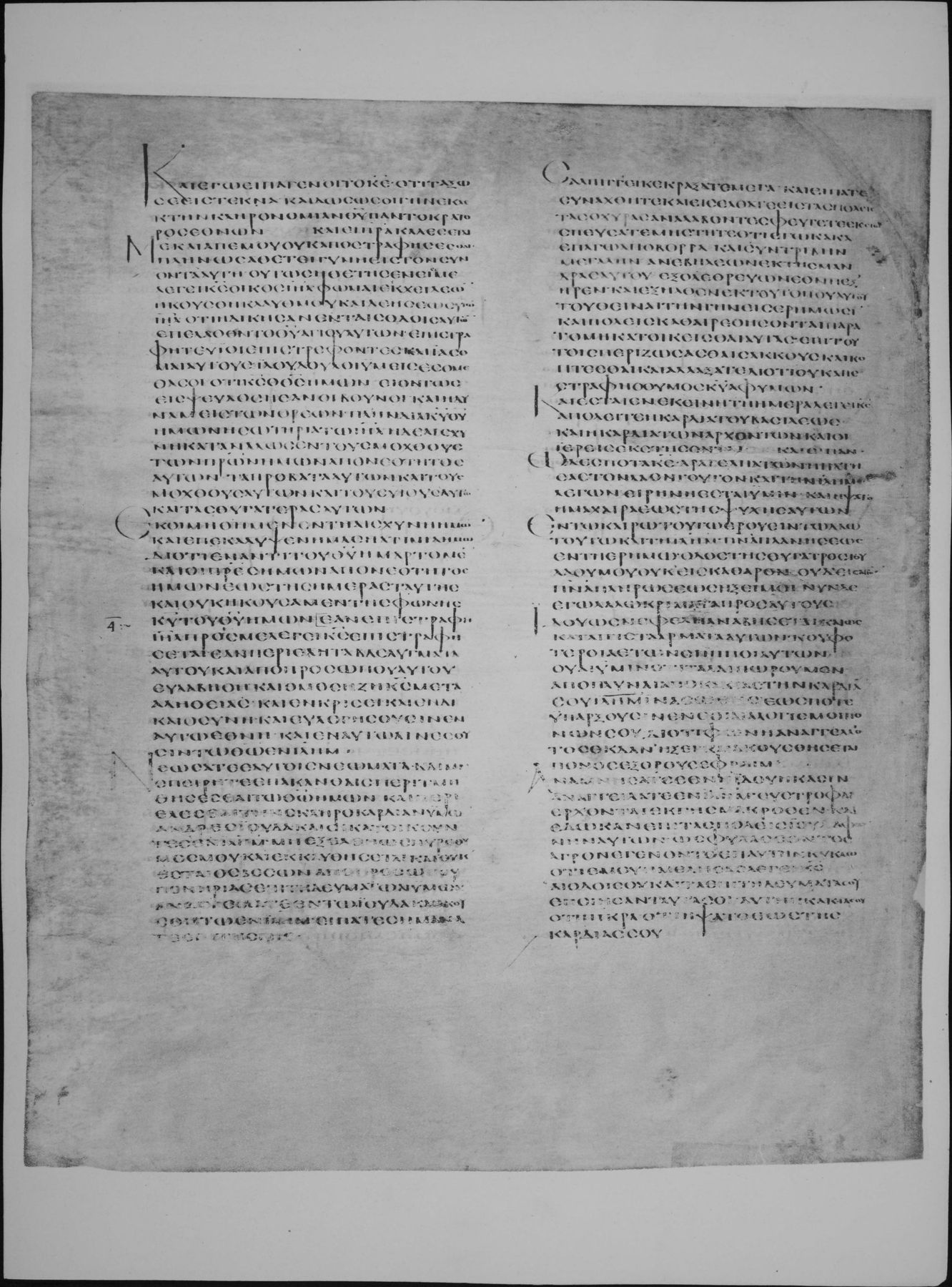
Where on the image
Jeremiah 3:17-18 is on fol. 332r (full-size facsimile of 1879-83, Internet Archive codex-alexandrinus leaf 688). The 1936 reduced facsimile prints beneath this page: Jer. ii. 34-iii. 18. Checked on the plate: the page begins at the start of Jeremiah 2:34 (first words read: ΚΑΙ ΕΝ ΤΑΙΣ ΧΕΡΣΙΝ ΣΟΥ ΕΥΡΕΘΗΣΑΝ ΑΙΜΑΤΑ ΨΥΧΩΝ ΑΘΩΩΝ ΟΥΚ ΕΝ ΔΙΟΡΥΓΜΑΣΙΝ ΕΥΡΟΝ ΑΥΤΟΥΣ). Jeremiah 3:19-25 is on fol. 332v (full-size facsimile of 1879-83, Internet Archive codex-alexandrinus leaf 689). The 1936 reduced facsimile prints beneath this page: Jer. iii. 19-iv. 18. Checked on the plate: the page begins at the start of Jeremiah 3:19 (first words read: ΚΑΙ ΕΓΩ ΕΙΠΑ ΓΕΝΟΙΤΟ ΚΕ ΟΤΙ ΤΑΞΩ ΣΕ ΕΙΣ ΤΕΚΝΑ ΚΑΙ ΔΩΣΩ ΣΟΙ ΓΗΝ ΕΚΛΕΚΤΗΝ ΚΛΗΡΟΝΟΜΙΑΝ ΠΑΝΤΟΚΡΑΤΟΡΟΣ).
17ἐν ταῖς ἡμέραις ἐκείναις καὶ ἐν τῷ καιρῷ ἐκείνῳ καλέσουσιν τὴν Ἰερουσαλήμ Θρόνος Κυρίου, καὶ συναχθήσονται πάντα τὰ ἔθνη εἰς αὐτήν, καὶ οὐ πορεύσονται ἔτι ὀπίσω τῶν ἐνθυμημάτων τῆς καρδίας αὐτῶν τῆς πονηρᾶς. 18ἐν ταῖς ἡμέραις ἐκείναις συνελεύσονται οἶκος Ἰούδα ἐπὶ τὸν οἶκον τοῦ Ἰσραήλ, καὶ ἥξουσιν ἐπὶ τὸ αὐτὸ ἀπὸ γῆς βορρᾶ καὶ ἀπὸ πασῶν τῶν χωρῶν ἐπὶ τὴν γῆν ἣν κατεκληρονόμησα τοὺς πατέρας αὐτῶν. 19καὶ ἐγὼ εἶπα Γένοιτο, Κύριε· ὅτι τάξω σε εἰς ἔθνη, καὶ δώσω σοι γῆν ἐκλεκτὴν κληρονομίαν θεοῦ Παντοκράτορος ἐθνῶν· καὶ εἶπα Πατέρα καλέσετέ με, καὶ ἀπ᾽ ἐμοῦ οὐκ ἀποστραφήσεσθε. 20πλὴν ὡς ἀθετεῖ γυνὴ εἰς τὸν συνόντα αὐτῇ, οὕτως ἠθέτησεν εἰς ἐμὲ οἶκος Ἰσραήλ, λέγει Κύριος. 21φωνὴ ἐκ χειλέων ἠκούσθη κλαυθμοῦ καὶ δεήσεως υἱῶν Ἰσραήλ, ὅτι ἠδίκησαν ἐν ταῖς ὁδοῖς αὐτῶν, ἐπελάθοντο θεοῦ Ἁγίου αὐτῶν. 22ἐπιστράφητε, υἱοὶ ἐπιστρέφοντες, καὶ ἰάσομαι τὰ συντρίμματα ὑμῶν. ἰδοὺ δοῦλοι ἡμεῖς ἐσόμεθά σοι, ὅτι σὺ Κύριος ὁ θεὸς ἡμῶν εἶ. 23ὄντως εἰς ψεῦδος ἦσαν οἱ βουνοὶ καὶ ἡ δύναμις τῶν ὀρέων, πλὴν διὰ Κυρίου θεοῦ ἡμῶν ἡ σωτηρία τοῦ Ἰσραήλ. 24ἡ δὲ αἰσχύνη κατανάλωσεν τοὺς μόχθους τῶν πατέρων ἡμῶν ἀπὸ νεότητος ἡμῶν, τὰ πρόβατα αὐτῶν καὶ τοὺς μόσχους αὐτῶν, καὶ τοὺς υἱοὺς αὐτῶν καὶ τὰς θυγατέρας αὐτῶν. 25ἐκοιμήθημεν ἐν τῇ αἰσχύνῃ ἡμῶν, καὶ ἐπεκάλυψεν ἡμᾶς ἡ ἀτιμία ἡμῶν, διότι ἔναντι τοῦ θεοῦ ἡμῶν ἡμάρτομεν ἡμεῖς καὶ οἱ πατέρες ἡμῶν ἀπὸ νεότητος ἡμῶν ἕως τῆς ἡμέρας ταύτης, καὶ οὐχ ὑπηκούσαμεν τῆς φωνῆς Κυρίου τοῦ θεοῦ ἡμῶν.
17In those days and at that time they shall call Jerusalem the throne of the Lord; and all the nations shall be gathered to it: and they shall not walk any more after the imaginations of their evil heart. 18In those days the house of Juda shall come together to the house of Israel, and they shall come, together, from the land of the north, and from all the countries, to the land, which I caused their fathers to inherit. 19And I said, So be it, Lord, for thou saidst, I will set thee among children, and will give thee a choice land, the inheritance of the Almighty God of the Gentiles: and I said, Ye shall call me Father; and ye shall not turn away from me. 20But as a wife acts treacherously against her husband, so has the house of Israel dealt treacherously against me, saith the Lord. 21A voice from the lips was heard, even of weeping and supplication of the children of Israel: for they have dealt unrighteously in their ways, they have forgotten God their Holy One. 22Turn, ye children that are given to turning, and I will heal your bruises. 23Truly the hills and the strength of the mountains were a lying refuge: but by the Lord our God is the salvation of Israel. 24But shame has consumed the labours of our fathers from our youth; their sheep and their calves, and their sons and their daughters. 25We have lain down in our shame, and our disgrace has covered us: because we and our fathers have sinned before our God, from our youth until this day; and we have not hearkened to the voice of the Lord our God.
Cite
Sources
- Source: Codex Alexandrinus (British Library Royal MS 1 D. VI) via the British Museum photographic facsimiles of 1879-83 and 1936 (Internet Archive) + Swete's Septuagint + Brenton's English (holding institution)
- Critical edition: H. B. Swete, The Old Testament in Greek according to the Septuagint (1909)
← previous · → next · v cycle view · l back to library