Jonah, Chapter 3 (Codex Alexandrinus)
Introduction
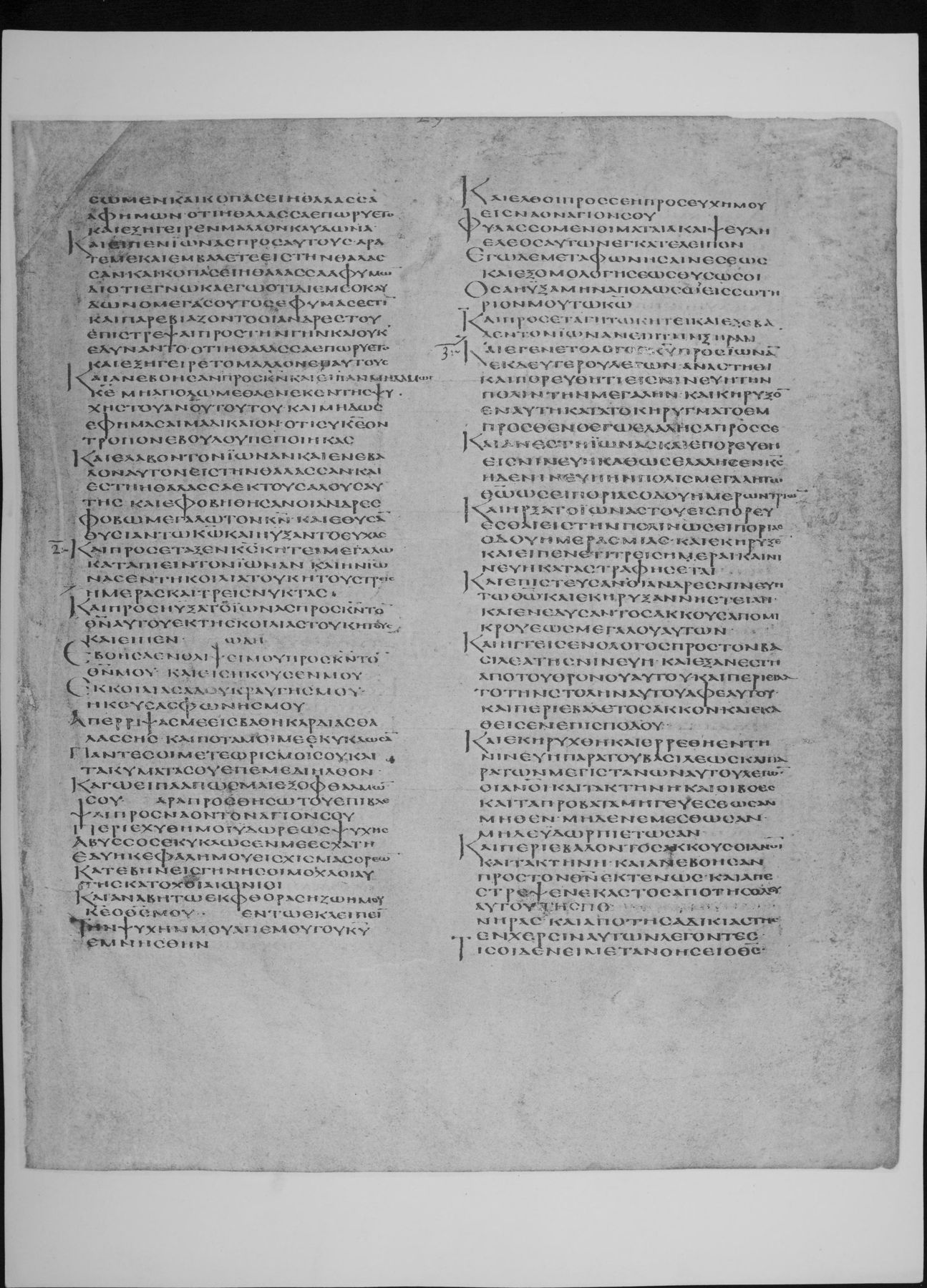
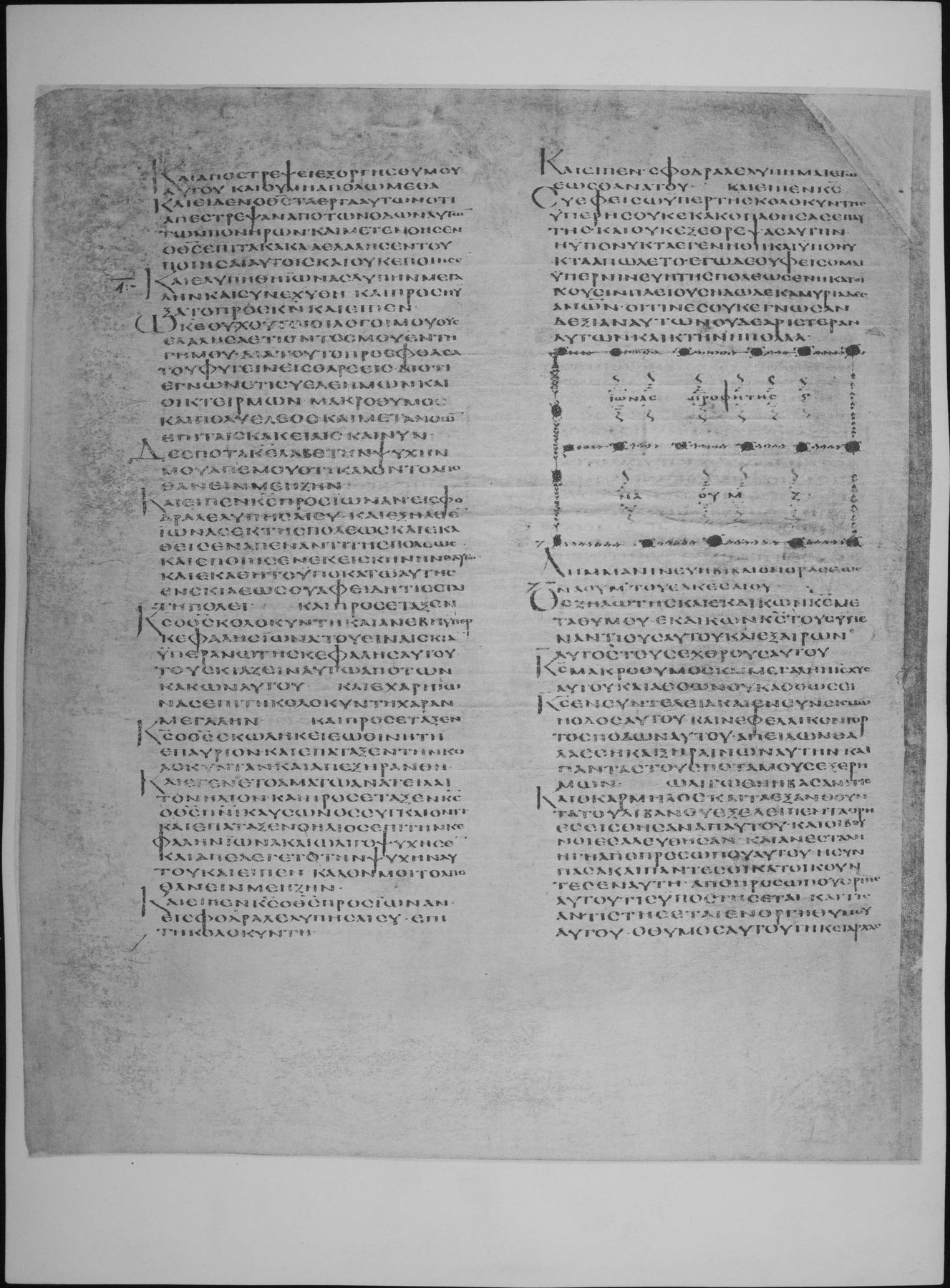
Jonah 3 in the Greek Old Testament (the Septuagint) as written in Codex Alexandrinus, a Greek Bible copied in the fifth century, probably in Egypt, and now in the British Library (Royal MS 1 D. VI, the second of its four volumes). It is one of the three great early codices of the whole Greek Bible, with Codex Vaticanus and Codex Sinaiticus.
This entry meets the strict three-criteria standard of the Theosis Library:
- Manuscript scan: the pages of Codex Alexandrinus carrying this chapter (fol. 290r, fol. 290v), from the full-size photographic (autotype) facsimile published by the British Museum in 1879-1883, as digitised on the Internet Archive. The verse range of every page comes from the reduced photographic facsimile of 1936, which prints it beneath each plate, and the opening words of every page were read on the plate to confirm the page and the verse it begins with. Each section links to the page or pages that hold its verses. Folio numbers are those written at the head of each leaf and visible on the plates.
- Original text: Swete's edition, which here prints the text of Codex Vaticanus (Vat. gr. 1209), the base of his edition, and gives the readings of Alexandrinus only in his apparatus. The Greek column is therefore Vaticanus' text; where Alexandrinus differs, the plate shows what Alexandrinus reads.
- English translation: Sir Lancelot C. L. Brenton, The Septuagint Version of the Old Testament (1844; 1851 edition), a translation of the Greek, public domain, from the eBible.org text.
How was this verified? (Provenance)
Where on the image
Jonah 3:1-9 is on fol. 290r (full-size facsimile of 1879-83, Internet Archive codex-alexandrinus leaf 604). The 1936 reduced facsimile prints beneath this page: Jonah i. 11-iii. 9. Checked on the plate: the page begins inside Jonah 1:11 (first words read: ΣΩΜΕΝ ΚΑΙ ΚΟΠΑΣΕΙ Η ΘΑΛΑΣΣΑ ΑΦ ΗΜΩΝ ΟΤΙ Η ΘΑΛΑΣΣΑ ΕΠΟΡΕΥΕΤΟ ΚΑΙ ΕΞΗΓΕΙΡΕΝ ΜΑΛΛΟΝ ΚΛΥΔΩΝΑ). Jonah 3:9-10 is on fol. 290v (full-size facsimile of 1879-83, Internet Archive codex-alexandrinus leaf 605). The 1936 reduced facsimile prints beneath this page: Jonah iii. 9-iv. 11, Nahum i. 1-6. Checked on the plate: the page begins inside Jonah 3:9 (first words read: ΚΑΙ ΑΠΟΣΤΡΕΨΕΙ ΕΞ ΟΡΓΗΣ ΘΥΜΟΥ ΑΥΤΟΥ ΚΑΙ ΟΥ ΜΗ ΑΠΟΛΩΜΕΘΑ ΚΑΙ ΕΙΔΕΝ Ο ΘΣ ΤΑ ΕΡΓΑ ΑΥΤΩΝ).
1Καὶ ἐγένετο λόγος Κυρίου πρὸς Ἰωνᾶν ἐκ δευτέρου λέγων 2Ἀνάστηθι πορεύθητι εἰς Νινευὴ τὴν πόλιν τὴν μεγάλην, καὶ κήρυξον ἐν αὐτῇ κατὰ τὸ κήρυγμα τὸ ἔμπροσθεν ὃ ἐγὼ ἐλάλησα πρὸς σὲ. 3καὶ ἀνέστη Ἰωνᾶς καὶ ἐπορεύθη εἰς Νινευή, καθὰ ἐλάλησεν Κύριος· ἡ δὲ Νινευὴ ἦν πόλις μεγάλη τῷ θεῷ, ὡσεὶ πορείας ὁδοῦ ἡμερῶν τριῶν. 4καὶ ἤρξατο Ἰωνᾶς τοῦ εἰσελθεῖν εἰς τὴν πόλιν ὡσεὶ πορείαν ἡμέρας μιᾶς, καὶ ἐκήρυξεν καὶ εἶπεν Ἔτι τρεῖς ἡμέραι καὶ Νινευὴ καταστραφήσεται. 5καὶ ἐνεπίστευσαν οἱ ἄνδρες Νινευὴ τῷ θεῷ, καὶ ἐκήρυξαν νηστίαν, καὶ ἐνεδύσαντο σάκκους ἀπὸ μεγάλου αὐτῶν ἕως μικροῦ αὐτῶν. 6καὶ ἤγγισεν ὁ λόγος πρὸς τὸν βασιλέα τῆς Νινευή· καὶ ἐξανέστη ἀπὸ τοῦ θρόνου αὐτοῦ, καὶ περιείλατο τὴν στολὴν αὐτοῦ ἀφ᾽ ἑαυτοῦ καὶ περιεβάλετο σάκκον, καὶ ἐκάθισεν ἐπὶ σποδοῦ. 7καὶ ἐκηρύχθη καὶ ἐρρέθη ἐν τῇ Νινευὴ παρὰ τοῦ βασιλέως καὶ παρὰ τῶν μεγιστάνων αὐτοῦ λέγων Οἱ ἄνθρωποι καὶ τὰ κτήνη καὶ οἱ βόες καὶ τὰ πρόβατα μὴ γευσάσθωσαν μηδὲν μηδὲ νεμέσθωσαν μηδὲ ὕδωρ πιέτωσαν. 8καὶ περιεβάλοντο σάκκους οἱ ἄνθρωποι καὶ τὰ κτήνη, καὶ ἀνεβόησαν πρὸς τὸν θεὸν ἐκτενῶς· καὶ ἀπέστρεψαν ἕκαστος ἀπὸ τῆς ὁδοῦ αὐτοῦ τῆς πονηρᾶς καὶ ἀπὸ τῆς ἀδικίας τῆς ἐν χερσὶν αὐτῶν, λέγοντες 9Τίς οἶδεν εἰ μετανοήσει ὁ θεὸς καὶ ἀποστρέψει ἐξ ὀργῆς θυμοῦ αὐτοῦ, καὶ οὐ μὴ ἀπολώμεθα; 10καὶ εἶδεν ὁ θεὸς τὰ ἔργα αὐτῶν, ὅτι ἀπέστρεψαν ἀπὸ τῶν ὁδῶν αὐτῶν τῶν πονηρῶν· καὶ μετενόησεν ὁ θεὸς ἐπὶ τῇ κακίᾳ ᾗ ἐλάλησεν τοῦ ποιῆσαι αὐτοῖς, καὶ οὐκ ἐποίησεν.
1And the word of the Lord came to Jonas the second time, saying, 2Rise, go to Nineve, the great city, and preach in it according to the former preaching which I spoke to thee of. 3And Jonas arose, and went to Nineve, as the Lord had spoken. Now Nineve was an exceeding great city, of about three days' journey. 4And Jonas began to enter into the city about a day's journey, and he proclaimed, and said, Yet three days, and Nineve shall be overthrown. 5And the men of Nineve believed God, and proclaimed a fast, and put on sackcloths, from the greatest of them to the least of them. 6And the word reached the king of Nineve, and he arose from off his throne, and took off his raiment from him, and put on sackcloth, and sat on ashes. 7And proclamation was made, and it was commanded in Nineve by the king and by his great men, saying, Let not men, or cattle, or oxen, or sheep, taste any thing, nor feed, nor drink water. 8So men and cattle were clothed with sackcloths, and cried earnestly to God; and they turned every one from their evil way, and from the iniquity that was in their hands, saying, 9Who knows if God will repent, and turn from his fierce anger, and so we shall not perish? 10And God saw their works, that they turned from their evil ways; and God repented of the evil which he had said he would do to them; and he did it not.
Cite
Sources
- Source: Codex Alexandrinus (British Library Royal MS 1 D. VI) via the British Museum photographic facsimiles of 1879-83 and 1936 (Internet Archive) + Swete's Septuagint + Brenton's English (holding institution)
- Critical edition: H. B. Swete, The Old Testament in Greek according to the Septuagint (1909)
← previous · → next · v cycle view · l back to library