Jonah, Chapter 4 (Codex Alexandrinus)
Introduction
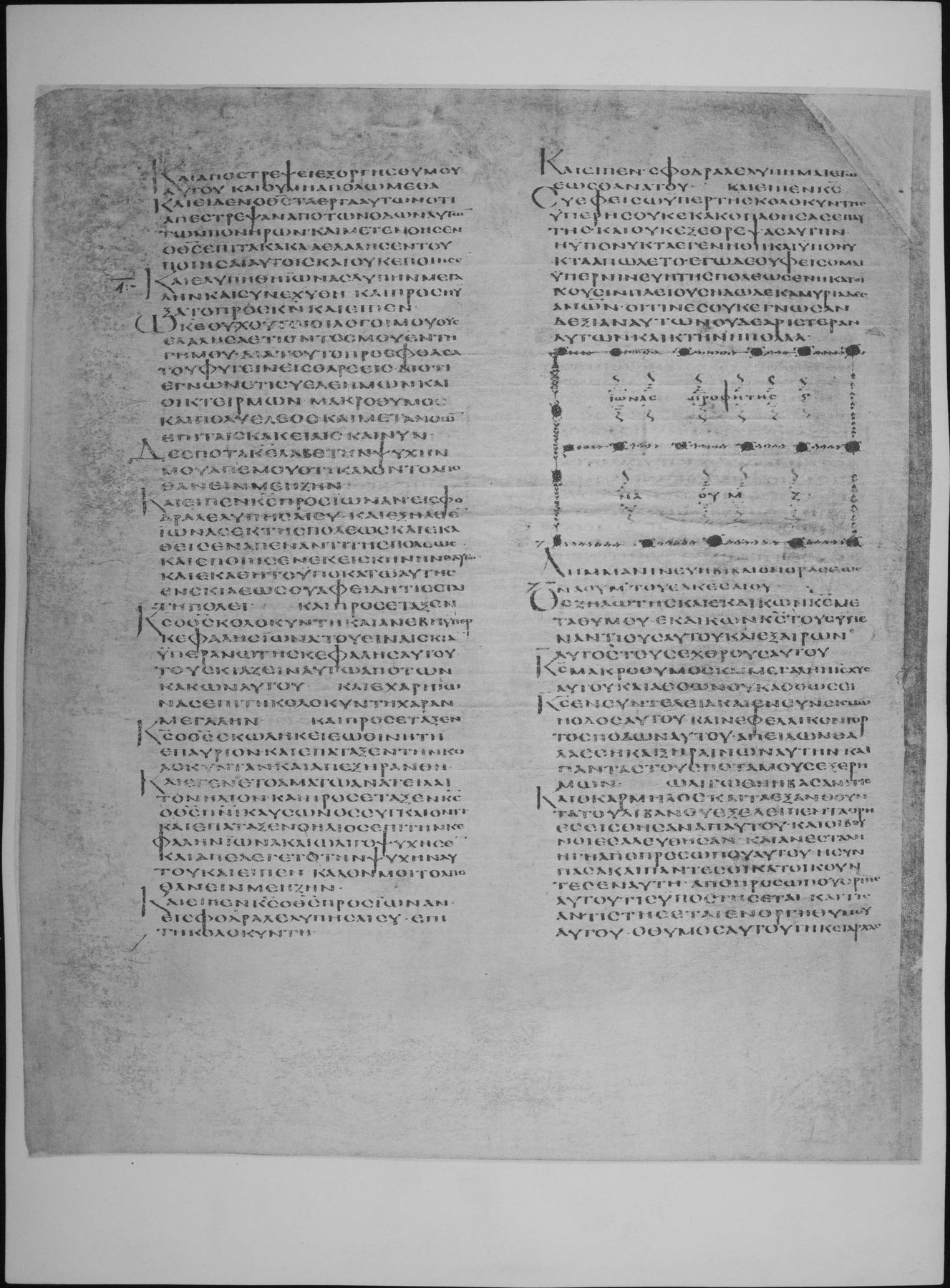
Jonah 4 in the Greek Old Testament (the Septuagint) as written in Codex Alexandrinus, a Greek Bible copied in the fifth century, probably in Egypt, and now in the British Library (Royal MS 1 D. VI, the second of its four volumes). It is one of the three great early codices of the whole Greek Bible, with Codex Vaticanus and Codex Sinaiticus.
This entry meets the strict three-criteria standard of the Theosis Library:
- Manuscript scan: the page of Codex Alexandrinus carrying this chapter (fol. 290v), from the full-size photographic (autotype) facsimile published by the British Museum in 1879-1883, as digitised on the Internet Archive. The verse range of every page comes from the reduced photographic facsimile of 1936, which prints it beneath each plate, and the opening words of every page were read on the plate to confirm the page and the verse it begins with. Each section links to the page or pages that hold its verses. Folio numbers are those written at the head of each leaf and visible on the plates.
- Original text: Swete's edition, which here prints the text of Codex Vaticanus (Vat. gr. 1209), the base of his edition, and gives the readings of Alexandrinus only in his apparatus. The Greek column is therefore Vaticanus' text; where Alexandrinus differs, the plate shows what Alexandrinus reads.
- English translation: Sir Lancelot C. L. Brenton, The Septuagint Version of the Old Testament (1844; 1851 edition), a translation of the Greek, public domain, from the eBible.org text.
How was this verified? (Provenance)
Where on the image
Jonah 4:1-8 is on fol. 290v (full-size facsimile of 1879-83, Internet Archive codex-alexandrinus leaf 605). The 1936 reduced facsimile prints beneath this page: Jonah iii. 9-iv. 11, Nahum i. 1-6. Checked on the plate: the page begins inside Jonah 3:9 (first words read: ΚΑΙ ΑΠΟΣΤΡΕΨΕΙ ΕΞ ΟΡΓΗΣ ΘΥΜΟΥ ΑΥΤΟΥ ΚΑΙ ΟΥ ΜΗ ΑΠΟΛΩΜΕΘΑ ΚΑΙ ΕΙΔΕΝ Ο ΘΣ ΤΑ ΕΡΓΑ ΑΥΤΩΝ).
1Καὶ ἐλυπήθη Ἰωνᾶς λύπην μεγάλην, καὶ συνεχύθη· 2καὶ προσεύξατο πρὸς Κύριον καὶ εἶπεν Ὦ Κύριε, οὐχ οὗτοι οἱ λόγοι μου, ἔτι ὄντος μου ἐν τῇ γῇ μου; διὰ τοῦτο προέφθασα τοῦ φυγεῖν εἰς Θαρσείς, διότι ἔγνων ὅτι σὺ ἐλεήμων καὶ οἰκτίρμων, μακρόθυμος καὶ πολυέλεος καὶ μετανοῶν ἐπὶ ταῖς κακίαις. 3καὶ νῦν, δέσποτα Κύριε, λάβε τὴν ψυχήν μου ἀπ᾽ ἐμοῦ, ὅτι καλὸν τὸ ἀποθανεῖν με ἢ ζῇν με. 4καὶ εἶπεν Κύριος πρὸς Ἰωνᾶν Εἰ σφόδρα λελύπησαι σύ; 5καὶ ἐξῆλθεν Ἰωνᾶς ἐκ τῆς πόλεως, καὶ ἐκάθισεν ἀπέναντι τῆς πόλεως· καὶ ἐποίησεν ἑαυτῷ ἐκεῖ σκηνὴν καὶ ἐκάθητο ὑποκάτω αὐτῆς ἐν σκιᾷ, ἕως οὗ ἀπίδῃ τί ἔσται τῇ πόλει. 6καὶ προσέταξεν Κύριος ὁ θεὸς κολοκύνθῃ, καὶ ἀνέβη ὑπὲρ κεφαλῆς τοῦ Ἰωνᾶ τοῦ εἶναι σκιὰν ὑπεράνω τῆς κεφαλῆς αὐτοῦ, τοῦ σκιάζειν αὐτῷ ἀπὸ τῶν κακῶν αὐτοῦ· καὶ ἐχάρη Ἰωνᾶς ἐπὶ τῇ κολοκύνθῃ χαρὰν μεγάλην. 7καὶ προσέταξεν ὁ θεὸς σκώληκι ἑωθινῇ τῇ ἐπαύριον, καὶ ἐπάταξεν τὴν κολόκυνθαν, καὶ ἀπεξηράνθη. 8καὶ ἐγένετο ἅμα τῷ ἀνατεῖλαι τὸν ἥλιον καὶ προσέταξεν ὁ θεὸς πνεύματι καύσωνος συνκαίοντι, καὶ ἐπάταξεν ὁ ἥλιος ἐπὶ τὴν κεφαλὴν Ἰωνᾶ· καὶ ὠλιγοψύχησεν καὶ ἀπελέγετο τὴν ψυχὴν αὐτοῦ, καὶ εἶπεν Καλόν μοι ἀποθανεῖν με ἢ ζῇν.
1But Jonas was very deeply grieved, and he was confounded. 2And he prayed to the Lord, and said, O Lord, were not these my words when I was yet in my land? therefore I made haste to flee to Tharsis; because I knew that thou art merciful and compassionate, long-suffering, and abundant in kindness, and repentest of evil. 3And now, Lord God, take my life from me; for it is better for me to die than to live. 4And the Lord said to Jonas, Art thou very much grieved? 5And Jonas went out from the city, and sat over against the city; and he made for himself there a booth, and he sat under it, until he should perceive what would become of the city. 6And the Lord God commanded a gourd, and it came up over the head of Jonas, to be a shadow over his head, to shade him from his calamities: and Jonas rejoiced with great joy for the gourd. 7And God commanded a worm the next morning, and it smote the gourd, and it withered away. 8And it came to pass at the rising of the sun, that God commanded a burning east wind; and the sun smote on the head of Jonas, and he fainted, and despaired of his life, and said, It is better for me to die than to live.
Where on the image
Jonah 4:9-11 is on fol. 290v (full-size facsimile of 1879-83, Internet Archive codex-alexandrinus leaf 605). The 1936 reduced facsimile prints beneath this page: Jonah iii. 9-iv. 11, Nahum i. 1-6. Checked on the plate: the page begins inside Jonah 3:9 (first words read: ΚΑΙ ΑΠΟΣΤΡΕΨΕΙ ΕΞ ΟΡΓΗΣ ΘΥΜΟΥ ΑΥΤΟΥ ΚΑΙ ΟΥ ΜΗ ΑΠΟΛΩΜΕΘΑ ΚΑΙ ΕΙΔΕΝ Ο ΘΣ ΤΑ ΕΡΓΑ ΑΥΤΩΝ).
9καὶ εἶπεν ὁ θεὸς πρὸς Ἰωνᾶν Εἰ σφόδρα λελύπησαι σὺ ἐπὶ τῇ κολοκύνθῃ; καὶ εἶπεν Σφόδρα λελύπημαι ἐγὼ ἕως θανάτου. 10καὶ εἶπεν Κύριος Σὺ ἐφείσω ὑπὲρ τῆς κολοκύνθης, ὑπὲρ ἧς οὐκ ἐκακοπάθησας ἐπ᾽ αὐτήν, καὶ οὐκ ἐξέθρεψας αὐτήν, ἣ ἐγενήθη ὑπὸ νύκτα καὶ ὑπὸ νύκτα ἀπώλετο. 11ἐγὼ δὲ οὐ φείσομαι ὑπὲρ Νινευὴ τῆς πόλεως τῆς μεγάλης, ἐν ᾗ κατοικοῦσιν πλείους δώδεκα μυριάδες ἀνθρώπων, οἵτινες οὐκ ἔγνωσαν δεξιὰν αὐτῶν ἢ ἀριστερὰν αὐτῶν, καὶ κτήνη πολλά;
9And God said to Jonas, Art thou very much grieved for the gourd? And he said, I am very much grieved, even to death. 10And the Lord said, Thou hadst pity on the gourd, for which thou hast not suffered, neither didst thou rear it; which came up before night, and perished before another night: 11and shall not I spare Nineve, the great city, in which dwell more than twelve myriads of human beings, who do not know their right hand or their left hand; and also much cattle?
Cite
Sources
- Source: Codex Alexandrinus (British Library Royal MS 1 D. VI) via the British Museum photographic facsimiles of 1879-83 and 1936 (Internet Archive) + Swete's Septuagint + Brenton's English (holding institution)
- Critical edition: H. B. Swete, The Old Testament in Greek according to the Septuagint (1909)
← previous · → next · v cycle view · l back to library