Nahum, Chapter 1 (Codex Alexandrinus)
Introduction
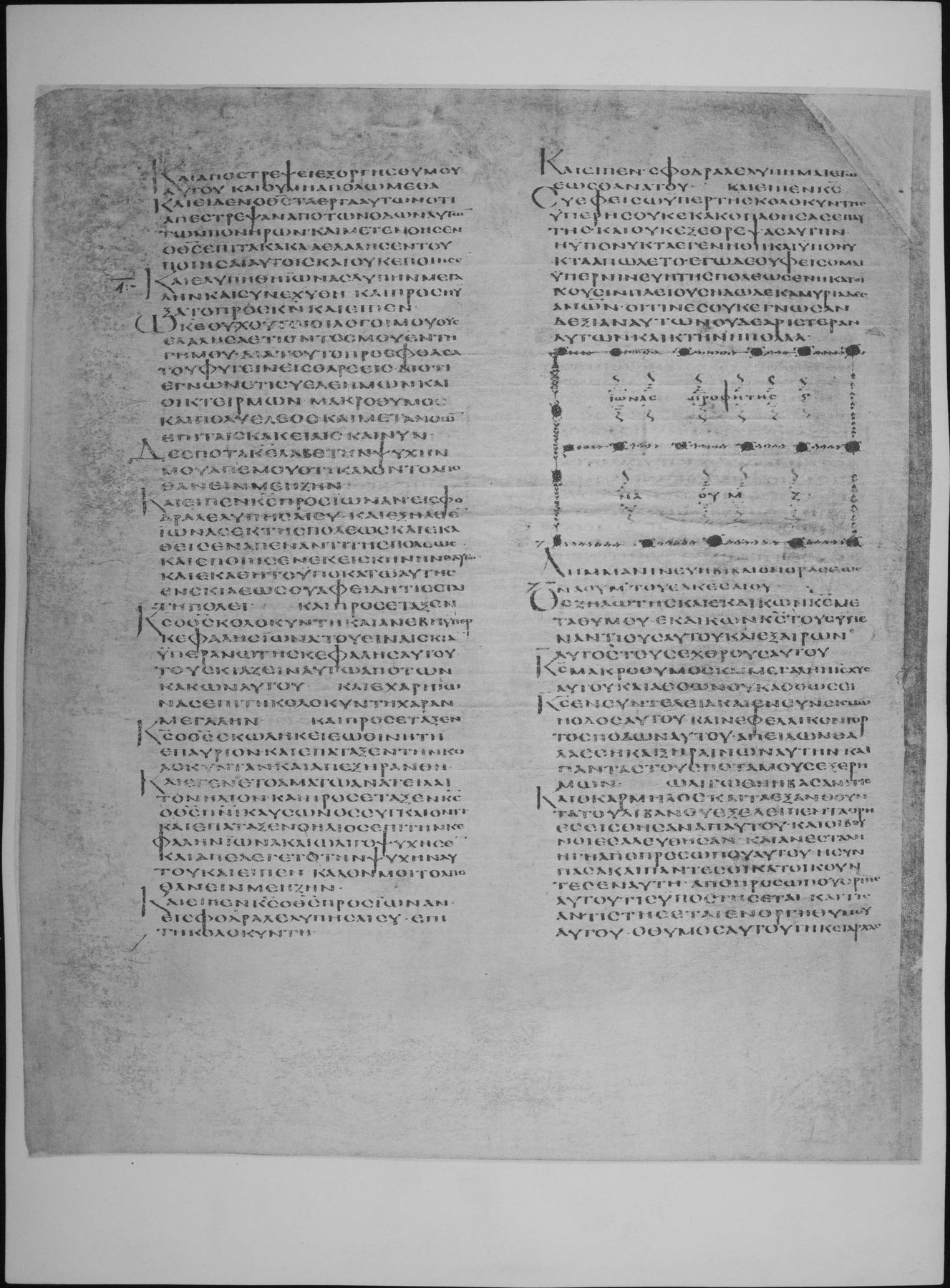
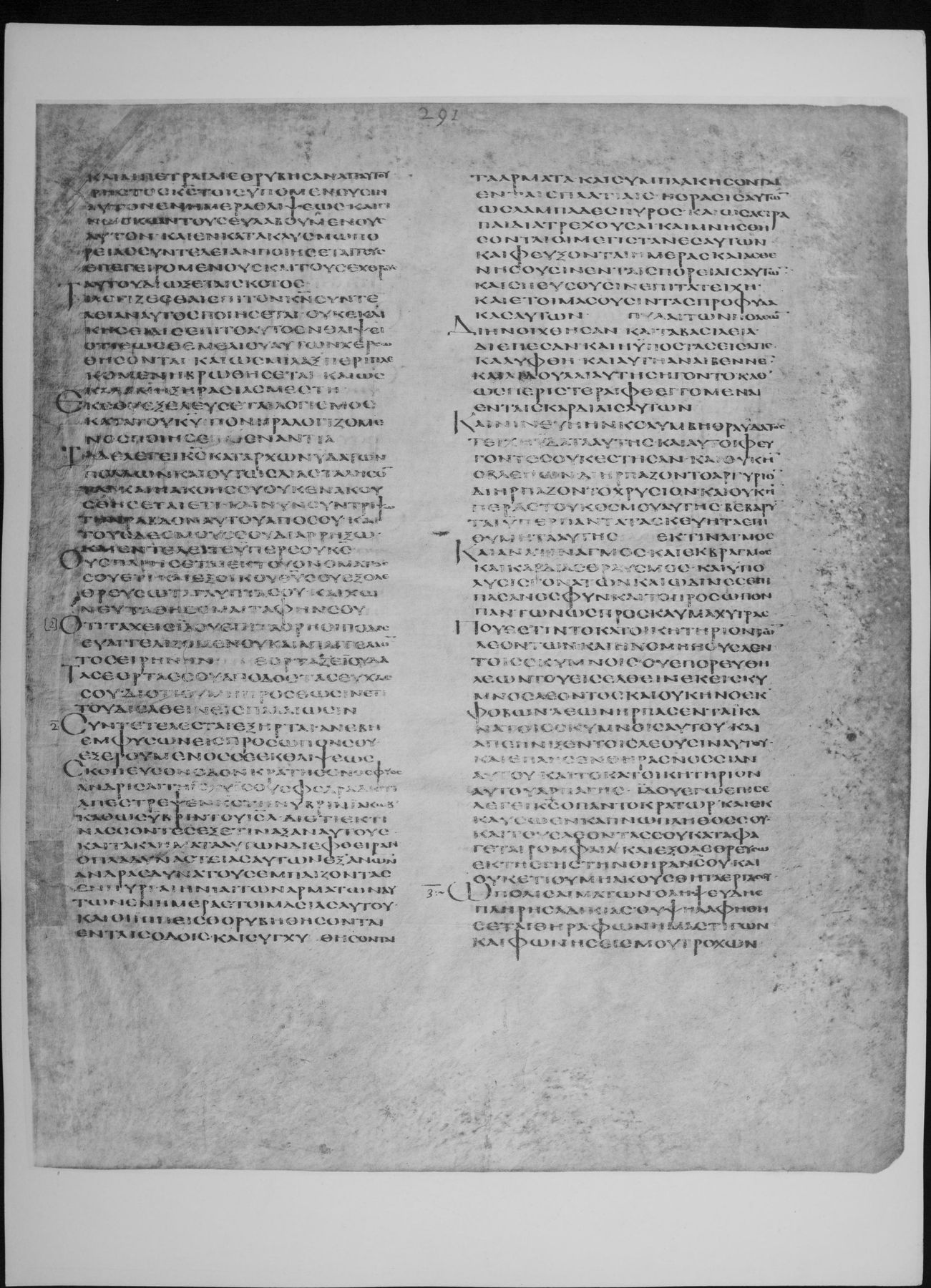
Nahum 1 in the Greek Old Testament (the Septuagint) as written in Codex Alexandrinus, a Greek Bible copied in the fifth century, probably in Egypt, and now in the British Library (Royal MS 1 D. VI, the second of its four volumes). It is one of the three great early codices of the whole Greek Bible, with Codex Vaticanus and Codex Sinaiticus.
Numbering: Swete's Greek and Brenton's English number or divide some verses of this chapter differently (Swete 1:15 = Brenton 2:1). Each column keeps its own verse numbers, and sections are cut only where the two texts agree, so each section holds the same passage in both languages.
This entry meets the strict three-criteria standard of the Theosis Library:
- Manuscript scan: the pages of Codex Alexandrinus carrying this chapter (fol. 290v, fol. 291r), from the full-size photographic (autotype) facsimile published by the British Museum in 1879-1883, as digitised on the Internet Archive. The verse range of every page comes from the reduced photographic facsimile of 1936, which prints it beneath each plate, and the opening words of every page were read on the plate to confirm the page and the verse it begins with. Each section links to the page or pages that hold its verses. Folio numbers are those written at the head of each leaf and visible on the plates.
- Original text: Swete's edition, which here prints the text of Codex Vaticanus (Vat. gr. 1209), the base of his edition, and gives the readings of Alexandrinus only in his apparatus. The Greek column is therefore Vaticanus' text; where Alexandrinus differs, the plate shows what Alexandrinus reads.
- English translation: Sir Lancelot C. L. Brenton, The Septuagint Version of the Old Testament (1844; 1851 edition), a translation of the Greek, public domain, from the eBible.org text.
How was this verified? (Provenance)
Where on the image
Nahum 1:1-6 is on fol. 290v (full-size facsimile of 1879-83, Internet Archive codex-alexandrinus leaf 605). The 1936 reduced facsimile prints beneath this page: Jonah iii. 9-iv. 11, Nahum i. 1-6. Checked on the plate: the page begins inside Jon 3:9 (first words read: ΚΑΙ ΑΠΟΣΤΡΕΨΕΙ ΕΞ ΟΡΓΗΣ ΘΥΜΟΥ ΑΥΤΟΥ ΚΑΙ ΟΥ ΜΗ ΑΠΟΛΩΜΕΘΑ ΚΑΙ ΕΙΔΕΝ Ο ΘΣ ΤΑ ΕΡΓΑ ΑΥΤΩΝ). Nahum 1:6-8 is on fol. 291r (full-size facsimile of 1879-83, Internet Archive codex-alexandrinus leaf 606). The 1936 reduced facsimile prints beneath this page: Nahum i. 6-iii. 2. Checked on the plate: the page begins inside Nahum 1:6 (first words read: ΚΑΙ ΑΙ ΠΕΤΡΑΙ ΔΙΕΘΡΥΒΗΣΑΝ ΑΠ ΑΥΤΟΥ ΧΡΗΣΤΟΣ ΚΣ ΤΟΙΣ ΥΠΟΜΕΝΟΥΣΙΝ ΑΥΤΟΝ).
1ΛΗΜΜΑ Νινευή, βιβλίον ὁράσεως Ναοὺμ τοῦ Ἐλκεσαίου. 2Θεὸς ζηλωτὴς καὶ ἐκδικῶν Κύριος μετὰ θυμοῦ, ἐκδικῶν Κύριος τοὺς ὑπεναντίους αὐτοῦ, καὶ ἐξαίρων αὐτὸς τοὺς ἐχθροὺς αὐτοῦ. 3Κύριος μακρόθυμος, καὶ μεγάλη ἡ ἰσχὺς αὐτοῦ, καὶ ἀθῷον οὐκ ἀθῳώσει Κύριος· ἐν συντελείᾳ καὶ ἐν συνσεισμῷ ἡ ὁδὸς αὐτοῦ, καὶ νεφέλαι κονιορτὸς ποδῶν αὐτοῦ· 4ἀπειλῶν θαλάσσῃ καὶ ξηραίνων αὐτήν, καὶ πάντας τοὺς ποταμοὺς ἐξερημῶν. ὀλιγώθη ἡ Βασανῖτις καὶ ὁ Κάρμηλος, καὶ τὰ ἐξανθοῦντα τοῦ Λιβάνου ἐξέλιπεν· 5τὰ ὄρη ἐσείσθησαν ἀπ᾽ αὐτοῦ, καὶ οἱ βουνοὶ ἐσαλεύθησαν· καὶ ἀνεστάλη ἡ γῆ ἀπὸ προσώπου αὐτοῦ, ἡ σύμπασα, καὶ πάντες οἱ κατοικοῦντες ἐν αὐτῇ. 6ἀπὸ προσώπου ὀργῆς αὐτοῦ τίς ὑποστήσεται; καὶ τίς ἀντιστήσεται ἐν ὀργῇ θυμοῦ αὐτοῦ; ὁ θυμὸς αὐτοῦ τήκει ἀρχάς, καὶ αἱ πέτραι διεθρύβησαν ἀπ᾽ αὐτοῦ. 7χρηστὸς Κύριος τοῖς ὑπομένουσιν αὐτὸν ἐν ἡμέρᾳ θλίψεως, καὶ γινώσκων τοὺς εὐλαβουμένους αὐτόν. 8καὶ ἐν κατακλυσμῷ πορείας συντέλειαν ποιήσεται, τοὺς ἐπεγειρομένους καὶ τοὺς ἐχθροὺς αὐτοῦ διώξεται σκότος.
1The burden of Nineve: the book of the vision of Naum the Elkesite. 2God is jealous, and the Lord avenges; the Lord avenges with wrath; the Lord takes vengeance on his adversaries, and he cuts off his enemies. 3The Lord is long-suffering, and his power is great, and the Lord will not hold any guiltless: his way is in destruction and in the whirlwind, and the clouds are the dust of his feet. 4He threatens the sea, and dries it up, and exhausts all the rivers: the land of Basan, and Carmel are brought low, and the flourishing trees of Libanus have come to nought. 5The mountains quake at him, and the hills are shaken, and the earth recoils at his presence, even the world, and all that dwell in it. 6Who shall stand before his anger? and who shall withstand in the anger of his wrath? his wrath brings to nought kingdoms, and the rocks are burst asunder by him. 7The Lord is good to them that wait on him in the day of affliction; and he knows them that reverence him. 8But with an overrunning flood he will make an utter end: darkness shall pursue those that rise up against him and his enemies.
Where on the image
Nahum 1:9-15 is on fol. 291r (full-size facsimile of 1879-83, Internet Archive codex-alexandrinus leaf 606). The 1936 reduced facsimile prints beneath this page: Nahum i. 6-iii. 2. Checked on the plate: the page begins inside Nahum 1:6 (first words read: ΚΑΙ ΑΙ ΠΕΤΡΑΙ ΔΙΕΘΡΥΒΗΣΑΝ ΑΠ ΑΥΤΟΥ ΧΡΗΣΤΟΣ ΚΣ ΤΟΙΣ ΥΠΟΜΕΝΟΥΣΙΝ ΑΥΤΟΝ).
9τί λογίζεσθε ἐπὶ τὸν κύριον; συντέλειαν αὐτὸς ποιήσεται, οὐκ ἐκδικήσει δὶς ἐπὶ τὸ αὐτὸ ἐν θλίψει· 10ὅτι ἕως θεμελίου αὐτοῦ χερσωθήσεται, καὶ ὡς σμῖλαξ περιπλεκομένη βρωθήσεται, καὶ ὡς καλάμη ξηρασίας μεστή. 11ἐκ σοῦ ἐξελεύσεται λογισμὸς κατὰ τοῦ κυρίου, πονηρὰ βουλευόμενος ἐναντία. 12τάδε λέγει Κύριος κατάρχων ὑδάτων πολλῶν Καὶ οὕτως διασταλήσονται, καὶ ἡ ἀκοή σου οὐκ ἐνακουσθήσεται ἔτι. 13καὶ νῦν συντρίψω τὴν ῥάβδον αὐτοῦ ἀπὸ σοῦ, καὶ τοὺς δεσμοὺς διαρήξω· 14καὶ ἐντελεῖται ὑπὲρ σοῦ Κύριος, οὐ σπαρήσεται ἐκ τοῦ ὀνόματός σου ἔτι· ἐξ οἴκου θεοῦ σου ἐξολεθρεύσω τὰ γλυπτά, καὶ χωνευτὰ θήσομαι ταφήν σου. ὅτι ταχεῖς 15ἰδοὺ ἐπὶ τὰ ὄρη οἱ πόδες εὐαγγελιζομένου καὶ ἀπαγγέλλοντος εἰρήνην· ἑόρταζε, Ἰούδα, τὰς ἑορτάς σου, ἀπόδος τὰς εὐχάς σου, διότι οὐ μὴ προσθήσωσιν ἔτι τοῦ διελθεῖν διὰ σοῦ εἰς παλαίωσιν.
9What do ye devise against the Lord? he will make a complete end: he will not take vengeance by affliction twice at the same time. 10For the enemy shall be laid bare even to the foundation, and shall be devoured as twisted yew, and as stubble fully dry. 11Out of thee shall proceed a device against the Lord, counselling evil things hostile to him. 12Thus saith the Lord who rules over many waters, Even thus shall they be sent away, and the report of thee shall not be heard any more. 13And now will I break his rod from off thee, and will burst thy bonds. 14And the Lord shall give a command concerning thee; there shall no more of thy name be scattered: I will utterly destroy the graven images out of the house of thy god, and the molten images: I will make thy grave; for they are swift. 2:1Behold upon the mountains the feet of him that brings glad tidings, and publishes peace! O Juda, keep thy feasts, pay thy vows: for they shall no more pass through thee to thy decay.
Cite
Sources
- Source: Codex Alexandrinus (British Library Royal MS 1 D. VI) via the British Museum photographic facsimiles of 1879-83 and 1936 (Internet Archive) + Swete's Septuagint + Brenton's English (holding institution)
- Critical edition: H. B. Swete, The Old Testament in Greek according to the Septuagint (1909)
← previous · → next · v cycle view · l back to library