Joshua, Chapter 14 (Codex Alexandrinus)
Introduction
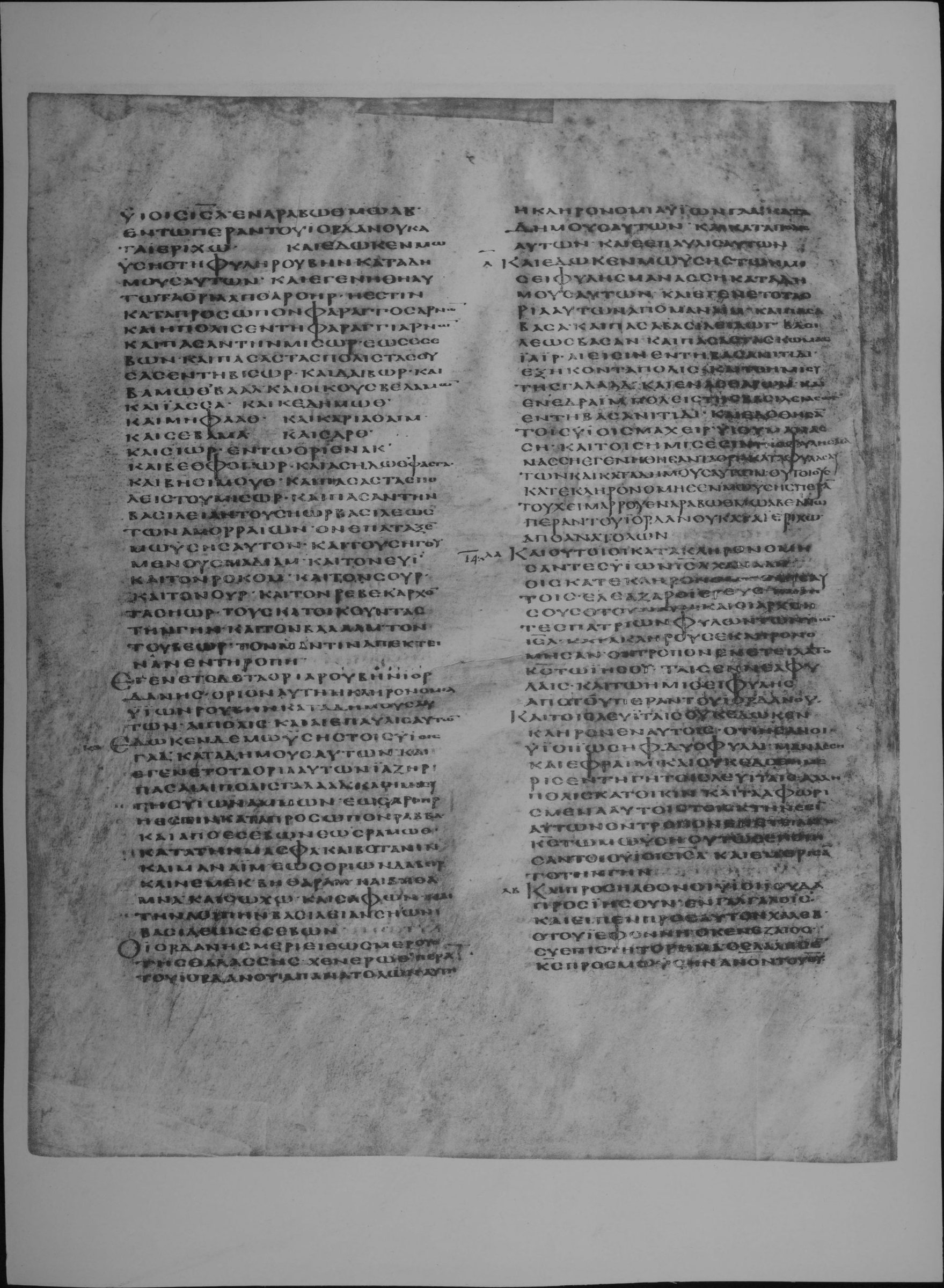
Joshua 14 in the Greek Old Testament (the Septuagint) as written in Codex Alexandrinus, a Greek Bible copied in the fifth century, probably in Egypt, and now in the British Library (Royal MS 1 D. V, the first of its four volumes). It is one of the three great early codices of the whole Greek Bible, with Codex Vaticanus and Codex Sinaiticus, and for Genesis 1:1-46:28, which Codex Vaticanus has lost, it is the oldest surviving complete Greek text (older papyri such as the Berlin Genesis papyrus and Chester Beatty 961 survive only in part).
This entry meets the strict three-criteria standard of the Theosis Library:
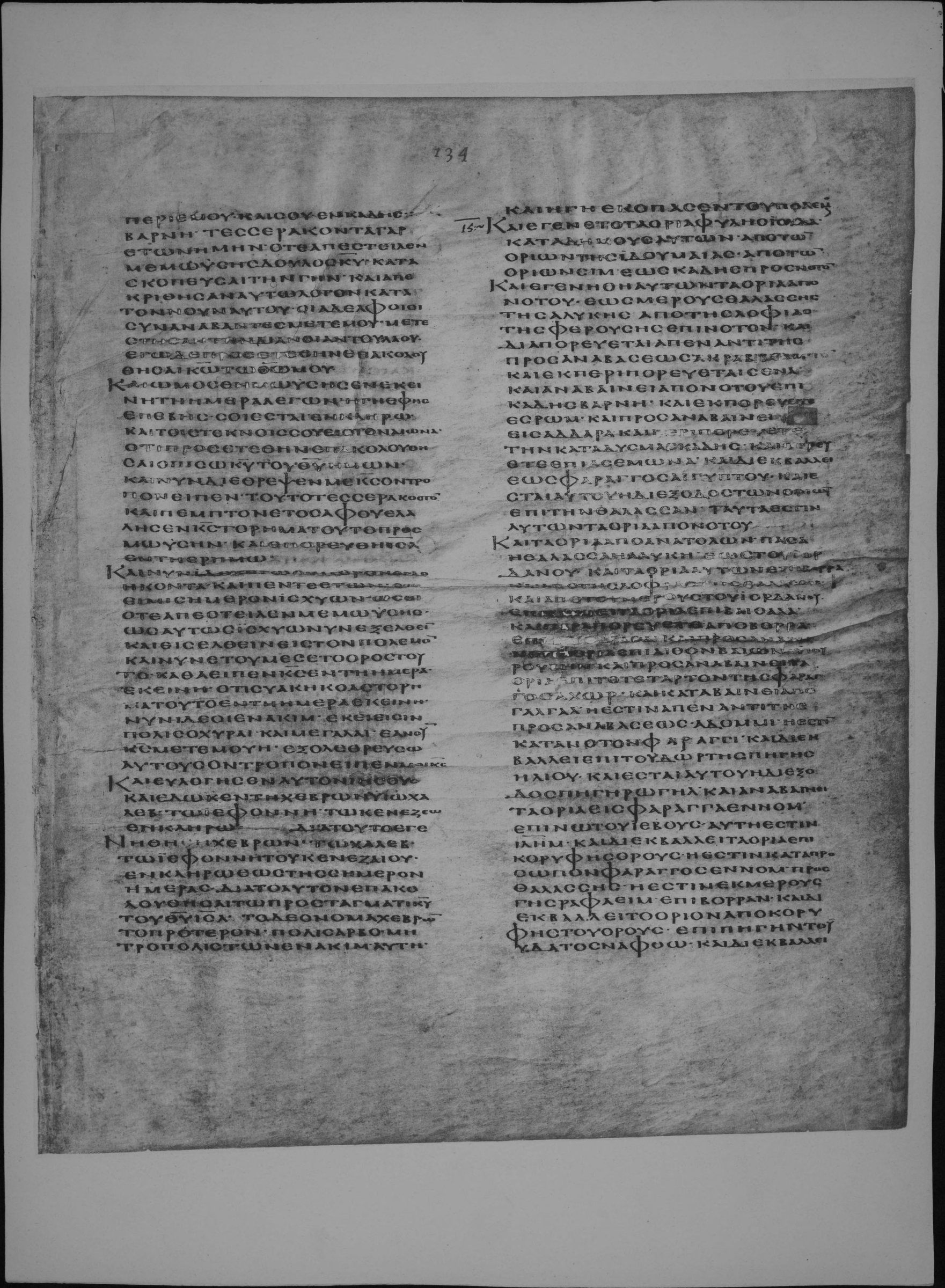
- Manuscript scan: the pages of Codex Alexandrinus carrying this chapter (fol. 133v, fol. 134r), from the full-size photographic (autotype) facsimile published by the British Museum in 1879-1883, as digitised on the Internet Archive. The verse range of every page comes from the reduced photographic facsimile of 1915, which prints it beneath each plate, and the opening words of every page were read on the plate to confirm the page and the verse it begins with. Each section links to the page or pages that hold its verses. Folio numbers are those written at the head of each leaf and visible on the plates.
- Original text: Swete's edition, which here prints the text of Codex Vaticanus (Vat. gr. 1209), the base of his edition, and gives the readings of Alexandrinus only in his apparatus. The Greek column is therefore Vaticanus' text; where Alexandrinus differs, the plate shows what Alexandrinus reads.
- English translation: Sir Lancelot C. L. Brenton, The Septuagint Version of the Old Testament (1844; 1851 edition), a translation of the Greek, public domain, from the eBible.org text.
How was this verified? (Provenance)
Where on the image
Joshua 14:1-6 is on fol. 133v (full-size facsimile of 1879-83, Internet Archive codex-alexandrinus leaf 287). The 1915 reduced facsimile prints beneath this page: Jos. xiii. 14-xiv. 6. Checked on the plate: the page begins inside Joshua 13:14 (first words read: ΥΙΟΙΣ ΙΣΡΑΗΛ ΕΝ ΑΡΑΒΩΘ ΜΩΑΒ ΕΝ ΤΩ ΠΕΡΑΝ ΤΟΥ ΙΟΡΔΑΝΟΥ ΙΕΡΙΧΩ ΚΑΙ ΕΔΩΚΕΝ ΜΩΥΣΗΣ ΤΗ ΦΥΛΗ ΡΟΥΒΗΝ). Joshua 14:6-8 is on fol. 134r (full-size facsimile of 1879-83, Internet Archive codex-alexandrinus leaf 288). The 1915 reduced facsimile prints beneath this page: Jos. xiv. 6-xv. 9. Checked on the plate: the page begins inside Joshua 14:6 (first words read: ΠΕΡΙ ΕΜΟΥ ΚΑΙ ΣΟΥ ΕΝ ΚΑΔΗΣ ΒΑΡΝΗ ΤΕΣΣΕΡΑΚΟΝΤΑ ΓΑΡ ΕΤΩΝ ΗΜΗΝ ΟΤΕ ΑΠΕΣΤΕΙΛΕΝ ΜΕ ΜΩΥΣΗΣ).
1Καὶ οὗτοι οἱ κατακληρονομήσαντες υἱῶν Ἰσραὴλ ἐν τῇ γῇ Χανάαν, οἷς κατεκληρονόμησεν αὐτοῖς Ἐλεαζὰρ ὁ ἱερεὺς καὶ Ἰησοῦς ὁ τοῦ Ναυὴ καὶ οἱ ἄρχοντες πατριῶν φυλῶν τῶν υἱῶν Ἰσραήλ. 2κατὰ κλήρους ἐκληρονόμησαν, ὃν τρόπον ἐνετείλατο Κύριος ἐν χειρὶ Ἰησοῦ ταῖς ἐννέα φυλαῖς καὶ τῷ ἡμίσει φυλῆς, 3ἀπὸ τοῦ πέραν τοῦ Ἰορδάνου. καὶ τοῖς Λευείταις οὐκ ἔδωκεν κλῆρον ἐν αὐτοῖς, 4ὅτι ἦσαν οἱ υἱοὶ Ἰωσὴφ δύο φυλαὶ Μανασσὴ καὶ Ἐφράιμ· καὶ οὐκ ἐδόθη μερὶς ἐν τῇ γῇ τοῖς Λευείταις, ἀλλ᾽ ἤ πόλεις κατοικεῖν καὶ τὰ ἀφωρισμένα αὐτῶν τοῖς κτήνεσιν καὶ τὰ κτήνη αὐτῶν. 5ὅν τρόπον ἐνετείλατο Κύριος τῷ Μωυσῇ, οὕτως ἐποίησαν οἱ υἱοὶ Ἰσραήλ, καὶ ἐμέρισαν τὴν γῆν. 6Καὶ προσήλθοσαν οἱ υἱοὶ Ἰούδα πρὸς Ἰησοῦν ἐν Γαλγάλ, καὶ εἶπεν πρὸς αὐτὸν Χαλὲβ ὁ τοῦ Ἰεφοννὴ ὁ Κενεζαῖος Σὺ ἐπίστῃ τὸ ῥῆμα ὅ ἐλάλησεν Κύριος πρὸς Μωυσῆν ἄνθρωπον τοῦ θεοῦ περὶ ἐμοῦ καὶ σοῦ ἐν Καδὴς Βαρνή. 7τεσσεράκοντα γὰρ ἐτῶν ἤμην ὅτε ἀπέστειλέν με Μωυσῆς ὁ παῖς τοῦ θεοῦ ἐκ Καδὴς Βαρνὴ κατασκοπεῦσαι τὴν γῆν, καὶ ἀπεκρίθην αὐτῷ λόγον κατὰ τὸν νοῦν αὐτοῦ. 8οἱ δὲ ἀδελφοί μου οἱ ἀναβάντες μετ᾽ ἐμοῦ μετέστησαν τὴν καρδίαν τοῦ λαοῦ, ἐγὼ δὲ προσέθην ἐπακολουθῆσαι Κυρίῳ τῷ θεῷ μου.
1And these are they of the children of Israel that received their inheritance in the land of Chanaan, to whom Eleazar the priest, and Joshua the son of Naue, and the heads of the families of the tribes of the children of Israel, gave inheritance. 2They inherited according to their lots, as the Lord commanded by the hand of Joshua to the nine tribes and the half tribe, on the other side of Jordan. 3But to the Levites he gave no inheritance among them. 4For the sons of Joseph were two tribes, Manasse and Ephraim; and there was none inheritance in the land given to the Levites, only cities to dwell in, and their suburbs separated for the cattle, and their cattle. 5As the Lord commanded Moses, so did the children of Israel; and they divided the land. 6And the children of Juda came to Joshua in Galgal, and Chaleb the son of Jephone the Kenezite said to him, Thou knowest the word that the Lord spoke to Moses the man of God concerning me and thee in Cades Barne. 7For I was forty years old when Moses the servant of God sent me out of Cades Barne to spy out the land; and I returned him an answer according to his mind. 8My brethren that went up with me turned away the heart of the people, but I applied myself to follow the Lord my God.
Where on the image
Joshua 14:9-15 is on fol. 134r (full-size facsimile of 1879-83, Internet Archive codex-alexandrinus leaf 288). The 1915 reduced facsimile prints beneath this page: Jos. xiv. 6-xv. 9. Checked on the plate: the page begins inside Joshua 14:6 (first words read: ΠΕΡΙ ΕΜΟΥ ΚΑΙ ΣΟΥ ΕΝ ΚΑΔΗΣ ΒΑΡΝΗ ΤΕΣΣΕΡΑΚΟΝΤΑ ΓΑΡ ΕΤΩΝ ΗΜΗΝ ΟΤΕ ΑΠΕΣΤΕΙΛΕΝ ΜΕ ΜΩΥΣΗΣ).
9καὶ ὤμοσεν Μωυσῆς ἐν ἐκείνῃ τῇ ἡμέρᾳ λέγων Ἡ γῆ ἐφ᾽ ἣν ἐπέβης σοὶ ἔσται ἐν κλήρῳ καὶ τοῖς τέκνοις σου εἰς τὸν αἰῶνα, ὅτι προσετέθης ἐπακολουθῆσαι ὀπίσω Κυρίου τοῦ θεοῦ ἡμῶν. 10καὶ νῦν διέθρεψέν με Κύριος ὃν τρόπον εἶπεν τοῦτο τεσσερακοστὸν καὶ πέμπτον ἔτος ἀφ᾽ οὗ ἐλάλησεν Κύριος τὸ ῥῆμα τοῦτο πρὸς Μωυσῆν, καὶ ἐπορεύθη Ἰσραὴλ ἐν τῇ ἐρήμῳ. καὶ νῦν ἰδοὺ ἐγὼ σήμερον ὀγδοήκοντα καὶ πέντε ἐτῶν· 11ἔτι εἰμὶ σήμερον ἰσχύων ὡσεὶ ὅτε ἀπέστειλέν με Μωυσῆς, ὡσαύτως ἰσχύω νῦν εἰσελθεῖν καὶ ἐξελθεῖν εἰς τὸν πόλεμον. 12καὶ νῦν αἰτοῦμαί σε τὸ ὄρος τοῦτο, καθὰ εἶπεν Κύριος τῇ ἡμέρᾳ ἐκείνῃ· ὅτι σὺ ἀκήκοας τὸ ῥῆμα τοῦτο τῇ ἡμέρᾳ ἐκείνῃ. νυνὶ δὲ οἱ Ἐνακεὶμ ἐκεῖ εἰσιν, πόλεις ὀχυραὶ καὶ μεγάλαι· ἐὰν οὖν Κύριος μετ᾽ ἐμοῦ ᾖ, ἐξολεθρεύσω αὐτοὺς ὃν τρόπον εἶπέν μοι Κύριος. 13καὶ εὐλόγησεν αὐτὸν Ἰησοῦς, καὶ ἔδωκεν Χεβρὼν τῷ Χαλὲβ υἱῷ Ἰεφοννὴ υἱῷ Κενὲζ ἐν κλήρῳ. 14διὰ τοῦτο ἐγενήθη ἡ Χεβρὼν τῷ Χαλὲβ τῷ τοῦ Ἰεφοννὴ τοῦ Κενεζαίου ἐν κλήρῳ ἕως τῆς ἡμέρας ταύτης, διὰ τὸ αὐτὸν ἐπακολουθῆσαι τῷ προστάγματι. Κυρίου θεοῦ Ἰσραήλ. 15τὸ δὲ ὄνομα τῆς Χεβρὼν ἦν τὸ πρότερον πόλις Ἀργόβ· μητρόπολις τῶν Ἐνακεὶμ αὕτη. καὶ ἡ γῆ ἐκόπασεν τοῦ πολέμου.
9And Moses sware on that day, saying, The land on which thou art gone up, it shall be thy inheritance and thy children's for ever, because thou hast applied thyself to follow the Lord our God. 10And now the Lord has kept me alive as he said: this is the forty-fifth year since the Lord spoke that word to Moses; and Israel journeyed in the wilderness; and now, behold, I am this day eighty-five years old. 11I am still strong this day, as when the Lord sent me: just so strong am I now to go out and to come in for war. 12And now I ask of thee this mountain, as the Lord said in that day; for thou heardest this word on that day; and now the Enakim are there, cities great and strong: if then the Lord should be with me, I will utterly destroy them, as the Lord said to me. 13And Joshua blessed him, and gave Chebron to Chaleb the son of Jephone the son of Kenez for an inheritance. 14Therefore Chebron became the inheritance of Chaleb the son of Jephone the Kenezite until this day, because he followed the commandment of the Lord God of Israel. 15And the name of Chebron before was the city Argob, it is the metropolis of the Enakim: and the land rested from war.
Cite
Sources
- Source: Codex Alexandrinus (British Library Royal MS 1 D. V) via the British Museum photographic facsimiles of 1879-83 and 1915 (Internet Archive) + Swete's Septuagint + Brenton's English (holding institution)
- Critical edition: H. B. Swete, The Old Testament in Greek according to the Septuagint (1909)
← previous · → next · v cycle view · l back to library