Judith, Chapter 4 (Codex Alexandrinus)
Introduction
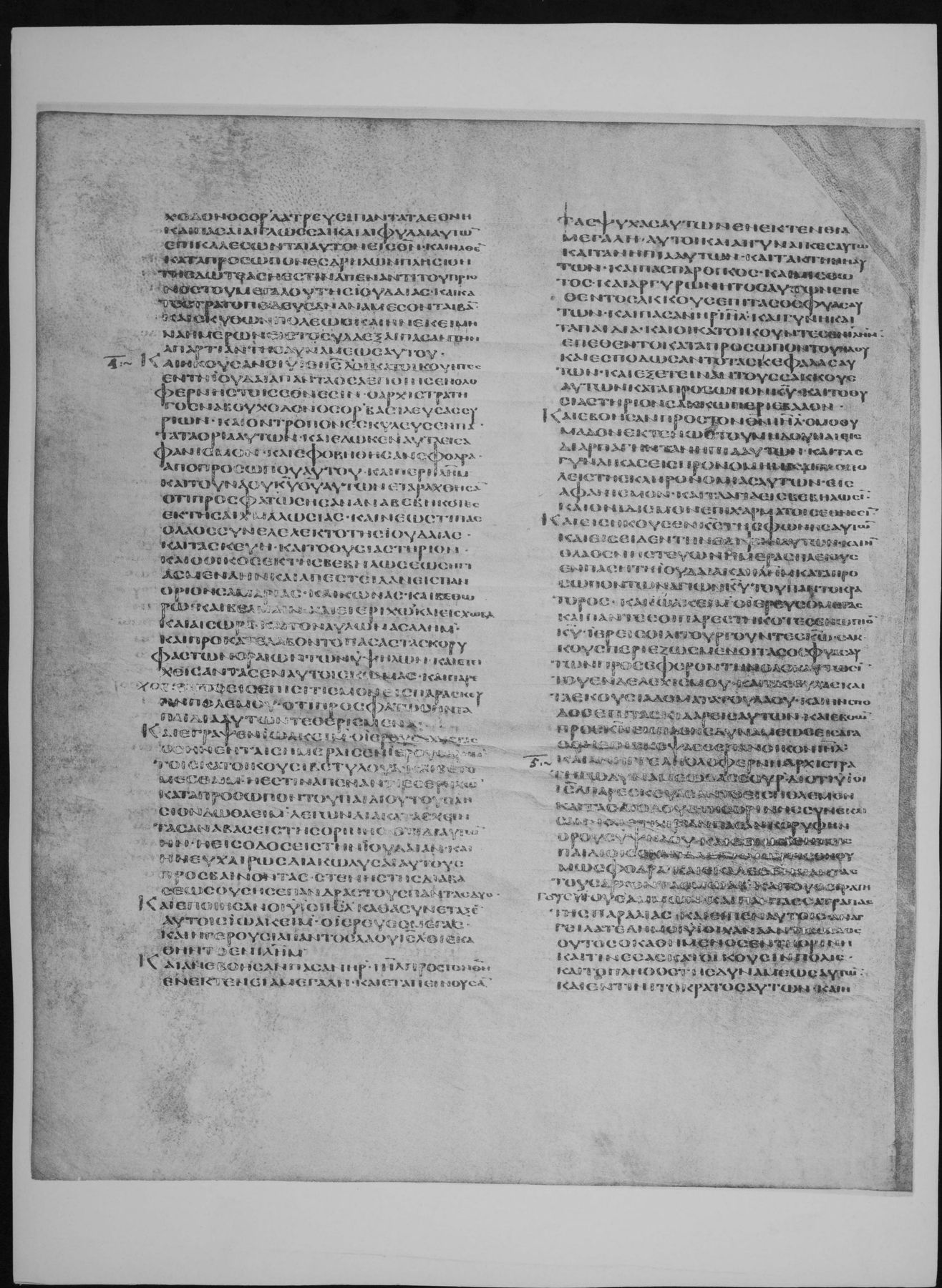
Judith 4 in the Greek Old Testament (the Septuagint) as written in Codex Alexandrinus, a Greek Bible copied in the fifth century, probably in Egypt, and now in the British Library (Royal MS 1 D. VI, the second of its four volumes). It is one of the three great early codices of the whole Greek Bible, with Codex Vaticanus and Codex Sinaiticus.
This entry meets the strict three-criteria standard of the Theosis Library:
- Manuscript scan: the page of Codex Alexandrinus carrying this chapter (fol. 430v), from the full-size photographic (autotype) facsimile published by the British Museum in 1879-1883, as digitised on the Internet Archive. The verse range of every page comes from the reduced photographic facsimile of 1936, which prints it beneath each plate, and the opening words of every page were read on the plate to confirm the page and the verse it begins with. Each section links to the page or pages that hold its verses. Folio numbers are those written at the head of each leaf and visible on the plates.
- Original text: Swete's edition, which here prints the text of Codex Vaticanus (Vat. gr. 1209), the base of his edition, and gives the readings of Alexandrinus only in his apparatus. The Greek column is therefore Vaticanus' text; where Alexandrinus differs, the plate shows what Alexandrinus reads.
- English translation: Sir Lancelot C. L. Brenton, The Septuagint Version of the Old Testament (1844; 1851 edition), a translation of the Greek, public domain, from the eBible.org text.
How was this verified? (Provenance)
Where on the image
Judith 4:1-8 is on fol. 430v (full-size facsimile of 1879-83, Internet Archive codex-alexandrinus leaf 885). The 1936 reduced facsimile prints beneath this page: Judith iii. 8-v. 3. Checked on the plate: the page begins inside Judith 3:8 (first words read: ΧΟΔΟΝΟΣΟΡ ΛΑΤΡΕΥΣΙ ΠΑΝΤΑ ΤΑ ΕΘΝΗ ΚΑΙ ΠΑΣΑΙ ΑΙ ΓΛΩΣΣΑΙ ΚΑΙ ΑΙ ΦΥΛΑΙ ΑΥΤΩΝ).
1Καὶ ἤκουσαν οἱ υἱοὶ Ἰσραὴλ οἱ κατοικοῦντες ἐν τῇ Ἰουδαίᾳ πάντα ὅσα ἐποίησεν Ὀλοφέρνης τοῖς ἔθνεσιν, ὁ ἀρχιστράτηγος Ναβουχοδονοσὸρ βασιλέως Ἀσσυρίων, καὶ ὃν τρόπον ἐσκύλευσεν πάντα τὰ ἱερὰ αὐτῶν καὶ ἔδωκεν αὐτὰ εἰς ἀφανισμόν· 2καὶ ἐφοβήθησαν σφόδρα σφόδρα ἀπὸ προσώπου αὐτοῦ, καὶ περὶ Ἰερουσαλὴμ καὶ τοῦ ναοῦ Κυρίου θεοῦ αὐτῶν ἐταράχθησαν. 3ὅτι προσφάτως ἦσαν ἀναβεβηκότες ἐκ τῆς αἰχμαλωσίας, καὶ νεωστὶ πᾶς ὁ λαὸς συνελέλεκτο τῆς Ἰουδαίας, καὶ τὰ σκεύη καὶ τὸ θυσιαστήριον καὶ ὁ οἶκος ἐκ τῆς βεβηλώσεως ἡγιασμένα ἦν. 4καὶ ἀπέστειλαν εἰς πᾶν ὅριον Σαμαρίας καὶ Κωνὰ καὶ Βαιθωρὼν καὶ Βαιλμάιν καὶ Ἰερειχὼ καὶ εἰς Χωβὰ καὶ Αἱσωρὰ καὶ τὸν αὐλῶνα Σαλήμ, 5καὶ προκατελάβοντο πάσας τὰς κορυφὰς τῶν ὀρέων τῶν ὑψηλῶν, καὶ ἐτειχίσαντο τὰς ἐν αὐτοῖς κώμας, καὶ παρέθεντο εἰς ἐπισιτισμὸν εἰς παρασκευὴν πολέμου, ὅτι προσφάτως ἦν τὰ πεδία αὐτῶν τεθερισμένα. 6καὶ ἔγραψεν Ἰωακεὶμ ὁ ἱερεὺς ὁ μέγας, ὃς ἦν ἐν ταῖς ἡμέραις ἐν Ἰερουσαλήμ, τοῖς κατοικοῦσι Βαιτουλουὰ καὶ Βαιτομαισθάιμ, ἥ ἐστιν ἀπέναντι Ἐσρηλὼν κατὰ πρόσωπον τοῦ πεδίου τοῦ πλησίον Δωθάειμ, 7λέγων διακατασχεῖν τὰς ἀναβάσεις τῆς ὀρινῆς, ὅτι δι᾽ αὐτῶν ἦν ἡ εἴσοδος εἰς τὴν Ἰουδαίαν· καὶ ἦν εὐχερῶς διακωλῦσαι αὐτοὺς προσβαίνοντας, στενῆς τῆς προσβάσεως οὔσης, ἐπ᾽ ἄνδρας τοὺς πάντας δύο. 8καὶ ἐποίησαν οἱ υἱοὶ Ἰσραὴλ καθὰ συνέταξεν αὐτοῖς Ἰωακεὶμ ὁ ἱερεὺς ὁ μέγας καὶ ἡ γερουσία παντὸς δήμου Ἰσραὴλ οἳ ἐκάθηντο ἐν Ἰερουσαλήμ.
1Now the children of Israel, that dwelt in Judea, heard all that Holofernes the chief captain of Nabuchodonosor king of the Assyrians had done to the nations, and after what manner he had spoiled all their temples, and brought them to nought. 2Therefore they were exceedingly afraid of him, and were troubled for Jerusalem, and for the temple of the Lord their God: 3for they were newly returned from the captivity, and all the people of Judea were lately gathered together: and the vessels, and the altar, and the house, were sanctified after the profanation. 4Therefore they sent into all the coasts of Samaria, and the villages, and to Bethoron, and Belmen, and Jericho, and to Choba, and Esora, and to the valley of Salem: 5and possessed themselves beforehand of all the tops of the high mountains, and fortified the villages that were in them, and laid up victuals for the provision of war: for their fields were of late reaped. 6Also Joacim the high priest, which was in those days in Jerusalem, wrote to them that dwelt in Bethulia, and Betomestham, which is over against Esdraelon toward the open country, near to Dothaim, 7charging them to keep the passages of the hill country: for by them there was an entrance into Judea, and it was easy to stop them that would come up, because the passage was strait, for two men at the most. 8And the children of Israel did as Joacim the high priest had commanded them, with the ancients of all the people of Israel, which dwelt at Jerusalem.
Where on the image
Judith 4:9-15 is on fol. 430v (full-size facsimile of 1879-83, Internet Archive codex-alexandrinus leaf 885). The 1936 reduced facsimile prints beneath this page: Judith iii. 8-v. 3. Checked on the plate: the page begins inside Judith 3:8 (first words read: ΧΟΔΟΝΟΣΟΡ ΛΑΤΡΕΥΣΙ ΠΑΝΤΑ ΤΑ ΕΘΝΗ ΚΑΙ ΠΑΣΑΙ ΑΙ ΓΛΩΣΣΑΙ ΚΑΙ ΑΙ ΦΥΛΑΙ ΑΥΤΩΝ).
9Καὶ ἀνεβόησαν πᾶς ἀνὴρ Ἰσραὴλ πρὸς τὸν θεὸν ἐν ἐκτενείᾳ μεγάλῃ, καὶ ἐταπεινοῦσαν τὰς ψυχὰς αὐτῶν ἐν ἐκτενείᾳ μεγάλῃ, 10αὐτοὶ καὶ αἱ γυναῖκες αὐτῶν καὶ τὰ νήπια αὐτῶν καὶ τὰ κτήνη αὐτῶν· καὶ πᾶς πάροικος ἢ μισθωτὸς καὶ ἀργυρώνητος αὐτῶν ἐπέθεντο σάκκους ἐπὶ τὰς ὀσφύας αὐτῶν. 11καὶ πᾶς ἀνὴρ Ἰσραὴλ καὶ γυνὴ καὶ παιδία, οἱ κατοικοῦντες ἐν Ἰερουσαλήμ, ἔπεσον κατὰ πρόσωπον τοῦ ναοῦ, καὶ ἐσποδώσαντο τὰς κεφαλὰς αὐτῶν, καὶ ἐξέτειναν τοὺς σάκκους αὐτῶν κατὰ πρόσωπον Κυρίου, 12καὶ τὸ θυσιαστήριον σάκκῳ περιέβαλλον· καὶ ἐβόησαν πρὸς τὸν θεὸν Ἰσραὴλ ὁμοθυμαδὸν ἐκτενῶς, τοῦ μὴ δοῦναι εἰς διαρπαγὴν τὰ νήπια αὐτῶν καὶ τὰς γυναῖκας εἰς προνομὴν καὶ τὰς πόλεις τῆς κληρονομίας αὐτῶν εἰς ἀφανισμὸν καὶ τὰ ἅγια εἰς βεβήλωσιν καὶ ὀνειδισμόν, ἐπίχαρμα τοῖς ἔθνεσιν. 13καὶ εἰσήκουσεν Κύριος τῆς φωνῆς αὐτῶν καὶ ἐσεῖδεν τὴν θλίψιν αὐτῶν· καὶ ἦν ὁ λαὸς νηστεύων ἡμέρας πλείους ἐν πάσῃ τῇ Ἰουδαίᾳ καὶ Ἰερουσαλὴμ κατὰ πρόσωπον τῶν ἁγίων Κυρίου Παντοκράτορος. 14καὶ Ἰωακεὶμ ὁ ἱερεὺς ὁ μέγας καὶ πάντες οἱ παρεστηκότες ἐνώπιον Κυρίου ἱερεῖς, καὶ οἱ λειτουργοῦντες Κυρίῳ, σάκκους περιεζωσμένοι τὰς ὀσφύας αὐτῶν προσέφερον τὴν ὁλοκαύτωσιν τοῦ ἐνδελεχισμοῦ καὶ τὰς εὐχὰς καὶ τὰ ἑκούσια δόματα τοῦ λαοῦ, 15καὶ ἦν σποδὸς ἐπὶ τὰς κιδάρεις αὐτῶν· καὶ ἐβόων πρὸς Κύριον ἐκ πάσης δυνάμεως, εἰς ἀγαθὸν ἐπισκέψασθαι πᾶν οἶκον Ἰσραήλ.
9Then every man of Israel cried to God with great fervency, and with great vehemency did they humble their souls: 10both they, and their wives, and their children, and their cattle, and every stranger and hireling, and their servants bought with money, put sackcloth upon their loins. 11Thus every man and woman, and the little children, and the inhabitants of Jerusalem, fell before the temple, and cast ashes upon their heads, and spread out their sackcloth before the face of the Lord: also they put sackcloth about the altar, 12and cried to the God of Israel all with one consent earnestly, that he would not give their children for a prey, and their wives for a spoil, and the cities of their inheritance to destruction, and the sanctuary to profanation and reproach, and for the nations to rejoice at. 13So God heard their prayers, and looked upon their afflictions: for the people fasted many days in all Judea and Jerusalem before the sanctuary of the Lord Almighty. 14And Joacim the high priest, and all the priests that stood before the Lord, and they which ministered unto the Lord, had their loins girt with sackcloth, and offered the daily burnt offerings, with the vows and free gifts of the people, 15and had ashes on their mitres, and cried unto the Lord with all their power, that he would look upon all the house of Israel graciously.
Cite
Sources
- Source: Codex Alexandrinus (British Library Royal MS 1 D. VI) via the British Museum photographic facsimiles of 1879-83 and 1936 (Internet Archive) + Swete's Septuagint + Brenton's English (holding institution)
- Critical edition: H. B. Swete, The Old Testament in Greek according to the Septuagint (1909)
← previous · → next · v cycle view · l back to library