Micah, Chapter 6 (Codex Alexandrinus)
Introduction
Micah 6 in the Greek Old Testament (the Septuagint) as written in Codex Alexandrinus, a Greek Bible copied in the fifth century, probably in Egypt, and now in the British Library (Royal MS 1 D. VI, the second of its four volumes). It is one of the three great early codices of the whole Greek Bible, with Codex Vaticanus and Codex Sinaiticus.
This entry meets the strict three-criteria standard of the Theosis Library:
- Manuscript scan: the pages of Codex Alexandrinus carrying this chapter (fol. 286v, fol. 287r), from the full-size photographic (autotype) facsimile published by the British Museum in 1879-1883, as digitised on the Internet Archive. The verse range of every page comes from the reduced photographic facsimile of 1936, which prints it beneath each plate, and the opening words of every page were read on the plate to confirm the page and the verse it begins with. Each section links to the page or pages that hold its verses. Folio numbers are those written at the head of each leaf and visible on the plates.
- Original text: Swete's edition, which here prints the text of Codex Vaticanus (Vat. gr. 1209), the base of his edition, and gives the readings of Alexandrinus only in his apparatus. The Greek column is therefore Vaticanus' text; where Alexandrinus differs, the plate shows what Alexandrinus reads.
- English translation: Sir Lancelot C. L. Brenton, The Septuagint Version of the Old Testament (1844; 1851 edition), a translation of the Greek, public domain, from the eBible.org text.
How was this verified? (Provenance)
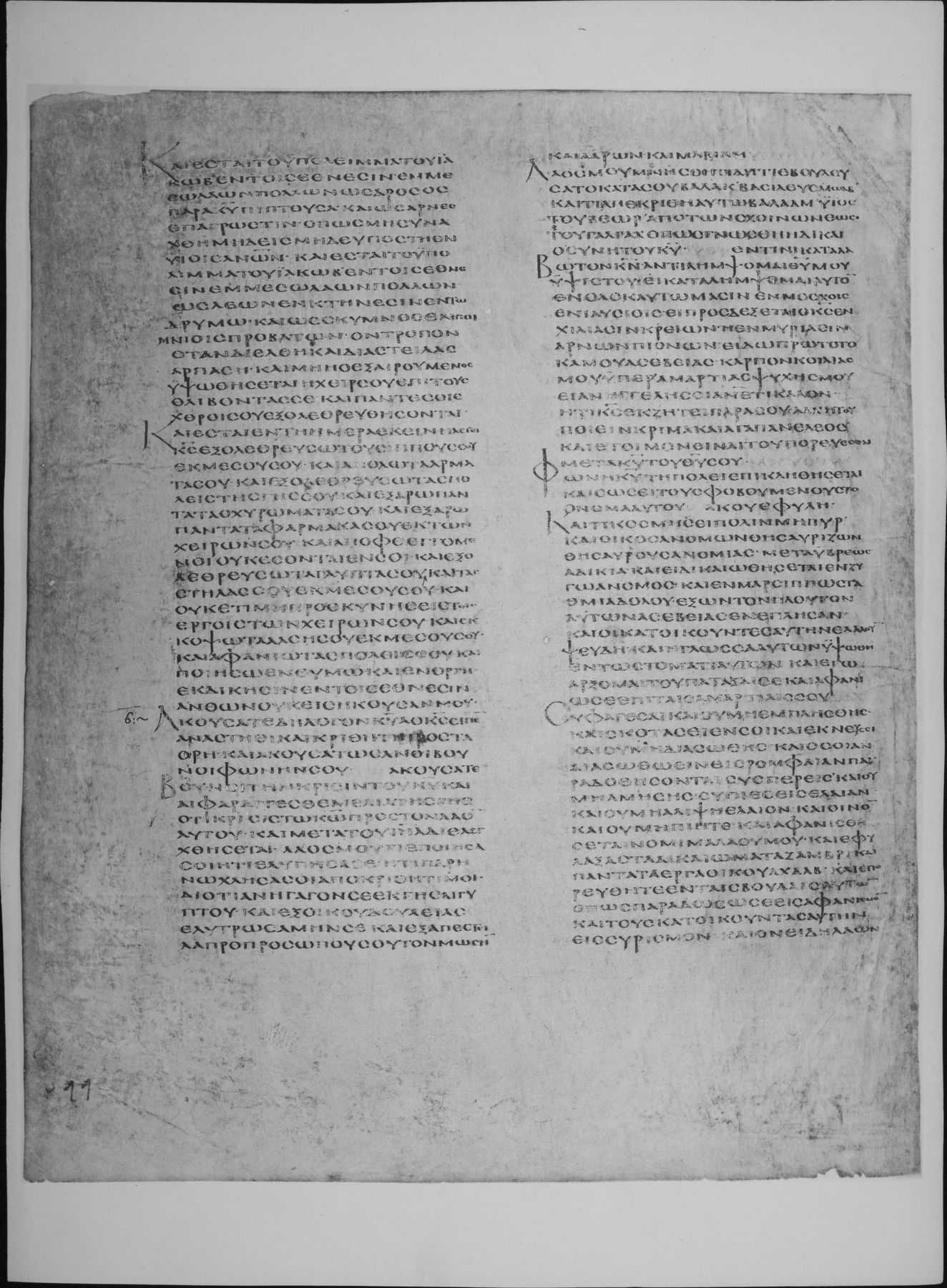
Where on the image
Micah 6:1-8 is on fol. 286v (full-size facsimile of 1879-83, Internet Archive codex-alexandrinus leaf 597). The 1936 reduced facsimile prints beneath this page: (caption not legible in the scan; range bounded by the captions of leaves 24 and 26). Checked on the plate: the page begins at the start of Micah 5:7 (first words read: ΚΑΙ ΕΣΤΑΙ ΤΟ ΥΠΟΛΕΙΜΜΑ ΤΟΥ ΙΑΚΩΒ ΕΝ ΤΟΙΣ ΕΘΝΕΣΙΝ ΕΝ ΜΕΣΩ ΛΑΩΝ ΠΟΛΛΩΝ ΩΣ ΔΡΟΣΟΣ ΠΑΡΑ ΚΥ).
1Ἀκούσατε δὴ λόγον. κύριος Κύριος εἶπεν Ἀνάστηθι κρίθητι πρὸς τὰ ὄρη, καὶ ἀκουσάτωσαν οἱ βουνοὶ φωνήν σου. 2ἀκούσατε, λαοί, τὴν κρίσιν τοῦ κυρίου, καὶ αἱ φάραγγες θεμέλια τῆς γῆς, ὅτι κρίσις τῷ κυρίῳ πρὸς τὸν λαὸν αὐτοῦ, καὶ μετὰ τοῦ Ἰσραὴλ διελεγχθήσεται. 3λαός μου, τί ἐποίησά σοι, ἢ τί ἐλύπησά σε, ἢ τί παρηνώχλησά σοι; ἀποκρίθητί μοι. 4διότι ἀνήγαγόν σε ἐκ γῆς Αἰγύπτου, καὶ ἐξ οἴκου δουλίας ἐλυτρωσάμην σε, καὶ ἐξαπέστειλα πρὸ προσώπου σου τὸν Μωσῆν καὶ Ἀαρὼν καὶ Μαριάμ. 5λαός μου, μνήσθητι δὴ τί ἐβουλεύσατο κατὰ σοῦ βαλὰκ βασιλεὺς Μωάβ, καὶ τί ἀπεκρίθη αὐτῷ Βαλαὰμ υἱὸς τοῦ Βεὼρ ἀπὸ τῶν σχοίνων ἕως τοῦ Γαλγάλ, ὅπως γνωσθῇ ἡ δικαιοσύνη τοῦ κυρίου. 6ἐν τίνι καταλάβω τὸν κύριον, ἀντιλήμψομαι θεοῦ μου Ὑψίστου; εἰ καταλήμψομαι αὐτὸν ἐν ὁλοκαυτώμασιν ἐν μόσχοις ἐνιαυσίοις; 7εἰ προσδέξεται Κύριος ἐν χιλιάσιν κριῶν ἢ ἐν μυριάσιν χειμάρρων πιόνων; εἰ δῶ πρωτότοκά μου ἀσεβείας, καρπὸν κοιλίας μου ὑπὲρ ἁμαρτίας ψυχῆς μου; 8εἰ ἀνηγγέλη σοι, ἄνθρωπε, τί καλόν; ἢ τί Κύριος ἐκζητεῖ παρὰ σοῦ ἀλλ᾽ ἢ τοῦ ποιεῖν κρίμα καὶ ἀγαπᾷν ἔλεον καὶ ἕτοιμον εἶναι τοῦ πορεύεσθαι μετὰ Κυρίου θεοῦ σου;
1Hear now a word: the Lord God has said; Arise, plead with the mountains, and let the hills hear thy voice. 2Hear ye, O mountains, the controversy of the Lord, and ye valleys even the foundations of the earth: for the Lord has a controversy with his people, and will plead with Israel. 3O my people, what have I done to thee? or wherein have I grieved thee? or wherein have I troubled thee? answer me. 4For I brought thee up out of the land of Egypt, and redeemed thee out of the house of bondage, and sent before thee Moses, and Aaron, and Mariam. 5O my people, remember now, what counsel Balac king of Moab took against thee, and what Balaam the son of Beor answered him, from the reeds to Galgal; that the righteousness of the Lord might be known. 6Wherewithal shall I reach the Lord, and lay hold of my God most high? shall I reach him by whole-burnt-offerings, by calves of a year old? 7Will the Lord accept thousands of rams, or ten thousands of fat goats? should I give my first-born for ungodliness, the fruit of my body for the sin of my soul? 8Has it not been told thee, O man, what is good? or what does the Lord require of thee, but to do justice, and love mercy, and be ready to walk with the Lord thy God?
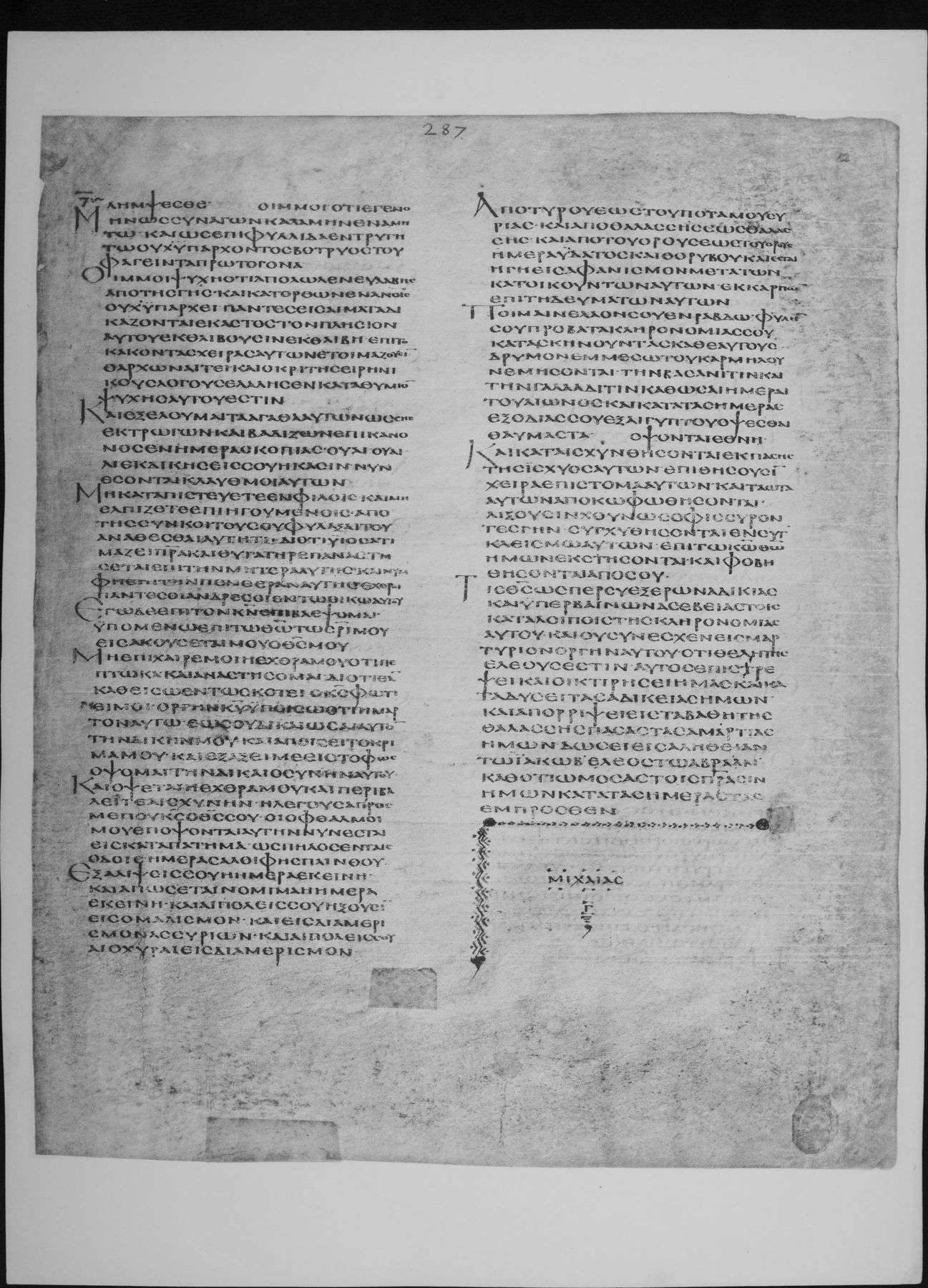
Where on the image
Micah 6:9-16 is on fol. 286v (full-size facsimile of 1879-83, Internet Archive codex-alexandrinus leaf 597). The 1936 reduced facsimile prints beneath this page: (caption not legible in the scan; range bounded by the captions of leaves 24 and 26). Checked on the plate: the page begins at the start of Micah 5:7 (first words read: ΚΑΙ ΕΣΤΑΙ ΤΟ ΥΠΟΛΕΙΜΜΑ ΤΟΥ ΙΑΚΩΒ ΕΝ ΤΟΙΣ ΕΘΝΕΣΙΝ ΕΝ ΜΕΣΩ ΛΑΩΝ ΠΟΛΛΩΝ ΩΣ ΔΡΟΣΟΣ ΠΑΡΑ ΚΥ). Micah 6:16 is on fol. 287r (full-size facsimile of 1879-83, Internet Archive codex-alexandrinus leaf 598). The 1936 reduced facsimile prints beneath this page: Mic. vi. 16-vii. 20. Checked on the plate: the page begins inside Micah 6:16 (first words read: ΛΗΜΨΕΣΘΕ ΟΙΜΜΟΙ ΟΤΙ ΕΓΕΝΟΜΗΝ ΩΣ ΣΥΝΑΓΩΝ ΚΑΛΑΜΗΝ ΕΝ ΑΜΗΤΩ).
9Φωνὴ Κυρίου τῇ πόλει ἐπικληθήσεται, καὶ σώσει φοβουμένους τὸ ὄνομα αὐτοῦ. ἄκουε, φυλή, καὶ τίς κοσμήσει πόλιν; 10μὴ πῦρ καὶ οἶκος ἀνόμου θησαυρίζων θησαυροὺς ἀνόμους, καὶ μετὰ ὕβρεως ἀδικία; 11εἰ δικαιωθήσεται ἐν ζυγῷ ἄνομος, καὶ ἐν μαρσίππῳ στάθμια δόλου; 12ἐξ ὧν τὸν πλοῦτον αὐτῶν ἀσεβείας ἔπλησαν, καὶ οἱ κατοικοῦντες αὐτὴν ἐλάλουν ψευδῆ, καὶ ἡ γλῶσσα αὐτῶν, ὑψώθητι ἐν τῷ στόματι αὐτῶν. 13καὶ ἐγὼ ἄρξομαι τοῦ πατάξαι σε, ἀφανιῶ σε ἐν ταῖς ἁμαρτίαις σου. 14σὺ φάγεσαι καὶ οὐ μὴ ἐμπλησθῇς, καὶ σκοτάσει ἐν σοὶ καὶ ἐκνεύσει, καὶ σὺ οὐ μὴ διασωθῇς, καὶ ὅσοι ἐὰν διασωθῶσιν εἰς ῥομφαίαν παραδοθήσονται· 15σὺ σπερεῖς καὶ οὐ μὴ ἀμήσῃς, σὺ πιέσεις ἐλαίαν καὶ οὐ μὴ ἀλείψῃ ἔλαιον, καὶ οἶνον καὶ οὐ μὴ πίητε, καὶ ἀφανισθήσεται νόμιμα λαοῦ μου. 16καὶ ἐφύλαξας τὰ δικαιώματα Ζαμβρεὶ καὶ πάντα τὰ ἔργα οἴκου Ἀχαάβ, καὶ ἐπορεύθητε ἐν ταῖς ὁδοῖς αὐτῶν, ὅπως παραδῶ σε εἰς ἀφανισμὸν καὶ τοὺς κατοικοῦντας αὐτὴν εἰς συρισμόν, καὶ ὀνείδη λαῶν λήψεσθε.
9The Lord's voice shall be proclaimed in the city, and he shall save those that fear his name: hear, O tribe; and who shall order the city? 10Is there not fire, and the house of the wicked heaping up wicked treasures, and that with the pride of unrighteousness? 11Shall the wicked be justified by the balance, or deceitful weights in the bag, 12whereby they have accumulated their ungodly wealth, and they that dwell in the city have uttered falsehoods, and their tongue has been exalted in their mouth? 13Therefore will I begin to smite thee; I will destroy thee in thy sins. 14Thou shalt eat, and shalt not be satisfied; and there shall be darkness upon thee; and he shall depart from thee, and thou shalt not escape; and all that shall escape shall be delivered over to the sword. 15Thou shalt sow, but thou shalt not reap; thou shalt press the olive, but thou shalt not anoint thyself with oil; and shalt make wine, but ye shall drink no wine: and the ordinances of my people shall be utterly abolished. 16For thou hast kept the statutes of Zambri, and done all the works of the house of Achaab; and ye have walked in their ways, that I might deliver thee to utter destruction, and those that inhabit the city to hissing: and ye shall bear the reproach of nations.
Cite
Sources
- Source: Codex Alexandrinus (British Library Royal MS 1 D. VI) via the British Museum photographic facsimiles of 1879-83 and 1936 (Internet Archive) + Swete's Septuagint + Brenton's English (holding institution)
- Critical edition: H. B. Swete, The Old Testament in Greek according to the Septuagint (1909)
← previous · → next · v cycle view · l back to library