Nahum, Chapter 3 (Codex Alexandrinus)
Introduction
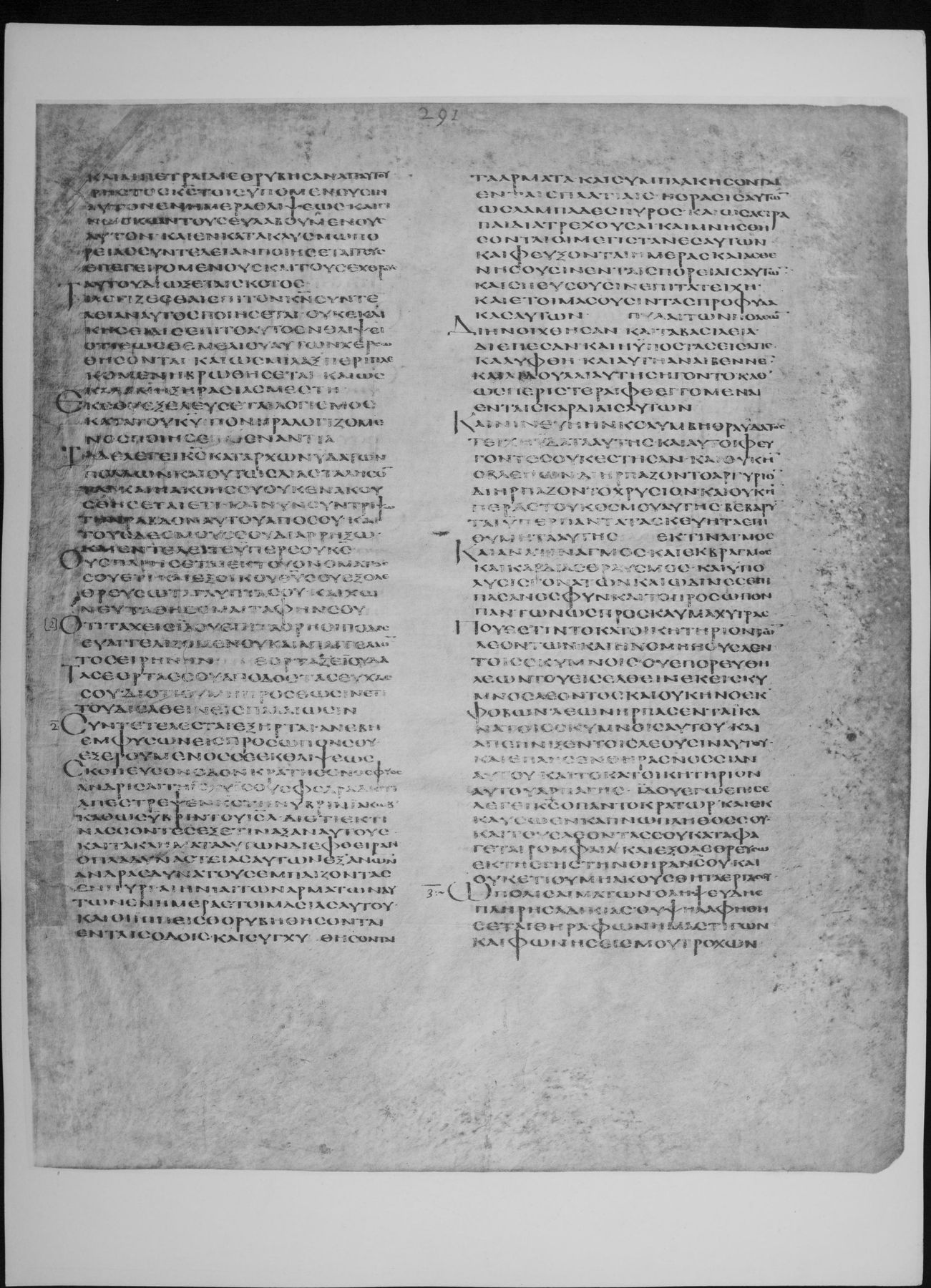
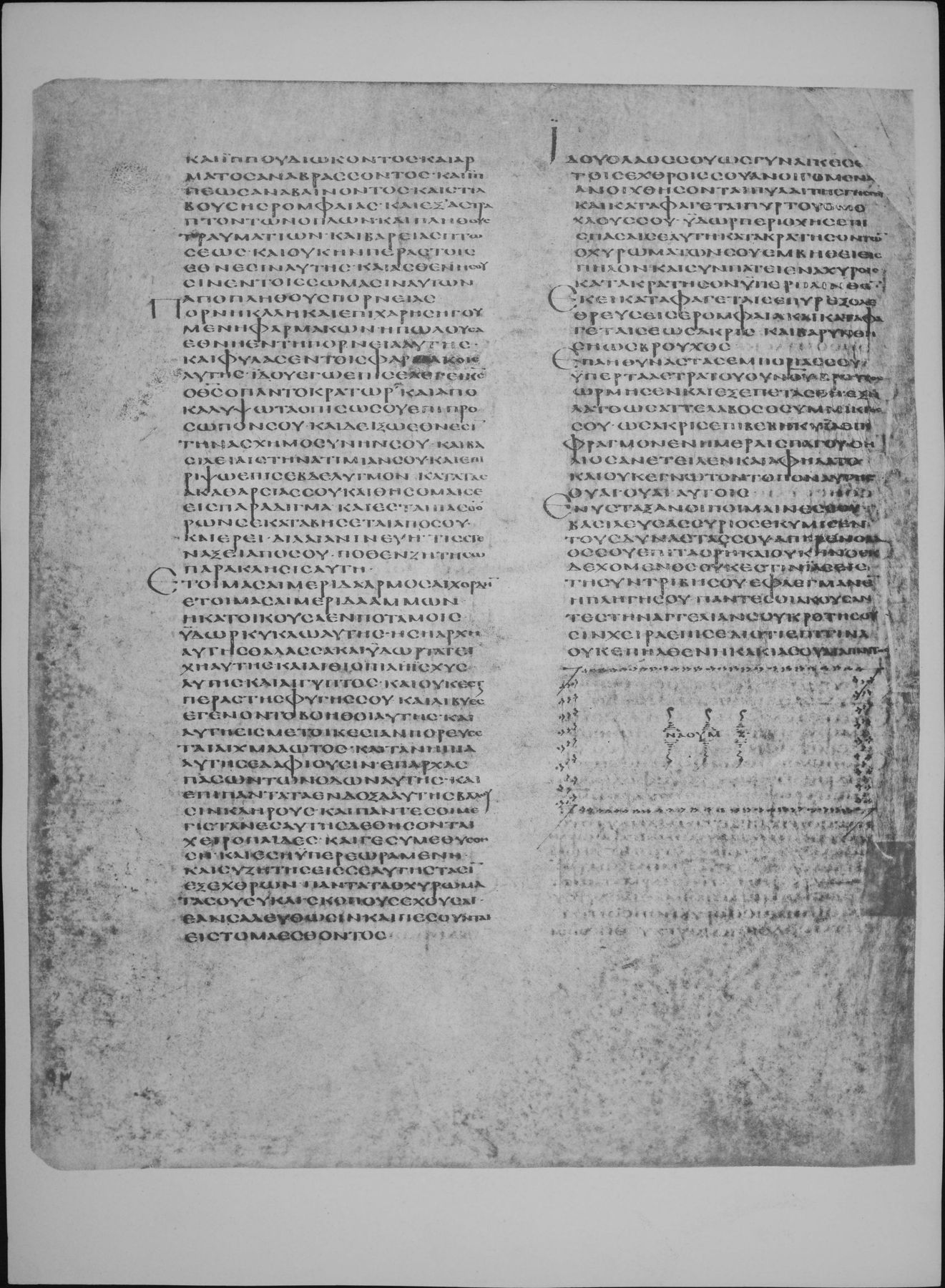
Nahum 3 in the Greek Old Testament (the Septuagint) as written in Codex Alexandrinus, a Greek Bible copied in the fifth century, probably in Egypt, and now in the British Library (Royal MS 1 D. VI, the second of its four volumes). It is one of the three great early codices of the whole Greek Bible, with Codex Vaticanus and Codex Sinaiticus.
This entry meets the strict three-criteria standard of the Theosis Library:
- Manuscript scan: the pages of Codex Alexandrinus carrying this chapter (fol. 291r, fol. 291v), from the full-size photographic (autotype) facsimile published by the British Museum in 1879-1883, as digitised on the Internet Archive. The verse range of every page comes from the reduced photographic facsimile of 1936, which prints it beneath each plate, and the opening words of every page were read on the plate to confirm the page and the verse it begins with. Each section links to the page or pages that hold its verses. Folio numbers are those written at the head of each leaf and visible on the plates.
- Original text: Swete's edition, which here prints the text of Codex Vaticanus (Vat. gr. 1209), the base of his edition, and gives the readings of Alexandrinus only in his apparatus. The Greek column is therefore Vaticanus' text; where Alexandrinus differs, the plate shows what Alexandrinus reads.
- English translation: Sir Lancelot C. L. Brenton, The Septuagint Version of the Old Testament (1844; 1851 edition), a translation of the Greek, public domain, from the eBible.org text.
How was this verified? (Provenance)
Where on the image
Nahum 3:1-2 is on fol. 291r (full-size facsimile of 1879-83, Internet Archive codex-alexandrinus leaf 606). The 1936 reduced facsimile prints beneath this page: Nahum i. 6-iii. 2. Checked on the plate: the page begins inside Nahum 1:6 (first words read: ΚΑΙ ΑΙ ΠΕΤΡΑΙ ΔΙΕΘΡΥΒΗΣΑΝ ΑΠ ΑΥΤΟΥ ΧΡΗΣΤΟΣ ΚΣ ΤΟΙΣ ΥΠΟΜΕΝΟΥΣΙΝ ΑΥΤΟΝ). Nahum 3:2-8 is on fol. 291v (full-size facsimile of 1879-83, Internet Archive codex-alexandrinus leaf 607). The 1936 reduced facsimile prints beneath this page: Nahum iii. 2-19. Checked on the plate: the page begins inside Nahum 3:2 (first words read: ΚΑΙ ΙΠΠΟΥ ΔΙΩΚΟΝΤΟΣ ΚΑΙ ΑΡΜΑΤΟΣ ΑΝΑΒΡΑΣΣΟΝΤΟΣ ΚΑΙ ΙΠΠΕΩΣ ΑΝΑΒΑΙΝΟΝΤΟΣ ΚΑΙ ΣΤΙΛΒΟΥΣΗΣ ΡΟΜΦΑΙΑΣ).
1Ὦ πόλις αἱμάτων, ὅλη ψευδής, ἀδικίας πλήρης, οὐ ψηλαφηθήσεται θήρα. 2φωνὴ μαστίγων καὶ φωνὴ σεισμοῦ τροχῶν, καὶ ἵππου διώκοντος καὶ ἅρματος ἀναβράσσοντος, 3καὶ ἱππέως ἀναβαίνοντος καὶ στιλβούσης ῥομφαίας καὶ ἐξαστραπτόντων ὅπλων, καὶ πλήθους τραυματιῶν καὶ βαρείας πτώσεως, καὶ οὐκ ἦν πέρας τοῖς ἔθνεσιν αὐτῆς· καὶ ἀσθενήσουσιν ἐν τοῖς σώμασιν αὐτῶν ἀπὸ πλήθους πορνείας. 4πόρνη καλὴ καὶ ἐπιχαρής, ἡγουμένη φαρμάκων, ἡ πωλοῦσα ἔθνη ἐν τῇ πορνείᾳ αὐτῆς καὶ λαοὺς ἐν τοῖς φαρμάκοις αὐτῆς. 5ἰδοὺ ἐγὼ ἐπὶ σέ, λέγει Κύριος ὁ θεὸς ὁ παντοκράτωρ, καὶ ἀποκαλύψω τὰ ὀπίσω σου ἐπὶ τὸ πρόσωπόν σου, καὶ δείξω ἔθνεσιν τὴν αἰσχύνην σου καὶ βασιλείαις τὴν ἀτιμίαν σου· 6καὶ ἐπιρίψω ἐπὶ σὲ βδελυγμὸν κατὰ τὰς ἀκαθαρσίας σου, καὶ θήσομαί σε εἰς παράδειγμα· 7καὶ ἔσται πᾶς ὁ ὁρῶν σε καταβήσεται ἀπὸ σοῦ καὶ ἐρεῖ Δειλαία Νινευή· τίς στενάξει αὐτήν; πόθεν ζητήσω παράκλησιν αὐτῇ; 8ἑτοίμασαι μερίδα, ἅρμοσαι χορδήν, ἑτοίμασαι μερίδα, Ἀμμών, ἡ κατοικοῦσα ἐν ποταμοῖς· ὕδωρ κύκλῳ αὐτῆς, ἧς ἡ ἀρχὴ θάλασσα καὶ ὕδωρ τὰ τείχη αὐτῆς.
1O city of blood, wholly false, full of unrighteousness; the prey shall not be handled. 2The noise of whips, and the noise of the rumbling of wheels, and of the pursuing horse, and of the bounding chariot, 3and of the mounting rider, and of the glittering sword, and of the gleaming arms, and of a multitude of slain, and of heavy falling: and there was no end to her nations, but they shall be weak in their bodies 4because of the abundance of fornication: she is a fair harlot, and well-favoured, skilled in sorcery, that sells the nations by her fornication, and peoples by her sorceries. 5Behold, I am against thee, saith the Lord God Almighty, and I will uncover thy skirts in thy presence, and I will shew the nations thy shame, and the kingdoms thy disgrace. 6And I will cast abominable filth upon thee according to thine unclean ways, and will make thee a public example. 7And it shall be that every one that sees thee shall go down from thee, and shall say, Wretched Nineve! who shall lament for her? whence shall I seek comfort for her? 8Prepare thee a portion, tune the chord, prepare a portion for Ammon: she that dwells among the rivers, water is round about her, whose dominion is the sea, and whose walls are water.
Where on the image
Nahum 3:9-16 is on fol. 291v (full-size facsimile of 1879-83, Internet Archive codex-alexandrinus leaf 607). The 1936 reduced facsimile prints beneath this page: Nahum iii. 2-19. Checked on the plate: the page begins inside Nahum 3:2 (first words read: ΚΑΙ ΙΠΠΟΥ ΔΙΩΚΟΝΤΟΣ ΚΑΙ ΑΡΜΑΤΟΣ ΑΝΑΒΡΑΣΣΟΝΤΟΣ ΚΑΙ ΙΠΠΕΩΣ ΑΝΑΒΑΙΝΟΝΤΟΣ ΚΑΙ ΣΤΙΛΒΟΥΣΗΣ ΡΟΜΦΑΙΑΣ).
9καὶ Αἰθιοπία ἰσχὺς αὐτῆς καὶ Αἴγυπτος, καὶ οὐκ ἔστιν πέρας τῆς φυγῆς, καὶ Λίβυες ἐγένοντο βοηθοὶ αὐτῆς. 10καὶ αὐτὴ εἰς μετοικεσίαν πορεύσεται αἰχμάλωτος, καὶ τὰ νήπια αὐτῆς ἐδαφιοῦσιν ἐπ᾽ ἀρχὰς πασῶν τῶν ὁδῶν αὐτῆς, καὶ ἐπὶ πάντα τὰ ἔνδοξα αὐτῆς βαλοῦσιν κλήρους, καὶ πάντες οἱ μεγιστᾶνες αὐτῆς δεθήσονται χειροπέδαις. 11καὶ σὺ μεθυσθήσῃ καὶ ἔσῃ ὑπερεωραμένη, καὶ σὺ ζητήσεις σεαυτῇ στάσιν ἐξ ἐχθρῶν. 12πάντα τὰ ὀχυρώματά σου συκαῖ σκοποὺς ἔχουσαι· ἐὰν σαλευθῶσιν, πεσοῦνται εἰς στόμα ἔσθοντος. 13ἰδοὺ ὁ λαός σου ὡς γυναῖκες ἐν σοί· τοῖς ἐχθροῖς σου ἀνοιγόμεναι ἀνοιχθήσονται πύλαι τῆς γῆς σου, καταφάγεται πῦρ τοὺς μοχλούς σου. 14ὕδωρ περιοχῆς ἐπίσπασαι σεαυτῇ, καὶ κατακράτησον τῶν ὀχυρωμάτων σου· ἔμβηθι εἰς πηλὸν καὶ συμπατήθητι ἐν ἀχύροις, κατακράτησον ὑπὲρ πλίνθον· 15ἐκεῖ καταφάγεταί σε πῦρ, ἐξολεθρεύσει σε ῥομφαία, καταφάγεταί σε ὡς ἀκρίς, καὶ βαρυνθήσει ὡς βροῦχος. 16ἐπλήθυνας τὰς ἐμπορίας σου ὑπὲρ τὰ ἄστρα τοῦ οὐρανοῦ· βροῦχος ὥρμησεν καὶ ἐξεπετάσθη.
9And Ethiopia is her strength, and Egypt; and there was no limit of the flight of her enemies; and the Libyans became her helpers. 10Yet she shall go as a prisoner into captivity, and they shall dash her infants against the ground at the top of all her ways: and they shall cast lots upon all her glorious possessions, and all her nobles shall be bound in chains. 11And thou shalt be drunken, and shalt be overlooked; and thou shalt seek for thyself strength because of thine enemies. 12All thy strong-holds are as fig-trees having watchers: if they be shaken, they shall fall into the mouth of the eater. 13Behold, thy people within thee are as women: the gates of thy land shall surely be opened to thine enemies: the fire shall devour thy bars. 14Draw thee water for a siege, and well secure thy strong-holds: enter into the clay, and be thou trodden in the chaff, make the fortifications stronger than brick. 15There the fire shall devour thee; the sword shall utterly destroy thee, it shall devour thee as the locust, and thou shalt be pressed down as a palmerworm. 16Thou hast multiplied thy merchandise beyond the stars of heaven: the palmerworm has attacked it, and has flown away.
Where on the image
Nahum 3:17-19 is on fol. 291v (full-size facsimile of 1879-83, Internet Archive codex-alexandrinus leaf 607). The 1936 reduced facsimile prints beneath this page: Nahum iii. 2-19. Checked on the plate: the page begins inside Nahum 3:2 (first words read: ΚΑΙ ΙΠΠΟΥ ΔΙΩΚΟΝΤΟΣ ΚΑΙ ΑΡΜΑΤΟΣ ΑΝΑΒΡΑΣΣΟΝΤΟΣ ΚΑΙ ΙΠΠΕΩΣ ΑΝΑΒΑΙΝΟΝΤΟΣ ΚΑΙ ΣΤΙΛΒΟΥΣΗΣ ΡΟΜΦΑΙΑΣ).
17ἐξήλατο ὡς ἀττέλεβος ὁ σύμμικτός σου, ὡς ἀκρὶς ἐπιβεβηκυῖα ἐπὶ φραγμὸν ἐν ἡμέρᾳ πάγους· ὁ ἥλιος ἀνέτειλεν, καὶ ἀφήλατο, καὶ οὐκ ἔγνω τὸν τόπον αὐτῆς. οὐαὶ αὐτοῖς. 18ἐνύσταξαν οἱ ποιμένες σου, βασιλεὺς Ἀσσύριος, ἐκοίμισεν τοὺς δυνάστας σου· ἀπῆρεν ὁ λαός σου ἐπὶ τὰ ὄρη, καὶ οὐκ ἦν ὁ ἐκδεχόμενος. 19οὐκ ἔστιν ἴασις τῇ συντριβῇ σου, ἐφλέγμανεν ἡ πληγή σου· πάντες οἱ ἀκούοντες τὴν ἀγγελίαν σου κροτήσουσιν χεῖρας ἐπὶ σέ· διότι ἐπὶ τίνα οὐκ ἐπῆλθεν ἡ κακία σου διὰ παντός;
17Thy mixed multitude has suddenly departed as the grasshopper, as the locust perched on a hedge in a frosty day; the sun arises, and it flies off, and knows not its place: woe to them! 18Thy shepherds have slumbered, the Assyrian king has laid low thy mighty men: thy people departed to the mountains, and there was none to receive them. 19There is no healing for thy bruise; thy wound has rankled: all that hear the report of thee shall clap their hands against thee; for upon whom has not thy wickedness passed continually?
Cite
Sources
- Source: Codex Alexandrinus (British Library Royal MS 1 D. VI) via the British Museum photographic facsimiles of 1879-83 and 1936 (Internet Archive) + Swete's Septuagint + Brenton's English (holding institution)
- Critical edition: H. B. Swete, The Old Testament in Greek according to the Septuagint (1909)
← previous · → next · v cycle view · l back to library