Tobit, Chapter 2 (Codex Alexandrinus)
Introduction
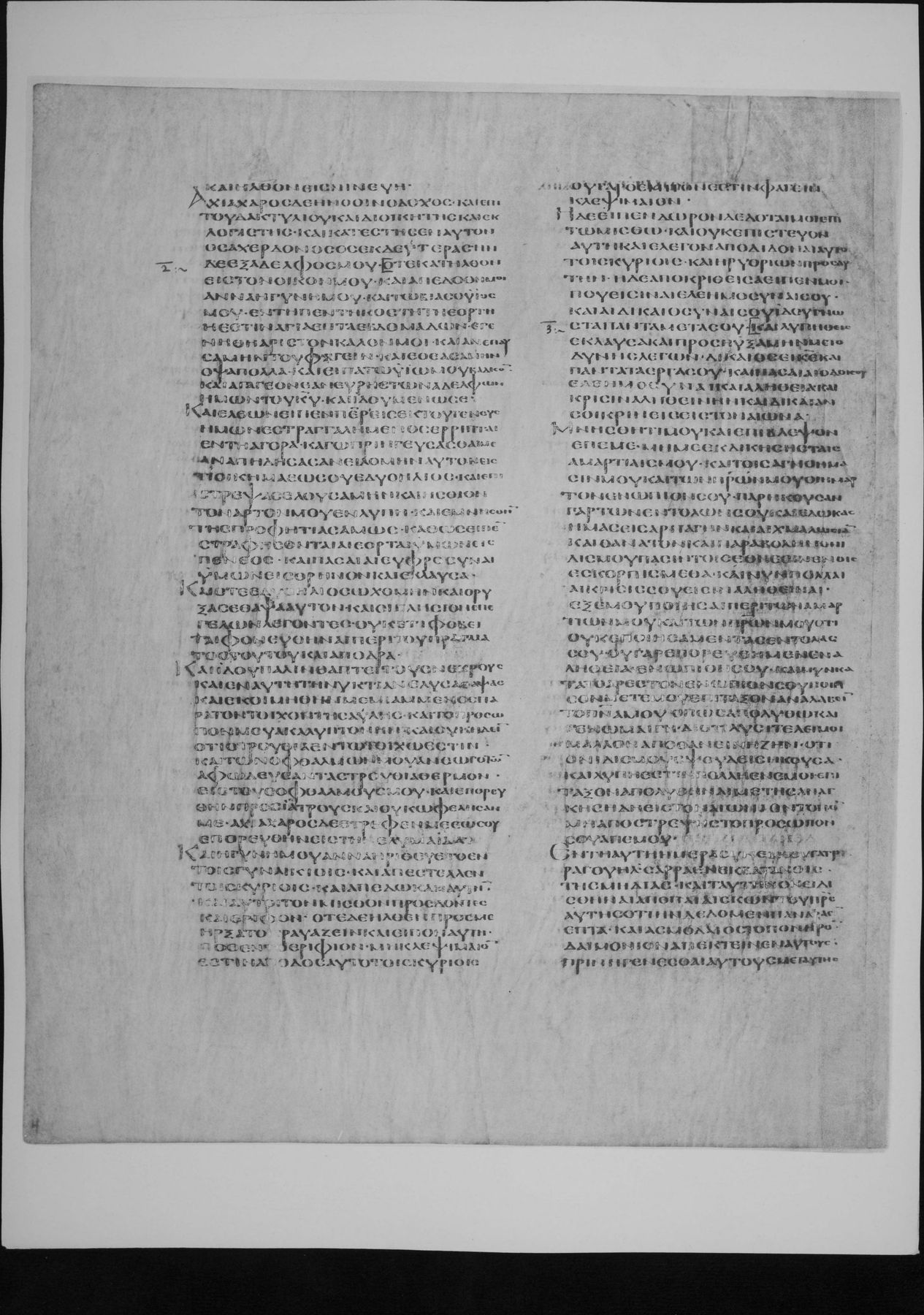
Tobit 2 in the Greek Old Testament (the Septuagint) as written in Codex Alexandrinus, a Greek Bible copied in the fifth century, probably in Egypt, and now in the British Library (Royal MS 1 D. VI, the second of its four volumes). It is one of the three great early codices of the whole Greek Bible, with Codex Vaticanus and Codex Sinaiticus.
Two Greek forms of Tobit: Tobit survives in a shorter and a longer Greek form. Codex Alexandrinus, like Codex Vaticanus, has the shorter form, which Swete prints from Vaticanus as his main text (he prints the longer form of Codex Sinaiticus beneath it; that form is not used here). Brenton's English also translates the shorter form.
This entry meets the strict three-criteria standard of the Theosis Library:
- Manuscript scan: the page of Codex Alexandrinus carrying this chapter (fol. 424v), from the full-size photographic (autotype) facsimile published by the British Museum in 1879-1883, as digitised on the Internet Archive. The verse range of every page comes from the reduced photographic facsimile of 1936, which prints it beneath each plate, and the opening words of every page were read on the plate to confirm the page and the verse it begins with. Each section links to the page or pages that hold its verses. Folio numbers are those written at the head of each leaf and visible on the plates.
- Original text: Swete's edition, which here prints the text of Codex Vaticanus (Vat. gr. 1209), the base of his edition, and gives the readings of Alexandrinus only in his apparatus. The Greek column is therefore Vaticanus' text; where Alexandrinus differs, the plate shows what Alexandrinus reads.
- English translation: Sir Lancelot C. L. Brenton, The Septuagint Version of the Old Testament (1844; 1851 edition), a translation of the Greek, public domain, from the eBible.org text.
How was this verified? (Provenance)
Where on the image
Tobit 2:1-8 is on fol. 424v (full-size facsimile of 1879-83, Internet Archive codex-alexandrinus leaf 873). The 1936 reduced facsimile prints beneath this page: Tobit i. 22-iii. 8. Checked on the plate: the page begins inside Tobit 1:22 (first words read: ΚΑΙ ΗΛΘΟΝ ΕΙΣ ΝΙΝΕΥΗ ΑΧΙΑΧΑΡΟΣ ΔΕ ΗΝ Ο ΟΙΝΟΧΟΟΣ ΚΑΙ ΕΠΙ ΤΟΥ ΔΑΚΤΥΛΙΟΥ).
1Ὅτε δὲ κατῆλθον εἰς τὸν οἶκόν μου καὶ ἀπεδόθη μοι Ἅννα ἡ γυνή μου καὶ Τωβίας ὁ υἱός μου, ἐν τῇ πεντηκοστῇ ἑορτῇ ἥ ἐστιν ἁγία ἑπτὰ ἑβδομάδων, ἐγενήθη ἄριστον καλόν μοι· ἀνέπεσα τοῦ φαγεῖν. 2καὶ ἐθεασάμην ὄψα πολλά, καὶ εἶπα τῷ υἱῷ μου Βάδισον καὶ ἄγαγε ὃν ἐὰν εὕρῃς τῶν ἀδελφῶν ἡμῶν ἐνδεῆ ὃς μέμνηται τοῦ κυρίου, καὶ ἰδοὺ μένω σε. 3καὶ ἐλθὼν εἶπεν Πάτερ, εἷς ἐκ τοῦ γένους ἡμῶν ἐστραγγαλωμένος ἔρριπται ἐν τῇ ἀγορᾷ. 4κἀγὼ πρὶν ἢ γεύσασθαί με ἀναπηδήσας ἀνειλόμην αὐτὸν εἴς τι οἴκημα ἕως οὗ ἔδυ ὁ ἥλιος. 5καὶ ἐπιστρέψας ἐλουσάμην, καὶ ἤσθιον τὸν ἄρτον μου ἐν λύπῃ· 6καὶ ἐμνήσθην τῆς προφητείας Ἀμώς, καθὼς εἶπεν Στραφήσονται αἱ ἑορταὶ ὑμῶν εἰς πένθος, καὶ πᾶσαι αἱ εὐφροσύναι ὑμῶν εἰς θρῆνον. 7καὶ ἔκλαυσα. καὶ ὅτε ἔδυ ὁ ἥλιος, ᾠχόμην καὶ ὀρύξας ἔθαψα αὐτόν. 8καὶ οἱ πλησίον ἐπεγέλων λέγοντες Οὐκέτι φοβεῖται φονευθῆναι περὶ τοῦ πράγματος τούτου· καὶ ἀπέδρα, καὶ ἰδοὺ πάλιν θάπτει τοὺς νεκρούς.
1Now when I was come home again, and my wife Anna was restored unto me, with my son Tobias, in the feast of Pentecost, which is the holy feast of the seven weeks, there was a good dinner prepared me; and I sat down to eat. 2And when I saw abundance of meat, I said to my son, Go and bring what poor man soever thou shalt find out of our brethren, who is mindful of the Lord; and, lo, I tarry for thee. 3But he came again, and said, Father, one of our nation is strangled, and is cast out in the marketplace. 4Then before I had tasted any meat, I started up, and took him up into a room until the going down of the sun. 5Then I returned, and washed myself, and ate my meat in heaviness, 6remembering that prophecy of Amos, as he said, Your feasts shall be turned into mourning, and all your mirth into lamentation. 7Therefore I wept: and after the going down of the sun I went and made a grave, and buried him. 8But my neighbours mocked me, and said, This man is not yet afraid to be put to death for this matter: who fled away; and yet, lo, he burieth the dead again.
Where on the image
Tobit 2:9-14 is on fol. 424v (full-size facsimile of 1879-83, Internet Archive codex-alexandrinus leaf 873). The 1936 reduced facsimile prints beneath this page: Tobit i. 22-iii. 8. Checked on the plate: the page begins inside Tobit 1:22 (first words read: ΚΑΙ ΗΛΘΟΝ ΕΙΣ ΝΙΝΕΥΗ ΑΧΙΑΧΑΡΟΣ ΔΕ ΗΝ Ο ΟΙΝΟΧΟΟΣ ΚΑΙ ΕΠΙ ΤΟΥ ΔΑΚΤΥΛΙΟΥ).
9καὶ ἐν αὐτῇ τῇ νυκτὶ ἀνέλυσα θάψας, καὶ ἐκοιμήθην μεμιαμμένος παρὰ τὸν τοῖχον τῆς αὐλῆς, καὶ τὸ πρόσωπόν μου ἀκάλυπτον ἦν. 10καὶ οὐκ ᾔδειν ὅτι στρουθία ἐν τῷ τοίχῳ ἐστίν· καὶ τῶν ὀφθαλμῶν μου ἀνεῳγότων, ἀφώδευσαν τὰ στρουθία θερμὸν εἰς τοὺς ὀφθαλμούς μου, καὶ ἐγενήθη λευκώματα εἰς τοὺς ὀφθαλμούς μου· καὶ ἐπορεύθην πρὸς ἰατρούς, καὶ οὐκ ὠφέλησάν με· Ἀχιάχαρος δὲ ἔτρεφέν με ἕως οὗ ἐπορεύθην εἰς τὴν Ἐλλυμαίδα. 11Καὶ ἡ γυνή μου Ἅννα ἠριθεύετο ἐν τοῖς γυναικείοις· 12καὶ ἀπέστελλε τοῖς κυρίοις, καὶ ἀπέδωκαν αὐτῇ καὶ αὐτοὶ τὸν μισθόν, προσδόντες καὶ ἔριφον. 13ὅτε δὲ ἦλθεν πρὸς μέ, ἤρξατο κράζειν· καὶ εἶπα αὐτῇ Πόθεν τὸ ἐρίφιον; μὴ κλεψιμαῖόν ἐστιν; ἀπόδος αὐτὸ τοῖς κυρίοις· οὐ γὰρ θεμιτόν ἐστιν φαγεῖν κλεψιμαῖον. 14ἡ δὲ εἶπεν Δῶρον δέδοταί μοι ἐπὶ τῷ μισθῷ. καὶ οὐκ ἐπίστευον αὐτῇ, καὶ ἔλεγον ἀποδιδόναι αὐτὸ τοῖς κυρίοις, καὶ ἠρυθρίων πρὸς αὐτήν· ἡ δὲ ἀποκριθεῖσα εἶπέν μοι Ποῦ εἰσιν αἱ ἐλεημοσύναι σου καὶ αἱ δικαιοσύναι σου; ἰδοὺ γνωστὰ πάντα μετὰ σοῦ.
9The same night also I returned from the burial, and slept by the wall of my courtyard, being polluted, and my face was uncovered: 10and I knew not that there were sparrows in the wall, and mine eyes being open, the sparrows muted warm dung into mine eyes, and a whiteness came in mine eyes; and I went to the physicians, but they helped me not: moreover Achiacharus did nourish me, until I went into Elymais. 11And my wife Anna did take women's works to do. 12And when she had sent them home to the owners, they paid her wages, giving her also besides a kid. 13And when it was in my house, and began to cry, I said unto her, From whence is this kid? is it not stolen? render it to the owners; for it is not lawful to eat any thing that is stolen. 14But she replied upon me, It was given for a gift more than the wages. Howbeit I did not believe her, but bade her render it to the owners: and I was abashed at her. But she replied upon me, Where are thine alms and thy righteous deeds? behold, thou and all thy works are known.
Cite
Sources
- Source: Codex Alexandrinus (British Library Royal MS 1 D. VI) via the British Museum photographic facsimiles of 1879-83 and 1936 (Internet Archive) + Swete's Septuagint + Brenton's English (holding institution)
- Critical edition: H. B. Swete, The Old Testament in Greek according to the Septuagint (1909)
← previous · → next · v cycle view · l back to library