Tobit, Chapter 3 (Codex Alexandrinus)
Introduction
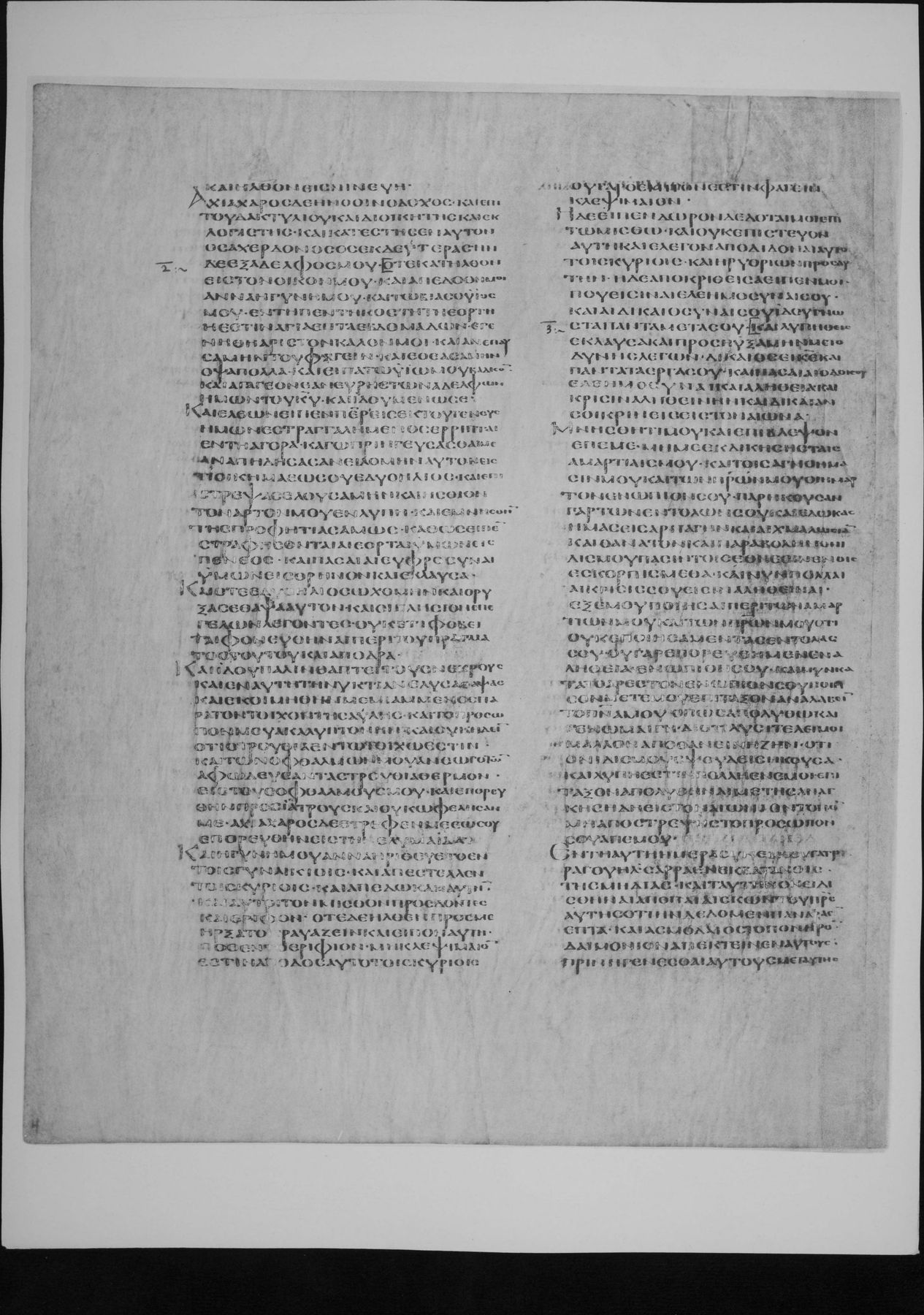
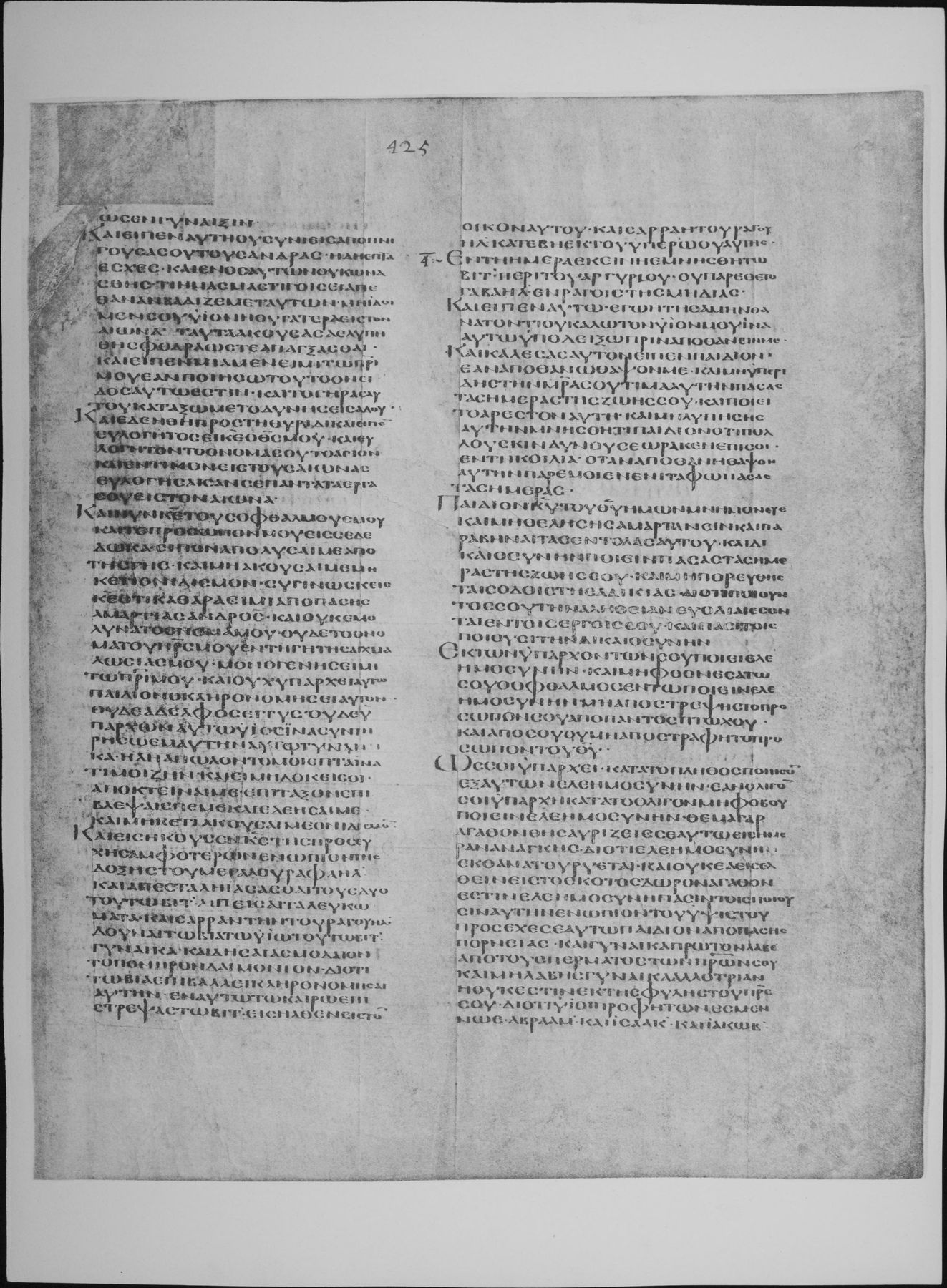
Tobit 3 in the Greek Old Testament (the Septuagint) as written in Codex Alexandrinus, a Greek Bible copied in the fifth century, probably in Egypt, and now in the British Library (Royal MS 1 D. VI, the second of its four volumes). It is one of the three great early codices of the whole Greek Bible, with Codex Vaticanus and Codex Sinaiticus.
Two Greek forms of Tobit: Tobit survives in a shorter and a longer Greek form. Codex Alexandrinus, like Codex Vaticanus, has the shorter form, which Swete prints from Vaticanus as his main text (he prints the longer form of Codex Sinaiticus beneath it; that form is not used here). Brenton's English also translates the shorter form.
This entry meets the strict three-criteria standard of the Theosis Library:
- Manuscript scan: the pages of Codex Alexandrinus carrying this chapter (fol. 424v, fol. 425r), from the full-size photographic (autotype) facsimile published by the British Museum in 1879-1883, as digitised on the Internet Archive. The verse range of every page comes from the reduced photographic facsimile of 1936, which prints it beneath each plate, and the opening words of every page were read on the plate to confirm the page and the verse it begins with. Each section links to the page or pages that hold its verses. Folio numbers are those written at the head of each leaf and visible on the plates.
- Original text: Swete's edition, which here prints the text of Codex Vaticanus (Vat. gr. 1209), the base of his edition, and gives the readings of Alexandrinus only in his apparatus. The Greek column is therefore Vaticanus' text; where Alexandrinus differs, the plate shows what Alexandrinus reads.
- English translation: Sir Lancelot C. L. Brenton, The Septuagint Version of the Old Testament (1844; 1851 edition), a translation of the Greek, public domain, from the eBible.org text.
How was this verified? (Provenance)
Where on the image
Tobit 3:1-8 is on fol. 424v (full-size facsimile of 1879-83, Internet Archive codex-alexandrinus leaf 873). The 1936 reduced facsimile prints beneath this page: Tobit i. 22-iii. 8. Checked on the plate: the page begins inside Tobit 1:22 (first words read: ΚΑΙ ΗΛΘΟΝ ΕΙΣ ΝΙΝΕΥΗ ΑΧΙΑΧΑΡΟΣ ΔΕ ΗΝ Ο ΟΙΝΟΧΟΟΣ ΚΑΙ ΕΠΙ ΤΟΥ ΔΑΚΤΥΛΙΟΥ). Tobit 3:8 is on fol. 425r (full-size facsimile of 1879-83, Internet Archive codex-alexandrinus leaf 874). The 1936 reduced facsimile prints beneath this page: Tobit iii. 8-iv. 12. Checked on the plate: the page begins inside Tobit 3:8 (first words read: ΩΣ ΕΝ ΓΥΝΑΙΞΙΝ ΚΑΙ ΕΙΠΕΝ ΑΥΤΗ ΟΥ ΣΥΝΙΕΙΣ ΑΠΟΠΝΙΓΟΥΣΑ ΣΟΥ ΤΟΥΣ ΑΝΔΡΑΣ).
1Καὶ λυπηθεὶς ἔκλαυσα, καὶ προσευξάμην μετ᾽ ὀδύνης λέγων 2Δίκαιος εἶ, Κύριε, καὶ πάντα τὰ ἔργα σου καὶ πᾶσαι αἱ ὁδοί σου ἐλεημοσύναι καὶ ἀλήθεια, καὶ κρίσιν ἀληθινὴν καὶ δικαίαν σὺ κρίνεις εἰς τὸν αἰῶνα. 3μνήσθητί μου καὶ ἐπίβλεψον ἐπ᾽ ἐμέ· μὴ ἐκδικῇς ταῖς ἁμαρτίαις μου καὶ τοῖς ἀγνοήμασίν μου καὶ τῶν πατέρων μου, ἃ ἥμαρτον ἐνώπιόν σου. 4παρήκουσαν γὰρ τῶν ἐντολῶν σου· ἔδωκας ἡμᾶς εἰς διαρπαγὴν καὶ αἰχμαλωσίαν καὶ θάνατον καὶ παραβολὴν ὀνειδισμοῦ πᾶσιν τοῖς ἔθνεσιν ἐν οἷς ἐσκορπίσμεθα. 5καὶ νῦν πολλαὶ αἱ κρίσεις σού εἰσιν ἀληθιναί, ἐξ ἐμοῦ ποιῆσαι περὶ τῶν ἁμαρτιῶν μου καὶ τῶν πατέρων μου, ὃτι οὐκ ἐποιήσαμεν τὰς ἐντολάς σου· οὐ γὰρ ἐπορεύθημεν ἐν ἀληθείᾳ ἐνώπιόν σου. 6καὶ νῦν κατὰ τὸ ἀρεστόν σου ποίησον μετ᾽ ἐμοῦ· ἐπίταξον ἀναλαβεῖν τὸ πνεῦμά μου, ὅπως ἀπολυθῶ καὶ γένωμαι γῆ· διότι λυσιτελεῖ μοι ἀποθανεῖν ἢ ζῇν, ὅτι ὀνειδισμοὺς ψευδεῖς ἤκουσα, λύπη ἐστὶν πολλὴ ἐν ἐμοί· ἐπίταξον ἀπολυθῆναί με τῆς ἀνάγκης ἤδη εἰς τὸν αἰώνιον τόπον, μὴ ἀποστρέψῃς τὸ πρόσωπόν σου ἀπ᾽ ἐμοῦ. 7Ἐν τῇ αὐτῇ ἡμέρᾳ συνέβη τῇ θυγατρὶ Ῥαγουὴλ Σάρρᾳ ἐν Ἐκβατάνοις τῆς Μηδείας, καὶ ταύτην ὀνειδισθῆναι ὑπὸ παιδισκῶν πατρὸς αὐτῆς, 8ὅτι ἦν δεδομένη ἀνδράσιν ἑπτά, καὶ Ἀσμόδαυς τὸ πονηρὸν δαιμόνιον ἀπέκτεινεν αὐτοὺς πρὶν ἢ γενέσθαι αὐτοὺς μετ᾽ αὐτῆς ὡς ἐν γυναιξίν· καὶ εἶπαν αὐτῇ Οὐ συνίεις ἀποπνίγουσά σου τοὺς ἄνδρας; ἤδη ἑπτὰ ἔσχες, καὶ ἑνὸς αὐτῶν οὐκ ὠνάσθης.
1Then I being grieved did weep, and in my sorrow prayed, saying, 2O Lord, thou art just, and all thy works and all thy ways are mercy and truth, and thou judgest truly and justly for ever. 3Remember me, and look on me; punish me not for my sins and ignorances, and the sins of my fathers, who have sinned before thee: 4for they obeyed not thy commandments: wherefore thou hast delivered us for a spoil, and unto captivity, and unto death, and for a proverb of reproach to all the nations among whom we are dispersed. 5And now thy judgments are many and true: deal with me according to my sins and my fathers'; because we have not kept thy commandments, neither have walked in truth before thee. 6Now therefore deal with me as seemeth best unto thee, and command my spirit to be taken from me, that I may be dissolved, and become earth: for it is profitable for me to die rather than to live, because I have heard false reproaches, and have much sorrow: command therefore that I may now be delivered out of this distress, and go into the everlasting place: turn not thy face away from me. 7It came to pass the same day, that in Ecbatane a city of Media, Sara the daughter of Raguel was also reproached by her father's maids; 8because that she had been married to seven husbands, whom Asmodeus the evil spirit had killed, before they had lain with her. Dost thou not know, said they, that thou hast strangled thine husbands? thou hast had already seven husbands, neither wast thou named after any of them.
Where on the image
Tobit 3:9-17 is on fol. 425r (full-size facsimile of 1879-83, Internet Archive codex-alexandrinus leaf 874). The 1936 reduced facsimile prints beneath this page: Tobit iii. 8-iv. 12. Checked on the plate: the page begins inside Tobit 3:8 (first words read: ΩΣ ΕΝ ΓΥΝΑΙΞΙΝ ΚΑΙ ΕΙΠΕΝ ΑΥΤΗ ΟΥ ΣΥΝΙΕΙΣ ΑΠΟΠΝΙΓΟΥΣΑ ΣΟΥ ΤΟΥΣ ΑΝΔΡΑΣ).
9τί ἡμᾶς μαστιγοῖς; εἰ ἀπέθαναν, βάδιζε μετ᾽ αὐτῶν· μὴ ἴδοιμέν σου υἱὸν ἢ θυγατέρα εἰς τὸν αἰῶνα. 10ταῦτα ἀκούσασα ἐλυπήθη σφόδρα ὥστε ἀπάγξασθαι· καὶ εἶπεν Μία μέν εἰμι τῷ πατρί μου· ἐὰν ποιήσω τοῦτο, ὄνειδος αὐτῷ ἔσται, καὶ τὸ γῆρας αὐτοῦ κατάξω μετ᾽ ὀδύνης εἰς ᾅδου. 11καὶ ἐδεήθη πρὸς τῇ θυρίδι καὶ εἶπεν Εὐλογητὸς εἶ, Κύριε ὁ θεός μου, καὶ εὐλογητὸν τὸ ὄνομά σου τὸ ἅγιον καὶ ἔντιμον εἰς τοὺς αἰῶνας· εὐλογήσαισάν σε πάντα τὰ ἔργα σου εἰς τὸν αἰῶνα. 12καὶ νῦν, Κύριε, τοὺς ὀφθαλμούς μου καὶ τὸ πρόσωπόν μου εἰς σὲ δέδωκα. 13εἰπὸν ἀπολῦσαί με ἀπὸ τῆς γῆς καὶ μὴ ἀκοῦσαί με μηκέτι ὀνειδισμόν. 14σὺ γινώσκεις, Κύριε, ὅτι καθαρά εἰμι ἀπὸ πάσης ἁμαρτίας καὶ ἀνδρός, 15καὶ οὐκ ἐμόλυνα τὸ ὄνομά μου οὐδὲ τὸ ὄνομα τοῦ πατρός μου ἐν τῇ γῇ τῆς αἰχμαλωσίας μου. μονογενής εἰμι τῷ πατρί μου, καὶ οὐχ ὑπάρχει αὐτῷ παιδίον ὃ κληρονομήσει αὐτόν, οὐδὲ ἀδελφὸς ἐγγὺς οὐδὲ ὑπάρχων αὐτῷ υἱὸς ἵνα συντηρήσω ἐμαυτὴν αὐτῷ γυναῖκα. ἤδη ἀπώλοντό μοι ἑπτά· ἵνα τί μοι ζῇν; καὶ εἰ μὴ δοκεῖ σοι ἀποκτεῖναί με, ἐπίταξον ἐπιβλέψαι ἐπ᾽ ἐμὲ καὶ ἐλεῆσαί με, καὶ μηκέτι ἀκοῦσαί με ὀνειδισμόν. 16Καὶ εἰσηκούσθη προσευχὴ ἀμφοτέρων ἐνώπιον τῆς δόξης τοῦ μεγάλου Ῥαφαήλ, 17καὶ ἀπεστάλη ἰάσασθαι τοὺς δύο, τοῦ Τωβεὶτ λεπίσαι τὰ λευκώματα, καὶ Σάρραν τὴν τοῦ Ῥαγουὴλ δοῦναι Τωβίᾳ τῷ υἱῷ Τωβεὶτ γυναῖκα, καὶ δῆσαι Ἀσμόδαυν τὸ πονηρὸν δαιμόνιον, διότι Τωβίᾳ ἐπιβάλλει κληρονομῆσαι αὐτήν. ἐν αὐτῷ τῷ καιρῷ ἐπιστρέψας Τωβεὶτ εἰσῆλθεν εἰς τὸν οἶκον αὐτοῦ, καὶ Σάρρα ἡ τοῦ Ῥαγουὴλ κατέβη ἐκ τοῦ ὑπερῴου αὐτῆς.
9Wherefore dost thou beat us for them? if they be dead, go thy ways after them, let us never see of thee either son or daughter. 10When she heard these things she was very sorrowful, so that she thought to have strangled herself; and she said, I am the only daughter of my father, and if I do this, it shall be a reproach unto him, and I shall bring his old age with sorrow unto the grave. 11Then she prayed toward the window, and said, Blessed art thou, O Lord my God, and thine holy and glorious name is blessed and honourable for ever: let all thy works praise thee for ever. 12And now, O Lord, I set mine eyes and my face toward thee, 13and say, Take me out of the earth, that I may hear no more the reproach. 14Thou knowest, Lord, that I am pure from all sin with man, 15and that I never polluted my name, nor the name of my father, in the land of my captivity: I am the only daughter of my father, neither hath he any child to be his heir, neither any near kinsman, nor any son of his alive, to whom I may keep myself for a wife: my seven husbands are already dead; and why should I live? but if it please not thee that I should die, command some regard to be had of me, and pity taken of me, that I hear no more reproach. 16So the prayers of them both were heard before the majesty of the great God. 17And Raphael was sent to heal them both, that is, to scale away the whiteness of Tobit's eyes, and to give Sara the daughter of Raguel for a wife to Tobias the son of Tobit: and to bind Asmodeus the evil spirit; because she belonged to Tobias by right of inheritance. The self-same time came Tobit home, and entered into his house, and Sara the daughter of Raguel came down from her upper chamber.
Cite
Sources
- Source: Codex Alexandrinus (British Library Royal MS 1 D. VI) via the British Museum photographic facsimiles of 1879-83 and 1936 (Internet Archive) + Swete's Septuagint + Brenton's English (holding institution)
- Critical edition: H. B. Swete, The Old Testament in Greek according to the Septuagint (1909)
← previous · → next · v cycle view · l back to library