Tobit, Chapter 5 (Codex Alexandrinus)
Introduction
Tobit 5 in the Greek Old Testament (the Septuagint) as written in Codex Alexandrinus, a Greek Bible copied in the fifth century, probably in Egypt, and now in the British Library (Royal MS 1 D. VI, the second of its four volumes). It is one of the three great early codices of the whole Greek Bible, with Codex Vaticanus and Codex Sinaiticus.
Two Greek forms of Tobit: Tobit survives in a shorter and a longer Greek form. Codex Alexandrinus, like Codex Vaticanus, has the shorter form, which Swete prints from Vaticanus as his main text (he prints the longer form of Codex Sinaiticus beneath it; that form is not used here). Brenton's English also translates the shorter form.
Numbering: Swete's Greek and Brenton's English number or divide some verses of this chapter differently (Swete 5:8-9 = Brenton 5:8; Swete 5:10-22 = Brenton 5:9-21). Each column keeps its own verse numbers, and sections are cut only where the two texts agree, so each section holds the same passage in both languages.
This entry meets the strict three-criteria standard of the Theosis Library:
- Manuscript scan: the pages of Codex Alexandrinus carrying this chapter (fol. 425v, fol. 426r), from the full-size photographic (autotype) facsimile published by the British Museum in 1879-1883, as digitised on the Internet Archive. The verse range of every page comes from the reduced photographic facsimile of 1936, which prints it beneath each plate, and the opening words of every page were read on the plate to confirm the page and the verse it begins with. Each section links to the page or pages that hold its verses. Folio numbers are those written at the head of each leaf and visible on the plates.
- Original text: Swete's edition, which here prints the text of Codex Vaticanus (Vat. gr. 1209), the base of his edition, and gives the readings of Alexandrinus only in his apparatus. The Greek column is therefore Vaticanus' text; where Alexandrinus differs, the plate shows what Alexandrinus reads.
- English translation: Sir Lancelot C. L. Brenton, The Septuagint Version of the Old Testament (1844; 1851 edition), a translation of the Greek, public domain, from the eBible.org text.
How was this verified? (Provenance)
Where on the image
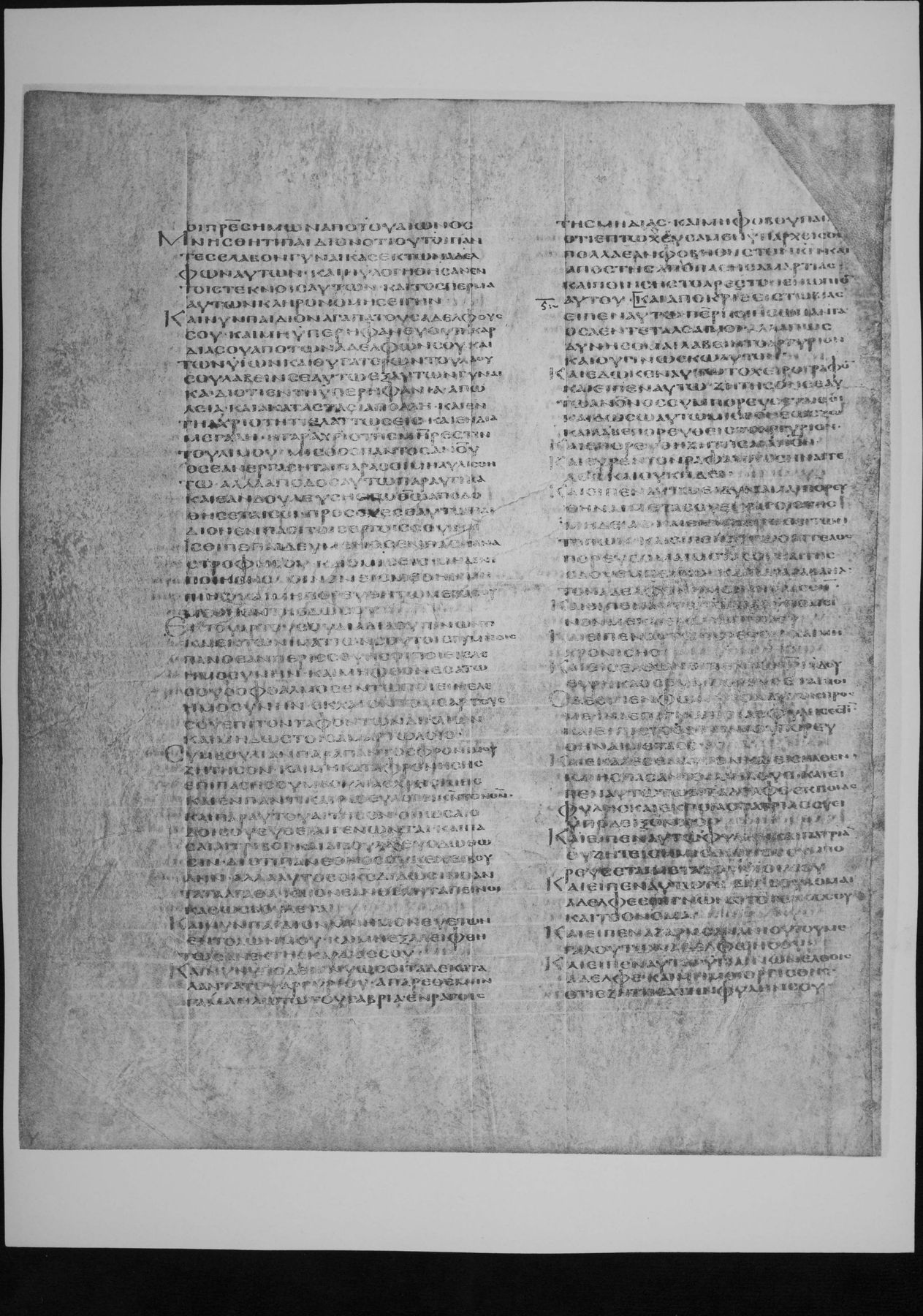
Tobit 5:1-9 is on fol. 425v (full-size facsimile of 1879-83, Internet Archive codex-alexandrinus leaf 875). The 1936 reduced facsimile prints beneath this page: Tobit iv. 12-v. 14. Checked on the plate: the page begins inside Tobit 4:12 (first words read: ΟΙ ΠΡΕΣ ΗΜΩΝ ΑΠΟ ΤΟΥ ΑΙΩΝΟΣ ΜΝΗΣΘΗΤΙ ΠΑΙΔΙΟΝ ΟΤΙ ΟΥΤΟΙ ΠΑΝΤΕΣ).
1Καὶ ἀποκριθεὶς Τωβίας εἶπεν αὐτῷ Πάτερ, ποιήσω πάντα ὅσα ἐντέταλσαί μοι. 2ἀλλὰ πῶς δυνήσομαι λαβεῖν τὸ ἀργύριον, καὶ οὐ γινώσκω αὐτόν; 3καὶ ἔδωκεν αὐτῷ τὸ χειρόγραφον, καὶ εἶπεν αὐτῷ Ζήτησον σεαυτῷ ἄνθρωπον ὃς συμπορεύσεταί σοι, καὶ δώσω αὐτῷ μισθὸν ἕως ζῶ, καὶ λάβε πορευθεὶς τὸ ἀργύριον. 4καὶ ἐπορεύθη ζητῆσαι ἄνθρωπον, καὶ εὗρεν Ῥαφαὴλ ὃς ἦν ἄγγελος, καὶ οὐκ ᾔδει· 5καὶ εἶπεν αὐτῷ Εἰ δύναμαι πορευθῆναι μετὰ σοῦ ἐν Ῥάγοις τῆς Μηδείας, καὶ εἰ ἔμπειρος εἶ τῶν τόπων; 6καὶ εἶπεν αὐτῷ ὁ ἄγγελος Πορεύσομαι μετὰ σοῦ, καὶ τῆς ὁδοῦ ἐμπειρῶ, καὶ παρὰ Γαβαὴλ τὸν ἀδελφὸν ἡμῶν ηὐλίσθην. 7καὶ εἶπεν αὐτῷ Τωβίας Ὑπόμεινόν με, καὶ ἐρῶ τῷ πατρί. 8καὶ εἶπεν αὐτῷ Πορεύου καὶ μὴ χρονίσῃς. 9Καὶ εἰσελθὼν εἶπεν τῷ πατρί Ἰδοὺ εὕρηκα ὃς συνπορεύσεταί μοι. ὁ δὲ εἶπεν Φώνησον αὐτὸν πρὸς μέ, ἵνα ἐπιγνῶ ποίας φυλῆς ἐστιν, καὶ εἰ πιστὸς τοῦ πορευθῆναι μετὰ σοῦ.
1Tobias then answered and said, Father, I will do all things which thou hast commanded me: 2but how can I receive the money, seeing I know him not? 3Then he gave him the handwriting, and said unto him, Seek thee a man which may go with thee, and I will give him wages whiles I yet live: and go and receive the money. 4Therefore when he went to seek a man, he found Raphael that was an angel. 5But he knew not; and he said unto him, Canst thou go with me to Rages? and knowest thou those places well? 6To whom the angel said, I will go with thee, and I know the way well: for I have lodged with our brother Gabael. 7Then Tobias said unto him, Tarry for me, till I tell my father. 8Then he said unto him, Go, and tarry not. So he went in and said to his father, Behold, I have found one which will go with me. Then he said, Call him unto me, that I may know of what tribe he is, and whether he be a trusty man to go with thee.
Where on the image
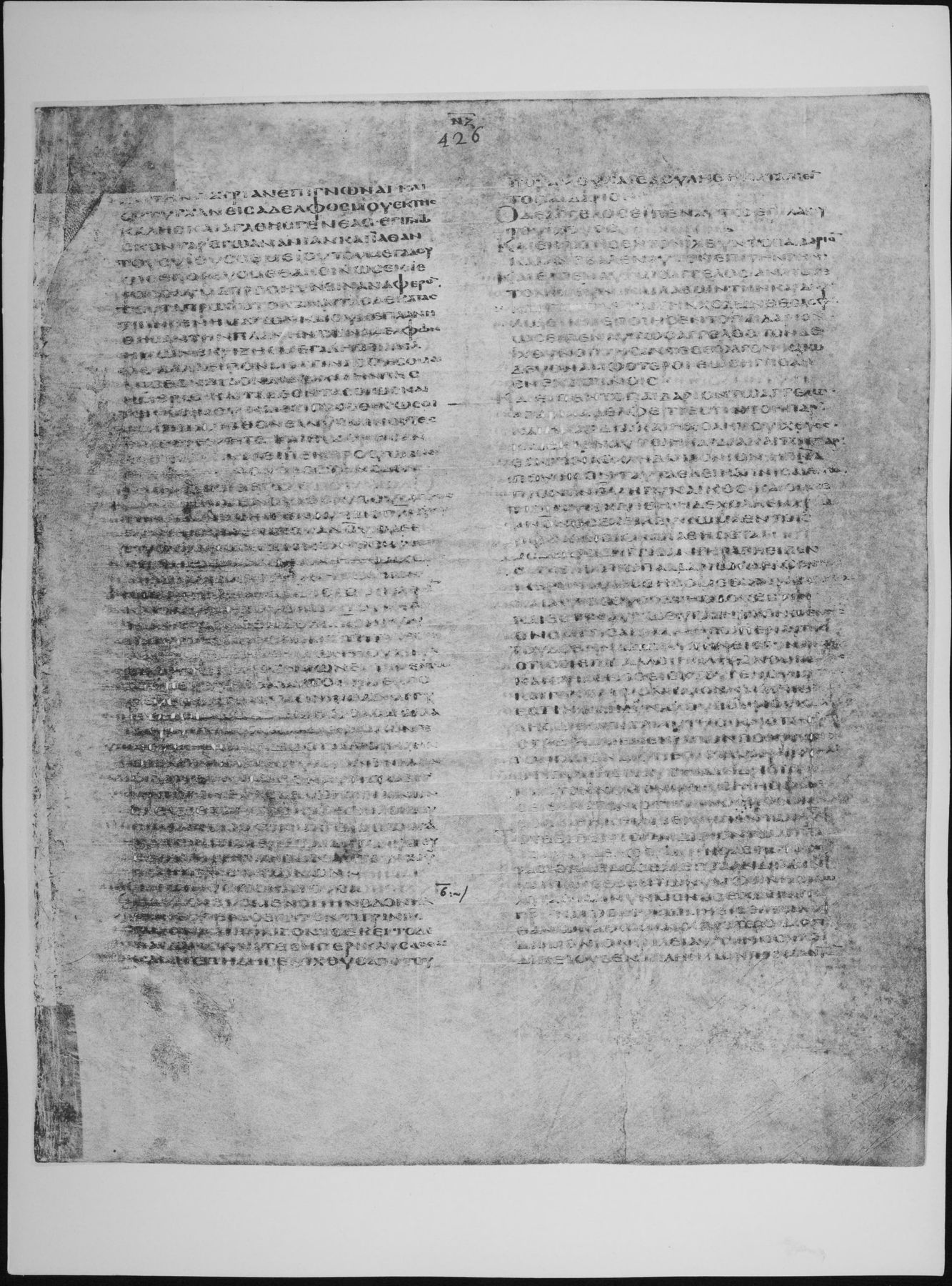
Tobit 5:10-14 is on fol. 425v (full-size facsimile of 1879-83, Internet Archive codex-alexandrinus leaf 875). The 1936 reduced facsimile prints beneath this page: Tobit iv. 12-v. 14. Checked on the plate: the page begins inside Tobit 4:12 (first words read: ΟΙ ΠΡΕΣ ΗΜΩΝ ΑΠΟ ΤΟΥ ΑΙΩΝΟΣ ΜΝΗΣΘΗΤΙ ΠΑΙΔΙΟΝ ΟΤΙ ΟΥΤΟΙ ΠΑΝΤΕΣ). Tobit 5:14-17 is on fol. 426r (full-size facsimile of 1879-83, Internet Archive codex-alexandrinus leaf 876). The 1936 reduced facsimile prints beneath this page: Tobit v. 14-vi. 15. Checked on the plate: the page begins inside Tobit 5:14 (first words read: ΣΥ ΤΥΓΧΑΝΕΙΣ ΑΔΕΛΦΟΣ ΜΟΥ ΕΚ ΤΗΣ ΚΑΛΗΣ ΚΑΙ ΑΓΑΘΗΣ ΓΕΝΕΑΣ ΕΠΕΓΙΝΩΣΚΟΝ ΓΑΡ ΕΓΩ ΑΝΑΝΙΑΝ ΚΑΙ ΙΑΘΑΝ). Note: the first line of the column is faint on the plate; the words given are the first that can be read with confidence.
10καὶ ἐκάλεσεν αὐτόν· καὶ εἰσῆλθεν, καὶ ἠσπάσαντο ἀλλήλους. 11καὶ εἶπεν αὐτῷ Τωβείτ Ἀδελφέ, ἐκ ποίας φυλῆς καὶ ἐκ ποίας πατρίδος σὺ εἶ; ὑπόδειξόν μοι. 12καὶ εἶπεν αὐτῷ Φυλὴν καὶ πατριὰν σὺ ζητεῖς, ἢ μίσθιον ὃς συμπορεύσεται μετὰ τοῦ υἱοῦ σου; καὶ εἶπεν αὐτῷ Τωβείτ Βούλομαι, ἀδελφέ, ἐπιγνῶναι τὸ γένος σου καὶ τὸ ὄνομα. 13ὃς δὲ εἶπεν Ἐγὼ Ἀζαρίας Ἁνανίου τοῦ μεγάλου, τῶν ἀδελφῶν σου. 14καὶ εἶπεν αὐτῷ Ὑγιαίνων ἔλθοις, ἀδελφέ· καὶ μή μοι ὀργισθῇς ὅτι ἐζήτησα τὴν φυλήν σου καὶ τὴν πατριάν σου ἐπιγνῶναι. καὶ σὺ τυγχάνεις ἀδελφός μου ἐκ τῆς καλῆς καὶ ἀγαθῆς γενεᾶς· ἐπεγίνωσκον γὰρ ἐγὼ Ἁνανίαν καὶ Ἰαθὰν τοὺς υἱοὺς Σεμεοῦ τοῦ μεγάλου, ὡς ἐπορευόμεθα κοινῶς εἰς Ἰεροσόλυμα προσκυνεῖν, ἀναφέροντες τὰ πρωτότοκα καὶ τὰς δεκάτας τῶν γενημάτων, καὶ οὐκ ἐπλανήθησαν ἐν τῇ πλάνῃ τῶν ἀδελφῶν ἡμῶν· ἐκ ῥίζης καλῆς εἶ, ἀδελφέ. 15ἀλλ᾽ εἰπόν μοι τίνα σοι ἔσομαι μισθὸν διδόναι; δραχμὴν τῆς ἡμέρας καὶ τὰ δέοντά σοι ὡς καὶ τῷ υἱῷ μου; 16καὶ ἔτι προσθήσω σοι ἐπὶ τὸν μισθόν, ἐὰν ὑγιαίνοντες ἐπιστρέψητε. 17εὐδόκησαν οὕτως· καὶ εἶπεν πρὸς Τωβίαν Ἕτοιμος γίνου πρὸς τὴν ὁδόν· καὶ εὐοδωθείητε. καὶ ἡτοίμασεν ὁ υἱὸς αὐτοῦ τὰ πρὸς τὴν ὁδόν· καὶ εἶπεν αὐτῷ ὁ πατὴρ αὐτοῦ Πορεύου μετὰ τοῦ ἀνθρώπου· ὁ δὲ ἐν τῷ οὐρανῷ οἰκῶν θεὸς εὐοδώσει τὴν ὁδὸν ὑμῶν, καὶ ὁ ἄγγελος αὐτοῦ συνπορευθήτω ὑμῖν. καὶ ἐξῆλθαν ἀμφότεροι ἀπελθεῖν, καὶ ὁ κύων τοῦ παιδαρίου μετ᾽ αὐτῶν.
9So he called him, and he came in, and they saluted one another. 10Then Tobit said unto him, Brother, shew me of what tribe and family thou art. 11To whom he said, Dost thou seek for a tribe or family, or an hired man to go with thy son? Then Tobit said unto him, I would know, brother, thy kindred and name. 12Then he said, I am Azarias, the son of Ananias the great, and of thy brethren. 13Then Tobit said, Thou art welcome, brother; be not now angry with me, because I have enquired to know thy tribe and thy family; for thou art my brother, of an honest and good stock: for I know Ananias and Jonathas, sons of that great Samaias, as we went together to Jerusalem to worship, and offered the firstborn, and the tenths of the fruits; and they were not seduced with the error of our brethren: my brother, thou art of a good stock. 14But tell me, what wages shall I give thee? wilt thou a drachm a day, and things necessary, as to mine own son? 15Yea, moreover, if ye return safe, I will add something to thy wages. 16So they were well pleased. Then said he to Tobias, Prepare thyself for the journey, and God send you a good journey. And when his son had prepared all things for the journey, his father said, Go thou with this man, and God, which dwelleth in heaven, prosper your journey, and the angel of God keep you company. So they went forth both, and the young man's dog with them.
Where on the image
Tobit 5:18-22 is on fol. 426r (full-size facsimile of 1879-83, Internet Archive codex-alexandrinus leaf 876). The 1936 reduced facsimile prints beneath this page: Tobit v. 14-vi. 15. Checked on the plate: the page begins inside Tobit 5:14 (first words read: ΣΥ ΤΥΓΧΑΝΕΙΣ ΑΔΕΛΦΟΣ ΜΟΥ ΕΚ ΤΗΣ ΚΑΛΗΣ ΚΑΙ ΑΓΑΘΗΣ ΓΕΝΕΑΣ ΕΠΕΓΙΝΩΣΚΟΝ ΓΑΡ ΕΓΩ ΑΝΑΝΙΑΝ ΚΑΙ ΙΑΘΑΝ). Note: the first line of the column is faint on the plate; the words given are the first that can be read with confidence.
18Ἔκλαυσεν δὲ Ἅννα ἡ μήτηρ αὐτοῦ, καὶ εἶπεν πρὸς Τωβείτ Τί ἐξαπέστειλας τὸ παιδίον ἡμῶν; ἢ οὐχὶ ἡ ῥάβδος τῆς χειρὸς ἡμῶν ἐστιν ἐν τῷ εἰσπορεύεσθαι αὐτὸν καὶ ἐκπορεύεσθαι ἐνώπιον ἡμῶν; 19ἀργύριον τῷ ἀργυρίῳ μὴ φθάσαι, ἀλλὰ περίψημα τοῦ παιδίου ἡμῶν γένοιτο. 20ὡς γὰρ δέδοται ἡμῖν ζῇν παρὰ τοῦ κυρίου, τοῦτο ἱκανὸν ἡμῖν ὑπάρχει. 21καὶ εἶπεν αὐτῇ Τωβείτ Μὴ λόγον ἔχε, ἀδελφή· ὑγιαίνων ἐλεύσεται, καὶ οἱ ὀφθαλμοί σου ὄψονται αὐτόν. 22ἄγγελος γὰρ ἀγαθὸς συνπορεύσεται αὐτῷ, καὶ εὐοδωθήσεται ἡ ὁδὸς αὐτοῦ, καὶ ὑποστρέψει ὑγιαίνων.
17But Anna his mother wept, and said to Tobit, Why hast thou sent away our son? is he not the staff of our hand, in going in and out before us? 18Be not greedy to add money to money: but let it be as refuse in respect of our child. 19For that which the Lord hath given us to live with doth suffice us. 20Then said Tobit to her, Take no care, my sister; he shall return in safety, and thine eyes shall see him. 21For the good angel will keep him company, and his journey shall be prosperous, and he shall return safe.
Cite
Sources
- Source: Codex Alexandrinus (British Library Royal MS 1 D. VI) via the British Museum photographic facsimiles of 1879-83 and 1936 (Internet Archive) + Swete's Septuagint + Brenton's English (holding institution)
- Critical edition: H. B. Swete, The Old Testament in Greek according to the Septuagint (1909)
← previous · → next · v cycle view · l back to library