P72 (Papyrus Bodmer VII): Jude 1:1-25 (pages 62-68)
Introduction
P72 is a papyrus codex copied in Egypt in the 3rd or early 4th century. It holds the oldest known copies of 1 Peter, 2 Peter and Jude. The pages are numbered by the scribe. 1-2 Peter (papyrus pages 1-36) are Papyrus Bodmer VIII, given by Martin Bodmer to Pope Paul VI in 1969 and now in the Vatican Library; Jude (pages 62-68) is Papyrus Bodmer VII, still at the Fondation Martin Bodmer, Cologny (Geneva). Both belong to the Bodmer "Miscellaneous" or "Composite" codex, which also contains the Nativity of Mary, the apocryphal correspondence of Paul with the Corinthians, the 11th Ode of Solomon, Melito's sermon On the Pascha, a hymn fragment and other texts. 1-2 Peter seem to have formed a separate booklet before being bound with the rest.
Each section below is one papyrus page: the photograph, the NTVMR diplomatic transcription of that page line by line, and the King James Version of every verse on it. The scribe's spelling is irregular (ει for ι, ε for αι, and so on) and is kept as written.
This entry covers papyrus pages 62-68 (Jude 1:1-25). The photographs are from the Fondation Martin Bodmer (Pap. Bodmer VII), via the Bodmer Lab of the University of Geneva.
How was this verified? (Provenance)
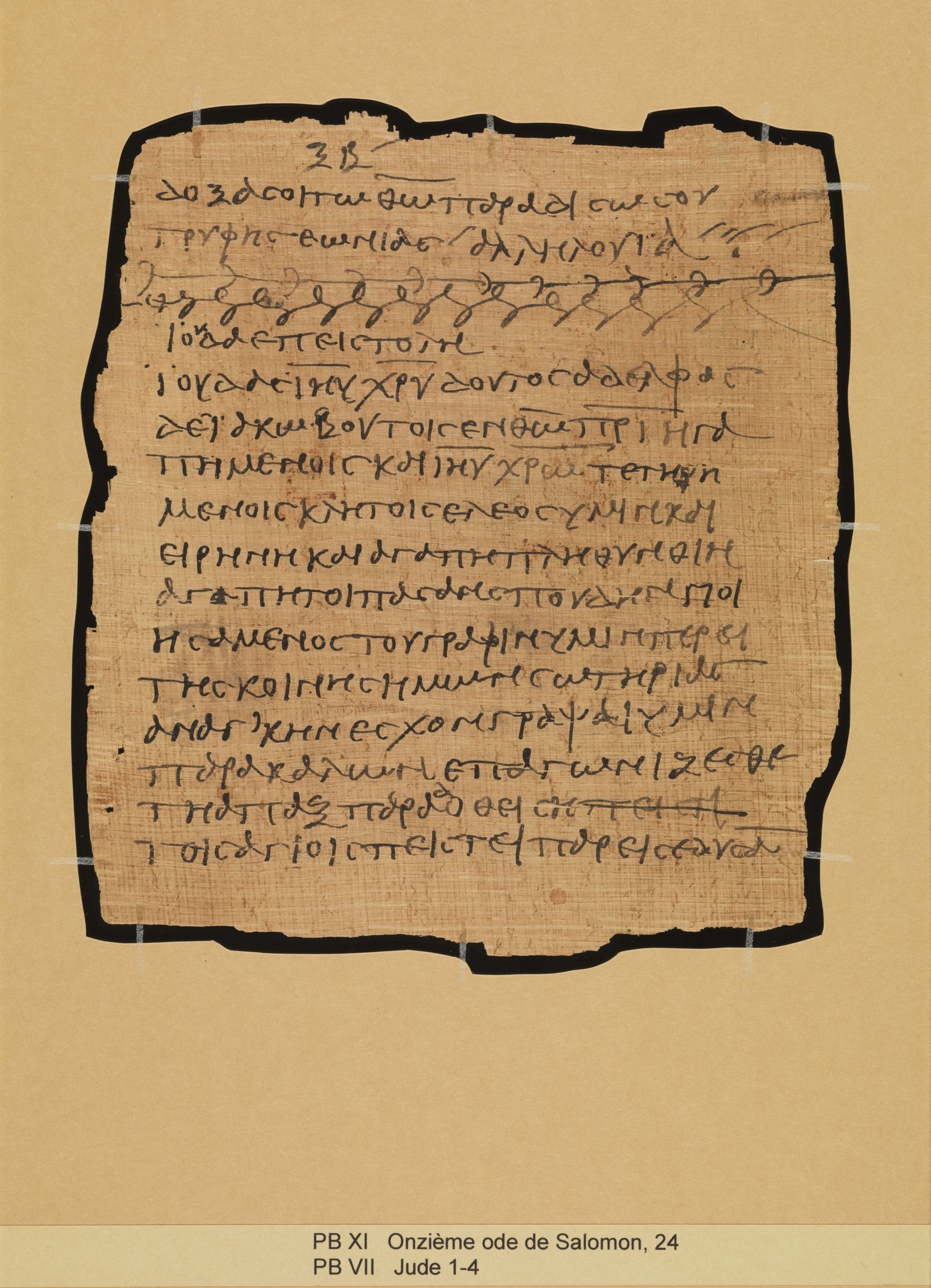
Where on the image
Fondation Martin Bodmer, Bodmer Miscellaneous Codex (PB C), Bodmer Lab image 049 (https://bodmerlab.unige.ch/fr/constellations/papyri/mirador/1072205366), the leaf in its glass plate. The printed caption under the plate reads "PB XI Onzième ode de Salomon, 24 / PB VII Jude 1-4". 1:4 continues on the next page. The page also carries a book title, shown in italics in the Greek (ιοδα επειστολη ·); the KJV has no English for it. Checked on the image: 13 lines in the transcription; the first legible line (line 1) reads ‹ιοδα επειστολη ·›, the last legible line (line 13) ‹τοις αγιοις παρεισεδυσαν›; both match the page. Above Jude, the first two lines of the page are the end of the 11th Ode of Solomon (P. Bodmer XI), followed by a line of decoration; these are not part of the P72 transcription.
ιοδα επειστολη·
1:1 ιουδας ι̅η̅υ̅ χ̅ρ̅υ̅ δουλος αδελφο̣ς
δε ιακωβου τοις εν θ̅ω̅ π̅ρ̅ι̅ ηγα
πημενοις και ι̅η̅υ̅ χ̅ρ̅ω̅ τετηρ̣η
μενοις κλητοις 2 ελεος υμιν και
ειρηνη και αγαπη πληθυνθιη
3 αγαπητοι πασαν σπουδην ποι
ησαμενος του γραφιν υμιν περει
της κοινης ημων σωτηριας
αναγκην εσχον γραψαι υμιν
παρακαλων επαγωνιζεσθε
τη απαξ παραοθειση πειστι
τοις αγιοις 4 παρεισεδυσαν
1:1Jude, the servant of Jesus Christ, and brother of James, to them that are sanctified by God the Father, and preserved in Jesus Christ, and called: 2Mercy unto you, and peace, and love, be multiplied. 3Beloved, when I gave all diligence to write unto you of the common salvation, it was needful for me to write unto you, and exhort you that ye should earnestly contend for the faith which was once delivered unto the saints. 4For there are certain men crept in unawares, who were before of old ordained to this condemnation, ungodly men, turning the grace of our God into lasciviousness, and denying the only Lord God, and our Lord Jesus Christ.
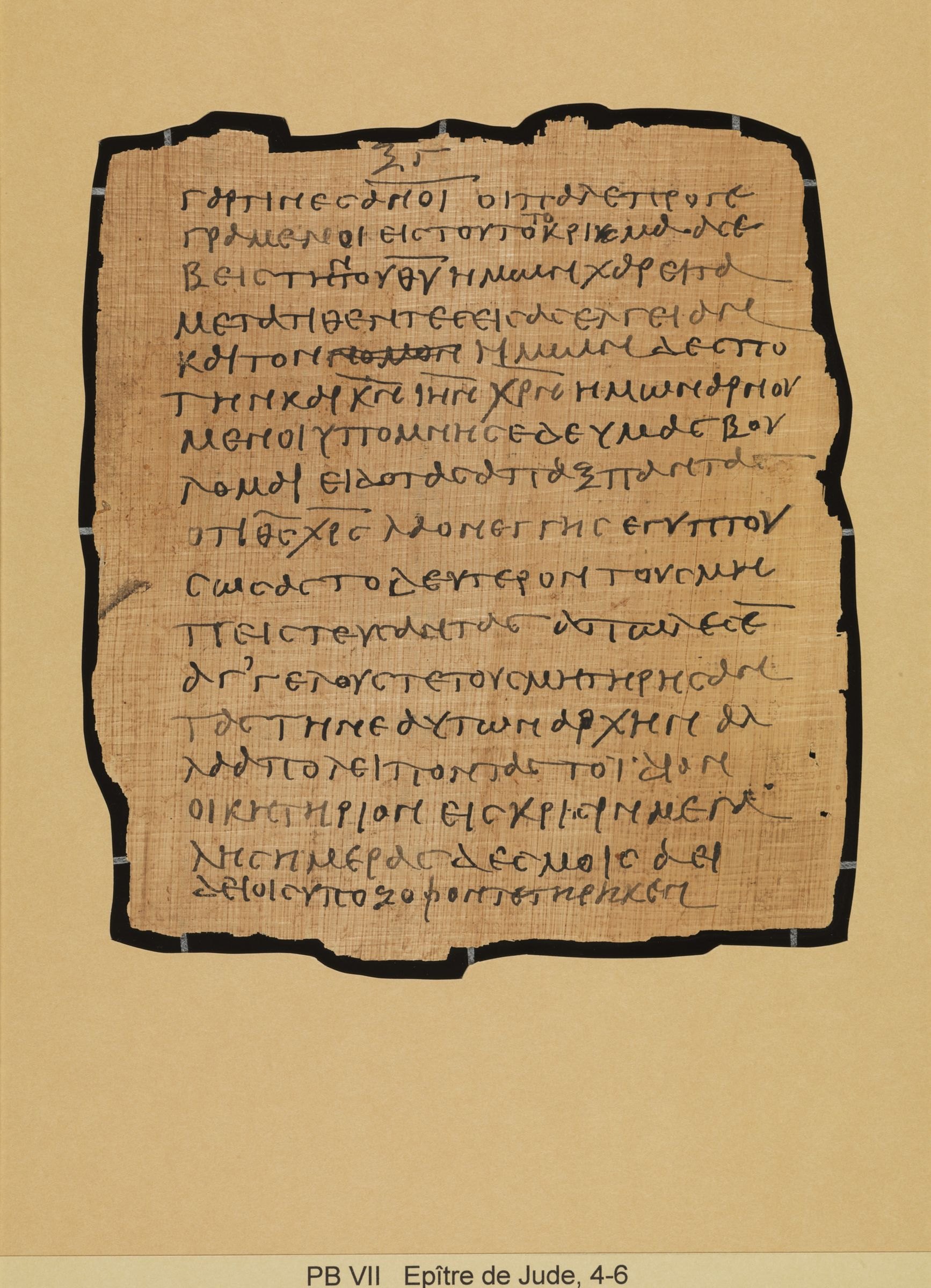
Where on the image
Fondation Martin Bodmer, Bodmer Miscellaneous Codex (PB C), Bodmer Lab image 050 (https://bodmerlab.unige.ch/fr/constellations/papyri/mirador/1072205366), the leaf in its glass plate. The printed caption under the plate reads "PB VII Epître de Jude, 4-6". 1:4 begins on the previous page. Checked on the image: 17 lines in the transcription; the first legible line (line 1) reads ‹γαρ τινες α̅ν̅ο̅ι̅ οι παλε προγε›, the last legible line (line 17) ‹δειοις υπο ζοφον τετηρηκεν›; both match the page.
1:4 γαρ τινες α̅ν̅ο̅ι̅ οι παλε προγε
γραμενοι εις τουτο κρισ̣μα ασε
βεις τη του θ̅υ̅ ημων χαρειτα
μετατιθεντες εις ασελγειαν
και τον νομον ημων δεσπο
την και κ̅ν̅ ι̅η̅ν̅ χ̅ρ̅ν̅ ημων αρνου
μενοι 5 υπομνησε δε υμας βου
λομαι ειδοτας απαξ παντας
οτι θ̅ς̅ χ̅ρ̅ς̅ λαον εγ γης εγυπτου
σωσας το δευτερον τους μη
πειστευσαντας απωλεσεν
6 αγγελους τε τους μη τηρησαν
τας την εαυτων αρχην αλ
λα απολειποντας το ιδιον
οικητηριον εις κρισιν μεγα
λης ημερας δεσμοις αει
δειοις υπο ζοφον τετηρηκεν
1:4For there are certain men crept in unawares, who were before of old ordained to this condemnation, ungodly men, turning the grace of our God into lasciviousness, and denying the only Lord God, and our Lord Jesus Christ. 5I will therefore put you in remembrance, though ye once knew this, how that the Lord, having saved the people out of the land of Egypt, afterward destroyed them that believed not. 6And the angels which kept not their first estate, but left their own habitation, he hath reserved in everlasting chains under darkness unto the judgment of the great day.
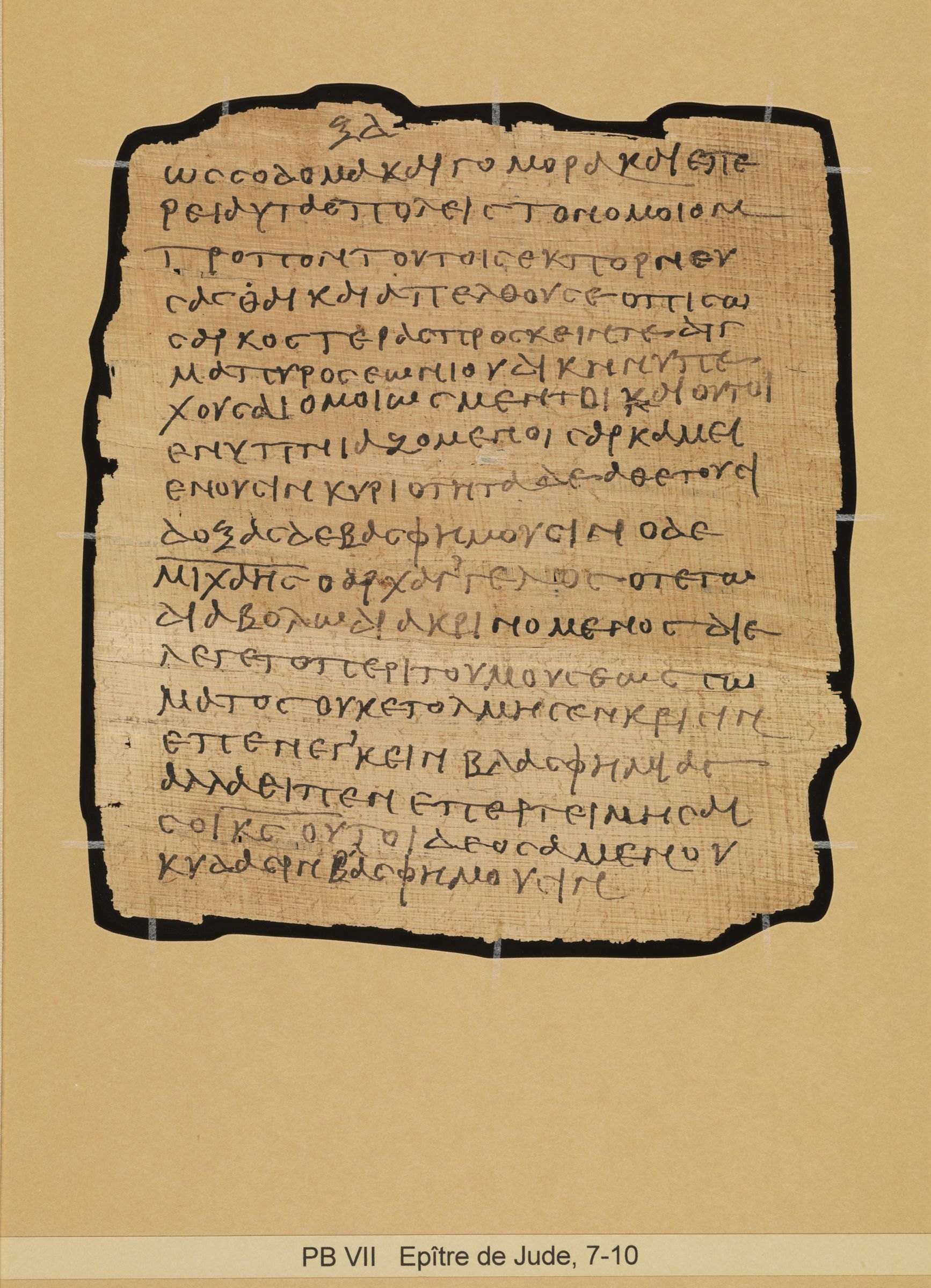
Where on the image
Fondation Martin Bodmer, Bodmer Miscellaneous Codex (PB C), Bodmer Lab image 051 (https://bodmerlab.unige.ch/fr/constellations/papyri/mirador/1072205366), the leaf in its glass plate. The printed caption under the plate reads "PB VII Epître de Jude, 7-10". 1:10 continues on the next page. Checked on the image: 18 lines in the transcription; the first legible line (line 1) reads ‹ως σοδομα και γομορα και ε πε›, the last legible line (line 18) ‹κ υδασιν βασφημουσιν›; both match the page.
1:7 ως σοδομα και γομορα και ε πε
ρει αυτας πολεις τον ομοιον
τροπον τουτοις εκπορνευ
σασθαι και απελθουσε οπισω
σαρκος τερας προσκειντε διγ
μα πυρος εωνιου δικην υπε
χουσαι 8 ομοιως μεντοι και ουτοι
ενυπνιαζομενοι σαρκα μει
ενουσιν κυριοτητα δε αθετουσι
δοξας δε βασφημουσιν 9 ο δε
μιχαης ο αρχαγγελος οτε τω
διαβολω διακρινομενος διε
λεγετο περι του μουσεως σω
ματος ουκ ετολμησεν κρισιν
επενεγκειν βλασφημιας
αλλα ειπεν επειτειμησαι
σοι κ̅ς̅ 10 ουτοι δε οσα μεν ου
κ υδασιν βασφημουσιν
1:7Even as Sodom and Gomorrha, and the cities about them in like manner, giving themselves over to fornication, and going after strange flesh, are set forth for an example, suffering the vengeance of eternal fire. 8Likewise also these filthy dreamers defile the flesh, despise dominion, and speak evil of dignities. 9Yet Michael the archangel, when contending with the devil he disputed about the body of Moses, durst not bring against him a railing accusation, but said, The Lord rebuke thee. 10But these speak evil of those things which they know not: but what they know naturally, as brute beasts, in those things they corrupt themselves.
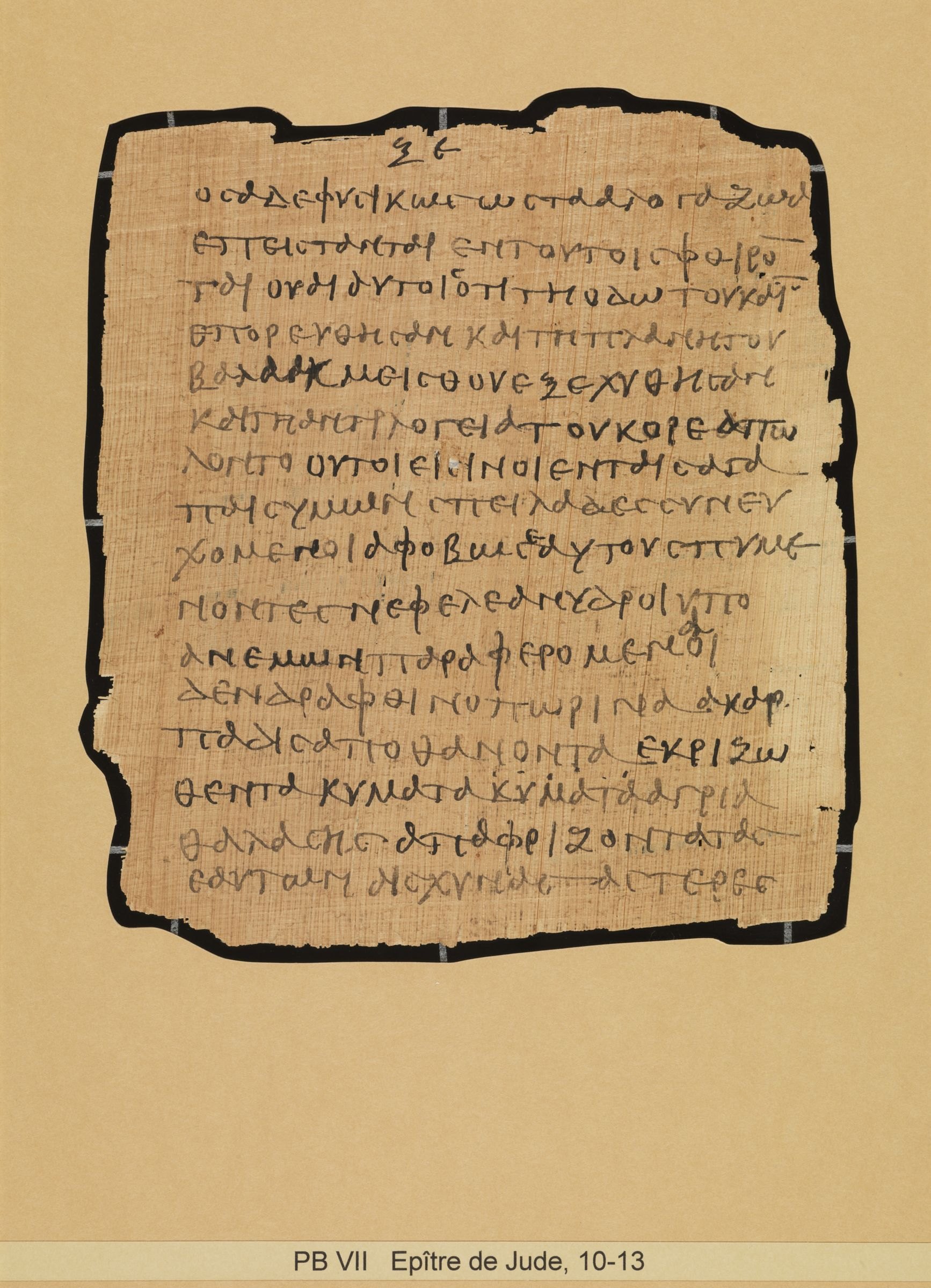
Where on the image
Fondation Martin Bodmer, Bodmer Miscellaneous Codex (PB C), Bodmer Lab image 052 (https://bodmerlab.unige.ch/fr/constellations/papyri/mirador/1072205366), the leaf in its glass plate. The printed caption under the plate reads "PB VII Epître de Jude, 10-13". 1:10 begins on the previous page; 1:13 continues on the next page. Checked on the image: 16 lines in the transcription; the first legible line (line 1) reads ‹οσα δε φυσικως ως τα αλογα ζωα›, the last legible line (line 16) ‹εαυτων αισχυνας αστερες›; both match the page.
1:10 οσα δε φυσικως ως τα αλογα ζωα
επειστανται εν τουτοις φθιρον
ται 11 ουαι αυτοι οτι τη οδω του καιν
επορευθησαν και τη πλανη του
βαλαακ μεισθου εξεχυθησαν
και τη αντιλογεια του κορε απω
λοντο 12 ουτοι εισιν οι εν ταις αγα
παις υμων σπειλαδες συνευ
χομενοι αφοβως αυτους πυμε
νοντες νεφελε ανυδροι υπο
ανεμων παραφερομενοι
δενδρα φθινοπωρινα ακαρ
πα δις αποθανοντα εκριζω
θεντα 13 κυματα κυματα αγρια
θαλασης απαφριζοντα τας
εαυτων αισχυνας αστερες
1:10But these speak evil of those things which they know not: but what they know naturally, as brute beasts, in those things they corrupt themselves. 11Woe unto them! for they have gone in the way of Cain, and ran greedily after the error of Balaam for reward, and perished in the gainsaying of Core. 12These are spots in your feasts of charity, when they feast with you, feeding themselves without fear: clouds they are without water, carried about of winds; trees whose fruit withereth, without fruit, twice dead, plucked up by the roots; 13Raging waves of the sea, foaming out their own shame; wandering stars, to whom is reserved the blackness of darkness for ever.
Where on the image
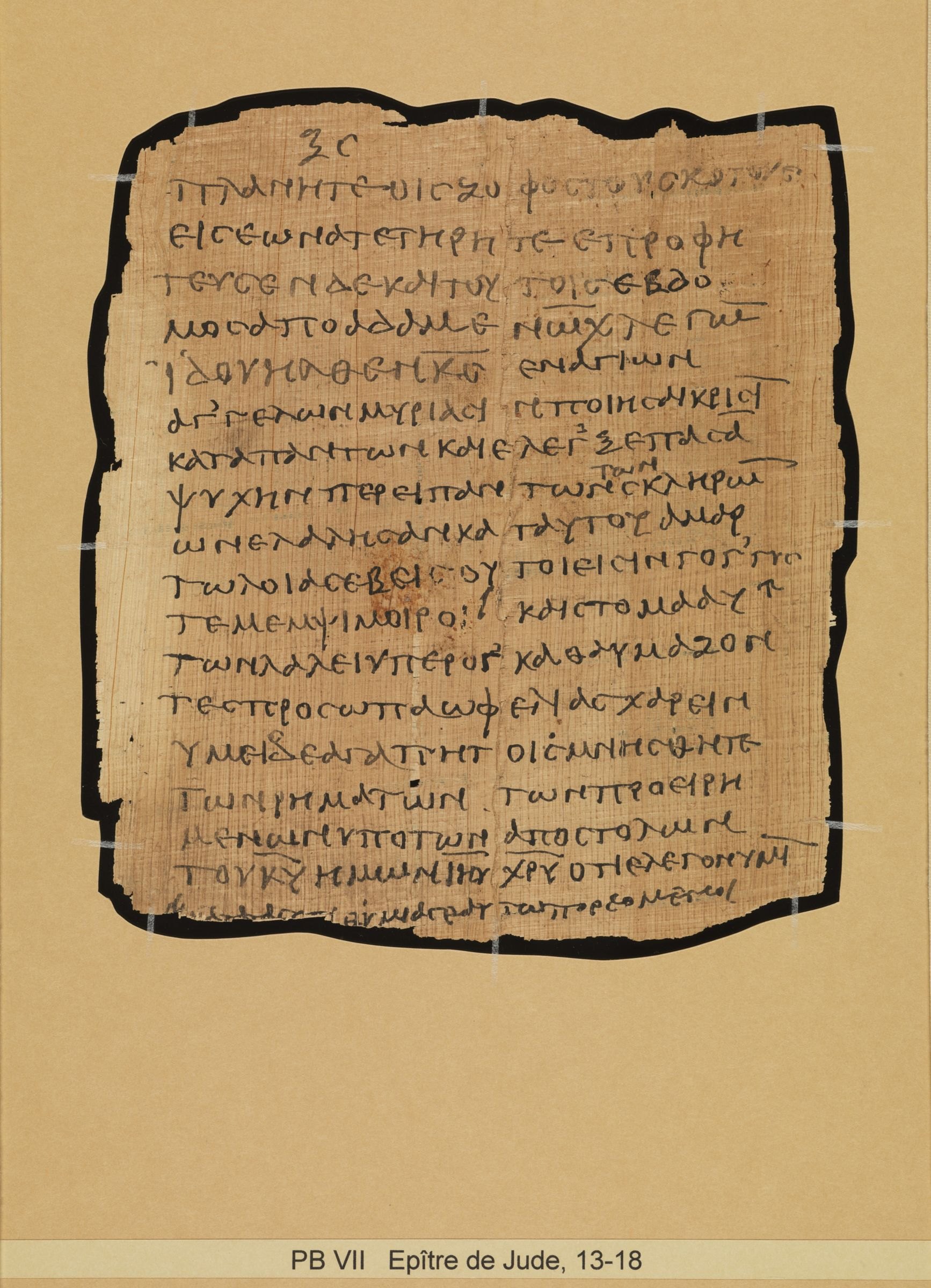
Fondation Martin Bodmer, Bodmer Miscellaneous Codex (PB C), Bodmer Lab image 053 (https://bodmerlab.unige.ch/fr/constellations/papyri/mirador/1072205366), the leaf in its glass plate. The printed caption under the plate reads "PB VII Epître de Jude, 13-18". 1:13 begins on the previous page; 1:18 continues on the next page. Checked on the image: 17 lines in the transcription; the first legible line (line 1) reads ‹πλανητε οις ζοφος του σκοτους›, the last legible line (line 17) ‹κ̅υ̅ ημων ι̅η̅υ̅ χ̅ρ̅υ̅ οτι ελεγον υμιν›; both match the page. A line written by a corrector below the text (κατα τας επιθυμιας εαυτω πορεομενοι, words of Jude 16 missing from the first hand) is not shown: the Greek is the first hand.
1:13 πλανητε οις ζοφος του σκοτους
εις εωνα τετηρητε 14 επροφη
τευσεν δε και τουτοις εβδο
μος απο αδαμ ενωχ λεγων
ιδου ηλθεν κ̅ς̅ εν αγιων
αγγελων μυριασιν 15 ποιησαι κρισιν
κατα παντων και ελεγξε πασαν
ψυχην περει παντων σκληρων
ων ελαλησαν κατ αυτου αμαρ
τωλοι ασεβεις 16 ουτοι εισιν γογγυσ
τε μεμψιμοιροι και στομα αυ
των λαλει υπερογκα θαυμαζον
τες προσωπα ωφελιας χαρειν
17 υμει δε αγαπητοις μνησθητε
των ρηματων των προειρη
μενων υπο των αποστολων
του κ̅υ̅ ημων ι̅η̅υ̅ χ̅ρ̅υ̅ 18 οτι ελεγον υμιν
1:13Raging waves of the sea, foaming out their own shame; wandering stars, to whom is reserved the blackness of darkness for ever. 14And Enoch also, the seventh from Adam, prophesied of these, saying, Behold, the Lord cometh with ten thousands of his saints, 15To execute judgment upon all, and to convince all that are ungodly among them of all their ungodly deeds which they have ungodly committed, and of all their hard speeches which ungodly sinners have spoken against him. 16These are murmurers, complainers, walking after their own lusts; and their mouth speaketh great swelling words, having men’s persons in admiration because of advantage. 17But, beloved, remember ye the words which were spoken before of the apostles of our Lord Jesus Christ; 18How that they told you there should be mockers in the last time, who should walk after their own ungodly lusts.
Where on the image
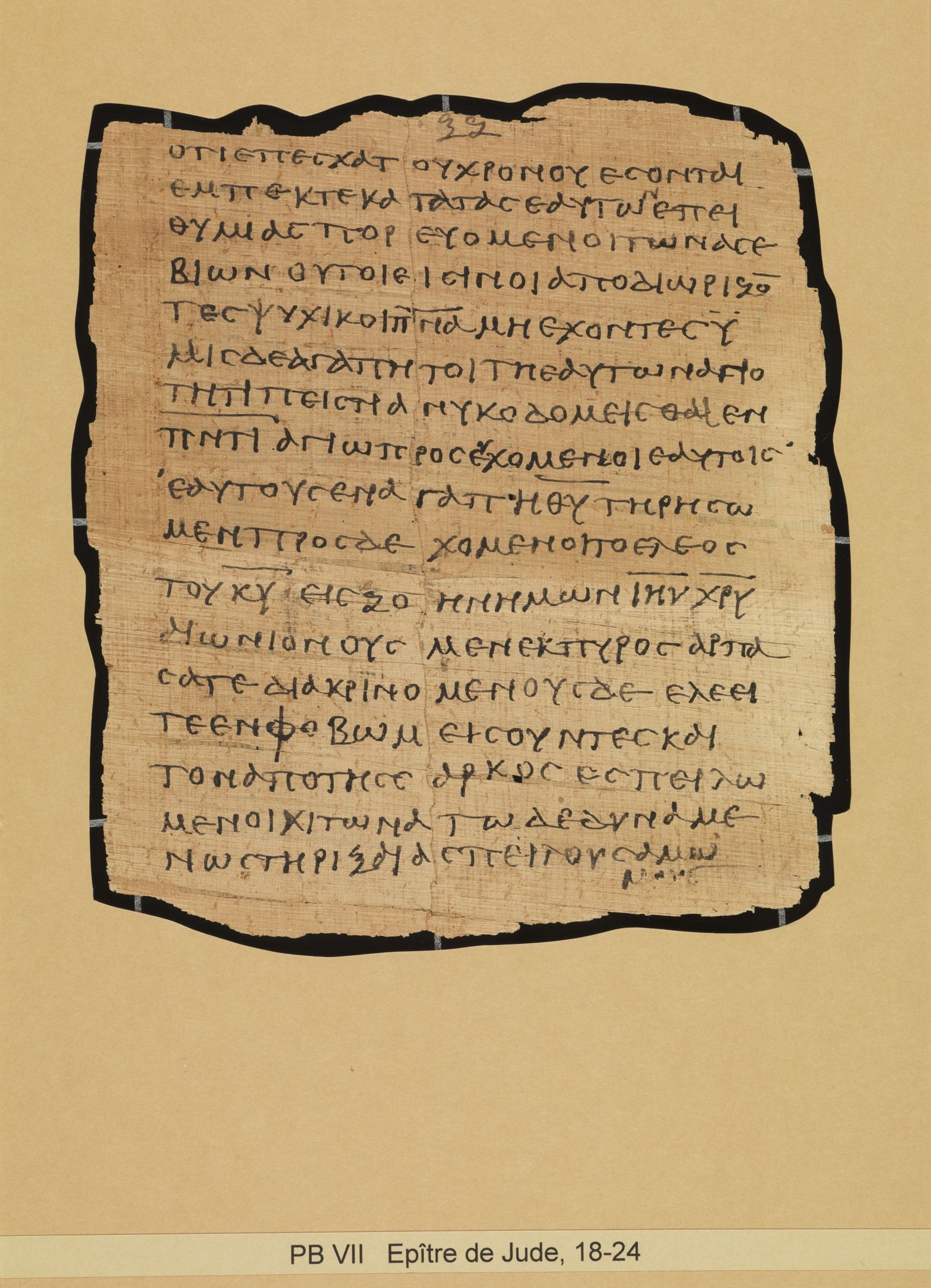
Fondation Martin Bodmer, Bodmer Miscellaneous Codex (PB C), Bodmer Lab image 054 (https://bodmerlab.unige.ch/fr/constellations/papyri/mirador/1072205366), the leaf in its glass plate. The printed caption under the plate reads "PB VII Epître de Jude, 18-24". 1:18 begins on the previous page; 1:24 continues on the next page. Checked on the image: 17 lines in the transcription; the first legible line (line 1) reads ‹οτι επ εσχατου χρονου εσονται›, the last legible line (line 17) ‹νω στηριξαι ασπειλους αμωμο̣υς›; both match the page.
1:18 οτι επ εσχατου χρονου εσονται
εμπεκτε κατα τας εαυτω επει
θυμιας πορευομενοι των ασε
βιων 19 ουτοι εισιν οι αποδιωριζον
τες ψυχικοι π̅ν̅α̅ μη εχοντες 20 υ
μις δε αγαπητοι τη εαυτων αγιο
τητι πειστι ανυκοδομεισθαι εν
π̅ν̅τ̅ι̅ αγιω προσεχομενοι εαυτοις·
21 εαυτους εν αγαπη θ̅υ̅ τηρησω
μεν προσδεχομενοι το ελεος
του κ̅υ̅ εις ζοην ημων ι̅η̅υ̅ χ̅ρ̅υ̅
αιωνιον 22 ους μεν 23 εκ πυρος αρπα
σατε διακρινομενους δε ελεει
τε εν φοβω μεισουντες και
τον απο της σαρκος εσπειλω
μενοι χιτωνα 24 τω δε δυναμε
νω στηριξαι ασπειλους αμωμο̣υς
1:18How that they told you there should be mockers in the last time, who should walk after their own ungodly lusts. 19These be they who separate themselves, sensual, having not the Spirit. 20But ye, beloved, building up yourselves on your most holy faith, praying in the Holy Ghost, 21Keep yourselves in the love of God, looking for the mercy of our Lord Jesus Christ unto eternal life. 22And of some have compassion, making a difference: 23And others save with fear, pulling them out of the fire; hating even the garment spotted by the flesh. 24Now unto him that is able to keep you from falling, and to present you faultless before the presence of his glory with exceeding joy,
Where on the image
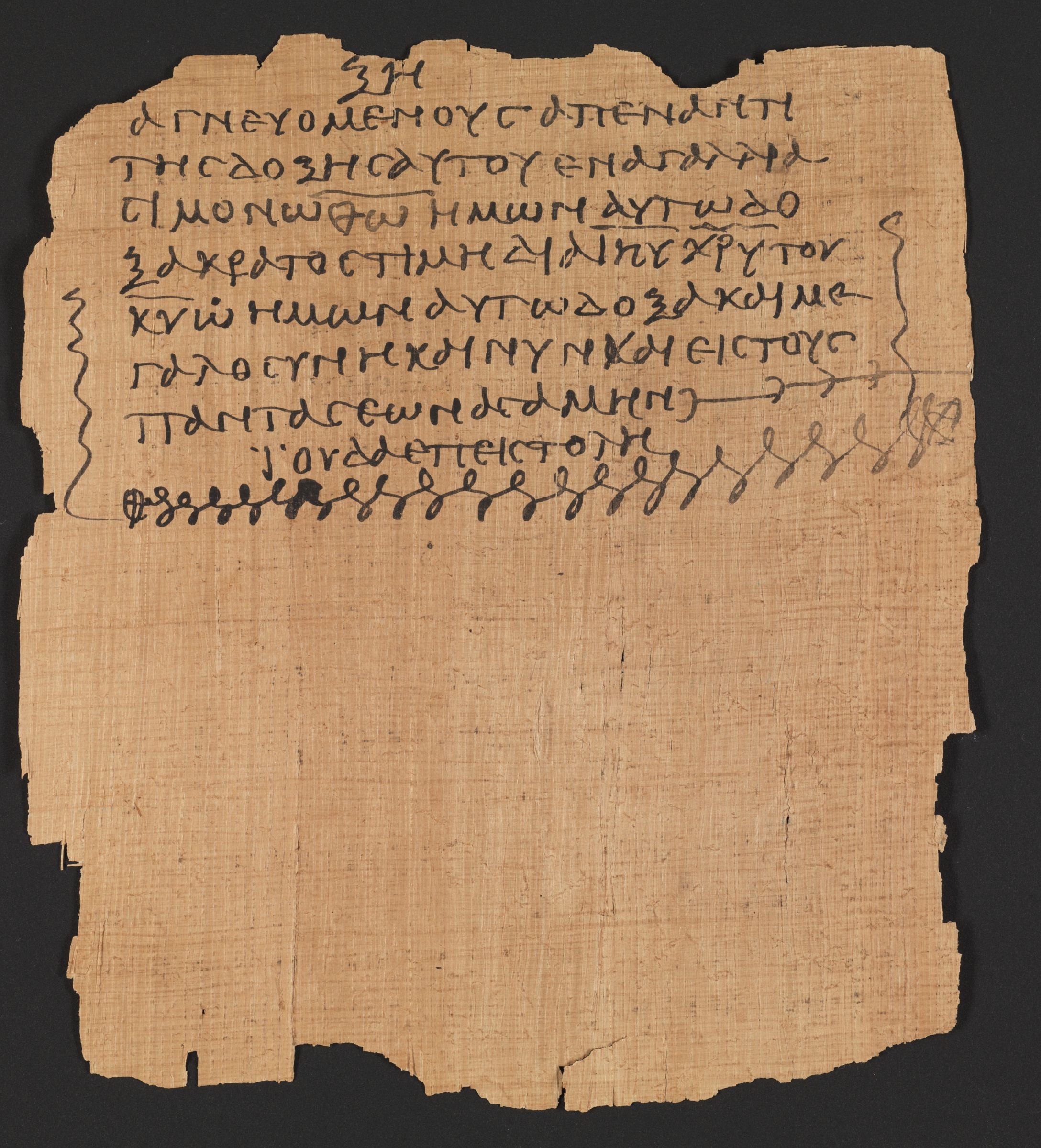
Fondation Martin Bodmer, Bodmer Miscellaneous Codex (PB C), Bodmer Lab image 055 (https://bodmerlab.unige.ch/fr/constellations/papyri/mirador/1072205366), cropped to the leaf (ruler and colour chart cut away). The plate has no caption; the page number ξη (68) is written at the head of the page. 1:24 begins on the previous page. The page also carries a book title, shown in italics in the Greek (ιουδα επειστολη); the KJV has no English for it. Checked on the image: 8 lines in the transcription; the first legible line (line 1) reads ‹αγνευομενους απεναντι›, the last legible line (line 8) ‹ιουδα επειστολη›; both match the page. Below the title ιουδα επειστολη the scribe drew an ornament; the lower half of the page is blank.
1:24 αγνευομενους απεναντι
της δοξης αυτου εν αγαλλια
σι 25 μονω θ̅ω̅ ημων αυτω δο
ξα κρατος τιμη δια ι̅η̅υ̅ χ̅ρ̅υ̅ του
κ̅υ̅ ω ημων αυτω δοξα και με
γαλοσυνη και νυν και εις τους
παντας εωνας αμην
ιουδα επειστολη
1:24Now unto him that is able to keep you from falling, and to present you faultless before the presence of his glory with exceeding joy, 25To the only wise God our Saviour, be glory and majesty, dominion and power, both now and ever. Amen.
Notes
- Greek: the NTVMR diplomatic transcription, line by line as on the papyrus. Square brackets enclose letters that are lost or illegible and were supplied by the transcribers; a dot under a letter marks it as uncertain; [...] marks a gap. Nomina sacra and numerals keep the scribe's overline. Spelling is the scribe's (no accents or breathings). Words broken at a line end stay broken as on the papyrus. Corrections are not shown: the text is the first hand.
- English: the King James Version (1611), whole verses, for every verse that has text on the page. A verse that begins on one page and ends on the next is given in full on both. The KJV translates a later form of the Greek text, so its wording does not always match the papyrus; material differences (such as verses the papyrus does not have) are noted in the section.
Cite
Sources
- Source: Papyrus Bodmer VII (Fondation Martin Bodmer, Cologny): photographs from Bodmer Lab, University of Geneva; Greek from the INTF NTVMR transcription of P72; English from the King James Version (holding institution)
- Critical edition: INTF NTVMR diplomatic transcription (CC BY 4.0)
← previous · → next · v cycle view · l back to library