Plato, Phaedo 78b-84b: the soul's kinship with the divine
Introduction
The Phaedo tells of Socrates' last conversation in prison before he drank the hemlock. In this passage (the 'affinity argument') he divides things into two kinds: the invisible, which is always the same, and the visible, which never stays the same. The soul is more like the first, the body like the second; and 'the soul is most like the divine and immortal and intellectual and uniform and indissoluble and ever unchanging' (80b). A soul that has lived by philosophy, keeping itself pure of the body, goes away at death 'into that which is like itself, into the invisible, divine, immortal, and wise' (81a), while souls bound to the body wander and are born again; philosophy is described as the release of the soul.
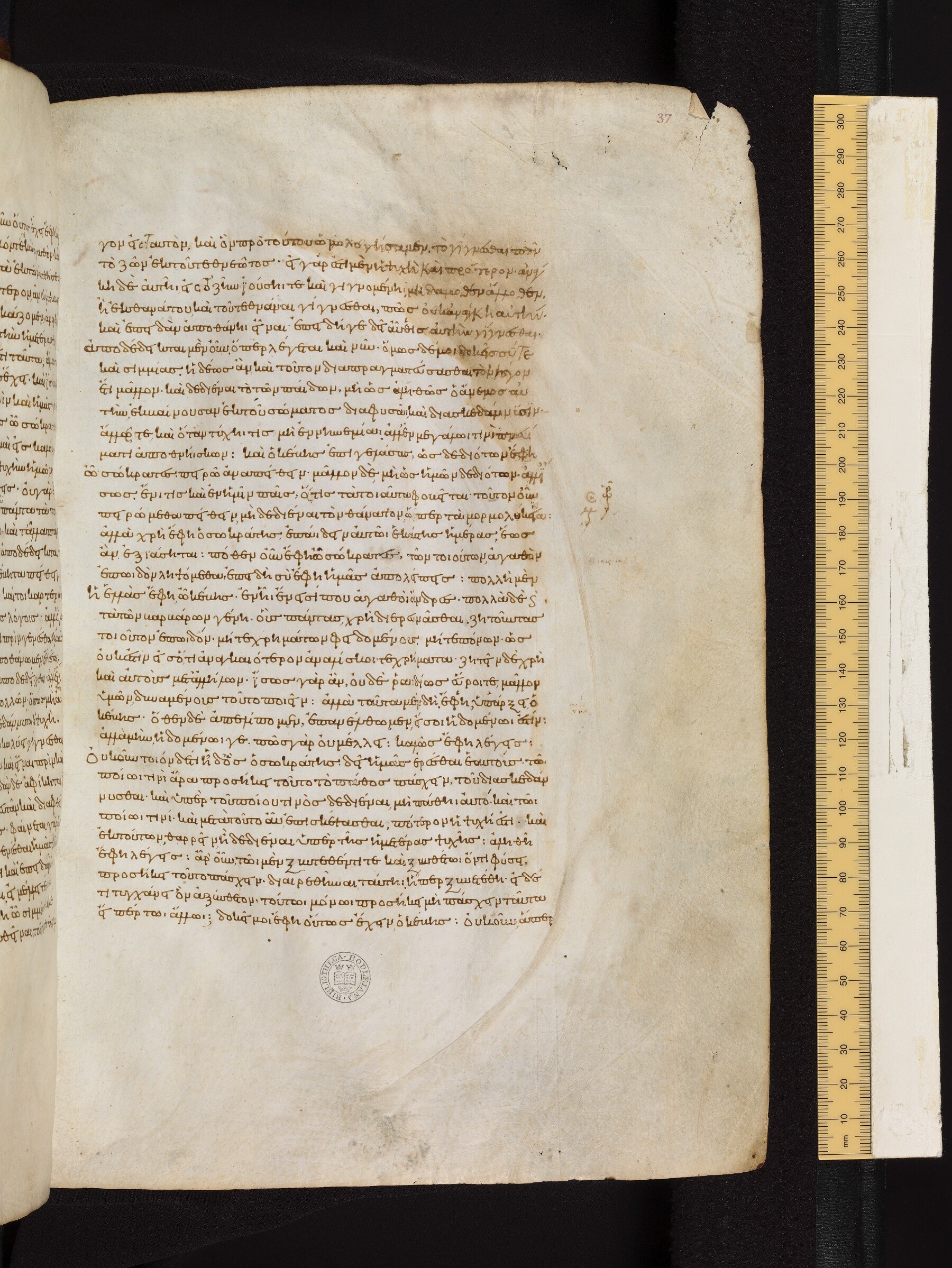
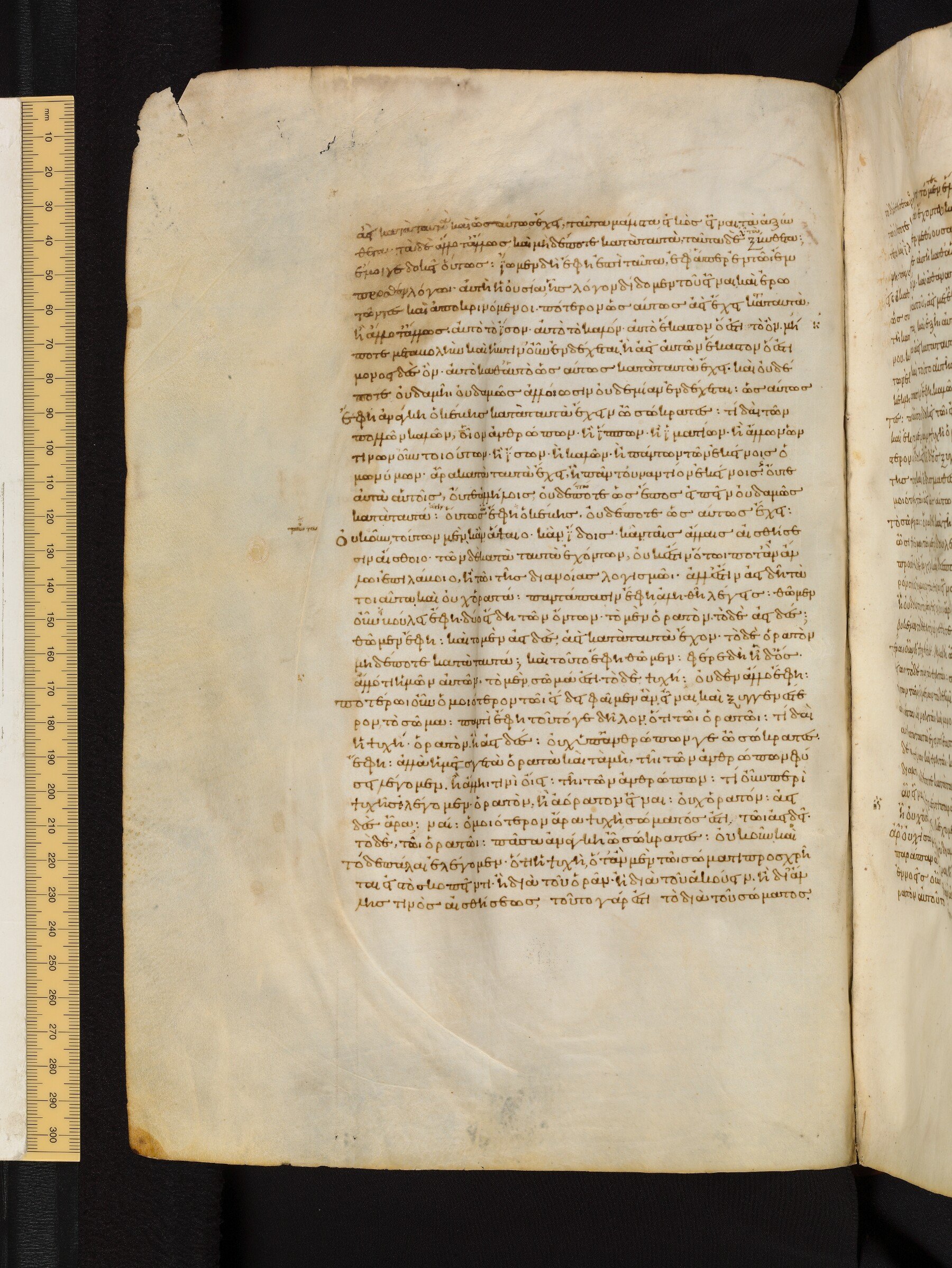
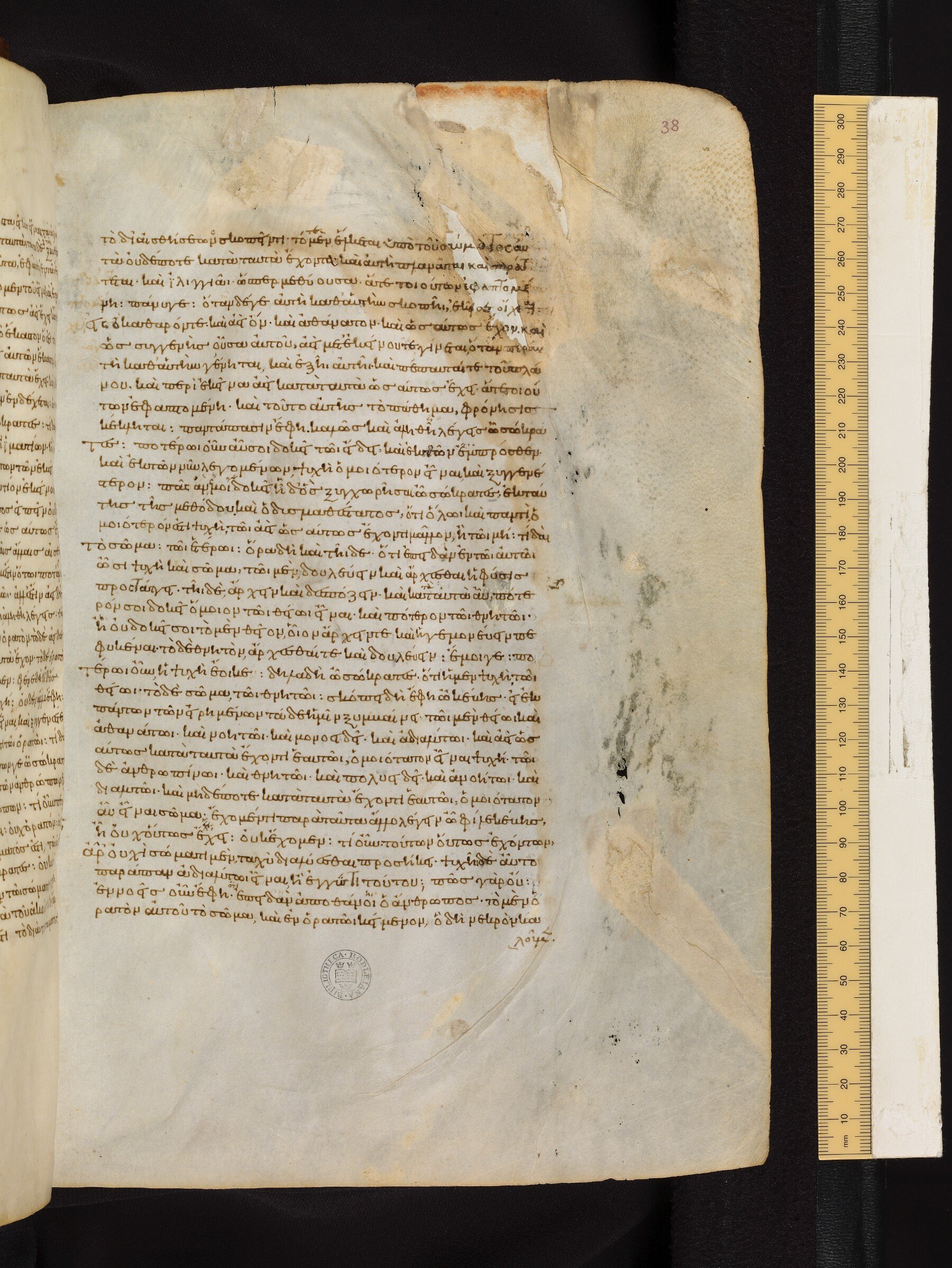
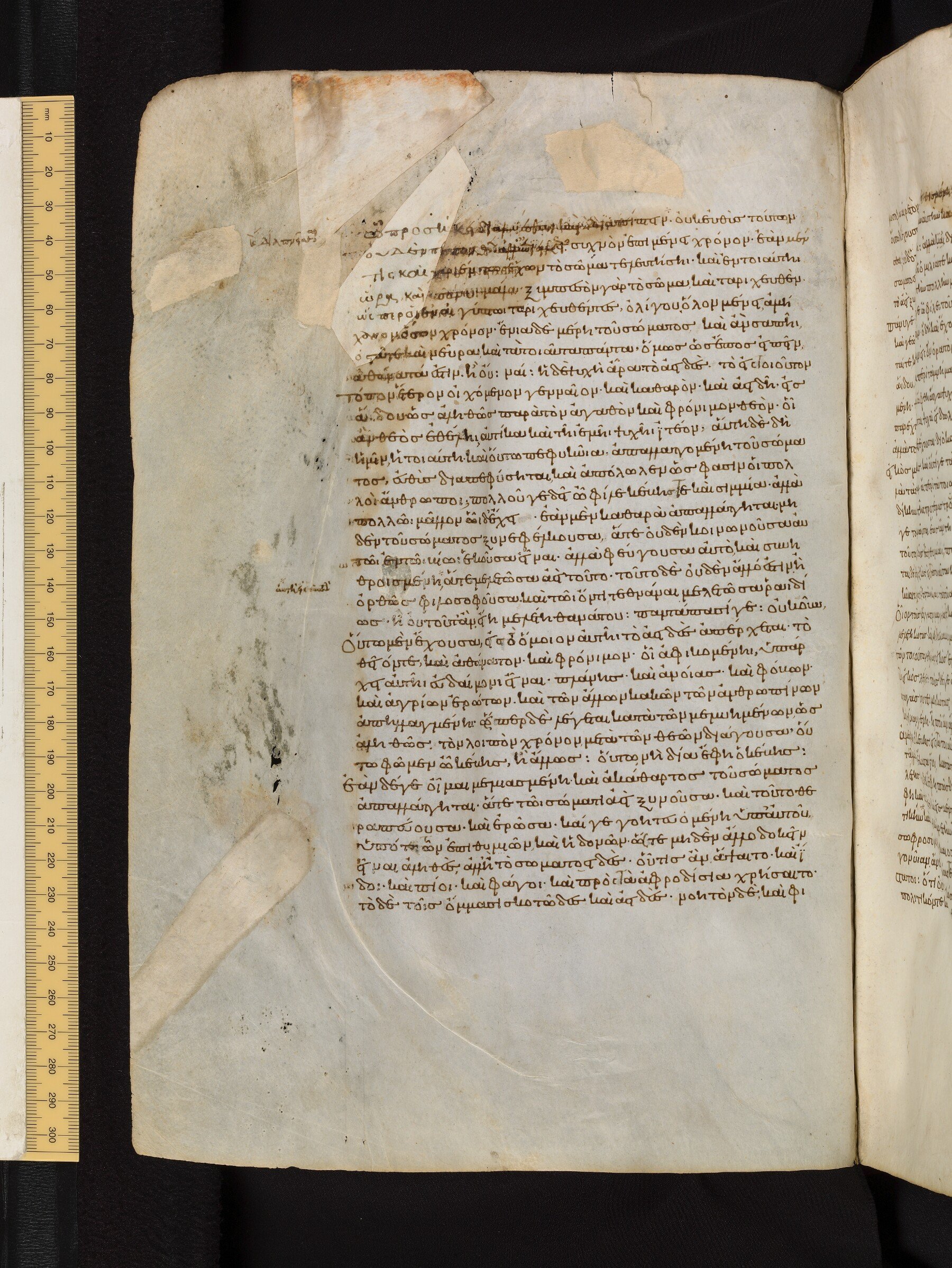
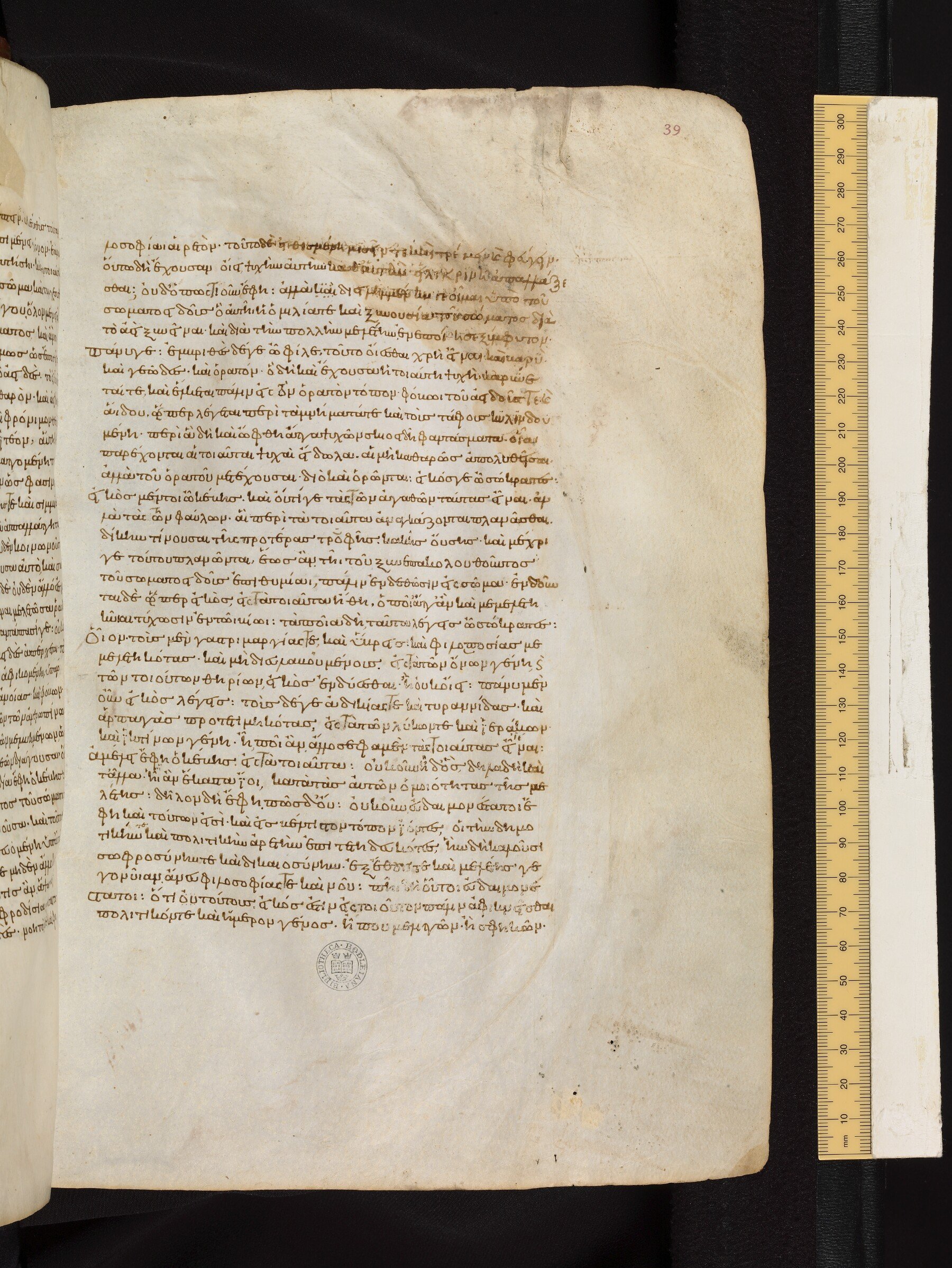
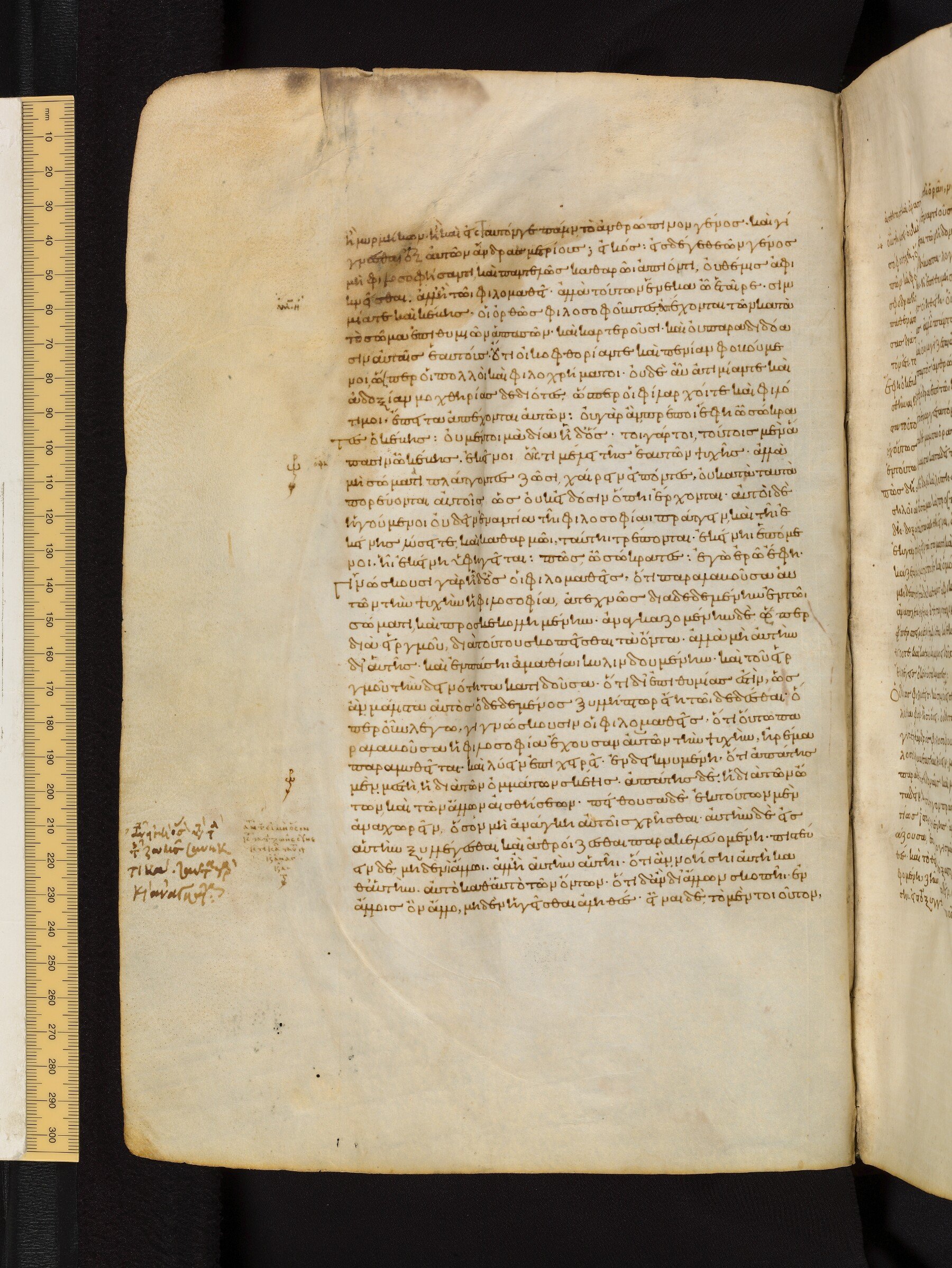
The pages shown are from the Clarke Plato (Oxford, Bodleian Library, MS. E. D. Clarke 39), copied in Constantinople in 895, the oldest manuscript of the Phaedo (siglum B). The passage runs from fol. 37r to the top of fol. 40v, eight pages. On fol. 38v the inner part of the first lines is damaged and repaired, and some letters there have been retraced by a later hand. Each section is one Stephanus subsection, linked to the page or pages that carry its words, identified by reading the first and last lines of each page on the image. The Greek is Burnet's critical text, not a transcription of the manuscript.
How was this verified? (Provenance)
Where on the image
On Clarke 39 fol. 37r. Clarke 39 fol. 37r runs from 'εἰς ταὐτὸν καὶ ὃν πρὸ τούτου ὡμολογήσαμεν, τὸ γίγνεσθαι πᾶν' on its first line (77c) to 'δοκεῖ μοι, ἔφη, οὕτως ἔχειν, ὁ Κέβης. οὐκοῦν ἅπερ' on its last line (78c). Viewer: https://digital.bodleian.ox.ac.uk/objects/f57d074b-cff1-4172-8236-797c7b8f0403/surfaces/f229e632-5a69-4869-8491-952f19f5da09/ Checked on the images. The Greek shown is Burnet's critical text; the copyist's wording differs from it in small details.
ἀπελίπομεν ἐπανέλθωμεν, εἴ σοι ἡδομένῳ ἐστίν. ἀλλὰ μὴν ἡδομένῳ γε· πῶς γὰρ οὐ μέλλει; καλῶς, ἔφη, λέγεις. οὐκοῦν τοιόνδε τι, ἦ δ’ ὃς ὁ Σωκράτης, δεῖ ἡμᾶς ἀνερέσθαι ἑαυτούς, τῷ ποίῳ τινὶ ἄρα προσήκει τοῦτο τὸ πάθος πάσχειν, τὸ διασκεδάννυσθαι, καὶ ὑπὲρ τοῦ ποίου τινὸς δεδιέναι μὴ πάθῃ αὐτό, καὶ τῷ ποίῳ τινὶ <οὔ>· καὶ μετὰ τοῦτο αὖ ἐπισκέψασθαι πότερον [ἡ] ψυχή ἐστιν, καὶ ἐκ τούτων θαρρεῖν ἢ δεδιέναι ὑπὲρ τῆς ἡμετέρας ψυχῆς; ἀληθῆ, ἔφη, λέγεις.
if you are willing. Oh, I am willing, of course. Good, said he. Well then, said Socrates, must we not ask ourselves some such question as this? What kind of thing naturally suffers dispersion, and for what kind of thing might we naturally fear it, and again what kind of thing is not liable to it? And after this must we not inquire to which class the soul belongs and base our hopes or fears for our souls upon the answers to these questions? You are quite right, he replied. Now is not that which is compounded
Where on the image
Starts on fol. 37r and continues on fol. 37v (page break inside this subsection). Clarke 39 fol. 37r runs from 'εἰς ταὐτὸν καὶ ὃν πρὸ τούτου ὡμολογήσαμεν, τὸ γίγνεσθαι πᾶν' on its first line (77c) to 'δοκεῖ μοι, ἔφη, οὕτως ἔχειν, ὁ Κέβης. οὐκοῦν ἅπερ' on its last line (78c). Viewer: https://digital.bodleian.ox.ac.uk/objects/f57d074b-cff1-4172-8236-797c7b8f0403/surfaces/f229e632-5a69-4869-8491-952f19f5da09/ Clarke 39 fol. 37v runs from 'κατὰ ταὐτὰ καὶ ὡσαύτως ἔχει, ταῦτα μάλιστα εἰκὸς εἶναι τὰ ἀσύνθετα' on its first line (78c) to 'ἢ διʼ ἄλλης τινὸς αἰσθήσεως, τοῦτο γάρ ἐστιν τὸ διὰ τοῦ σώματος' on its last line (79c). Viewer: https://digital.bodleian.ox.ac.uk/objects/f57d074b-cff1-4172-8236-797c7b8f0403/surfaces/7d2ba39e-96b2-440a-ac46-430f924679de/ Checked on the images. The Greek shown is Burnet's critical text; the copyist's wording differs from it in small details.
ἆρ’ οὖν τῷ μὲν συντεθέντι τε καὶ συνθέτῳ ὄντι φύσει προσήκει τοῦτο πάσχειν, διαιρεθῆναι ταύτῃ ᾗπερ συνετέθη· εἰ δέ τι τυγχάνει ὂν ἀσύνθετον, τούτῳ μόνῳ προσήκει μὴ πάσχειν ταῦτα, εἴπερ τῳ ἄλλῳ; δοκεῖ μοι, ἔφη, οὕτως ἔχειν, ὁ Κέβης. οὐκοῦν ἅπερ ἀεὶ κατὰ ταὐτὰ καὶ ὡσαύτως ἔχει, ταῦτα μάλιστα εἰκὸς εἶναι τὰ ἀσύνθετα, τὰ δὲ ἄλλοτ’ ἄλλως καὶ μηδέποτε κατὰ ταὐτά, ταῦτα δὲ σύνθετα; ἔμοιγε δοκεῖ οὕτως. ἴωμεν δή, ἔφη, ἐπὶ ταὐτὰ ἐφ’ ἅπερ ἐν τῷ ἔμπροσθεν
and composite naturally liable to be decomposed, in the same way in which it was compounded? And if anything is uncompounded is not that, if anything, naturally unlikely to be decomposed? I think, said Cebes, that is true. Then it is most probable that things which are always the same and unchanging are the uncompounded things and the things that are changing and never the same are the composite things? Yes, I think so. Let us then, said he, turn to what we were discussing before.
Where on the image
On Clarke 39 fol. 37v. Clarke 39 fol. 37v runs from 'κατὰ ταὐτὰ καὶ ὡσαύτως ἔχει, ταῦτα μάλιστα εἰκὸς εἶναι τὰ ἀσύνθετα' on its first line (78c) to 'ἢ διʼ ἄλλης τινὸς αἰσθήσεως, τοῦτο γάρ ἐστιν τὸ διὰ τοῦ σώματος' on its last line (79c). Viewer: https://digital.bodleian.ox.ac.uk/objects/f57d074b-cff1-4172-8236-797c7b8f0403/surfaces/7d2ba39e-96b2-440a-ac46-430f924679de/ Checked on the images. The Greek shown is Burnet's critical text; the copyist's wording differs from it in small details.
λόγῳ. αὐτὴ ἡ οὐσία ἧς λόγον δίδομεν τοῦ εἶναι καὶ ἐρωτῶντες καὶ ἀποκρινόμενοι, πότερον ὡσαύτως ἀεὶ ἔχει κατὰ ταὐτὰ ἢ ἄλλοτ’ ἄλλως; αὐτὸ τὸ ἴσον, αὐτὸ τὸ καλόν, αὐτὸ ἕκαστον ὃ ἔστιν, τὸ ὄν, μή ποτε μεταβολὴν καὶ ἡντινοῦν ἐνδέχεται; ἢ ἀεὶ αὐτῶν ἕκαστον ὃ ἔστι, μονοειδὲς ὂν αὐτὸ καθ’ αὑτό, ὡσαύτως κατὰ ταὐτὰ ἔχει καὶ οὐδέποτε οὐδαμῇ οὐδαμῶς ἀλλοίωσιν οὐδεμίαν ἐνδέχεται; ὡσαύτως, ἔφη, ἀνάγκη, ὁ Κέβης, κατὰ ταὐτὰ ἔχειν, ὦ Σώκρατες. τί δὲ τῶν πολλῶν καλῶν, οἷον ἀνθρώπων ἢ ἵππων ἢ
Is the absolute essence, which we in our dialectic process of question and answer call true being, always the same or is it liable to change? Absolute equality, absolute beauty, any absolute existence, true being—do they ever admit of any change whatsoever? Or does each absolute essence, since it is uniform and exists by itself, remain the same and never in any way admit of any change? It must, said Cebes, necessarily remain the same,
Where on the image
On Clarke 39 fol. 37v. Clarke 39 fol. 37v runs from 'κατὰ ταὐτὰ καὶ ὡσαύτως ἔχει, ταῦτα μάλιστα εἰκὸς εἶναι τὰ ἀσύνθετα' on its first line (78c) to 'ἢ διʼ ἄλλης τινὸς αἰσθήσεως, τοῦτο γάρ ἐστιν τὸ διὰ τοῦ σώματος' on its last line (79c). Viewer: https://digital.bodleian.ox.ac.uk/objects/f57d074b-cff1-4172-8236-797c7b8f0403/surfaces/7d2ba39e-96b2-440a-ac46-430f924679de/ Checked on the images. The Greek shown is Burnet's critical text; the copyist's wording differs from it in small details.
ἱματίων ἢ ἄλλων ὡντινωνοῦν τοιούτων, ἢ ἴσων [ἢ καλῶν] ἢ πάντων τῶν ἐκείνοις ὁμωνύμων; ἆρα κατὰ ταὐτὰ ἔχει, ἢ πᾶν τοὐναντίον ἐκείνοις οὔτε αὐτὰ αὑτοῖς οὔτε ἀλλήλοις οὐδέποτε ὡς ἔπος εἰπεῖν οὐδαμῶς κατὰ ταὐτά; οὕτως αὖ, ἔφη ὁ Κέβης, ταῦτα· οὐδέποτε ὡσαύτως ἔχει.
Socrates. But how about the many things, for example, men, or horses, or cloaks, or any other such things, which bear the same names as the absolute essences and are called beautiful or equal or the like? Are they always the same? Or are they, in direct opposition to the essences, constantly changing in themselves, unlike each other, and, so to speak, never the same? The latter, said Cebes; they are never the same.
Where on the image
On Clarke 39 fol. 37v. Clarke 39 fol. 37v runs from 'κατὰ ταὐτὰ καὶ ὡσαύτως ἔχει, ταῦτα μάλιστα εἰκὸς εἶναι τὰ ἀσύνθετα' on its first line (78c) to 'ἢ διʼ ἄλλης τινὸς αἰσθήσεως, τοῦτο γάρ ἐστιν τὸ διὰ τοῦ σώματος' on its last line (79c). Viewer: https://digital.bodleian.ox.ac.uk/objects/f57d074b-cff1-4172-8236-797c7b8f0403/surfaces/7d2ba39e-96b2-440a-ac46-430f924679de/ Checked on the images. The Greek shown is Burnet's critical text; the copyist's wording differs from it in small details.
οὐκοῦν τούτων μὲν κἂν ἅψαιο κἂν ἴδοις κἂν ταῖς ἄλλαις αἰσθήσεσιν αἴσθοιο, τῶν δὲ κατὰ ταὐτὰ ἐχόντων οὐκ ἔστιν ὅτῳ ποτ’ ἂν ἄλλῳ ἐπιλάβοιο ἢ τῷ τῆς διανοίας λογισμῷ, ἀλλ’ ἔστιν ἀιδῆ τὰ τοιαῦτα καὶ οὐχ ὁρατά; παντάπασιν, ἔφη, ἀληθῆ λέγεις. θῶμεν οὖν βούλει, ἔφη, δύο εἴδη τῶν ὄντων, τὸ μὲν ὁρατόν, τὸ δὲ ἀιδές; θῶμεν, ἔφη. καὶ τὸ μὲν ἀιδὲς ἀεὶ κατὰ ταὐτὰ ἔχον, τὸ δὲ ὁρατὸν μηδέποτε κατὰ ταὐτά; καὶ τοῦτο, ἔφη, θῶμεν.
And you can see these and touch them and perceive them by the other senses, whereas the things which are always the same can be grasped only by the reason, and are invisible and not to be seen? Certainly, said he, that is true. Now, said he, shall we assume two kinds of existences, one visible, the other invisible? Let us assume them, said Cebes. And that the invisible is always the same and the visible constantly changing? Let us assume that also, said he.
Where on the image
On Clarke 39 fol. 37v. Clarke 39 fol. 37v runs from 'κατὰ ταὐτὰ καὶ ὡσαύτως ἔχει, ταῦτα μάλιστα εἰκὸς εἶναι τὰ ἀσύνθετα' on its first line (78c) to 'ἢ διʼ ἄλλης τινὸς αἰσθήσεως, τοῦτο γάρ ἐστιν τὸ διὰ τοῦ σώματος' on its last line (79c). Viewer: https://digital.bodleian.ox.ac.uk/objects/f57d074b-cff1-4172-8236-797c7b8f0403/surfaces/7d2ba39e-96b2-440a-ac46-430f924679de/ Checked on the images. The Greek shown is Burnet's critical text; the copyist's wording differs from it in small details.
φέρε δή, ἦ δ’ ὅς, ἄλλο τι ἡμῶν αὐτῶν τὸ μὲν σῶμά ἐστι, τὸ δὲ ψυχή; οὐδὲν ἄλλο, ἔφη. ποτέρῳ οὖν ὁμοιότερον τῷ εἴδει φαμὲν ἂν εἶναι καὶ συγγενέστερον τὸ σῶμα; παντί, ἔφη, τοῦτό γε δῆλον, ὅτι τῷ ὁρατῷ. τί δὲ ἡ ψυχή; ὁρατὸν ἢ ἀιδές; οὐχ ὑπ’ ἀνθρώπων γε, ὦ Σώκρατες, ἔφη. ἀλλὰ μὴν ἡμεῖς γε τὰ ὁρατὰ καὶ τὰ μὴ τῇ τῶν ἀνθρώπων φύσει ἐλέγομεν· ἢ ἄλλῃ τινὶ οἴει; τῇ τῶν ἀνθρώπων. τί οὖν περὶ ψυχῆς λέγομεν; ὁρατὸν ἢ ἀόρατον εἶναι; οὐχ ὁρατόν. ἀιδὲς ἄρα; ναί. ὁμοιότερον ἄρα ψυχὴ σώματός ἐστιν τῷ ἀιδεῖ, τὸ δὲ τῷ ὁρατῷ.
Well then, said Socrates, are we not made up of two parts, body and soul? Yes, he replied. Now to which class should we say the body is more similar and more closely akin? To the visible, said he; that is clear to everyone. And the soul? Is it visible or invisible? Invisible, to man, at least, Socrates. But we call things visible and invisible with reference to human vision, do we not? Yes, we do. Then what do we say about the soul? Can it be seen or not? It cannot be seen. Then it is invisible? Yes. Then the soul is more like the invisible than the body is,
Where on the image
Starts on fol. 37v and continues on fol. 38r (page break inside this subsection). Clarke 39 fol. 37v runs from 'κατὰ ταὐτὰ καὶ ὡσαύτως ἔχει, ταῦτα μάλιστα εἰκὸς εἶναι τὰ ἀσύνθετα' on its first line (78c) to 'ἢ διʼ ἄλλης τινὸς αἰσθήσεως, τοῦτο γάρ ἐστιν τὸ διὰ τοῦ σώματος' on its last line (79c). Viewer: https://digital.bodleian.ox.ac.uk/objects/f57d074b-cff1-4172-8236-797c7b8f0403/surfaces/7d2ba39e-96b2-440a-ac46-430f924679de/ Clarke 39 fol. 38r runs from 'τὸ διʼ αἰσθήσεως σκοπεῖν τι, τότε μὲν ἕλκεται ὑπὸ τοῦ σώματος' on its first line (79c) to 'τὸ μὲν ὁρατὸν αὐτοῦ, τὸ σῶμα, καὶ ἐν ὁρατῷ κείμενον, ὃ δὴ νεκρὸν καλ(οῦμεν)' on its last line (80c). Viewer: https://digital.bodleian.ox.ac.uk/objects/f57d074b-cff1-4172-8236-797c7b8f0403/surfaces/419040bb-b68c-47a5-a78e-eb979f6662c1/ Checked on the images. The Greek shown is Burnet's critical text; the copyist's wording differs from it in small details.
πᾶσα ἀνάγκη, ὦ Σώκρατες. οὐκοῦν καὶ τόδε πάλαι ἐλέγομεν, ὅτι ἡ ψυχή, ὅταν μὲν τῷ σώματι προσχρῆται εἰς τὸ σκοπεῖν τι ἢ διὰ τοῦ ὁρᾶν ἢ διὰ τοῦ ἀκούειν ἢ δι’ ἄλλης τινὸς αἰσθήσεως — τοῦτο γάρ ἐστιν τὸ διὰ τοῦ σώματος, τὸ δι’ αἰσθήσεως σκοπεῖν τι — τότε μὲν ἕλκεται ὑπὸ τοῦ σώματος εἰς τὰ οὐδέποτε κατὰ ταὐτὰ ἔχοντα, καὶ αὐτὴ πλανᾶται καὶ ταράττεται καὶ εἰλιγγιᾷ ὥσπερ μεθύουσα, ἅτε τοιούτων ἐφαπτομένη; πάνυ γε.
and the body more like the visible. Necessarily, Socrates. Now we have also been saying for a long time, have we not, that, when the soul makes use of the body for any inquiry, either through seeing or hearing or any of the other senses—for inquiry through the body means inquiry through the senses,—then it is dragged by the body to things which never remain the same, and it wanders about and is confused and dizzy like a drunken man because it lays hold upon such things? Certainly. But when the soul
Where on the image
On Clarke 39 fol. 38r. Clarke 39 fol. 38r runs from 'τὸ διʼ αἰσθήσεως σκοπεῖν τι, τότε μὲν ἕλκεται ὑπὸ τοῦ σώματος' on its first line (79c) to 'τὸ μὲν ὁρατὸν αὐτοῦ, τὸ σῶμα, καὶ ἐν ὁρατῷ κείμενον, ὃ δὴ νεκρὸν καλ(οῦμεν)' on its last line (80c). Viewer: https://digital.bodleian.ox.ac.uk/objects/f57d074b-cff1-4172-8236-797c7b8f0403/surfaces/419040bb-b68c-47a5-a78e-eb979f6662c1/ Checked on the images. The Greek shown is Burnet's critical text; the copyist's wording differs from it in small details.
ὅταν δέ γε αὐτὴ καθ’ αὑτὴν σκοπῇ, ἐκεῖσε οἴχεται εἰς τὸ καθαρόν τε καὶ ἀεὶ ὂν καὶ ἀθάνατον καὶ ὡσαύτως ἔχον, καὶ ὡς συγγενὴς οὖσα αὐτοῦ ἀεὶ μετ’ ἐκείνου τε γίγνεται, ὅτανπερ αὐτὴ καθ᾽ αὑτὴν γένηται καὶ ἐξῇ αὐτῇ, καὶ πέπαυταί τε τοῦ πλάνου καὶ περὶ ἐκεῖνα ἀεὶ κατὰ ταὐτὰ ὡσαύτως ἔχει, ἅτε τοιούτων ἐφαπτομένη· καὶ τοῦτο αὐτῆς τὸ πάθημα φρόνησις κέκληται; παντάπασιν, ἔφη, καλῶς καὶ ἀληθῆ λέγεις, ὦ Σώκρατες. ποτέρῳ οὖν αὖ σοι δοκεῖ τῷ εἴδει καὶ ἐκ τῶν πρόσθεν καὶ ἐκ
inquires alone by itself, it departs into the realm of the pure, the everlasting, the immortal and the changeless, and being akin to these it dwells always with them whenever it is by itself and is not hindered, and it has rest from its wanderings and remains always the same and unchanging with the changeless, since it is in communion therewith. And this state of the soul is called wisdom. Is it not so? Socrates, said he, what you say is perfectly right and true. And now again, in view of what we said before and of what has just been said, to which class do you think
Where on the image
On Clarke 39 fol. 38r. Clarke 39 fol. 38r runs from 'τὸ διʼ αἰσθήσεως σκοπεῖν τι, τότε μὲν ἕλκεται ὑπὸ τοῦ σώματος' on its first line (79c) to 'τὸ μὲν ὁρατὸν αὐτοῦ, τὸ σῶμα, καὶ ἐν ὁρατῷ κείμενον, ὃ δὴ νεκρὸν καλ(οῦμεν)' on its last line (80c). Viewer: https://digital.bodleian.ox.ac.uk/objects/f57d074b-cff1-4172-8236-797c7b8f0403/surfaces/419040bb-b68c-47a5-a78e-eb979f6662c1/ Checked on the images. The Greek shown is Burnet's critical text; the copyist's wording differs from it in small details.
τῶν νῦν λεγομένων ψυχὴ ὁμοιότερον εἶναι καὶ συγγενέστερον; πᾶς ἄν μοι δοκεῖ, ἦ δ’ ὅς, συγχωρῆσαι, ὦ Σώκρατες, ἐκ ταύτης τῆς μεθόδου, καὶ ὁ δυσμαθέστατος, ὅτι ὅλῳ καὶ παντὶ ὁμοιότερόν ἐστι ψυχὴ τῷ ἀεὶ ὡσαύτως ἔχοντι μᾶλλον ἢ τῷ μή. τί δὲ τὸ σῶμα; τῷ ἑτέρῳ. ὅρα δὴ καὶ τῇδε ὅτι ἐπειδὰν ἐν τῷ αὐτῷ ὦσι ψυχὴ καὶ
the soul has greater likeness and kinship? I think, Socrates, said he, that anyone, even the dullest, would agree, after this argument that the soul is infinitely more like that which is always the same than that which is not. And the body? Is more like the other. Consider, then, the matter in another way. When the soul
Where on the image
On Clarke 39 fol. 38r. Clarke 39 fol. 38r runs from 'τὸ διʼ αἰσθήσεως σκοπεῖν τι, τότε μὲν ἕλκεται ὑπὸ τοῦ σώματος' on its first line (79c) to 'τὸ μὲν ὁρατὸν αὐτοῦ, τὸ σῶμα, καὶ ἐν ὁρατῷ κείμενον, ὃ δὴ νεκρὸν καλ(οῦμεν)' on its last line (80c). Viewer: https://digital.bodleian.ox.ac.uk/objects/f57d074b-cff1-4172-8236-797c7b8f0403/surfaces/419040bb-b68c-47a5-a78e-eb979f6662c1/ Checked on the images. The Greek shown is Burnet's critical text; the copyist's wording differs from it in small details.
σῶμα, τῷ μὲν δουλεύειν καὶ ἄρχεσθαι ἡ φύσις προστάττει, τῇ δὲ ἄρχειν καὶ δεσπόζειν· καὶ κατὰ ταῦτα αὖ πότερόν σοι δοκεῖ ὅμοιον τῷ θείῳ εἶναι καὶ πότερον τῷ θνητῷ; ἢ οὐ δοκεῖ σοι τὸ μὲν θεῖον οἷον ἄρχειν τε καὶ ἡγεμονεύειν πεφυκέναι, τὸ δὲ θνητὸν ἄρχεσθαί τε καὶ δουλεύειν; ἔμοιγε. ποτέρῳ οὖν ἡ ψυχὴ ἔοικεν; δῆλα δή, ὦ Σώκρατες, ὅτι ἡ μὲν ψυχὴ τῷ θείῳ, τὸ δὲ σῶμα τῷ θνητῷ. σκόπει δή, ἔφη, ὦ Κέβης, εἰ ἐκ πάντων τῶν εἰρημένων
and the body are joined together, nature directs the one to serve and be ruled, and the other to rule and be master. Now this being the case, which seems to you like the divine, and which like the mortal? Or do you not think that the divine is by nature fitted to rule and lead, and the mortal to obey and serve? Yes, I think so. Which, then, does the soul resemble? Clearly, Socrates, the soul is like the divine and the body like the mortal. Then see, Cebes, if this is not the conclusion from all that we have said,
Where on the image
On Clarke 39 fol. 38r. Clarke 39 fol. 38r runs from 'τὸ διʼ αἰσθήσεως σκοπεῖν τι, τότε μὲν ἕλκεται ὑπὸ τοῦ σώματος' on its first line (79c) to 'τὸ μὲν ὁρατὸν αὐτοῦ, τὸ σῶμα, καὶ ἐν ὁρατῷ κείμενον, ὃ δὴ νεκρὸν καλ(οῦμεν)' on its last line (80c). Viewer: https://digital.bodleian.ox.ac.uk/objects/f57d074b-cff1-4172-8236-797c7b8f0403/surfaces/419040bb-b68c-47a5-a78e-eb979f6662c1/ Checked on the images. The Greek shown is Burnet's critical text; the copyist's wording differs from it in small details.
τάδε ἡμῖν συμβαίνει, τῷ μὲν θείῳ καὶ ἀθανάτῳ καὶ νοητῷ καὶ μονοειδεῖ καὶ ἀδιαλύτῳ καὶ ἀεὶ ὡσαύτως κατὰ ταὐτὰ ἔχοντι ἑαυτῷ ὁμοιότατον εἶναι ψυχή, τῷ δὲ ἀνθρωπίνῳ καὶ θνητῷ καὶ πολυειδεῖ καὶ ἀνοήτῳ καὶ διαλυτῷ καὶ μηδέποτε κατὰ ταὐτὰ ἔχοντι ἑαυτῷ ὁμοιότατον αὖ εἶναι σῶμα. ἔχομέν τι παρὰ ταῦτα ἄλλο λέγειν, ὦ φίλε Κέβης, ᾗ οὐχ οὕτως ἔχει; οὐκ ἔχομεν. τί οὖν; τούτων οὕτως ἐχόντων ἆρ’ οὐχὶ σώματι μὲν ταχὺ διαλύεσθαι προσήκει, ψυχῇ δὲ αὖ τὸ παράπαν ἀδιαλύτῳ εἶναι ἢ ἐγγύς τι τούτου;
that the soul is most like the divine and immortal and intellectual and uniform and indissoluble and ever unchanging, and the body, on the contrary, most like the human and mortal and multiform and unintellectual and dissoluble and ever changing. Can we say anything, my dear Cebes, to show that this is not so? No, we cannot. Well then, since this is the case, is it not natural for the body to meet with speedy dissolution and for the soul, on the contrary, to be entirely indissoluble, or nearly so?
Where on the image
Starts on fol. 38r and continues on fol. 38v (page break inside this subsection). Clarke 39 fol. 38r runs from 'τὸ διʼ αἰσθήσεως σκοπεῖν τι, τότε μὲν ἕλκεται ὑπὸ τοῦ σώματος' on its first line (79c) to 'τὸ μὲν ὁρατὸν αὐτοῦ, τὸ σῶμα, καὶ ἐν ὁρατῷ κείμενον, ὃ δὴ νεκρὸν καλ(οῦμεν)' on its last line (80c). Viewer: https://digital.bodleian.ox.ac.uk/objects/f57d074b-cff1-4172-8236-797c7b8f0403/surfaces/419040bb-b68c-47a5-a78e-eb979f6662c1/ Clarke 39 fol. 38v runs from '(ᾧ) προσήκει διαλύεσθαι ... οὐκ εὐθὺς τούτων' on its first line (80c) to 'τὸ δὲ τοῖς ὄμμασι σκοτῶδες καὶ ἀιδές, νοητὸν δὲ καὶ φι(λοσοφίᾳ)' on its last line (81b). The inner ends of lines 1-7 are damaged and repaired; line 2 reads '... συχνὸν ἐπιμένει χρόνον, ἐὰν μὲν'. Viewer: https://digital.bodleian.ox.ac.uk/objects/f57d074b-cff1-4172-8236-797c7b8f0403/surfaces/aab3e2e6-b1ac-47d9-a2f1-05b02d837240/ Checked on the images. The Greek shown is Burnet's critical text; the copyist's wording differs from it in small details.
πῶς γὰρ οὔ; ἐννοεῖς οὖν, ἔφη, ἐπειδὰν ἀποθάνῃ ὁ ἄνθρωπος, τὸ μὲν ὁρατὸν αὐτοῦ, τὸ σῶμα, καὶ ἐν ὁρατῷ κείμενον, ὃ δὴ νεκρὸν καλοῦμεν, ᾧ προσήκει διαλύεσθαι καὶ διαπίπτειν καὶ διαπνεῖσθαι, οὐκ εὐθὺς τούτων οὐδὲν πέπονθεν, ἀλλ᾽ ἐπιεικῶς συχνὸν ἐπιμένει χρόνον, ἐὰν μέν τις καὶ χαριέντως ἔχων τὸ σῶμα τελευτήσῃ καὶ ἐν τοιαύτῃ ὥρᾳ, καὶ πάνυ μάλα· συμπεσὸν γὰρ τὸ σῶμα καὶ ταριχευθέν, ὥσπερ οἱ ἐν Αἰγύπτῳ ταριχευθέντες, ὀλίγου ὅλον μένει ἀμήχανον ὅσον χρόνον,
Of course. Observe, he went on, that when a man dies, the visible part of him, the body, which lies in the visible world and which we call the corpse, which is naturally subject to dissolution and decomposition, does not undergo these processes at once, but remains for a considerable time, and even for a very long time, if death takes place when the body is in good condition, and at a favorable time of the year. For when the body is shrunk and embalmed, as is done in Egypt, it remains almost entire for an incalculable time. And even if the body decay,
Where on the image
On Clarke 39 fol. 38v. Clarke 39 fol. 38v runs from '(ᾧ) προσήκει διαλύεσθαι ... οὐκ εὐθὺς τούτων' on its first line (80c) to 'τὸ δὲ τοῖς ὄμμασι σκοτῶδες καὶ ἀιδές, νοητὸν δὲ καὶ φι(λοσοφίᾳ)' on its last line (81b). The inner ends of lines 1-7 are damaged and repaired; line 2 reads '... συχνὸν ἐπιμένει χρόνον, ἐὰν μὲν'. Viewer: https://digital.bodleian.ox.ac.uk/objects/f57d074b-cff1-4172-8236-797c7b8f0403/surfaces/aab3e2e6-b1ac-47d9-a2f1-05b02d837240/ Checked on the images. The Greek shown is Burnet's critical text; the copyist's wording differs from it in small details.
ἔνια δὲ μέρη τοῦ σώματος, καὶ ἂν σαπῇ, ὀστᾶ τε καὶ νεῦρα καὶ τὰ τοιαῦτα πάντα, ὅμως ὡς ἔπος εἰπεῖν ἀθάνατά ἐστιν· ἢ οὔ; ναί. ἡ δὲ ψυχὴ ἄρα, τὸ ἀιδές, τὸ εἰς τοιοῦτον τόπον ἕτερον οἰχόμενον γενναῖον καὶ καθαρὸν καὶ ἀιδῆ, εἰς Ἅιδου ὡς ἀληθῶς, παρὰ τὸν ἀγαθὸν καὶ φρόνιμον θεόν, οἷ, ἂν θεὸς θέλῃ, αὐτίκα καὶ τῇ ἐμῇ ψυχῇ ἰτέον, αὕτη δὲ δὴ ἡμῖν ἡ τοιαύτη καὶ οὕτω πεφυκυῖα ἀπαλλαττομένη τοῦ σώματος εὐθὺς διαπεφύσηται καὶ ἀπόλωλεν, ὥς φασιν οἱ πολλοὶ
some parts of it, such as the bones and sinews and all that, are, so to speak, indestructible. Is not that true? Yes. But the soul, the invisible, which departs into another place which is, like itself, noble and pure and invisible, to the realm of the god of the other world in truth, to the good and wise god, whither, if God will, my soul is soon to go,—is this soul, which has such qualities and such a nature, straightway scattered and destroyed when it departs from the body, as most men say?
Where on the image
On Clarke 39 fol. 38v. Clarke 39 fol. 38v runs from '(ᾧ) προσήκει διαλύεσθαι ... οὐκ εὐθὺς τούτων' on its first line (80c) to 'τὸ δὲ τοῖς ὄμμασι σκοτῶδες καὶ ἀιδές, νοητὸν δὲ καὶ φι(λοσοφίᾳ)' on its last line (81b). The inner ends of lines 1-7 are damaged and repaired; line 2 reads '... συχνὸν ἐπιμένει χρόνον, ἐὰν μὲν'. Viewer: https://digital.bodleian.ox.ac.uk/objects/f57d074b-cff1-4172-8236-797c7b8f0403/surfaces/aab3e2e6-b1ac-47d9-a2f1-05b02d837240/ Checked on the images. The Greek shown is Burnet's critical text; the copyist's wording differs from it in small details.
ἄνθρωποι; πολλοῦ γε δεῖ, ὦ φίλε Κέβης τε καὶ Σιμμία, ἀλλὰ πολλῷ μᾶλλον ὧδ’ ἔχει· ἐὰν μὲν καθαρὰ ἀπαλλάττηται, μηδὲν τοῦ σώματος συνεφέλκουσα, ἅτε οὐδὲν κοινωνοῦσα αὐτῷ ἐν τῷ βίῳ ἑκοῦσα εἶναι, ἀλλὰ φεύγουσα αὐτὸ καὶ συνηθροισμένη αὐτὴ εἰς ἑαυτήν, ἅτε μελετῶσα ἀεὶ τοῦτο — τὸ δὲ οὐδὲν ἄλλο ἐστὶν ἢ ὀρθῶς φιλοσοφοῦσα καὶ τῷ ὄντι
Far from it, dear Cebes and Simmias, but the truth is much rather this—if it departs pure, dragging with it nothing of the body, because it never willingly associated with the body in life, but avoided it and gathered itself into itself alone, since this has always been its constant study—but this means nothing else than that it pursued philosophy rightly and
Where on the image
On Clarke 39 fol. 38v. Clarke 39 fol. 38v runs from '(ᾧ) προσήκει διαλύεσθαι ... οὐκ εὐθὺς τούτων' on its first line (80c) to 'τὸ δὲ τοῖς ὄμμασι σκοτῶδες καὶ ἀιδές, νοητὸν δὲ καὶ φι(λοσοφίᾳ)' on its last line (81b). The inner ends of lines 1-7 are damaged and repaired; line 2 reads '... συχνὸν ἐπιμένει χρόνον, ἐὰν μὲν'. Viewer: https://digital.bodleian.ox.ac.uk/objects/f57d074b-cff1-4172-8236-797c7b8f0403/surfaces/aab3e2e6-b1ac-47d9-a2f1-05b02d837240/ Checked on the images. The Greek shown is Burnet's critical text; the copyist's wording differs from it in small details.
τεθνάναι μελετῶσα ῥᾳδίως· ἢ οὐ τοῦτ’ ἂν εἴη μελέτη θανάτου; παντάπασί γε. οὐκοῦν οὕτω μὲν ἔχουσα εἰς τὸ ὅμοιον αὐτῇ τὸ ἀιδὲς ἀπέρχεται, τὸ θεῖόν τε καὶ ἀθάνατον καὶ φρόνιμον, οἷ ἀφικομένῃ ὑπάρχει αὐτῇ εὐδαίμονι εἶναι, πλάνης καὶ ἀνοίας καὶ φόβων καὶ ἀγρίων ἐρώτων καὶ τῶν ἄλλων κακῶν τῶν ἀνθρωπείων ἀπηλλαγμένῃ, ὥσπερ δὲ λέγεται κατὰ τῶν μεμυημένων, ὡς ἀληθῶς τὸν λοιπὸν χρόνον μετὰ θεῶν διάγουσα; οὕτω φῶμεν, ὦ Κέβης, ἢ ἄλλως; οὕτω νὴ Δία, ἔφη ὁ Κέβης.
really practiced being in a state of death: or is not this the practice of death? By all means. Then if it is in such a condition, it goes away into that which is like itself, into the invisible, divine, immortal, and wise, and when it arrives there it is happy, freed from error and folly and fear and fierce loves and all the other human ills, and as the initiated say, lives in truth through all after time with the gods. Is this our belief, Cebes, or not? Assuredly, said Cebes. But, I think,
Where on the image
Starts on fol. 38v and continues on fol. 39r (page break inside this subsection). Clarke 39 fol. 38v runs from '(ᾧ) προσήκει διαλύεσθαι ... οὐκ εὐθὺς τούτων' on its first line (80c) to 'τὸ δὲ τοῖς ὄμμασι σκοτῶδες καὶ ἀιδές, νοητὸν δὲ καὶ φι(λοσοφίᾳ)' on its last line (81b). The inner ends of lines 1-7 are damaged and repaired; line 2 reads '... συχνὸν ἐπιμένει χρόνον, ἐὰν μὲν'. Viewer: https://digital.bodleian.ox.ac.uk/objects/f57d074b-cff1-4172-8236-797c7b8f0403/surfaces/aab3e2e6-b1ac-47d9-a2f1-05b02d837240/ Clarke 39 fol. 39r runs from '(φι)λοσοφίᾳ αἱρετόν, τοῦτο δὲ εἰθισμένη μισεῖν τε καὶ τρέμειν' on its first line (81b) to 'πολιτικόν τε καὶ ἥμερον γένος, ἤ που μελιττῶν ἢ σφηκῶν' on its last line (82b). Viewer: https://digital.bodleian.ox.ac.uk/objects/f57d074b-cff1-4172-8236-797c7b8f0403/surfaces/8f489f4c-7887-4a0a-9f00-6c921cb2cabd/ Checked on the images. The Greek shown is Burnet's critical text; the copyist's wording differs from it in small details.
ἐὰν δέ γε οἶμαι μεμιασμένη καὶ ἀκάθαρτος τοῦ σώματος ἀπαλλάττηται, ἅτε τῷ σώματι ἀεὶ συνοῦσα καὶ τοῦτο θεραπεύουσα καὶ ἐρῶσα καὶ γοητευομένη ὑπ’ αὐτοῦ ὑπό τε τῶν ἐπιθυμιῶν καὶ ἡδονῶν, ὥστε μηδὲν ἄλλο δοκεῖν εἶναι ἀληθὲς ἀλλ’ ἢ τὸ σωματοειδές, οὗ τις ἂν ἅψαιτο καὶ ἴδοι καὶ πίοι καὶ φάγοι καὶ πρὸς τὰ ἀφροδίσια χρήσαιτο, τὸ δὲ τοῖς ὄμμασι σκοτῶδες καὶ ἀιδές, νοητὸν δὲ καὶ φιλοσοφίᾳ αἱρετόν, τοῦτο δὲ εἰθισμένη μισεῖν τε καὶ τρέμειν καὶ φεύγειν, οὕτω
if when it departs from the body it is defiled and impure, because it was always with the body and cared for it and loved it and was fascinated by it and its desires and pleasures, so that it thought nothing was true except the corporeal, which one can touch and see and drink and eat and employ in the pleasures of love, and if it is accustomed to hate and fear and avoid that which is shadowy and invisible to the eyes but is intelligible and tangible to philosophy—do you think a soul in this condition
Where on the image
On Clarke 39 fol. 39r. Clarke 39 fol. 39r runs from '(φι)λοσοφίᾳ αἱρετόν, τοῦτο δὲ εἰθισμένη μισεῖν τε καὶ τρέμειν' on its first line (81b) to 'πολιτικόν τε καὶ ἥμερον γένος, ἤ που μελιττῶν ἢ σφηκῶν' on its last line (82b). Viewer: https://digital.bodleian.ox.ac.uk/objects/f57d074b-cff1-4172-8236-797c7b8f0403/surfaces/8f489f4c-7887-4a0a-9f00-6c921cb2cabd/ Checked on the images. The Greek shown is Burnet's critical text; the copyist's wording differs from it in small details.
δὴ ἔχουσαν οἴει ψυχὴν αὐτὴν καθ’ αὑτὴν εἰλικρινῆ ἀπαλλάξεσθαι; οὐδ’ ὁπωστιοῦν, ἔφη. ἀλλὰ [καὶ] διειλημμένην γε οἶμαι ὑπὸ τοῦ σωματοειδοῦς, ὃ αὐτῇ ἡ ὁμιλία τε καὶ συνουσία τοῦ σώματος διὰ τὸ ἀεὶ συνεῖναι καὶ διὰ τὴν πολλὴν μελέτην ἐνεποίησε σύμφυτον; πάνυ γε. ἐμβριθὲς δέ γε, ὦ φίλε, τοῦτο οἴεσθαι χρὴ εἶναι καὶ βαρὺ καὶ γεῶδες καὶ ὁρατόν· ὃ δὴ καὶ ἔχουσα ἡ τοιαύτη ψυχὴ βαρύνεταί τε καὶ ἕλκεται πάλιν εἰς τὸν ὁρατὸν τόπον φόβῳ τοῦ ἀιδοῦς τε καὶ Ἅιδου, ὥσπερ λέγεται, περὶ τὰ
will depart pure and uncontaminated? By no means, said he. But it will be interpenetrated, I suppose, with the corporeal which intercourse and communion with the body have made a part of its nature because the body has been its constant companion and the object of its care? Certainly. And, my friend, we must believe that the corporeal is burdensome and heavy and earthly and visible. And such a soul is weighed down by this and is dragged back into the visible world, through fear of the invisible and of the other world, and so,
Where on the image
On Clarke 39 fol. 39r. Clarke 39 fol. 39r runs from '(φι)λοσοφίᾳ αἱρετόν, τοῦτο δὲ εἰθισμένη μισεῖν τε καὶ τρέμειν' on its first line (81b) to 'πολιτικόν τε καὶ ἥμερον γένος, ἤ που μελιττῶν ἢ σφηκῶν' on its last line (82b). Viewer: https://digital.bodleian.ox.ac.uk/objects/f57d074b-cff1-4172-8236-797c7b8f0403/surfaces/8f489f4c-7887-4a0a-9f00-6c921cb2cabd/ Checked on the images. The Greek shown is Burnet's critical text; the copyist's wording differs from it in small details.
μνήματά τε καὶ τοὺς τάφους κυλινδουμένη, περὶ ἃ δὴ καὶ ὤφθη ἄττα ψυχῶν σκιοειδῆ φαντάσματα, οἷα παρέχονται αἱ τοιαῦται ψυχαὶ εἴδωλα, αἱ μὴ καθαρῶς ἀπολυθεῖσαι ἀλλὰ τοῦ ὁρατοῦ μετέχουσαι, διὸ καὶ ὁρῶνται. εἰκός γε, ὦ Σώκρατες. εἰκὸς μέντοι, ὦ Κέβης· καὶ οὔ τί γε τὰς τῶν ἀγαθῶν αὐτὰς εἶναι, ἀλλὰ τὰς τῶν φαύλων, αἳ περὶ τὰ τοιαῦτα ἀναγκάζονται πλανᾶσθαι δίκην τίνουσαι τῆς προτέρας τροφῆς κακῆς οὔσης. καὶ μέχρι γε τούτου πλανῶνται, ἕως ἂν τῇ
as they say, it flits about the monuments and the tombs, where shadowy shapes of souls have been seen, figures of those souls which were not set free in purity but retain something of the visible; and this is why they are seen. That is likely, Socrates. It is likely, Cebes. And it is likely that those are not the souls of the good, but those of the base, which are compelled to flit about such places as a punishment for their former evil mode of life. And they flit about
Where on the image
On Clarke 39 fol. 39r. Clarke 39 fol. 39r runs from '(φι)λοσοφίᾳ αἱρετόν, τοῦτο δὲ εἰθισμένη μισεῖν τε καὶ τρέμειν' on its first line (81b) to 'πολιτικόν τε καὶ ἥμερον γένος, ἤ που μελιττῶν ἢ σφηκῶν' on its last line (82b). Viewer: https://digital.bodleian.ox.ac.uk/objects/f57d074b-cff1-4172-8236-797c7b8f0403/surfaces/8f489f4c-7887-4a0a-9f00-6c921cb2cabd/ Checked on the images. The Greek shown is Burnet's critical text; the copyist's wording differs from it in small details.
τοῦ συνεπακολουθοῦντος, τοῦ σωματοειδοῦς, ἐπιθυμίᾳ πάλιν ἐνδεθῶσιν εἰς σῶμα· ἐνδοῦνται δέ, ὥσπερ εἰκός, εἰς τοιαῦτα ἤθη ὁποῖ’ ἄττ’ ἂν καὶ μεμελετηκυῖαι τύχωσιν ἐν τῷ βίῳ. τὰ ποῖα δὴ ταῦτα λέγεις, ὦ Σώκρατες; οἷον τοὺς μὲν γαστριμαργίας τε καὶ ὕβρεις καὶ φιλοποσίας μεμελετηκότας καὶ μὴ διηυλαβημένους εἰς τὰ τῶν ὄνων γένη
until through the desire of the corporeal which clings to them they are again imprisoned in a body. And they are likely to be imprisoned in natures which correspond to the practices of their former life. What natures do you mean, Socrates? I mean, for example, that those who have indulged in gluttony and violence and drunkenness, and have taken no pains to avoid them, are likely to pass into the bodies of asses and other beasts of that sort.
Where on the image
On Clarke 39 fol. 39r. Clarke 39 fol. 39r runs from '(φι)λοσοφίᾳ αἱρετόν, τοῦτο δὲ εἰθισμένη μισεῖν τε καὶ τρέμειν' on its first line (81b) to 'πολιτικόν τε καὶ ἥμερον γένος, ἤ που μελιττῶν ἢ σφηκῶν' on its last line (82b). Viewer: https://digital.bodleian.ox.ac.uk/objects/f57d074b-cff1-4172-8236-797c7b8f0403/surfaces/8f489f4c-7887-4a0a-9f00-6c921cb2cabd/ Checked on the images. The Greek shown is Burnet's critical text; the copyist's wording differs from it in small details.
καὶ τῶν τοιούτων θηρίων εἰκὸς ἐνδύεσθαι. ἢ οὐκ οἴει; πάνυ μὲν οὖν εἰκὸς λέγεις. τοὺς δέ γε ἀδικίας τε καὶ τυραννίδας καὶ ἁρπαγὰς προτετιμηκότας εἰς τὰ τῶν λύκων τε καὶ ἱεράκων καὶ ἰκτίνων γένη· ἢ ποῖ ἂν ἄλλοσέ φαμεν τὰς τοιαύτας ἰέναι; ἀμέλει, ἔφη ὁ Κέβης, εἰς τὰ τοιαῦτα. οὐκοῦν, ἦ δ’ ὅς, δῆλα δὴ καὶ τἆλλα ᾗ ἂν ἕκαστα ἴοι κατὰ τὰς αὐτῶν ὁμοιότητας τῆς μελέτης; δῆλον δή, ἔφη· πῶς δ’ οὔ; οὐκοῦν εὐδαιμονέστατοι, ἔφη, καὶ τούτων εἰσὶ καὶ εἰς βέλτιστον τόπον ἰόντες οἱ τὴν δημοτικὴν καὶ πολιτικὴν
Do you not think so? Certainly that is very likely. And those who have chosen injustice and tyranny and robbery pass into the bodies of wolves and hawks and kites. Where else can we imagine that they go? Beyond a doubt, said Cebes, they pass into such creatures. Then, said he, it is clear where all the others go, each in accordance with its own habits? Yes, said Cebes, of course. Then, said he, the happiest of those, and those who go to the best place, are those who have practiced,
Where on the image
Starts on fol. 39r and continues on fol. 39v (page break inside this subsection). Clarke 39 fol. 39r runs from '(φι)λοσοφίᾳ αἱρετόν, τοῦτο δὲ εἰθισμένη μισεῖν τε καὶ τρέμειν' on its first line (81b) to 'πολιτικόν τε καὶ ἥμερον γένος, ἤ που μελιττῶν ἢ σφηκῶν' on its last line (82b). Viewer: https://digital.bodleian.ox.ac.uk/objects/f57d074b-cff1-4172-8236-797c7b8f0403/surfaces/8f489f4c-7887-4a0a-9f00-6c921cb2cabd/ Clarke 39 fol. 39v runs from 'ἢ μυρμήκων, ἢ καὶ εἰς ταὐτόν γε πάλιν τὸ ἀνθρώπινον γένος' on its first line (82b) to 'μηδὲν ἡγεῖσθαι ἀληθές· εἶναι δὲ τὸ μὲν τοιοῦτον' on its last line (83b). Viewer: https://digital.bodleian.ox.ac.uk/objects/f57d074b-cff1-4172-8236-797c7b8f0403/surfaces/1010bc7e-f13a-4b6c-85a8-e93132a57c09/ Checked on the images. The Greek shown is Burnet's critical text; the copyist's wording differs from it in small details.
ἀρετὴν ἐπιτετηδευκότες, ἣν δὴ καλοῦσι σωφροσύνην τε καὶ δικαιοσύνην, ἐξ ἔθους τε καὶ μελέτης γεγονυῖαν ἄνευ φιλοσοφίας τε καὶ νοῦ; πῇ δὴ οὗτοι εὐδαιμονέστατοι; ὅτι τούτους εἰκός ἐστιν εἰς τοιοῦτον πάλιν ἀφικνεῖσθαι πολιτικὸν καὶ ἥμερον γένος, ἤ που μελιττῶν ἢ σφηκῶν ἢ μυρμήκων, καὶ εἰς ταὐτόν γε πάλιν τὸ ἀνθρώπινον γένος, καὶ γίγνεσθαι ἐξ αὐτῶν ἄνδρας μετρίους. εἰκός. εἰς δέ γε θεῶν γένος μὴ φιλοσοφήσαντι καὶ παντελῶς
by nature and habit, without philosophy or reason, the social and civil virtues which are called moderation and justice? How are these happiest? Don’t you see? Is it not likely that they pass again into some such social and gentle species as that of bees or of wasps or ants, or into the human race again, and that worthy men spring from them? Yes. And no one who has not been a philosopher and who is not wholly pure when he departs, is allowed to enter into the communion of the gods,
Where on the image
On Clarke 39 fol. 39v. Clarke 39 fol. 39v runs from 'ἢ μυρμήκων, ἢ καὶ εἰς ταὐτόν γε πάλιν τὸ ἀνθρώπινον γένος' on its first line (82b) to 'μηδὲν ἡγεῖσθαι ἀληθές· εἶναι δὲ τὸ μὲν τοιοῦτον' on its last line (83b). Viewer: https://digital.bodleian.ox.ac.uk/objects/f57d074b-cff1-4172-8236-797c7b8f0403/surfaces/1010bc7e-f13a-4b6c-85a8-e93132a57c09/ Checked on the images. The Greek shown is Burnet's critical text; the copyist's wording differs from it in small details.
καθαρῷ ἀπιόντι οὐ θέμις ἀφικνεῖσθαι ἀλλ’ ἢ τῷ φιλομαθεῖ. ἀλλὰ τούτων ἕνεκα, ὦ ἑταῖρε Σιμμία τε καὶ Κέβης, οἱ ὀρθῶς φιλόσοφοι ἀπέχονται τῶν κατὰ τὸ σῶμα ἐπιθυμιῶν ἁπασῶν καὶ καρτεροῦσι καὶ οὐ παραδιδόασιν αὐταῖς ἑαυτούς, οὔ τι οἰκοφθορίαν τε καὶ πενίαν φοβούμενοι, ὥσπερ οἱ πολλοὶ καὶ φιλοχρήματοι· οὐδὲ αὖ ἀτιμίαν τε καὶ ἀδοξίαν μοχθηρίας δεδιότες, ὥσπερ οἱ φίλαρχοί τε καὶ φιλότιμοι, ἔπειτα ἀπέχονται αὐτῶν. οὐ γὰρ ἂν πρέποι, ἔφη, ὦ Σώκρατες, ὁ Κέβης.
but only the lover of knowledge. It is for this reason, dear Simmias and Cebes, that those who truly love wisdom refrain from all bodily desires and resist them firmly and do not give themselves up to them, not because they fear poverty or loss of property, as most men, in their love of money, do; nor is it because they fear the dishonor or disgrace of wickedness, like the lovers of honor and power, that they refrain from them. No, that would not be seemly for them, Socrates, said Cebes. Most assuredly not,
Where on the image
On Clarke 39 fol. 39v. Clarke 39 fol. 39v runs from 'ἢ μυρμήκων, ἢ καὶ εἰς ταὐτόν γε πάλιν τὸ ἀνθρώπινον γένος' on its first line (82b) to 'μηδὲν ἡγεῖσθαι ἀληθές· εἶναι δὲ τὸ μὲν τοιοῦτον' on its last line (83b). Viewer: https://digital.bodleian.ox.ac.uk/objects/f57d074b-cff1-4172-8236-797c7b8f0403/surfaces/1010bc7e-f13a-4b6c-85a8-e93132a57c09/ Checked on the images. The Greek shown is Burnet's critical text; the copyist's wording differs from it in small details.
οὐ μέντοι μὰ Δία, ἦ δ’ ὅς. τοιγάρτοι τούτοις μὲν ἅπασιν, ὦ Κέβης, ἐκεῖνοι οἷς τι μέλει τῆς ἑαυτῶν ψυχῆς ἀλλὰ μὴ σώματι πλάττοντες ζῶσι, χαίρειν εἰπόντες, οὐ κατὰ ταὐτὰ πορεύονται αὐτοῖς ὡς οὐκ εἰδόσιν ὅπῃ ἔρχονται, αὐτοὶ δὲ ἡγούμενοι οὐ δεῖν ἐναντία τῇ φιλοσοφίᾳ πράττειν καὶ τῇ ἐκείνης λύσει τε καὶ καθαρμῷ ταύτῃ δὴ τρέπονται ἐκείνῃ ἑπόμενοι, ᾗ ἐκείνη ὑφηγεῖται. πῶς, ὦ Σώκρατες; ἐγὼ ἐρῶ, ἔφη. γιγνώσκουσι γάρ, ἦ δ᾽ ὅς, οἱ φιλομαθεῖς
said he. And therefore those who care for their own souls, and do not live in service to the body, turn their backs upon all these men and do not walk in their ways, for they feel that they know not whither they are going. They themselves believe that philosophy, with its deliverance and purification, must not be resisted, and so they turn and follow it whithersoever it leads. How do they do this, Socrates? I will tell you, he replied. The lovers of knowledge, said he, perceive that when philosophy first takes possession of their soul it is entirely
Where on the image
On Clarke 39 fol. 39v. Clarke 39 fol. 39v runs from 'ἢ μυρμήκων, ἢ καὶ εἰς ταὐτόν γε πάλιν τὸ ἀνθρώπινον γένος' on its first line (82b) to 'μηδὲν ἡγεῖσθαι ἀληθές· εἶναι δὲ τὸ μὲν τοιοῦτον' on its last line (83b). Viewer: https://digital.bodleian.ox.ac.uk/objects/f57d074b-cff1-4172-8236-797c7b8f0403/surfaces/1010bc7e-f13a-4b6c-85a8-e93132a57c09/ Checked on the images. The Greek shown is Burnet's critical text; the copyist's wording differs from it in small details.
ὅτι παραλαβοῦσα αὐτῶν τὴν ψυχὴν ἡ φιλοσοφία ἀτεχνῶς διαδεδεμένην ἐν τῷ σώματι καὶ προσκεκολλημένην, ἀναγκαζομένην δὲ ὥσπερ διὰ εἱργμοῦ διὰ τούτου σκοπεῖσθαι τὰ ὄντα ἀλλὰ μὴ αὐτὴν δι’ αὑτῆς, καὶ ἐν πάσῃ ἀμαθίᾳ κυλινδουμένην, καὶ τοῦ εἱργμοῦ τὴν δεινότητα κατιδοῦσα ὅτι δι’ ἐπιθυμίας ἐστίν, ὡς ἂν μάλιστα αὐτὸς ὁ δεδεμένος συλλήπτωρ
fastened and welded to the body and is compelled to regard realities through the body as through prison bars, not with its own unhindered vision, and is wallowing in utter ignorance. And philosophy sees that the most dreadful thing about the imprisonment is the fact that it is caused by the lusts of the flesh, so that the prisoner is the
Where on the image
On Clarke 39 fol. 39v. Clarke 39 fol. 39v runs from 'ἢ μυρμήκων, ἢ καὶ εἰς ταὐτόν γε πάλιν τὸ ἀνθρώπινον γένος' on its first line (82b) to 'μηδὲν ἡγεῖσθαι ἀληθές· εἶναι δὲ τὸ μὲν τοιοῦτον' on its last line (83b). Viewer: https://digital.bodleian.ox.ac.uk/objects/f57d074b-cff1-4172-8236-797c7b8f0403/surfaces/1010bc7e-f13a-4b6c-85a8-e93132a57c09/ Checked on the images. The Greek shown is Burnet's critical text; the copyist's wording differs from it in small details.
εἴη τοῦ δεδέσθαι, — ὅπερ οὖν λέγω, γιγνώσκουσιν οἱ φιλομαθεῖς ὅτι οὕτω παραλαβοῦσα ἡ φιλοσοφία ἔχουσαν αὐτῶν τὴν ψυχὴν ἠρέμα παραμυθεῖται καὶ λύειν ἐπιχειρεῖ, ἐνδεικνυμένη ὅτι ἀπάτης μὲν μεστὴ ἡ διὰ τῶν ὀμμάτων σκέψις, ἀπάτης δὲ ἡ διὰ τῶν ὤτων καὶ τῶν ἄλλων αἰσθήσεων, πείθουσα δὲ ἐκ τούτων μὲν ἀναχωρεῖν, ὅσον μὴ ἀνάγκη αὐτοῖς χρῆσθαι, αὐτὴν δὲ εἰς αὑτὴν συλλέγεσθαι καὶ ἁθροίζεσθαι παρακελευομένη, πιστεύειν δὲ μηδενὶ ἄλλῳ ἀλλ’
chief assistant in his own imprisonment. The lovers of knowledge, then, I say, perceive that philosophy, taking possession of the soul when it is in this state, encourages it gently and tries to set it free, pointing out that the eyes and the ears and the other senses are full of deceit, and urging it to withdraw from these, except in so far as their use is unavoidable, and exhorting it to collect and concentrate itself within itself, and to trust nothing except
Where on the image
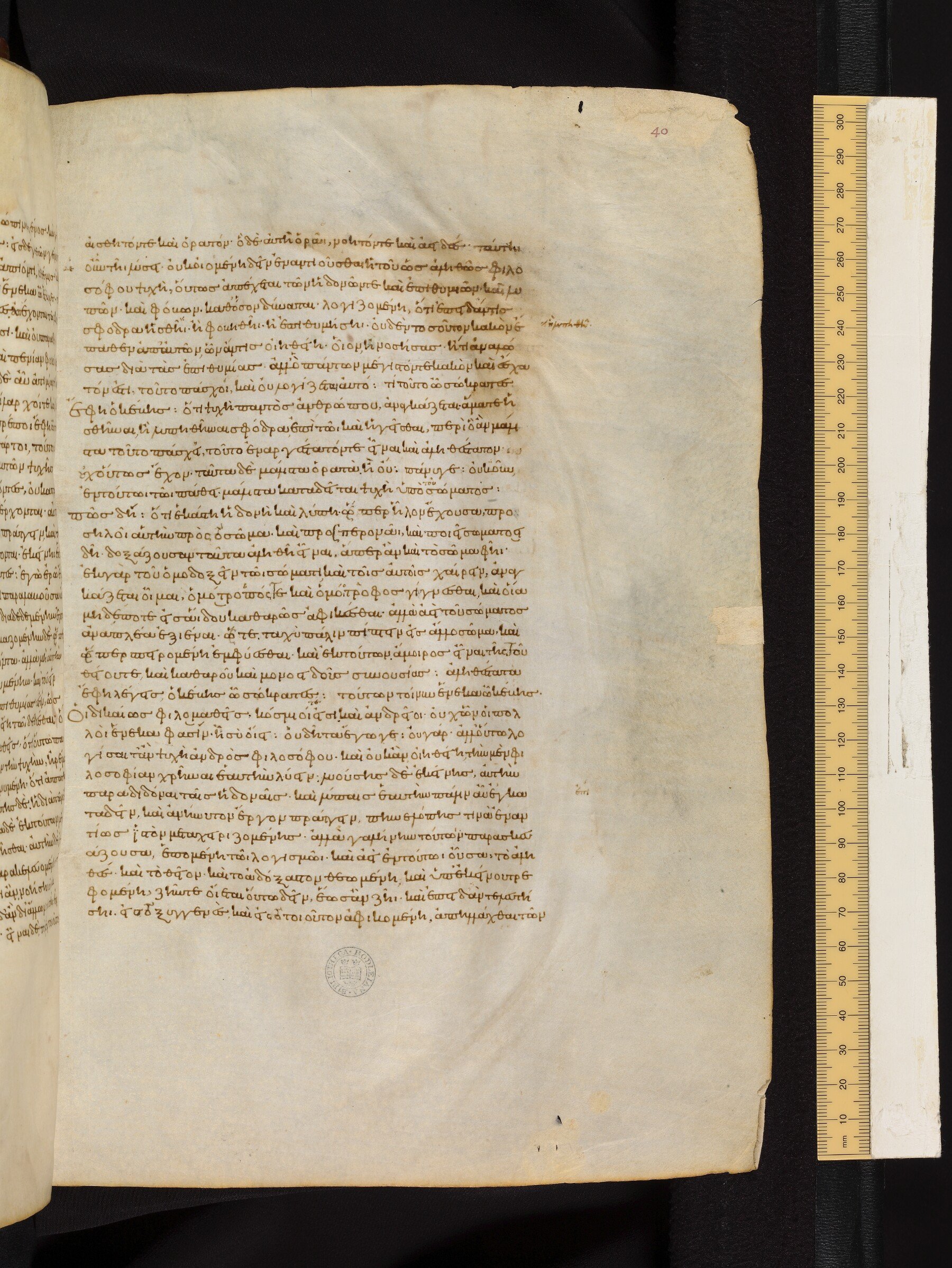
Starts on fol. 39v and continues on fol. 40r (page break inside this subsection). Clarke 39 fol. 39v runs from 'ἢ μυρμήκων, ἢ καὶ εἰς ταὐτόν γε πάλιν τὸ ἀνθρώπινον γένος' on its first line (82b) to 'μηδὲν ἡγεῖσθαι ἀληθές· εἶναι δὲ τὸ μὲν τοιοῦτον' on its last line (83b). Viewer: https://digital.bodleian.ox.ac.uk/objects/f57d074b-cff1-4172-8236-797c7b8f0403/surfaces/1010bc7e-f13a-4b6c-85a8-e93132a57c09/ Clarke 39 fol. 40r runs from '(αἰσθη)τόν τε καὶ ὁρατόν, ὃ δὲ αὐτὴ ὁρᾷ, νοητόν τε καὶ ἀιδές' on its first line (83b) to 'εἰς τὸ συγγενὲς καὶ εἰς τὸ τοιοῦτον ἀφικομένη ἀπηλλάχθαι τῶν' on its last line (84b). Viewer: https://digital.bodleian.ox.ac.uk/objects/f57d074b-cff1-4172-8236-797c7b8f0403/surfaces/d0d9fedc-4898-404a-b354-8065b601dab7/ Checked on the images. The Greek shown is Burnet's critical text; the copyist's wording differs from it in small details.
ἢ αὐτὴν αὑτῇ, ὅτι ἂν νοήσῃ αὐτὴ καθ’ αὑτὴν αὐτὸ καθ’ αὑτὸ τῶν ὄντων· ὅτι δ’ ἂν δι’ ἄλλων σκοπῇ ἐν ἄλλοις ὂν ἄλλο, μηδὲν ἡγεῖσθαι ἀληθές· εἶναι δὲ τὸ μὲν τοιοῦτον αἰσθητόν τε καὶ ὁρατόν, ὃ δὲ αὐτὴ ὁρᾷ νοητόν τε καὶ ἀιδές. ταύτῃ οὖν τῇ λύσει οὐκ οἰομένη δεῖν ἐναντιοῦσθαι ἡ τοῦ ὡς ἀληθῶς φιλοσόφου ψυχὴ οὕτως ἀπέχεται τῶν ἡδονῶν τε καὶ ἐπιθυμιῶν καὶ λυπῶν [καὶ φόβων] καθ’ ὅσον δύναται, λογιζομένη ὅτι, ἐπειδάν τις σφόδρα ἡσθῇ ἢ φοβηθῇ [ἢ λυπηθῇ] ἢ ἐπιθυμήσῃ, οὐδὲν τοσοῦτον κακὸν ἔπαθεν ἀπ’
itself and its own abstract thought of abstract existence; and to believe that there is no truth in that which it sees by other means and which varies with the various objects in which it appears, since everything of that kind is visible and apprehended by the senses, whereas the soul itself sees that which is invisible and apprehended by the mind. Now the soul of the true philosopher believes that it must not resist this deliverance, and therefore it stands aloof from pleasures and lusts and griefs and fears, so far as it can, considering that when anyone has violent pleasures or fears or griefs or lusts he suffers from them not merely what one might think—for example, illness or loss of money spent
Where on the image
On Clarke 39 fol. 40r. Clarke 39 fol. 40r runs from '(αἰσθη)τόν τε καὶ ὁρατόν, ὃ δὲ αὐτὴ ὁρᾷ, νοητόν τε καὶ ἀιδές' on its first line (83b) to 'εἰς τὸ συγγενὲς καὶ εἰς τὸ τοιοῦτον ἀφικομένη ἀπηλλάχθαι τῶν' on its last line (84b). Viewer: https://digital.bodleian.ox.ac.uk/objects/f57d074b-cff1-4172-8236-797c7b8f0403/surfaces/d0d9fedc-4898-404a-b354-8065b601dab7/ Checked on the images. The Greek shown is Burnet's critical text; the copyist's wording differs from it in small details.
αὐτῶν ὧν ἄν τις οἰηθείη, οἷον ἢ νοσήσας ἤ τι ἀναλώσας διὰ τὰς ἐπιθυμίας, ἀλλ’ ὃ πάντων μέγιστόν τε κακῶν καὶ ἔσχατόν ἐστι, τοῦτο πάσχει καὶ οὐ λογίζεται αὐτό. τί τοῦτο, ὦ Σώκρατες; ἔφη ὁ Κέβης. ὅτι ψυχὴ παντὸς ἀνθρώπου ἀναγκάζεται ἅμα τε ἡσθῆναι σφόδρα ἢ λυπηθῆναι ἐπί τῳ καὶ ἡγεῖσθαι περὶ ὃ ἂν μάλιστα τοῦτο πάσχῃ, τοῦτο ἐναργέστατόν τε εἶναι καὶ ἀληθέστατον, οὐχ οὕτως ἔχον· ταῦτα δὲ μάλιστα <τὰ> ὁρατά· ἢ οὔ; πάνυ γε.
for his lusts—but he suffers the greatest and most extreme evil and does not take it into account. What is this evil, Socrates? said Cebes. The evil is that the soul of every man, when it is greatly pleased or pained by anything, is compelled to believe that the object which caused the emotion is very distinct and very true; but it is not. These objects are mostly the visible ones, are they not?
Where on the image
On Clarke 39 fol. 40r. Clarke 39 fol. 40r runs from '(αἰσθη)τόν τε καὶ ὁρατόν, ὃ δὲ αὐτὴ ὁρᾷ, νοητόν τε καὶ ἀιδές' on its first line (83b) to 'εἰς τὸ συγγενὲς καὶ εἰς τὸ τοιοῦτον ἀφικομένη ἀπηλλάχθαι τῶν' on its last line (84b). Viewer: https://digital.bodleian.ox.ac.uk/objects/f57d074b-cff1-4172-8236-797c7b8f0403/surfaces/d0d9fedc-4898-404a-b354-8065b601dab7/ Checked on the images. The Greek shown is Burnet's critical text; the copyist's wording differs from it in small details.
οὐκοῦν ἐν τούτῳ τῷ πάθει μάλιστα καταδεῖται ψυχὴ ὑπὸ σώματος; πῶς δή; ὅτι ἑκάστη ἡδονὴ καὶ λύπη ὥσπερ ἧλον ἔχουσα προσηλοῖ αὐτὴν πρὸς τὸ σῶμα καὶ προσπερονᾷ καὶ ποιεῖ σωματοειδῆ, δοξάζουσαν ταῦτα ἀληθῆ εἶναι ἅπερ ἂν καὶ τὸ σῶμα φῇ. ἐκ γὰρ τοῦ ὁμοδοξεῖν τῷ σώματι καὶ τοῖς αὐτοῖς χαίρειν ἀναγκάζεται οἶμαι ὁμότροπός τε καὶ ὁμότροφος γίγνεσθαι καὶ οἵα μηδέποτε εἰς Ἅιδου καθαρῶς ἀφικέσθαι, ἀλλὰ ἀεὶ τοῦ σώματος ἀναπλέα ἐξιέναι, ὥστε ταχὺ πάλιν πίπτειν εἰς
Certainly. And when this occurs, is not the soul most completely put in bondage by the body? How so? Because each pleasure or pain nails it as with a nail to the body and rivets it on and makes it corporeal, so that it fancies the things are true which the body says are true. For because it has the same beliefs and pleasures as the body it is compelled to adopt also the same habits and mode of life, and can never depart in purity to the other world, but must always go away contaminated with the body; and so it sinks quickly into another body again and grows into it,
Where on the image
On Clarke 39 fol. 40r. Clarke 39 fol. 40r runs from '(αἰσθη)τόν τε καὶ ὁρατόν, ὃ δὲ αὐτὴ ὁρᾷ, νοητόν τε καὶ ἀιδές' on its first line (83b) to 'εἰς τὸ συγγενὲς καὶ εἰς τὸ τοιοῦτον ἀφικομένη ἀπηλλάχθαι τῶν' on its last line (84b). Viewer: https://digital.bodleian.ox.ac.uk/objects/f57d074b-cff1-4172-8236-797c7b8f0403/surfaces/d0d9fedc-4898-404a-b354-8065b601dab7/ Checked on the images. The Greek shown is Burnet's critical text; the copyist's wording differs from it in small details.
ἄλλο σῶμα καὶ ὥσπερ σπειρομένη ἐμφύεσθαι, καὶ ἐκ τούτων ἄμοιρος εἶναι τῆς τοῦ θείου τε καὶ καθαροῦ καὶ μονοειδοῦς συνουσίας. ἀληθέστατα, ἔφη, λέγεις, ὁ Κέβης, ὦ Σώκρατες. τούτων τοίνυν ἕνεκα, ὦ Κέβης, οἱ δικαίως φιλομαθεῖς κόσμιοί εἰσι καὶ ἀνδρεῖοι, οὐχ ὧν οἱ πολλοὶ ἕνεκά φασιν· ἢ σὺ οἴει;
like seed that is sown. Therefore it has no part in the communion with the divine and pure and absolute. What you say, Socrates, is very true, said Cebes. This, Cebes, is the reason why the true lovers of knowledge are temperate and brave; not the world’s reason. Or do you disagree?
Where on the image
On Clarke 39 fol. 40r. Clarke 39 fol. 40r runs from '(αἰσθη)τόν τε καὶ ὁρατόν, ὃ δὲ αὐτὴ ὁρᾷ, νοητόν τε καὶ ἀιδές' on its first line (83b) to 'εἰς τὸ συγγενὲς καὶ εἰς τὸ τοιοῦτον ἀφικομένη ἀπηλλάχθαι τῶν' on its last line (84b). Viewer: https://digital.bodleian.ox.ac.uk/objects/f57d074b-cff1-4172-8236-797c7b8f0403/surfaces/d0d9fedc-4898-404a-b354-8065b601dab7/ Checked on the images. The Greek shown is Burnet's critical text; the copyist's wording differs from it in small details.
οὐ δῆτα ἔγωγε. οὐ γάρ· ἀλλ’ οὕτω λογίσαιτ’ ἂν ψυχὴ ἀνδρὸς φιλοσόφου, καὶ οὐκ ἂν οἰηθείη τὴν μὲν φιλοσοφίαν χρῆναι αὐτὴν λύειν, λυούσης δὲ ἐκείνης, αὐτὴν παραδιδόναι ταῖς ἡδοναῖς καὶ λύπαις ἑαυτὴν πάλιν αὖ ἐγκαταδεῖν καὶ ἀνήνυτον ἔργον πράττειν Πηνελόπης τινὰ ἐναντίως ἱστὸν μεταχειριζομένης, ἀλλὰ γαλήνην τούτων παρασκευάζουσα, ἑπομένη τῷ λογισμῷ καὶ ἀεὶ ἐν τούτῳ οὖσα, τὸ ἀληθὲς καὶ τὸ θεῖον καὶ τὸ ἀδόξαστον
Certainly not. No, for the soul of the philosopher would not reason as others do, and would not think it right that philosophy should set it free, and that then when set free it should give itself again into bondage to pleasure and pain and engage in futile toil, like Penelope unweaving the web she wove. No, his soul believes that it must gain peace from these emotions, must follow reason and abide always in it, beholding that which is true and divine and not a matter of opinion, and making that its only food;
Where on the image
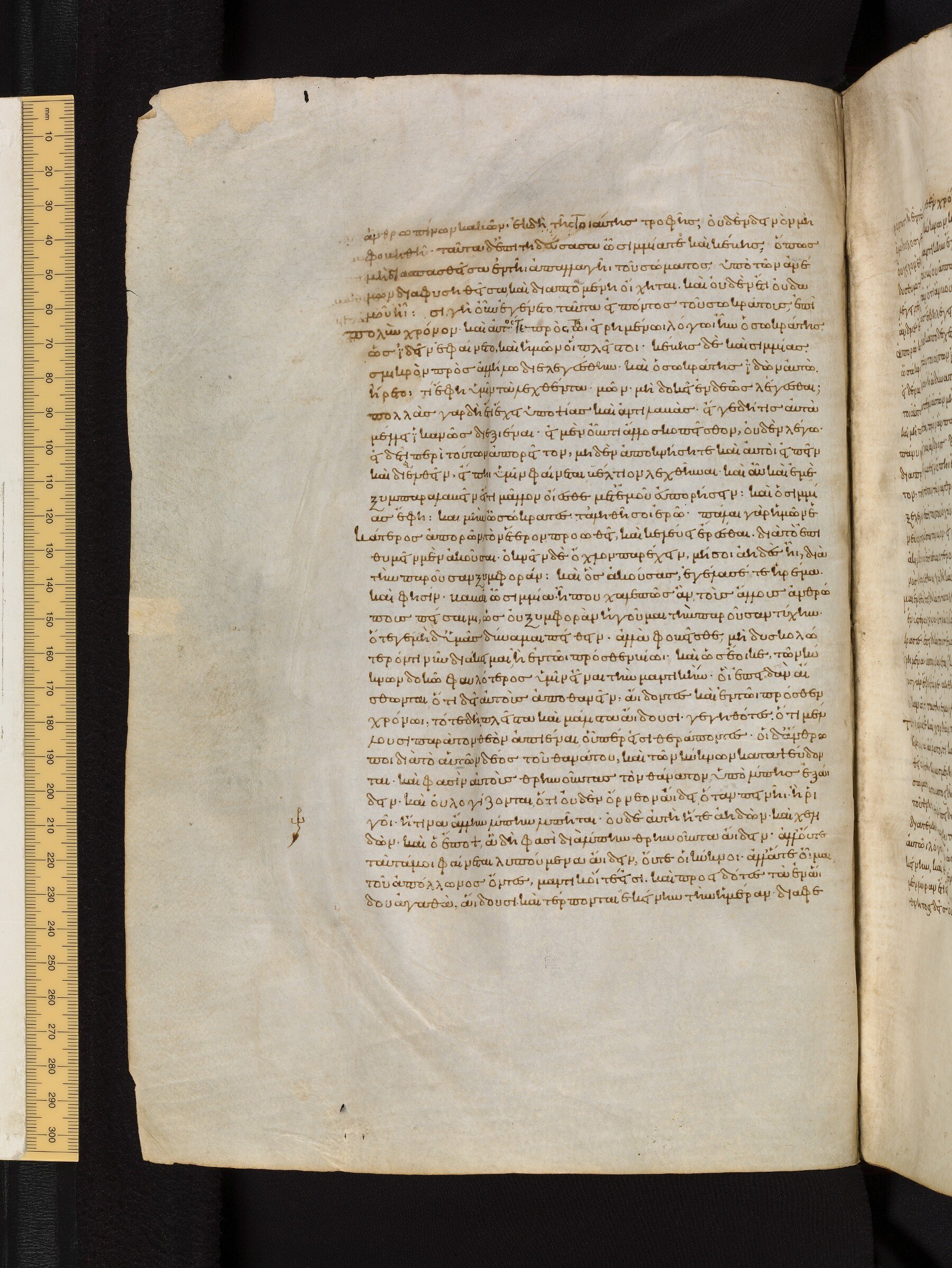
Starts on fol. 40r and continues on fol. 40v (page break inside this subsection). Clarke 39 fol. 40r runs from '(αἰσθη)τόν τε καὶ ὁρατόν, ὃ δὲ αὐτὴ ὁρᾷ, νοητόν τε καὶ ἀιδές' on its first line (83b) to 'εἰς τὸ συγγενὲς καὶ εἰς τὸ τοιοῦτον ἀφικομένη ἀπηλλάχθαι τῶν' on its last line (84b). Viewer: https://digital.bodleian.ox.ac.uk/objects/f57d074b-cff1-4172-8236-797c7b8f0403/surfaces/d0d9fedc-4898-404a-b354-8065b601dab7/ Clarke 39 fol. 40v runs from 'ἀνθρωπίνων κακῶν. ἐκ δὴ τῆς τοιαύτης τροφῆς οὐδὲν δεινὸν μὴ' on its first line (84b) to 'ᾄδουσι καὶ τέρπονται ἐκείνην τὴν ἡμέραν διαφε(ρόντως)' on its last line (85b). Line 2 reads 'ταῦτα δʼ ἐπιτηδεύσασα, ὦ Σιμμία τε καὶ Κέβης, ὅπως', still within 84b. Viewer: https://digital.bodleian.ox.ac.uk/objects/f57d074b-cff1-4172-8236-797c7b8f0403/surfaces/1bfee2e3-f909-4364-a125-16bc49470908/ Checked on the images. The Greek shown is Burnet's critical text; the copyist's wording differs from it in small details.
θεωμένη καὶ ὑπ’ ἐκείνου τρεφομένη, ζῆν τε οἴεται οὕτω δεῖν ἕως ἂν ζῇ, καὶ ἐπειδὰν τελευτήσῃ, εἰς τὸ συγγενὲς καὶ εἰς τὸ τοιοῦτον ἀφικομένη ἀπηλλάχθαι τῶν ἀνθρωπίνων κακῶν. ἐκ δὴ τῆς τοιαύτης τροφῆς οὐδὲν δεινὸν μὴ φοβηθῇ, [ταῦτα δ’ ἐπιτηδεύσασα,] ὦ Σιμμία τε καὶ Κέβης, ὅπως μὴ διασπασθεῖσα ἐν τῇ ἀπαλλαγῇ τοῦ σώματος ὑπὸ τῶν ἀνέμων διαφυσηθεῖσα καὶ διαπτομένη οἴχηται καὶ οὐδὲν ἔτι οὐδαμοῦ ᾖ.
and in this way it believes it must live, while life endures, and then at death pass on to that which is akin to itself and of like nature, and be free from human ills. A soul which has been nurtured in this way, Simmias and Cebes, is not likely to fear that it will be torn asunder at its departure from the body and will vanish into nothingness, blown apart by the winds, and be no longer anywhere. When Socrates had said this there was silence
Notes
- Greek: John Burnet, Platonis Opera (Oxford Classical Texts, 1900-1907), Perseus digital text. Square brackets mark words Burnet deletes.
- English: Harold North Fowler, Plato I: Euthyphro, Apology, Crito, Phaedo, Phaedrus (Loeb Classical Library, Harvard University Press / Heinemann, 1914), Perseus tlg0059.tlg004.perseus-eng2. The English section breaks follow the translator's own Stephanus markers, so a few words may fall on the neighbouring side of a break compared with the Greek.
Cite
Sources
- Source: Oxford, Bodleian Library, MS. E. D. Clarke 39 fol. 37r-40v (Bodleian Libraries, University of Oxford, Digital Bodleian (IIIF)) + Burnet Greek (Perseus) + H. N. Fowler (1914) English (Perseus) (holding institution)
- Critical edition: Burnet, Platonis Opera (1900-1907), via Perseus
← previous · → next · v cycle view · l back to library