Plato, Phaedrus 245c-250c: the immortal soul, the winged chariot and the place beyond the heavens
Introduction
In his second speech on love in the Phaedrus, Socrates argues that every soul is immortal, since what moves itself never ceases to move. He then describes the soul in an image: a charioteer with two winged horses. The souls of the gods drive easily to the outer rim of heaven and look on what lies beyond it, 'the colorless, formless, and intangible truly existing essence'; human souls follow as they can, lose their wings and fall into bodies. The mind of the philosopher alone regains its wings, 'for he is always, so far as he is able, in communion through memory with those things the communion with which causes God to be divine' (249c).
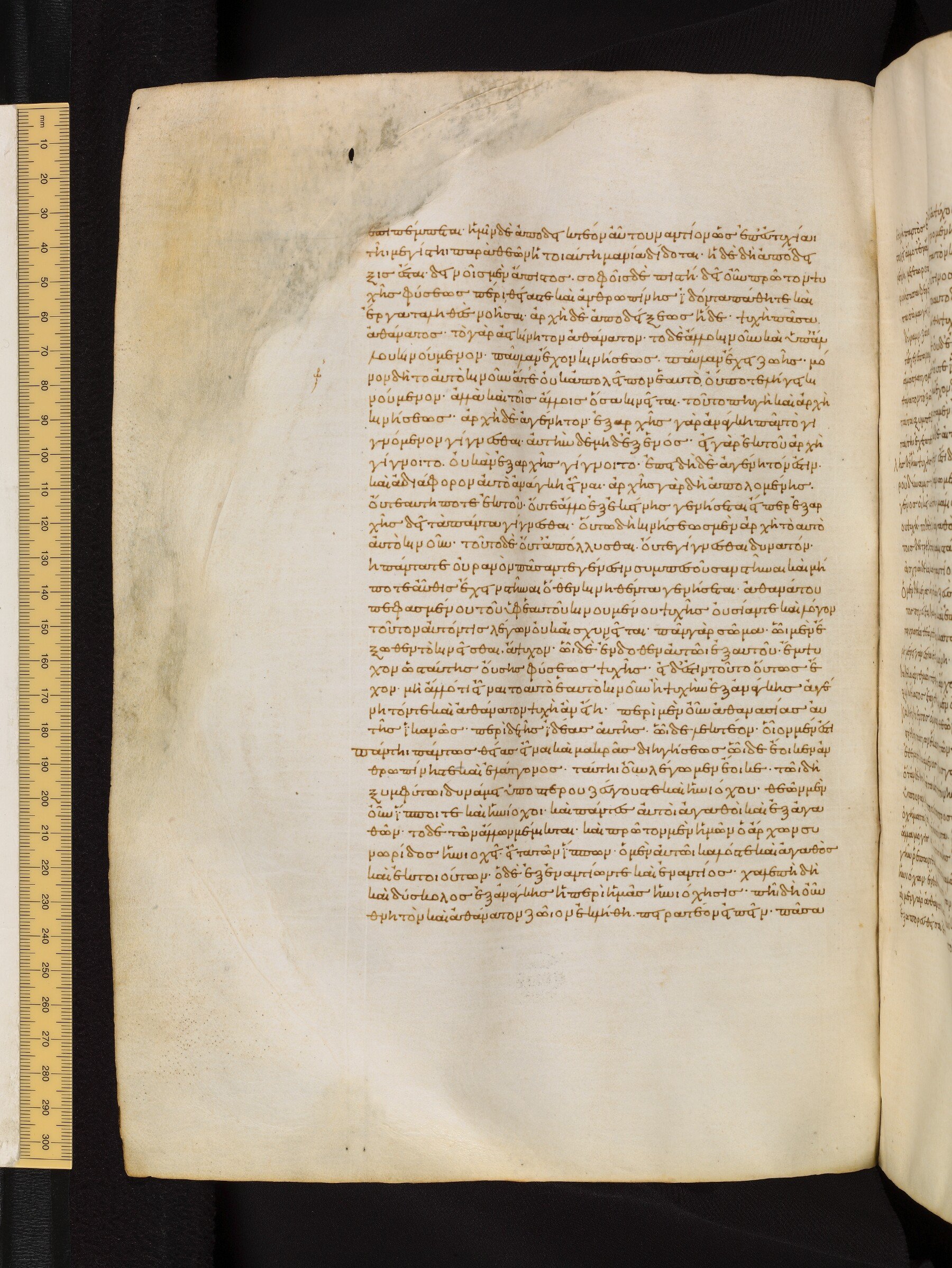
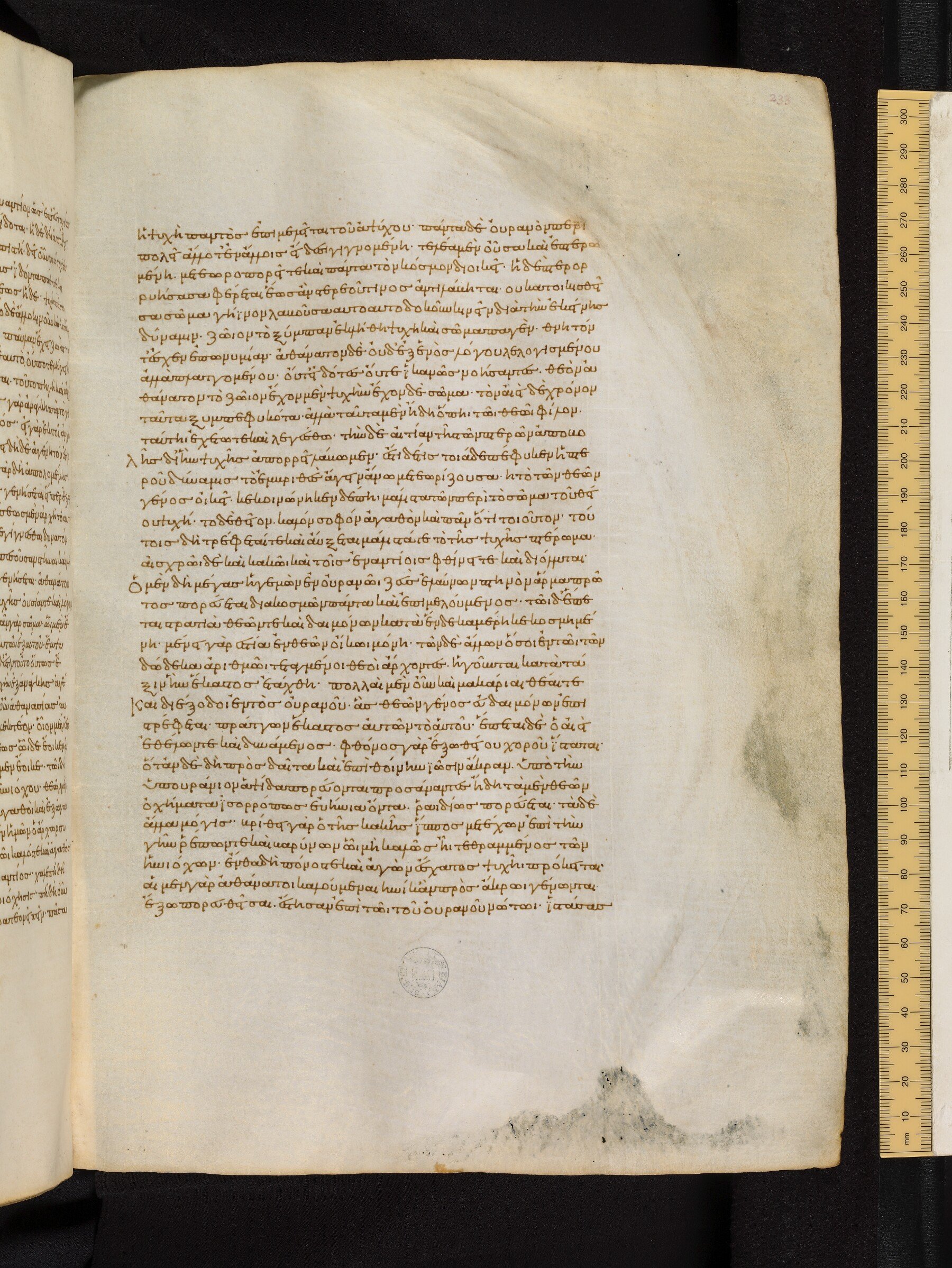
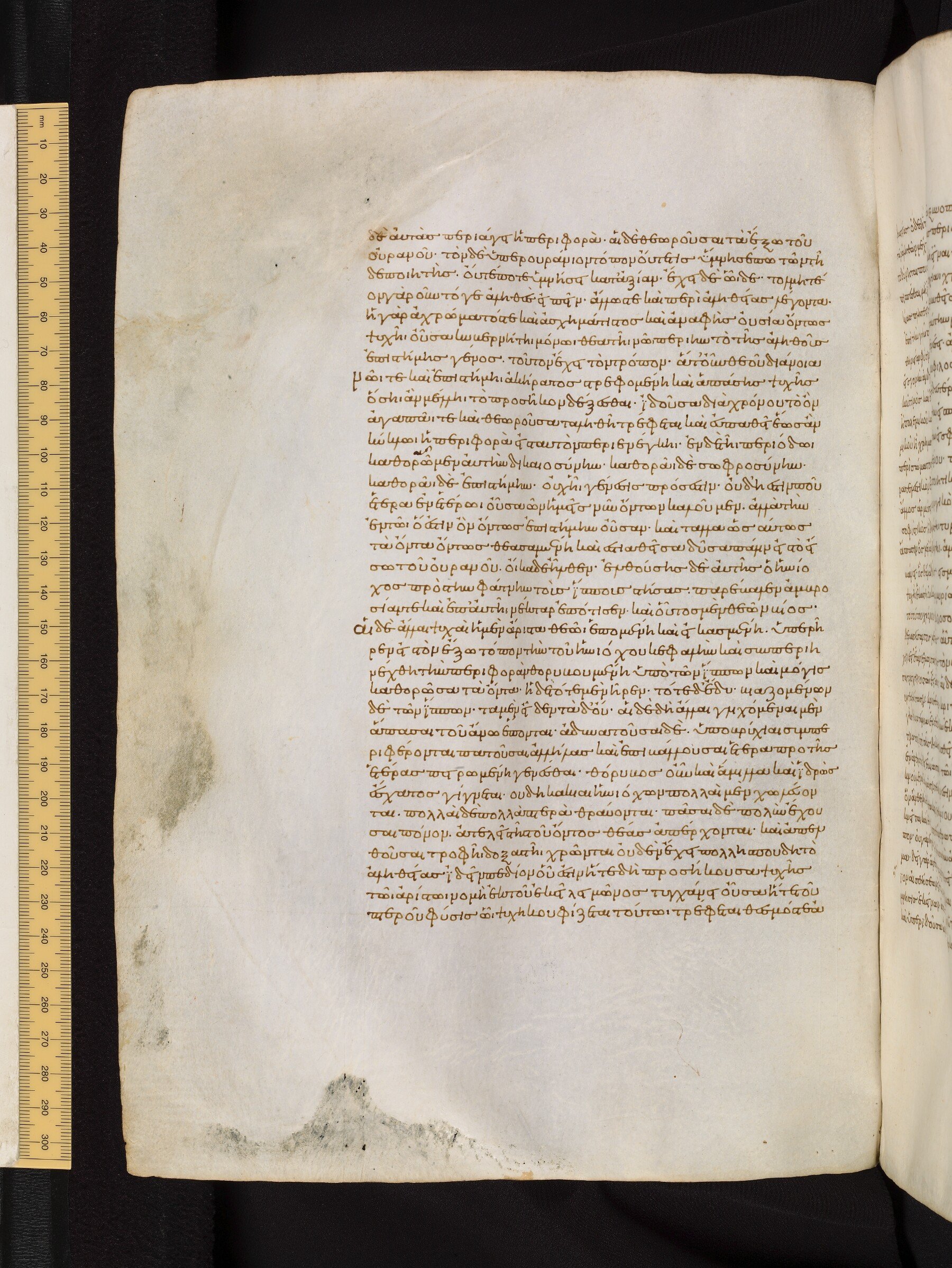
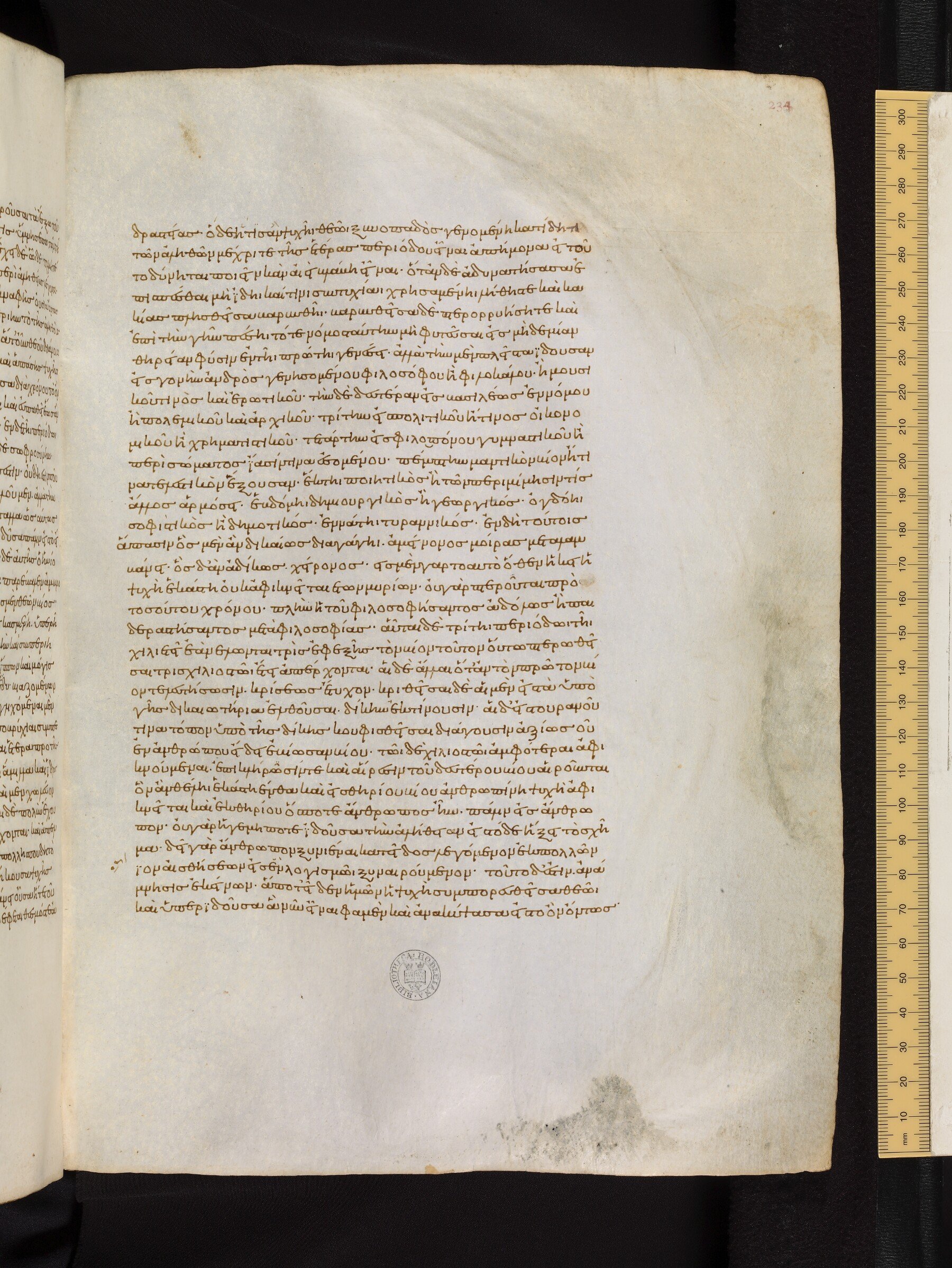
The pages shown are from the Clarke Plato (Oxford, Bodleian Library, MS. E. D. Clarke 39), copied in Constantinople in 895, the oldest manuscript of the Phaedrus (siglum B). The passage runs from fol. 232v line 2 to the top of fol. 235r, six pages. Each section is one Stephanus subsection, linked to the page or pages that carry its words, identified by reading the first and last lines of each page on the image. The Greek is Burnet's critical text, not a transcription of the manuscript.
How was this verified? (Provenance)
Where on the image
On Clarke 39 fol. 232v. Clarke 39 fol. 232v runs from 'ἐπιπέμπεται. ἡμῖν δὲ ἀποδεικτέον αὖ τοὐναντίον, ὡς ἐπʼ εὐτυχίᾳ' on its first line (245b) to 'θνητόν τε καὶ ἀθάνατον ζῷον ἐκλήθη πειρατέον εἰπεῖν. ψυχὴ πᾶσα' on its last line (246b). 245c begins on line 2 ('τῇ μεγίστῃ παρὰ θεῶν ἡ τοιαύτη μανία δίδοται'). Viewer: https://digital.bodleian.ox.ac.uk/objects/f57d074b-cff1-4172-8236-797c7b8f0403/surfaces/0f37a1f6-ba6a-4bc2-a149-f13c5cf0e1c7/ Checked on the images. The Greek shown is Burnet's critical text; the copyist's wording differs from it in small details.
παρὰ θεῶν ἡ τοιαύτη μανία δίδοται· ἡ δὲ δὴ ἀπόδειξις ἔσται δεινοῖς μὲν ἄπιστος, σοφοῖς δὲ πιστή. δεῖ οὖν πρῶτον ψυχῆς φύσεως πέρι θείας τε καὶ ἀνθρωπίνης ἰδόντα πάθη τε καὶ ἔργα τἀληθὲς νοῆσαι· ἀρχὴ δὲ ἀποδείξεως ἥδε. ψυχὴ πᾶσα ἀθάνατος. τὸ γὰρ ἀεικίνητον ἀθάνατον· τὸ δʼ ἄλλο κινοῦν καὶ ὑπʼ ἄλλου κινούμενον, παῦλαν ἔχον κινήσεως, παῦλαν ἔχει ζωῆς. μόνον δὴ τὸ αὑτὸ κινοῦν, ἅτε οὐκ ἀπολεῖπον ἑαυτό, οὔποτε λήγει κινούμενον, ἀλλὰ καὶ τοῖς ἄλλοις ὅσα κινεῖται τοῦτο πηγὴ καὶ ἀρχὴ κινήσεως.
is given by the gods for our greatest happiness; and our proof will not be believed by the merely clever, but will be accepted by the truly wise. First, then, we must learn the truth about the soul divine and human by observing how it acts and is acted upon. And the beginning of our proof is as follows: Every soul is immortal. For that which is ever moving is immortal but that which moves something else or is moved by something else, when it ceases to move, ceases to live. Only that which moves itself, since it does not leave itself, never ceases to move, and this is also
Where on the image
On Clarke 39 fol. 232v. Clarke 39 fol. 232v runs from 'ἐπιπέμπεται. ἡμῖν δὲ ἀποδεικτέον αὖ τοὐναντίον, ὡς ἐπʼ εὐτυχίᾳ' on its first line (245b) to 'θνητόν τε καὶ ἀθάνατον ζῷον ἐκλήθη πειρατέον εἰπεῖν. ψυχὴ πᾶσα' on its last line (246b). 245c begins on line 2 ('τῇ μεγίστῃ παρὰ θεῶν ἡ τοιαύτη μανία δίδοται'). Viewer: https://digital.bodleian.ox.ac.uk/objects/f57d074b-cff1-4172-8236-797c7b8f0403/surfaces/0f37a1f6-ba6a-4bc2-a149-f13c5cf0e1c7/ Checked on the images. The Greek shown is Burnet's critical text; the copyist's wording differs from it in small details.
ἀρχὴ δὲ ἀγένητον. ἐξ ἀρχῆς γὰρ ἀνάγκη πᾶν τὸ γιγνόμενον γίγνεσθαι, αὐτὴν δὲ μηδʼ ἐξ ἑνός· εἰ γὰρ ἔκ του ἀρχὴ γίγνοιτο, οὐκ ἂν ἔτι ἀρχὴ γίγνοιτο. ἐπειδὴ δὲ ἀγένητόν ἐστιν, καὶ ἀδιάφθορον αὐτὸ ἀνάγκη εἶναι. ἀρχῆς γὰρ δὴ ἀπολομένης οὔτε αὐτή ποτε ἔκ του οὔτε ἄλλο ἐξ ἐκείνης γενήσεται, εἴπερ ἐξ ἀρχῆς δεῖ τὰ πάντα γίγνεσθαι. οὕτω δὴ κινήσεως μὲν ἀρχὴ τὸ αὐτὸ αὑτὸ κινοῦν. τοῦτο δὲ οὔτʼ ἀπόλλυσθαι οὔτε γίγνεσθαι δυνατόν, ἢ πάντα τε οὐρανὸν
the source and beginning of motion for all other things which have motion. But the beginning is ungenerated. For everything that is generated must be generated from a beginning, but the beginning is not generated from anything; for if the beginning were generated from anything, it would not be generated from a beginning. And since it is ungenerated, it must be also indestructible; for if the beginning were destroyed, it could never be generated from anything nor anything else from it, since all things must be generated from a beginning. Thus that which moves itself must be the beginning of motion. And this can be neither destroyed nor generated,
Where on the image
On Clarke 39 fol. 232v. Clarke 39 fol. 232v runs from 'ἐπιπέμπεται. ἡμῖν δὲ ἀποδεικτέον αὖ τοὐναντίον, ὡς ἐπʼ εὐτυχίᾳ' on its first line (245b) to 'θνητόν τε καὶ ἀθάνατον ζῷον ἐκλήθη πειρατέον εἰπεῖν. ψυχὴ πᾶσα' on its last line (246b). 245c begins on line 2 ('τῇ μεγίστῃ παρὰ θεῶν ἡ τοιαύτη μανία δίδοται'). Viewer: https://digital.bodleian.ox.ac.uk/objects/f57d074b-cff1-4172-8236-797c7b8f0403/surfaces/0f37a1f6-ba6a-4bc2-a149-f13c5cf0e1c7/ Checked on the images. The Greek shown is Burnet's critical text; the copyist's wording differs from it in small details.
πᾶσάν τε γῆν εἰς ἓν συμπεσοῦσαν στῆναι καὶ μήποτε αὖθις ἔχειν ὅθεν κινηθέντα γενήσεται. ἀθανάτου δὲ πεφασμένου τοῦ ὑφʼ ἑαυτοῦ κινουμένου, ψυχῆς οὐσίαν τε καὶ λόγον τοῦτον αὐτόν τις λέγων οὐκ αἰσχυνεῖται. πᾶν γὰρ σῶμα, ᾧ μὲν ἔξωθεν τὸ κινεῖσθαι, ἄψυχον, ᾧ δὲ ἔνδοθεν αὐτῷ ἐξ αὑτοῦ, ἔμψυχον, ὡς ταύτης οὔσης φύσεως ψυχῆς· εἰ δʼ ἔστιν τοῦτο οὕτως ἔχον, μὴ ἄλλο τι εἶναι τὸ αὐτὸ ἑαυτὸ
otherwise all the heavens and all generation must fall in ruin and stop and never again have any source of motion or origin. But since that which is moved by itself has been seen to be immortal, one who says that this self-motion is the essence and the very idea of the soul, will not be disgraced. For every body which derives motion from without is soulless, but that which has its motion within itself has a soul, since that is the nature of the soul; but if this is true,—
Where on the image
On Clarke 39 fol. 232v. Clarke 39 fol. 232v runs from 'ἐπιπέμπεται. ἡμῖν δὲ ἀποδεικτέον αὖ τοὐναντίον, ὡς ἐπʼ εὐτυχίᾳ' on its first line (245b) to 'θνητόν τε καὶ ἀθάνατον ζῷον ἐκλήθη πειρατέον εἰπεῖν. ψυχὴ πᾶσα' on its last line (246b). 245c begins on line 2 ('τῇ μεγίστῃ παρὰ θεῶν ἡ τοιαύτη μανία δίδοται'). Viewer: https://digital.bodleian.ox.ac.uk/objects/f57d074b-cff1-4172-8236-797c7b8f0403/surfaces/0f37a1f6-ba6a-4bc2-a149-f13c5cf0e1c7/ Checked on the images. The Greek shown is Burnet's critical text; the copyist's wording differs from it in small details.
κινοῦν ἢ ψυχήν, ἐξ ἀνάγκης ἀγένητόν τε καὶ ἀθάνατον ψυχὴ ἂν εἴη. περὶ μὲν οὖν ἀθανασίας αὐτῆς ἱκανῶς· περὶ δὲ τῆς ἰδέας αὐτῆς ὧδε λεκτέον. οἷον μέν ἐστι, πάντῃ πάντως θείας εἶναι καὶ μακρᾶς διηγήσεως, ᾧ δὲ ἔοικεν, ἀνθρωπίνης τε καὶ ἐλάττονος· ταύτῃ οὖν λέγωμεν. ἐοικέτω δὴ συμφύτῳ δυνάμει ὑποπτέρου ζεύγους τε καὶ ἡνιόχου. θεῶν μὲν οὖν ἵπποι τε καὶ ἡνίοχοι πάντες αὐτοί τε ἀγαθοὶ καὶ ἐξ ἀγαθῶν,
that that which moves itself is nothing else than the soul,—then the soul would necessarily be ungenerated and immortal. Concerning the immortality of the soul this is enough; but about its form we must speak in the following manner. To tell what it really is would be a matter for utterly superhuman and long discourse, but it is within human power to describe it briefly in a figure; let us therefore speak in that way. We will liken the soul to the composite nature of a pair of winged horses and a charioteer. Now the horses and charioteers of the gods are all good and
Where on the image
Starts on fol. 232v and continues on fol. 233r (page break inside this subsection). Clarke 39 fol. 232v runs from 'ἐπιπέμπεται. ἡμῖν δὲ ἀποδεικτέον αὖ τοὐναντίον, ὡς ἐπʼ εὐτυχίᾳ' on its first line (245b) to 'θνητόν τε καὶ ἀθάνατον ζῷον ἐκλήθη πειρατέον εἰπεῖν. ψυχὴ πᾶσα' on its last line (246b). 245c begins on line 2 ('τῇ μεγίστῃ παρὰ θεῶν ἡ τοιαύτη μανία δίδοται'). Viewer: https://digital.bodleian.ox.ac.uk/objects/f57d074b-cff1-4172-8236-797c7b8f0403/surfaces/0f37a1f6-ba6a-4bc2-a149-f13c5cf0e1c7/ Clarke 39 fol. 233r runs from 'παντὸς ἐπιμελεῖται τοῦ ἀψύχου, πάντα δὲ οὐρανὸν περι(πολεῖ)' on its first line (246b) to 'ἔξω πορευθεῖσαι ἔστησαν ἐπὶ τῷ τοῦ οὐρανοῦ νώτῳ, στάσας' on its last line (247c). Viewer: https://digital.bodleian.ox.ac.uk/objects/f57d074b-cff1-4172-8236-797c7b8f0403/surfaces/e95235f4-566d-4b35-841d-31231863406b/ Checked on the images. The Greek shown is Burnet's critical text; the copyist's wording differs from it in small details.
τὸ δὲ τῶν ἄλλων μέμεικται. καὶ πρῶτον μὲν ἡμῶν ὁ ἄρχων συνωρίδος ἡνιοχεῖ, εἶτα τῶν ἵππων ὁ μὲν αὐτῷ καλός τε καὶ ἀγαθὸς καὶ ἐκ τοιούτων, ὁ δʼ ἐξ ἐναντίων τε καὶ ἐναντίος· χαλεπὴ δὴ καὶ δύσκολος ἐξ ἀνάγκης ἡ περὶ ἡμᾶς ἡνιόχησις. πῇ δὴ οὖν θνητόν τε καὶ ἀθάνατον ζῷον ἐκλήθη πειρατέον εἰπεῖν. ψυχὴ πᾶσα παντὸς ἐπιμελεῖται τοῦ ἀψύχου, πάντα δὲ οὐρανὸν περιπολεῖ, ἄλλοτʼ ἐν ἄλλοις εἴδεσι γιγνομένη. τελέα
of good descent, but those of other races are mixed; and first the charioteer of the human soul drives a pair, and secondly one of the horses is noble and of noble breed, but the other quite the opposite in breed and character. Therefore in our case the driving is necessarily difficult and troublesome. Now we must try to tell why a living being is called mortal or immortal. Soul, considered collectively, has the care of all that which is soulless, and it traverses the whole heaven, appearing sometimes in one form and sometimes in another; now when it is perfect
Where on the image
On Clarke 39 fol. 233r. Clarke 39 fol. 233r runs from 'παντὸς ἐπιμελεῖται τοῦ ἀψύχου, πάντα δὲ οὐρανὸν περι(πολεῖ)' on its first line (246b) to 'ἔξω πορευθεῖσαι ἔστησαν ἐπὶ τῷ τοῦ οὐρανοῦ νώτῳ, στάσας' on its last line (247c). Viewer: https://digital.bodleian.ox.ac.uk/objects/f57d074b-cff1-4172-8236-797c7b8f0403/surfaces/e95235f4-566d-4b35-841d-31231863406b/ Checked on the images. The Greek shown is Burnet's critical text; the copyist's wording differs from it in small details.
μὲν οὖν οὖσα καὶ ἐπτερωμένη μετεωροπορεῖ τε καὶ πάντα τὸν κόσμον διοικεῖ, ἡ δὲ πτερορρυήσασα φέρεται ἕως ἂν στερεοῦ τινος ἀντιλάβηται, οὗ κατοικισθεῖσα, σῶμα γήϊνον λαβοῦσα, αὐτὸ αὑτὸ δοκοῦν κινεῖν διὰ τὴν ἐκείνης δύναμιν, ζῷον τὸ σύμπαν ἐκλήθη, ψυχὴ καὶ σῶμα παγέν, θνητόν τʼ ἔσχεν ἐπωνυμίαν· ἀθάνατον δὲ οὐδʼ ἐξ ἑνὸς λόγου λελογισμένου, ἀλλὰ πλάττομεν οὔτε ἰδόντες οὔτε ἱκανῶς νοήσαντες
and fully winged, it mounts upward and governs the whole world; but the soul which has lost its wings is borne along until it gets hold of something solid, when it settles down, taking upon itself an earthly body, which seems to be self-moving, because of the power of the soul within it; and the whole, compounded of soul and body, is called a living being, and is further designated as mortal. It is not immortal by any reasonable supposition, but we, though we have never seen
Where on the image
On Clarke 39 fol. 233r. Clarke 39 fol. 233r runs from 'παντὸς ἐπιμελεῖται τοῦ ἀψύχου, πάντα δὲ οὐρανὸν περι(πολεῖ)' on its first line (246b) to 'ἔξω πορευθεῖσαι ἔστησαν ἐπὶ τῷ τοῦ οὐρανοῦ νώτῳ, στάσας' on its last line (247c). Viewer: https://digital.bodleian.ox.ac.uk/objects/f57d074b-cff1-4172-8236-797c7b8f0403/surfaces/e95235f4-566d-4b35-841d-31231863406b/ Checked on the images. The Greek shown is Burnet's critical text; the copyist's wording differs from it in small details.
θεόν, ἀθάνατόν τι ζῷον, ἔχον μὲν ψυχήν, ἔχον δὲ σῶμα, τὸν ἀεὶ δὲ χρόνον ταῦτα συμπεφυκότα. ἀλλὰ ταῦτα μὲν δή, ὅπῃ τῷ θεῷ φίλον, ταύτῃ ἐχέτω τε καὶ λεγέσθω· τὴν δὲ αἰτίαν τῆς τῶν πτερῶν ἀποβολῆς, διʼ ἣν ψυχῆς ἀπορρεῖ, λάβωμεν. ἔστι δέ τις τοιάδε. πέφυκεν ἡ πτεροῦ δύναμις τὸ ἐμβριθὲς ἄγειν ἄνω μετεωρίζουσα ᾗ τὸ τῶν θεῶν γένος οἰκεῖ, κεκοινώνηκε δέ πῃ μάλιστα τῶν περὶ τὸ σῶμα τοῦ θείου [ψυχή], τὸ δὲ θεῖον
or rightly conceived a god, imagine an immortal being which has both a soul and a body which are united for all time. Let that, however, and our words concerning it, be as is pleasing to God; we will now consider the reason why the soul loses its wings. It is something like this. The natural function of the wing is to soar upwards and carry that which is heavy up to the place where dwells the race of the gods. More than any other thing that pertains to the body
Where on the image
On Clarke 39 fol. 233r. Clarke 39 fol. 233r runs from 'παντὸς ἐπιμελεῖται τοῦ ἀψύχου, πάντα δὲ οὐρανὸν περι(πολεῖ)' on its first line (246b) to 'ἔξω πορευθεῖσαι ἔστησαν ἐπὶ τῷ τοῦ οὐρανοῦ νώτῳ, στάσας' on its last line (247c). Viewer: https://digital.bodleian.ox.ac.uk/objects/f57d074b-cff1-4172-8236-797c7b8f0403/surfaces/e95235f4-566d-4b35-841d-31231863406b/ Checked on the images. The Greek shown is Burnet's critical text; the copyist's wording differs from it in small details.
καλόν, σοφόν, ἀγαθόν, καὶ πᾶν ὅτι τοιοῦτον· τούτοις δὴ τρέφεταί τε καὶ αὔξεται μάλιστά γε τὸ τῆς ψυχῆς πτέρωμα, αἰσχρῷ δὲ καὶ κακῷ καὶ τοῖς ἐναντίοις φθίνει τε καὶ διόλλυται. ὁ μὲν δὴ μέγας ἡγεμὼν ἐν οὐρανῷ Ζεύς, ἐλαύνων πτηνὸν ἅρμα, πρῶτος πορεύεται, διακοσμῶν πάντα καὶ ἐπιμελούμενος· τῷ δʼ ἕπεται στρατιὰ θεῶν τε καὶ δαιμόνων,
it partakes of the nature of the divine. But the divine is beauty, wisdom, goodness, and all such qualities; by these then the wings of the soul are nourished and grow, but by the opposite qualities, such as vileness and evil, they are wasted away and destroyed. Now the great leader in heaven, Zeus, driving a winged chariot, goes first, arranging all things and caring for all things.
Where on the image
On Clarke 39 fol. 233r. Clarke 39 fol. 233r runs from 'παντὸς ἐπιμελεῖται τοῦ ἀψύχου, πάντα δὲ οὐρανὸν περι(πολεῖ)' on its first line (246b) to 'ἔξω πορευθεῖσαι ἔστησαν ἐπὶ τῷ τοῦ οὐρανοῦ νώτῳ, στάσας' on its last line (247c). Viewer: https://digital.bodleian.ox.ac.uk/objects/f57d074b-cff1-4172-8236-797c7b8f0403/surfaces/e95235f4-566d-4b35-841d-31231863406b/ Checked on the images. The Greek shown is Burnet's critical text; the copyist's wording differs from it in small details.
κατὰ ἕνδεκα μέρη κεκοσμημένη. μένει γὰρ Ἑστία ἐν θεῶν οἴκῳ μόνη· τῶν δὲ ἄλλων ὅσοι ἐν τῷ τῶν δώδεκα ἀριθμῷ τεταγμένοι θεοὶ ἄρχοντες ἡγοῦνται κατὰ τάξιν ἣν ἕκαστος ἐτάχθη. πολλαὶ μὲν οὖν καὶ μακάριαι θέαι τε καὶ διέξοδοι ἐντὸς οὐρανοῦ, ἃς θεῶν γένος εὐδαιμόνων ἐπιστρέφεται πράττων ἕκαστος αὐτῶν τὸ αὑτοῦ, ἕπεται δὲ ὁ ἀεὶ ἐθέλων τε καὶ δυνάμενος· φθόνος γὰρ ἔξω θείου χοροῦ ἵσταται. ὅταν δὲ δὴ πρὸς δαῖτα καὶ ἐπὶ θοίνην ἴωσιν, ἄκραν ἐπὶ τὴν
He is followed by an army of gods and spirits, arrayed in eleven squadrons; Hestia alone remains in the house of the gods. Of the rest, those who are included among the twelve great gods and are accounted leaders, are assigned each to his place in the army. There are many blessed sights and many ways hither and thither within the heaven, along which the blessed gods go to and fro attending each to his own duties; and whoever wishes, and is able, follows, for jealousy is excluded from the celestial band. But when they go to a feast and a banquet,
Where on the image
On Clarke 39 fol. 233r. Clarke 39 fol. 233r runs from 'παντὸς ἐπιμελεῖται τοῦ ἀψύχου, πάντα δὲ οὐρανὸν περι(πολεῖ)' on its first line (246b) to 'ἔξω πορευθεῖσαι ἔστησαν ἐπὶ τῷ τοῦ οὐρανοῦ νώτῳ, στάσας' on its last line (247c). Viewer: https://digital.bodleian.ox.ac.uk/objects/f57d074b-cff1-4172-8236-797c7b8f0403/surfaces/e95235f4-566d-4b35-841d-31231863406b/ Checked on the images. The Greek shown is Burnet's critical text; the copyist's wording differs from it in small details.
ὑπουράνιον ἁψῖδα πορεύονται πρὸς ἄναντες, ᾗ δὴ τὰ μὲν θεῶν ὀχήματα ἰσορρόπως εὐήνια ὄντα ῥᾳδίως πορεύεται, τὰ δὲ ἄλλα μόγις· βρίθει γὰρ ὁ τῆς κάκης ἵππος μετέχων, ἐπὶ τὴν γῆν ῥέπων τε καὶ βαρύνων ᾧ μὴ καλῶς ἦν τεθραμμένος τῶν ἡνιόχων. ἔνθα δὴ πόνος τε καὶ ἀγὼν ἔσχατος ψυχῇ πρόκειται. αἱ μὲν γὰρ ἀθάνατοι καλούμεναι, ἡνίκʼ ἂν πρὸς ἄκρῳ γένωνται, ἔξω πορευθεῖσαι ἔστησαν ἐπὶ τῷ τοῦ οὐρανοῦ
they proceed steeply upward to the top of the vault of heaven, where the chariots of the gods, whose well matched horses obey the rein, advance easily, but the others with difficulty; for the horse of evil nature weighs the chariot down, making it heavy and pulling toward the earth the charioteer whose horse is not well trained. There the utmost toil and struggle await the soul. For those that are called immortal, when they reach the top,
Where on the image
Starts on fol. 233r and continues on fol. 233v (page break inside this subsection). Clarke 39 fol. 233r runs from 'παντὸς ἐπιμελεῖται τοῦ ἀψύχου, πάντα δὲ οὐρανὸν περι(πολεῖ)' on its first line (246b) to 'ἔξω πορευθεῖσαι ἔστησαν ἐπὶ τῷ τοῦ οὐρανοῦ νώτῳ, στάσας' on its last line (247c). Viewer: https://digital.bodleian.ox.ac.uk/objects/f57d074b-cff1-4172-8236-797c7b8f0403/surfaces/e95235f4-566d-4b35-841d-31231863406b/ Clarke 39 fol. 233v runs from 'δὲ αὐτὰς περιάγει ἡ περιφορά, αἱ δὲ θεωροῦσι τὰ ἔξω τοῦ οὐρανοῦ' on its first line (247c) to 'ἥ τε πτεροῦ φύσις, ᾧ ψυχὴ κουφίζεται, τούτῳ τρέφεται· θεσμός τε' on its last line (248c). Line 2 has 'τὸν δὲ ὑπερουράνιον τόπον οὔτε τις ὕμνησέ πω τῶν τῇδε'. Viewer: https://digital.bodleian.ox.ac.uk/objects/f57d074b-cff1-4172-8236-797c7b8f0403/surfaces/c5abce04-953c-4a86-9fee-58702d5bc32f/ Checked on the images. The Greek shown is Burnet's critical text; the copyist's wording differs from it in small details.
νώτῳ, στάσας δὲ αὐτὰς περιάγει ἡ περιφορά, αἱ δὲ θεωροῦσι τὰ ἔξω τοῦ οὐρανοῦ. τὸν δὲ ὑπερουράνιον τόπον οὔτε τις ὕμνησέ πω τῶν τῇδε ποιητὴς οὔτε ποτὲ ὑμνήσει κατʼ ἀξίαν. ἔχει δὲ ὧδε—τολμητέον γὰρ οὖν τό γε ἀληθὲς εἰπεῖν, ἄλλως τε καὶ περὶ ἀληθείας λέγοντα—ἡ γὰρ ἀχρώματός τε καὶ ἀσχημάτιστος καὶ ἀναφὴς οὐσία ὄντως οὖσα, ψυχῆς κυβερνήτῃ μόνῳ θεατὴ νῷ, περὶ ἣν τὸ τῆς ἀληθοῦς ἐπιστήμης γένος, τοῦτον ἔχει
pass outside and take their place on the outer surface of the heaven, and when they have taken their stand, the revolution carries them round and they behold the things outside of the heaven. But the region above the heaven was never worthily sung by any earthly poet, nor will it ever be. It is, however, as I shall tell; for I must dare to speak the truth, especially as truth is my theme. For the colorless, formless, and intangible truly existing essence, with which all true knowledge is concerned, holds this region
Where on the image
On Clarke 39 fol. 233v. Clarke 39 fol. 233v runs from 'δὲ αὐτὰς περιάγει ἡ περιφορά, αἱ δὲ θεωροῦσι τὰ ἔξω τοῦ οὐρανοῦ' on its first line (247c) to 'ἥ τε πτεροῦ φύσις, ᾧ ψυχὴ κουφίζεται, τούτῳ τρέφεται· θεσμός τε' on its last line (248c). Line 2 has 'τὸν δὲ ὑπερουράνιον τόπον οὔτε τις ὕμνησέ πω τῶν τῇδε'. Viewer: https://digital.bodleian.ox.ac.uk/objects/f57d074b-cff1-4172-8236-797c7b8f0403/surfaces/c5abce04-953c-4a86-9fee-58702d5bc32f/ Checked on the images. The Greek shown is Burnet's critical text; the copyist's wording differs from it in small details.
τὸν τόπον. ἅτʼ οὖν θεοῦ διάνοια νῷ τε καὶ ἐπιστήμῃ ἀκηράτῳ τρεφομένη, καὶ ἁπάσης ψυχῆς ὅσῃ ἂν μέλῃ τὸ προσῆκον δέξασθαι, ἰδοῦσα διὰ χρόνου τὸ ὂν ἀγαπᾷ τε καὶ θεωροῦσα τἀληθῆ τρέφεται καὶ εὐπαθεῖ, ἕως ἂν κύκλῳ ἡ περιφορὰ εἰς ταὐτὸν περιενέγκῃ. ἐν δὲ τῇ περιόδῳ καθορᾷ μὲν αὐτὴν δικαιοσύνην, καθορᾷ δὲ σωφροσύνην, καθορᾷ δὲ ἐπιστήμην, οὐχ ᾗ γένεσις πρόσεστιν, οὐδʼ ἥ ἐστίν που ἑτέρα
and is visible only to the mind, the pilot of the soul. Now the divine intelligence, since it is nurtured on mind and pure knowledge, and the intelligence of every soul which is capable of receiving that which befits it, rejoices in seeing reality for a space of time and by gazing upon truth is nourished and made happy until the revolution brings it again to the same place. In the revolution it beholds absolute justice, temperance, and knowledge, not such knowledge as has a beginning and varies as it is associated with one
Where on the image
On Clarke 39 fol. 233v. Clarke 39 fol. 233v runs from 'δὲ αὐτὰς περιάγει ἡ περιφορά, αἱ δὲ θεωροῦσι τὰ ἔξω τοῦ οὐρανοῦ' on its first line (247c) to 'ἥ τε πτεροῦ φύσις, ᾧ ψυχὴ κουφίζεται, τούτῳ τρέφεται· θεσμός τε' on its last line (248c). Line 2 has 'τὸν δὲ ὑπερουράνιον τόπον οὔτε τις ὕμνησέ πω τῶν τῇδε'. Viewer: https://digital.bodleian.ox.ac.uk/objects/f57d074b-cff1-4172-8236-797c7b8f0403/surfaces/c5abce04-953c-4a86-9fee-58702d5bc32f/ Checked on the images. The Greek shown is Burnet's critical text; the copyist's wording differs from it in small details.
ἐν ἑτέρῳ οὖσα ὧν ἡμεῖς νῦν ὄντων καλοῦμεν, ἀλλὰ τὴν ἐν τῷ ὅ ἐστιν ὂν ὄντως ἐπιστήμην οὖσαν· καὶ τἆλλα ὡσαύτως τὰ ὄντα ὄντως θεασαμένη καὶ ἑστιαθεῖσα, δῦσα πάλιν εἰς τὸ εἴσω τοῦ οὐρανοῦ, οἴκαδε ἦλθεν. ἐλθούσης δὲ αὐτῆς ὁ ἡνίοχος πρὸς τὴν φάτνην τοὺς ἵππους στήσας παρέβαλεν ἀμβροσίαν τε καὶ ἐπʼ αὐτῇ νέκταρ ἐπότισεν.
or another of the things we call realities, but that which abides in the real eternal absolute; and in the same way it beholds and feeds upon the other eternal verities, after which, passing down again within the heaven, it goes home, and there the charioteer puts up the horses at the manger and feeds them with ambrosia and then gives them nectar to drink. Such is the life of the gods; but of the other souls,
Where on the image
On Clarke 39 fol. 233v. Clarke 39 fol. 233v runs from 'δὲ αὐτὰς περιάγει ἡ περιφορά, αἱ δὲ θεωροῦσι τὰ ἔξω τοῦ οὐρανοῦ' on its first line (247c) to 'ἥ τε πτεροῦ φύσις, ᾧ ψυχὴ κουφίζεται, τούτῳ τρέφεται· θεσμός τε' on its last line (248c). Line 2 has 'τὸν δὲ ὑπερουράνιον τόπον οὔτε τις ὕμνησέ πω τῶν τῇδε'. Viewer: https://digital.bodleian.ox.ac.uk/objects/f57d074b-cff1-4172-8236-797c7b8f0403/surfaces/c5abce04-953c-4a86-9fee-58702d5bc32f/ Checked on the images. The Greek shown is Burnet's critical text; the copyist's wording differs from it in small details.
καὶ οὗτος μὲν θεῶν βίος· αἱ δὲ ἄλλαι ψυχαί, ἡ μὲν ἄριστα θεῷ ἑπομένη καὶ εἰκασμένη ὑπερῆρεν εἰς τὸν ἔξω τόπον τὴν τοῦ ἡνιόχου κεφαλήν, καὶ συμπεριηνέχθη τὴν περιφοράν, θορυβουμένη ὑπὸ τῶν ἵππων καὶ μόγις καθορῶσα τὰ ὄντα· ἡ δὲ τοτὲ μὲν ἦρεν, τοτὲ δʼ ἔδυ, βιαζομένων δὲ τῶν ἵππων τὰ μὲν εἶδεν, τὰ δʼ οὔ. αἱ δὲ δὴ ἄλλαι γλιχόμεναι μὲν ἅπασαι τοῦ ἄνω ἕπονται, ἀδυνατοῦσαι δέ, ὑποβρύχιαι συμπεριφέρονται, πατοῦσαι ἀλλήλας καὶ ἐπιβάλλουσαι, ἑτέρα
that which best follows after God and is most like him, raises the head of the charioteer up into the outer region and is carried round in the revolution, troubled by the horses and hardly beholding the realities; and another sometimes rises and sometimes sinks, and, because its horses are unruly, it sees some things and fails to see others. The other souls follow after, all yearning for the upper region but unable to reach it, and are carried round beneath,
Where on the image
On Clarke 39 fol. 233v. Clarke 39 fol. 233v runs from 'δὲ αὐτὰς περιάγει ἡ περιφορά, αἱ δὲ θεωροῦσι τὰ ἔξω τοῦ οὐρανοῦ' on its first line (247c) to 'ἥ τε πτεροῦ φύσις, ᾧ ψυχὴ κουφίζεται, τούτῳ τρέφεται· θεσμός τε' on its last line (248c). Line 2 has 'τὸν δὲ ὑπερουράνιον τόπον οὔτε τις ὕμνησέ πω τῶν τῇδε'. Viewer: https://digital.bodleian.ox.ac.uk/objects/f57d074b-cff1-4172-8236-797c7b8f0403/surfaces/c5abce04-953c-4a86-9fee-58702d5bc32f/ Checked on the images. The Greek shown is Burnet's critical text; the copyist's wording differs from it in small details.
πρὸ τῆς ἑτέρας πειρωμένη γενέσθαι. θόρυβος οὖν καὶ ἅμιλλα καὶ ἱδρὼς ἔσχατος γίγνεται, οὗ δὴ κακίᾳ ἡνιόχων πολλαὶ μὲν χωλεύονται, πολλαὶ δὲ πολλὰ πτερὰ θραύονται· πᾶσαι δὲ πολὺν ἔχουσαι πόνον ἀτελεῖς τῆς τοῦ ὄντος θέας ἀπέρχονται, καὶ ἀπελθοῦσαι τροφῇ δοξαστῇ χρῶνται. οὗ δʼ ἕνεχʼ ἡ πολλὴ σπουδὴ τὸ ἀληθείας ἰδεῖν πεδίον οὗ ἐστιν, ἥ τε δὴ προσήκουσα ψυχῆς τῷ ἀρίστῳ νομὴ ἐκ τοῦ ἐκεῖ
trampling upon and colliding with one another, each striving to pass its neighbor. So there is the greatest confusion and sweat of rivalry, wherein many are lamed, and many wings are broken through the incompetence of the drivers; and after much toil they all go away without gaining a view of reality, and when they have gone away they feed upon opinion. But the reason of the great eagerness to see where the plain of truth is, lies in the fact that the fitting pasturage for the best part of the soul is in the meadow there, and the wing
Where on the image
Starts on fol. 233v and continues on fol. 234r (page break inside this subsection). Clarke 39 fol. 233v runs from 'δὲ αὐτὰς περιάγει ἡ περιφορά, αἱ δὲ θεωροῦσι τὰ ἔξω τοῦ οὐρανοῦ' on its first line (247c) to 'ἥ τε πτεροῦ φύσις, ᾧ ψυχὴ κουφίζεται, τούτῳ τρέφεται· θεσμός τε' on its last line (248c). Line 2 has 'τὸν δὲ ὑπερουράνιον τόπον οὔτε τις ὕμνησέ πω τῶν τῇδε'. Viewer: https://digital.bodleian.ox.ac.uk/objects/f57d074b-cff1-4172-8236-797c7b8f0403/surfaces/c5abce04-953c-4a86-9fee-58702d5bc32f/ Clarke 39 fol. 234r runs from '(Ἀ)δραστείας ὅδε. ἥτις ἂν ψυχὴ θεῷ συνοπαδὸς γενομένη κατίδῃ τι' on its first line (248c) to 'καὶ ὑπεριδοῦσα ἃ νῦν εἶναί φαμεν, καὶ ἀνακύψασα εἰς τὸ ὂν ὄντως' on its last line (249c). Viewer: https://digital.bodleian.ox.ac.uk/objects/f57d074b-cff1-4172-8236-797c7b8f0403/surfaces/35bc6395-ca3a-4efe-8bcb-3fb763a0a20e/ Checked on the images. The Greek shown is Burnet's critical text; the copyist's wording differs from it in small details.
λειμῶνος τυγχάνει οὖσα, ἥ τε τοῦ πτεροῦ φύσις, ᾧ ψυχὴ κουφίζεται, τούτῳ τρέφεται. θεσμός τε Ἀδραστείας ὅδε. ἥτις ἂν ψυχὴ θεῷ συνοπαδὸς γενομένη κατίδῃ τι τῶν ἀληθῶν, μέχρι τε τῆς ἑτέρας περιόδου εἶναι ἀπήμονα, κἂν ἀεὶ τοῦτο δύνηται ποιεῖν, ἀεὶ ἀβλαβῆ εἶναι· ὅταν δὲ ἀδυνατήσασα ἐπισπέσθαι μὴ ἴδῃ, καί τινι συντυχίᾳ χρησαμένη λήθης τε καὶ κακίας πλησθεῖσα βαρυνθῇ, βαρυνθεῖσα δὲ πτερορρυήσῃ τε καὶ ἐπὶ τὴν γῆν πέσῃ, τότε νόμος ταύτην
on which the soul is raised up is nourished by this. And this is a law of Destiny, that the soul which follows after God and obtains a view of any of the truths is free from harm until the next period, and if it can always attain this, is always unharmed; but when, through inability to follow, it fails to see, and through some mischance is filled with forgetfulness and evil and grows heavy, and when it has grown heavy, loses its wings and falls to the earth, then it is the law that this soul
Where on the image
On Clarke 39 fol. 234r. Clarke 39 fol. 234r runs from '(Ἀ)δραστείας ὅδε. ἥτις ἂν ψυχὴ θεῷ συνοπαδὸς γενομένη κατίδῃ τι' on its first line (248c) to 'καὶ ὑπεριδοῦσα ἃ νῦν εἶναί φαμεν, καὶ ἀνακύψασα εἰς τὸ ὂν ὄντως' on its last line (249c). Viewer: https://digital.bodleian.ox.ac.uk/objects/f57d074b-cff1-4172-8236-797c7b8f0403/surfaces/35bc6395-ca3a-4efe-8bcb-3fb763a0a20e/ Checked on the images. The Greek shown is Burnet's critical text; the copyist's wording differs from it in small details.
μὴ φυτεῦσαι εἰς μηδεμίαν θήρειον φύσιν ἐν τῇ πρώτῃ γενέσει, ἀλλὰ τὴν μὲν πλεῖστα ἰδοῦσαν εἰς γονὴν ἀνδρὸς γενησομένου φιλοσόφου ἢ φιλοκάλου ἢ μουσικοῦ τινος καὶ ἐρωτικοῦ, τὴν δὲ δευτέραν εἰς βασιλέως ἐννόμου ἢ πολεμικοῦ καὶ ἀρχικοῦ, τρίτην εἰς πολιτικοῦ ἤ τινος οἰκονομικοῦ ἢ χρηματιστικοῦ, τετάρτην εἰς φιλοπόνου <ἢ> γυμναστικοῦ ἢ περὶ σώματος ἴασίν τινος ἐσομένου, πέμπτην μαντικὸν βίον
shall never pass into any beast at its first birth, but the soul that has seen the most shall enter into the birth of a man who is to be a philosopher or a lover of beauty, or one of a musical or loving nature, and the second soul into that of a lawful king or a warlike ruler, and the third into that of a politician or a man of business or a financier, the fourth into that of a hardworking gymnast or one who will be concerned with the cure of the body, and the fifth
Where on the image
On Clarke 39 fol. 234r. Clarke 39 fol. 234r runs from '(Ἀ)δραστείας ὅδε. ἥτις ἂν ψυχὴ θεῷ συνοπαδὸς γενομένη κατίδῃ τι' on its first line (248c) to 'καὶ ὑπεριδοῦσα ἃ νῦν εἶναί φαμεν, καὶ ἀνακύψασα εἰς τὸ ὂν ὄντως' on its last line (249c). Viewer: https://digital.bodleian.ox.ac.uk/objects/f57d074b-cff1-4172-8236-797c7b8f0403/surfaces/35bc6395-ca3a-4efe-8bcb-3fb763a0a20e/ Checked on the images. The Greek shown is Burnet's critical text; the copyist's wording differs from it in small details.
ἤ τινα τελεστικὸν ἕξουσαν· ἕκτῃ ποιητικὸς ἢ τῶν περὶ μίμησίν τις ἄλλος ἁρμόσει, ἑβδόμῃ δημιουργικὸς ἢ γεωργικός, ὀγδόῃ σοφιστικὸς ἢ δημοκοπικός, ἐνάτῃ τυραννικός. ἐν δὴ τούτοις ἅπασιν ὃς μὲν ἂν δικαίως διαγάγῃ ἀμείνονος μοίρας μεταλαμβάνει, ὃς δʼ ἂν ἀδίκως, χείρονος· εἰς μὲν γὰρ τὸ αὐτὸ ὅθεν ἥκει ἡ ψυχὴ ἑκάστη οὐκ ἀφικνεῖται ἐτῶν μυρίων—
will lead the life of a prophet or some one who conducts mystic rites; to the sixth, a poet or some other imitative artist will be united, to the seventh, a craftsman or a husbandman, to the eighth, a sophist or a demagogue, to the ninth, a tyrant. Now in all these states, whoever lives justly obtains a better lot, and whoever lives unjustly, a worse. For each soul returns to the place whence it came in ten thousand years; for it does not
Where on the image
On Clarke 39 fol. 234r. Clarke 39 fol. 234r runs from '(Ἀ)δραστείας ὅδε. ἥτις ἂν ψυχὴ θεῷ συνοπαδὸς γενομένη κατίδῃ τι' on its first line (248c) to 'καὶ ὑπεριδοῦσα ἃ νῦν εἶναί φαμεν, καὶ ἀνακύψασα εἰς τὸ ὂν ὄντως' on its last line (249c). Viewer: https://digital.bodleian.ox.ac.uk/objects/f57d074b-cff1-4172-8236-797c7b8f0403/surfaces/35bc6395-ca3a-4efe-8bcb-3fb763a0a20e/ Checked on the images. The Greek shown is Burnet's critical text; the copyist's wording differs from it in small details.
οὐ γὰρ πτεροῦται πρὸ τοσούτου χρόνου—πλὴν ἡ τοῦ φιλοσοφήσαντος ἀδόλως ἢ παιδεραστήσαντος μετὰ φιλοσοφίας, αὗται δὲ τρίτῃ περιόδῳ τῇ χιλιετεῖ, ἐὰν ἕλωνται τρὶς ἐφεξῆς τὸν βίον τοῦτον, οὕτω πτερωθεῖσαι τρισχιλιοστῷ ἔτει ἀπέρχονται. αἱ δὲ ἄλλαι, ὅταν τὸν πρῶτον βίον τελευτήσωσιν, κρίσεως ἔτυχον, κριθεῖσαι δὲ αἱ μὲν εἰς τὰ ὑπὸ γῆς δικαιωτήρια ἐλθοῦσαι δίκην ἐκτίνουσιν, αἱ δʼ εἰς τοὐρανοῦ τινα τόπον ὑπὸ τῆς Δίκης κουφισθεῖσαι διάγουσιν ἀξίως οὗ ἐν
regain its wings before that time has elapsed, except the soul of him who has been a guileless philosopher or a philosophical lover; these, when for three successive periods of a thousand years they have chosen such a life, after the third period of a thousand years become winged in the three thousandth year and go their way; but the rest, when they have finished their first life, receive judgment, and after the judgment some go to the places of correction under the earth and pay their penalty, while the others,
Where on the image
On Clarke 39 fol. 234r. Clarke 39 fol. 234r runs from '(Ἀ)δραστείας ὅδε. ἥτις ἂν ψυχὴ θεῷ συνοπαδὸς γενομένη κατίδῃ τι' on its first line (248c) to 'καὶ ὑπεριδοῦσα ἃ νῦν εἶναί φαμεν, καὶ ἀνακύψασα εἰς τὸ ὂν ὄντως' on its last line (249c). Viewer: https://digital.bodleian.ox.ac.uk/objects/f57d074b-cff1-4172-8236-797c7b8f0403/surfaces/35bc6395-ca3a-4efe-8bcb-3fb763a0a20e/ Checked on the images. The Greek shown is Burnet's critical text; the copyist's wording differs from it in small details.
ἀνθρώπου εἴδει ἐβίωσαν βίου. τῷ δὲ χιλιοστῷ ἀμφότεραι ἀφικνούμεναι ἐπὶ κλήρωσίν τε καὶ αἵρεσιν τοῦ δευτέρου βίου αἱροῦνται ὃν ἂν θέλῃ ἑκάστη· ἔνθα καὶ εἰς θηρίου βίον ἀνθρωπίνη ψυχὴ ἀφικνεῖται, καὶ ἐκ θηρίου ὅς ποτε ἄνθρωπος ἦν πάλιν εἰς ἄνθρωπον. οὐ γὰρ ἥ γε μήποτε ἰδοῦσα τὴν ἀλήθειαν εἰς τόδε ἥξει τὸ σχῆμα. δεῖ γὰρ ἄνθρωπον συνιέναι κατʼ εἶδος λεγόμενον, ἐκ πολλῶν ἰὸν αἰσθήσεων
made light and raised up into a heavenly place by justice, live in a manner worthy of the life they led in human form. But in the thousandth year both come to draw lots and choose their second life, each choosing whatever it wishes. Then a human soul may pass into the life of a beast, and a soul which was once human, may pass again from a beast into a man. For the soul which has never seen the truth can never pass into human form. For a human being must understand a general conception formed by collecting into a unity
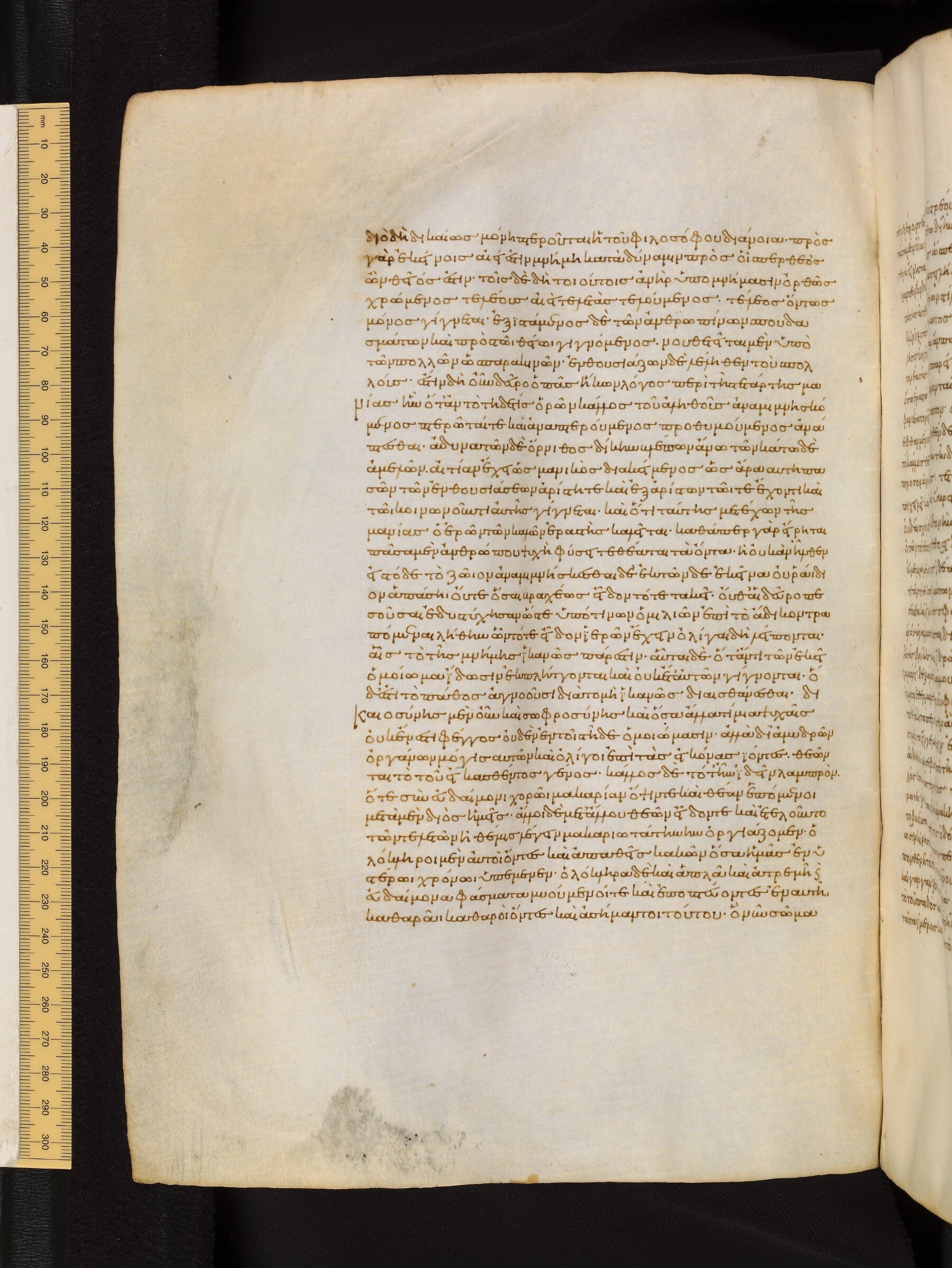
Where on the image
Starts on fol. 234r and continues on fol. 234v (page break inside this subsection). Clarke 39 fol. 234r runs from '(Ἀ)δραστείας ὅδε. ἥτις ἂν ψυχὴ θεῷ συνοπαδὸς γενομένη κατίδῃ τι' on its first line (248c) to 'καὶ ὑπεριδοῦσα ἃ νῦν εἶναί φαμεν, καὶ ἀνακύψασα εἰς τὸ ὂν ὄντως' on its last line (249c). Viewer: https://digital.bodleian.ox.ac.uk/objects/f57d074b-cff1-4172-8236-797c7b8f0403/surfaces/35bc6395-ca3a-4efe-8bcb-3fb763a0a20e/ Clarke 39 fol. 234v runs from 'διὸ δὴ δικαίως μόνη πτεροῦται ἡ τοῦ φιλοσόφου διάνοια' on its first line (249c) to 'ἐν αὐγῇ καθαρᾷ, καθαροὶ ὄντες καὶ ἀσήμαντοι τούτου ὃ νῦν σῶμα' on its last line (250c). Line 2 reads 'γὰρ ἐκείνοις ἀεί ἐστιν μνήμῃ κατὰ δύναμιν, πρὸς οἷσπερ θεὸς' (249c). Viewer: https://digital.bodleian.ox.ac.uk/objects/f57d074b-cff1-4172-8236-797c7b8f0403/surfaces/82c1777b-884f-49ef-ba65-8e723ae3ad5d/ Checked on the images. The Greek shown is Burnet's critical text; the copyist's wording differs from it in small details.
εἰς ἓν λογισμῷ συναιρούμενον· τοῦτο δʼ ἐστὶν ἀνάμνησις ἐκείνων ἅ ποτʼ εἶδεν ἡμῶν ἡ ψυχὴ συμπορευθεῖσα θεῷ καὶ ὑπεριδοῦσα ἃ νῦν εἶναί φαμεν, καὶ ἀνακύψασα εἰς τὸ ὂν ὄντως. διὸ δὴ δικαίως μόνη πτεροῦται ἡ τοῦ φιλοσόφου διάνοια· πρὸς γὰρ ἐκείνοις ἀεί ἐστιν μνήμῃ κατὰ δύναμιν, πρὸς οἷσπερ θεὸς ὢν θεῖός ἐστιν. τοῖς δὲ δὴ τοιούτοις ἀνὴρ ὑπομνήμασιν ὀρθῶς χρώμενος, τελέους ἀεὶ τελετὰς τελούμενος, τέλεος ὄντως μόνος γίγνεται· ἐξιστάμενος δὲ τῶν
by means of reason the many perceptions of the senses; and this is a recollection of those things which our soul once beheld, when it journeyed with God and, lifting its vision above the things which we now say exist, rose up into real being. And therefore it is just that the mind of the philosopher only has wings, for he is always, so far as he is able, in communion through memory with those things the communion with which causes God to be divine. Now a man who employs such memories rightly is always being initiated into perfect mysteries and he alone becomes truly perfect;
Where on the image
On Clarke 39 fol. 234v. Clarke 39 fol. 234v runs from 'διὸ δὴ δικαίως μόνη πτεροῦται ἡ τοῦ φιλοσόφου διάνοια' on its first line (249c) to 'ἐν αὐγῇ καθαρᾷ, καθαροὶ ὄντες καὶ ἀσήμαντοι τούτου ὃ νῦν σῶμα' on its last line (250c). Line 2 reads 'γὰρ ἐκείνοις ἀεί ἐστιν μνήμῃ κατὰ δύναμιν, πρὸς οἷσπερ θεὸς' (249c). Viewer: https://digital.bodleian.ox.ac.uk/objects/f57d074b-cff1-4172-8236-797c7b8f0403/surfaces/82c1777b-884f-49ef-ba65-8e723ae3ad5d/ Checked on the images. The Greek shown is Burnet's critical text; the copyist's wording differs from it in small details.
ἀνθρωπίνων σπουδασμάτων καὶ πρὸς τῷ θείῳ γιγνόμενος, νουθετεῖται μὲν ὑπὸ τῶν πολλῶν ὡς παρακινῶν, ἐνθουσιάζων δὲ λέληθεν τοὺς πολλούς. ἔστι δὴ οὖν δεῦρο ὁ πᾶς ἥκων λόγος περὶ τῆς τετάρτης μανίας—ἣν ὅταν τὸ τῇδέ τις ὁρῶν κάλλος, τοῦ ἀληθοῦς ἀναμιμνῃσκόμενος, πτερῶταί τε καὶ ἀναπτερούμενος προθυμούμενος ἀναπτέσθαι, ἀδυνατῶν δέ, ὄρνιθος δίκην βλέπων ἄνω, τῶν κάτω δὲ ἀμελῶν, αἰτίαν ἔχει ὡς μανικῶς διακείμενος—ὡς
but since he separates himself from human interests and turns his attention toward the divine, he is rebuked by the vulgar, who consider him mad and do not know that he is inspired. All my discourse so far has been about the fourth kind of madness, which causes him to be regarded as mad, who, when he sees the beauty on earth, remembering the true beauty, feels his wings growing and longs to stretch them for an upward flight, but cannot do so, and, like a bird, gazes upward and neglects the things below.
Where on the image
On Clarke 39 fol. 234v. Clarke 39 fol. 234v runs from 'διὸ δὴ δικαίως μόνη πτεροῦται ἡ τοῦ φιλοσόφου διάνοια' on its first line (249c) to 'ἐν αὐγῇ καθαρᾷ, καθαροὶ ὄντες καὶ ἀσήμαντοι τούτου ὃ νῦν σῶμα' on its last line (250c). Line 2 reads 'γὰρ ἐκείνοις ἀεί ἐστιν μνήμῃ κατὰ δύναμιν, πρὸς οἷσπερ θεὸς' (249c). Viewer: https://digital.bodleian.ox.ac.uk/objects/f57d074b-cff1-4172-8236-797c7b8f0403/surfaces/82c1777b-884f-49ef-ba65-8e723ae3ad5d/ Checked on the images. The Greek shown is Burnet's critical text; the copyist's wording differs from it in small details.
ἄρα αὕτη πασῶν τῶν ἐνθουσιάσεων ἀρίστη τε καὶ ἐξ ἀρίστων τῷ τε ἔχοντι καὶ τῷ κοινωνοῦντι αὐτῆς γίγνεται, καὶ ὅτι ταύτης μετέχων τῆς μανίας ὁ ἐρῶν τῶν καλῶν ἐραστὴς καλεῖται. καθάπερ γὰρ εἴρηται, πᾶσα μὲν ἀνθρώπου ψυχὴ φύσει τεθέαται τὰ ὄντα, ἢ οὐκ ἂν ἦλθεν
My discourse has shown that this is, of all inspirations, the best and of the highest origin to him who has it or who shares in it, and that he who loves the beautiful, partaking in this madness, is called a lover. For, as has been said, every soul of man has by the law of nature beheld the realities, otherwise it would not have entered
Where on the image
On Clarke 39 fol. 234v. Clarke 39 fol. 234v runs from 'διὸ δὴ δικαίως μόνη πτεροῦται ἡ τοῦ φιλοσόφου διάνοια' on its first line (249c) to 'ἐν αὐγῇ καθαρᾷ, καθαροὶ ὄντες καὶ ἀσήμαντοι τούτου ὃ νῦν σῶμα' on its last line (250c). Line 2 reads 'γὰρ ἐκείνοις ἀεί ἐστιν μνήμῃ κατὰ δύναμιν, πρὸς οἷσπερ θεὸς' (249c). Viewer: https://digital.bodleian.ox.ac.uk/objects/f57d074b-cff1-4172-8236-797c7b8f0403/surfaces/82c1777b-884f-49ef-ba65-8e723ae3ad5d/ Checked on the images. The Greek shown is Burnet's critical text; the copyist's wording differs from it in small details.
εἰς τόδε τὸ ζῷον· ἀναμιμνῄσκεσθαι δὲ ἐκ τῶνδε ἐκεῖνα οὐ ῥᾴδιον ἁπάσῃ, οὔτε ὅσαι βραχέως εἶδον τότε τἀκεῖ, οὔθʼ αἳ δεῦρο πεσοῦσαι ἐδυστύχησαν, ὥστε ὑπό τινων ὁμιλιῶν ἐπὶ τὸ ἄδικον τραπόμεναι λήθην ὧν τότε εἶδον ἱερῶν ἔχειν. ὀλίγαι δὴ λείπονται αἷς τὸ τῆς μνήμης ἱκανῶς πάρεστιν· αὗται δέ, ὅταν τι τῶν ἐκεῖ ὁμοίωμα ἴδωσιν, ἐκπλήττονται καὶ οὐκέτʼ <ἐν> αὑτῶν γίγνονται, ὃ δʼ ἔστι τὸ πάθος ἀγνοοῦσι
into a human being, but it is not easy for all souls to gain from earthly things a recollection of those realities, either for those which had but a brief view of them at that earlier time, or for those which, after falling to earth, were so unfortunate as to be turned toward unrighteousness through some evil communications and to have forgotten the holy sights they once saw. Few then are left which retain an adequate recollection of them; but these when they see here any likeness of the things of that other world, are stricken with amazement and can no longer control themselves; but they do not understand their condition, because they do not clearly perceive.
Where on the image
On Clarke 39 fol. 234v. Clarke 39 fol. 234v runs from 'διὸ δὴ δικαίως μόνη πτεροῦται ἡ τοῦ φιλοσόφου διάνοια' on its first line (249c) to 'ἐν αὐγῇ καθαρᾷ, καθαροὶ ὄντες καὶ ἀσήμαντοι τούτου ὃ νῦν σῶμα' on its last line (250c). Line 2 reads 'γὰρ ἐκείνοις ἀεί ἐστιν μνήμῃ κατὰ δύναμιν, πρὸς οἷσπερ θεὸς' (249c). Viewer: https://digital.bodleian.ox.ac.uk/objects/f57d074b-cff1-4172-8236-797c7b8f0403/surfaces/82c1777b-884f-49ef-ba65-8e723ae3ad5d/ Checked on the images. The Greek shown is Burnet's critical text; the copyist's wording differs from it in small details.
διὰ τὸ μὴ ἱκανῶς διαισθάνεσθαι. δικαιοσύνης μὲν οὖν καὶ σωφροσύνης καὶ ὅσα ἄλλα τίμια ψυχαῖς οὐκ ἔνεστι φέγγος οὐδὲν ἐν τοῖς τῇδε ὁμοιώμασιν, ἀλλὰ διʼ ἀμυδρῶν ὀργάνων μόγις αὐτῶν καὶ ὀλίγοι ἐπὶ τὰς εἰκόνας ἰόντες θεῶνται τὸ τοῦ εἰκασθέντος γένος· κάλλος δὲ τότʼ ἦν ἰδεῖν λαμπρόν, ὅτε σὺν εὐδαίμονι χορῷ μακαρίαν ὄψιν τε καὶ θέαν, ἑπόμενοι μετὰ μὲν Διὸς ἡμεῖς, ἄλλοι δὲ μετʼ ἄλλου θεῶν, εἶδόν τε καὶ ἐτελοῦντο τῶν τελετῶν ἣν θέμις λέγειν
Now in the earthly copies of justice and temperance and the other ideas which are precious to souls there is no light, but only a few, approaching the images through the darkling organs of sense, behold in them the nature of that which they imitate, and these few do this with difficulty. But at that former time they saw beauty shining in brightness, when, with a blessed company—we following in the train of Zeus, and others in that of some other god—they saw the blessed sight and vision and were initiated into that which is rightly called
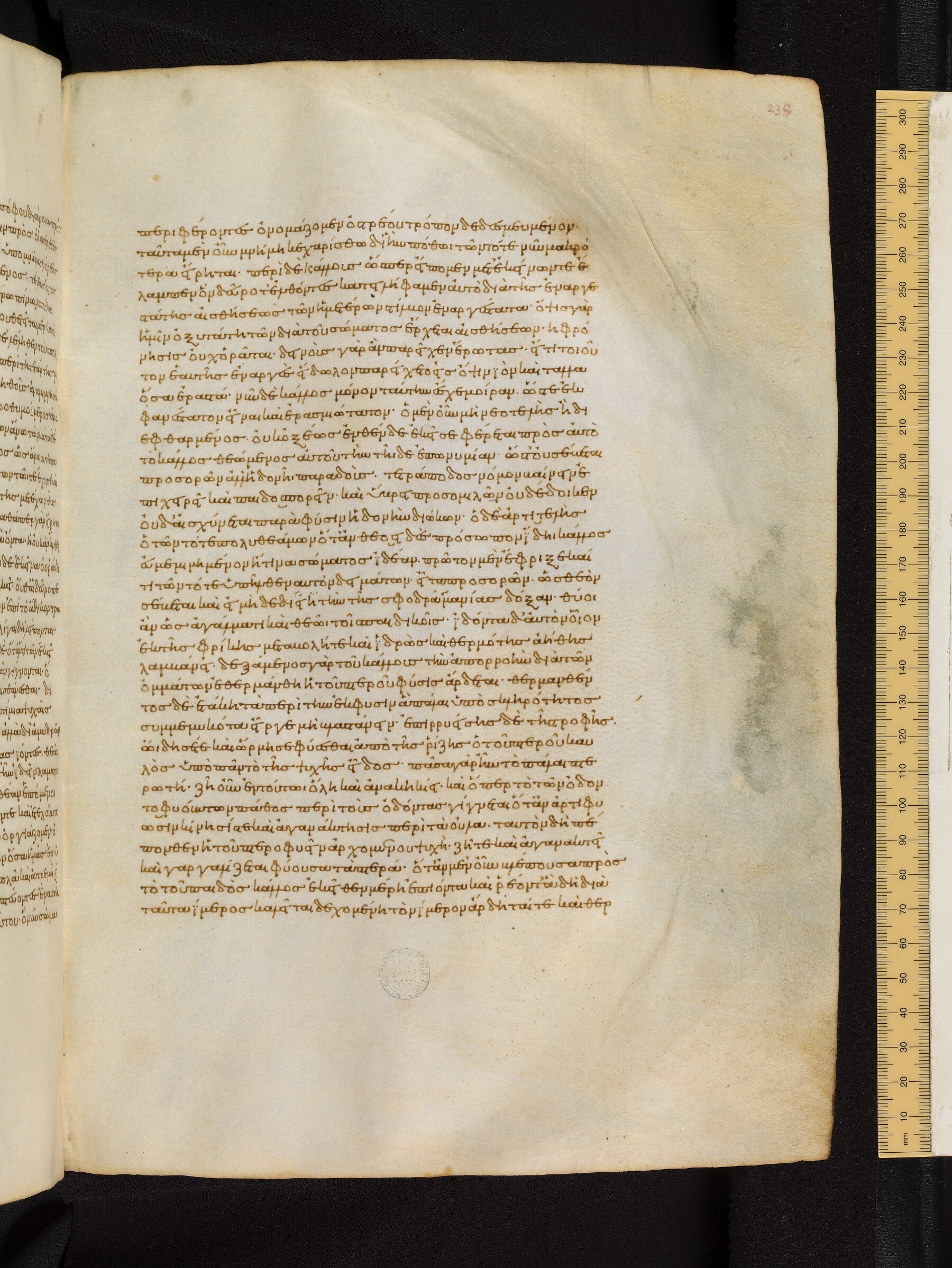
Where on the image
Starts on fol. 234v and continues on fol. 235r (page break inside this subsection). Clarke 39 fol. 234v runs from 'διὸ δὴ δικαίως μόνη πτεροῦται ἡ τοῦ φιλοσόφου διάνοια' on its first line (249c) to 'ἐν αὐγῇ καθαρᾷ, καθαροὶ ὄντες καὶ ἀσήμαντοι τούτου ὃ νῦν σῶμα' on its last line (250c). Line 2 reads 'γὰρ ἐκείνοις ἀεί ἐστιν μνήμῃ κατὰ δύναμιν, πρὸς οἷσπερ θεὸς' (249c). Viewer: https://digital.bodleian.ox.ac.uk/objects/f57d074b-cff1-4172-8236-797c7b8f0403/surfaces/82c1777b-884f-49ef-ba65-8e723ae3ad5d/ Clarke 39 fol. 235r runs from 'περιφέροντες ὀνομάζομεν, ὀστρέου τρόπον δεδεσμευμένοι' on its first line (250c) to 'ἵμερος καλεῖται, δεχομένη τὸν ἵμερον ἄρδεταί τε καὶ θερ(μαίνεται)' on its last line (251c). Line 2 begins 'ταῦτα μὲν οὖν μνήμῃ κεχαρίσθω', still within 250c. Viewer: https://digital.bodleian.ox.ac.uk/objects/f57d074b-cff1-4172-8236-797c7b8f0403/surfaces/c0698089-f91c-4c01-b626-7f7ba9c76590/ Checked on the images. The Greek shown is Burnet's critical text; the copyist's wording differs from it in small details.
μακαριωτάτην, ἣν ὠργιάζομεν ὁλόκληροι μὲν αὐτοὶ ὄντες καὶ ἀπαθεῖς κακῶν ὅσα ἡμᾶς ἐν ὑστέρῳ χρόνῳ ὑπέμενεν, ὁλόκληρα δὲ καὶ ἁπλᾶ καὶ ἀτρεμῆ καὶ εὐδαίμονα φάσματα μυούμενοί τε καὶ ἐποπτεύοντες ἐν αὐγῇ καθαρᾷ, καθαροὶ ὄντες καὶ ἀσήμαντοι τούτου ὃ νῦν δὴ σῶμα περιφέροντες ὀνομάζομεν, ὀστρέου τρόπον δεδεσμευμένοι. ταῦτα μὲν οὖν μνήμῃ κεχαρίσθω, διʼ ἣν πόθῳ τῶν τότε νῦν μακρότερα εἴρηται· περὶ δὲ κάλλους, ὥσπερ εἴπομεν,
the most blessed of mysteries, which we celebrated in a state of perfection, when we were without experience of the evils which awaited us in the time to come, being permitted as initiates to the sight of perfect and simple and calm and happy apparitions, which we saw in the pure light, being ourselves pure and not entombed in this which we carry about with us and call the body, in which we are imprisoned like an oyster in its shell. So much, then, in honor of memory, on account of which I have now spoken at some length, through yearning for the joys of that other time. But beauty,
Notes
- Greek: John Burnet, Platonis Opera (Oxford Classical Texts, 1900-1907), Perseus digital text. Square brackets mark words Burnet deletes.
- English: Harold North Fowler, Plato I: Euthyphro, Apology, Crito, Phaedo, Phaedrus (Loeb Classical Library, Harvard University Press / Heinemann, 1914), Perseus tlg0059.tlg012.perseus-eng2. The English section breaks follow the translator's own Stephanus markers, so a few words may fall on the neighbouring side of a break compared with the Greek.
Cite
Sources
- Source: Oxford, Bodleian Library, MS. E. D. Clarke 39 fol. 232v-235r (Bodleian Libraries, University of Oxford, Digital Bodleian (IIIF)) + Burnet Greek (Perseus) + H. N. Fowler (1914) English (Perseus) (holding institution)
- Critical edition: Burnet, Platonis Opera (1900-1907), via Perseus
← previous · → next · v cycle view · l back to library